Marco Minozzo is an Associate Professor of Statistics at the University of Verona , affiliated with the Department of Economics within the School of Economics and Management. Previously, he served as a Researcher in Statistics at the University of Perugia. His academic credentials include a degree in Statistics and Economics from the University of Padova and a Ph.D. in Statistics from University College London. Research Focus : Modeling multivariate geostatistical data, Monte Carlo estimation algorithms, spatial and temporal statistical models, and applications in economics, finance, and environmental science. Teaching : Statistics and Probability at undergraduate, graduate, and postgraduate levels, including courses on data analysis with R, Python, MATLAB, and SAS. Third Mission : Active in public engagement and continuous education, with teaching assignments in professional master’s programs and specialized courses. Research Projects : FAIR-PLAY (marketing 4.0), Management Journal Relevance, Monte Carlo methods for geostatistics, and high-dimensional dependency models.
Huan Chen is a Research Assistant Professor in the Department of Environmental Engineering and Earth Sciences at Clemson University. His research specializes in water resilience, contaminant dynamics, and resource recovery, integrating biogeochemistry, environmental chemistry, and computational methods. He investigates impacts of wildfires, climate change, and land-use alterations on water quality using advanced analytical techniques including FT-ICR MS, pyrolysis-GC/MS, and hyperspectral imaging. Education: Ph.D. in Civil Engineering, University of Tennessee, Knoxville (2013–2016) M.S. in Statistics, University of Tennessee, Knoxville (2013–2016) M.S. in Environmental Engineering, Peking University (2006–2009) B.E. in Environmental Engineering, Southwest Jiaotong University (2002–2006) Research Focus: Dr. Chen studies (1) disturbances at aquatic-terrestrial interfaces affecting drinking water quality; (2) water reuse in agriculture/hydraulic fracturing and resource recovery via microalgae; (3) environmental big data analysis using MATLAB/R/Python and machine learning for microplastics detection. His work addresses PFAS, antibiotics, and wildfire-derived contaminants. Publication Trends: Recent articles (2023–2025) demonstrate strong focus on wildfire impacts, PFAS dynamics, microplastics detection, water reuse technologies, and antibiotic resistance. Methodologies emphasize advanced mass spectrometry, hyperspectral imaging, and machine learning applications across diverse environmental matrices. Awards: Excellent Papers of 2023 (Soil & Environmental Health) Excellent Undergraduate Thesis (2006)
Jeffrey R Bunn serves as the lead instrument scientist at the residual stress diffractometer (HIDRA) located at the High Flux Isotope Reactor (HFIR) at Oak Ridge National Laboratory. With over 10 years of laboratory experience in non-destructive evaluation, he is recognized as an expert in neutron and x-ray diffraction techniques for residual stress measurements and material characterization. Dr. Bunn earned his B.S. in Engineering from The University of Tennessee at Martin (2007) and his Ph.D. in Civil Engineering from the University of Tennessee at Knoxville (2014). His career at ORNL began in 2006 as an undergraduate intern at the High Temperature Materials Laboratory, where he utilized x-ray and neutron diffraction for strain determination. After completing his doctorate, he returned as a postdoctoral research associate in the Chemical and Engineering Materials Division before being hired permanently as an instrument scientist in 2017. His research program spans multiple critical areas of materials science: Material responses to complex mechanical loadings (biaxial torsion, combined tension and torsion) Welding processes and residual stress characterization in joined materials Development of advanced data analysis tools for neutron and X-ray data reduction Neutron imaging applications for strain, texture and phase analysis in engineering materials Dr. Bunn's technical expertise encompasses XRD, SAXS, CT-Imaging (neutron and x-ray), SANS, and Radiography, with proficiency in both continuous wavelength and time-of-flight neutron diffractometers. His programming and data analysis skills include Excel, MATLAB, and Python. His significant contributions to the field have been recognized through multiple prestigious awards: National Science Foundation fellow and IGERT Trainee (2009-2014) Three-time recipient of the A.F. Davis Silver medal from the American Welding Society (2017, 2019, 2021) R&D 100 award winner (2023) for developing Additively Manufactured Thermally Conductive Collimators Dr. Bunn maintains active professional collaborations with industrial partners and academic institutions, effectively communicating complex scientific concepts to diverse audiences. He is a member of ASM International, the American Welding Society, and the Society of Experimental Mechanics, contributing to the advancement of materials characterization techniques with real-world engineering applications.
Peter H. Gruber is a Senior Lecturer and Senior Scientist at the Università della Svizzera Italiana (USI), Faculty of Economics, in Lugano, Switzerland. He has been affiliated with USI since 2008. PhD in Physics from TU Wien PhD in Finance from Università della Svizzera Italiana His research spans multiple disciplines, focusing on: Asset Pricing, particularly risk premia and stochastic volatility models Numerical Methods in finance and econometrics Economics of Cryptocurrencies and Entrepreneurship High-Performance Computing applications in economics His publication trends highlight expertise in option pricing models , matrix affine jump diffusion (MAJD) frameworks, and stochastic skewness analysis. Earlier work in particle physics demonstrates interdisciplinary technical proficiency. At USI, he teaches numerical methods using MATLAB and R, and develops computational resources for financial econometrics and macroeconomic analysis.
Hugh R. Wilson is the ORDCF Professor of Biological & Computational Vision at York University, holding joint appointments in the Departments of Biology, Psychology, Mathematics, and Computer Science. Previously, he held a professorship in Ophthalmology & Visual Science at the University of Chicago (1985–2000). His research focuses on psychophysics, visual network models, and nonlinear dynamics in neuroscience. Wilson is a Fellow of the Optical Society of America and authored the influential book Spikes, Decisions & Actions: Dynamical Foundations of Neuroscience (Oxford University Press, 1999), which explores nonlinear systems in brain function. His work spans experimental and theoretical domains, including studies on motion perception, face recognition, and cortical neuron modeling. Key projects include investigating global orientation pooling in visual area V4, dynamics of binocular rivalry, and neural mechanisms of migraine aura. His neural network models integrate physiology, anatomy, and psychophysical data to explain visual functions. Wilson’s research has been published in journals like Vision Research , Nature , and Journal of Theoretical Biology . He has received grants for projects on visual adaptation, migraine-related visual phenomena, and developmental face perception. His lab at York University employs MATLAB simulations and fMRI techniques to study neural dynamics and visual processing across age groups and clinical populations. He is also involved in educational initiatives, including developing computational tools for neuroscience education and mentoring early-career researchers in theoretical and experimental vision science.
Dr. Jasmine Jaffres is an Adjunct Professor at James Cook University and a full-time Principal Environmental Data Analyst at C&R Consulting in Townsville. She specializes in hydroclimatology , with a focus on extreme weather events (tropical cyclones, floods, bushfires) and catchment-scale environmental processes . Collaborations with CSIRO , Bureau of Meteorology , and universities like University of Tasmania Expertise in big data management , MATLAB programming , non-parametric statistics , and geospatial visualization (QGIS, ArcGIS) Co-supervised PhD research at Central Queensland University and informally mentored candidates at James Cook University Her recent publications address hazard quantification , climate data infrastructure , and environmental disease associations , reflecting a multidisciplinary approach to natural hazard mitigation and climate resilience .
Mengyang Gu is an Assistant Professor in the Department of Statistics and Applied Probability at the University of California, Santa Barbara. His research focuses on uncertainty quantification, Gaussian process emulation, statistical calibration, and machine learning for computational science and materials physics. He has developed open-source packages like RobustGaSP, RobustCalibration, and FastGaSP for R and MATLAB. Education: PhD in Statistical Science from Duke University (2016) Research: Uncertainty Quantification, Gaussian Processes, Materials Science, Dynamical Systems Grants: NSF awards for computer model calibration, BioPACIFIC MIP funding Awards: Scialog Fellow, Hellman Fellowship, SIAM Early Career Prize, ACM Best Paper Students: Mentored PhD graduates including Xubo Liu, Yue He, Hanmo Li, and Xinyi Fang His group collaborates with materials scientists, physicists, and biologists to develop statistical methods for complex systems. Recent projects include physics-informed ML for polymer phase identification, inverse Kalman filtering, and AI-enabled materials exploration.
Hugo Victor Thomas Léo Najberg is a Research Fellow in the Department of Medicine at the University of Fribourg's Faculty of Science and Medicine. He holds dual roles as a Data Scientist in the Direktion der IT-Dienste and a Postdoc researcher supported by the Swiss National Science Foundation (SNF). His work focuses on applying neurophysiologically-informed gamified interventions to improve health behaviors, notably through the development of The Diner , a software tool designed to create rewarding environments for behavioral change. He also develops reproducible research methodologies using MATLAB and R, including EEG signal preprocessing software, outlier detection pipelines for cognitive tasks (GNG, Flanker, N-back), and Monte Carlo-based statistical power analyses. Education: PhD holder (degree details unspecified) His research interests bridge computational methods and medical applications, emphasizing both behavioral interventions and technical reproducibility. He is affiliated with the Institute of Medical Fundamental Research (IMF) and the National Aeronautics Research Agency (NARA). His office is located at PER 09, room 2.106c, Ch. du Musée 5, 1700 Fribourg. Contact: +41 26 300 8535.
Akash Deep serves as an Assistant Professor in the Department of Industrial Engineering within the School of Industrial Engineering & Management at Oklahoma State University. His academic foundation includes a Ph.D. in Industrial Engineering from UW-Madison (2022), an M.S. in Statistics from the same institution (2020), and a B.Tech from IIT Roorkee, India (2017). Dr. Deep's research centers on industrial analytics , integrating statistical methodologies with industrial knowledge to model complex systems. Key focus areas include AI for IoT-enabled smart systems, reliability optimization of engineering systems, stochastic control processes, and domain-aware machine learning. His methodological expertise spans stochastic processes, Bayesian optimization, and reinforcement learning. His publication record demonstrates strong alignment with industrial IoT applications and system reliability, particularly through his 2021 IISE Transactions paper on degradation modeling with imperfect maintenance. This work exemplifies his approach of combining data-driven modeling with industrial process constraints. Dr. Deep actively mentors graduate students in industrial engineering and maintains professional engagement through GitHub repositories focused on machine learning implementation and algorithm development. His technical contributions include MATLAB-based deep learning tools and R packages for multivariate arithmetic reduction.
Dr. Saša Cvetković is an Assistant Professor at the Department of Information Technologies , Faculty of Technical Sciences in Čačak , University of Kragujevac , Serbia. Prior to this role, he spent 22 years in the Netherlands working at leading R&D institutions like Philips , Bosch , and ASML , followed by a research position at the Lola Institute specializing in biomedical signal processing. Technical Expertise : Programming (Matlab, Python, C/C++), Data Science, Biomedical Signal Processing, Computer Vision, Embedded Systems, Software Architecture. Teaching Subjects : Introduction to Programming, Information Technology, Data Security, Modern Software Architectures, Multimedia Technologies and Systems. Publications : 21 papers (7 in SCI-listed journals) and 7 international patents. His research focuses on data analysis, algorithm development, and interdisciplinary collaboration in technology and biomedical fields.
Robert Guggenberger is a multidisciplinary researcher with a dual background in translational neuroscience and software engineering . His academic career included a decade-long role as a Researcher at the Institute for Neurotechnology and Neuromodulation , University Hospital Tübingen, where he focused on non-invasive brain stimulation techniques like TMS, TCS, and PES for treating motor disorders (Parkinson’s, stroke) and exploring neurofeedback mechanisms. He later transitioned to industry in 2022, working as an R&D Specialist at neuroConn . Education : Dipl.-Päd. (Master in Education, Otto-Friedrich University Bamberg), Dr.rer.nat (University of Tübingen), Dr.rer.soc (University of Tübingen), M.Eng. in Software Engineering (TH Nürnberg). Research Interests : Non-invasive neurostimulation, brain-computer interfaces (BCIs), corticospinal excitability, phase-specific stimulation, neuro-cardiac coupling, and adaptive neurofeedback systems. His work bridges neuroscience, bioethics, and real-time embedded software engineering. Publications highlight his expertise in EEG-TMS integration, phase-amplitude coupling, vagus nerve stimulation, and methodological advancements in neuroimaging. He actively contributed to peer review for journals in biomedical engineering , neuroethics , and neurorehabilitation . Though currently not supervising students, he previously guided over 20 theses in biomedical engineering and education.
Dr. Ruiyan Luo is an Assistant Professor in Biostatistics at the School of Public Health, Georgia State University, with a Ph.D. in Statistics from the University of Wisconsin-Madison (2007) and M.S./B.S. in Applied Mathematics from Tianjin University, China. She transitioned from a postdoctoral position at Yale University (2007-2010) to the Department of Mathematics and Statistics at GSU (2010) before joining the School of Public Health in 2012. Ph.D., University of Wisconsin-Madison, Statistics M.S., Tianjin University, Applied Mathematics B.S., Tianjin University, Applied Mathematics Dr. Luo specializes in functional data analysis, Bayesian statistics, and high-dimensional data analysis. Her methodological work focuses on linear/nonlinear functional regression models with functional responses and multiple predictors, while applied research addresses public health and biological problems, including epidemic modeling, network inference, and metabolomics/proteomics analysis. Her recent publications highlight expertise in epidemic forecasting , including mpox trajectory prediction and sub-epidemic modeling frameworks, alongside statistical software development (StatModPredict, BayesianFitForecast, SpatialWavePredict). She also explores functional regression approaches for densely observed data and develops tools for parameter estimation in differential equation models.
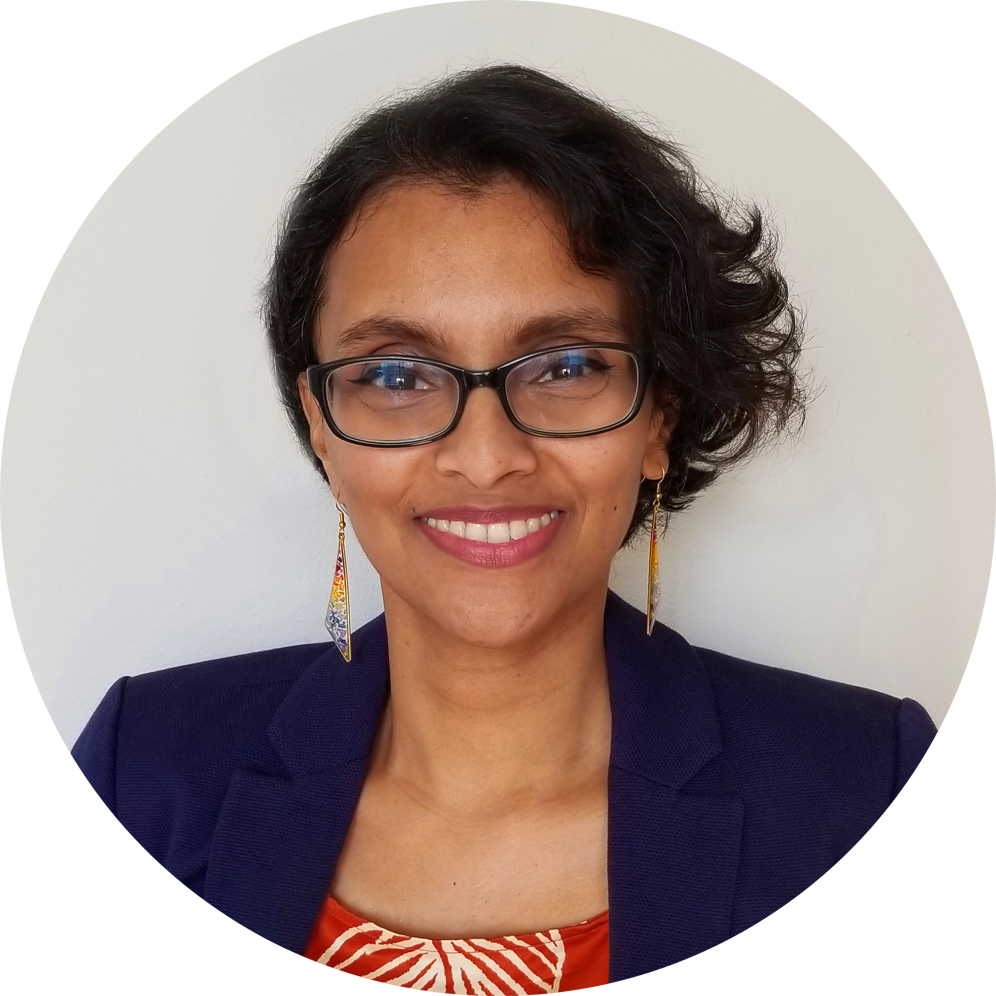
Chandra Rajulapati is an Assistant Professor in the Department of Civil Engineering at the University of Manitoba's Price Faculty of Engineering. She holds a Ph.D. from Indian Institute of Science, Bangalore and an MTech from Indian Institute of Technology, Kanpur. Her research develops statistical methods for hydro-climatological applications, focusing on climate change impacts on water systems, extreme event modeling, and risk assessment. Key areas include hydroclimatic variability, water-food-energy nexus, and uncertainty quantification in climate projections. Recent publications demonstrate a strong focus on improving climate modeling techniques through advanced statistical approaches. Her work frequently addresses precipitation analysis, extreme temperature trends, and hydrological model coupling, with practical applications in flood/drought risk management across different climate zones. She seeks motivated graduate students with programming skills in R/Python/MATLAB to join her research group on statistical hydrology challenges.
Effie J. Pereira is an Assistant Professor in the Department of Psychology at Queen's University within the Faculty of Arts and Science. Previously, she was an NSERC Banting postdoctoral research fellow at the University of Waterloo working with Dr. Daniel Smilek in the Vision & Attention Laboratory. Her research program focuses on attentional dynamics, examining how attentional processes fluctuate over time across social situations, internal thoughts, and digital environments. Dr. Pereira earned her PhD in Experimental Psychology and Cognitive Science from Queen's University in 2020, followed by a Master's degree in Psychology-Brain Behaviour and Cognitive Science in 2014, and a Bachelor's degree in Psychology and Economics in 2008, all from Queen's University. Her research investigates the "ebbs and flows" of attentional processes over time, challenging traditional views of attention as static. She employs a multidisciplinary approach combining behavioral experiments (attentional tasks, experience sampling, collaborative activities), psychophysiological methods (eye tracking, EEG, fMRI), and computational approaches (nonlinear analyses, machine learning). Her work has revealed that individual patterns of attentional fluctuations are stable and predictable, with meaningful implications for real-world outcomes. Analysis of Dr. Pereira's recent publications shows a consistent focus on temporal dynamics of attention across contexts. Her research has evolved from examining basic attentional mechanisms to investigating attention in complex digital environments and social contexts. A notable trend is her increasing use of computational methods to analyze nonlinear patterns in attentional time series data, reflecting her technical expertise and innovative approach to cognitive science. NSERC Banting Postdoctoral Research Fellow As a mentor, Dr. Pereira takes a scaffolded approach, working with students to identify short-term and long-term goals that support their development as independent researchers. She leads the Queen's Attentional Dynamics (QuAD) lab and is actively recruiting graduate students for Fall 2026 in the Cognitive Neuroscience and Social-Personality area, with a focus on Canadian students due to current funding restrictions. Her mentorship emphasizes technical skill development including programming in Python, JavaScript, R, and MATLAB, as well as experience with eye tracking, EEG, and fMRI systems. Dr. Pereira directs the Queen's Attentional Dynamics (QuAD) lab, where she develops and applies innovative methodologies to study attentional fluctuations. She has created several specialized software platforms including TESSA (Temporal Experience Sampling Smartphone Application), VICTOR (Video Teleconferencing Platform), and MECO (Message Communication Platform) to study attention in naturalistic settings. Her lab also utilizes DAMARIS, EEGAN, FELIX, and EMMA for advanced analysis of attentional time series data.
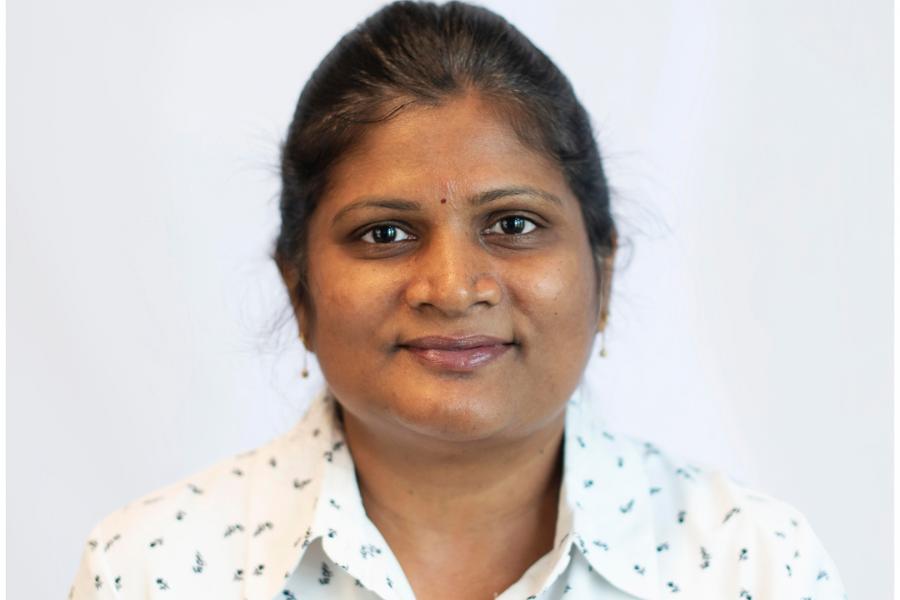
Sandhya Patidar is an Associate Professor at the School of Energy, Geoscience, Infrastructure and Society, Heriot-Watt University. She holds editorial roles in journals like Geosciences and Frontiers in Environmental Engineering, and is a member of the Royal Academy of Engineering. Her research focuses on interdisciplinary applications of data science (mathematical/statistical/machine learning) to energy, water, climate change, and environmental impact assessment. She has led projects funded by grants like EP/F038240/1 and EP/K013513/1, and developed novel methodologies in stochastic processes, complex networks, and bifurcation analysis. Education & Early Career: Previously affiliated with Shri RGP Gujarati Professional Institute (2001–2004), DAVV Indore, and RGPV Bhopal. Holds expertise in programming (Python, R, MATLAB) and has over 70 peer-reviewed publications. Three outputs won best paper awards, including recognition at climate change and low-energy architecture conferences. Research Interests: Machine learning applications in energy systems, flood risk modeling, and climate change adaptation. Specializes in techniques like Hidden Markov Modeling, time series analysis, and deep learning frameworks for energy demand forecasting and hydrological prediction. Key Contributions: Developed a physics-aware machine learning framework for hydrological models, error correction models for reservoir levels, and AI-driven heat pump usage classification. Pioneered methodologies linking climatic trends to energy demand via stochastic modeling and covariance approaches. Awards: Robert Alfred Carr Prize (2022) Sir David Wallace Prize (2008) Best Paper Awards (2011, 2019) Advising & Grants: Supervises interdisciplinary PhD projects on data analytics in climate-energy-water nexus. Collaborates on initiatives like the CEDRI project for community energy demand reduction in India. Actively engages in grant-funded research on flood inundation modeling and probabilistic climate projections. Labs & Teams: Part of the Institute for Infrastructure & Environment, leading cross-disciplinary teams in energy performance assessments, resilience planning, and environmental risk management.