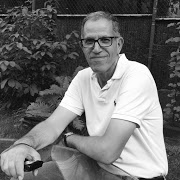
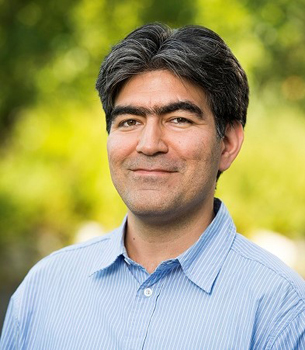
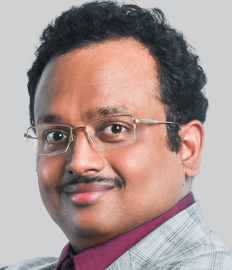
Saddek Bensalem is a Professor at Université Grenoble Alpes (UGA), affiliated with the Laboratoire Verimag within the Grenoble Institute of Technology. His research focuses on rigorous system design, formal methods for verification, and the integration of learning-enabled components into safety-critical systems. He leads projects like FETLAS (Engineering Trustworthy Learning-enabled Autonomous Systems) and has contributed to frameworks such as BIP for component-based system design. Research Interests: Formal verification of real-time systems, model-based design, cyber-physical systems, autonomous robotics, and security in IoT. His work emphasizes scalable verification techniques and correctness-by-construction approaches. Recent Projects: FOCETA (H2020): Foundations for continuous engineering of trustworthy learning-enabled systems. BRAIN-IoT: Framework for smart IoT-CPS integration and security. CPS4EU: Strengthening European capabilities in cyber-physical systems. Labs & Teams: Laboratoire Verimag, leading the Rigorous System Design team (2008-2020) and currently advancing autonomous systems research. Active in collaborations with institutions like NASA/JPL and SRI International.
Dr. YANG Yaxi is a Research Fellow at iTrust, Singapore University of Technology and Design (SUTD), Singapore. She specializes in secure computation, applied cryptography, and privacy-preserving data processing. Her work emphasizes cryptographic techniques for real-world data challenges, including genomic data security, query optimization, and protecting against malicious actors. She holds a B.Sc. (2017) and Ph.D. (2023) in Information Security from Jinan University, Guangzhou, China. Her research interests focus on developing systems that ensure data privacy while maintaining computational efficiency, such as privacy-preserving queries, secure multi-party computation, and protocols for large-scale databases. Her recent articles explore advancements in technologies like oblivious PRFs, range-constrained intersection queries, and certificate-based encryption. These contributions highlight her commitment to enhancing security in outsourced environments and biomedical applications. Dr. Yang collaborates within the iTrust research group at SUTD, which specializes in trustworthy computing and information security. Her work addresses cutting-edge issues in privacy-preserving data processing and secure collaborative systems.
Dr. Chaoxiong Ye is an Academy Research Fellow (PI) at the Department of Psychology, University of Jyväskylä. He holds two PhDs: one in Cognitive Science (2015–2018) and another in Psychology (2018–2020). He holds four docentships (Associate Professor titles) at Finnish universities in Cognitive Neuroscience and Cognitive Psychology. As a PI, he has secured over €1.5M in funding and supervises nine doctoral students. He serves on editorial boards of BMC Psychology and PLOS ONE , and fosters international collaborations with leading institutions globally. Education: PhD in Cognitive Science, University of Jyväskylä (2015–2018) PhD in Psychology, University of Jyväskylä (2018–2020) Master’s in Applied Psychology, MinNan Normal University (2012–2015) Research Interests: Focuses on cognitive and neural mechanisms of visual memory, working memory, and emotional face processing. Current projects include studying memorability’s impact on long-term memory and developing diagnostic strategies for memory disorders. Principal Investigator: Cognitive and Neural Mechanisms for Memorable Visual Stimuli (€0.93M, 2023–2027) Previous project: Two-Phase Resource Allocation Model of Visual Working Memory (2020–2023) Publications: Over 110 publications in top journals, emphasizing working memory mechanisms, emotional interference, and neural basis of depression. Notable contributions include studies on retro-cue effects, dimension-based attention, and face distractor impacts. Awards & Grants: Secured €1.5M+ in grants from the Research Council of Finland. Recognized for editorial work and international collaborations. Labs & Teams: Leads Ye’s Lab at the University of Jyväskylä, fostering research on cognitive processes and neural mechanisms.
Dr. Lina Mohjazi is a Senior Lecturer in Autonomous Systems & Connectivity at the James Watt School of Engineering, University of Glasgow. She holds a B.Sc. (Honours) from UAE University (2008), M.Sc. from Khalifa University (2012), and Ph.D. from the University of Surrey (2018), all in Electrical and Electronic Engineering. Her research focuses on green wireless communications, IoT, machine learning, and beyond 5G technologies. She is an Associate Editor for IEEE Communications Letters and has received accolades including IEEE awards and global talent recognitions. Notable contributions include work on reconfigurable intelligent surfaces (RIS), federated learning, and sustainable network design. She leads research groups exploring 6G innovations, digital twins, and AI-driven healthcare systems. Education: B.Sc., M.Sc., Ph.D. in Electrical and Electronic Engineering Affiliations: IEEE Senior Member, Fellow of Women’s Engineering Society Key Projects: Vision-aided mmWave networks, RIS-assisted UAV communications Dr. Mohjazi’s work bridges theoretical advancements with practical applications in smart grids, healthcare IoT, and autonomous systems. Her recent efforts emphasize sustainability in wireless systems and blockchain integration for secure UAV networks.
Ivan DeAndres-Tame is an Assistant Professor in the Department of Signal Theory and Communications at the School of Engineering, Universidad Autónoma de Madrid. His research focuses on advancing biometric systems with particular emphasis on face recognition and behavioral biometrics using cutting-edge computer vision and machine learning techniques. His research interests span face recognition systems, synthetic data generation for biometric applications, explainable AI in biometric contexts, and keystroke verification systems. DeAndres-Tame has made significant contributions to the field through his leadership in major international challenges including the FRCSyn Challenge at CVPR and WACV, and the Keystroke Verification Challenge at IEEE BigData. His work bridges theoretical advances with practical applications in biometric security systems. Analysis of his recent publications reveals a strong focus on evaluating and improving face recognition systems using synthetic data, with a growing interest in the intersection of large language models and biometric systems. His research demonstrates consistent innovation in benchmarking methodologies and evaluation frameworks for biometric systems. Throughout his career, DeAndres-Tame has collaborated extensively with leading researchers in the biometrics community, including Ruben Tolosana, Rubén Vera-Rodríguez, Aythami Morales, Julian Fiérrez, and Javier Ortega-Garcia, contributing to the advancement of biometric technologies through both theoretical and applied research.
Mohamed Shehata is a Professor in the Department of Computer Science, Mathematics, Physics, and Statistics at the University of British Columbia's Irving K. Barber Faculty of Science. He holds an adjunct professorship at Memorial University of Newfoundland's Computer Engineering Department. His research focuses on computer vision, biomedical applications, and intelligent camera systems. He earned his B.Sc. (Zagazig University), M.Sc. (Zagazig University), Ph.D. (University of Calgary), and P.Eng. licensure. Previously, he worked at Intelliview Technologies Inc. as Vice President of Engineering and Research. He has held roles as an assistant and associate professor at Memorial University before joining UBC in 2019. He serves as Editor-in-Chief of the IEEE Canadian Journal of Electrical and Computer Engineering and has contributed to over 70 peer-reviewed publications. His work spans video surveillance systems, domain generalization, and medical imaging applications. Education: B.Sc. (Honors), Zagazig University M.Sc., Computer Engineering, Zagazig University Ph.D., University of Calgary Research Interests: He explores cutting-edge topics like federated learning for domain adaptation, biomedical image analysis, and lightweight neural networks for embedded systems. His recent work emphasizes cross-domain generalization and few-shot learning for medical diagnostics and object tracking. Professional Contributions: Dr. Shehata has supervised graduate students and led projects in computer vision applications. His publications bridge theoretical advancements with practical systems like drone-based surveillance and IoT healthcare devices. He actively contributes to IEEE committees and academic journal editing.
Alessandro Papadopoulos is a Professor of Electrical and Computer Engineering at Mälardalen University (MDU) and a QUALIFICA Fellow at the Institute for Software Technology and Software Engineering (ITIS), University of Málaga. He leads the Complex Real-Time Embedded Systems (CORE) research group and serves as Scientific Leader for Applied AI under the AI@MDU initiative. His research focuses on control theory, robotics, and real-time embedded systems, emphasizing interconnected systems and uncertainty management. Education: BSc (2008) and MSc (2010) in Computer Engineering from Politecnico di Milano; PhD (2014) in Information Technology, Systems and Control from the same institution. Postdoctoral fellowships at Lund University’s Department of Automatic Control and Politecnico di Milano’s Dipartimento di Elettronica, Informazione e Bioingegneria. Research interests include control theory applications to computing systems, distributed systems, and AI integration. His work addresses challenges in real-time, embedded, and edge computing. Notable contributions include VR starting grant (2020) and SSF strategic mobility grant (2020), and the Most Influential Paper Award at SEAMS 2025. He has advised PhD students like Anna Friebe and Daniel Bujosa Mateu. Grants and collaborations include projects with ABB industrial automation and leadership roles in conferences (e.g., DEBS 2025 Workshop/Tutorial Chairs). His research group explores autonomous systems, cybersecurity in industrial networks, and cloud manufacturing resilience. Labs/teams: CORE group, collaborating with Prof. Thomas Nolte.
Masoud Daneshtalab is a Professor at Mälardalen University, leading the Heterogeneous System research group (HERO). He previously held roles as a European Marie Curie Fellow at KTH Royal Institute of Technology (2014) and as a university lecturer and group leader at the University of Turku, Finland (2012-2014). His research focuses on interconnection networks, hardware/software co-design, deep learning acceleration, and evolutionary optimization. He specializes in fault-tolerant DNN accelerators, time-sensitive networking (TSN), and embedded systems. His work bridges theoretical advancements with practical implementations, emphasizing reliability and efficiency in edge computing and AI applications. Research interests include: Network-on-Chip (NoC) architectures and congestion prediction Fault resilience in deep neural networks (DNNs) Optimization of federated learning and homomorphic encryption for edge AI Integration of TSN with 5G and automotive systems Hardware acceleration techniques for computational efficiency Recent publications emphasize advancements in robust AI architectures, fault tolerance mechanisms, and TSN-based communication protocols. His work often addresses practical challenges in deploying machine learning models on resource-constrained devices. He actively contributes to interdisciplinary projects in autonomous systems, healthcare monitoring via FMCW radar, and neural architecture search for embedded applications. Labs/Teams: Leads the HERO group at Mälardalen University, focusing on heterogeneous computing systems and real-time embedded systems.
Ganesh Neelakanta Iyer is a Lecturer in the Department of Computer Science at the School of Computing, National University of Singapore (NUS). He holds a PhD (2012) and MSc (2008) from NUS and a B.Tech. in Computer Science and Engineering from Mahatma Gandhi University, India (2004), where he ranked first. He brings over a decade of industry experience from companies like Salesforce, NXP, and Progress Software, and prior academic roles at Amrita Vishwa Vidyapeetham and IIIT-Hyderabad. His research interests span Software Engineering , Cloud/Edge Computing , Machine Learning , AI for Cultural Heritage , and Software Engineering Education . He founded the STeAdS (Software Engineering and Technological Advancements for Society) research group in 2021, focusing on technology applications in healthcare, education, and traditional arts like Kathakali and Wayang Kulit. The recent publications highlight a strong trend in AI-driven educational technologies , including LLMs for curriculum customization, web-based DevOps learning platforms, and agile project management tools. Another major theme is AI in cultural preservation , with works on Kathakali gesture and facial expression recognition. A third stream involves distributed systems and networking , particularly in edge computing and federated learning. Faculty Teaching Excellence Award 2024, NUS AWS Educate Cloud Faculty Ambassador (2019, 2020) Certified Kubernetes Administrator (CKA) University Topper (First Rank, 2004) NUS Postgraduate Research Scholarship (2009–2012) Dr. Iyer mentors students through UROP, FYP, Master’s, and PhD projects, and has led numerous grants and initiatives in cloud computing education and AI for societal benefit. He has delivered workshops and keynote speeches across the USA, Europe, Australia, and Asia. He actively leads the STeAdS virtual research group, fostering global collaborations. As a maestro in Kathakali, he integrates traditional art with technology, composing and staging performances while applying AI to preserve and analyze this heritage.
Udaya Kiran Tupakula is an Associate Professor in the Department of Computing within the School of Computer, Data and Mathematical Sciences at Western Sydney University. With over two decades of research experience, his work focuses on cybersecurity with particular emphasis on network security, cloud infrastructure protection, and emerging technologies. He has established himself as a leading researcher through extensive collaborations, particularly with Professor Vijay Varadharajan, and has contributed significantly to securing virtualized environments and next-generation networks. Dr. Tupakula's research spans multiple critical areas in cybersecurity. His early work focused on fundamental security challenges like DDoS mitigation and TCP SYN flood attacks, evolving into more complex domains including Software Defined Networking security, cloud security architectures, and IoT protection. Recent research directions include AI security, privacy-preserving machine learning, and securing 5G infrastructure. His approach combines theoretical frameworks with practical implementations, often developing novel security architectures that address specific vulnerabilities in emerging technologies. Analysis of his publication trends shows a clear progression from traditional network security toward more sophisticated systems. His work has increasingly incorporated machine learning techniques for intrusion detection, expanded into industrial control systems security, and recently embraced AI safety challenges. The breadth of his research demonstrates adaptability to evolving security landscapes while maintaining focus on practical, implementable solutions rather than purely theoretical approaches. Dr. Tupakula has mentored numerous researchers who have become active contributors in the cybersecurity field. His collaborative approach is evident in the extensive co-authorship network spanning multiple institutions and countries. His research has been supported by various grants focusing on critical infrastructure protection, cloud security, and next-generation network security. His laboratory work focuses on practical security testing environments for SDN, cloud infrastructure, and IoT systems. Current research directions include securing AI systems from malicious use, enhancing privacy in federated learning environments, and developing more robust security frameworks for industrial control systems. The applied nature of his research ensures close alignment with real-world security challenges faced by industry and government organizations.
Dr. Jagruti Sahoo is an Associate Professor in Computer Science and Academic Program Coordinator for the Cybersecurity Program at South Carolina State University (SCSU), USA. Her research focuses on Internet of Things (IoT) , cybersecurity , machine learning , vehicular networks , and network functions virtualization . Ph.D. in Computer Science and Information Engineering from National Central University, Taiwan (2013) Postdoctoral research at University of Sherbrooke and Concordia University, Canada (2013-2016) Her research lab explores optimization, security, and privacy in IoT and cyber-physical systems, particularly in smart transportation and smart farming domains. She has published extensively in IEEE journals and conferences, with expertise in fog node placement, vehicular network protocols, and VNF management. Dr. Sahoo serves on technical program committees for major conferences (IEEE ICC, Globecom, CCNC, LCN) and as Associate Editor for IEEE Access . She is certified by CompTIA Security+ and contributes to professional organizations like ACM, N² Women, and Women in Cybersecurity (WiCyS).
Vasileios Argyriou is an academic researcher affiliated with Kingston University, with extensive contributions in computer vision, image processing, and AI applications in IoT, healthcare, and smart agriculture. His work spans photometric stereo, motion estimation, federated learning, and UAV-based remote sensing. Research Interests: His research focuses on developing advanced computer vision techniques including photometric stereo for 3D reconstruction, deep learning for anomaly detection, federated learning for privacy-preserving AI, and AI-driven solutions for smart farming and healthcare. He explores motion estimation, facial recognition, and synthetic data generation for training robust models. The recent publications (2024–2025) highlight a strong trend toward applying machine learning in real-world systems—particularly federated learning for intrusion detection, UAV-based agricultural monitoring, 5G security, and medical imaging. His work integrates computer vision with IoT, wireless communications, and edge computing, demonstrating interdisciplinary innovation. Scientific Contributions: Author of a book on image and video registration with quality metrics. Extensive publication record in top journals including IEEE Transactions, Sensors, and Pattern Recognition. Pioneering work in photometric stereo, motion estimation using phase correlation, and GAN-based face reenactment. He has advised or collaborated with numerous researchers across fields, though specific student names are not listed. His work often involves large-scale data analysis, simulation frameworks, and real-time systems. He is involved in projects related to smart cities, precision agriculture, and autonomous systems. Laboratories and Teams: His collaborations suggest involvement with research groups focused on intelligent systems, computer vision, and IoT at Kingston University and beyond, particularly with Panagiotis Sarigiannidis, Thomas Lagkas, and others in networking and AI.
Dr. Henry Hong-Ning Dai is an Associate Professor in the Department of Computer Science at the Faculty of Science, Hong Kong Baptist University (HKBU). He previously held academic positions at Lingnan University and Macau University of Science and Technology, where he advanced from Assistant to Associate Professor. He holds a Ph.D. from the Chinese University of Hong Kong and a D.Eng. from Shanghai Jiao Tong University. Education: Ph.D. in Computer Science and Engineering, Chinese University of Hong Kong (2008) D.Eng. in Computer Technology Application, Shanghai Jiao Tong University (2012) M.Eng. in Computer Science and Engineering, South China University of Technology (2003) B.Eng. in Computer Science and Engineering, South China University of Technology (2000) Dr. Dai's research focuses on security and reliability of VR/AR systems , Internet of Things , blockchain and distributed systems , federated learning , and cyber-physical systems . His work integrates AI, networking, and software engineering to address real-world security and performance challenges in emerging technologies. He has published over 300 papers in top journals and conferences such as IEEE JSAC, TMC, ICSE, INFOCOM, and AAAI, accumulating more than 24,000 citations. The 15 most recent publications (2023–2025) highlight his leadership in VR/AR security (e.g., AcouListener, Meta VR study), blockchain scalability and fairness (e.g., Porygon, Auncel, Justitia), federated and robust learning (e.g., EBS-CFL, FedDP), and edge-AI and wireless security (e.g., HARBOR, Smart Shield). His recent work also explores AI-generated art evaluation and LLM-driven manufacturing systems , showcasing interdisciplinary innovation. Scientific Awards and Recognition: Holder of 1 U.S. patent and 1 Australia innovation patent Winner of more than 17 awards Senior Member of ACM, IEEE, and EAI Dr. Dai has been Principal or Co-Investigator on over 12 research projects totaling HK$16 million, funded by UGC, NSFC, FDCT, and HKBU. He serves as an Associate Editor for IEEE Communications Surveys & Tutorials , IEEE Transactions on Intelligent Transportation Systems , and several other IEEE journals. He has chaired program committees and served on the PC of top conferences including ICSE, KDD, and INFOCOM. He is actively recruiting Ph.D. students and RAs in security, blockchain, and AI. Laboratories and Research Teams: While not explicitly named, Dr. Dai leads a research group focused on secure and intelligent distributed systems, with active projects in blockchain, VR security, and edge AI. His team has developed open-source tools such as VR-SP Detector , PrettySmart , and RLF for smart contract analysis and security assessment.
Luciano Bononi is a Full Professor and Deputy Head of the Department of Computer Science and Engineering at the University of Bologna. He holds a PhD in Computer Science (2002) and has been active in academia since 2001, progressing through roles like Researcher, Senior Researcher, Associate Professor (2011), and Full Professor (2020). His research focuses on Wireless Systems, IoT, Digital Twins, Smart Cities, and Mobile Applications , with over 160 peer-reviewed publications and major contributions to EU projects like Arrowhead and IoE. Education: MS (Laurea) in Computer Science, University of Bologna (1997, Summa cum Laude) PhD in Computer Science, University of Bologna (2002) Research Interests: Bononi's work spans Wireless Protocols, IoT Platforms, Digital Twin Integration with AI, Smart Mobility/ Energy Systems, and Edge Computing . He leads the WiLMA Lab and the ALMA-AI CoInnovation Lab , focusing on real-world IoT deployments and smart city solutions. Key Contributions: Coordinated EU projects like Arrowhead (2013-2017) and national initiatives like PNRR-Mobility-Spoke 7 Recipient of 4 Best Paper Awards and top rankings in global scientist databases Editorial roles at 7 journals including Wiley's Wireless Communications and Elsevier's Ad Hoc Networks Organized over 15 international conferences as Chair and participated in 200+ TPC roles Labs & Teams: Directs the WiLMA Lab (Wireless Systems and Mobile Apps) and the ALMA-AI CoInnovation Lab , emphasizing interdisciplinary collaboration between academia and industry.
Ashutosh Dhar Dwivedi is an Assistant Professor in the Cybersecurity Group at Aalborg University, Copenhagen, Denmark. He specializes in blockchain security, applied cryptography, post-quantum cryptography, and advanced cybersecurity. His interdisciplinary research spans cryptography, IoT security, and AI-driven security analytics. Education: PhD in Cryptography, with postdoctoral research at institutions including the University of Waterloo, Technical University of Denmark, and the Polish Academy of Sciences. His pedagogical focus includes professional upskilling in cyber defense and post-quantum resilience. Research interests include post-quantum cryptographic protocols, privacy-preserving blockchain systems, and machine learning for security. His work has yielded over 50 peer-reviewed papers, including contributions to high-impact journals and conferences. Notable achievements: 2023 and 2024 Stanford University Top 2% Scientist ranking. Contributions: Editorial roles in international journals, program committees for premier conferences, and leadership in academic-industry collaborations like the Quantum Communication Infrastructure (QCI) consortium. Active in developing quantum-secure systems for national and industrial infrastructure.