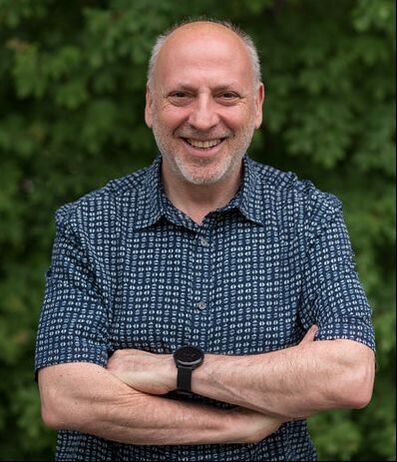
Prof. Dr. Boris Koldehofe is a Full Professor of Distributed and Operating Systems at the Technical University of Ilmenau, Germany since 2023. Previously, he held Full Professor of Computer Networks at the University of Groningen (2020–2023) and served as a Senior Researcher/Lecturer at Technical University of Darmstadt (2014–2020). He is also an Adjunct Professor at TU Darmstadt since 2020. Research Focus: Distributed Systems, Software-defined Networking, Complex Event Processing (CEP), Fog Computing, Privacy Engineering Education: Habilitation in Communications and Distributed Systems (2019), PhD in Computer Science (2005) Research Trends : His 2024–2023 publications emphasize analog/memristor-based network computing , privacy-preserving CEP , and time-sensitive networking . Key themes include programmable data planes , AI-driven infrastructure , and energy-efficient systems . Recent work explores federated learning in vehicular networks and privacy engineering for IoT analytics . Projects & Leadership : He leads the DFG CRC 1053 MAKI (2014–2024) and the Parrot: Privacy Engineering for IoT project (2021–). He serves as principal investigator for dynamic Industry 4.0 communication networks and has managed collaborations with institutions like EPFL, University of Stuttgart, and University of Heidelberg.
Filip Holik is an Associate Professor at the Department of Information Security and Communication Technology at Norwegian University of Science and Technology (NTNU). He works remotely at the University of Glasgow, Scotland, and is actively involved in cybersecurity research for critical infrastructure. Key research areas: eBPF-based programmable data planes, Smart Grid security, Digital Substations, Software-Defined Networking. Major projects: Multidisciplinary Research group on Privacy and data protection (MR PET) , ECoDiS - Engineering and Condition monitoring in Digital Substations , InterSecure - Security of supply in smartgrids . Publications focus on eBPF security frameworks, digital substation threat modeling, and smart grid cybersecurity. His work addresses security of supply in interconnected digital systems and develops adaptive learning mechanisms for attack detection. Technical contributions include developing simulation models for Digital Substations, serving as a Smart Grid Simulation Model developer , and Digital Security instructor for industrial network training programs.
Laurent Vanbever is an Associate Professor at ETH Zürich's Department of Information Technology and Electrical Engineering and heads the Computer Engineering and Networks Lab. His research focuses on networking systems, with a strong emphasis on network security, routing protocols, software-defined networking (SDN), and distributed systems. He explores topics such as BGP convergence, energy-efficient router designs, and mitigating routing attacks on cryptocurrencies. His work bridges theoretical advancements with practical implementations, addressing challenges in network scalability, resilience, and sustainability. Key research areas include network verification, programmable packet processing (P4), and the security of decentralized systems like blockchain. Recent projects analyze transient forwarding anomalies, SDN-based network optimizations, and energy consumption in ISP networks. His contributions to network measurement and control plane innovations have significant implications for Internet architecture and operational practices. Vanbever actively publishes in top-tier conferences/journals and collaborates on open-source networking tools. His lab develops frameworks to enhance network performance and security, such as verifying link loads and mitigating BGP hijacks. Current efforts include exploring energy-efficient network designs and safeguarding cryptocurrency infrastructure against routing vulnerabilities.
Dr. Emir Demirović is an Assistant Professor in the Department of Computer Science at Delft University of Technology (TU Delft), The Netherlands. He leads the Constraint Solving ("ConSol") research group and co-directs the Explainable AI in Transportation Lab ("XAIT") as part of Delft AI Labs. Prior roles: Postdoc at University of Melbourne (2017-2020), PhD at Vienna University of Technology (2017) Collaborations: Civil Engineering, QuTech, and industry partners Funding sources: Dutch national funding agency, TU Delft, VoestAlpine Research Focus: Constraint programming and combinatorial optimisation Explainable AI methods for decision-making systems Integration of optimisation with machine learning Robust/resilient optimisation for industrial applications Optimal decision trees with dynamic programming Quantum computing scheduling techniques Scientific Contributions: Pioneered "Pseudo-Boolean Reasoning" for algorithm certification Developed "Blossom" algorithm for optimal decision trees Advances in "Predict+Optimise" frameworks Created Pumpkin constraint programming solver Bridge between SAT/CP and Machine Learning Awards: First Place, MaxSAT Evaluation 2018+ First Place, ROADEF/EURO 2012 Adoption of methods in Google OR-Tools Collaborations: Research visits to EPFL, ANITI/CNRS, CUHK, Monash University, TU Wien Participated in Dagstuhl seminars, Lorentz workshops, and Simons-Berkeley programme
Fabian Ihle is a Researcher & PhD Student at the Chair of Communication Networks , Department of Computer Science , University of Tübingen . He works on Software-Defined Networking (SDN) , P4 Programming Language , and MPLS Network Actions , focusing on Time-Sensitive Networking and Network Resilience . His research includes data plane programming , network protocol development , and high-speed switching using hardware like Intel Tofino. He has contributed to IETF Internet Drafts and presented at workshops including ReNeSys 2025 and IETF MPLS WG meetings. Academic Background : B.Sc. and M.Sc. in Computer Science from University of Tübingen (2021-2023) His publications address MPLS extensions , BIER-TE , and P4-based tools for traffic generation and runtime control. He actively participates in KuVS workshops and serves as a reviewer for journals like IEEE Transactions on Cognitive Communications .
Mohammad Fotouhi is a Lecturer in Materials and Structures at the James Watt School of Engineering, University of Glasgow, where he joined in September 2019. Prior to his current position, he served as a lecturer at the University of the West of England and led the Hybrid Composites developments in the HiPerDuCT programme (EP/I02946X/1, £6.41m) as a postdoctoral researcher at the University of Bristol. Dr. Fotouhi earned his honored MSc (September 2011) and PhD (December 2015) in mechanical engineering with a focus on manufacturing and production. Both his graduate theses centered on acoustic emission-based damage monitoring of composites and were recognized for their quality in a university-wide assessment. His research expertise spans composites design, manufacturing, and structural integrity. Dr. Fotouhi's current work focuses on generative design, lightweight and smart bio-inspired composites, 4D printed self-morphing structures, and multi-functional materials. He has pioneered innovations in high-performance composite T-joints, pseudo-ductile and notch-insensitive composites, and novel damage detection methodologies. His work bridges fundamental materials science with practical engineering applications, particularly in structural health monitoring systems that can autonomously detect and report damage in composite structures. Analysis of Dr. Fotouhi's recent publications reveals a strong emphasis on structural health monitoring technologies for composite materials. His work integrates multiple approaches including mechanochromic materials that change color when damaged, bio-inspired sensor technologies, acoustic emission monitoring, and machine learning algorithms for damage detection. A significant portion of his research focuses on 'barely visible impact damage' - a critical challenge in composite structures where damage may not be apparent to the naked eye but significantly compromises structural integrity. His work consistently demonstrates the application of advanced manufacturing techniques to create smarter, more reliable composite structures. Member of editorial board: Journal of Composites Science Member of editorial board: Composite Materials: Science publishing group Member of editorial board: SVOA Materials Science & Technology Member of editorial board: Journal of Engineering and Technology Guest editor: Polymers Session chair at international conferences (ICCS and ECCM) Dr. Fotouhi has secured over £450,000 in competitive research funding as Principal Investigator for his innovative work in composite materials. His research program involves collaborations with multiple institutions and industry partners, particularly in the development of next-generation composite monitoring systems. Before entering academia, he gained three years of industrial R&D experience in reverse engineering, manufacturing, CAD/CAM, and material analysis, which informs his practical approach to research problems. His laboratory work focuses on developing and testing novel composite structures with integrated sensing capabilities, particularly using thin-ply hybrid composites and mechanochromic materials. His team works at the intersection of materials science, structural engineering, and sensor technology to create composite systems that can not only withstand operational stresses but also report their own health status in real time.
Karl-Johan Grinnemo is an Associate Professor at Karlstad University's Department of Computer Science, specializing in network quality, 5G, and IoT research. His work focuses on multi-connectivity, network slicing, edge computing, and energy-efficient IoT protocols. Grinnemo has held roles including Senior Lecturer (2014) and tenured position since 2010. He collaborates with institutions like KTH Royal Institute of Technology, RISE, and European universities on EU-funded projects. His research includes the PLANS policy framework for network slicing and machine learning-driven NB-IoT optimization. Grinnemo teaches advanced courses in networking, databases, and machine learning, and advises numerous student projects. He is a Senior IEEE Member and has published over 100 papers on transport protocols and cellular networks. Education: PhD in Computer Science (2006), postdoctoral work at Karlstad University. Research: Policy-based network slicing, edge computing optimization, and 6G/IoT innovations. Awards: Senior Member of IEEE.
Dr. Yiming Qiu is an Assistant Professor at the Department of Computer Science , University of Hong Kong (HKU). Prior to joining HKU, he worked as a Postdoctoral Researcher co-hosted by Prof. Ang Chen at the University of Michigan CSE and Prof. Sylvia Ratnasamy at UC Berkeley EECS. He earned his PhD in Computer Science and Engineering from the University of Michigan, following a three-year PhD journey at Rice University and BS studies at Beijing University of Posts and Telecommunications (BUPT). Current Role: Assistant Professor, University of Hong Kong Postdoctoral Affiliation: University of Michigan CSE, UC Berkeley EECS Education: PhD (University of Michigan), BS (BUPT) Dr. Qiu's research focuses on systems, networking, and security , with a specific emphasis on applying program analysis , formal reasoning , and machine learning techniques to advance cloud automation and datacenter networks . His work bridges theoretical rigor with practical applications in network function offloading, programmable switches, and AI-driven cloud management. Dr. Qiu's recent publications (2025-2020) highlight trends in cloud infrastructure management, AI agents for scientific experimentation, SmartNIC offloading, and formal methods for network security. Key contributions include best paper awards and frameworks for runtime programmable networks. Scientific Awards: Best Paper Award at APNet 2025 Service: Journal reviewer (IEEE/ACM Transactions on Networking, Computer Networks, IEEE JSAC), Conference reviewer (ASPLOS, APSys, WWW, P4 Workshop), NSF Innovation Corps Entrepreneur lead Teaching: Teaching Assistant for Secure and Cloud Computing (Rice COMP 436/536, 2020-2021)
Jonatan Langlet is a postdoctoral researcher at KTH Royal Institute of Technology, affiliated with the Division of Software and Computer Systems (SCS) and the Network Systems Lab (NSLab). Holding a Digital Futures fellowship, his work bridges programmable hardware, network telemetry, and machine learning, with a focus on high-speed monitoring and security technologies embedded in network switches and cards. Education: PhD in Computer Science (2024) from Queen Mary University of London, supervised by Prof. Gianni Antichi Teaching: Distributed Systems (QMUL 2021-2022), Data Structures and Algorithms (Karlstad 2019) Research spans three main areas: In-Network Intelligence : Developing machine learning inference capabilities within programmable switches (P4), optimizing neural networks for hardware constraints Telemetry Systems : Creating RDMA-based telemetry pipelines for zero-CPU, line-rate data collection (Direct Telemetry Access, ACM SIGCOMM 2023) 5G Network Innovation : Designing programmable pipelines for 5G user plane functions (IEEE TMC 2022) His publications in top venues like ACM SIGCOMM, SIGMETRICS, and HotNets demonstrate technical depth in programmable hardware, while community roles (TPC member, reviewer) highlight academic engagement. The Digital Futures fellowship supports his ongoing work on large-scale monitoring technologies.
Dr. William Joseph Spring is a Senior Lecturer in the Department of Computer Science at the University of Hertfordshire, specializing in quantum and classical security systems. He contributes to research in cybersecurity, quantum AI, and stochastic theory while actively developing courses and supervising students in these fields. PhD, MSc, BSc(Hons), PGCE Member of STRI Research Centre and Algorithms, AI & Information Research Groups Active in AQPIDA, IACR, and International Quantum Structures Association Research Interests: Spring's work spans Classical and Quantum-Based Security for Distributed Systems, including intrusion detection, quantum voting protocols, and cybersecurity education. His theoretical research involves Martingale theory, C* algebras, and quantum state modeling in hyperbolic geometry. Recent Article Trends: His publications focus on quantum-driven security solutions, AI integration in education, and network resilience. Key areas include 5G cybersecurity, quantum probability, and pandemic-era pedagogical adaptations. Teaching & Collaborations: Spring has lectured in the UK, India, and the Middle East, covering quantum networks, cryptography, and cybersecurity. He has designed online modules and short courses globally.
Theo Gevers is a Professor of Computer Vision at the University of Amsterdam , leading the Computer Vision Research Group and co-directing public-private labs Atlas Lab (UvA-TomTom) and Delta Lab (UvA-Bosch) . He co-founded successful spin-offs 3DUniversum and Sightcorp (sold in 2022). His research focuses on Computer Vision , Deep Learning , and 3D Reconstruction , with societal impacts in deepfake detection through software like DeepFact and grief therapy applications . He has secured major grants including VICI (1.5 MEuro) , NWO grants (1.3 MEuro, 1.1 MEuro) , and Eurostars Programme (1 MEuro) . His 15 most recent articles emphasize 3D scene reconstruction using Gaussian splatting , intrinsic image decomposition , and LiDAR-based segmentation , with applications in urban planning , autonomous vehicles , and diffusion models . Scientific Awards : VICI Laureate (NWO) Blue Tulip Awards for DeepFact Software Advising & Grants : Supervised 20+ PhD students, secured 10+ major grants totaling >5 MEuro, including FlexCRAFT and Efficient Deep Learning . Collaborated with TomTom , Bosch , Raydiant , and Eurostars Programme . Labs & Teams : Director of Computer Vision Lab , co-director of Atlas Lab and Delta Lab . Leads teams like BBQ 2025 , Delta Lab 2025 , and 3DUniversum 2025 Product Team .
Dr. Selcuk Uluagac is an Associate Professor in the Department of Electrical and Computer Engineering at Florida International University. His research focuses on cybersecurity challenges in emerging technologies including Internet of Things, blockchain systems, and next-generation networks. His work addresses critical security vulnerabilities in modern computing environments, with particular emphasis on IoT device security, ransomware defense, and privacy-preserving technologies. Dr. Uluagac has developed novel frameworks for securing smart home systems, detecting cryptojacking activities, and analyzing security issues in enterprise IoT deployments. Current research explores security implications of Web 3.0 technologies, decentralized identity systems, and privacy aspects of extended reality devices. His contributions include innovative defense mechanisms for ransomware attacks over web browsers, security protocols for 5G networks, and forensic techniques for IoT systems.
Jennifer Rexford is the Gordon Y.S. Wu Professor of Engineering and Provost of Princeton University. She holds a joint appointment in the Department of Computer Science within the School of Engineering and Applied Science. Previously, she served as Chair of the Computer Science Department from 2015 to 2022 and worked at AT&T Labs—Research from 1997 to 2005. She earned her BSE in Electrical Engineering from Princeton University in 1991 and her PhD in Electrical Engineering and Computer Science from the University of Michigan in 1996. Her research focuses on computer networking, with an emphasis on enhancing network security, scalability, and trustworthiness. Key areas include software-defined networking (SDN), network architecture evolution, and mitigating cybersecurity threats. She co-authored influential books such as Web Protocols and Practice and The Real Internet Architecture , and has contributed to foundational research on network telemetry, BGP security, and programmable data planes. Rexford has received numerous accolades, including the ACM Grace Murray Hopper Award, ACM SIGCOMM Lifetime Contribution Award, and IEEE Alexander Graham Bell Medal. She is a Fellow of the ACM and IEEE, and a member of the National Academies. Her recent work addresses challenges like global BGP attack mitigation and scalable video conferencing solutions using SDN principles. As Provost, she oversees academic affairs and continues to advise students, including PhD candidate Sophia Yoo. Her affiliations include the Center for Information Technology Policy (CITP), the Keller Center, and the Princeton Environmental Institute (PEI).
Professor David Abrahams is a leading figure in applied mathematics, currently affiliated with the University of Cambridge as the Professor of Applied Mathematics in the Department of Applied Mathematics and Theoretical Physics and a Professorial Fellow at Corpus Christi College. Previously, he served as Director of the Isaac Newton Institute for Mathematical Sciences (2016-2021) and held the Beyer Chair of Applied Mathematics at the University of Manchester (1998-2016). His research spans wave processes, acoustics, fluid-structure interactions, and interdisciplinary applications in geophysics and finance. His recent work includes public engagement initiatives like the UK Festival of Mathematics and its Applications, and collaborative projects such as the Lost Meteorites of Antarctica Programme. He has made significant contributions to mathematical finance, nonlinear viscoelasticity, and glacier dynamics. BSc (Eng), PhD (Imperial College London) FIMA (Fellow of the Institute of Mathematics and its Applications) FRSE (Fellow of the Royal Society of Edinburgh) Research trends focus on wave propagation, metamaterial design, and geophysical modeling. His scientific awards include the Royal Society Wolfson Research Merit Award (2013-2016) and Royal Society Industry Fellowship. He collaborates with institutions like the University of Manchester's Mathematics of Waves and Materials Group and the International Centre for Mathematical Sciences. Professor Abrahams has over 40 years of experience in wave theory and its applications, with extensive publications in acoustics, elasticity, and interdisciplinary mathematics. He continues to lead research on Antarctic meteorite entrapment and debris-covered glacier melting mechanisms.
Chris Misa is a post-doctoral researcher at the University of Oregon's Department of Computer Science, affiliated with the Oregon Networking Research Group and Oregon Cybersecurity Center of Excellence. His work bridges programmable network hardware, virtualization, and security research. PhD in Computer Science (University of Oregon, mentor: Rejaie & Durairajan) Key research: hardware-accelerated network telemetry, DDoS defense via ZAPDOS, cloud networking Publications in top venues: USENIX NSDI, IEEE Security & Privacy, IEEE Transactions on Networking His research focuses on optimizing network measurement systems by combining programmable switch hardware, machine learning, and innovative algorithmic approaches. Recent projects like ZAPDOS demonstrate his emphasis on addressing high-volume DDoS threats through prefix-level traffic analysis and dynamic resource allocation. Current work spans runtime telemetry, multi-cloud management, and optical network security solutions. Scientific awards include: Ripple Faculty Fellowship Ripple Graduate Fellowship NSF grant CNS 1850297 (as team member) As a postdoc, he contributes to sponsored research collaborations with Broadcom and leads academic advising for junior researchers. His projects integrate network testbeds, open-source tools (BONSAI), and interdisciplinary approaches to network science.