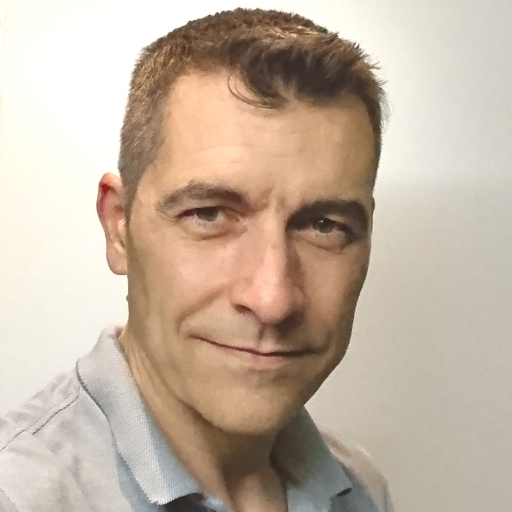
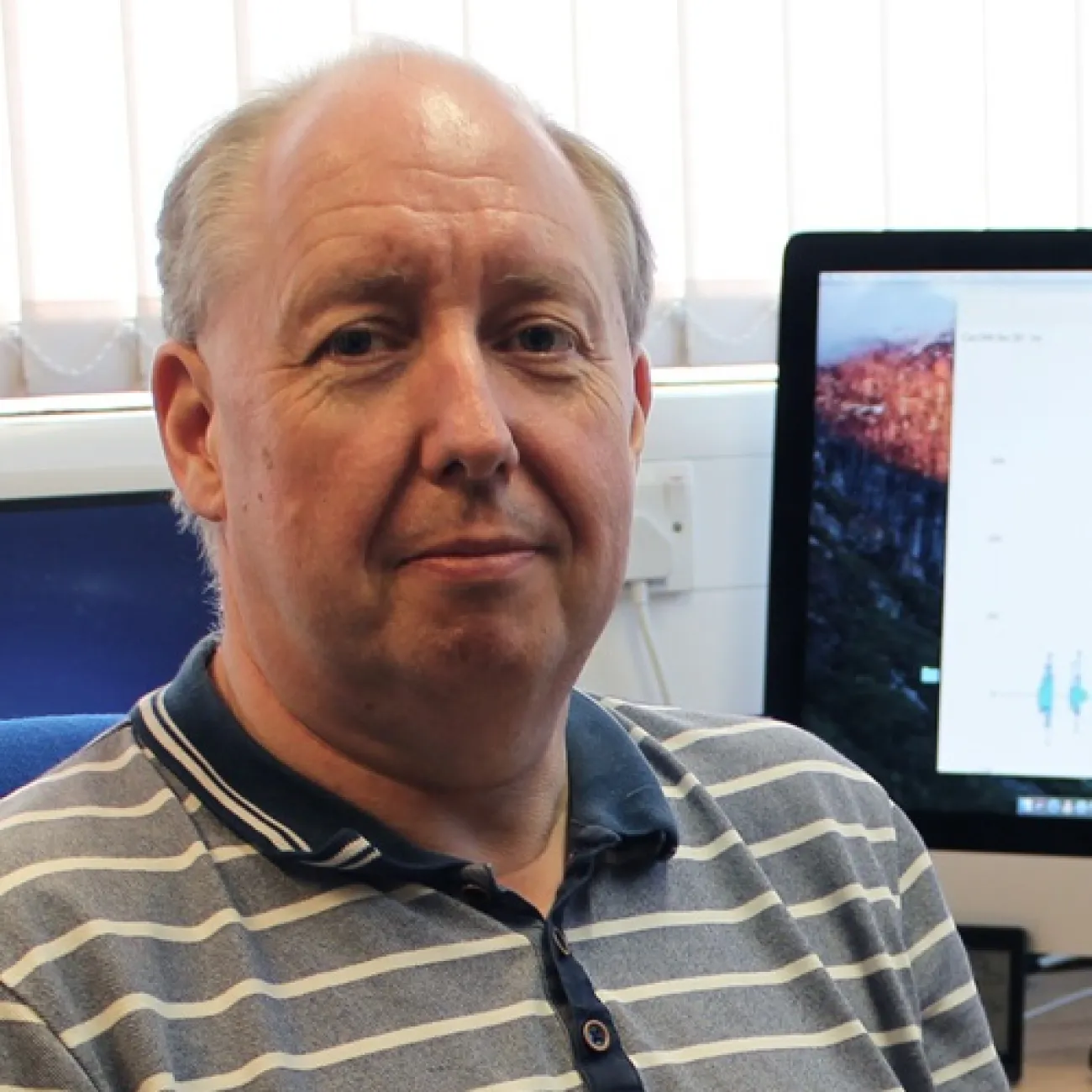
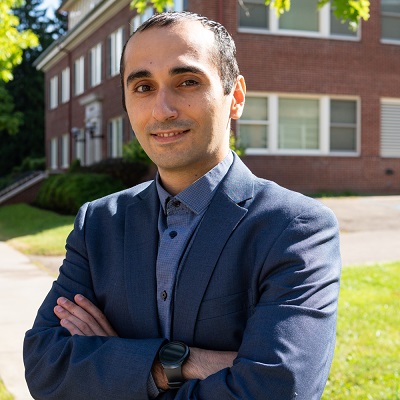
Simon Jouet is Research Fellow at the University of Glasgow's School of Computing Science specializing in software-defined networking and network security. Research focuses on: Programmable data planes using eBPF technology Distributed anomaly detection systems Network function virtualization DDoS mitigation strategies Cloud data center resource management Publications show emphasis on SDN/NFV technologies (70%) and network security (30%), with recent work expanding into operational technology resilience. Developed Glasgow Network Functions framework for virtual network function management. Research addresses challenges in cloud computing infrastructures and critical network protection during disasters. Collaborates with industry partners through European research projects on resilient networking.
Alessio Sacco is a Fixed-term Assistant Professor at the Department of Control and Computer Engineering (DAUIN) at Politecnico di Torino, Italy. He's affiliated with the NETGROUP - Computer Networks Group and actively contributes to research in computer networks, machine learning, and software-defined networking. Current academic position: Assistant Professor Research group: NETGROUP Key collaborations: Guido Marchetto, Flavio Esposito Research Interests focus on: Computer networks and communications Dynamic programming and reinforcement learning Machine learning applications in network management Software-defined networks Cybersecurity and privacy analysis Intelligent Internet of Things systems Recent Publications demonstrate expertise across: Network security verification (PathSafe) AI-driven agricultural optimization (FertilizeSmart) Cross-layer congestion control (Flecto) Reinforcement learning for computing continuum scheduling Explainable AI for network transparency (ClearNET) Multi-agent exploration systems (MARS) Scientific Contributions include: Commercial research on network security and anomaly detection ERC sector expertise in distributed systems and machine learning Teaching in computer engineering programs since 2019 Advising involves: Supervising Federico Rinaudi (ongoing) Co-supervising Doriana Monaco (ongoing)
Sean Choi is an Assistant Professor in the Department of Computer Science and Engineering at Santa Clara University. He holds a Ph.D. in Electrical Engineering from Stanford University (2020), M.S. in Computer Science from Stanford (2013), and a dual B.S. in Computer Science and Business Economics & Management from Caltech (2011). His research focuses on programmable network hardware, including smartNICs, and their applications in machine learning, blockchain, and cloud computing. Education: Ph.D. in Electrical Engineering, Stanford University (2020) M.S. in Computer Science, Stanford University (2013) B.S. in Computer Science & Business Economics, California Institute of Technology (2011) Research Interests: Programmable Network Switches, SmartNIC Acceleration, Cloud Infrastructure, Serverless Computing, Blockchain Optimization, and Privacy-Preserving Machine Learning . Recent Work: Explores leveraging programmable hardware for low-latency machine learning inference, blockchain scalability via NIC-assisted consensus, and privacy-preserving federated learning through homomorphic encryption offload. His NSF-funded project develops ultra-low-latency ML systems using programmable networks. Awards: NSF CRII 2023 Award Hewlett Packard Enterprise Grant Labs/Teams: Leads research on network programmability and hardware acceleration within Santa Clara University's School of Engineering. Collaborates with industry on data center network optimization and cloud infrastructure projects.
Dr. Nancy Samaan is an Associate Professor at the School of Electrical Engineering and Computer Science, University of Ottawa. She holds a Ph.D. in Computer Science from the University of Ottawa (2007), along with B.Sc. and M.Sc. degrees in Computer Science from Alexandria University, Egypt (1998 and 2001). Her research focuses on wireless communication, QoS in networks, autonomic networks, and policy-based management, with over 20 publications in refereed journals and conferences. Key achievements include the 2008 NSERC University Faculty Award and recognition for her 2006 paper highlighted in IEEE Wireless Communication magazine. She is an active IEEE member and contributes to advancing network management through innovative solutions like programmable data-plane architectures and machine learning integration. Her recent work emphasizes machine learning applications in networking, programmable data planes, and QoS optimization, reflecting a trend toward intelligent and adaptive network systems. Despite no explicitly listed grants or labs, her publications indicate significant contributions to network autonomy and resource management in dynamic environments.
Filip Holik is an External Associate Professor at the Department of Information Security and Communication Technology at NTNU (Norwegian University of Science and Technology). His expertise spans cybersecurity, communication networks, software-defined networking, and smart grid technologies. He contributes to programmable data plane research and has roles in supervision support and teaching digital security practices. Competencies include Cisco systems, cybersecurity frameworks, and smart grid simulation model development. No specific scientific awards or grants are listed in the provided text. Advising activities are noted but without student names. His work intersects with practical applications in digital security instruction and network infrastructure.
Ralf Kundel is a Professor of Computer Science at the University of Applied Sciences Darmstadt, Germany. He holds a Ph.D. (2022) and dual M.Sc./B.Sc. degrees (2015-2017) from TU Darmstadt. His research focuses on network programmability, hardware acceleration using FPGAs and P4-programmable switches, Quality of Service (QoS), Time Sensitive Networking (TSN), and Network Intrusion Detection Systems (NIDS). He leads the Adaptive Communication Group (ACS) since 2021, emphasizing network data plane programmability. Key projects include BMWK's Real Lab Drive 4.0 (TSN in industrial networks), Deutsche Telekom's Dynamic Networks (SDN and FPGA-based carrier networks), and BMBF initiatives like Open 6G Hub (disaggregated O-RAN architectures) and AI-NET-PROTECT (machine learning for network security). He contributed to open-source frameworks like P4-UPF (5G UPF implementation), P4-CoDel (AQM), and P4STA (network testing). Publications span over 25 peer-reviewed works and five patent applications, with recent focus on high-performance network evaluation and programmable hardware applications.
Paolo Giaccone is a Full Professor at the Department of Electronics and Telecommunications (DET) of Politecnico di Torino. He serves as Course Coordinator for the Master's Degree in Communications Engineering and contributes to teaching in the College of Electronic, Telecommunications and Physics Engineering. His research focuses on cloud computing, 5G networks, programmable data planes, WiFi-based crowd monitoring, and network softwarization . His recent publications highlight edge computing, microservice orchestration, and resource optimization in cloud and network systems. Collaborations with researchers like Carla Chiasserini and Holger Karl dominate his work. He has received honors such as the Open badge Learning to Teach (L2T) and served as Associate Editor for IEEE/ACM Transactions on Networking. He advises PhD candidates including Antonio Calagna and Madhura Adeppady, and leads projects like SmartShires and TrialsNet for next-generation networks.
Dr. Chaminda Hewage serves as Interim Associate Dean for Research and Reader (Associate Professor) in the Cardiff School of Technologies at Cardiff Metropolitan University. He leads the Computer Security Programme and holds a Ph.D. in Multimedia Communications from the University of Surrey (2009) and a B.Sc. in Electrical and Information Engineering from the University of Ruhuna (Sri Lanka). His research focuses on cybersecurity, data protection in AI/ML systems, blockchain applications, and multimedia communication security. He has authored over 50 peer-reviewed publications and edited major books on emerging technologies' privacy challenges. Education Background: B.Sc. (Hons) Electrical & Information Engineering, University of Ruhuna (2004) Ph.D. in Multimedia Communications, University of Surrey (2009) Postgraduate Certificate in HE Teaching & Learning, Kingston University (2014) Research Interests: Data protection mechanisms in AI/ML Cybersecurity frameworks for Industry 4.0 Blockchain for public and private sector applications Metaverse privacy and security Edge AI and embedded system security Regulatory compliance in digital transformation Recent Contributions: Co-edited the 2024 Springer volume Data Protection: The Wake of AI and Machine Learning , published influential works on Kubernetes security, V2X communication cryptography, and metaverse privacy. Active in international conferences including C3AI and ICCS. Awards & Recognition: Gold Medal for Academic Excellence (2004), University of Ruhuna ORS Scholarship (2005), HEFCE Fellow of the Higher Education Academy Grants & Collaborations: Leads research projects on cybersecurity for SMEs, smart city infrastructure, and digital transformation. Engages with industry partners through Cardiff Met's innovation networks. Advises on UK government cyber policy initiatives. Labs/Teams: Oversees the Cybersecurity Research Group and collaborates with the ZERO2FIVE Food Industry Centre for IoT applications. Active in multidisciplinary teams addressing Industry 5.0 challenges.
Enio Kaljic is an Assistant Professor in the Department of Telecommunications at the Faculty of Electrical Engineering, University of Sarajevo. He holds a PhD in Telecommunication Engineering (2019) from the same institution, following a Master's (2010) and Bachelor's (2008). His career includes roles as a Teaching Assistant (2010–2014) and Senior Teaching Assistant (2014–2019) at the same department. Education: Bachelor's in Telecommunication Engineering, Faculty of Electrical Engineering, University of Sarajevo (2008) Master's in Telecommunication Engineering, Faculty of Electrical Engineering, University of Sarajevo (2010) PhD in Telecommunication Engineering, Faculty of Electrical Engineering, University of Sarajevo (2019) Research Interests: Kaljic focuses on advancing next-generation networks through software-defined networking (SDN), data plane programmability, and security. His work includes reconfigurable communication systems, FPGA-based hardware-software co-design, and quantum cryptography integration in 5G systems. Key areas include: Quantum Cryptography for 5G/6G Networks Data Plane Flexibility and Security Hardware-Accelerated Network Solutions Blockchain Applications in Telecommunications Notable Projects & Grants: Leading the NATO-funded Quantum Cybersecurity in 5G Networks (QUANTUM5) (2021–2024) Developing blockchain-based D2D communication protocols for 6G networks (2022) EU-funded BENEFIT project (2017–2020) to modernize telecommunications education Awards: Best Paper Award at the Seventh International Conference on Networking and Services (ICNS’11) Labs & Infrastructure: Active in the Department’s Reconfigurable Radio Communication Systems Lab , contributing to FPGA-based hardware-software co-design and SDN experimentation. Collaborates on multidisciplinary telecom labs funded by federal and cantonal ministries.
Géza Szabó is a Researcher at Ericsson Research in Budapest, Hungary. His work focuses on advanced networking solutions for industrial and robotic systems, particularly in 5G/6G integration, network resource management, and AI-driven automation. He has extensively contributed to optimizing wireless resource allocation in industrial IoT environments and enhancing network performance through programmable data planes. Key areas: Network Co-Design, Industrial Automation, Reinforcement Learning Notable collaborations: József Peto, Sándor Rácz, Rafael Antonello His research bridges theoretical advancements with practical implementations, addressing challenges in real-time systems and quality-of-control (QoC) for cyber-physical processes. He has pioneered solutions for multipath channel switching in ROS2 and 3GPP frameworks, and developed adaptive traffic reduction techniques using SDN/NFV architectures. Recent work includes the FATHER project (Factory on the Road) exploring agile industrial production cells and the application of digital twins for network-physical system synchronization. His publications span top venues like IEEE Access, GLOBECOM, and ICC, reflecting his deep engagement with both academic and industry-relevant networking challenges.
Antonio Carzaniga is a Full Professor and founding member of the Faculty of Informatics at Università della Svizzera italiana (USI), where he has been active since 2004. Previously, he served as an Assistant Research Professor at the University of Colorado at Boulder from 2001 to 2007. He holds a Ph.D. in Computer Science and a Bachelor’s degree in Electronic Engineering from Politecnico di Milano. Full Professor, Faculty of Informatics, Università della Svizzera italiana (2004–Present) Assistant Research Professor, Department of Computer Science, University of Colorado at Boulder (2001–2007) Ph.D. in Computer Science, Politecnico di Milano Bachelor’s in Electronic Engineering, Politecnico di Milano His research spans distributed systems and software engineering, with a strong focus on content-based addressing networks, publish/subscribe systems, middleware, software fault tolerance, and verification. He has pioneered work in information-centric networking and developed the Siena project, a scalable publish/subscribe service. His recent work extends into programmable networks, GPU-accelerated matching, and performance annotations for cloud systems. The 15 most recent publications highlight a consistent trajectory in scalable, high-performance networking and adaptive software systems. Key themes include content-based communication, packet subscriptions, information-centric networking, and leveraging redundancy for fault tolerance and testing. His work bridges theoretical foundations with practical implementations, often involving system-level software and performance evaluation. Best Paper Award, ACM SIGCOMM Workshop on Information-Centric Networking (ICN'13) Carzaniga has advised multiple graduate students, including Michele Papalini, Koorosh Khazaei, and Daniele Rogora, and has collaborated on funded research projects in distributed systems and networking. He has contributed to software development through projects like the Siena Fast Forwarding engine and the Synthetic Workload Generator. His service includes organizing workshops and contributing to major conferences in software engineering and computer systems. He leads research initiatives such as Siena and Content-Based Networking, focusing on scalable, decentralized communication infrastructures. His lab has developed key tools for evaluating publish/subscribe performance and implementing high-speed forwarding algorithms.
Emilia Ndilokelwa Weyulu is a Ph.D. student and researcher in the Internet Architecture department at the Max Planck Institute for Informatics, Saarbrücken, Germany, with concurrent enrollment in Computer Science at Universität des Saarlandes. Her work focuses on internet congestion control mechanisms and transport protocol analysis within the Saarland Informatics Campus ecosystem. Her academic journey includes: Ph.D. in Computer Science (2019–present) at Universität des Saarlandes and Max Planck Institute for Informatics Master of Informatics (2016–2018) at Tokyo University of Information Sciences, thesis: Asymmetric RTS/CTS for Exposed Node Reduction Master of Computer Science (2014–2017) at Namibia University of Science and Technology, thesis: A Rate Adaptive and Forward Error Correction Scheme for Video Streaming in 802.11b WLANs Bachelor of Science in Computer Science and Statistics (2006–2011) at University of Namibia Weyulu's research centers on congestion control heterogeneity in internet infrastructure, with emphasis on BBRv3 protocol evaluation, in-band service routing, and network-assisted congestion feedback. Her work bridges theoretical protocol design with empirical measurement in public internet environments, extending to wireless networking challenges including ad hoc WLAN optimization and video streaming reliability. She employs cross-layer approaches to address exposed node problems and throughput limitations in wireless networks. Analysis of her 2024 publications reveals a concentrated focus on next-generation congestion control evaluation, particularly BBRv3's real-world performance across diverse network conditions. Her research combines protocol design with large-scale internet measurement, addressing both wired infrastructure challenges and wireless network constraints through innovative routing and feedback mechanisms. Weyulu has served as tutor for Data Networks courses during Winter 2018 and 2020 terms, and for the Hot Topics in Data Networks Seminar in Summer 2020 at Universität des Saarlandes. She also acted as student scribe for the CoNEXT 2020 TPC meeting, demonstrating active engagement in academic community service. As a core member of the Internet Architecture research group at Max Planck Institute for Informatics, she contributes to projects analyzing internet traffic patterns, transport protocol evolution, and network measurement methodologies within the institute's collaborative research environment on the Saarland Informatics Campus.
Professor Tony Bird is a member of the astronomy group within the School of Physics and Astronomy at the University of Southampton. He currently serves as Deputy Head of School (Education) and previously held roles as Director of Programmes for Physics and Astronomy. His research focuses on instrumentation and data analysis for high-energy astrophysics, particularly through his role as a co-investigator on the ESA's INTEGRAL mission's IBIS telescope. He leads the compilation of its all-sky survey catalogues and explores applications of astronomical technology in medical imaging and security systems. Research Projects: - Developed novel instrumental techniques for coded-aperture imaging. - Led Knowledge Transfer Partnerships with Symetrica for security tech. - Co-led SPRINT programs advancing space technology innovation. - Active in next-generation space telescope design initiatives. Teaching: Teaches Medical Physics and Applied Nuclear Physics courses, and oversees mission design components of the Tenerife Field Trip for astronomy students. Supervises multiple PhD students in physics and related fields. Labs/Teams: Part of the Southampton Theory Astrophysics and Gravity (STAG) Research Centre and collaborates with interdisciplinary teams on detector development and data analysis challenges.
Dr. Damu Ding is a researcher specializing in network security and programmable data planes, currently affiliated with the Department of Computer Science and Engineering at the University of Bologna. With a PhD completed in 2021 from the same institution, Dr. Ding has established a robust research profile focused on leveraging programmable network devices for security applications and network monitoring. Dr. Ding's research interests center around network security mechanisms, particularly DDoS detection systems implemented directly within programmable switches using the P4 language. Their work bridges theoretical network security concepts with practical implementations in modern data plane programmable networks. Key areas of investigation include network traffic entropy analysis, flow cardinality estimation, volumetric attack detection, and in-network machine learning applications. Analysis of Dr. Ding's publication record from 2019-2024 reveals a consistent research trajectory focused on pushing security functionality into the network data plane. The publications demonstrate increasing sophistication in leveraging programmable switches for security applications, moving from basic heavy-hitter detection to complex DDoS mitigation systems and in-network machine learning. This research sits at the intersection of networking, security, and systems, with strong practical implications for modern network infrastructure. Dr. Ding has established productive collaborations with researchers including Marco Savi, Domenico Siracusa, and Noa Zilberman, resulting in numerous publications in top networking venues including IEEE Transactions on Network and Service Management, IEEE Transactions on Dependable and Secure Computing, and INFOCOM. Their work has been published in both journal and conference formats, demonstrating impact across the networking research community. As a researcher who completed their PhD relatively recently (2021), Dr. Ding represents an emerging voice in the network security and programmable networking space, with a growing body of work that addresses critical challenges in modern network security architectures.
Garegin Grigoryan is an Assistant Professor at Alfred University 's School of Mathematics & Computer Science, focusing on Computer Networking , Network Security , and Software-Defined Networking (SDN) . His research emphasizes programmable data planes , energy-aware routing , and IoT security , with active engagement in IEEE and ACM conferences. Education : PhD in Computer Science from Rochester Institute of Technology (2020) Recent publications highlight data center optimization , forwarding table verification , and IoT security frameworks , reflecting his expertise in SDN and network programmability. Grigoryan also holds patents in network virtualization and RDMA optimization. He contributes to the academic community as a reviewer for journals like IEEE/ACM Transactions on Networking and participates in conferences such as IEEE HPSR and ACM HPDC . His work bridges theoretical advancements with practical implementations in networking and cybersecurity.