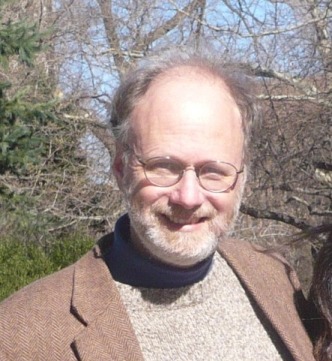
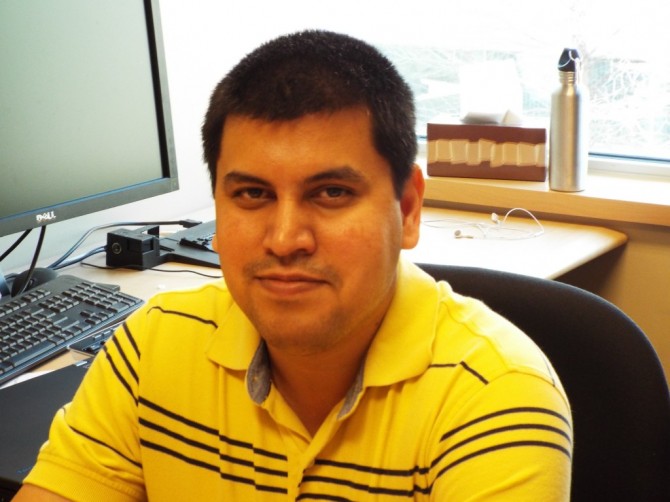
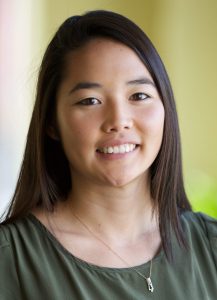
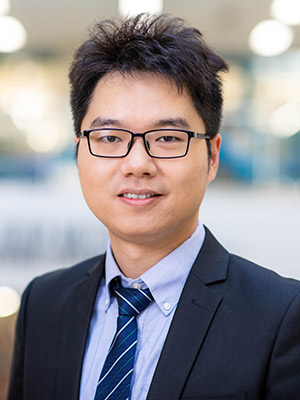
Fei Ding is a Senior Researcher at National Renewable Energy Laboratory (NREL) specializing in Power Systems Engineering within the Grid Modernization Research Topic. Her work focuses on integrating renewable energy into electrical grids, optimizing distributed energy resources, and enhancing grid resilience. Education: PhD in Electrical Engineering from Case Western Reserve University Her research spans: Distribution grid modeling and control strategies Grid-edge resource optimization for reliability and cybersecurity Photovoltaic hosting capacity analysis Recent publications emphasize: AI-driven voltage regulation with neural networks Microgrid formation for grid restoration Data fusion techniques for outage detection Award highlights: NREL Chairman’s Award (2018) NREL President's Award (2020) NREL Distinguished Member of Research Staff (2021) She actively contributes to IEEE as a Senior Member and leads projects developing advanced distribution management systems.
Prof. Dr. Stefanie Hellweg serves as a Full Professor for Ecological Systems Design at the ETH Zürich , Department of Civil, Environmental and Geomatic Engineering. She is Deputy Head of the Institute of Environmental Engineering and leads groundbreaking research at the intersection of industrial ecology, life cycle assessment, and circular economy systems. PhD in Environmental Engineering (ETH Zürich, 2000) Industrial Engineering Degree (Karlsruhe University, 1996) Her research develops advanced methodologies for environmental impact assessment of products and technologies, focusing on: Life Cycle Assessment (LCA) with correlated uncertainty modeling Circular economy implementation in chemical and energy sectors Industrial symbiosis optimization for heat and nutrient flows Urban wastewater systems redesign for resource recovery Chemical pollution analysis in plastic materials Key publication trends reveal expertise in: Hybrid wastewater treatment systems Energy-efficient greenhouse cultivation Exergy analysis for sustainability metrics Machine learning applications in environmental modeling Policy-relevant industrial ecology studies She actively participates in global sustainability initiatives as: President of the International Society of Industrial Ecology (ISIE) Member of UN Environment's International Resource Panel Editorial board member for leading environmental journals
Assoc Prof Ying Chen is an Associate Professor at the National University of Singapore , affiliated with the Department of Mathematics, Asian Institute of Digital Finance (as Academic Director of PhD Program in Digital FinTech 2022–2024), Risk Management Institute (2019–2023), Department of Statistics and Data Science (2019–2023), and Department of Economics (2018–2023). She also contributes to NUS Graduate School for Integrative Sciences and Engineering since 2016. Research Interests include: AI forecasting and quantum computing for finance Nonstationary time series and functional data analysis Energy data analytics and precision medicine Network autoregression and spatial-temporal modeling Explainable AI and citation metrics Portfolio liquidation and market-making algorithms Article Trends demonstrate expertise in: Adaptive forecasting for gas flows and electricity prices Blockchain network influence detection Quantum computing applications in finance Functional autoregression with mixed predictors Credit rating fairness and explainability High-resolution implied volatility modeling Scientific Awards include: ISI Elected Member (2016–) International Statistical Institute Council (2023–2027) IASC Scientific Secretary (2017–2019, 2023–2025) Advisory roles for EU FIN-TECH and xAIM projects
Frede Blaabjerg is a Professor at Aalborg University (AAU Energy) , affiliated with the Faculty of Engineering and Science . Since 1998, he has pioneered power electronics research in applications such as wind turbines , photovoltaic (PV) systems , reliability engineering , and Power-2-X technologies. Education : PhD in Electrical Engineering (1995, Aalborg University) Honorary Degrees : Honoris Causa at University Politehnica Timisoara (2017) and Tallinn Technical University (2018) His research focuses on power electronics control , system optimization , and reliability for renewable energy and electric mobility . Recent work includes grid-forming converters , virtual synchronous generators , and smart EV charging systems. Key publication trends span 15+ years , with over 3,733 peer-reviewed articles and 900+ journal papers in power electronics , renewables , and energy storage . Notable book series: Control of Power Electronic Converters and Systems (4 volumes, Elsevier). Scientific Awards : 46 IEEE Prize Paper Awards 2020 IEEE Edison Medal 2019 Global Energy Prize 2014 IEEE William E. Newell Power Electronics Award Leadership Roles : Editor-in-Chief, IEEE Transactions on Power Electronics (2006–2012) Chairman, Danish Council for Research and Innovation Policy (2020–) President, IEEE Power Electronics Society (2019–2020)
Vaishak Belle is a Reader in Logic and Learning at the School of Informatics, University of Edinburgh, and serves as Director of Research and Innovation at the Bayes Centre (40% position). His academic career focuses on the critical intersection of artificial intelligence, formal logic, and machine learning systems. His research spans multiple domains within AI: Neurosymbolic AI integration approaches Logic-based machine learning frameworks Ethics, fairness, and responsibility in AI systems Generative AI and its societal impact Robotics with advanced reasoning capabilities Causal modeling and probabilistic reasoning Belle leads a research laboratory dedicated to advancing neurosymbolic AI, which combines the explainability of symbolic systems with the learning capabilities of neural networks. His recent work has explored abduction in logical frameworks, formal languages for AI safety, and the relevance of logic for general-purpose AI systems. He has made significant contributions to bridging the gap between theoretical AI foundations and practical applications. His publications demonstrate consistent focus on creating AI systems that can reason formally while learning from data, with applications ranging from robotics to ethical decision-making frameworks. His research addresses fundamental challenges in developing trustworthy, explainable AI that can operate safely in complex environments. Beyond technical research, Belle is actively engaged in AI education through executive programs on AI leadership and ethics, and has contributed to public understanding through his children's book "The girl and the robot" which explores human-robot relationships and emotional projection onto artificial agents. He maintains an active presence in the international AI research community, regularly participating in major workshops including Dagstuhl seminars on neurosymbolic AI, and collaborating with researchers across disciplines from computer science to philosophy.
Howard Elman is a Professor in the Department of Computer Science at the University of Maryland, with affiliations to the Institute for Advanced Computer Studies (UMIACS) and as an Affiliate Professor in the Department of Mathematics. His research spans numerical analysis, computational fluid dynamics, and uncertainty quantification, focusing on iterative solvers for partial differential equations. Education: PhD in Computer Science, Yale University (1982); BA in Mathematics, Columbia University (1975); Stuyvesant High School (1971) Elman's research integrates Scientific Computing with Numerical Linear Algebra , Computational Fluid Dynamics , and Uncertainty Quantification . His work addresses Stochastic Galerkin Methods , Reduced-Order Modeling , and Low-Rank Approximations for PDEs with random data. Recent publications emphasize Surrogate Models and Deep Learning in Bayesian inverse problems. His scientific awards include SIAM Fellowship (2009) and roles as Associate Editor for journals like Mathematics of Computation and SIAM Journal on Scientific Computing . He served as SIAM Editor-in-Chief (1998-2004) and Vice President for Publications. Contact: helman@umd.edu | Office: 4210 Iribe Center | Courses: AMSC/CMSC 460 Computational Methods
Jason Ritt is an Associate Professor of Brain Science (Research) and Scientific Director of Quantitative Neuroscience at the Robert J. and Nancy D. Carney Institute for Brain Science, Brown University. He holds affiliations with the Data Science Institute and collaborates across disciplines on quantitative research methods. Education : B.S., M.A., and Ph.D. in Neuroscience from Boston University (1997–2003). Research : Focuses on neural processing during active sensing and neuroengineering for neurostimulation. Combines electrophysiology, optogenetics, and theoretical approaches in rodent models. Develops closed-loop systems for studying sensory neural prosthetics and brain-machine interfaces. Key areas include synaptic diversity, neurocontrol algorithms, and sensory restoration. Teaching : Instructs NEUR 2100 NeuroPracticum, integrating hands-on neuroscience research training.
Vibhav Gogate is a Professor and Associate Head of Research at University of Texas at Dallas, specializing in machine learning and artificial intelligence. His research focuses on probabilistic graphical models, statistical relational learning, and integrating deep learning with graphical models. Professor Gogate has received numerous awards including the NSF CAREER Award (2017), Outstanding Researcher Award (2022, 2017), and Best Paper awards at top AI conferences. His research funding includes projects from NSF and DARPA. Education: PhD, University of California, Irvine MS, University of Maine BS, University of Mumbai Recent Publications: His research spans probabilistic inference, tractable models, and neural network approaches for efficient reasoning, with publications in NeurIPS, AAAI, UAI, and AISTATS. Recent work focuses on scalable inference methods and explainable AI systems for complex domains. Research Funding: Secured over $8M in grants from DARPA and NSF for projects in explainable AI and probabilistic reasoning. Teaching: Regularly teaches graduate and undergraduate courses in Machine Learning, Artificial Intelligence, and Advanced Statistical Methods.
William Powrie is Professor of Geotechnical Engineering at the University of Southampton and former Dean of the Faculty of Engineering and the Environment (2010-2018). He authored the seminal textbook 'Soil Mechanics: Concepts and Applications' and chairs HS2's Independent Geotechnical Expert Panel. Research focuses on geotechnical challenges in transportation infrastructure including railway track behavior, earthworks, tunneling, and groundwater control. His work applies soil mechanics principles to complex materials like landfilled waste and railway ballast. As Convenor of the UK Collaboratorium for Research on Infrastructure and Cities (UKCRIC) and leader of UK Rail Research and Innovation Network (UKRRIN), he coordinates national infrastructure research initiatives. Recent publications emphasize experimental and numerical investigations of infrastructure performance, particularly railway geotechnics and sustainable construction practices. Awards and honors include Fellowship of the Royal Academy of Engineering (2009), British Geotechnical Association Medal (2017, 2021), and invited lectureships worldwide. Current research projects receive support from EPSRC, Network Rail, and HS2. Advises multiple PhD students including Akeem Faniran, Benjamin Robert Lee, and Tracey Anne Najafpour Navaei. Leads the iPACT network developing infrastructure solutions for coastal communities.
Constantinos Daskalakis is the Armen Avanessians (1982) Professor in the MIT Schwarzman College of Computing and the Department of Electrical Engineering and Computer Science (EECS). He joined MIT in 2009 and is a member of the Computer Science and Artificial Intelligence Laboratory (CSAIL), affiliated with the Laboratory for Information and Decision Systems (LIDS) and the Operations Research Center (ORC). His research focuses on theoretical computer science, with emphasis on game theory, machine learning, and high-dimensional statistics. Education: Ph.D. in Computer Science (not explicitly stated, but implied by tenure and awards). Research interests include computational complexity of Nash equilibria, multi-item auctions, machine learning algorithms, and causal inference. His work bridges game theory, economics, probability, and statistics, with applications in AI and healthcare. Key contributions include resolving long-standing problems in computational game theory and developing efficient methods for statistical hypothesis testing. He has been recognized with the 2018 Nevanlinna Prize, ACM Grace Murray Hopper Award, and the Kalai Game Theory Prize. Affiliations: CSAIL, LIDS, ORC, and the Foundations of Data Science Institute. Active in multi-agent learning, bias mitigation in data, and generative models.
Miyuki Hino is an Assistant Professor in the Department of City and Regional Planning and an Adjunct Assistant Professor in the Environment, Ecology, and Energy Program at the University of North Carolina at Chapel Hill. She holds a Ph.D. in Environment and Resources from Stanford University and a B.S. in Chemical Engineering from Yale University. Her research focuses on climate hazards, governance, and public policy , with emphasis on equitable adaptation to climate change. Key areas include sea level rise impacts, flood risk on property markets, and managed retreat strategies. She has conducted extensive work on floodplain development policies, household relocation programs, and community resilience frameworks. Dr. Hino's interdisciplinary approach integrates environmental science, urban planning, and social equity . She collaborates with academic and municipal partners, such as the Center for Urban and Regional Studies and Annapolis, MD local governments, to develop actionable solutions for climate adaptation. Her work bridges technical analyses (e.g., sensor networks, machine learning) with policy design to ensure both effectiveness and justice in climate responses. Recent projects emphasize preventing future 'trapped households' by analyzing zoning policies and market dynamics that drive risky development. She advocates for climate-smart growth strategies to balance economic needs with environmental safety, while addressing disparities in vulnerability across communities. Her research has been featured in Science Advances , Nature Climate Change , and interdisciplinary journals. She actively engages with policymakers to translate findings into practical measures, such as equitable buyout programs and floodplain management reforms.
Cheng Zhang is an Assistant Professor in the Department of Computer Science & Engineering at Texas A&M University. His research focuses on computer vision, machine learning, artificial intelligence, and cyber-physical systems. He holds a Ph.D. from The Ohio State University (2022), an M.S. from Beijing University of Posts and Telecommunications (2016), and a B.Eng. from Tianjin University (2013). His work emphasizes high-fidelity 3D garment generation, text-to-image systems, and addressing challenges in long-tailed data for instance segmentation. Key achievements include the 2023 Best Paper Finalist at ICCV and the 2022 Ohio State University Graduate Research Award. Selected publications span top venues like ACM SIGGRAPH Asia, ECCV, and ICCV, showcasing contributions to generative models, view synthesis, and calibration techniques in computer vision.
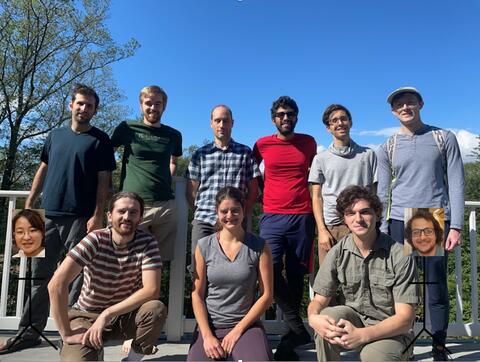
Benjamin Machta is an Assistant Professor of Physics at Yale University, affiliated with the Department of Physics and the QBio Institute. He holds a BS from Brown University and a PhD from Cornell University, followed by a postdoctoral fellowship at Princeton University. His research focuses on applying theoretical physics to understand biological systems, particularly leveraging statistical physics and information theory to study biological membranes near critical points and the energetic constraints of biological signaling. Education: BS in Physics (Brown University), PhD in Physics (Cornell University), Postdoc at Princeton University (Lewis-Sigler Theory Fellow). Research Interests include: membrane criticality, phase transitions in biological systems, information-theoretic limits in organism function, and energy dissipation in biological processes. His work often bridges theoretical models with experimental data, such as collaborations with Sarah Veatch’s lab on membrane phase behavior. Publications highlight themes like membrane criticality, protein phase separation, and energy constraints in signaling. His group’s current projects explore cochlear mechanics, thermodynamic control in biological systems, and the role of criticality in sensory systems. Awards: 2019 Simons Investigator Award. Lab Affiliations: QBio Institute and Department of Physics at Yale, located in YSB-C164. Group members include postdocs Isabella Graf and Michael Abbott, and graduate students Asheesh Momi, Mason Rouches, and others.
Zerina Kapetanovic is an Assistant Professor in the Department of Electrical Engineering at Stanford University, with courtesy appointments in Computer Science and Geophysics. She leads the S4 Lab, focusing on low-power wireless systems, IoT, and environmental/healthcare applications. Her work includes innovations in passive communication, energy-efficient sensing, and satellite connectivity. Education: PhD in Electrical Engineering (University of Washington, 2022) Postdoctoral Research: Microsoft Research (Networking and Research for Industry Groups) Research interests span wireless communication, IoT systems, and energy-efficient hardware. Notable projects include Johnson noise thermometry, satellite backscatter (SARLink), and carrier-free RFID communication. Awards include the Terman Faculty Fellowship and Yang Research Award. Advises doctoral students in IoT and wireless systems. Teaches courses on wireless sensing, engineering investigation, and special studies in EE. Active in grants and collaborations, including the Wu Tsai Human Performance Alliance. Labs/Teams: S4 Lab (Smart Sensing Systems) and involvement in FarmBeats IoT agriculture platform.
Finlay Maguire is an Assistant Professor jointly appointed in the Faculty of Computer Science and the Department of Community Health & Epidemiology at Dalhousie University. He leads the Maguire Lab, which develops data-driven methods to address health and social crises through genomic epidemiology and interdisciplinary health data science. He is also affiliated with the Shared Hospital Laboratory, Sunnybrook Research Institute, and multiple national and international public health consortia including PHA4GE, CanCOGeN, and IRIDA. PhD: University College London / Natural History Museum (2016) MA: University of Oxford (2011) Donald Hill Family Fellowship, Dalhousie University (2021) Dr. Maguire's research focuses on two main areas: genomic epidemiology of infectious diseases and interdisciplinary health data science collaborations . His work in genomic epidemiology includes developing bioinformatics and machine learning tools to study antimicrobial resistance (AMR) and SARS-CoV-2 dynamics, often in collaboration with public health agencies. His broader health data science work addresses issues such as online radicalization, healthcare access for refugees, and autism-related language use, combining computational methods with social science. His recent publications (2023–2025) reflect a strong trend in pathogen genomics , AMR , zoonotic spillover , and computational social science . He has published on novel coronaviruses in bats, SARS-CoV-2 animal models, invasive Group A Streptococcus, and sociological analyses of incel communities. Much of this work involves tool development (e.g., ArgNorm, Pathoplexus) and data standardization (e.g., PHA4GE metadata standards). Finalist, 2024 Discovery Awards (Emerging Professional) 2023 President’s Research Excellence Award for an Emerging Investigator, Dalhousie Finalist, 2023 Discovery Awards (Emerging Professional) Funding from CIHR, NSERC, Genome Canada, SSHRC, BMGF Dr. Maguire actively mentors graduate students and postdocs, including PhD candidates in Computer Science and MSc students in Community Health & Epidemiology. He has secured major training grants such as the CIHR Health Research Training Platform and the Canadian One Health Training Program for Emerging Zoonoses. He also contributes to capacity-building initiatives like MicroResearch in Ghana and Kenya. The Maguire Lab is embedded in a rich network of collaborations, including the CARD database, Public Health Agency of Canada, Canadian Food Inspection Agency, and Sunnybrook Health Sciences Centre. The lab emphasizes open science, reproducible research, and interdisciplinary training, as seen in the development of open-source tools and participation in international consortia.