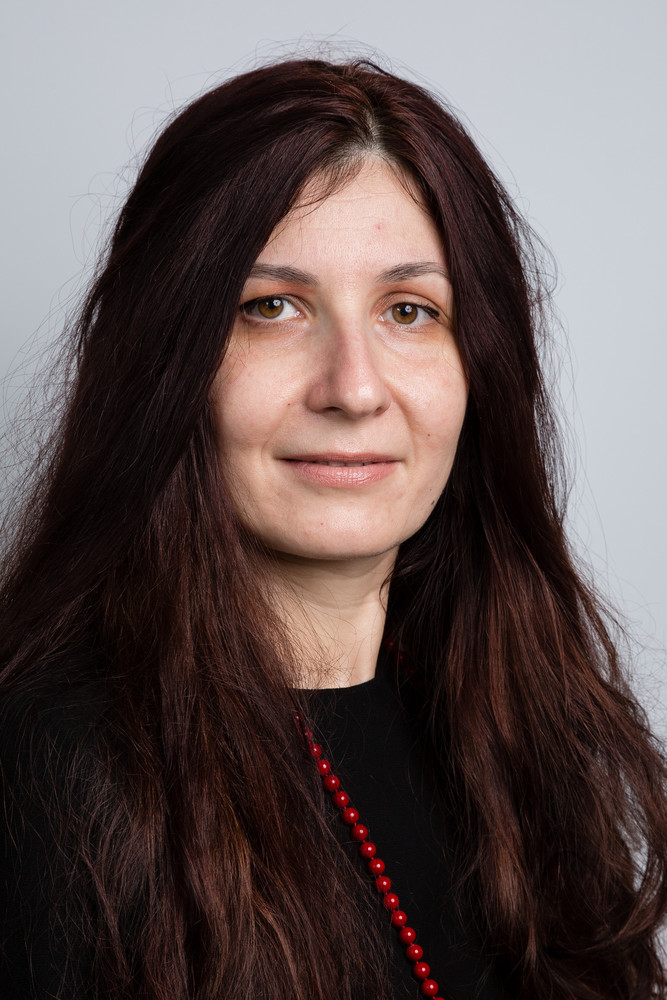
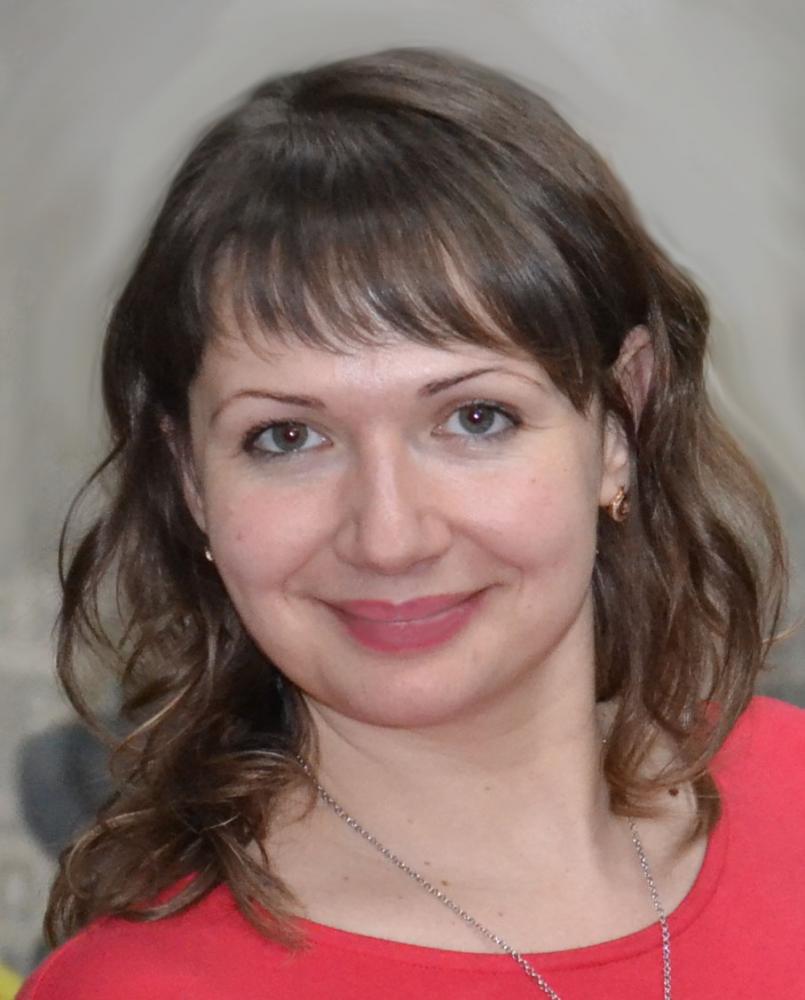
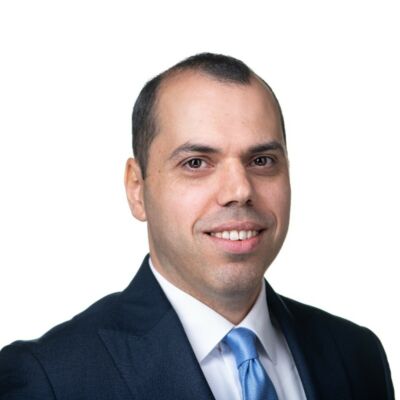
Clementina Moldovan is an Associate Professor in the Department of Environmental Engineering and Geology at the Faculty of Mining, Politehnica University of Timişoara. Her research focuses on environmental safety, industrial emissions, and explosion protection systems in hazardous environments. She has contributed extensively to understanding coal combustion byproducts' environmental impacts, air quality monitoring, and electrical equipment safety standards in explosive atmospheres. Her work integrates computational modeling (e.g., CFD simulations for indoor air pollution) with geospatial analysis (e.g., hot spot mapping of pollutants in Craiova). Key research areas include: 1) Development of GHG intensity metrics for industrial processes, 2) Thermal safety of equipment in explosive environments, and 3) Heavy metal contamination in atmospheric particulates. Dr. Moldovan also investigates radiation dosimetry in soils and the application of natural materials like zeolites for pollution control. Recent studies address hydrogen safety protocols and the adaptation of safety standards to emerging energy technologies. Her publications emphasize practical applications of research to industrial safety compliance, environmental policy formulation, and sustainable development strategies for mining regions. Current projects explore synergies between computational fluid dynamics and regulatory frameworks for hazardous environment equipment certification.
Hannes Grassegger is an award-winning investigative reporter, economist, and technologist who teaches at the University of Basel. He is the founder of Polaris, a digital platform for village journals, and has held fellowships at the Sandberg Institute and Woodrow Wilson Center in Washington DC. As a member of the World Economic Forum's Global Experts Community and the Global Future Council on Media, Sports and Entertainment (2020/2021), he engages with global digital policy issues. His research explores the societal impact of technology, with key interests including: Digital networks and social media's influence on democracy Artificial intelligence and data ownership economics Investigative journalism methodologies Disinformation ecosystems and microtargeting Media innovation and sustainable journalism models Grassegger's publications critically examine technology's role in politics, notably through works on climate communication, right-wing populism, and digital campaigning. His 2019 pamphlet combines performance art with climate reporting, while his political analyses reveal systemic vulnerabilities in digital democracies. He leads the Polaris project developing a 'half-fare ticket for news' infrastructure and pioneered a COVID-19 information network using WhatsApp groups with 80+ international experts. These initiatives demonstrate his approach to collaborative problem-solving for media challenges.
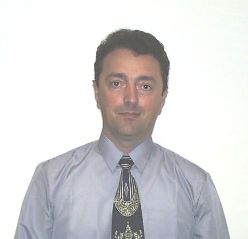
Prof. Dan Cristea is a faculty member at the Faculty of Computer Science, Alexandru Ioan Cuza University (UAIC), specializing in Artificial Intelligence and Natural Language Processing. He holds a PhD and is a corresponding member of the Romanian Academy. His research focuses on computational linguistics, knowledge representation, and historical document deciphering, with notable projects like DeLORo for old Cyrillic texts and EUROLAN Summer Schools. He has supervised numerous students in AI and NLP projects, including systems for question-answering, sentiment analysis, and agent-based models. His work bridges theoretical linguistics with practical applications in digital heritage preservation and multilingual technologies. Education: PhD (not explicitly stated in text), but his academic rank implies doctoral qualifications. Research Interests: AI applications in NLP, discourse analysis, computational linguistics, and cultural heritage digitization. Projects include MappingBooks for geographical text navigation, CoBiLiRo for bimodal corpora, and Sentimatrix for sentiment analysis. He collaborates internationally on corpora like EuReCo and has developed tools for dependency parsing and semantic annotation. Key Achievements: Corresponding member of the Romanian Academy Lead developer of the Corpus of Contemporary Romanian Language (CoRoLa) Pioneered AI-driven historical document transcription systems Grants and Collaborations: Involved in EU-funded projects like i-Librarian and i-Publisher. Collaborates with institutions globally on NLP and corpus linguistics. Labs/Teams: Director of the NLP-Group@UAIC-FII and heads the DeLORo project team.
Олексій Феліксович Кузькін є професором кафедри транспортних технологій Транспортного факультету Запорізької політехніки. Здобув науковий ступінь доктора технічних наук у 2020 році за дисертацією "Теоретичні основи організації транспортних процесів у системах міського масового пасажирського транспорту". Має понад 25-річний досвід науково-педагогічної діяльності, починаючи з 1995 року. Основні наукові інтереси професора Кузькіна охоплюють методи дослідження операцій у системах міського, вантажного та пасажирського транспорту, організацію пасажирських перевезень та міські транспортні системи. Він читає курси з загального транспорту, дослідження операцій у транспортних системах, пасажирських перевезень та міських транспортних систем. Його наукова діяльність представлена понад 50 публікаціями, включаючи 2 патенти та 2 навчальні посібники. Останні наукові роботи зосереджені на аналізі транспортної інфраструктури під час епідемій, цифровій трансформації громадського транспорту, дослідженні пасажиропотоків та моделюванні транспортних потоків у місті Запоріжжі. Бейдж Міністерства освіти і науки України "За наукові та педагогічні досягнення", 2020 Диплом Верховної Ради України, 2020 Почесне свідоцтво Запорізької обласної державної адміністрації, 2019 Бейдж "Відмінник освіти України", 2011 Почесне свідоцтво Міністерства освіти і науки України, 2008 Професор Кузькін активно займається науковою роботою зі студентами та аспірантами, проводить дослідження в галузі транспортних систем, організації пасажирських перевезень та оптимізації транспортних процесів. Його роботи мають практичне значення для удосконалення транспортної інфраструктури міста Запоріжжя та регіону.
Iryna Mykhailivna Kilymnyk is an Associate Professor at the Department of Mathematics, Faculty of Mechanical Engineering, Zaporizhzhia Polytechnic National University. With a distinguished career spanning nearly five decades since joining the university in 1976, she has established herself as a respected academic in both mathematical education and applied mechanics, maintaining active research and teaching activities through 2024. Education: Diploma with honors from Dnipropetrovsk State University, Faculty of Mechanics and Mathematics (1976), specialty: Applied Mathematics Candidate of Technical Sciences (equivalent to PhD) with thesis 'Object-oriented modeling of the thermal stress-strain state of the "casting - metal mold" system' (1997) Research Interests: Dr. Kilymnyk specializes in the mechanics of deformable solid bodies and the methodology of teaching mathematics in higher education. Her work bridges theoretical mathematics with practical engineering applications, particularly in electromagnetic processes simulation and power transformer modeling. She has developed innovative approaches to mathematical modeling of complex physical systems, with a focus on industrial applications. Her research has contributed significantly to understanding thermal stress-strain states in casting processes and electromagnetic field behavior in industrial equipment, with publications spanning mathematical theory, engineering applications, and interdisciplinary medical research. Publication Trends: Over her extensive career, Dr. Kilymnyk has published more than 50 scientific papers, with 9 indexed in Scopus. Her recent work (2023-2024) shows continued productivity with publications spanning mathematical education textbooks, electromagnetic modeling, and interdisciplinary medical applications. Her research demonstrates a consistent focus on applying mathematical principles to solve practical engineering problems while maintaining strong contributions to mathematics education methodology. The breadth of her work reflects both deep expertise in core mathematical disciplines and the ability to apply these principles across diverse fields including electrical engineering, materials science, and medical applications. Awards and Honors: Honorary Diploma of the Ministry of Education and Science of Ukraine (2000, 2004) Zaporizhzhia Polytechnic National University Badge 'For Impeccable Work' (3rd degree, 2008) Zaporizhzhia Polytechnic National University Badge 'For Impeccable Work' (2nd degree, 2015) Badge of the Ministry of Education and Science of Ukraine 'Distinguished Educator of Ukraine' (2020) Zaporizhzhia Polytechnic National University Badge 'For Impeccable Work' (1st degree, 2024) Academic Service: Dr. Kilymnyk serves as responsible for the educational and methodological direction of the Department of Mathematics and is a member of the university staff conference. She has maintained an active research profile while contributing significantly to curriculum development and mathematical education at the university. Her scientific contributions include 1 patent, 3 textbooks, and over 50 scientific papers, with consistent publication activity well into her later career years, demonstrating remarkable scholarly dedication and productivity.
Volodymyr Valentynovych Vasilevsky is a Senior Lecturer at Zaporizhzhia Polytechnic National University's Faculty of Electrical Engineering. Holding a Candidate of Technical Sciences degree, his career has focused on electromechanical systems and power transformer insulation analysis since joining the university in 2012. Education: Master's in Electrical Machines and Devices (Zaporizhia National Technical University, 2011) Research: Specializing in insulation resource modeling, neural network applications for transformer diagnostics, and lifecycle management of power equipment Key Contributions: Developed layered models for insulation resource consumption, automated evaluation systems for transformer diagnostics, and defect distribution dynamics models Contact: Email lisses@ukr.net , Office 520a, Zhukovsky St. 64
Professor Kateryna Ivanivna Antonyuk serves in the Department of Economics and Customs at National University Zaporizhzhia Polytechnic's Faculty of Business Technologies and Economics, holding the academic rank of Professor with Doctor of Economic Sciences degree. Her 15-year academic career since 2011 encompasses teaching innovative international business models, global marketing, and anti-corruption disciplines while leading research on consumption security systems. Her educational foundation includes: Higher National Institute for Strategic Studies (2020) - Doctoral studies in Economics Kyiv National Economic University (2008) - Postgraduate studies in Economics and Enterprise Management Zaporizhia National Technical University (2005) - Honors diploma in Marketing Professor Antonyuk's research centers on consumption security across institutional hierarchies, with expanding focus on wartime economic resilience. Her work examines how global marketing frameworks adapt to geopolitical instability, particularly analyzing Ukraine's integration challenges with EU regulatory systems. Recent scholarship investigates sustainable development intersections with consumption security, revealing critical linkages between environmental protection and economic stability during conflict. Analysis of her 15 most recent publications shows dominant focus on Ukraine's post-war reconstruction through seven key lenses: consumption security frameworks (32% of works), international trade adaptation (24%), sustainable development integration (18%), digital transformation (12%), entrepreneurship ecosystem rebuilding (9%), and environmental economics (5%). This distribution reflects urgent national priorities while maintaining theoretical rigor in economic security. Her scientific recognition includes: National University 'Zaporizhzhia Polytechnic' Gratitude (2023) for student business idea mentorship Zaporizhzhia Regional State Administration Award (2023) for youth scientific project development As DAAD project 'DILLUGIS' coordinator, she facilitates German-Ukrainian academic mobility while co-managing Economic Fundamental Initiative's 'Economic Literacy for All' program. Her grant leadership focuses on practical solutions for wartime economic continuity, including dual education systems and anti-corruption frameworks. International engagements span Estonia's Business School, East Bavarian Technical University, and EU-funded summer schools on sustainability. Professor Antonyuk actively shapes policy through Ukraine's Association of International Economists, contributing to national discussions on consumption security standards and EU integration pathways. Her current work establishes methodological frameworks for measuring war-induced economic damage while developing reconstruction models for enterprise ecosystems.
Augustin Constantinescu is a Lecturer at Transilvania University of Brașov, Romania, affiliated with the Faculty of Mechanics and the Department of Automotive, Transportation and Industrial Engineering. Holding a Doctor of Engineering in Technical Sciences (2010) from Transilvania University, his academic foundation combines mechanical engineering with advanced mathematical modeling capabilities. His educational background includes a PhD in Mechanical Engineering with specialization in Automotive Engineering, Road Transport Systems, Management and Legislation in Transport, and Tractors and Trailers. His areas of competence encompass road vehicles, tractors and agricultural machinery, finite element analysis, and agricultural machinery expertise. Constantinescu's research spans multiple disciplines with particular emphasis on dynamical systems theory, nonlinear dynamics, and mathematical physics. His work demonstrates remarkable interdisciplinary breadth, connecting plasma physics with epidemiological modeling and transportation engineering. Recent publications reveal significant contributions to epidemic modeling, including applications to the COVID-19 pandemic in Romania, alongside his longstanding research in plasma physics and nonlinear dynamical systems. His publication record shows consistent output since the 1990s, with recent work focusing on bifurcation theory, stability analysis, and multistability phenomena in 3D dynamical systems. The research demonstrates strong mathematical rigor with practical applications across epidemiology, plasma physics, and engineering systems. Constantinescu maintains active scholarly communication through two professional email addresses: gusti_constantinescu@yahoo.com and augustin.constantinescu@edu.ucv.ro. His academic profile reflects a dedicated researcher who bridges theoretical mathematics with practical engineering applications, particularly in transportation systems and plasma physics.
Mihai Mocanu is a Lecturer at the University of Craiova, affiliated with the Faculty of Automatic Control, Computers and Electronics. His work spans machine learning, educational data mining, and medical imaging technologies. Research Interests: He focuses on developing interpretable machine learning models, particularly using decision trees for educational data mining and GIS analysis. His work also includes designing e-learning systems with personalized recommendation workflows and enhancing engagement through data-driven approaches. Notable Contributions: Mihai has pioneered segmentation techniques for 3D medical imaging, created adaptive learning systems with stacked models, and explored social network impact on education. His research integrates pedagogical agents and usability evaluation frameworks in e-learning platforms.
Cristian Mihaescu is a Lecturer at the Department of Computer Science and Engineering (DCTI), University of Craiova, within the Faculty of Automatic Control, Computers and Electronics. He is actively involved in teaching and research related to machine learning, distributed systems, and educational data mining. Teaching: Data Structures and Algorithms, Parallel and Distributed Algorithms, Machine Learning, Distributed Systems Engineering Research Focus: Machine learning applications in education, social network analysis, and compiler optimization Technological Interests: Microservices, data mining, and intelligent system design
Ana Maria Chirosca is a Lecturer at the University of Galati, focusing on maritime engineering, climate risk assessment, and computational fluid dynamics (CFD). Her work bridges hydrodynamics, renewable energy, and maritime transport analysis, with a strong emphasis on European seas. Her research explores: Climate Impact on Navigation: Assessing hydrological and meteorological risks on the Danube and Mediterranean/Black Seas. Maritime Engineering: Studying ship behavior (e.g., container ships, DTC hulls) and propulsion systems. Renewable Energy: Analyzing offshore wind/wave potential and green hydrogen technologies for sustainable shipping. Recent publications highlight trends in maritime climate modeling, CFD validation, and adaptive strategies for shipping under climate change. While no awards are listed, her work demonstrates technical expertise in integrating engineering and climate science for maritime solutions.
Prof. Dr. Ing. Alexandru Isar is a Full Professor at the Department of Communications, Faculty of Electronics and Telecommunications, Politehnica University of Timișoara. He holds academic ranks since 1990 (Adjunct Professor), 1995 (Associate Professor), and 1999 (Full Professor). His research focuses on signal processing, wavelet analysis, and medical imaging. He has advised 5 Ph.D. students and currently supervises 2 doctoral candidates. Isar has published extensively in IEEE journals and authored books on time-frequency representations and network security. **Education**: Ph.D. in Engineering (1993), supervised by Prof. Eugen Pop. Completed postdoctoral research at Telecom Bretagne, France (2003). **Grants**: European Space Agency-funded projects (2013-2017) and national grants (IDEI 2009-2011). **Research Directions**: Introduced time-frequency representations and wavelet theory applications. **Notable Contributions**: Inventions in ultrasonic control systems (1987), development of the Hyperanalytic Wavelet Transform (2008), and SAR/SONAR image denoising algorithms. **Administrative Roles**: Deputy Dean (2001-2004), Department Director (2012-2020). **Collaborations**: European Space Agency projects, international conferences (Brest, Bordeaux), and peer reviews for IEEE journals. His work bridges theoretical signal processing with practical applications in healthcare and telecommunications.
Corina Botoca is an Associate Professor at the Politehnica University of Timișoara, Faculty of Electronics and Telecommunications. She joined the university in 1988 as an assistant, progressing to works manager (1996–2006), and has held her current position since 2006. Her research focuses on neural networks applied to signal processing, telecommunications, and medical diagnostics, with notable contributions in nonlinear systems and image analysis. She has authored/co-authored books on neural networks and signal processing techniques, and her work includes pioneering studies on prostate cancer prediction using neural networks (accuracy exceeding 95%). Botoca has received the ETC Excellence Award in 2004 and 2006. She serves on multiple academic committees, including quality assurance and accreditation, and has led significant grants such as the PN II bilateral project on facial expression recognition (2009–2010). Her teaching innovations include courses on cellular neural networks and data communications. She has established research labs like B712 (Data Communications) and B219 (Selected Topics on Communications Networks), advancing interdisciplinary research in medical imaging and telecommunications. Her publications span over three decades, with key articles in IEEE and WSEAS journals. Notable works include 'Nonlinear complex channel equalization using a radial basis function neural network' (2004) and 'Cellular neural network processing of CEUS examination' (2016). Botoca’s administrative roles include membership in the Department Council and leadership in quality assurance initiatives, reflecting her dual commitment to research and institutional governance.
Sorin Anagoste is a Professor and Vice Dean for Academic Affairs at FABIZ, part of the Bucharest University of Economic Studies. His primary affiliation is with the Bucharest Business School (BBS), where he contributes to academic leadership and faculty governance. He holds a PhD and focuses on interdisciplinary research at the intersection of business strategy, technology, and innovation. His academic career spans over two decades, with a strong emphasis on advancing education and research in digital transformation, artificial intelligence, and entrepreneurship. Prior roles include leadership in mergers and acquisitions studies, transformational leadership research, and Lean Six Sigma methodologies. Research Interests: Artificial Intelligence applications in business decision-making Digital transformation strategies Entrepreneurship dynamics across generations Impact of AI on political and economic systems Knowledge dynamics in organizational contexts Recent work emphasizes the societal implications of AI, including election influence via LLMs, post-pandemic consumer behavior, and Romania's economic interdependencies through Leontief matrix analysis. He has authored over 35 articles on topics ranging from robotic process automation to sustainable development. Professional Activities: Academic leadership in business education reform Consultancy on digital strategy for enterprises Founder of BBS's strategic frameworks for chatbot implementation
Professor Marian-Gabriel Hâncean holds a faculty position at the University of Bucharest's Faculty of Sociology and Social Work. His research focuses on network science, particularly social networks analysis, organizational sociology, and the interplay between societal structures and health outcomes. He leads the GraphNets research team, which explores applications ranging from migration corridors to climate impact on disease spread (e.g., the COSMOS project). Research Interests: Social Network Analysis, Sociology of Organizations, Organizational Behavior, Public Health, Complex Systems Key Projects: COSMOS Project (climate & mobility's role in pandemic spread), migration corridor analysis, and global health policy studies His work bridges mathematical modeling with sociological theory, addressing contemporary challenges like pandemic dynamics and organizational efficiency. Recent collaborations include transnational social field sampling and multinational pandemic response strategies.