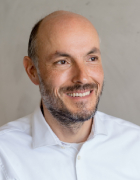
Jeremy Blackburn is an Associate Professor in the Department of Computer Science at Binghamton University. He co-founded the International Data-driven Research for Advanced Modeling and Analysis Lab ( iDRAMA Lab ) and leads its Binghamton satellite. His research focuses on large-scale measurement and analysis of social media, particularly the behavior of malicious actors and disinformation campaigns.
Prof. Dr. Wolfgang Nejdl is a Professor at the Institute for Data Science within the Faculty of Electrical Engineering and Computer Science at Leibniz University Hannover. He serves as Executive Director of the L3S Research Centre and Leibniz Forschungszentrum Inclusive Citizenship. Web Science Information Retrieval Artificial Intelligence Deep Learning His recent research focuses on AI applications in medicine , multimodal data fusion , and ethical AI systems . Projects include CAIMed (AI in Causal Medicine) and DAISEC (AI & Cybersecurity). His publications span conferences like AAMAS, WWW, and SIGIR. Notable awards include membership in the National Academy of Science and Engineering (acatech) . Former students hold positions at institutions like Stanford, TU Dresden, and ETH Zürich. Current projects involve climate resilience AI , federated learning for healthcare , and quantum-inspired data science .
Dr. Jing Wang is a Professor in the Department of Bioinformatics at Southern Medical University's School of Medicine, with extensive research at the intersection of artificial intelligence and biomedical applications. Her work demonstrates strong cross-disciplinary collaboration across medical institutions, engineering departments, and computer science research groups. Her primary research interests include Artificial Intelligence in Healthcare , Biomedical Engineering , and Traditional Chinese Medicine Informatics , with recent publications showing particular expertise in medical imaging analysis, diagnostic assistance systems, and clinical decision support. Her work spans both theoretical algorithm development and practical clinical implementations. Analysis of her 15 most recent publications (2025-2026) reveals a strong trend toward clinically applicable AI systems, with approximately 60% of publications focused on medical diagnostics and treatment support systems. The remaining publications demonstrate expertise in industrial applications of computer vision and fundamental AI research. Her work shows consistent collaboration with both domestic Chinese institutions and international research groups. Notable scientific contributions include: Development of 'Tianyi', a traditional Chinese medicine language model for clinical practice Innovations in bionic soft robotics for rehabilitation assistance Novel approaches to medical image analysis for cancer diagnostics Her research program appears well-funded with consistent publication output across high-impact journals in biomedical engineering, AI, and medical informatics. Current work suggests strong emphasis on translating AI research into clinical practice, particularly in diagnostic support systems and rehabilitation technology.
Meeyoung Cha is a Professor at KAIST and Scientific Director of the Max Planck Institute for Security and Privacy (MPI-SP) in Bochum, Germany. Her research focuses on Data Science for Humanity, encompassing computational social science, misinformation dynamics, and human-machine interaction. She holds a PhD in Computer Science from KAIST (2008) and previously served as Chief Investigator at the Institute for Basic Science and Visiting Professor at Facebook. Her work addresses societal challenges such as poverty mapping, fraud detection, and AI ethics. Key achievements include best paper awards and recognition like the Hong Jin-Ki Creator Award (2024) and Test-of-Time Awards (ACM IMC 2022, AAAI ICWSM 2020). Research interests span AI ethics, social media analysis, and interdisciplinary applications of machine learning. Notable projects include modeling climate risks via satellite imagery and analyzing chatbot interactions' societal impacts. She leads the MPI-SP's Data Science for Humanity Group, mentoring over 20 students across PhD and postdoc programs. Education: PhD in Computer Science (KAIST, 2008) Affiliations: MPI-SP (Germany), KAIST Key Awards: Hong Jin-Ki Creator Award, Korean Young Information Scientist Award, Test-of-Time Awards Her publications bridge computational methods with societal issues, including climate modeling, protein engineering, and algorithmic fairness. Current projects explore geospatial AI for economic development and ethical AI design frameworks.
Stefania Degaetano-Ortlieb is an Associate Professor of English Linguistics and Corpus Linguistics at Saarland University's Department of Language Science and Technology. She serves as Principal Investigator for the Collaborative Research Center (SFB 1102) 'Information Density and Linguistic Encoding,' leading Project B1 on diachronic information density in English scientific writing (17th century-present). Her interdisciplinary work bridges computational methods with sociolinguistics, focusing on register variation, language change, and digital humanities. Research interests center on text mining, data analytics, and probabilistic modeling of language variation. Key areas include: Diachronic evolution of scientific registers and linguistic densification Information-theoretic approaches to language efficiency Computational sociolinguistics and register diversification AI applications in humanities education (e.g., ChatGPT integration) Her publications show a strong trend toward quantitative diachronic analysis, with recent work emphasizing: interpretable AI models for linguistic change detection; propagandistic narrative analysis in conflict zones; and multi-word expression dynamics in scientific discourse. Cross-disciplinary collaborations frequently intersect with history, psychology, and media studies. Awards include the Fellowship Excellence Program for Young Female Scientists (2015-2018). Current grants: EU Horizon MSCA Doctoral Network 'CASCADE' (€521K to UdS, 2024-2027) Data-Pin Project for AI in education (€50K, 2023-2024) SFB 1102 Project B1 (€595K, 2022-2026) Advises PhD candidates in the EU CASCADE project on computational semantic change. Leads a research team exploring Russian media narratives, personality modeling in LLMs, and multi-word expressions. Directs teaching modules integrating AI tools for humanities students.
Rainer Gemulla is a Professor of Practical Computer Science I: Data Analytics at the University of Mannheim, heading the Data and Web Science Group within the School of Business Informatics and Mathematics. He has been a W3-Professor at the University since 2014, following positions as a senior researcher at Max-Planck-Institut für Informatik (2010-2014) and postdoctoral researcher at IBM Almaden Research Center (2008-2010). His research focuses on machine learning with structured and semi-structured data, particularly knowledge graphs, and developing efficient systems for data-intensive processing. Professor Gemulla's research spans multiple areas including machine learning with structured data (relational data), machine learning with semi-structured data (multi-relational graphs), combining these approaches with unstructured knowledge (text), and developing efficient, scalable methods for data-intensive processing. His work bridges theoretical foundations with practical implementations, as evidenced by numerous open-source software projects including LibKGE, DistKGE, and AdaPM. His recent publications show a strong trend toward knowledge graph embeddings, parameter server architectures, and efficient training methods. The research demonstrates increasing focus on scalability challenges in graph learning, with particular attention to hyperparameter optimization, dynamic resource allocation, and benchmarking methodologies. His work consistently addresses the practical challenges of implementing machine learning systems at scale. Distinguished Reviewer Award at SIGMOD, 2025 Distinguished PC Member Award at EDBT, 2023 Outstanding Reviewer Award at NeurIPS, 2021 Junior-Fellow of the Gesellschaft für Informatik (GI), 2013 IBM's 2011 Pat Goldberg Memorial best paper award Best paper of NIPS 2011 Biglearn workshop Professor Gemulla actively mentors PhD students and has supervised numerous successful doctoral candidates. His leadership extends to administrative roles including Head of examination board for MSc Business Informatics since 2017, and previously serving as Study dean of the WIM faculty (2016-2019) and CIO of University of Mannheim (2022-2024). His research is supported by grants including AWS in Education Research Grant Award (2013) and Google Focused Research Award (2011). The Data and Web Science Group develops multiple open-source software projects including LibKGE (knowledge graph embedding library), DistKGE (multi-GPU training), AdaPM (adaptive parameter manager), Lapse (parameter server), and various tools for information extraction and sequence mining. The group maintains active collaborations with industry partners and academic institutions worldwide, particularly in the areas of knowledge graph research and scalable machine learning systems.
Prof. Dr. Heiko Paulheim is a Professor of Data Science and currently serves as University Vice President at the University of Mannheim. He leads the Data and Web Science Group (DWS), which focuses on Web Data Mining, Knowledge Graphs, and Semantic Web technologies. His research group contributes to open source knowledge graphs like DBpedia and develops new knowledge graphs such as WebIsALOD and DBkWik. As of October 1, 2024, he has limited teaching capacity due to his vice presidential duties. Prof. Paulheim's research interests span Knowledge Graphs, Semantic Web, Web Data Mining, Machine Learning, and Natural Language Processing. His work particularly focuses on knowledge graph refinement, embedding techniques (notably RDF2vec), and applications in various domains including news recommendation, biomedical informatics, and environmental monitoring. His group develops practical tools like the RapidMiner Linked Open Data Extension and RDF2vec for knowledge graph applications. His recent publications demonstrate a strong focus on knowledge graph embeddings, with particular attention to RDF2vec variants, applications in news recommendation systems, biomedical data integration, and spatio-temporal knowledge graphs for environmental monitoring. His work bridges theoretical advances in knowledge representation with practical applications across multiple domains. Among his notable achievements are a nomination for the Best Paper Award at CAiSE 2025 and securing an Open Science Grant for the SpatialBenchRAG project. His research has significant impact in both academic and industrial contexts, with multiple papers accepted at top conferences like ISWC and ESWC. Prof. Paulheim has supervised numerous PhD students including Alexander Brinkmann and Michael Schlechtinger, and has led several research projects including the DFG Project Mine@LOD, State of BW Project SyKoW², and BMBF Project DS4DM. His group maintains strong industry connections with partners like SAP AG, Daimler AG, and IDS.
Dongwook Kim is affiliated with the Korea Advanced Institute of Science & Technology (KAIST) as a faculty member in the Department of Business and Technology Management under the College of Business. His research spans multiple domains including machine learning, robotics, signal processing, and biomedical engineering. Key contributions in Computer Vision (CNN-based semantic segmentation, 3D point cloud analysis) Significant work in Hardware Design (energy-efficient processors, neuromorphic computing) Interdisciplinary expertise in Medical Imaging (bone age assessment, retinal biomarkers) and Cybersecurity (attack detection, network analytics) Publications since 2015 demonstrate sustained innovation in AI applications , Signal Processing , and Smart City Governance . His work often integrates theoretical advances with practical implementations in real-world systems. No scientific awards or student mentorship details are explicitly documented in the provided records.
Max Pellert is a computational social scientist and cognitive scientist with faculty appointments at multiple institutions. Since 2022, he has served as an Assistant Professor at the Chair for Data Science in the Economic and Social Sciences at the University of Mannheim . He previously held an interim Professor position at the University of Konstanz and an Assistant Researcher role at Sony Computer Science Laboratories Rome. His work bridges computational methods with social science theory. Education M.Sc., University of Vienna (2017) in Middle European interdisciplinary Master's program in Cognitive Science (with distinction) Ph.D., Medical University of Vienna (2022) in Medical Informatics, Biostatistics & Complex Systems Research interests center on Computational Social Science , Digital Traces , and Natural Language Processing for emotion and sentiment analysis. He develops Temporal Adapters for tracking longitudinal emotional patterns and FAULTANA pipeline for polarization studies. His AI Psychometrics framework assesses personality-like traits in large language models. Recent publications include: (1) 2025 ACL work on political bias in LLMs; (2) 2025 ICWSM study of temporal emotion analysis; (3) 2024 Perspectives on Psychological Science paper on LLM psychometrics; (4) 2024 PNAS Nexus polarization analysis; (5) 2023 Emotion cross-cultural study of pandemic emotions. Scientific Awards Habilitation candidate status at University of Mannheim Teaching includes IS 616: Large Scale Data Analysis , IS 809: Advanced Text Mining Lab , and IS 723: Data Science Seminar at master’s and PhD levels. His Barcelona Supercomputing Center role focuses on principal investigator duties for computational social science projects.
Prof. Dr. Oya Beyan is a Professor at the University of Cologne's Institute for Biomedical Informatics and a Core Scientist at the Center for Data and Simulation Science. Her research focuses on enabling FAIR (Findable, Accessible, Interoperable, Reusable) data management, distributed analytics on sensitive medical data, and data-driven innovations in healthcare. She leads projects like the PADME platform for federated machine learning and privacy-preserving analytics. Key areas include biomedical informatics, semantic web technologies, clinical decision support systems, and ethical challenges in data science. Research Interests: FAIR Data Principles & Infrastructure Privacy-Preserving Distributed Learning Explainable AI in Healthcare Semantic Interoperability Medical Data Integration Ethical & Social Implications of Data Use Notable Contributions: Development of the Personal Health Train framework for decentralized medical data analysis Leadership in EU-funded initiatives like NFDI4Health and Medical Informatics Collaborations Pioneering work on federated learning applications in oncology and rare disease research Lab & Affiliations: Prof. Beyan's work is anchored in the Institute for Biomedical Informatics and the Center for Data and Simulation Science, fostering interdisciplinary collaboration between computational science and medical research.
Prof. Stefan Wrobel is a Professor of Computer Science at the University of Bonn and Director of the Fraunhofer Institute for Intelligent Analysis and Information Systems (IAIS). He holds leadership roles, including Co-Director of the Lamarr Institute for Machine Learning and Artificial Intelligence and Managing Director of the Bonn-Aachen International Center for Information Technology (b-it). His research focuses on AI, machine learning, and big data applications in industry and society. He earned his PhD from the University of Dortmund and has held academic positions at Magdeburg University and Berlin Technical University. Active in national/international AI initiatives, he chairs the Fraunhofer Strategic Research Field on Artificial Intelligence and co-leads the Machine Learning Rhine-Ruhr (ML2R) Competence Center. Education: Master's (Georgia Tech), PhD (University of Dortmund). Research emphasizes intelligent algorithms, data analysis, and AI ethics. Awarded GI-Fellow (2022) and honored by the German Computer Science Society for contributions to AI history. Key roles include Editorial Board member of Machine Learning journals and advisory roles in AI ethics and certification. Scientific contributions span over 100 publications in machine learning, data mining, and visual analytics. Advised numerous PhD students on topics like graph mining and trustworthy AI. Leadership in institutions like Fraunhofer Technology Hub for Machine Learning and the German Computer Science Society's Special Interest Group on Knowledge Discovery.
Professor Stephan A. Sieber is a leading researcher in bioorganic chemistry at the Technical University of Munich (TUM), where he holds the Chair of Organic Chemistry II within the TUM School of Natural Sciences. His research program focuses on developing new drugs against multidrug-resistant bacteria through a multi-disciplinary approach that integrates synthetic chemistry, functional proteomics, microbiology, and protein biochemistry. His laboratory has made significant contributions to identifying unprecedented antibacterial targets beyond the scope of current antibiotics and exploiting these for chemical manipulation. Recent work has increasingly incorporated machine learning approaches to accelerate antibiotic discovery, with notable publications on AI-guided pipelines, drug-target interaction prediction, and high-throughput screening optimization. Sieber's research has resulted in the discovery of new active substances, some of which are currently being optimized for medical applications. His group's publications reveal a strong focus on chemical proteome mining, natural product mode of action studies, and novel antibacterial target identification. The lab has published extensively in top journals including Nature Chemistry, Nature Communications, and ACS Central Science. Inhoffen Medal (2024) Max Bergmann Medal (2023) ERC Advanced Grant (2023) Merck Future Insight Prize (2020) Klaus Grohe Prize (2020) ERC Consolidator Grant (2016) Professor Sieber leads an active research group that maintains a strong presence in the scientific community through regular publications, conference presentations, and collaborations. His laboratory website and BlueSky presence (@sieberlab.bsky.social) demonstrate ongoing research activities and engagement with the broader scientific community. He has successfully secured significant research funding including multiple ERC grants that have supported his innovative work in antibiotic discovery.
Dr. Raimon Tolosana Delgado is a Research Fellow at the Helmholtz-Zentrum Dresden-Rossendorf (HZDR), affiliated with the Helmholtz Institute Freiberg for Resource Technology. He leads research in predictive geometallurgy and statistical analysis of mineral resources, focusing on translating geological data into processing insights. His research integrates geostatistics , compositional data analysis (CoDa) , and machine learning to model ore behavior and resource potential. Key areas include: Predictive geometallurgy for forecasting ore/waste behavior Bayesian statistics for parameter estimation and uncertainty analysis Development of R-based tools (e.g., compositions and gmGeostats packages) for mineral data analysis Particle-based process modelling for mineral separation optimization Recent publications emphasize machine learning integration (e.g., neural networks for geophysical tensor fields), tailings reprocessing (3D geostatistical assessment of resource potential), and advanced statistical methods for compositional data. A consistent trend involves enhancing predictive accuracy in mineral processing through multi-source data fusion. Dr. Tolosana Delgado coordinates the development of technology platforms for geometallurgical data analysis, including databases and interfaces for industrial applications. His work bridges ore geology, mineral processing, and metallurgy to optimize resource efficiency.
Irena Koprinska is a prominent researcher at the University of Sydney with over 150 publications from 1996 to 2025. Her work spans multiple interdisciplinary domains with significant contributions to machine learning applications in educational technology, time series forecasting, and health informatics. She maintains strong research collaborations, particularly with Kalina Yacef (38 joint publications), Mashud Rana (26 papers), and Bryn Jeffries (22 papers), indicating leadership in her research group. Her research interests focus on practical applications of machine learning across diverse domains. In educational data mining, she has pioneered methods for predicting student performance in programming courses, analyzing syntax errors, and developing automated hint generation systems. Her work in time series forecasting has made significant contributions to solar power prediction using advanced neural network architectures. Additionally, she has applied machine learning techniques to medical domains, particularly in sleep disorder detection and analysis. The analysis of her 15 most recent publications (2022-2025) reveals a continued focus on educational technology and time series analysis, with increasing attention to interpretable methods and health applications. Her work demonstrates a consistent trajectory of applying sophisticated machine learning techniques to solve real-world problems across multiple domains, with particular emphasis on creating practical tools for education and renewable energy management. Notable Research Contributions: Development of the HINTS framework for automated programming hint generation Innovative approaches to multistep-ahead time series forecasting Applications of deep learning to sleep disorder detection Methods for predicting student performance in programming education Her publication record in top venues including Machine Learning journal, AIED, EDM, and IJCNN demonstrates significant impact in both machine learning and educational technology communities. The consistent output of high-quality research over nearly three decades indicates sustained scholarly productivity and leadership in her fields of expertise.
Prof. Dr. Matthias Weidlich is a faculty member at Humboldt University of Berlin within the Institute of Computer Science under the Faculty of Mathematics and Natural Sciences . His research focuses on Process Mining , Complex Event Processing , and Data Privacy with applications in Business Process Management and Scientific Workflows . Research Interests: Business Process Management and Process Mining Complex Event Processing and Stream Data Analysis Data Privacy and Security in Process Systems Scientific Workflow Systems and User Behavior Heterogeneous Network Embeddings Algorithm Design and Optimization Recent Publications (2023-2025) demonstrate expertise in: Efficient stream processing techniques Privacy-preserving process mining frameworks Scientific workflow analysis tools Graph neural network applications Multi-modal data integration Adaptive querying systems Contact: Office: Unter den Linden 6, 10099 Berlin Phone: 030 2093-41277 Email: matthias.weidlich@hu-berlin.de Web: hu.berlin/data