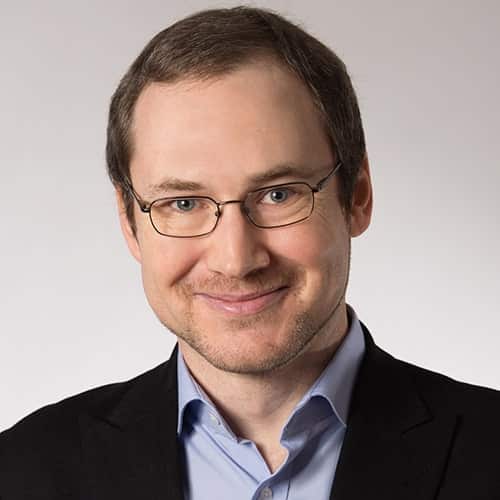
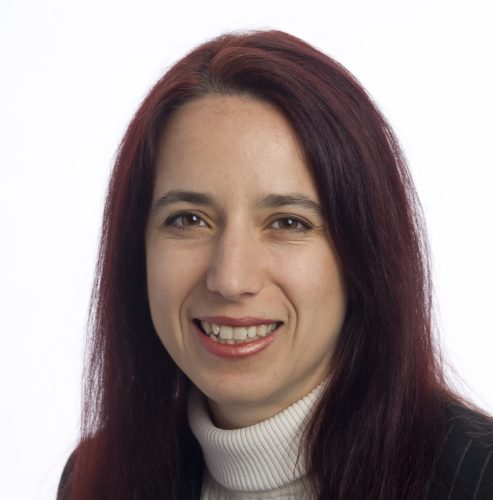
Martin Aumüller is a Lecturer in Theoretical Computer Science Algorithms at the IT University of Copenhagen . He serves as Head of Education and Master of Software Design , focusing on algorithm engineering, differential privacy, and similarity search. Research interests include: Algorithm engineering for high-dimensional data Locality-sensitive hashing and nearest neighbor search Privacy-preserving machine learning Fairness in approximate search algorithms Benchmarking and evaluation of similarity search tools Publications trends highlight his work on approximate nearest neighbor search , privacy-preserving techniques , clustering algorithms , and scalable outlier detection in high-dimensional spaces. His recent projects (2024-2025) focus on fairness, differential privacy, and efficient indexing. Grants and projects : DIREC (2020-2025): Digital Research Centre Denmark (Innovation Fund Denmark) DIREC: Bias and Benefit of Approximate Nearest Neighbor Search (2022-2025): Principal Investigator (Innovation Fund Denmark) BARC (2017-2024): Basic Algorithms Research Copenhagen (Villum Fonden) SSS (2014-2019): Scalable Similarity Search (European Commission)
Arijit Khan is an Associate Professor in the Department of Computer Science at Aalborg University, Denmark. He leads the Data Engineering, Science and Systems group and is affiliated with the Technical Faculty of IT and Design. His research focuses on Graph Neural Networks , Blockchain , Data Management , and AI interpretability . He is the Principal Investigator (PI) of a major project on Data Management, Fundamental Algorithms, and Machine Learning for Emerging Problems in Large Networks (2022–2027). Research Interests : Graph Data Management & Machine Learning Blockchain Transaction Analysis Large Language Model + Knowledge Graph Synergies Healthcare AI (e.g., ICU glucose prediction) Explainable AI for Graph Neural Networks Research Trends : His publications emphasize neuro-symbolic systems , uncertain graph analysis , and AI-driven blockchain insights . Recent work bridges large language models with knowledge graphs and explores GPU performance optimization via shader code analysis. Awards & Grants : No explicit awards listed, but his active research grants include a 5-year project on large network analysis with interdisciplinary applications in life and health sciences. Funding emphasizes algorithmic innovation and data science integration. Labs/Teams : Head of the Data Engineering, Science and Systems research group, focusing on AI for societal impact ('AI for the People') and scalable graph data systems. Collaborations span blockchain analytics, healthcare informatics, and GPU architecture design.
Ling Ding is an Associate Professor at the Department of Biotechnology and Biomedicine, Technical University of Denmark, and a key member of the DTU Microbes Initiative and Center for Microbial Secondary Metabolites. Their research focuses on microbial ecology, secondary metabolite biosynthesis, and antifungal compound discovery. Recent work involves genome mining in Streptomyces species, NMR spectroscopy, and studying microbial interactions such as actinobacterial and Pseudomonas fluorescens systems. Projects explore bioactive phosphorus-containing molecules, in situ detection of metabolites, and data-driven biosynthesis mechanisms. Their research contributes to UN Sustainable Development Goals (SDGs) related to health and environmental sustainability, with publications spanning microbial chemistry, drug discovery, and synthetic biology. Supervised PhD projects include omics-driven antifungal metabolite discovery and microbial interaction studies. Key publication trends include Streptomyces-derived bioactive compounds (e.g., lydicamycins, alligamycin), azoxy/polyketide metabolites, and computational approaches for fungal interaction classification. Methodologies emphasize NMR, genome mining, and deep learning models. Advising: PhD students: M. Haahr, A. Kostoglou, D. J. Otto, A. Svetlova, A. Kaltenyte Projects: Active roles in omics-driven antifungal metabolite discovery, phosphorus-containing molecule mining, and secondary metabolite biosynthesis mechanisms.
Sophia Natasha Wilson is a Research Fellow in the Department of Computer Science (DIKU) at the University of Copenhagen, specializing in machine learning applications across interdisciplinary domains. She is affiliated with the SCIENCE AI Centre and holds a cross-departmental position at the Niels Bohr Institute . Her research bridges theoretical machine learning with practical implementations in healthcare, quantum computing, and environmental sustainability. University of Copenhagen Department of Computer Science (DIKU) Niels Bohr Institute SCIENCE AI Centre Her research focuses include: Quantum-enhanced machine learning algorithms Explainable AI for healthcare applications Environmental sustainability in computing Emotion-aware language models Quantum computing hardware optimization Public health risk modeling Her recent publications demonstrate cross-disciplinary work in quantum machine learning (hybrid optical processors, qubit stabilization), health informatics (hypothyroidism analysis, nursing values evaluation), and ethical AI (sustainable AI, fairness in recommender systems). Technical work also appears in non-Euclidean generative models and real-time adaptive systems . Current projects include quantum dot array simulation (QDarts platform) and federated learning for personalized medicine . She contributes to the TreeSense center for remote sensing of global tree resources and works on climate-aware AI frameworks.
Stefan Oehmcke is an Assistant Professor at the Machine Learning Section of the Department of Computer Science , University of Copenhagen. His research focuses on applying machine learning techniques to environmental and geospatial analysis, particularly in forest ecology, tree monitoring, and climate impact studies. Research Trends: His recent publications emphasize deep learning for LiDAR data processing, multi-modal geospatial representation, and sustainable AI practices. Key Collaborations: Frequently collaborates with researchers in environmental science, remote sensing, and climate change (e.g., Martin Brandt, Christian Igel). Applications: Develops tools for forest biomass estimation, tree mortality mapping, and urban safety analysis using satellite imagery. While no specific educational background or scientific awards are mentioned in the provided texts, Oehmcke's work demonstrates technical innovation in AI explainability and environmental monitoring, with significant contributions to journals like Remote Sensing of Environment and Nature Communications .
Tijs Slaats is an Associate Professor in the Software, Data, People & Society section at the Department of Computer Science, University of Copenhagen. His research focuses on Business Process Management with particular emphasis on declarative and hybrid process notations to provide flexible workflow support for knowledge workers, funded by the Danish Council for Independent Research. His educational background includes: M.Sc. in Information Technology from IT University of Copenhagen Ph.D. in Computer Science from IT University of Copenhagen (supervised by Thomas Hildebrandt) Dr. Slaats specializes in declarative process modeling, particularly Dynamic Condition Response (DCR) graphs which enable flexible workflow systems. His work bridges theoretical foundations with practical applications in cross-organizational settings. Recent research extends into blockchain technologies, smart contracts, and applications in sensitive domains like asylum processing and refugee law. He combines formal methods with empirical evaluation to ensure both correctness and usability of workflow systems. His publication pattern shows increasing application of process mining techniques to blockchain technologies and socially impactful domains, while maintaining core research in Business Process Management. Notable trends include integration of DCR graphs with smart contracts, privacy-preserving techniques for asylum data, and object-centric approaches to process discovery. Research funding includes: Hybrid Business Process Management Technologies project (Danish Council for Independent Research) Technologies for Flexible Cross-organizational Case Management Systems (FLExCMS) industrial Ph.D. project Alongside his academic work, Dr. Slaats maintains strong industry connections through Exformatics A/S where he developed the DCR Graphs workflow solution (www.dcrgraphs.net), and previously worked as a software engineer in the Dutch e-commerce sector. His dual expertise in academia and industry ensures his research addresses real-world workflow challenges while maintaining theoretical rigor.
Allan Hanbury is a Full Professor for Data Intelligence at the Faculty of Informatics, TU Wien, and a faculty member at the Complexity Science Hub Vienna. He leads the Data Science Research Unit and serves as the Faculty Representative for financial affairs and internationalization. He holds a PhD in Applied Mathematics from Mines ParisTech and a Habilitation in Practical Informatics from TU Wien. PhD in Applied Mathematics, Mines ParisTech, 2002 Habilitation in Practical Informatics, TU Wien, 2008 Bachelor’s and Master’s in Physics and Applied Mathematics, University of Cape Town His research focuses on information retrieval, data mining, natural language processing, and information extraction, with applications in healthcare, legal, and patent domains. He has coordinated major EU projects including Khresmoi, VISCERAL, KConnect, and DoSSIER, the latter training 15 PhD students. He is co-founder of contextflow, a spin-off commercializing radiology search technology. His recent publications (2024–2022) highlight a strong trend in systematic literature review automation, neural re-ranking, large language models, and domain-specific information extraction. Key themes include improving citation screening, patient-trial matching, evaluation metrics, and dataset creation for offensive language and legal text. His work combines technical innovation with real-world impact in medical, legal, and scientific communication contexts. Allan Hanbury has received no explicitly mentioned scientific awards in the provided text. He actively supervises numerous PhD and master’s students and leads large research projects such as DoSSIER, Transparent Automated Content Moderation, and PLFDoc, funded by FWF, WWTF, and EU. His group develops tools for evidence synthesis, clinical data extraction, and legal document analysis. He also contributes to AI and data strategy in Austria and Europe. He leads the Data Science Research Unit at TU Wien and is involved in multiple interdisciplinary projects including BRISE (building regulation analysis), CDL-RecSys, and TACo, focusing on legal and scientific document processing. His work bridges academia and industry through spin-offs like contextflow and collaborations with Deutsche Telekom, Siemens, and FMA.
Giovanni Colavizza holds a dual academic appointment as Professor in the Department of Communication at the University of Copenhagen and Associate Professor at the University of Bologna (since November 2023). His research bridges information science, digital humanities, and open science practices. His primary research areas include: Quantitative analysis of open research practices (data/code/preprint sharing) and citation impact Wikipedia's role in scientific knowledge dissemination and news source reliability assessment Digital tools for humanities including knowledge graphs and NLP applications for historical archives Recent publications (2024-2025) reveal strong interdisciplinary trends, combining scientometrics with natural language processing to analyze scientific communication patterns and colonial archival materials. His work appears in leading venues including PLoS ONE, Scientometrics, and IEEE Journal of Biomedical and Health Informatics, demonstrating methodological innovation across information science and humanities domains.
Irena Vodenska is Professor of Finance and Director of Finance Programs at Boston University’s Metropolitan College, Department of Administrative Sciences. She holds a PhD in statistical finance and an MA in economics from Boston University, an MBA from Vanderbilt University, and a BS in computer information systems from the University of Belgrade. She is also a Chartered Financial Analyst (CFA) charter holder. Her research is at the intersection of finance, complexity science, and artificial intelligence, focusing on systemic risk modeling, ESG investments, and financial network dynamics. She has led major interdisciplinary research projects funded by the National Science Foundation, the European Commission, and the U.S. Army Research Office. PhD, Statistical Finance – Boston University MA, Economics – Boston University MBA – Owen Graduate School of Management, Vanderbilt University BS, Computer Information Systems – University of Belgrade Dr. Vodenska’s research interests include network theory in finance, systemic risk propagation, AI-powered ESG analysis, cryptocurrency price forecasting, and financial regulation. She employs big data, machine learning, and natural language processing to analyze financial news, market dynamics, and corporate sustainability. Her work investigates how climate disinformation spreads via social networks and influences public policy and governance. The recent articles highlight a consistent focus on modeling financial and economic systems using network science and AI. Trends include systemic stress testing, sentiment analysis in financial markets, cascading failures, and the interplay between macroeconomic indicators and financial networks. Her work spans econophysics, behavioral finance, public health economics, and ethical AI in fintech. National Science Foundation (NSF) research grant (2023) NSF EAGER Award (2014–2015) European Commission FET Open Grant (2012–2014) U.S. Army Research Office (ARO) Grant (2020–2021) MEXT Post-K Computer Grant, Japan (2016–2019) Alexander Hamilton Fulbright Fellowship (1994) Owen Graduate School Fellowship (1995–1996) Dr. Vodenska teaches core finance courses such as Investment Analysis and Portfolio Management, Derivatives Securities, and Financial Regulation and Ethics. She co-developed the MET AD 678 course with Professor Tamar Frankel from BU Law, emphasizing real-world case studies and ethical decision-making. Her research grants have supported innovative work in systemic risk modeling, AI for ESG, and financial network stability. She is actively involved in mentoring, conference organization, and editorial roles in leading journals. She is a key organizer of the International School and Conference on Network Science (NetSci) and the Big Data in Economics, Science, and Technology (BEST) Conference. Her lab and research team focus on complexity in financial systems, bringing together economists, physicists, computer scientists, and data analysts to study global financial stability and sustainability.
Leon Derczynski is an Associate Professor of Computer Science at the IT University of Copenhagen , with a dual role as Principal Research Scientist/LLMSEC at NVIDIA . He leads the Strømberg NLP research group and coordinates NLP South at ITU, while also being affiliated with the Machine Learning group. Specializes in Natural Language Processing , Machine Learning , and LLM security Focus on Misinformation detection , Clinical text mining , and Danish language technology Research grants include Verif-AI (2.9M DKK), ClinRead (544K DKK), and LITHME (EU COST action, €11K). He has coordinated major projects like COMRADES and PHEME , and contributed to uComp and TrendMiner . Scientific recognition includes the University of Sheffield Exceptional Contribution Award (twice), WEBIST Best Student Paper award , and FP7 funding . His technical work includes the garak.ai LLM vulnerability scanner and generalised-brown clustering library. Actively supervises students and maintains numerous GitHub repositories (86 public projects) related to NLP, machine learning, and computational linguistics. He has delivered keynotes and guest lectures , including at Innopolis University (Russia) and PET (Danish Security and Intelligence Service).
Aristides Gionis is a Research Professor Fellow at Aalto University specializing in advanced network analysis and data mining. His work bridges theoretical graph algorithms with practical applications in dynamic and signed networks. His research focuses on graph theory and temporal network analysis , particularly in discovering dense subgraphs, community structures, and event patterns in evolving networks. Key methodologies include contrastive subgraph mining for explainable AI in brain networks and polarization detection in social systems. His publication trends reveal consistent contributions to top-tier venues like KDD, PAKDD, and ECML PKDD, with emphasis on algorithmic solutions for network segmentation, correlation mining, and interpretable classification. Primary application domains include social networks, neuroscience, and temporal data streams. As a Fellow at Aalto University, he leads research in computational network science without explicit departmental affiliation stated in available sources.
Jonas Vinther is a Research Fellow at the Department of Computer Science , University of Copenhagen, specializing in Machine Learning and its intersections with quantum computing, medical data analysis, and sustainability. He is also an external PhD student in the Quantum Information Science & Technology program at the Niels Bohr Institute. Email: jonas.vinther@nbi.ku.dk , jonas.vinther@di.ku.dk Location: Universitetsparken 1, 2100 København Ø His research spans quantum machine learning , AI ethics , medical imaging , and environmentally sustainable AI , with recent publications on topics ranging from quantum neural networks to fairness in recommender systems . He contributes to the SCIENCE AI Centre and collaborates on initiatives like TreeSense for global tree resource monitoring.
Jens Ulrik Hansen is an Associate Professor at Roskilde University's Department of People and Technology. His work bridges artificial intelligence, data science, and social epistemology. He holds a PhD and MSc, and his research focuses on explainable AI, machine learning applications in healthcare, social network dynamics, and logical frameworks for multi-agent systems. Hansen participates in interdisciplinary projects like #echopol (studying social media polarization) and ROROGREEN (digital innovation in maritime shipping). He has published widely on topics including AI ethics, expert knowledge integration in ML systems, and opinion dynamics in social networks. Research Interests: Artificial Intelligence & Machine Learning Data Science & Big Data Analysis Explainable AI Social Network Analysis Formal Epistemology Key Projects: #echopol: Echo chambers and polarization dynamics ROROGREEN: Green RORO shipping innovations FeedbackBox: Collaborative workshop methodologies Awards: No specific prizes listed, though his work has received media attention for innovations in AI research and healthcare applications.
Abdulkadir Celikkanat is an Assistant Professor in the Department of Computer Science at Aalborg University, Denmark. He is affiliated with The Technical Faculty of IT and Design and the Data, Knowledge and Web Engineering research group. His research focuses on graph representation learning, network analysis, bioinformatics, and machine learning applications in dynamic systems. Key projects include the Villum Foundation-funded 'DarkScience: Illuminating microbial dark matter through data science,' which explores metagenomic binning and microbial ecology using advanced data science techniques. He has been recognized with the Best Paper Award (2023) for contributions to temporal graph analysis and modeling. His work spans continuous-time dynamic node representations, scalable genome profiling, and polarization detection in social networks. Celikkanat collaborates widely, contributing to interdisciplinary research at the intersection of computer science, biology, and environmental science. Recent publications highlight innovations in graph embeddings, citation network modeling, and hybrid membership latent distance models. His research addresses challenges in low-dimensional graph representations, efficient kernel methods, and integrating biological networks for protein analysis.
Ginés Carreto Picón serves as a Research Fellow within the Department of Electrical and Computer Engineering at Aarhus University, Denmark, specializing in the Signal Processing and Machine Learning research group. His work focuses on developing computationally efficient AI solutions for resource-constrained environments. His research expertise spans machine learning, signal processing, and artificial intelligence of things (AIoT), with emphasis on creating high-performance sequence processing models through continual learning frameworks, dimensionality reduction, and low-rank approximation techniques. These approaches significantly reduce energy consumption while maintaining model accuracy for edge deployment. His publication on visual fingerprinting for sequential data demonstrates his focus on interpretable pattern recognition methods. Current work centers on the 2024-2027 PhD project developing lightweight AI architectures specifically optimized for IoT devices, aiming to expand feasible AI applications in constrained computational environments. He actively contributes to the Signal Processing and Machine Learning laboratory's research ecosystem, advancing methodologies for practical implementation of efficient AI systems in real-world edge computing scenarios.