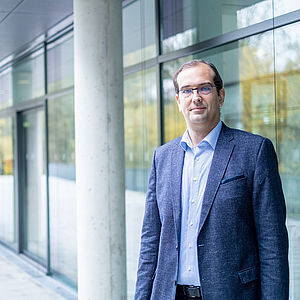
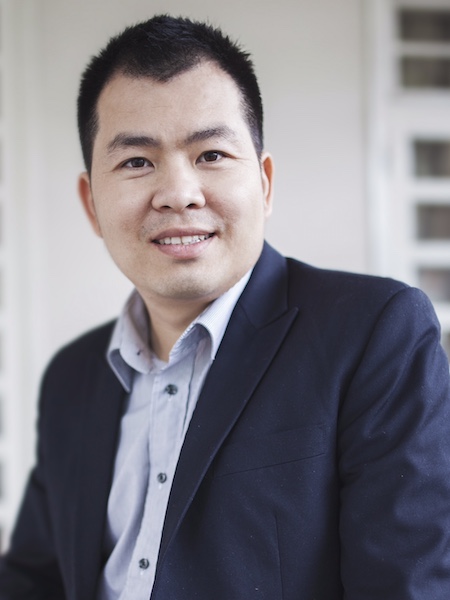
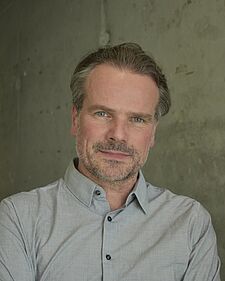
Dr. Frank Loh is a researcher at the Department of Computer Science III, University of Würzburg, specializing in energy efficiency, network performance, and Quality of Experience (QoE) in communication networks. His work focuses on optimizing LoRaWAN deployments, serverless computing, and edge-cloud environments, with an emphasis on reducing message collisions and improving resource utilization. He actively contributes to methodologies for gateway placement, traffic modeling, and energy consumption metrics. Research Areas Energy Efficiency in Communication Networks Quality of Service (QoS) and Quality of Experience (QoE) LoRaWAN Network Planning Edge and Serverless Computing Network Resource Analysis Recent Publications 2025: Energy modeling for 6G base stations 2025: Server cluster resilience via Markov models 2024: Serverless computing in edge-cloud environments 2024: LoRaWAN channel access optimization
Alessandro Aliakbargolkar is a Professor at the Department of Space Systems Design under the School of Aerospace Engineering at Skolkovo Institute of Science and Technology (Skoltech). His research focuses on Federated Satellite Systems, CubeSat constellations, and Spacecraft Systems Architecture, with applications in Earth observation, messaging services, and networked satellite systems. He has an extensive publication record in these areas, including work on technology roadmapping and digital twin implementation. Key Research Areas: Satellite federation and resource sharing CubeSat constellation design Network performance optimization Integration of systems engineering models with AI Selected Trends: Recent work explores digital twin technologies for CubeSats, federated satellite network analysis, and large language model applications in spacecraft design. Publications often combine theoretical frameworks (e.g., network theory) with practical implementations (e.g., LoRa-based messaging services). ORCID Profile: 0000-0001-5993-2994
Prof. Harald Sternberg is a distinguished academic at HafenCity University Hamburg, holding the position of University Professor for Hydrography and Geodesy. His affiliations include the Department of Geodesy and Geoinformatics, where he leads research in hydrographic education and advanced geomatics technologies. He previously served as Vice President for Teaching and Studies (2009-2022) and Acting President (2010) of HCU. Education: Ph.D. in Geodesy from University of the Bundeswehr Munich (1999), specializing in trajectory determination of land vehicles using hybrid systems. Early career included roles as scientist at Bundeswehr University (1991-2001) and academic leadership at HAW Hamburg (2005-2009). Research focuses on underwater mapping, navigation systems, and sensor integration. Key projects include: Level 5 Indoor Navigation (5G-based positioning), hydrothermal vent exploration using deep-towed multibeam systems, and low-cost mobile mapping solutions. He also investigates smartphone-based inertial navigation and autonomous underwater vehicles for infrastructure monitoring. Publications span underwater vision systems, satellite-derived bathymetry, and 3D point cloud analysis. Over 200 peer-reviewed articles and book chapters reflect expertise in geomatics applications. Current research emphasizes 5G-enabled indoor navigation and environmental sensor networks. Grants include BMWK-funded autonomous deep-sea monitoring and BGR exploration projects in the Indian Ocean. His lab develops innovative tools like the HOMESIDE sled for seafloor surveys. Supervises Ph.D. research on hydrothermal vent analysis and data-driven inertial localization.
Dieter Uckelmann serves as Professor of Information Logistics and Scientific Director of the Institute for Applied Research at Stuttgart University of Applied Sciences (HFT Stuttgart). He holds multiple leadership positions including Spokesperson for the research focus 'Smart Technologies, Processes and Methods' at HFT Stuttgart since March 2023 and Scientific Director of the Institute for Applied Research since September 2023. His academic journey began with mechanical engineering studies in Braunschweig, followed by doctoral research at the University of Bremen focusing on 'Quantifying the Value of RFID and the EPCglobal Architecture Framework in Logistics.' Uckelmann's research spans Internet of Things applications across Industry 4.0, logistics, smart buildings, and smart cities, with significant contributions to educational technology including learning analytics and AI in teaching. His work bridges technical innovation with practical implementation, particularly in digital transformation of laboratories and smart city infrastructure. He has led numerous research projects including KNIGHT (AI for teaching), InDeckLe (earth composite ceiling systems), iCity initiatives, and DigiLab4U (online laboratories). His publication record shows a clear progression from foundational RFID and IoT research toward emerging technologies like the Industrial Metaverse, 5G applications, and AI-driven educational systems. Recent work demonstrates strong integration of physical and digital systems, particularly in urban environments and educational contexts, with increasing emphasis on sustainability and energy efficiency applications. Co-editor of International Journal of RF-Technologies: Research and Applications Member of PhD Association BW, Research Unit III Computer Science and Electrical Engineering Mentor in the HAWCareer mentoring program Program Committee Member for IEEE RFID, IEEE/ITMC, AIET, and other major conferences Associate Editor for Journal of Online and Biomedical Engineering Professor Uckelmann actively mentors students and researchers, with his team contributing to projects across smart city infrastructure, digital learning platforms, and industrial IoT applications. He leads the Industrie 4.0 Laboratory which focuses on industrial IoT applications, digital twins, and the industrial metaverse, with research spanning RFID, RTLS, wireless sensor networks, AR/VR, and IoT architectures. His work extends to international collaborations including visiting professorships at Auburn University and the University of Parma.
Prof. Dr.-Ing. habil. Gero Mühl is a W2-Professor at the University of Rostock, where he holds the chair for "Architecture of Application Systems" since October 2009. His academic journey includes positions as a Heisenberg Fellow at the Technical University of Berlin (2009), postdoctoral research at TU Berlin (2002-2009), and doctoral studies at TU Darmstadt where he received his Dr.-Ing. degree with distinction in 2002. He completed dual Diplomas in Computer Science (Dipl.-Inform.) and Electrical Engineering (Dipl.-Ing.) from FernUniversität in Hagen in 1998. Prof. Mühl's research focuses on Self-Organizing Distributed Systems , with particular expertise in distributed systems, distributed algorithms, event-based systems, middleware, energy-efficient systems, organic computing, sensor networks, web services, and electronic commerce. His work bridges theoretical foundations with practical implementations in real-world distributed environments. His recent publications show a strong trend toward time-sensitive networking, content-based publish/subscribe systems, and P4 programmable data planes. These works address critical challenges in industrial communication, real-time systems, and network reliability. His research group has made significant contributions to making distributed systems more autonomous, reliable, and efficient. Scientific awards and recognitions include: Nomination for the Berlin Science Award for Young Scientists (2008) Heisenberg Fellowship by the German Research Foundation (DFG) (2008) Best paper award in System Software and Security at SAC 2015 Prof. Mühl has been actively involved in numerous research projects and collaborations, particularly focusing on self-organizing and self-stabilizing systems. His work on the REBECA publish/subscribe middleware represents a significant contribution to autonomous distributed systems. He has supervised numerous students and researchers, contributing to the development of the next generation of computer scientists specializing in distributed systems. His laboratory at the University of Rostock focuses on practical implementations of self-organizing distributed systems, with current projects investigating time-sensitive networking, publish/subscribe systems, and energy-efficient distributed computing. The team combines theoretical analysis with practical system development to address real-world challenges in industrial and commercial applications of distributed systems.
Patrick Henkel is a Professor at the Technical University of Munich (TUM) affiliated with the TUM School of Engineering and Design and the Chair of Communication and Navigation. He holds a professorship in Satellite Geodesy under Prof. Hugentobler. His research focuses on advanced positioning technologies, including Global Navigation Satellite Systems (GNSS), autonomous systems, and sensor fusion. He develops algorithms for precise positioning in challenging environments such as urban areas, alpine regions, and indoor spaces. His work also extends to environmental applications, such as snow hydrology and climate monitoring using GNSS signals. Henkel’s contributions include innovations in real-time kinematic (RTK) positioning, UAV navigation, and multi-sensor integration for robotics and autonomous vehicles. His research is supported by collaborations with industry and academic partners, addressing both theoretical and applied challenges in geodesy and navigation. Henkel leads projects on GNSS signal processing, satellite-based environmental monitoring, and autonomous driving technologies. He has contributed to the Galileo HAS service and developed methodologies for snow water equivalent estimation using multi-frequency GNSS signals. His expertise spans hardware-software co-design for navigation systems and algorithm optimization for high-precision positioning in dynamic environments. He actively publishes in top-tier journals and conferences, with a focus on advancing the reliability and accuracy of navigation systems across various domains. His advising and grants include funding for projects on sensor fusion, UAV-based measurements, and satellite receiver development. He collaborates with teams at TUM’s Navigation Lab and the Professur für Satellitengeodäsie, contributing to both academic and industrial applications. His work on low-bandwidth RTK dissemination and laser-tracker verified UAV positioning highlights his commitment to bridging theoretical advancements with real-world implementation.
Prof. Serge A. Shapiro is a Full Professor of Geophysics at Freie Universität Berlin since 1999 and Director of the PHASE consortium since 2004. He holds a Diploma in Applied Geophysics from Lomonosov Moscow State University (1982), a PhD from the Moscow Research Institute of Geosystems (1987), and a Habilitation from Karlsruhe University (1995). His research focuses on seismogenic processes, induced seismicity, rock physics, and subduction zone dynamics, with applications to geothermal energy, CO2 storage, and hydraulic fracturing. Education: Diploma in Applied Geophysics, Lomonosov Moscow State University (1982) PhD in Geophysics, Moscow Research Institute of Geosystems (1987) Habilitation, Karlsruhe University (1995) Research Interests: Induced seismicity from fluid operations CO2 storage and hydraulic fracturing risks Seismic hazard assessment Rock physics under stress Key Contributions: Developed the Seismogenic Index Model for induced earthquakes Pioneered DAS-based seismic monitoring techniques Advanced understanding of fault stability and pressure diffusion effects Awards: Virgil Kauffman Gold Medal (2013) for work in microseismic monitoring and rock physics Grants & Projects: PHASE consortium leader (2004–present) Utah FORGE EGS project advisor Labs/Teams: Seismology Group, Freie Universität Berlin PHASE university consortium
Prof. Dr. sc. techn. ETH Oliver Staadt is Full Professor of Computer Science and Chair of Visual Computing at the University of Rostock , Germany. Since 2023 he also serves as Director of the Institute for Visual and Analytic Computing within the Faculty of Computer Science and Electrical Engineering . Previously he was Dean (2016–2018) and Vice Dean (2010–2016) of the same faculty. Education Ph.D. in Computer Science, ETH Zürich (2001) M.Sc. in Computer Science, TU Darmstadt (1994) Research Interests Prof. Staadt’s research spans virtual and augmented reality , computer graphics , visualization , telepresence , immersive analytics , and human–computer interaction . A particular focus lies on real-time rendering and display technologies for large high-resolution display systems, depth-image enhancement for RGB-D sensors, and interaction techniques that leverage spatial cognition and eye-tracking. His work is frequently applied to collaborative settings and microgravity environments, including experiments aboard parabolic flights and the International Space Station. Recent Publication Trends Between 2019 and 2021 his output centers on foveated rendering , AR viewpoint guidance , collaborative analytics on wall-sized displays , and embodied interaction metaphors . Earlier work addressed bandwidth-efficient telepresence, depth-image filtering, and physically-based animation. The corpus reveals a steady evolution from fundamental graphics algorithms toward applied immersive systems. Scientific Awards & Honors Fellow of the Eurographics Association Associate Editor, IEEE Transactions on Visualization and Computer Graphics (past) Associate Editor, Computers & Graphics (past) Associate Editor, Computer Animation and Virtual Worlds (past) Associate Editor, Frontiers in Virtual Reality (current) Chair, Expert Group on Virtual & Augmented Reality, German Informatics Society (2013–2020) Advising & Funding He has successfully supervised more than ten PhD graduates whose dissertations range from collision detection and physically-based animation to 3D interaction in microgravity and predictive user modeling. Current PhD researchers include Bipul Mohanto, Mana Takhsha, and Sven Kluge. His projects are supported by national and EU programs such as EVOCATION, SMOOTH, ARGuide, 3DPick, DIVA, and Telepresence. Labs & Teams Prof. Staadt leads the Visual Computing Group at Rostock, operating state-of-the-art facilities including large tiled display walls, VR/AR laboratories, and motion-capture systems. The institute hosts interdisciplinary collaborations with partners in visualization, computer vision, psychology, and aerospace engineering.
Prof. Dr. Gerald Urban is a distinguished Professor at the Institute for Microsystems Technology (IMTEK) within the Faculty of Engineering at the University of Freiburg, Germany. With over three decades of academic and research experience, he has established himself as a leading expert in biomedical microtechnology and sensor systems. His career spans prestigious institutions including the Vienna University of Technology and collaborations with major research centers worldwide. His educational journey includes: 1973: Graduated from Sigmund Freud Gymnasium in Vienna 1979: Completed studies in Technical Physics at Vienna University of Technology 1985: Earned Doctorate (Dr.-Ing.) with distinction (Summa cum Laude) from Vienna University of Technology 1994: Completed habilitation in Sensorics Prof. Urban's research focuses on the development and application of miniaturized integrated sensors for clinical and industrial applications. His work bridges the gap between fundamental materials science and practical medical devices, with particular emphasis on biomedical microtechnology , electrochemical biosensors , and organ-on-chip systems . His team has pioneered innovations in point-of-care diagnostics, therapeutic drug monitoring, and micro energy harvesting technologies. The research group maintains strong collaborations with clinical partners to ensure translational impact of their technological developments. Analysis of Prof. Urban's recent publications reveals a clear trajectory toward increasingly sophisticated multiplexed sensing platforms that integrate CRISPR-based diagnostics with electrochemical detection systems. His work demonstrates growing emphasis on point-of-care applications, with particular focus on making complex diagnostic capabilities accessible outside traditional laboratory settings. The integration of additive manufacturing techniques with sensor technology represents another significant trend in his recent work, enabling customized microreactor and organ-on-chip platforms. Among his notable scientific achievements: Stefan Schuy Prize for Biomedical Engineering (1990) AVL-List Prize (1993) Best Poster at Eurosensors (1993) Hoechst-Price (1994) Corresponding member of the Austrian Academy of Sciences (2010) EAMBES-Fellow (2018) Prof. Urban has successfully secured substantial research funding throughout his career, with accumulated third-party funding reaching approximately 5 million euros between 1986-1995. He has established multiple spin-off companies including Otto Sensorenfabrikationsgesellschaft (1985), Biosensor GnbR (1994), and Jobst Technologies GmbH (2002), demonstrating his commitment to translating research into practical applications. His leadership extends to major research initiatives including the excellence initiative "µMAT" and the graduate school "PolyMIC". At the University of Freiburg, Prof. Urban leads a vibrant research group within the Institute for Microsystems Technology, which forms part of the larger BrainLinks-BrainTools and BIOSS research clusters. His laboratory maintains state-of-the-art facilities for microsensor fabrication, including cleanroom access through the WebFab service center. The research environment benefits from strong connections with the Freiburg Material Research Center (FMF) and the Freiburg Institute for Advanced Studies (FRIAS), where he served as an Internal Fellow (2008-2010).
Stefan Katzenbeisser is a Professor at the Chair of Computer Engineering, University of Passau, focusing on cybersecurity in embedded systems, critical infrastructures, and technical data protection. He serves as spokesperson for the Bavarian-funded research cluster ForDaySec and contributes to the DFG Review Board for Security and Dependability. Research areas: Automotive cybersecurity, railway security, hardware-based security (PUFs), post-quantum cryptography Key projects: RESURREC (autonomous vehicle security), FINESSE (secure transportation sensors), 6G-RIC (future mobile networks) His work spans both theoretical and applied cybersecurity, with collaborations in industry and interdisciplinary fields. Recent publications highlight innovations in secure mobility and critical infrastructure protection.
Dr. Adrian Fazekas is a Lecturer at the Institute of Highway Engineering, RWTH Aachen University, and collaborates with the Federal Highway Research Institute (BASt). He holds a Dr.-Ing. in Computer Science from RWTH Aachen (2005–2011), specializing in Media Engineering. His professional trajectory includes roles as a Research Assistant at RWTH Aachen and industry experience as a Software Developer at Continental AG. Research interests focus on traffic data acquisition , microscopic traffic flow simulation , and intelligent transportation systems . Key projects include: DROVA: Drone-based traffic analysis for infrastructure optimization ESIMAS: Real-time tunnel safety management Digital Twin Road: Physical-informational mapping of future highways AUTUKAR: Automated tunnel monitoring systems His publications emphasize real-time traffic detection , safety analytics , and data-driven modeling , with recent work exploring thermal-camera nudging systems and weigh-in-motion accuracy. He actively contributes to the Research Association for Roads, Earth and Tunneling (SETAC). No awards or student advising roles are documented.
Danh Le Phuoc is a Principal Computer Scientist at Technical University of Berlin, leading research at the PICOM.AI lab where his team develops autonomous information systems for robotics, autonomous vehicles, and IoT systems through pervasive intelligence in complex networks. With over 70 publications and significant academic impact (6811 citations, H-index 31), he has established himself as a notable researcher in semantic technologies. His educational background isn't explicitly detailed in the provided text, but his research expertise spans multiple domains requiring advanced technical knowledge. Le Phuoc's research focuses on bridging theoretical concepts with practical system implementation, particularly in RDF Stream Processing, Semantic Web technologies, and IoT middleware. His work emphasizes building real-world systems that process linked streams and data in real-time, enabling applications in intelligent transportation systems and connected vehicles. His research trajectory shows consistent innovation from foundational work on semantic mashups (2009) through to advanced stream processing frameworks (2017). His publications reveal strong trends toward processing real-time semantic data streams, with increasing focus on scalability, performance optimization, and integration of IoT systems with knowledge graphs. The progression shows movement from basic semantic web pipes to complex, elastic cloud-based stream processing systems. 22 Awards, Honours, Fellowships and Grants 10+ awards for innovative Semantic Web applications Multiple honors for IoT applications As an obsessive builder, Le Phuoc has developed numerous influential systems including The Graph of Things, CQELS (Continuous Query Evaluation over Linked Streams), Semantic Web Pipes, and Linked Sensor/Stream Middleware. His current focus is on ASAP (Autonomous Semantic Stream Processing), a platform for connected vehicles and intelligent transportation systems. His lab appears to maintain active GitHub repositories for several of these systems, suggesting ongoing development and community engagement.
Prof. Can Dincer is a Professor of Sensors and Wearables for Healthcare at the TUM School of Computation, Information and Technology, Technische Universität München (TUM). His research focuses on bioanalytical materials, wearable sensors, and AI-driven diagnostics for One-Health applications, integrating disposable sensor technology with data science. He holds a doctorate from the University of Freiburg (summa cum laude, 2016) and worked as a visiting scientist at Imperial College London before joining TUM in 2024. He is a member of the Munich Institute of Biomedical Engineering (MIBE). Key research interests include: Development of wearable biosensors for real-time health monitoring CRISPR-based diagnostics for nucleic acids and proteins AI integration for therapeutic drug monitoring in sepsis and other critical conditions Environmental health connections via point-of-need diagnostics Notable achievements include the 2021 Biosensors & Bioelectronics Best Paper Award and inclusion in Stanford's World's Top 2% Scientists since 2022. His work spans clinical applications, microfluidic platforms, and nanotechnology-based solutions for healthcare challenges. Publications highlight innovations like optogenetic bioassays (Science Advances, 2024), CRISPR-powered multiplexed biosensors, and wearable systems for continuous biomarker monitoring. His research bridges material science, electrical engineering, and biomedicine to create practical diagnostic tools. Prof. Dincer collaborates across disciplines, focusing on translating lab innovations into clinical and commercial applications through advanced sensor technologies.
Prof. Dr.-Ing. Jörg Rainer Noennig is Professor of Digital City Science at HafenCity University Hamburg (HCU) and Head of the WISSENSARCHITEKTUR Laboratory of Knowledge Architecture at TU Dresden. With a background in architecture (Bauhaus Universität Weimar, Waseda University Tokyo), he practiced in Tokyo before transitioning to academia. He has held visiting professorships in Italy, France, Russia, and Japan. His research focuses on digital urban systems , including smart cities, participatory planning, and knowledge architecture. He explores AI applications in urban design, agent-based simulations for mobility, and transdisciplinary frameworks for sustainability. Recent projects include TOSCA (open-source urban tools), SmartFly (eVTOL integration), and MICADO (migrant integration platforms). Publications emphasize data-driven urban methodologies , spanning synthetic data generation, pedestrian modeling, and sustainable infrastructure design. His work integrates materials science (e.g., auxetic structures) with digital twins for resilient cities. Awards include the Grand Prix of the European Association for Architectural Education (EAAE). He leads Hamburg’s Digital City Science team and coordinates international collaborations, including Indo-German urban development projects. He directs the WISSENSARCHITEKTUR Laboratory , focusing on knowledge synthesis for urban innovation. Courses taught at HCU include 'Knowledge Architecture', 'Digital City Science', and 'Smart City Technologies'.
Prof. Thomas H. Kolbe serves as Chair of Geoinformatics at the Technical University of Munich (TUM), where he leads research in spatial, temporal, and semantic modeling of urban environments. His work focuses on developing foundational frameworks for 3D/4D city models, digital twins, and smart city applications through international standardization efforts including CityGML and IndoorGML. His research spans virtual city modeling, urban system simulation, and GIS integration with emerging technologies. Current projects emphasize AI-driven urban scenario generation, semantic streetspace modeling, and IoT integration in digital twin ecosystems. Recent publications demonstrate strong interdisciplinary connections between computer vision, urban planning, and geospatial data science, with particular emphasis on practical implementations of 3D city models for sustainability challenges. Prof. Kolbe actively contributes to professional organizations including the Round Table GIS eV (as Chairman since 2013) and the Munich Data Science Institute (as core member since 2021). His leadership extends to the Leonhard Obermeyer Center for digital methods in the built environment and the Hans Eisenmann Forum for agricultural sciences. His work bridges theoretical geoinformatics with practical urban applications through numerous collaborative projects with municipal governments and industry partners.