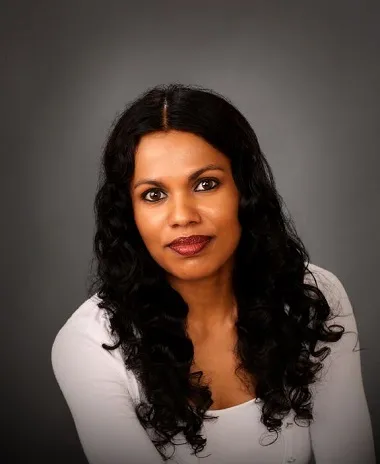
Gertrud Haidvogl serves as Associate Professor at the University of Natural Resources and Life Sciences, Vienna (BOKU), affiliated with the Institute of Hydrobiology and Water Management (IHYAM) and Institute of Social Ecology (iISEC). Her research bridges environmental history and aquatic ecology to examine long-term socio-ecological transformations in river systems, with special focus on the Danube River Basin. She holds teaching authorization in Historical Aquatic Ecology and Environmental History and maintains active scholarly output through 2025. Her research interests encompass historical ecology of rivers, socio-ecological river dynamics, and human-river coevolution. She investigates how industrialization, urbanization, and infrastructure projects have altered river connectivity, fish migration, and floodplain ecosystems over centuries. Her interdisciplinary methodology integrates archival research, archaeological data, ecological modeling, and policy analysis to reconstruct historical baselines and inform contemporary river restoration. Key themes include longitudinal connectivity disruption, biodiversity loss in freshwater systems, and the evolution of flood control paradigms. Analysis of her 2022-2025 publications reveals increasing emphasis on policy-relevant research, particularly regarding EU Nature Restoration Law implementation and transboundary river management. Her work consistently applies historical perspectives to establish ecological reference conditions while addressing contemporary challenges like climate change adaptation and free-flowing river restoration. The interdisciplinary nature of her scholarship is evident in collaborations spanning environmental history, ecology, hydrology, and social sciences. Dr. Haidvogl actively participates in the FWF Doctoral Program "Industrialized River Landscapes" under the HR21 Doctoral School, indicating her role in supervising doctoral candidates and securing competitive research funding. Her collaborations with the International Association for Danube Research (IAD) demonstrate engagement in transnational research networks addressing basin-scale challenges. While specific grant details aren't provided, her leadership in major interdisciplinary programs reflects substantial research funding. Embedded within BOKU's Hydrobiology and Water Management group, she contributes to interdisciplinary teams developing tools like the River Network Toolkit (RivTool) and iPODfish framework for historical fish occurrence reconstruction. Her work frequently involves partnerships with historians, ecologists, and policymakers to address complex river management challenges in urbanizing landscapes.