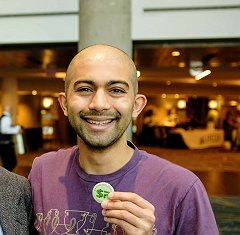
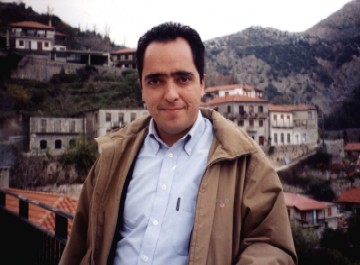
Prof. Nikos Mamoulis is a Professor at the Department of Computer Science & Engineering, University of Ioannina, and a Lead Researcher at Archimedes Research Unit, ATHENA RC. He holds a PhD from Hong Kong University of Science and Technology (HKUST) and a Diploma from the University of Patras. His research focuses on spatial data management, big data analytics, data privacy, and uncertain data systems. Education : Ph.D., Computer Science, Hong Kong University of Science and Technology (2000) 5-year Diploma, Computer Engineering and Informatics, University of Patras (1995) Research Interests : Complex data management (spatial, spatio-temporal, time-series, text, graphs), big data analysis, privacy preservation, and uncertain data systems. He develops scalable algorithms and systems for modern data management challenges, with applications in transportation, social networks, and geospatial analytics. Projects & Grants : MESA: In-memory Spatial Analytics Made Scalable (HFRI-funded, PI) MORE: Real-time Energy Data Management (H2020, Senior Researcher) Smart City Bus Platform (ERDF-funded, PI/Coordinator) Awards : Outstanding Young Researcher Award (2008-2009, HKU) Best Paper Award at SSTD 2015 Test of Time Award at MDM 2022 Labs & Collaborations : Leads the Archimedes Research Unit at ATHENA RC, collaborating with institutions like HKUST and Uppsala University on spatial and big data systems. Active in organizing top-tier conferences like SIGMOD, EDBT, and ICDE.
Theodora Varvarigou is a Professor in the Department of Electrical and Computer Engineering at the National Technical University of Athens (NTUA). She holds a B.Eng. from NTUA and M.Eng. and Ph.D. degrees from Stanford University. Her career includes research at AT&T Bell Labs and roles at the Technical University of Crete. From 2008-2012, she served as director of NTUA's 'Technoeconomic Systems' postgraduate program. Her research focuses on Cloud Computing, Multimedia Content Processing, Social Networking Technologies, and emerging areas like blockchain, edge computing, and cybersecurity. She has published over 200 papers and led numerous European research projects, emphasizing scalable systems, data management, and smart infrastructure applications. Her work spans technical innovations such as intrusion detection systems, edge resource optimization, and blockchain-based solutions for IoT, healthcare, and smart cities. Recent publications highlight advancements in AI-driven resource allocation, privacy-preserving blockchain designs, and predictive analytics for edge computing environments. Professor Varvarigou has contributed to interdisciplinary initiatives, including cohort data harmonization in biomedical research and social media analytics for urban planning. Her teaching includes courses on digital systems, network programming, and fault-tolerant systems.
Dimitris Mitropoulos is an Assistant Professor at the National and Kapodistrian University of Athens (NKUA) in the Department of Business Administration, where he teaches courses on Distributed Ledger Technologies, Data Security and Privacy, Algorithms and Business Analytics, and Introduction to Programming. He also serves as Head of the Reliability Engineering Directorate at the National Infrastructures for Research and Technology (GRNET), Greece's national research and education network organization. Previously, he was a Postdoctoral Researcher in the Computer Science Department at Columbia University. Dr. Mitropoulos received his Ph.D. degree in Secure Software Development Technologies from the Athens University of Economics and Business (AUEB) in 2014. His doctoral research was supported by the Heracleitus II Scholarship, co-financed by the European Union and Greek national funds. He is a member of prestigious professional organizations including ACM, IEEE, and USENIX. Dr. Mitropoulos conducts pioneering research at the intersection of software engineering and cybersecurity, with particular expertise in secure software development, vulnerability analysis, and blockchain security. His work spans multiple dimensions of software security including code injection attacks, infrastructure as code security, smart contract analysis, and dependency management in software ecosystems. His research methodology combines static and dynamic analysis techniques with empirical studies of real-world software systems, particularly focusing on Java, Python, and Solidity ecosystems. His recent work has made significant contributions to understanding security vulnerabilities in modern software development practices and infrastructure management. Dr. Mitropoulos has received numerous prestigious awards for his research contributions, including the Research Excellence Award from NKUA (2025), Distinguished Paper and Artifact Awards at PLDI '22, Best Data Showcase Award at MSR 2018, and multiple postdoctoral research funding scholarships. His work on "Finding typing compiler bugs" was recognized with both Distinguished Paper and Artifact Awards at PLDI '22, highlighting the significance and reproducibility of his research. He has also received recognition for his service to the academic community, including a Certificate of Appreciation from ESEC/FSE '21 for his contributions to conference organization. Dr. Mitropoulos has been actively involved in securing research funding and leading significant research projects. He currently serves as Principal Investigator for the SecOPERA project (2023-Today), funded by the European Commission under Horizon Europe. Previously, he contributed to several major EU and US-funded projects including eSSIF-Lab (2019-2022), FASTEN (2019-2022), PRIViLEDGE (2018-2021), CERTCOOP (2017-2020), PANORAMIX (2016-2019), and TREDISEC (2016-2018). His research has been supported by diverse funding sources including the European Commission's Horizon 2020 program, the National Science Foundation, and the Defense Advanced Research Projects Agency (DARPA). Dr. Mitropoulos plays an active role in the international research community through various leadership positions. He serves on program committees for top-tier conferences including OOPSLA (2026), ICSE (2026), ESEC/FSE (2025), and ISSTA (2025). He has previously served as Workshop Co-Chair for ISSTA 2025 and Student Volunteer Chair for ESEC/FSE 2021. His contributions to mentoring the next generation of researchers include serving as a mentor for the ICSE Student Mentoring Workshop (2022) and supervising Google Summer of Code projects (2017).
Christos Makris is an Associate Professor in the Department of Computer Engineering and Informatics at the University of Patras, Greece. His academic career spans over two decades with significant contributions to computer science, particularly in data structures, algorithms, and information systems. He maintains active research collaborations and supervises graduate students in his areas of expertise. Dr. Makris's research spans several key areas in computer science with a strong focus on efficient data organization and processing. His work encompasses Data Structures , Information Retrieval , Data Mining , String Management and Processing Algorithms , Computational Geometry , Internet Technologies , Bioinformatics , and Multimedia Databases . His interdisciplinary approach bridges theoretical computer science with practical applications across various domains including web technologies, bioinformatics, and emergency response systems. Analysis of Dr. Makris's publication record reveals a consistent research trajectory focused on efficient algorithms for information management. His work demonstrates evolution from foundational data structure research in the 1990s to more applied work in web technologies, social media analysis, and machine learning applications in recent years. A notable pattern is his ability to adapt core algorithmic techniques to emerging application domains while maintaining theoretical rigor. Dr. Makris maintains an impressive scholarly record with over 3,000 citations, an h-index of 29, and an i10-index of 71 according to Google Scholar metrics. These indicators reflect the significant impact of his research within the computer science community. As an active faculty member, Dr. Makris maintains regular office hours on Tuesdays from 18:00-20:00 and Thursdays from 12:00-14:00. He is accessible via email at makri@ceid.upatras.gr or makri@upatras.gr for academic inquiries and student supervision.
Ioannis Tsaknakis is an Associate Professor at the Department of Electrical & Computer Engineering, School of Engineering, University of Peloponnese. He holds a PhD in computational geometry and multidimensional data structures from the University of Patras (2004) and has been actively involved in software systems research since 2004. His work spans Database Information Management , Big Data Systems , and Knowledge Mining , with a focus on data structures and computational geometry. Research Interests : Information Management in Databases Big Data Management Systems Computational Geometry Knowledge Mining in Databases/Web Publications highlight his contributions to IoT-driven educational frameworks, machine learning applications, and cryptographic systems for data security. He has taught courses on software design and data management since joining the University of Peloponnese in 2019. Contact : jtsaknakis@uop.gr . Office hours are in Building K (Monday & Tuesday, 8:00-9:00).
Laxman Dhulipala serves as an Assistant Professor in the Department of Computer Science at the University of Maryland, College Park, while also working as a research scientist at Google Research with the Graph Mining team. Dr. Dhulipala earned his Ph.D. from Carnegie Mellon University under Guy Blelloch's supervision and completed a postdoctoral fellowship at MIT with Julian Shun. His research centers on efficient parallel algorithms, particularly for parallel clustering and graph processing, along with developing computational models for emerging hardware technologies. His scholarly output demonstrates significant expertise across parallel computing domains, with particular emphasis on scalable graph algorithms, dynamic data structures, and computational geometry. Dr. Dhulipala's work bridges theoretical computer science with practical systems implementation, producing algorithms that achieve both theoretical optimality and real-world performance. His research group has made substantial contributions to benchmarking frameworks including the Graph Based Benchmark Suite (GBBS) and ParClusterers Benchmark Suite, establishing standardized evaluation methods for graph processing systems. The collective work shows progression from theoretical foundations to practical implementations that handle massive-scale datasets. Best Paper Award at SPAA 2022 Best Paper Runner Up at VLDB 2022 Distinguished Paper Award at PLDI 2019 Memorable Paper Award Finalist at NVMW'20 CMU's SCS Dissertation Award Honorable Mention As an educator, Dr. Dhulipala mentors numerous graduate students while teaching advanced courses in algorithm design and parallel computing. His research collaborations span multiple institutions including Carnegie Mellon University, MIT, and Google Research, reflecting his position at the intersection of academia and industry research.
Yannis Theodoridis is a Professor at the Department of Informatics, University of Piraeus, leading the Information Systems Laboratory (InfoLab). He specializes in spatiotemporal databases, mobility analytics, and maritime data science. His research focuses on trajectory analysis, location-based services, and big data frameworks for transportation and maritime surveillance. Key projects include the MOD (Moving Objects Databases) initiative, the ARGOS framework for real-time trajectory prediction, and contributions to the HERMES trajectory database engine. He has advised 7 PhD students and co-authored numerous papers in IEEE and ACM venues. His work addresses challenges like vessel collision risk assessment, urban mobility optimization, and maritime event detection. He serves on the editorial board of the International Journal of Data Warehousing and Mining and contributes to conferences like PCI and ECML PKDD. His labs emphasize interdisciplinary approaches to mobility data science, integrating machine learning with domain-specific analytics.
Kostas Magoutis is Professor and Chair of the Computer Science Department at the University of Crete , and a collaborating researcher at FORTH-ICS . His research focuses on scalable distributed systems, cloud computing, IoT, and quantum-enhanced control. Education and Career: Ph.D. in Computer Science, Harvard University (2003) Research Staff Member, IBM T. J. Watson Research Center (2003-2009) Assistant Professor (2014-2019, tenured 2017) and Associate Professor (2020-2024), University of Crete Professor and Chair, University of Crete (2024-present) Research Interests: His work spans distributed computer systems , cloud computing , scalable data stores and stream-processing engines , Internet of Things , and the emerging area of quantum-enhanced control . Representative projects include the H.F.R.I.-funded QUADS (2025-2028) on quantum-enhanced adaptive systems, STREAMSTORE (2020-2023) on elastic stream processing, SmartCityBus on IoT-driven public transport, and the EU FP7 PaaSage project on model-based cloud lifecycle management. Awards and Honors: Best Paper Awards: USENIX ATC 2002, USENIX BSDCon 2002, IEEE SRDS 2014 (Best Student Paper), IoT 2024 (Runner-up) Grand Challenge Audience Award, ACM DEBS 2022 Best Poster Award, ACM EuroSys 2022 EU Marie Curie IEF Fellow (2009-2011) Alexander S. Onassis Fellow (1994-1995) and J. William Fulbright Scholar (1993-1994) Students and Mentoring: He has supervised or co-supervised more than 30 Ph.D., M.Sc. and undergraduate students, including Antonis Papaioannou (Ph.D. 2021), Efthimios Papageorgiou (current Ph.D.), and numerous M.Sc. graduates now in industry and academia. Labs and Teams: At FORTH-ICS he leads activities within the Distributed Systems and Storage Laboratory, coordinating research on scalable storage, stream processing, and IoT data management. The lab collaborates closely with European and national initiatives, hosting visiting researchers and industry partners.
Stergios Leventis is a Professor of Accounting at the International Hellenic University (IHU) and holds key leadership roles including membership on the IHU Governing Committee. He previously served as Chairman of the University Center for International Programmes of Studies, Dean of the School of Humanities, Social Sciences, and Economics, Dean of the School of Design, and member of the Senate and Governing Board. Before joining IHU, he worked as an accounting consultant. He holds an MSc from Heriot-Watt University and a PhD from the University of Strathclyde. His research focuses on: Market-based accounting and auditing practices Corporate governance mechanisms and board effectiveness Corporate social responsibility (CSR) reporting Regulatory enforcement and financial compliance Impact of sociocultural factors (e.g., religiosity, unionization) on financial behavior Analysis of his 15 most recent publications (2023-2025) reveals dominant themes in corporate governance (particularly board diversity), regulatory enforcement (SEC interventions), sustainability accounting, and methodological scholarship in accounting research. His editorial work for the Journal of International Accounting, Auditing and Taxation frequently addresses research design and academic publishing standards. Professor Leventis maintains significant editorial influence as Editor-in-Chief of the Journal of International Accounting, Auditing and Taxation and Associate Editor of the British Accounting Review , while serving on multiple international journal boards.
Nikitas Karanikolas serves as Professor in the Department of Informatics and Computer Engineering at the University of West Attica since March 2018, following a distinguished career progression from Assistant Professor (2004) to Associate Professor (2010) and Professor (2014) at the Technological Educational Institute of Athens. His professional trajectory includes significant roles as Systems Head of TEI Athens Library (1996-1997) and Chief of Informatics at Aretaieio University Hospital (1997-2004), alongside leadership positions in the Greek Computer Society as Board Member (2004-2006) and Secretary General (2006-2008). His academic foundation includes: Bachelor's in Statistics and Informatics from Athens University of Economics and Business (1988) PhD in Applied Informatics from Athens University of Economics and Business (1994) with thesis "Technological and Linguistic approaches in Natural Language Understanding" Dr. Karanikolas maintains an exceptionally broad research portfolio spanning Natural Language Processing , Computational Linguistics , Medical Informatics , and Green Energy systems. His work consistently bridges theoretical computational frameworks with practical healthcare applications, particularly evident in recent dementia care technologies and Greek language processing systems. The interdisciplinary nature of his research connects computational phonology with medical diagnostics and e-government applications. Analysis of his 15 most recent publications reveals a pronounced shift toward AI-driven healthcare solutions (particularly dementia patient monitoring), multilingual NLP systems (Greek and Polish), and urban safety applications . His work demonstrates consistent methodology development in ontological representations and multimodal fusion techniques, with increasing emphasis on real-world clinical and governmental implementations since 2023. No scientific awards were documented in the source materials. With 16 journal papers, 68 conference publications, and six authoritative Greek university textbooks, Dr. Karanikolas maintains an active research trajectory. His advising capacity is evidenced through extensive publication mentorship, particularly in medical informatics and NLP projects. While specific grant details are unavailable, his hospital information system implementations and textbook authorship suggest successful research funding acquisition. Current research activities focus on multimodal aggression prediction systems for dementia care, Greek language ontological frameworks, and urban navigation safety applications, primarily conducted through the University of West Attica's informatics infrastructure.
Gerhard Weikum is a renowned computer scientist and Director at the Max Planck Institute for Informatics in Saarbrücken, Germany. He holds the title of Scientific Member of the Max Planck Society. Previously, he served as a Professor at ETH Zurich (1990–1994) and Saarland University (1994–2003). His career includes roles as a Research Associate and Postdoc at TU Darmstadt, MCC in Austin, and ETH Zurich. Born in 1957, he earned his doctoral degree in computer science from TU Darmstadt in 1986. Education: Bachelor/Master studies in Computer Science at TU Darmstadt Doctoral Dissertation: TU Darmstadt (1986) His research interests span foundational areas of computer science, including database systems, information retrieval, and distributed computing. While specific publications are not listed here, his work aligns with the institute’s focus on cutting-edge informatics research. Grants and Advising: Details on grants, advising, or lab affiliations are not explicitly mentioned in the provided text. Labs/Teams: As a Director at the Max Planck Institute for Informatics, he likely contributes to interdisciplinary teams and research groups within the institute’s computational science initiatives.
Tim Kraska is an Associate Professor in the Department of Electrical Engineering and Computer Science at the Massachusetts Institute of Technology (MIT), affiliated with the Computer Science and Artificial Intelligence Laboratory (CSAIL) within the School of Engineering. His research spans foundational areas in modern data systems: Database Systems Distributed Systems Machine Learning Systems Learned Indexes Cloud Databases Dr. Kraska pioneers the integration of machine learning into core database components, developing "learned systems" that replace traditional algorithms with ML models for significant performance gains. His work on learned indexes redefined indexing paradigms, while recent research extends this approach to garbage collection, query optimization, and concurrency control. His publication trends reveal a strategic shift toward applying ML to low-level systems problems, particularly in memory management and runtime optimization as demonstrated by his PLDI 2020 paper on Learned Garbage Collection. Award highlights include: ACM SIGMOD Jim Gray Doctoral Dissertation Award VLDB Early Career Research Contribution Award Marie Curie Fellowship At MIT, he leads a research group focused on next-generation data systems, securing grants from NSF and industry partners to explore the theoretical and practical boundaries of learned components in database engines. His team collaborates extensively with industry research labs on real-world deployment challenges. As a core member of CSAIL's distributed systems group, he contributes to MIT's leadership in reimagining data infrastructure for the AI era through cross-lab initiatives on scalable machine learning systems.
Heather Miller is a tenure-track Assistant Professor in the Software and Societal Systems Department within Carnegie Mellon University's School of Computer Science. Her academic journey includes prior roles as an Assistant Clinical Professor at Northeastern University's College of Computer and Information Science and as Executive Director of the Scala Center at EPFL. Miller's research centers on distributed and concurrent computation through the lens of programming languages, with particular emphasis on data-centric systems, big data processing, and edge computing. A defining theme throughout her work is composability - enabling construction of complex distributed systems through composition of components that are correct by construction. Her projects span distributable closures, flexible serialization techniques, futures and promises for asynchronous programming, and deterministic concurrent dataflow models. Her recent publications demonstrate strong trends in applying programming language theory to practical distributed systems challenges, with increasing focus on WebAssembly instrumentation, microservice resilience, and language model pipelines. This evolution reflects her commitment to bridging theoretical foundations with real-world system requirements. Dahl-Nygaard Junior Prize (2023) Mentorship forms a significant component of Miller's academic work. She actively supervises multiple PhD, MS, and undergraduate researchers at CMU, including Christopher Meiklejohn, Matthew Weidner, Huairui Qui, Ria Pradeep, and Luke Dramko. Her service contributions span numerous top-tier conferences including PLDI, SPLASH, ECOOP, and ICSE where she has served as committee member, chair, and keynote speaker. Miller co-founded the Curry On conference to foster industry-academia dialogue, hosting successful editions in Prague, Rome, Barcelona, Amsterdam, and London. She leads research groups focused on distributed programming models and maintains strong industry connections through Two Sigma, where she holds an affiliation. Her work consistently emphasizes practical open-source implementations, primarily within the Scala ecosystem where she's been a core contributor since 2011.
Kostas Magoutis is Professor and Chair of the Computer Science Department at the University of Crete and collaborating researcher with FORTH-ICS. His research focuses on distributed systems, scalable data processing, IoT, and cloud computing, with projects including GreenInCities for urban regeneration and STREAMSTORE for stateful stream processing systems. Research interests include: Distributed computer systems architecture Elastic stream processing platforms Quantum-enhanced computing applications Multi-cloud application lifecycle management Recent publications demonstrate strong focus on federated data systems, quantum computing applications, and IoT-enhanced infrastructure, with consistent output in high-impact conferences and journals. Awards and distinctions: Multiple best paper awards from USENIX conferences Grand Challenge Audience Award at DEBS 2022 Marie Curie Fellowship and IBM Research awards Advises over 20 PhD and MSc students in distributed systems research. Leads multiple EU-funded projects and serves on program committees for top conferences including SOSP, EuroSys, and IEEE BigData. Directs research groups in distributed systems and cloud computing at FORTH-ICS.
Manolis Koubarakis is a Professor and Director of Graduate Studies at the Department of Informatics and Telecommunications, National and Kapodistrian University of Athens. He is affiliated with the Archimedes Unit at Athena Research Center and is a member of ELLIS. His research focuses on Artificial Intelligence and Data Science, particularly in Linked Geospatial Data, Earth Observation, and Knowledge Graphs. Education: PhD in Computer Science (National Technical University of Athens), M.Sc. in Computer Science (University of Toronto), and B.Sc. in Mathematics (University of Crete). Research Interests: His work spans AI applications in geospatial data, entity resolution, ontology-based data access (OBDA), and semantic web technologies. He leads projects like ExtremeEarth (AI for Copernicus data) and LEO (linked Earth Observation data). Awards: 2015: Fellow of the European Association of Artificial Intelligence (EurAI) 2022: Best Demo Award at CIKM for Copernicus App Lab Advising & Grants: Supervises students in AI and data science. Collaborates on EU-funded projects like BigDataEurope and participates in initiatives like the Standing Scientific Committee for AI in Greece's justice system. Labs & Teams: Heads the AI Lab (ai.di.uoa.gr) and contributes to the MaDgIK group, focusing on data and knowledge management systems.