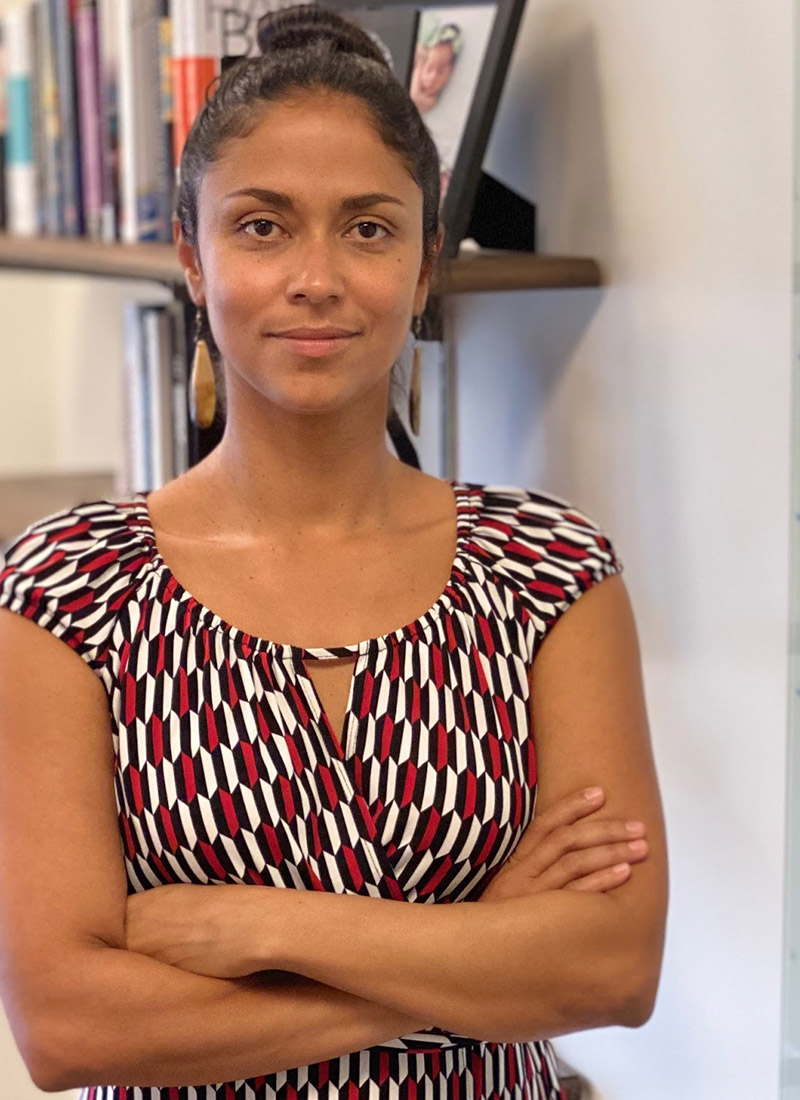
Jaqueline Oliveira is an Associate Professor of Economics at Rhodes College, located in Memphis, Tennessee. Prior to joining Rhodes College, she served as an Assistant Professor at Clemson University, teaching courses like Introduction to Econometrics and Family Economics. She holds a Ph.D. in Economics from Yale University (2013), with a dissertation focusing on intergenerational transfers, fertility, and human capital. Her research explores Development Economics, Environmental Economics, Family Economics, and Urban Economics. Her academic credentials include a B.A. in Economics from Federal University of Minas Gerais (2006), an M.Sc. in Economics from University of São Paulo (2008), and multiple advanced degrees from Yale University, including an M.A. (2009) and M.Phil (2011). Dr. Oliveira’s recent work examines climate impacts on migration, infrastructure effects on trade, and intergenerational support systems in aging societies. Her research often employs rigorous empirical methods, such as panel data analysis and spatial econometrics, to address pressing issues in developing economies. Contact: oliveiraj@rhodes.edu | Buckman Hall, Room 319 | (901) 843-3432
Timothy Verstynen is a Professor of Psychology and Neuroscience Institute at Carnegie Mellon University, affiliated with the Dietrich College of Humanities and Social Sciences. His research focuses on cognitive neuroscience, cognitive science, computational modeling, and learning science. He investigates how neural pathways regulate action planning, skill learning dynamics, and structure-function relationships in the brain. His work integrates psychophysics, computational models, and neuroimaging techniques (fMRI, TMS, diffusion imaging). Key research themes include: 1) Action selection and stopping mechanisms under sensory input; 2) Neurobiological bases of skill acquisition timelines; 3) White matter architecture's role in cognitive functions. Recent studies explore links between brain structure, cardiovascular health, and decision-making processes using multimodal imaging and machine learning. Notable publications address cortico-basal ganglia-thalamic circuits' role in decision policies, stress-brain connectivity, and reward-based learning. His CoAx Lab develops tools like CBGTPy for modeling decision-making systems. Research spans neuroimaging methodological advancements (e.g., local connectome fingerprinting) and translational health neuroscience projects.
John A. Higgins is a Professor of Geosciences at Princeton University, affiliated with the Department of Geosciences. He leads the Higgins Research Laboratory , focusing on paleoclimate and geochemistry. His research explores the evolution of Earth's carbon cycle, seawater chemistry, and post-depositional processes in carbonate sediments using numerical models and isotope analysis (e.g., Mg, Ca, K). Education : Not explicitly stated in provided text. Key research areas include diagenetic recrystallization, dolomitization, and hydrothermal alteration. His work integrates stable isotope studies with biogeochemical cycle modeling. Students advised include Lauren D. Gilmore, Fairuz Ishraque, Matthew Nadeau, and Gemma M. Sahwell. No specific grants or awards are listed in the provided data, though his lab's activities are highlighted in news updates about student achievements. Laboratory affiliations: The Higgins Research Laboratory (external link available).
Professor Dominic O'Brien is a Professor of Engineering Science at the University of Oxford and Senior Research Fellow at Balliol College. He serves as Director of the UK National Hub in Quantum Computing and Simulation. His research focuses on optoelectronics, optical wireless communications, and quantum key distribution. He leads the optical communications group and has authored over 200 publications in these areas. His work emphasizes high-speed free-space optical systems, UV-based secure communication, and beam-steering technologies. Education: MA and PhD from the University of Cambridge, followed by a DPhil from the University of Oxford. His research interests include quantum networks, photonics, and energy-efficient optical systems. Notable projects include handheld low-cost quantum key distribution systems and terabit-per-second fiber-wireless links. He collaborates on initiatives like the WORTECS project for virtual reality applications using optical wireless. Publications span topics from UV solar-blind OWC to liquid crystal beam steering. His work bridges academic and industrial applications, addressing challenges in both classical and quantum communication systems. He contributes to standards for visible light communications and next-generation wireless infrastructure.
Dr. Tyler Derr is an Assistant Professor in the Department of Computer Science at Vanderbilt University, with affiliate roles in the Data Science Institute and the Frist Center for Autism and Innovation. He holds a PhD from Michigan State University (2020) and focuses on data mining, machine learning, and graph neural networks with applications in drug discovery, ethical AI, and neurodiversity research. Education: PhD in Computer Science, Michigan State University (2020) M.S. in Computer Science, Pennsylvania State University B.S. in Computer Science and Mathematics, Pennsylvania State University His research emphasizes interdisciplinary social good, including drug discovery, education equity, and autism innovation. He directs the Network and Data Science (NDS) Lab, mentoring students who have won 50+ awards. Notable contributions include tools like FairNNV for fairness certification and datasets like WelQrate for drug discovery benchmarking. Awards include the NSF CAREER Award (2023), NVIDIA Academic Grant (2024), and Vanderbilt’s Career Catalyst Impact Award (2025). He co-founded the MLoG workshop series and serves on editorial boards for ACM TKDD and IEEE Transactions on Big Data . Grants & Leadership: NSF Grant for student travel to KDD2024 NVIDIA BioNeMo Platform grant for peptide design DOE Computational Science Fellowship advising His work bridges theory and practice, with tutorials on graph ML at AAAI/KDD and keynotes on ethical AI. The NDS Lab hosts interdisciplinary collaborations in computational biology, transportation, and neurodiversity advocacy.
Professor Inga Prokopenko is a faculty member at the University of Surrey's School of Biosciences (Faculty of Health and Medical Sciences), specializing in e-One Health and leading the Statistical Multi-Omics group. Her research focuses on genetic epidemiology, multi-omics approaches, and the comorbidity between metabolic disorders like type 2 diabetes and conditions such as cardiovascular disease, cancer, and mental health disorders. She leads studies on genetic determinants of blood glucose regulation, obesity-related risks, and shared pathophysiological pathways between diseases. Key research areas include: Genetic links between type 2 diabetes and cancers (breast, pancreatic, etc.) Mechanisms of GLP-1 receptor signaling in diabetes treatment Causal relationships between depression and diabetes using Mendelian randomization Role of abdominal obesity in cancer susceptibility She supervises PhD/MSc students in biosciences and medicine programs and develops computational tools like comorbidPRS for polygenic risk score analysis. Her work integrates large-scale genomic data from cohorts like the UK Biobank and EPIC studies to uncover shared genetic mechanisms across diseases. Recent work highlights include: Systematic reviews on flavan-3-ols and cardiovascular health Meta-analyses of trans-ethnic diabetes GWAS data Epigenetic studies linking blood metabolites to cancer risk Her research bridges statistical genetics with clinical applications, emphasizing precision medicine strategies for complex diseases.
Dr. Joseph Tay is an Honorary Lecturer in the School of Medicine at the University of St Andrews, affiliated with the Population and Behavioural Science Division. He also serves as Clinical Services Director at Forward Leeds. His research focuses on telemedicine applications in opioid use disorder (OUD) treatment, digital health equity, and global addiction medicine policy. Key interests include implementation science for telehealth, barriers to medication-assisted therapy, and addressing health disparities among marginalized populations such as homeless individuals and forcibly displaced persons. Dr. Tay’s work integrates interdisciplinary approaches, emphasizing stakeholder engagement and policy development. He has advised PhD students Sophie Given and Nina MacKenzie. His research outputs span peer-reviewed articles in journals like Journal of Medical Internet Research and The Lancet Psychiatry , covering topics such as AI in healthcare, opioid-cardiovascular disease links, and telemedicine scalability. Collaborations include global initiatives on OUD treatment models and pandemic responses in substance use care. Dr. Tay’s contributions extend to datasets on digital tool optimization for addiction care and presentations on reimagining telemedicine for OUD. Notably, he has explored digital exclusion among homeless populations and co-led the CO-CARDIO meta-analysis on opioid exposure and cardiovascular risks. His work bridges clinical practice, policy, and technology to improve access to evidence-based treatments, particularly in underserved communities.
Dr. Abigail Morris is a Lecturer in Organisational Health and Well Being at the University of Lancaster's Faculty of Health and Medicine. Her work focuses on developing and evaluating workplace health interventions, integrating mixed-methods research to address sedentary behavior, physical activity promotion, and climate change impacts on health. Collaborations include projects with Lancaster Environment Centre exploring local authority climate strategies and Net Zero goals. She has led initiatives like the SLAMM intervention for call center workers and process evaluations of eHealth/mHealth tools such as 'Exertime' and 'Rise and Recharge.' Research interests span interdisciplinary approaches to workplace health, with particular attention to innovative technologies and reducing health inequalities. Projects include feasibility studies on active commuting and the intersection of mental health with dental care access via link workers. Morris has presented at conferences including the International Society of Physical Activity and Health and UK Active Summit, and contributed to policy discussions through events like the Cycling UK Big Bike Revival Parliamentary Event. Awards include the Deans Award for Outstanding Contribution to the Faculty. She supervises PhD students Miriam El Irani and Ming Jin, and participates in research groups like the Centre for Organizational Health and Well Being and FHM Mental Health Theme.
Sergej Stoppel is currently a researcher (PostDoc) in the visualization group at the University of Bergen. His academic background includes a Mathematics master's degree (2014) and a PhD in 2018, both from the University of Bergen. His research focuses on visual data science, with an emphasis on interactive visualization techniques, human-computer interaction, and physical visualization systems. He has authored/co-authored numerous papers on topics such as hexagonal map enhancements, spatio-temporal data interaction, and low-cost physical art generation. Education: M.Sc. Mathematics (2014), University of Bergen PhD in Visualization (2018), University of Bergen Research Interests: His work spans data visualization, scientific visualization, and interactive techniques. Notable contributions include Vol²velle (printable interactive volume visualization widgets), Firefly (virtual illumination drones), and LinesLab (low-cost art generation systems). He explores methods to bridge the gap between virtual and physical visual representations, emphasizing user-centric design. Publications: His recent work includes advancements in hexagonal map visualization (2022), spatio-temporal selection techniques (2020), and illumination automation (2019). These contributions highlight his focus on enhancing data interpretation through novel interaction paradigms. Labs/Teams: Active member of the VisGroup at the University of Bergen, collaborating on projects like MetaVis and VIDI. His work is supported by grants involving visualization and medical imaging applications.
David López-Carr is a Professor of Geography at the University of California, Santa Barbara (UCSB), where he directs the Human-Environment Dynamics Lab (HED) and serves as Associate Dean of the University of California Education Abroad Program (UCEAP). He holds a PhD from the University of North Carolina (2002) and completed an NIH postdoctoral fellowship in Biostatistics. His research focuses on the interplay between population dynamics, health, rural livelihoods, and environmental conservation, with fieldwork in over 70 countries. He speaks five languages and has authored over 230 publications, supported by $10M+ in grants from NASA, NSF, NIH, and others. Education: PhD in Geography (UNC, 2002); Postdoc in Biostatistics (UNC School of Public Health). Research interests include climate change adaptation, schistosomiasis control via ecological interventions, and land degradation monitoring for UNCCD. He has pioneered studies linking dams to schistosomiasis outbreaks and developed frameworks for planetary health innovation in Africa. Awards include the 2024 ESA Sustainability Science Award, AAAS Fellowship (2014), and multiple mentoring/teaching accolades. His grants fund projects in Guatemala’s Maya Biosphere Reserve, sub-Saharan Africa, and California’s Central Valley. He advises graduate students Lívia Machado Costa and Nusrat Zahan Jarin. Labs/teams: Human-Environment Dynamics Lab (HED), leading interdisciplinary research on socio-ecological systems.
Yubai Yuan is an Assistant Professor of Statistics at the Pennsylvania State University, affiliated with the Department of Statistics within the Eberly College of Science. He holds a PhD from the University of Illinois Urbana-Champaign (2020) and completed postdoctoral research at UC Irvine. His research focuses on network science, causal inference, and statistical machine learning, with applications to neuroscience and social systems. Notable awards include the 2022 NSF-Simons Center Fellow Award and the 2019 ASA Student Paper Award. Education: PhD in Statistics (UIUC, 2020), MS in Statistics (Sun Yat-sen University, 2016), BS in Mathematics (Shandong University, 2012). Research interests span complex network analysis, optimal transport, active learning, and mediation analysis. Current projects include de-confounding causal inference and hypergraph modeling. Teaching includes courses on probability theory and statistical modeling at Penn State. Advises PhD students Yuanchen Wu (active learning on graphs) and Siyu Huang (latent network structures). Collaborates with the Center for Social Data Analytics and organizes workshops in statistical network science. Publications emphasize methodological advancements in network analysis, causal pathways, and data integration. Recent work addresses disaster response via social media data and neuronal activity analysis using optimal transport frameworks.
Luis Antonio Azpicueta Ruiz is an Associate Professor in the Department of Signal Theory and Communications at Carlos III University of Madrid. He leads research in the Signal Processing and Learning Group (GTSA) and Machine Learning for Data Science (ML4DS) group, focusing on interdisciplinary applications spanning acoustics, telecommunications, and machine learning. Research Interests: His work bridges signal processing theory with practical applications in environmental acoustics, adaptive filtering systems, and machine learning. Key research themes include: Advanced adaptive filtering architectures for nonlinear systems Distributed estimation in sensor networks Acoustic echo cancellation and room equalization Psychoacoustic evaluation methods Machine learning applications in noise monitoring and sound analysis Research Projects: Principal investigator for multiple funded projects including: Diagnóstico del ruido de chorro en aeronaves (AEI, 2022-2025) LearnINg FLow and Noise Dynamics via AI (COMUNIDAD DE MADRID, 2024-2026) BODYinTRANSIT - Sensory-driven Body Transformation (EUROPEAN COMMISSION, 2022-2026) Aprendizaje Automático para análisis Big Data (MINISTERIO DE ECONOMÍA, 2018-2021)
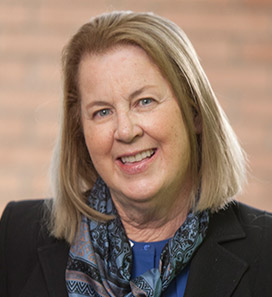
Eileen Crimmins, PhD, is a University Professor and AARP Chair in Gerontology at the USC Leonard Davis School of Gerontology. She holds dual appointments in the USC Schaeffer Center and the Department of Preventive Medicine. A member of the National Academy of Sciences, National Academy of Medicine, and American Academy of Arts and Sciences, her research focuses on biological and demographic aspects of aging, health disparities, and population health trends. She co-directs the USC/UCLA Center on Biodemography and Population Health and the NIA-sponsored Network on Biological Risk. Education: PhD and MA in Demography (University of Pennsylvania), BS in Mathematics (Chestnut Hill College) Affiliations: Co-director of the Multidisciplinary Training in Gerontology Program Her research integrates biological indicators into population studies, addressing global aging challenges such as health expectancy, mortality trends, and socioeconomic health disparities. Key contributions include advancing epigenetic aging clocks and their clinical applications, as well as analyzing dietary impacts on longevity. Recent work explores systemic aging heterogeneity via blood methylation tests, environmental influences on biological aging, and diet-based interventions. Over 248 publications span journals like PLoS Medicine, JAMA Network Open, and Nature Aging. Awarded the Kleemeier Award (2014) and Irene B. Taeuber Award (2023), she has co-edited seminal texts including Human Longevity and Explaining Diverging Longevity . Active in policy advocacy, her work informs global health strategies on aging populations.
Professor Mattias Jakobsson is a faculty member at Uppsala University's Department of Organismal Biology (Human Evolution), holding a PhD and Docent title. His research focuses on population genetics, human evolution, and genomic analysis of modern and ancient human populations. Jakobsson leads a lab using computational methods to study genomic variation, migration patterns, and adaptation in Stone Age Eurasia and sub-Saharan Africa. Key projects include investigations into hunter-gatherer populations, plague infections in Neolithic farmers, and genetic continuity in Scandinavia. Education: PhD (exact field unspecified), Docent Lab: Jakobsson Lab (website: jakobssonlab.iob.uu.se ) Research interests emphasize applying genomic data to understand human migration, admixture, and adaptation. Recent work highlights studies on HLA diversity in Thai hunter-gatherers, ancient European genetic shifts, and plague dynamics in Neolithic communities. Collaborations span global archaeological and genomic projects.
Bradley E. Aouizerat is a Professor at the College of Dentistry, New York University (NYU) , with a strong focus on oral-systemic health, genomics, and translational research. His work bridges dentistry, immunology, and chronic disease, particularly in populations affected by HIV, cancer, and health disparities. Education: BS in Microbiology/Molecular Genetics – University of California at Los Angeles PhD in Microbiology/Molecular Genetics/Immunology – University of California at Los Angeles MAS in Master of Advanced Science Research in Clinical – University of California at San Francisco His research interests span epigenetics, gene expression, pain mechanisms, microbiome, sleep, and inflammation , with a strong emphasis on biomarker discovery and minority health. He has led studies on DNA methylation in oral cancer, cytokine profiles in HIV, and the role of mitochondrial genetics in diabetes. His work often integrates machine learning and longitudinal cohort data from major studies like the Women’s Interagency HIV Study (WIHS) and Multicenter AIDS Cohort Study (MACS). His recent publications (2021–2025) reflect a broad and impactful research program, with studies in oral cancer, HIV persistence, depression in chronic disease, lymphedema, sleep disruption, and gut microbiota . These works highlight his interdisciplinary approach, combining molecular biology with clinical epidemiology and behavioral science. Key themes include epigenetic regulation of pain and opioid tolerance, neurodegenerative-like changes in cancer, and social determinants of inflammation . Scientific Awards and Recognition: Excellence in Research Mentoring Faculty Teaching Award (2013) Most Dedicated Mentor Award, PMCTR Fellowship Program (2009) Early Career Investigator Award, Bayer Healthcare International (2006) National Liver Scholar Award, American Liver Foundation (2004) Multiple early career and mentoring recognitions (2004–2006) He is an active mentor and collaborator , frequently co-authoring with junior researchers and leading interdisciplinary teams. His work has been supported by NIH-funded initiatives, including the Roadmap K12 program. He is a member of professional societies such as the American Heart Association, American Liver Foundation, and American Society for Human Genetics . He is involved in clinical and translational research teams focused on improving outcomes in cancer, HIV, and chronic pain. His lab and collaborators utilize advanced genomic and bioinformatic tools to uncover mechanisms linking biological systems with patient-reported outcomes. Future work is likely to expand on precision biomarkers, minority stress interventions, and real-time symptom detection using machine learning .