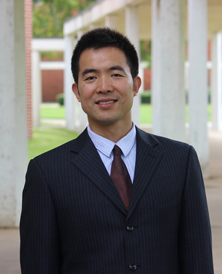
Dr. Songnian Li is a Professor and Associate Chair of Graduate Studies in the Department of Civil Engineering at Toronto Metropolitan University. His expertise spans geocollaboration systems, big geospatial data analytics, and digital twins for smart cities. He holds a PhD from the University of New Brunswick and a BEng from Wuhan Technical University of Surveying and Mapping. Dr. Li's research focuses on human mobility patterns, spatio-temporal dynamics, and geosocial media analysis. He has pioneered techniques for extracting real-time traffic insights from social media data and developed frameworks for urban solar energy mapping. His work emphasizes leveraging geospatial technologies for societal decision-making. Education: PhD (2002, UNB), BEng (1983, Wuhan) Professional Memberships: ISPRS Fellow, Editor-in-Chief of Canadian Journal of Remote Sensing Key achievements include the 2023 Career Achievement Award and 2020 ISPRS Fellowship. He supervises PhD and MASc students in geomatics, data science, and environmental management programs. His GIS and GeoCollaboration Lab explores cutting-edge applications like 3D urban modeling and cultural heritage preservation through point cloud analysis. Dr. Li advocates for student-driven research, evidenced by a supervisee's ultra-prestigious award-winning paper.
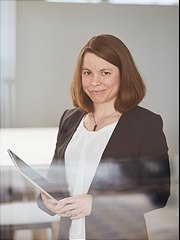
Dr. Michaela Regneri is a Senior Researcher at the Department of Informatics, University of Hamburg, affiliated with the Machine Learning group. She holds a PhD in Computer Science and focuses on interdisciplinary research at the intersection of artificial intelligence, computational linguistics, and ethical data practices. Her work emphasizes data minimalism, sustainable AI development, and clinical NLP applications for neurodiversity analysis. Research interests include: AI ethics and societal impact Resource-conscious machine learning Natural language processing for clinical narratives Knowledge graph construction Investigative data journalism tools Her recent articles explore topics like violence detection in ancient texts, conceptual abstraction in LLMs, and ethical frameworks for data usage. Notable projects include the new/s/leak visualization tool for journalists and the Seedling corpus development initiative. She actively contributes to low-resource language technologies and autism spectrum disorder discourse analysis. Professional activities include supervision of student projects and participation in interdisciplinary collaborations. Her work bridges technical innovation with critical societal discourse, particularly addressing German cultural skepticism towards AI development.
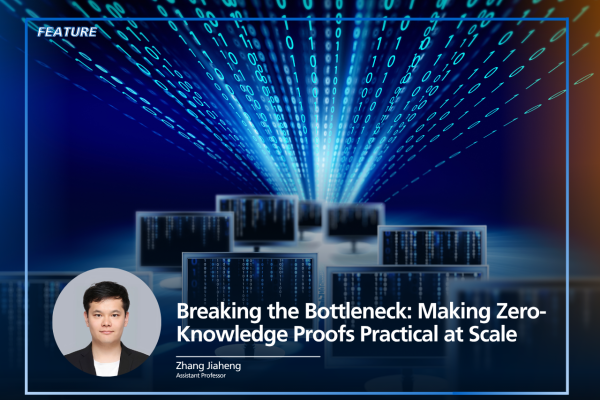
ZHANG Jiaheng is an Assistant Professor in the Department of Computer Science at the National University of Singapore (NUS), School of Computing. His work bridges cryptography, artificial intelligence, and system security, with a focus on scalable and privacy-preserving technologies. He teaches CS3235 – Computer Security and leads research in zero-knowledge proofs, LLM safety, and trustworthy AI. Research Interests: His research spans Cryptography , Security , Machine Learning & AI , Privacy , and Algorithms & Theory . He specializes in making zero-knowledge proofs practical at scale and securing large language models against jailbreaking, backdoors, and privacy leaks. His recent projects include zkGPT, BatchZK, and Guardreasoner, highlighting his dual focus on theoretical foundations and real-world applications. The recent publications show a strong trend toward scalable zero-knowledge systems and AI security , particularly in verifying and protecting LLMs. These works integrate cryptographic rigor with modern AI challenges, reflecting a cohesive research vision at the frontier of trustworthy computing. Scientific Contributions: Developed scalable collaborative zk-SNARKs for efficient proof generation. Pioneered techniques for secure LLM inference and jailbreak detection. Advanced GPU-accelerated and distributed zero-knowledge proof systems. Advising & Grants: While specific students and grants are not listed, his active publication record in top-tier venues suggests ongoing research supervision and external funding in cybersecurity and AI. He is likely involved in advising PhD and Master’s students in cryptography and AI security. Labs & Teams: He is part of the NUS School of Computing research ecosystem, potentially affiliated with cybersecurity or AI labs, contributing to Singapore’s leadership in privacy-preserving technologies.
Valderi Reis Quietinho Leithardt is an Assistant Professor at the Department of Information Science and Technology, Iscte – University Institute of Lisbon , Portugal, where he holds a full-time position with exclusive dedication. He is an integrated researcher at ISTAR-Iscte (Research Center in Information Sciences, Technologies and Architecture) and a Senior Member of the IEEE . His academic affiliations also include collaborations with the University of Coimbra, University of Salamanca, and Fondazione Bruno Kessler. Education: Post-Doctorate , University of Salamanca, Spain (2019–2021) Post-Doctorate , University of Coimbra, Portugal (2017–2019) PhD in Computer Science , Federal University of Rio Grande do Sul, Brazil (2011–2015) Master’s in Computer Science , Pontifical Catholic University of Rio Grande do Sul, Brazil (2006–2008) Bachelor’s in Data Processing Technology , Higher Education Center of Foz do Iguaçu, Brazil (1999–2002) Research Interests: Valderi's research focuses on Distributed Systems, Data Privacy, Internet of Things (IoT), Cloud Computing, and Intelligent Systems . He explores algorithmic solutions for secure and efficient data management in heterogeneous environments, with applications in smart cities, precision agriculture, healthcare, and energy systems. His work integrates machine learning, blockchain, and federated learning to enhance privacy, security, and system performance. Publication Trends: His recent publications (2024–2025) emphasize time series forecasting, anomaly detection, JVM optimization, and privacy-preserving AI . A strong trend is observed in applying machine learning to power grid fault prediction, blockchain-based healthcare data privacy, and data quality in federated learning. His work bridges theoretical computer science with real-world applications in infrastructure, sustainability, and digital security. Scientific Contributions: Senior IEEE Member Active contributor to open science and reproducibility Involved in interdisciplinary research networks: Embedded and Distributed Systems Laboratory, COPELABS, CTS, CANDEIIA Member of professional societies: IEEE (since 2011), Brazilian Computer Society (since 2003) Academic Service and Leadership: He has held leadership roles in academic programs, including Director and Coordinator of the Master's in Computer Science and Management at Iscte (2025–2027). He actively organizes and participates in scientific events such as IEEE CIoT, DiTTEt, SBSeg, and MobiSPC, serving on organizing and scientific committees. He has coordinated workshops like WTTFC 2024 and 2025, promoting technological trends in future computing. Labs and Research Groups: He is a collaborator in several research networks, including: Embedded and Distributed Systems Laboratory (since 2016) Expert Systems and Applications Laboratory (since 2019) COPELABS – Human-Centered Computing and Cognition (since 2020) Fondazione Bruno Kessler (2021–2025) Center for Technology and Systems (CTS) (since 2023) Advanced Center for Development of Intelligent Systems and Artificial Intelligence (CANDEIIA) (since 2024)
Dr. Bin Liang is a Senior Lecturer at the University of Technology Sydney (UTS), working within the Faculty of Engineering and Information Technology and the Data Science Institute. He joined UTS in December 2018 as a Lecturer and was promoted to Senior Lecturer in July 2022, following his postdoctoral fellowship at Data61 (CSIRO). PhD in Computer Vision, Pattern Recognition, and Machine Learning from Charles Sturt University, Australia (2012-2015) Masters in Computer Science from Taiyuan University of Technology, China (2009-2012) BEng in Computer Science from Taiyuan University of Technology, China (2005-2009) Dr. Liang's research spans data mining, machine learning, computer vision, pattern recognition, and survival analysis, with a strong focus on practical applications in critical infrastructure. His work develops sophisticated machine learning frameworks for anomaly detection, failure prediction, and optimization in water infrastructure, flood mapping, and real estate appraisal. He has pioneered approaches that integrate graph neural networks with temporal analysis for pipe failure prediction and has made significant contributions to water quality optimization through data-driven methods. His research consistently bridges theoretical advancements with practical implementation in industry settings. His recent publications demonstrate a clear trajectory toward increasingly sophisticated models that capture complex temporal and spatial relationships in infrastructure data. There's a notable emphasis on multimodal learning approaches and domain generalization techniques that enhance model robustness across diverse application scenarios. His work on anomaly detection frameworks like MLAD shows innovation in grouping sensors by temporal characteristics for more accurate monitoring. 2022 – AWA R&D Excellence Award (NSW) 2022 – UTS Medal for Research Impact 2022 – Finalist for 2021-22 AWA Young Water Professional of the Year Award (NSW) 2020 – Finalist for the Best Paper Award of the ICARCV 2020 2019 – Industrial & Primary Industries Merit at the Victorian iAwards 2018 – Australian Museum Eureka Prize for Excellence in Data Science Dr. Liang actively supervises Masters Research and PhD students, focusing on data science applications for infrastructure management. His research has been supported through industry partnerships with water utilities and other infrastructure organizations, translating academic research into practical solutions that reduce water loss, improve infrastructure reliability, and enhance environmental sustainability. His work on pipe failure prediction and leak detection has directly contributed to operational improvements in water distribution networks. As a core member of the Data Science Institute at UTS, Dr. Liang collaborates with interdisciplinary teams working on data-driven solutions for urban infrastructure challenges. His research group focuses on developing scalable machine learning models that can be deployed in real-world settings, often working directly with industry partners to validate and implement their approaches. This industry-academia collaboration ensures that his research remains grounded in practical challenges while pushing the boundaries of data science methodology.
Dr. Yueqing Li serves as an Associate Professor in the Department of Industrial and Systems Engineering within Lamar University's College of Engineering. His expertise spans neuroergonomics, human-computer interaction, and data analytics with significant contributions to transportation safety and assistive technologies. Dr. Li's educational foundation includes: Ph.D. in Industrial Engineering from North Carolina State University M.S. in Industrial Engineering from University of Arkansas M.S. in Economics from Nanjing University of Aeronautics and Astronautics B.S. in Electronics Engineering from Zhengzhou University His research program integrates neuroergonomics (BCI systems, neurocognitive processing), human-computer interaction (haptic interfaces, AR-based systems), human factors engineering (driving safety, occupational ergonomics), and data science (machine learning applications for safety analytics). Current projects focus on UAV security systems, pipeline leak detection, and transportation resilience in extreme weather. Analysis of Dr. Li's 15 most recent publications reveals dominant themes in transportation safety (32% of works), neuroergonomics applications (28%), and machine learning for safety engineering (24%). His Southeast Texas-focused crash severity studies demonstrate methodological innovation through CART and fuzzy systems, while his BCI research bridges rehabilitation engineering and human factors. Key recognitions include: Engineering Faculty Fellow (Lamar University College of Engineering, 2017-2020) Eric Malstrom Endowed Memorial Scholarship (University of Arkansas) Multiple university-level teaching and research awards across three institutions Dr. Li actively mentors graduate students (11 primary advisees since 2017) and secures substantial research funding, including $516,031 from NSF for high-performance computing infrastructure and $33,172 from the Center for Advances in Port Management for autonomous freight safety. His $600,000+ grant portfolio addresses critical challenges in port security, pipeline monitoring, and transportation resilience. The Human Factors and Ergonomics Laboratory under Dr. Li's direction features 16-channel EEG systems, BIOPAC data acquisition suites, wireless EMG/ECG modules, driving simulators, and Gazepoint eye tracking technology. His research team collaborates with TEES and the Texas Department of Transportation on interdisciplinary projects spanning neuroergonomics, transportation safety, and assistive technology development.
Yuntong She is a Professor in the Department of Civil and Environmental Engineering at the University of Alberta's Faculty of Engineering, holding this position since 2024 after progressing from Assistant Professor (2012-2019) to Associate Professor (2019-2024). His research focuses on computational hydraulics with specialization in cold regions engineering and infrastructure resilience. His educational background includes: Ph.D. in Civil & Environmental Engineering, University of Alberta (2004-2008) M.Sc. in Hydraulic Engineering, Tsinghua University (2000-2003) B.Sc. in Hydraulic Engineering, Tsinghua University (1996-2000) Dr. She's research centers on river ice engineering, freeze-up/breakup processes, and ice jam flood forecasting, with additional expertise in sediment transport, urban drainage systems, and oil pipeline integrity. His work combines advanced computational modeling with field data analysis to address hydraulic challenges in cold climates, particularly focusing on infrastructure protection and climate change adaptation. Recent projects demonstrate strong integration of machine learning techniques for ice quantification and transient analysis for pipeline monitoring. Analysis of his 15 most recent publications (2019-2023) reveals three dominant research thrusts: (1) river ice dynamics and flood forecasting (40% of publications), particularly ice jam formation and breakup initiation; (2) pipeline safety and leak detection using transient analysis methods (25%); and (3) renewable energy system performance in cold climates, especially snow impacts on solar panels (15%). His work consistently bridges theoretical modeling with practical engineering applications in Canadian river systems. His scientific recognition includes: Editor's Choice award from Science of the Total Environment (2020) CGU-HS CRIPE Gerard Medal for river ice research (2009) Dr. She actively supervises graduate students, as evidenced by multiple publications with student first authors across river ice, pipeline, and renewable energy topics. His teaching portfolio includes core courses CIV E 431 Water Resources Engineering, CIV E 395 Civil Engineering Analysis III, and specialized CIV E 636 River Ice Engineering. Research collaborations span multiple Canadian institutions with field studies concentrated in the Mackenzie Delta and North Saskatchewan River systems. His laboratory work involves computational modeling of ice processes and pipeline systems, utilizing both proprietary simulation tools and public-domain models like River1D. Current projects focus on climate change impacts on river ice regimes and machine learning applications for real-time infrastructure monitoring in cold regions.