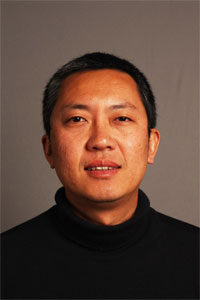
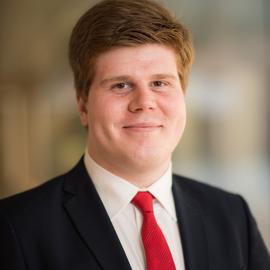
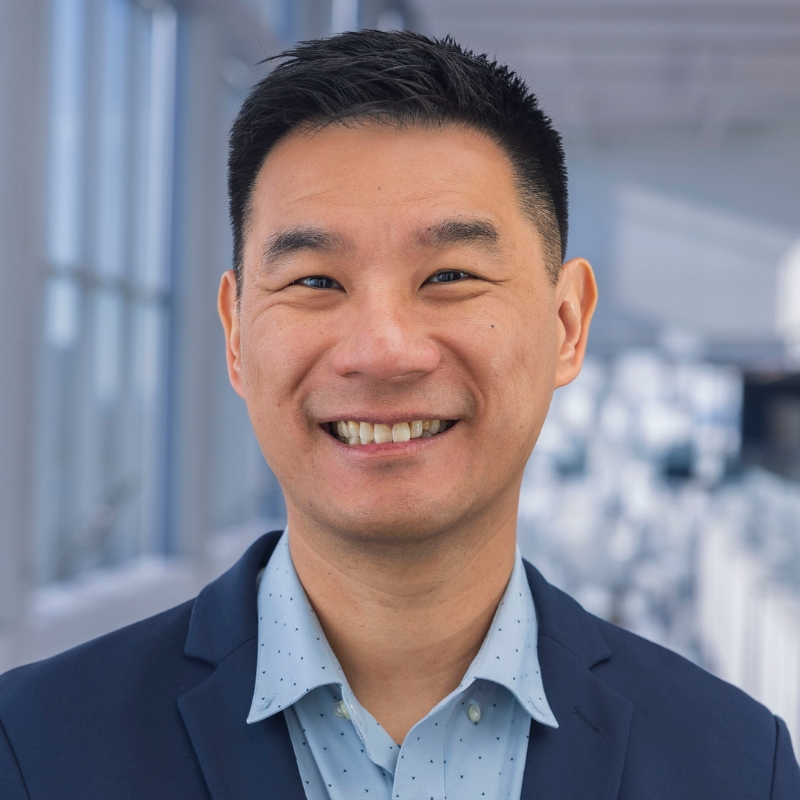
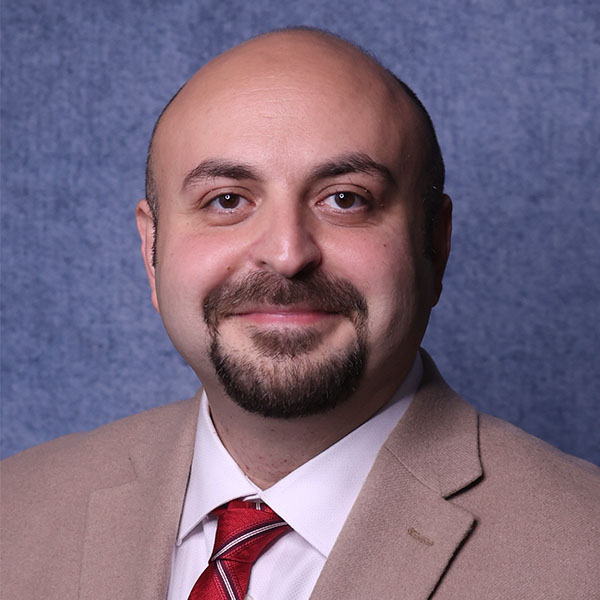
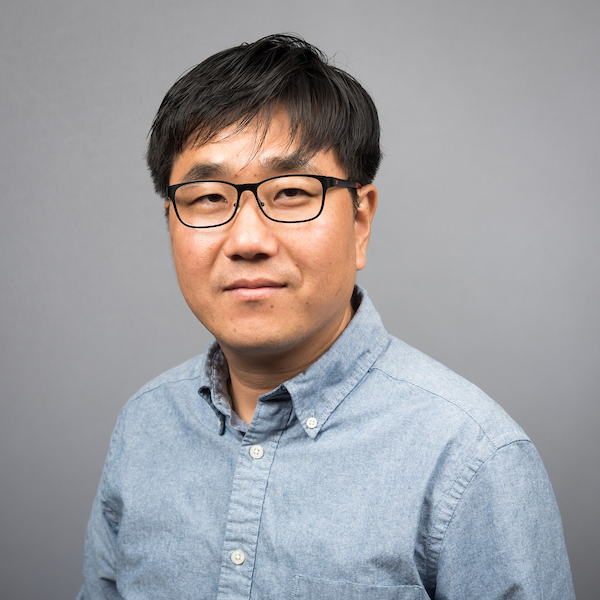
Dr. Feng Chen is a Senior Lecturer at the School of Computer Science and Informatics, De Montfort University (UK), affiliated with the Cyber Technology Institute within the Software Technology Research Laboratory. With academic qualifications from Nankai University, Dalian University of Technology, and De Montfort University, he specializes in software engineering, focusing on Model Driven Architecture (MDA), Service Oriented Architecture (SOA), and Cyber-Physical Systems. PhD thesis: Modernizing legacy systems via MDA Research themes: Cloud/Edge Computing, Internet of Things, Ambient Assisted Living Systems His 15 most recent publications span topics in sensor data segmentation, service-oriented architectures, and data leakage prevention. Notable scientific achievements include the Second Class Dalian Information System Application Prize , Golden Snake Prize , and a Best Paper Award at Healthcom . He supervises PhD students in areas like real-time systems and smart environments, and has secured significant research grants including an EU Horizon 2020 project (€3.8M) .
Mert D. Pesé is an Assistant Professor of Computer Science and Founding Director of the TigerSec Laboratory at Clemson University's School of Computing. His research focuses on autonomous vehicle security, adversarial machine learning, generative AI applications in security, and automotive data privacy. He holds a PhD in Computer Science and Engineering from the University of Michigan (2022), an MSc in Electrical Engineering from Technische Universität München (2016), and dual BSc degrees in Electrical Engineering and Computer Science (2015). His work involves collaboration with automotive companies like BMW, General Motors, Ford, Audi, DENSO, and Harman, supported by grants from the US Army GVSC and NSA. Recent projects include DENSO-funded research with Purdue University and leadership in the TigerSec Lab, which has onboarded PhD students Alkim Domeke and David Fernandez and Master’s student Jan de Voor. Key research trends in his publications emphasize securing automotive networks (e.g., CAN Bus vulnerabilities), adversarial attacks on AI-driven systems, and privacy-preserving techniques for vehicular data. His frameworks like FuzzSense and AutoWatch showcase innovations in automotive software testing and driver behavior analysis. Grants and collaborations highlight applied security solutions for modern vehicles, while his TigerSec Lab serves as a hub for exploring cutting-edge automotive cybersecurity challenges.
Elias Athanasopoulos is an Associate Professor in the Department of Computer Science at the University of Cyprus. His research focuses on systems security and privacy, with particular emphasis on web application security, hardware-based defenses, and privacy-preserving technologies. He holds a Ph.D. in Computer Science from the University of Crete (2011) and a BSc in Physics from the University of Athens (2005). Prior to joining the University of Cyprus, he served as an Assistant Professor at Vrije Universiteit Amsterdam. His work has been recognized with awards such as the Best Paper Award at IEEE European Symposium on Security and Privacy 2020 and the DCSR Best Paper Award at the 23rd USENIX Security Symposium. His research spans topics including fuzzing frameworks, adversarial machine learning, and network security. Elias has published extensively in top-tier conferences like IEEE Security & Privacy, ACM CCS, and Usenix Security. His contributions include practical solutions like Lethe for data breach detection and auth.js for advanced web authentication. He has also held fellowships at Columbia University (Marie Curie) and collaborated with organizations like Microsoft Research and FORTH. His teaching and research interests integrate theoretical and applied aspects of security, emphasizing real-world impact. Current projects explore vulnerabilities in modern systems and developing robust defenses against emerging threats.
Stephen Petrie is an Earth Observation Research Fellow at Swinburne University of Technology's Space Technology and Industry Institute, leading the Remote Sensing Program's Earth Observation stream. He holds a PhD in infectious disease modelling from the University of Melbourne, with prior degrees in theoretical cosmology (MPhil) and a BSc (Hons) in physics. His research spans interdisciplinary fields including satellite Earth Observation, machine learning, neural networks, and mathematical biology. He has extensive experience in high performance computing and cloud infrastructure (AWS, Nectar). His work integrates artificial intelligence with environmental and biomedical applications, such as developing novel text-image hybrid classifiers for entity disambiguation and advancing assistive vision technologies using self-attention networks. Current projects include carbon accounting via satellite fusion systems and methane plume detection using neural networks. Petrie has secured multiple grants totaling over AUD 10M, including ARC-funded research on automated horizon scanning and industry collaborations for water leak detection. Key Projects: Satellite hardware optimization frameworks, AI-driven agricultural carbon monitoring Teaching: Supervised 4 HDR students in machine learning, remote sensing, and interdisciplinary research team dynamics Labs/Teams: Remote Sensing Program leader within Swinburne's Space Institute
Jui-Kai Wang (Ray) is an Assistant Professor in the Department of Ophthalmology at UT Southwestern, joining in 2024. His research focuses on ophthalmic image analysis using machine learning and deep learning techniques across modalities like OCT, OCTA, LSFG, and color fundus photography. PhD in Electrical and Computer Engineering (2016), The University of Iowa MS in Computer and Communication Engineering, National Cheng Kung University BS in Electronic Engineering, Southern Taiwan University of Science and Technology Research spans ocular disease diagnosis , neurodegenerative imaging , and radiation therapy effects , leveraging multimodal imaging and advanced analytics. Recent work includes OCT layer segmentation, papilledema classification, and vascular biomarker discovery. Scientific contributions recognized through the Xtreme Research Award (Heidelberg Engineering, 2021) and ARVO travel grant (2019). Collaborative projects include NIH-funded research on glaucoma and radiation-induced vision loss.
Dr. Tong Liu is a Lecturer in Pervasive Data Science at the Department of Computer Science, School of Computer Science, University of Sheffield, UK. Previously, he served as a Research Associate at the Sargent Centre for Process Systems Engineering at both Imperial College London (2022-2023) and the University of Sheffield (2021-2022), and as a visiting researcher at the University of Southampton (2018-2019). His academic journey reflects a strong foundation in control theory and data science with applications across multiple domains. Dr. Liu obtained his B.S. degree in Automation and Ph.D. degree in Control Theory and Engineering in 2016 and 2021, respectively, from Chongqing University, China. During his doctoral studies, he also conducted research at the School of Electronics and Computer Science, University of Southampton (2018-2019). Dr. Liu's research focuses at the intersection of machine learning, data science, and decision-making. His primary expertise lies in advancing sustainable and lifelong AI methodologies for pervasive data analytics to support intelligent decision-making. His work spans multiple application domains including industrial automation, precision agriculture, and healthcare informatics. Specific research areas include lifelong learning, online learning, transfer learning, time series and streaming data analytics, adaptive modeling of dynamic processes, and safe learning and optimization. His research has practical implications for developing more efficient, sustainable, and intelligent systems across various industries. Dr. Liu's recent publications demonstrate a strong focus on lifelong learning frameworks, adaptive modeling for industrial processes, and applications in precision agriculture and healthcare. His work shows a progression from foundational algorithm development to practical implementations in real-world systems. A notable trend is the integration of domain knowledge with machine learning techniques to create more efficient and reliable systems. His research increasingly emphasizes sustainability and safety considerations in AI applications, reflecting broader trends in responsible AI development. Dr. Liu serves as Course Director for MSc Advanced Computer Science at the University of Sheffield. He is actively involved in research funding, including as Co-PI on the KG-PPN project: 'Knowledge Guided Multimodal AI for Automatic Quantification and Infestation Estimate of Plant-Parasitic Nematodes,' funded by Innovate UK (06/2025 - 02/2026, £54,388). His research group, the Pervasive Computing Group, focuses on developing AI solutions for real-world challenges across multiple domains. Dr. Liu is affiliated with the Pervasive Computing Group at the University of Sheffield's School of Computer Science. His research collaborations span multiple institutions including Imperial College London, University of Southampton, and various industry partners including Shell. His work often involves interdisciplinary teams bringing together expertise in machine learning, control systems, and domain-specific knowledge from agriculture, healthcare, and industrial engineering.
Filippo Stanco is a Full Professor at the Department of Mathematics and Computer Science at the University of Catania. He serves as President of the Bachelor's Degree in Computer Science (since 2017) and Deputy Rector for Technological Innovation (since 2019). His career includes positions as Associate Professor (2014-2023), Assistant Professor (2006-2014), and research fellowships at the Universities of Catania and Trieste. Education: PhD in Computer Science (2003) from University of Catania Bachelor's Degree in Computer Science (1999, summa cum laude) from University of Catania His research spans image processing, computer vision, and machine learning with applications in cultural heritage preservation, medical imaging, industrial automation, and multimedia systems. He leads the Archeomatica Project developing digital tools for archaeology and coordinates multiple national research projects including DREAMIN and CLEAR. Stanco has published extensively on food image analysis, document authentication, video processing, and heritage conservation. His work frequently employs deep learning, 3D modeling, and color science techniques across interdisciplinary domains. Honors: Best Session Paper Award at IPAS 2020 Cookpad Student Travel Grant at CEA 2018 Meritorious Papers recognition in Computers in Biology and Medicine (2016) He coordinates the Archeomatica research group and serves on editorial boards for multiple journals including ACM Journal of Computing and Cultural Heritage and IET Image Processing. Stanco has supervised over 200 theses and teaches courses on multimedia systems, game development, and image processing.
Professor Mohammad Moshirpour is a faculty member at the University of California, Irvine (UCI), affiliated with the School of Information and Computer Sciences and the Department of Computer Science. As Director of the Software Engineering Practice and Education (SEPE) Lab, his work spans applied software engineering, artificial intelligence, machine learning, and educational methodologies. He emphasizes practical applications, collaborating with healthcare institutions (e.g., University of Calgary nursing faculty), industry partners, and academic institutions to address real-world challenges such as pipeline monitoring, video restoration, and dementia therapy through virtual reality. His research interests include software requirements engineering, AI-driven software development, and innovative education models like project-based learning (PBL) and hackathon-based assessment. He advocates for hands-on learning, comparing software engineering education to medical training. His SEPE Lab focuses on creating scalable, maintainable software solutions with a strong emphasis on AI integration. Key collaborations include work on parent-child interaction analysis via machine learning and video super-resolution techniques. Professor Moshirpour’s recent projects highlight cross-disciplinary innovation, such as leveraging federated learning for video enhancement and applying Monte Carlo methods to pipeline monitoring. His educational contributions include frameworks for agile teaching, automated feedback systems, and curriculum modernization. While no specific awards are listed, his work reflects a commitment to bridging theoretical research with practical implementation.
Dr. Donghoon Kim is an Associate Professor in the Department of Computer Science at Arkansas State University, part of the College of Engineering & Computer Science. He holds a PhD from North Carolina State University and a Master of Science from Auburn University, following a software engineering role at Samsung Electronics in Korea. His research focuses on cloud computing security, high-performance computing, software engineering, parallel computing, and wireless network security. His work bridges theoretical advancements with practical applications in cybersecurity and machine learning. Dr. Kim’s research interests include analyzing machine learning approaches for detecting Android and IoT malware, enhancing deep hashing models for image retrieval, and improving authentication systems for digital content. He has contributed to optimizing multimedia data processing and evaluating Tor network vulnerabilities through real-time fingerprinting techniques. His teaching expertise spans software engineering and computer architecture. While his Google Scholar publications highlight cutting-edge work in cybersecurity and machine learning, no formal grants or awards are listed. His academic contributions emphasize both foundational research and applied solutions to modern computing challenges.
Dr. Wai-keung Fung is a Senior Lecturer in Electronics, Robotics & Control Engineering at Cardiff Metropolitan University's Cardiff School of Technologies. He holds a PhD in Mechanical and Automation Engineering from the Chinese University of Hong Kong (2001) and has held academic roles at the University of Manitoba (Canada) and Robert Gordon University (UK). He is Programme Director for the BEng/MEng in Electronics and Computer Systems Engineering and co-leads the EUREKA Robotics Centre. He is a Fellow of the Higher Education Academy (FHEA), IEEE Senior Member, and IET member. His research focuses on Autonomous Robotics , Computational Intelligence , and Human-machine Interaction , with recent work spanning gender bias in speech processing, underwater communication systems, and medical diagnostics via EEG analysis. His interdisciplinary contributions bridge robotics, machine learning, and engineering applications. Awards: Fellow of the Higher Education Academy (FHEA) since 2015 IEEE Senior Member since 2009 IET Member since 2017 Labs & Affiliations: EUREKA Robotics Centre (Cardiff School of Technologies) His research has been published in IEEE conferences and journals, addressing challenges in robotics, medical AI, and pipeline monitoring. He continues to advance applied technologies with industry and academic collaborations.
Huan Wu is an accomplished academic researcher with a substantial publication record spanning nearly three decades (1996-2025), comprising 63 indexed publications in the dblp database. Their scholarly work demonstrates expertise across multiple technical domains with significant contributions to optical communication systems, wireless networking, and artificial intelligence applications. Research interests focus on the intersection of electrical engineering and computer science, particularly in developing advanced sensing technologies using optical fibers, creating efficient communication protocols for IoT systems, and applying machine learning techniques to environmental monitoring and biomedical applications. Recent work shows a strong trend toward AI integration for infrastructure monitoring systems, including water pipe leak detection and hydrological modeling, as well as healthcare applications like non-invasive glucose monitoring and medical image analysis. The publication portfolio reveals a clear evolution from foundational work in signal processing and communication systems toward increasingly interdisciplinary research that bridges engineering with environmental science and healthcare. Recent publications (2023-2025) demonstrate particular strength in graph neural networks, distributed sensing systems, and AI-driven solutions for critical infrastructure monitoring. Based on publication patterns including consistent first-author contributions, supervisory roles evident in student collaborations, and extensive research output, Huan Wu appears to hold a senior academic position with significant research leadership. The collaborative nature of the work, involving multiple institutions across China and internationally, suggests active participation in major research initiatives and substantial grant funding, though specific details are not provided in the publication records.
Prof. Paola Pierleoni is a Researcher at the Department of Information Engineering of the University of Ancona and Marche Polytechnic (UNIVPM) . Her work focuses on IoT, telecommunications, and wearable sensor systems applied to healthcare, disaster management, and industrial automation. She leads projects in real-time data processing , embedded machine learning , and cross-protocol communication , with notable contributions to earthquake early warning systems and diabetes therapy optimization. Her research combines telecommunications engineering with health monitoring applications , including gait analysis for Parkinson’s disease, stress assessment via wearable sensors, and underwater diver monitoring. She has developed low-cost IoT solutions for infrastructure monitoring (e.g., water leak detection) and AI-driven algorithms for medical diagnostics and industrial predictive maintenance. Key projects include: Earthquake Early Warning systems using MEMS accelerometers AIoT frameworks for ambient assisted living (AAL) Bluetooth mesh network optimization for latency-sensitive applications Machine learning models for diabetes therapy personalization Her work emphasizes interdisciplinary collaboration , integrating engineering, computer science, and medical expertise. Office hours are held on Mondays 9:00–13:00 at the Department of Information Engineering, Via Brecce Bianche.
Aime LAY EKUAKILLE is an Associate Professor at the University of Salento's Department of Innovation Engineering, part of the Ecotekne Center in Lecce, Italy. His expertise spans instrumentation and measurement systems for biomedical, environmental, industrial, nanotechnology, machine learning, and photovoltaic panel aging applications. He is involved in interdisciplinary projects, such as smart sensors for telemedicine, energy-efficient robotic systems, and geothermal probe design. His research integrates advanced signal processing (e.g., wavelet transforms, machine learning algorithms) with sensor technology to address challenges in healthcare, environmental monitoring, and renewable energy. He has contributed to hardware-software solutions like solar-powered spectrophotometers and anti-theft systems for photovoltaic plants. Collaborations include international initiatives in nanotechnology, wearable devices, and IoT-based tele-rehabilitation. Key projects include: Development of a robotic arm for ball bearing sorting using size measurements and RFID. Designing a distributed edge computing architecture for leak detection in waterworks. Optimizing fertilizer dosing in smart fertigation pipelines through modeling and control. Investigating the magnetic behavior of nanosized contrast agents for medical imaging. He has presented at conferences such as IEEE MeMeA (2020), I2MTC (2020), and EnvImeko (2019, 2017). His work is supported by grants like the Ministry of Health's GR-2016-02361306 and Guangdong Province's 2019B010150002.
Aime Lay-Ekuakille is an Associate Professor at the Department of Innovation Engineering, University of Salento, Italy. Their research spans multiple domains of instrumentation and measurement systems, with particular expertise in biomedical applications, environmental monitoring, industrial instrumentation, nanotechnology, machine learning, and photovoltaic panel aging. The academic maintains an active research profile with numerous collaborations across international institutions. Research interests focus on developing advanced sensor systems and measurement techniques for diverse applications. This includes biomedical instrumentation for healthcare monitoring and diagnostics, environmental sensing for pollution detection and water management, industrial applications for harsh environments, and nanotechnology-based sensing solutions. Machine learning approaches are frequently integrated into their work to enhance data analysis and system performance. Recent publication trends demonstrate consistent output in high-impact journals with a strong emphasis on practical applications of sensor technology. The work spans from fundamental sensor development to system integration for specific applications in healthcare, environmental monitoring, and industrial settings. A significant portion of research involves interdisciplinary collaboration, particularly between engineering disciplines and medical or environmental applications. Research activities include leadership in multiple projects related to sensor development, with particular focus on instrumentation for biomedical applications, environmental monitoring systems, and nanotechnology-based sensing solutions. The academic has established collaborations with numerous international researchers across Europe and beyond. Current work involves several research groups focused on sensor development, with particular emphasis on biomedical instrumentation, environmental monitoring systems, and nanotechnology applications. The laboratory environment supports interdisciplinary research bridging engineering, medical science, and environmental science through advanced instrumentation development.
Dr. Daniele Lain is a Researcher at ETH Zürich's Institute of Information Security, part of the Professorship for Computer Science. His work focuses on cybersecurity, phishing prevention, and trusted execution environments. He explores user-centric security solutions, compiler vulnerabilities, and hardware-software co-design for robust systems. His research often addresses real-world challenges like phishing defense mechanisms, side-channel attacks, and privacy-preserving technologies. Notable contributions include studies on organizational phishing resilience, secure cloud storage (2fe), and mitigating compiler-induced timing attacks. He also investigates acoustic eavesdropping in VoIP systems and identity leasing via trusted execution environments. His work bridges theoretical advancements with practical applications, emphasizing user behavior and system integrity. His publications span 2015-2025, covering topics like misinformation detection in social networks, LTE network vulnerabilities, and password leakage via keystroke videos (PILOT). Though no awards are listed, his research is widely cited in security communities. He collaborates with industry and academia to develop tools like IntegriScreen for remote session supervision and SILK-TV for keystroke timing analysis.