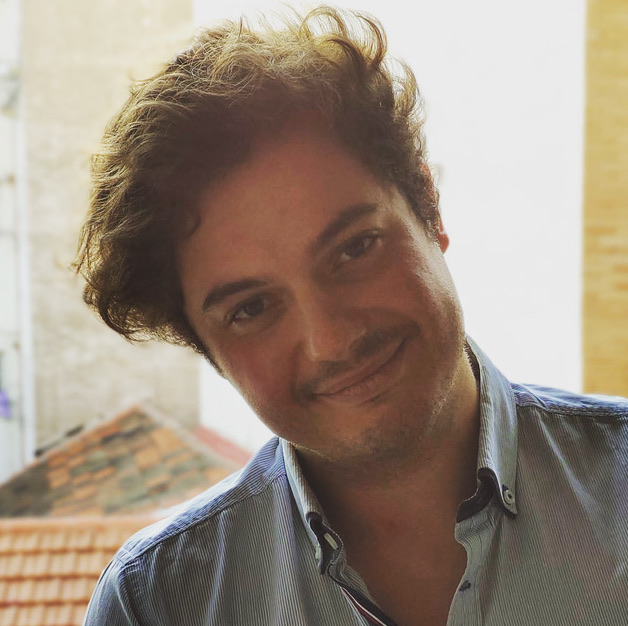
Dr. Zenon Michaelides is Reader in Business Analytics (equivalent to Associate Professor) at Manchester Metropolitan University Business School. With extensive industry experience, he bridges academic research with applied digital transformation in enterprise contexts. His research examines digital transformation, business analytics, supply chain optimization, and Industry 4.0 technologies. Michaelides leads knowledge transfer partnerships worth over £1.2M, collaborating with aerospace, retail, and public sector organizations. As Deputy Head of Research Ethics and Governance, he oversees compliance frameworks. He represents the university in SAP/AWS/Celonis academic partnerships. His publications emphasize practical applications: sustainability reporting, lean management in developing economies, big data in SCM, and RFID/e-business systems. Recent work analyzes organizational drivers for sustainable manufacturing and social value in procurement. He teaches postgraduate/executive courses on analytics, Industry 4.0, and digital leadership. His TEDx talk on cloud computing/ERP reflects commitment to translating technical concepts for broader audiences.
Briana Wyatt is an Assistant Professor in Soil Physics & Hydrology at Texas A&M University's College of Agriculture & Life Sciences. She leads research on soil moisture dynamics using in-situ/remote sensing data to quantify water balance components. Her work supports sustainable management of soil/water resources. Education: Ph.D. Soil Science - Applied Soil Physics & Hydrology, Oklahoma State University (2019) M.S. Plant and Soil Science, Oklahoma State University (2015) B.S. Environmental Science, Oklahoma State University (2013) Research Focus: Integrates meteorological data, soil moisture monitoring, and remote sensing to analyze evapotranspiration, drainage patterns, and hydrological fluxes across landscapes. Current projects examine soil health impacts on water cycles and develop precision agriculture tools. Awards: Early Career Award (2024) Students: Seyed Ali Azizi Jaiveer Brar Ke Ni Bismark Osei Mingxiu Wang Kathryn Watson Dallas Williams
Dr. Alexandros Seretakis is an Assistant Professor of Law at Trinity College Dublin's School of Law, specializing in financial regulation, fintech, and alternative investment funds. He holds a law degree from Aristotle University of Thessaloniki, an LL.M. in Banking and Finance from University College London, and an LL.M. in Corporation Law from New York University. He is a qualified lawyer in Greece and New York, with prior roles including consultant for a US investment firm and expert at the European Court of Auditors. His research focuses on digital finance regulation, blockchain, central bank digital currencies, and corporate governance. He contributes to global media like the Financial Times and advises on EU financial policies. Seretakis co-founded Trinity's interdisciplinary MSc in Law and Finance program and serves on bodies like Blockchain Ireland Legal Working Group and the Digital Euro Association. Education: LL.B., Aristotle University of Thessaloniki LL.M., Banking & Finance Law, University College London LL.M., Corporation Law, New York University PhD, University of Luxembourg Awards: 2023: Fellowship of Trinity College Dublin 2021: Master in Arts (jure officii), University of Dublin 2010-11: NYU Dean's Merit Scholarship Professional Roles: Adjunct Lecturer, University of Luxembourg and Institute of Bankers Ireland Expert, European Court of Auditors Member, Digital Euro Association His research explores fintech innovation, CBDCs, and regulatory harmonization in EU financial markets. Recent work addresses gaps in digital financial regulation and the evolving role of blockchain in securities markets. He advises on emerging technologies' legal frameworks and corporate governance reforms. Active in academic leadership, he directs Trinity's MSc in Law and Finance and supervises PhD candidates researching investment fund regulation and fintech. His work bridges legal scholarship with practical policy solutions for evolving financial ecosystems.
Professor John Morrison is the founder and director of the Centre for Unified Computing and co-founder of the Boole Centre for Research in Informatics at University College Cork. With qualifications including BSc, MSc, PhD, and DipTLHE, his research focuses on parallel distributed computing, grid technologies, and cloud architectures. His primary research explores: Self-organizing cloud management systems Heterogeneous computing environments Energy-efficient cloud infrastructure Grid computing middleware Professor Morrison's publications demonstrate strong focus on cloud computing optimization, distributed systems, and virtual reality applications in healthcare and education. Recent work emphasizes scalable resource management and trust systems in cloud environments. Honors include: Senior Member of ACM Senior Member of IEEE He has secured significant research funding including: €883,226 from Horizon 2020 for CloudLightning Project €379,111 from Enterprise Ireland for Cloud Computing Centre €646,604 from Higher Education Authority for Biophotonics Platform He leads the MAVRIC Research Lab focusing on immersive computing technologies and serves on editorial boards for multiple journals including Journal of SuperComputing.
Dr. Kaspar Gubler serves as Co-Head and Database Manager of the Repertorium Academicum Germanicum (REPAC) within the Department of Medieval History at the Institute of History, University of Bern . His work focuses on digital humanities, prosopography, and historical data analysis, particularly through the development and management of large-scale academic databases. He specializes in medieval academic networks, digital research tools, and interdisciplinary data harmonization. Research interests include the digitization of historical records, academic institutional history (14th–16th centuries), and the application of computational methods to cultural heritage. His projects, such as the nodegoat platform, emphasize web-based tools for humanities research and education. Key themes in his publications address data visualization, medieval university systems, and the integration of legal and educational histories. Recent work highlights include the REPAC database, encompassing over 200,000 students from European universities, and studies on academic networks between Basel and Eastern Central Europe. He explores methodological boundaries in digital humanities and emphasizes the role of dynamic data ingestion for historical research interoperability. Labs/Teams: Core contributor to the Repertorium Academicum Germanicum (RAG) project, a collaborative initiative analyzing scholarly networks and institutional data across medieval Europe. His role involves database design, data harmonization, and interdisciplinary outreach.
Gabriele Lobaccaro is a Professor at the Department of Civil and Environmental Engineering at NTNU. He specializes in sustainable urban planning, energy-efficient architecture, and solar energy integration in built environments. His research focuses on smart cities, solar potential assessment, and climate-resilient urban design. Education: MSc in Building Engineering and Architecture from Politecnico di Milano (2008), PhD in Building Engineering from Politecnico di Milano and UNSW Sydney (2013). Former roles include Postdoctoral Research Fellow (2013-2017) and Researcher at the Department of Architecture and Technology (2017-2020). Research highlights include participation in international projects like REINVENT, RAMSES, and EERA Joint Programme Smart Cities. He leads efforts in solar neighborhood planning, façade engineering, and digital twin technology for energy systems. Awards: Åsgård Research Program (2018/2020), ISSNAF/CNI Scholarship (2014), and COST Action TU0902 Scholarship (2014). Teaching: Courses in Building Physics for Architects, Climate and Built Forms, and Urban Studies. Active in NTNU’s Smart Sustainable Cities@NTNU initiative and IEA SHC Task 51/63.
Dominique Ritze is a Research Fellow at the Data and Web Science Group of the University of Mannheim. Her research focuses on ontology alignment, semantic web technologies, linked open data integration, and knowledge organization systems. She collaborates with Prof. Dr. Christian Bizer and Prof. Dr. Kai Eckert on projects like InFoLiS II, aiming to advance data integration and semantic web applications. Education: MSc Computer Science (Diplom-Informatikerin) Research Interests: Dominique’s work bridges theoretical and applied aspects of semantic web technologies. Key areas include ontology evaluation frameworks, cross-domain data integration, and the development of tools for provenance tracking and data reuse. She has contributed to methodologies for aligning knowledge organization systems (KOS) and enhancing discovery systems with linked data. Publications Trends: Her articles from 2010-2015 emphasize ontology alignment (e.g., OAEI evaluations), semantic web applications, and data integration techniques. Notable contributions include the ICE-Map visualization for KOS evaluation and the Mannheim Search Join Engine for cross-website table integration. Awards: No scientific awards explicitly listed in the provided texts. Projects & Teams: Active in the Data and Web Science Group, leading projects on web table matching and semantic data integration. Collaborates with global research networks through initiatives like the Ontology Alignment Evaluation Initiative.
Dr. Enayat Rajabi is an Associate Professor of Business Analytics at the Shannon School of Business, Cape Breton University. Holding a PhD in Information and Knowledge Engineering from the University of Alcala (Spain) and a postdoctoral fellowship from Dalhousie University, his research focuses on the intersection of Machine Learning, Knowledge Graphs, and Data Analytics. He actively applies these technologies in healthcare, smart cities, and social media crisis response contexts. Education PhD in Information and Knowledge Engineering, University of Alcala (Spain) Postdoctoral Fellowship, Dalhousie University Research Interests His work bridges Knowledge Graphs with Machine Learning, emphasizing explainability and practical applications. Key areas include: Explainable AI for clinical decision-making Knowledge Graph applications in healthcare systems Social media analytics for emergency response Smart city data integration Generative modeling for tabular data Recent Publications Trends Recent articles highlight: Explainable AI in healthcare settings Industrial breakdown prediction systems Social media influencer detection Smart city infrastructure modeling Advanced data synthesis techniques Continued focus on Knowledge Graph applications
Kamanashis Biswas is a Senior Lecturer at the Peter Faber Business School within the Faculty of Law and Business. His research focuses on blockchain technology, cybersecurity, IoT systems, federated learning, and healthcare applications. He has published extensively on topics such as blockchain interoperability, secure communication in wireless networks, and AI-driven healthcare solutions. Recent work includes studies on blockchain integration in UAV networks and explainable artificial intelligence. Key research areas include cross-blockchain protocols, energy-efficient wireless sensor networks, and blockchain-based frameworks for healthcare and finance. His contributions span both theoretical advancements and practical implementations, such as vaccine tracking systems and secure data-sharing mechanisms for wearable devices. Publications highlight interdisciplinary applications of blockchain in domains like smart cities, IoT platforms, and cybersecurity. Collaborations often involve addressing challenges in decentralized systems, privacy preservation, and system interoperability.
Pascal Hitzler is the University Distinguished Professor and endowed Lloyd T. Smith Creativity in Engineering Chair at Kansas State University's Department of Computer Science within the Carl R. Ice College of Engineering. He serves as Director of the Center for Artificial Intelligence and Data Science (CAIDS) and Director (Research) of the Institute for Digital Agriculture and Advanced Analytics (ID3A). Previously, he held roles at Wright State University, including NCR Distinguished Professor and Director of Data Science. His academic journey includes a PhD in Mathematics from University College Cork (2001) and a Diplom in Mathematics from the University of Tübingen (1998). Affiliations: Kansas State University (2020–present), Wright State University (2009–2020), University of Karlsruhe (2004–2009), TU Dresden (2001–2004). Education: PhD in Mathematics (2001, UCC Cork), Diplom in Mathematics (1998, Tübingen). His research focuses on neuro-symbolic AI, semantic web technologies, knowledge graphs, and ontology modeling. Key contributions include founding editorships of the Neurosymbolic Artificial Intelligence and Semantic Web journals, co-authoring the Foundations of Semantic Web Technologies textbook, and pioneering ontology design patterns. His work emphasizes semantic web standards like OWL and integrates explainable AI with deep learning. Recent articles explore neuro-symbolic integration, geospatial knowledge graphs (KnowWhereGraph), and explainable AI through concept induction. He has received awards such as the SWSA Ten-Year Award (2020) and is a highly cited researcher in artificial intelligence. Grants and collaborations span digital agriculture, cybersecurity (K-CaTS), and interdisciplinary initiatives like the NSF-funded Global Food Systems Datahub. His DaSe Lab develops advanced semantic technologies, with projects including the Enslaved.org hub ontology and crisis management frameworks (HIP Ontology). Labs/Teams: Director of the DaSe Lab for Data Semantics, leading projects on knowledge graphs, neuro-symbolic AI, and geospatial data integration. Collaborates with institutions like the University of Notre Dame, Jönköping University, and IOS Press.
Assoc Prof Yang Zhang is an Associate Professor in the School of Economics at the National University of Singapore , Department of Economics. He has been affiliated with the university since 2012, progressing from Lecturer (2012-2015) to Senior Lecturer (2016-2021) and currently Associate Professor since 2022. Education: PhD in Managerial Economics and Strategy (Northwestern University, 2011) BA in Economics (Peking University, 2005) Research Interests: Health Economics Applied Microeconomics Industrial Organization Recent Research Trends focus on leveraging deep learning and structural biology tools for protein structure prediction, RNA modeling, and computational drug design. His work integrates advanced algorithms with large-scale metagenomic data to improve accuracy in complex biological system modeling.
Veera Ragavan Sampath Kumar is a Senior Lecturer at the Malaysia School of Engineering, Monash University. With over 17 years of industrial experience in factory automation and systems integration, his research focuses on Industry 4.0, Cyber-Physical Systems, Robotics, and Machine Learning. He holds leadership roles in IEEE technical committees, including Co-Chair of the IEEE Working Group for Ontologies in Autonomous Robotics (IEEE1872.2 AuR). Research Interests: Industry 4.0, Cyber-Physical Systems, Real-time Embedded Systems, Robotics, Industrial IoT, Machine Learning Projects: Agriculture 4.0 (2023-2025), Model Synthesis Framework for CPS (2015-2018) Collaborations: IEEE Robotics and Automation Society, ASME, IEEE Standards Association His work aligns with UN SDGs, particularly in advancing sustainable manufacturing and technology. Teaching commitments include TRC2001 (Systems Engineering) and TRC3000 (Mechatronics Project II).
Hugo Ledoux is an academic affiliated with the Faculty of Architecture and the Built Environment at Delft University of Technology, specializing in Urban Data Science. His research focuses on 3D geospatial modeling, including CityGML standards, terrain analysis, and automated reconstruction of urban structures. He has contributed to projects like the DeltaDTM coastal terrain model and the cjdb database solution for CityGML. Education: Not explicitly detailed in text, but inferred through academic roles and publications. Research interests emphasize 3D geoinformation systems, remote sensing applications, and urban data science. His work addresses challenges in 3D city models, building reconstruction, and geospatial validation tools like Val3dity. Recent efforts include improving global terrain models using ICESat-2 and GEDI lidar data. Publications span automated building reconstruction workflows, terrain accuracy assessments, and semantic-guided facade modeling. Awards include the Best Presentation at 3DGeoInfo 2020 and the U.V. Helava Award for Best Paper in 2011. Ledoux has supervised 4 academic works and actively participates in conferences, editorial activities, and open-source software development for geospatial applications. Labs/Teams: Involved in TU Delft’s 3D geoinformation research, contributing to tools like 3dfier and CityJSON for 3D data interoperability.
Marc Alier Forment is an Associate Professor at the Universitat Politècnica de Catalunya (UPC), affiliated with the Department of Services and Information Systems Engineering within the Faculty of Informatics of Barcelona (FIB). He is also associated with the Institut de Ciències de l'Educació and serves as Coordinator of the Doctoral Program in Engineering, Science, and Technology Education. His research is conducted through the UPC EduSTEAM - STEAM University Learning Research Group. His research interests span Educational Technology , Artificial Intelligence in Education , Learning Management Systems , Open Source in Education , Ethics in Computing , Sustainability in Education , Mobile Learning , Learning Analytics , and Privacy in EdTech . He emphasizes ethical, secure, and sustainable applications of technology in higher education, particularly in engineering contexts. The recent scholarly output highlights a strong focus on the integration of AI in education (especially through the LAMB framework), ethical implications of generative AI, privacy in learning analytics using edge and fog computing, and innovative pedagogical methods in computer science education. His work increasingly bridges technical computing with humanistic concerns such as ethics, privacy, and social responsibility. Best Paper Award TEEM'22 Premis de Programari lliure 2005 de l'AGAUR VI Premi Davyd Luque a la innovació en les TIC Best interoperability innovation: Moodle simple learning tools for interoperability consumer – Spain Marc Alier Forment has led and participated in numerous educational innovation and R&D+i projects, particularly focused on Moodle/LMS integration, mobile learning, open-source educational tools, and the development of ethical and privacy-preserving technologies. He has mentored and collaborated extensively with colleagues on curriculum development, particularly in embedding sustainability and ethics into computing education. His work is central to UPC’s digital education strategy, especially through the Atenea platform. He leads and contributes to the UPC EduSTEAM research group and has been instrumental in developing STEAM-based lecturer training programs. His projects often involve interdisciplinary collaboration across computing, education, and social sciences, aiming to create holistic, responsible technological solutions for learning.
David Chaves-Fraga is an Assistant Professor at Universidade de Santiago de Compostela (Spain), affiliated with CiTIUS (Center for Intelligent Technologies) and a research collaborator at KU Leuven's DTAI group. His expertise lies in Knowledge Graph Construction (KGC), focusing on declarative mapping rules, data integration, and semantic web technologies. He completed his PhD at Universidad Politécnica de Madrid in 2021, researching Knowledge Graph Construction from heterogeneous data sources. Education PhD in Artificial Intelligence, Universidad Politécnica de Madrid (2016–2021) Master in Artificial Intelligence, Universidad Politécnica de Madrid (2015–2016) Bachelor in Computer Science, Universidade de Santiago de Compostela (2011–2015) Research Interests Dr. Chaves-Fraga specializes in optimizing data integration systems using declarative rules (e.g., RML), scalable KG materialization, and benchmarking tools like KROWN. He emphasizes reproducibility and sustainability in KG creation, advocating for community-driven standards. His work bridges theory and practice, addressing challenges in real-world KG adoption. Contributions He co-chairs the W3C Knowledge Graph Construction Community Group, organizes workshops like KGC and Sem4Tra, and coordinates initiatives like Open Summer of Code. His tools (e.g., SDM-RDFizer, RMLdoc) are widely used in the semantic web community. Key themes include RDF-star generation, SHACL constraint extraction, and ontology-mapping interoperability.