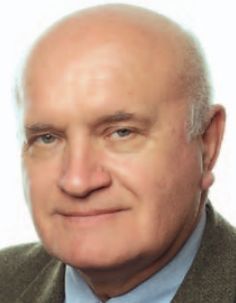
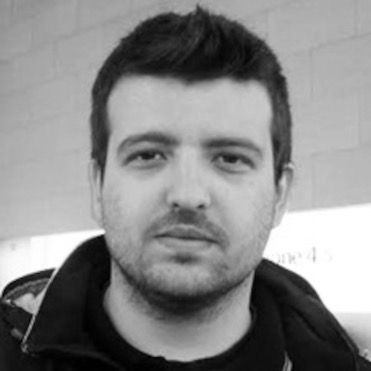
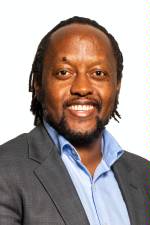
Prof. Kazimierz Bęcek is affiliated with the Wrocław University of Science and Technology as a faculty member in the Faculty of Geoengineering, Mining and Geology , specifically within the Department of Geodesy and Geoinformatics . His research spans multiple domains including geodesy, remote sensing, and geomatics, with a strong focus on elevation data analysis and environmental monitoring. Ecology Photogrammetry Remote Sensing Geodesy Geomatics Prof. Bęcek's work primarily investigates geospatial data accuracy, environmental dynamics, and geodetic methodologies. He has contributed significantly to elevation model validation, land subsidence detection, and vegetation collapse analysis through advanced remote sensing techniques. Recent publications highlight his expertise in Digital Elevation Model evaluation , LiDAR data processing , and environmental monitoring using satellite observations. His research extends to climate-ocean interactions and real-time geospatial mapping challenges. Contact: kazimierz.becek@pwr.edu.pl Physical address: ul. Na Grobli 15, 50-421 Wrocław, building L-1 (Geocentrum), room 366
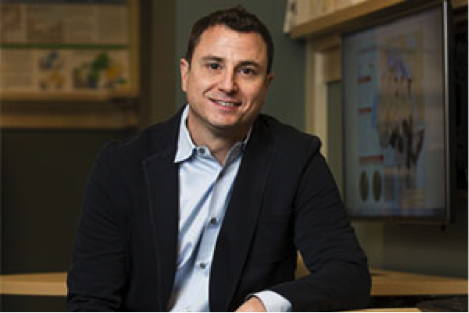
Feng Chen is a Clinical Associate Professor at the Marshall School of Business, University of Southern California, affiliated with the Department of Data Sciences and Operations. She teaches courses in operations management and data analytics for decision-making, with a Ph.D. in Business Administration from USC. Education: Ph.D. in Business Administration from University of Southern California Her research focuses on process analysis , supply chain analytics , and behavioral operations decision-making . She has designed and instructed advanced courses on business analytics, statistics, and operations optimization. Recent publications demonstrate expertise in atmospheric data assimilation , satellite meteorology , and weather system modeling . Key methodologies include multi-sensor integration, cloud-dependent observation-error modeling, and numerical prediction systems for tropical weather phenomena. Contact: fchen@marshall.usc.edu | Phone: 213-740-6319
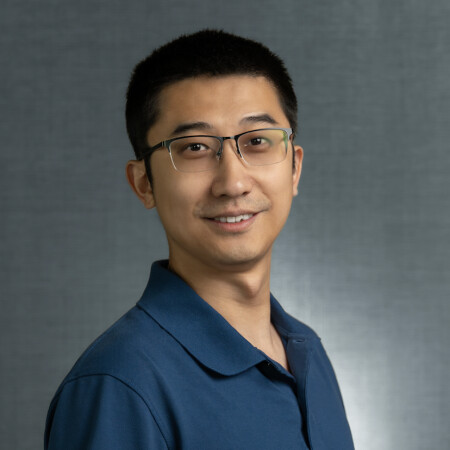
Chris Wiley serves as the Physical Sciences and Engineering Research and Data Services Librarian and Associate Professor at the University of Illinois at Urbana-Champaign. Based at the Grainger Engineering Library, he focuses on data management, research practices, and digital accessibility across scientific disciplines. Research Interests: Specializing in data governance and stewardship across engineering and physical sciences Advancing FAIR data principles and open repository systems Developing accessible data visualization tools Researching data privacy frameworks for scientific contexts Exploring cloud storage limitations for academic institutions Creating educational resources for data management transitions Contact: Email: cawiley@illinois.edu Phone: 217-300-5801 Location: Grainger Engineering Library, 1301 W. Springfield Ave., Urbana, IL 61801
Jignesh Patel is a Professor in the Computer Science Department at Carnegie Mellon University, specializing in database systems and data-intensive computing. His research focuses on hardware-software synergy for high-performance databases and democratizing data analytics through no-code interfaces. He co-founded DataChat, a startup focused on intuitive data analytics platforms. He holds fellowships from AAAS, ACM, and IEEE, along with teaching awards. His work emphasizes building systems that leverage novel hardware and user-friendly interfaces. Research interests include scalable data platforms, LLM-based query interfaces, and optimizing database performance through hardware collaboration. Notable projects include the Quickstep data platform and the Ava conversational interface. Awards: Fellow of AAAS, ACM, IEEE; Multiple Teaching Awards Labs/Teams: CRISP (Intelligent Storage and Processing), DataChat startup
Dr. Alex Hagen-Zanker is an Associate Professor in Infrastructure Systems at the University of Surrey's School of Sustainability, Civil and Environmental Engineering. His research focuses on quantitative analysis and simulation modelling of land use, transport, and urban activities, addressing challenges in urbanization, environmental pressures, and social equity. He leads initiatives on spatial modelling, infrastructure systems, and nature-based solutions. He holds roles as Director of Learning and Teaching and Module Leader in the School. His teaching contributions include Geographical Information Science, Numerical Methods, and Environmental Engineering modules. His work integrates geospatial technologies with environmental and transportation systems to inform sustainable urban development. Research interests include geographical information science, spatial simulation, urbanization dynamics, and landscape processes. He has collaborated on projects funded by ESRC (JPI Urban Europe / NSFC), focusing on multifunctional landscapes and urban growth scenarios. Recent work explores machine learning applications in urban planning and policy-relevant decision frameworks. His publications span over two decades, addressing topics from bridge scour risk under climate change to the socio-ecological impacts of urban expansion. His interdisciplinary approach bridges engineering, environmental science, and policy, emphasizing data-driven solutions for resilient infrastructure systems.
Joydeep Mukherjee is an Assistant Professor in the Department of Computer Science and Software Engineering at California Polytechnic State University (Cal Poly), San Luis Obispo, USA. He also holds an Adjunct Assistant Professor role at the University of Calgary's Department of Electrical & Software Engineering, where he collaborates on research and student supervision. His research focuses on software performance management in cloud computing and IoT systems, with a particular emphasis on detecting and mitigating performance interference in cloud-native applications. Education: Ph.D. and M.Sc. in Computer Science from the University of Calgary (supervised by Dr. Diwakar Krishnamurthy) Bachelor's in Computer Science and Engineering from NIT Durgapur, India Research Interests: Dr. Mukherjee's work addresses challenges in cloud and IoT systems, including performance anomaly detection, resource contention management, and machine learning-driven optimization. His Ph.D. introduced a novel model-based runtime performance management technique that avoids reliance on hardware counters, enabling cloud subscribers to autonomously manage application performance. He has also contributed to frameworks for IoT security, FaaS scalability, and DevOps automation. Key Research Contributions: His publications explore predictive auto-scaling, interference modeling, and anomaly detection using spectrograms and CNNs. He co-developed PRIMA and RAD systems for subscriber-driven performance mitigation in cloud environments. Awards: No specific awards mentioned in the provided text. Lab and Collaborations: Active in the CERAS Lab at York University (during his postdoc) and collaborates with the University of Calgary on research programs. His work bridges academic and industrial challenges in cloud computing and IoT through interdisciplinary approaches.
Patrick Florance is the Director of Research Technology at Tufts University, where he leads Tufts Technology Services’ support for High-Performance Computing, research storage, scientific instrumentation, and data science. He is concurrently an affiliate of the Department of Urban & Environmental Policy & Planning in the School of Arts and Sciences and a senior instructor at the Fletcher School of Law and Diplomacy. Education Bachelor of Arts, University of Oregon, Eugene, United States Master of Arts, Geography – Geographic Information Science, City University of New York – Hunter College, New York, United States Research & Scholarly Interests Florance’s scholarship and service converge on the design, deployment, and governance of open-source geospatial infrastructures. His work encompasses: Global and humanitarian mapping, crisis mapping, and geospatial support for disaster response Development of the Open Geoportal (OGP) Federation — a Sloan-funded collaborative platform for sharing geospatial data across universities 3D GIS, remote sensing, UAV/drone workflows, and spatial data infrastructures for urban modeling Digital humanities, natural language processing, and data-mining approaches to historical and textual geodata Geospatial pedagogy, open-data advocacy, and capacity-building in the developing world Publications & Intellectual Trajectory Across more than two decades, Florance has authored or co-authored scholarly articles, software reviews, and special journal issues that advance both technical architectures and sociotechnical practices for geospatial information curation. His writings trace a trajectory from foundational concerns of GIS collection development in academic libraries to contemporary challenges of real-time, open, and ethical crisis mapping. Scientific Awards & Grants Alfred P. Sloan Foundation – Open Geoportal Cloud (OGP) Federation (US$ grant, 2013) University Service & Leadership Patrick chairs or serves on multiple university committees driving data-intensive research strategy: Data Analytics Steering Committee, School of Arts & Sciences Digital Humanities Steering Committee, Tufts University Data-Intensive Scholarship Center (DISC) Advisory Committee on Infrastructure and Services (ACIS) GIS Steering Committee Research Data Services Committee Labs, Teams & Infrastructure He directs the Tufts Data Lab , a campus hub for GIS, statistics, visualization, and machine-learning services, and oversees the Open Geoportal Project , a multi-institutional consortium providing federated discovery and access to geospatial data sets. His team supports thousands of researchers university-wide with high-performance compute clusters, research storage arrays, and discipline-specific scientific instrumentation.
Dr. Bingzhe Li is an Assistant Professor in Computer Science at UT Dallas' Erik Jonsson School of Engineering. His research at the Lab for Intelligent Storage and Computing (Lab4ISC) focuses on DNA storage systems, machine learning infrastructure, and energy-efficient computing architectures. Awarded the NSF CAREER Award (2025) and recognized for Best Paper nominations at leading conferences. Research spans DNA storage capacity optimization, reinforcement learning for hybrid SSDs, Kubernetes storage optimization, and stochastic computing architectures. Recent publications demonstrate innovations in out-of-core graph processing and blockchain storage systems. Leads multiple NSF/NASA-funded projects on DNA storage and convertible SSDs. Teaches Digital Logic and Computer Architecture courses. Supervises 8 PhD students and 3 master's candidates in storage systems and low-power computing research.
Pieter Van Gorp is an Associate Professor at the School of Industrial Engineering at Eindhoven University of Technology (TU/e). He holds a part-time appointment at Utrecht University of Applied Sciences, focusing on societal applications of connected health games. His work spans digital health tools, personal health data economics, and cloud infrastructure for reproducible research. Education Background: Obtained PhD in Software Engineering from University of Antwerp, followed by a postdoc there. He has served as program manager for TU/e's Data Science Center (DSC/e) and Eindhoven AI Systems Institute (EAISI), linking research to societal challenges. Since 2023, he is Scientific Director of the Clinical Informatics EngD program. Research Interests: Focuses on personal health records as economic assets (e.g., MyPHRMachines platform), workflow model transformations (UML/BPMN/Petri-Net), and tools like SHARE/SciModeler for reproducible research. Active in gamification for corporate health and healthcare decision support systems. Awards: Awarded Best Paper (2007, 2012), 2nd Executable Paper Prize (2011). Current activities include teaching Health Information Systems and supervising 9 active PhD students. Advising & Grants: Mentor to 9 current PhD students and 5 alumni. Facilitates industry-academia collaboration through TU/e's innovation initiatives. Labs/Teams: Leads the Information Systems Lab at TU/e and co-leads EAISI Health. Involved in multidisciplinary teams addressing health tech and data science challenges.
Dr. Yong Chen is a Professor and Interim Department Chair in the Computer Science Department at Texas Tech University (TTU), where he founded the Data-Intensive Scalable Computing Laboratory (DISCL). He also serves as Co-Director of the NSF Cloud and Autonomic Computing Center (CAC@TTU), focusing on data-intensive computing, high-performance computing (HPC), cloud systems, and parallel/distributed architectures. His research bridges hardware-software co-design for scientific and enterprise applications. Ph.D., Computer Science, Illinois Institute of Technology (2009) M.S., Computer Science, University of Science and Technology of China (2003) B.E., Computer Engineering, University of Science and Technology of China (2000) Dr. Chen's research spans data-intensive computing, HPC, cloud systems, and parallel architectures. He develops scalable solutions for scientific discovery and enterprise computing, emphasizing systems software, storage optimization, and hardware-software co-design. His work addresses challenges in metadata management, 3D-stacked memory, and efficient resource allocation in distributed environments. Recent publications include studies on 3D-stacked memory optimization (IEEE TC), metadata indexing (SC), and parallel file system reliability (ICS). His work is characterized by interdisciplinary collaboration and practical applications in HPC domains. NSF-TCPP Early Adopter Status Award Best Paper Award (IPDPS'21) Outstanding Teaching Assistant, IIT (2006) Dr. Chen advises students through graduate and undergraduate research assistantships at DISCL and CAC@TTU, offering financial support for qualified candidates. He has contributed to major conferences as Program Co-Chair (ICPP) and Committee Member (IPDPS, CCGrid, ISC, HPCAsia). Labs/Teams: Data-Intensive Scalable Computing Laboratory (DISCL), NSF Cloud and Autonomic Computing Center (CAC@TTU).
Yanlei Diao is a Professor of Computer Science at École Polytechnique (France) with a joint appointment at the University of Massachusetts Amherst. She received her PhD from UC Berkeley in 2005. Her research focuses on scalable data systems, particularly in big data analytics, cloud computing optimization, and real-time stream processing. Research Interests: Her work spans cloud infrastructure optimization (UDAO project), explainable anomaly detection in data streams (EXAD), interactive data exploration (AIDEme), genomic data analysis (GESALL), and uncertain data management (CLARO). She leads the CEDAR team at Inria/LIX focusing on cloud-scale data exploration. Awards & Honors: ERC Consolidator Grant (2017-2023) CRA-W Borg Early Career Award (2013) NSF CAREER Award (2008) Keynote speaker at ACM DEBS 2021 and SWIFT 2023 AI Forum Best Paper Award at SIGMOD 2011 ACM SIGMOD Dissertation Honorable Mention (2005) Advising & Leadership: Mentored over 20 PhD students and postdocs, currently supervising 7 researchers. Served as PVLDB PC Co-Chair (2025-2026) and ACM SIGMOD Editor-in-Chief (2014-2019). Leads multiple projects with industry partners including Alibaba Cloud.
Ermeson Carneiro de Andrade is a Professor at the Department of Systems and Computer Engineering within the Center of Informatics at the Federal University of Pernambuco (UFPE) in Brazil. His research focuses on dependability engineering, performability analysis, and fault tolerance in distributed and embedded systems. Over his career spanning more than 15 years, he has established himself as a prominent researcher in the field of system reliability through numerous publications in top-tier journals and conferences. Dr. Andrade's research interests primarily center on the analysis and modeling of system dependability, with particular expertise in UAV-based monitoring systems, cloud computing environments, and IoT architectures. His work bridges theoretical modeling with practical applications, particularly in environmental monitoring, disaster recovery solutions, and mission-critical systems. He has made significant contributions to understanding software aging phenomena in various computing environments and developing performability-aware solutions for real-time systems. The analysis of his recent publications reveals a strong focus on UAV systems for environmental monitoring, particularly deforestation detection, with increasing attention to weather impacts and vehicle density-aware traffic monitoring. His research demonstrates a consistent pattern of applying stochastic modeling techniques to solve practical problems in distributed systems, with recent work expanding into NoSQL database performance, satellite constellation dependability, and the performance-interpretability trade-offs in machine learning models. This evolution shows his ability to adapt to emerging technologies while maintaining core expertise in system reliability. Dr. Andrade has been actively involved in mentoring students and collaborating with researchers across Brazil and internationally. His work often involves interdisciplinary teams addressing complex system challenges. While specific awards aren't detailed in the available publication records, his consistent output in high-impact venues demonstrates recognition within the dependability engineering community. His laboratory work appears to focus on system modeling and analysis, with particular emphasis on experimental validation through simulation and real-world testing. Current projects suggest involvement in UAV-based monitoring systems for environmental applications, with strong connections to public sector institutions in Pernambuco state.
John Paparrizos is an Assistant Professor of Computer Science and Engineering at The Ohio State University's College of Engineering, where he directs The DATUM Lab (Data Analytics, Understanding, Mining, and Management Lab). He maintains an adjunct affiliation with the School of Informatics at Aristotle University of Thessaloniki. His research spans databases, data science, machine learning, and artificial intelligence , with focus areas including: Time-series analysis (clustering, anomaly detection) Scalable data mining for structured/unstructured data Adaptive algorithms for resource-constrained environments Foundational technologies for data-intensive applications His work addresses real-world challenges across relational, time-series, multimedia, text, graph, web, and IoT data domains. Notable recognition includes: 2025 ACM SIGMOD Test-of-Time Award for k-Shape time-series clustering 2023 IEEE TCDE Rising Star Award ACM SIGMOD Research Highlight Award NetApp Faculty Award His research has been featured in New York Times (front page), Washington Post , Forbes , and adopted by Fortune 500 companies (Exelon, Nokia) and the European Space Agency. He actively serves on program committees for premier conferences including ACM SIGMOD, VLDB, IEEE ICDE, ACM SIGKDD, and NeurIPS. His open-source tools have exceeded 100,000 downloads and are integrated into academic curricula at Brown, Columbia, Purdue, and University of Chicago.
Dr. Francis Gacenga, currently at the University of Southern Queensland (UniSQ), serves as a Senior Digital Research Advisor in the Research Infrastructure Admin department. He is affiliated with the Centre for Sustainable Agricultural Systems and Institute for Advanced Engineering and Space Sciences. PhD in Information Systems (USQ, 2013) MBA (University of Nairobi, 2000) Graduate Diploma in MIS (University of Greenwich, 2003) BA(Hons) from Kenyatta University (1997) With over 20 years of experience in IT and academic research, Dr. Gacenga specializes in Research Data Management (RDM), IT Service Management (ITSM), Digital Research Infrastructure, and Design Science. His work focuses on applying FAIR (Findable, Accessible, Interoperable, Reusable) data principles to agricultural and environmental domains. The 15 most recent publications reveal a trajectory from foundational ITSM research (2010-2016) to agricultural data platforms (2019-2024). Key themes include FAIR data implementation, cloud computing integration, reproducible research frameworks, and cross-disciplinary agricultural applications. Senior Member of Australian Computer Society (since 2009) Former Chair of ACS Toowoomba Chapter As Principal Investigator for grants totaling over $500k from GRDC, Soils CRC, and ARDC, he leads digital infrastructure projects. He also supervises Doctoral candidates and contributes to national cybersecurity and data policy committees.
Luis Antunes Veiga is an Associate Professor and Senior Researcher at INESC-ID Lisbon, affiliated with the Distributed Systems Group and the Computing Systems and Communication Networks Laboratory. His research focuses on Cloud Computing, Edge Computing, Distributed Systems, and Big Data processing. He teaches courses such as 'Cloud Computing and Virtualization' and 'Operating Systems, Virtualization and Cloud Computing.' His work emphasizes scalable systems, network-aware workflows, and resource-efficient data processing. Research Interests: His primary areas include distributed systems architectures, edge computing frameworks, graph processing algorithms, and software-defined systems. He explores topics like latency-aware network design, resource auction mechanisms for edge environments, and interoperable service workflows. His contributions span theoretical frameworks and practical implementations, such as the RATEE system for edge resource trading and the VeilGraph incremental graph processing framework. Publications: His recent work addresses challenges in distributed systems, such as elastic scaling of stream processing, efficient graph processing in Spark, and latency optimization in internet-scale workflows. These publications reflect a trend toward integrating software-defined approaches with edge and cloud infrastructures. Notable Awards: Best Young Researcher INESC-ID, Excellence in Teaching (IST 2012), and a Best-Paper Award at ACM/IFIP/Usenix Middleware 2007. Labs & Teams: Active in the Computing Systems and Communication Networks Laboratory, leading projects on edge computing and distributed systems.