Associate Professor Jason Bendall is a conjoint academic at the University of Newcastle's School of Medicine and Public Health, specializing in Anaesthesia and Intensive Care. As Clinical Dean at the Manning Clinical School within the Department of Rural Health, he bridges clinical practice with medical education. His career spans paramedicine, clinical epidemiology, and emergency care research. Undergraduate: Honours in Medical Science (1991) Medical Degree & PhD in Medicine (2004) Postgraduate: Clinical Epidemiology and Biostatistics Research spans paramedicine , prehospital medicine , and clinical anaesthesia with a focus on resuscitation, trauma systems, and acute pain management. Recent work includes tourniquet use analysis, back pain management strategies, and airway registry insights. Key trends in publications: prehospital trauma systems evaluation (2023-2025), airway management improvements (2022-2024), seizure pharmacology (2024), and back pain utilization studies (2024). His research combines clinical trials with large-scale data linkage projects. Professional roles include: Staff Specialist in Anaesthesia at John Hunter Hospital (2018–present) Commissioner at St John Ambulance Australia (2016–present) Convenor of Australian Resuscitation Council's First Aid Subcommittee ILCOR First Aid Task Force Member His work with the Out-of-Hospital Airway Registry and ambulance trauma protocols demonstrates commitment to improving emergency medical systems through evidence-based governance and clinical innovation.
Dr. Dominic Pollard is a British Academy Postdoctoral Fellow at the McDonald Institute for Archaeological Research , University of Cambridge. His work bridges computational methods, environmental archaeology, and social theory to explore the Late Bronze Age and Early Iron Age Mediterranean, particularly Crete. He combines intensive survey data, GIS modeling, and spatial statistics to analyze settlement patterning, mortuary practices, and agricultural systems. Research Expertise : Archaeological Theory, Computational and Quantitative Archaeology, Environmental Archaeology, Geoarchaeology, Landscape studies. His projects emphasize multi-scalar analysis of human-landscape interactions, focusing on how communities shape and are shaped by their environments. Recent Publications : These include a 2023 Journal of Greek Archaeology synthesis of island-wide settlement changes (15th–6th centuries BCE), a 2023 Journal of Mediterranean Archaeology study using legacy survey data and GIS to model agricultural landscapes, and a 2021 Journal of Anthropological Archaeology quantitative analysis of Knossos cemeteries. All datasets and code are openly available via GitHub and Figshare, reflecting his commitment to reproducibility. Scientific Awards : British Academy Postdoctoral Fellowship
Monique Bijlaard is a Researcher at Wageningen University & Research specializing in sustainable greenhouse horticulture. Her work integrates engineering, data science, and crop physiology to develop energy-efficient cultivation systems, with active projects through 2026 focusing on resource optimization and technological innovation in agricultural production. Her research spans critical areas of modern horticulture: Greenhouse automation using sensor networks and AI-driven decision systems Energy reduction via low-e glass/screens and optimized lighting spectra Irrigation management and plant density optimization for diverse crops Computer vision applications for real-time crop monitoring Sustainable production of tomatoes, berries, courgettes, and ornamentals This multidisciplinary approach addresses climate challenges while maintaining productivity. Recent publications demonstrate leadership in autonomous greenhouse challenges and emission-free growing systems. Her work on dwarf tomato cultivation showcases multi-sensor feedback algorithms, while BEST-kas studies prove 20%+ energy savings in courgette/berry production. Spathiphyllum research reveals how light spectra manipulation enables carbon-neutral cultivation, establishing clear trends toward technology-driven resource efficiency across all crop systems. Monique leads two major LVVN-funded projects: 'Vergelijking low-ɛ glas en low-ɛ schermen' (2025-2026) quantifying energy savings from advanced glazing materials, and 'Zomerteelt in de WinterlichtKas' (2021-2022) developing CO 2 -limited summer cultivation protocols. These initiatives translate academic research into practical industry solutions for energy-intensive horticulture. She collaborates extensively with Fieldlab Vertical Farming partners including Delphy Improvement Centre, Logiqs, Vertify, and Philips Horticulture LED Solutions. Her work within Wageningen's Greenhouse Horticulture business unit ensures direct industry implementation through demonstration facilities and joint cultivation trials across the Netherlands.
Dana Petcu is a Professor at the Computer Science Department of the Faculty of Mathematics and Computer Science at West University of Timisoara. She serves as Director of both the Institute for Advanced Environmental Research and Institute e-Austria Timisoara. With expertise in distributed and parallel computing, she has published over two hundred papers on Cloud, Grid, Cluster, and HPC computing. She is also the chief editor of the open-access journal Scalable Computing: Practice and Experience (SCPE) and has coordinated multiple European Commission-funded projects. Education: Ms. Degree in Computer Science Ph.D. in Numerical Analysis Dana Petcu's research focuses on distributed and parallel computing systems. Her current interests include Cloud & Grid computing, and HPC & Cluster computing. Previously, she worked on Mathematical software, Numerical methods, and Computer graphics. Her work bridges theoretical foundations with practical implementations, particularly in resource management, scheduling algorithms, and scalable computing architectures. She has developed significant expertise in applying these technologies to scientific computing, data-intensive applications, and multi-cloud environments. Her scholarly output demonstrates consistent focus on cloud and distributed computing evolution. Over the past decade, her research has shifted from foundational grid computing to modern cloud technologies, edge computing, and exascale systems. Key themes include resource management across heterogeneous environments, autonomic systems, security SLAs, and multi-cloud portability. Her work shows increasing interdisciplinary connections, particularly with AI/ML techniques applied to resource optimization and anomaly detection in large-scale systems. Scientific Awards: Maria Sibylla Merian-Award (2005) IBM Faculty Award (2009) MLNR Award "Spiru Haret" (2015) Romanian Academy Award "Gheorghe Cartianu" (2015) Dana Petcu has advised numerous graduate students through various master's programs in Distributed and Parallel Computing. She has secured substantial research funding as coordinator of FP7 projects HOST and SPRERS, and as scientific coordinator of mOSAIC. Her grant portfolio includes multiple European Commission-funded initiatives focused on cloud computing infrastructure, resource management, and multi-cloud environments. She has also contributed to EU Research Activities in Cloud Computing as an editor, demonstrating her leadership in shaping European research agendas in this field. She leads the Computer Science Research Center (CCI) and High Performance Computing Service Center (HPC-UVT) at West University of Timisoara. Her teams develop and maintain significant infrastructure for distributed computing research, including simulation environments like CloudSim and iFogSim. She has established strong connections between academic research and practical applications through Institute e-Austria Timisoara, fostering technology transfer and innovation in cloud computing solutions.
Amit Goldenberg is an Assistant Professor of Business Administration at Harvard Business School, where he is a member of the Negotiation, Organizations & Markets unit. He is also an affiliate with Harvard's Department of Psychology and a member of the Digital Data and Design Institute (D^3). His academic work bridges the fields of psychology, business, and technology, focusing on how emotions operate in social and group contexts. Education and Background While specific educational details are not provided in the text, Professor Goldenberg has established himself as a leading researcher in the field of collective emotions and their implications for organizational behavior and social dynamics. Research Interests Professor Goldenberg's research focuses on understanding what makes people emotional in social and group contexts, and how such emotions can be changed when they are unhelpful or undesired. He is particularly interested in how technology is used for both emotion detection and regulation. His work integrates experimental psychology examining behavior at both individual and collective levels using a multi-method approach that combines behavioral experiments, analysis of data from digital media, computational modeling, and AI. His specific research areas include collective emotions, emotion regulation in groups, the impact of social media on emotional experiences, human-AI emotional interactions, and the application of psychological principles to organizational contexts. Scientific Awards and Recognition Winner of the 2024 Janet Taylor Spence Award for Transformative Early Career Contributions, given by the Association for Psychological Science Selected as a 2023 Rising Star by the Association for Psychological Science Advising and Professional Contributions Professor Goldenberg leads the Goldenberg Lab, a research group focused on studying questions related to the behavior of individuals and collectives through the lens of affective processes such as emotions and well-being. His lab takes a macro approach to understanding what measures can be taken to predict and change emotions when they are unhealthy or unhelpful, with particular attention to how technologies like Large Language Models and digital media play roles in both eliciting and managing emotions. His work integrates theories from psychology, complex systems, cognitive science, and philosophy, employing methods that include experimental work, big data analysis, computational modeling, and machine learning. He has developed numerous teaching cases at Harvard Business School covering topics like AI companions for older adults, online insurance platforms, and ransomware attacks. Research Teams and Labs Professor Goldenberg directs the Goldenberg Lab, which brings together social scientists to study individual and collective behavior through affective processes. The lab maintains active GitHub repositories with templates and code for research projects, indicating a strong emphasis on computational methods and reproducible research. His lab collaborates across disciplines, working with computer scientists, psychologists, and organizational behavior researchers to advance understanding of emotion in social contexts.
Ana Isabel Vieira is an Adjunct Professor at the Alcoitão School of Health, where she serves as Director of the Department of Physiotherapy. She is affiliated with the Business Research Unit (BRU-ISCTE) - Data Analytics Group, integrating academic, clinical, and community-focused roles. Her career spans over three decades in physiotherapy practice and education. Bachelor's in Physiotherapy (1990, Alcoitão School of Health) Postgraduate in Psychomotricity and Therapeutic Relaxation (1994, Faculty of Human Kinetics) Master's in Educational Sciences - Health Education (2006, University of Lisbon) PhD in Health Sciences - Neurological Rehabilitation (2017, Catholic University of Portugal) Her research focuses on neurological rehabilitation , gerontological physiotherapy , and community health initiatives . Notable work includes tactile discrimination studies in elderly populations, social touch assessment tools, and multidisciplinary aging research. She leads projects addressing dementia prevention , community accessibility , and informal caregiver support . Recent publications demonstrate her engagement with frailty assessment , post-stroke rehabilitation , and oral-motor dysfunction in aging populations. Her work has been published in journals like Journal of Oral Rehabilitation and Physiotherapy Theory and Practice. Career Award (2018, Alcoitão Higher School of Health) Performance Bonus (2009, Holy House of Mercy of Lisbon) Honorable Mention for Communication (2009, XXII Taipas Meeting) An active academic mentor, she supervises multiple Master's theses and serves on doctoral juries. Her professional activities include community projects like Cascais Cuida , Tango Argentino in Parkinson's , and SIRS (Solidão e Isolamento em Idosos) . She participates in international research networks including the World Wide Fingers project.
Johan Edvard Ekroos is an Associate Professor at the Department of Agricultural Sciences , University of Helsinki, and a key figure in the Helsinki Institute of Sustainability Science (HELSUS) . He supervises doctoral programs in Wildlife Biology, Interdisciplinary Environmental Sciences, and Sustainable Use of Renewable Natural Resources. Primary Affiliation: University of Helsinki Secondary Affiliation: Centre for Environmental and Climate Science (CEC), Lund University (postdoc 2011–2013) His research integrates landscape ecology and environmental science to study biodiversity responses to land-use changes. Key areas include: Joint effects of landscape structure and land-use intensity on biodiversity Organic farming as a resilience tool Green infrastructure for ecosystem services Post-fire ecosystem recovery Recent publications focus on semi-natural grasslands, urban stressors, and agricultural biomass policies. He has supervised multiple PhD students and peer-reviewed for leading journals like Journal of Applied Ecology and Trends in Ecology and Evolution . Scientific Awards: Docent in Environmental Science, University of Lund (2021)
Lara Gamble is a Research Associate Professor at the University of Washington's Department of Bioengineering within the College of Engineering. She is affiliated with the Molecular Analysis Facility and actively contributes to advancements in biomedical analytical techniques. Education : PhD in Physical Chemistry from the University of Washington; BA from the University of California, Santa Cruz. Postdoctoral Experience : Research Scientist at Zyomyx, Inc., and Senior Scientist at Space Dynamics Laboratory. Her research focuses on surface analysis, biomaterials, and mass spectral imaging , particularly using secondary ion mass spectrometry (SIMS) and ToF-SIMS for sub-cellular imaging of biological samples. Her work addresses tumor microenvironments, lipid metabolomics, and tissue repair. Recent publications highlight interdisciplinary applications of ToF-SIMS, microarray analysis, and surface chemistry. Collaborations span biomedical and clinical research communities. Scientific Awards : 2015 AVS Fellow 2014 Peter M.A. Sherwood Mid-Career Award (AVS) Leadership roles in AVS and IUVSTA She teaches the BIOEN 511: Biomaterials Seminar and has led the UW Molecular Analysis Facility since 2020. Her lab emphasizes technique development and data processing for biomedical diagnostics.
Mathias Kirchner is a Researcher at the University of Natural Resources and Life Sciences, Vienna (BOKU), affiliated with the wZGWN Centre for Global Change and Sustainability. Currently on parental part-time status (available Mondays and Wednesdays), he contributes to teaching and research in climate change economics, with a focus on policy-relevant modeling for Austrian sustainability transitions. His research spans : Climate Change Economics (CO2 pricing, decarbonization pathways) Environmental Policy (land use, stakeholder integration) Social Equity (distributional impacts, poverty assessments) Integrated Assessment Modeling (system dynamics, multi-model approaches) Work emphasizes Austrian contexts while addressing global challenges like SDG implementation and climate justice. Recent publications (2022-2025) reveal three dominant trends : (1) Economic modeling of carbon taxation with focus on revenue recycling and triple dividends, (2) Social equity analyses of decarbonization in housing/mobility sectors, and (3) Stakeholder-driven methodologies for SDG pathway validation. Key subfields include distributional impacts across income groups, land-use change under climate scenarios, and causal loop diagram applications. Dr. Kirchner operates within the wZGWN Centre for Global Change and Sustainability , an interdisciplinary hub at BOKU addressing climate adaptation, resource management, and policy coherence through integrated modeling approaches that bridge natural and social sciences.
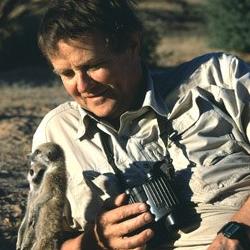
Tim Clutton-Brock is Professor and Director of Research in the Department of Zoology at the University of Cambridge, leading the Large Animal Research Group. His career spans decades of groundbreaking fieldwork on animal behaviour and evolutionary processes. His research integrates three core domains: Evolution of vertebrate breeding systems, examining cooperative behaviour in social mongooses, lek formation in mammals/birds, and adaptive parental care strategies in fish. Population regulation mechanisms through long-term studies of red deer (Isle of Rum), Soay sheep (St Kilda), and suricates (southern Kalahari), analyzing stability factors, early development impacts, and sex-specific competition. Natural and sexual selection dynamics in wild populations, using genomic and phenotypic data from ungulate studies to quantify selection pressures under varying population densities. His scientific contributions have been recognized with election as a Fellow of the Royal Society (FRS). He currently mentors 4-6 PhD students and 5-8 postdoctoral researchers, fostering next-generation ecological scientists through intensive field-based training.
Miriam (Mimi) Brinberg is an Assistant Professor at The Ohio State University, focusing on interpersonal interactions in both face-to-face and digital contexts. Her research emphasizes understanding conversational dynamics, relational processes, and methodological innovations for studying human behavior. She applies techniques like intensive longitudinal data, ecological momentary assessments, and unobtrusive digital monitoring (e.g., screen capture analysis) to reveal how interaction patterns shape individual and relational outcomes. Brinberg’s work intersects with fields such as communication studies, psychology, and digital media. She co-founded the LHAMA initiative to disseminate longitudinal methods for analyzing interpersonal interactions. Key areas of exploration include screen use behaviors (e.g., 'screenertia'), digital dating abuse perceptions, and the impact of educational media on parent-child communication. Her recent publications (2021–2025) highlight methodological advancements (e.g., state space grids, sequence analysis) and applied topics like emotional well-being apps, relational turbulence in marriages, and campaign-induced communication. She advocates for rigorous, ecologically valid approaches to studying daily interactions, often leveraging smartphone data and screenome frameworks. Brinberg’s research bridges theoretical and applied domains, aiming to decode the 'black box' of everyday conversations and their societal implications. She collaborates on projects like the Human Screenome Project to analyze digital life experiences and their impacts on human behavior.
Dr. Sihang Liu is an Assistant Professor in the School of Computer Science at the University of Waterloo. Prior to this role, he served as a visiting faculty member at SystemsResearch@Google. He holds a PhD from the University of Virginia, where his research was supported by the Google Fellowship Award. His academic career has been marked by contributions to computer architecture, systems, and persistent memory technologies. Dr. Liu's research interests span computer architecture, systems, and cybersecurity, with a focus on persistent memory systems, energy-efficient computing, and data center optimization. His work bridges hardware-software co-design and explores challenges in scalable computing, fault tolerance, and sustainable AI systems. His recent publications highlight advancements in adaptive memory tiering (HybridTier), carbon intensity forecasting (EnsembleCI), and securing persistent memory (Side-Channel Attacks on Optane). These contributions underscore his commitment to addressing critical issues in modern computing systems' performance, security, and environmental impact. Awards: Google Fellowship Award (PhD), NVMW Memorable Paper Award Finalist (2019), 2019 MICRO Top Picks Honorable Mention Professional Service: Program committees for ISCA, MICRO, ASPLOS; Artifact evaluation roles in leading conferences As an advisor, Dr. Liu mentors a diverse group of students, including current PhD candidates Henry Tian and Desen Sun, and numerous undergraduates. His lab focuses on innovation in sustainable computing and resilient systems design.
Arto Nurmikko is the L. Herbert Ballou University Professor of Engineering and a Professor of Physics at Brown University, affiliated with the School of Engineering. He leads the N3 Lab (Neuroengineering and Nanophotonics Laboratory), focusing on advancing biomedical technologies and neurotechnology. His work integrates nanoscale materials, optoelectronics, and wireless systems to address complex challenges in neuroscience and medical diagnostics. Research interests span neuroengineering, nanophotonics, and nanomaterials, with a strong emphasis on developing implantable microdevices, wireless sensor networks, and neuromorphic computing approaches for brain imaging and stimulation. Projects include optogenetic tools for neural modulation, high-density diffuse optical tomography, and energy-efficient wireless power transfer systems for biomedical implants. Recent publications highlight innovations in imaging through scattering media, neuromorphic reconstruction of dynamic targets, and distributed brain implant systems. These studies reflect a trend toward scalable, minimally invasive neural interfaces and real-time adaptive sensing technologies. His contributions to field-programmable gate array (FPGA) implementations for neural signal processing demonstrate advancements in high-performance embedded platforms. While no scientific awards are explicitly listed, his research has been supported by collaborative projects such as the NSF-funded 'Large-Scale Wireless RF Networks of Microchip Sensors.' Advising includes Jihun Lee, a student co-author in 2024. Grants and projects emphasize scalable sensor networks, wireless power efficiency, and closed-loop brain-computer interfaces. Labs and teams: The N3 Lab specializes in neurotechnology and nanophotonics, developing tools for optogenetic studies, neural imaging, and distributed sensor systems. Teamwork includes interdisciplinary collaboration between engineering, physics, and neuroscience to create innovative biomedical solutions.
Dr. Dale Lovell is a Senior Lecturer in Exercise Science at the University of the Sunshine Coast (UniSC), School of Health. He holds a PhD and BExSc(Hons) from Griffith University. His research focuses on optimizing strength, power, and speed for athletes and enhancing health outcomes in special populations, particularly older Australians. Combining sport science technology with practical principles, he designs programs to maximize athletic performance and improve health through exercise physiology and conditioning. Education: PhD in Exercise Science, Griffith University Bachelor of Exercise Science (Honours), Griffith University Research Interests: Strength and power training for athletes Individual/team speed development Anaerobic and aerobic conditioning Exercise physiology applications for older adults Publications: Dr. Lovell’s work spans metabolic flexibility protocols, jump mechanics, rugby performance analysis, and athlete recovery. Recent contributions include studies on standardized metabolic testing and the biomechanics of dynamic jumps. Awards: No scientific awards explicitly listed. Teaching and Mentorship: Teaches courses like Exercise Physiology I/II and Performance Enhancement. Advises HDR/honours students in sports performance, clinical exercise physiology, and integrated systems physiology. Labs/Teams: Affiliated with the School of Health’s research initiatives in exercise science and sports medicine.
Dr. Mizanur Khondoker is an Associate Professor in Medical Statistics at Norwich Medical School, University of East Anglia, with affiliations in Population Health and Norwich Epidemiology Centre. His research program focuses on developing advanced statistical methodologies for healthcare applications including dementia risk prediction, electronic health records analysis, and clinical trial design. He holds a PhD in Statistics from the University of Edinburgh, an MSc in Biostatistics from University of Dhaka, and postgraduate teaching qualifications from King's College London. As a Fellow of the Higher Education Academy, he maintains active roles in academic leadership including editorial positions for Statistical Methods in Medical Research. Khondoker's methodological research spans machine learning applications in genomics, longitudinal data modeling for cognitive decline trajectories, and dynamic prediction models. His clinical collaborations address pressing issues in mental health, neuroepidemiology, and post-pandemic health outcomes. Recent interdisciplinary work examines social prescribing interventions for dementia care and inflammation-related comorbidities. His publication record demonstrates consistent focus on psychiatric epidemiology and medical statistics, with emerging interests in the neurological sequelae of viral infections and health disparities. Methodological innovations appear in analysis of complex biobank datasets and causal inference techniques for observational studies. As principal investigator on multiple NIHR-funded projects, he leads research on anxiety assessment in stroke patients, motor neuron disease caregiver support, and inflammation-related comorbidities. His team maintains active industry partnerships to translate methodological advances into clinical practice.