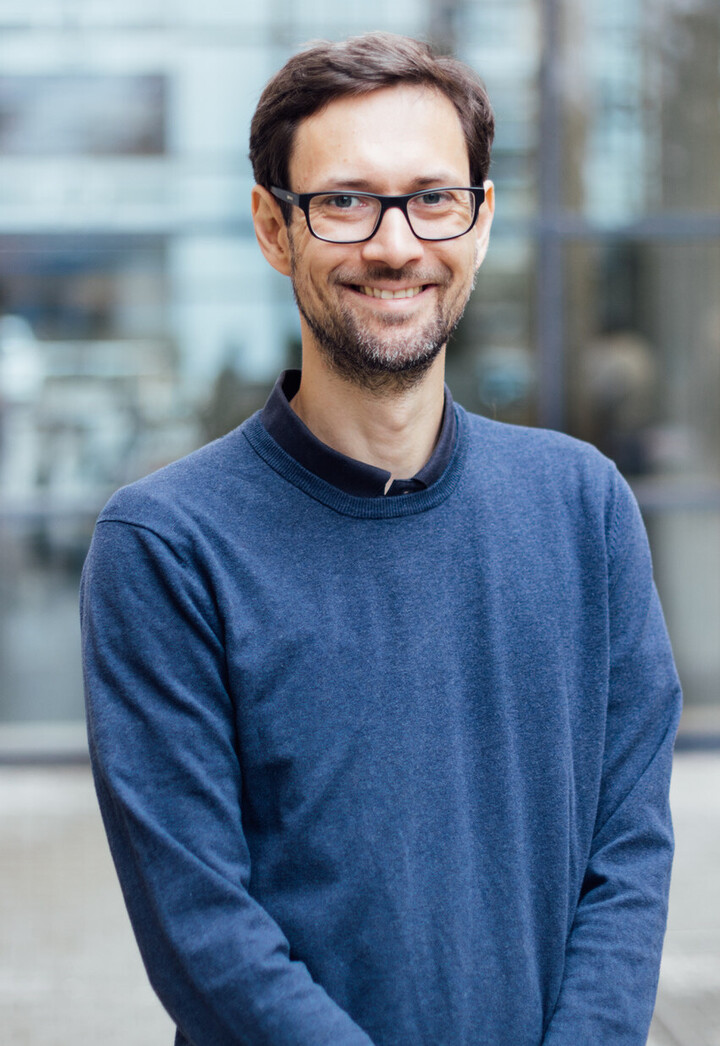
Shrikanth (Shri) Narayanan is University Professor and Niki & C. L. Max Nikias Chair in Engineering at the University of Southern California (USC), with appointments spanning Electrical & Computer Engineering, Computer Science, Linguistics, Psychology, Neuroscience, Pediatrics, and Otolaryngology-Head & Neck Surgery. He serves as Research Director of the Information Sciences Institute and Director of the Ming Hsieh Institute. PhD in Electrical Engineering (UCLA, 1995) Engineer and MS in Electrical Engineering (UCLA, 1992 and 1990) BE in Electrical Engineering (Anna University, India, 1988) His interdisciplinary research focuses on human-centered signal processing and machine intelligence , addressing societal challenges in health, education, defense, and media arts. Key areas include: Behavioral signal processing Affective computing Multimodal signal processing Computational speech science Biomedical applications Scientific Awards : IEEE James L. Flanagan Speech and Audio Processing Award (2025) Edward J. McCluskey Technical Achievement Award (2024) ISCA Medal for Scientific Achievement (2023) Claude Shannon-Harry Nyquist Technical Achievement Award (2023) ACM ICMI Sustained Accomplishment Award (2020) USC Distinguished Faculty Service Award With over 1,000 publications and 19 patents , his work has been commercialized through startups like Behavioral Signals Technologies and Lyssn . He leads transformative university initiatives and has served in editorial roles for top journals including Computer Speech and Language and IEEE Transactions on Affective Computing .
Prof. Martin Boeker is a Professor of Medical Informatics at the Technical University of Munich (TUM), affiliated with the TUM School of Medicine and Health. His work focuses on advancing healthcare through AI-driven solutions, interoperability frameworks, and precision medicine initiatives. Key projects include the German Medical Text Corpus (GeMTeX) and the MIRACUM DIFUTURE Alignment Hub. Expertise: Medical Informatics, AI in Healthcare, Federated Learning, Health Data Integration Key Contributions: FHIR-based systems, clinical decision support, patient-centered outcomes research Leadership: Director of the Institute for AI and Informatics in Medicine at TUM Hospital Right of the Isar Research emphasizes bridging clinical practice and data science through projects like modular health crawlers, automated guideline adherence monitoring, and cross-institutional medical NLP solutions. His work spans oncology informatics, rare disease management, and pandemic response data ecosystems. Recent articles highlight innovations in digital twins for precision oncology, federated analysis in oncology, and German-language medical NLP challenges. He collaborates internationally on EHR standardization and healthcare interoperability, contributing to the Medical Informatics Initiative (MII) and pandemic evidence ecosystems. Grants and collaborations involve the German Federal Ministry of Education and Research, European initiatives, and industry partnerships. Educational efforts focus on training future medical informatics professionals through MII competency programs.
Elena Simperl is a Professor of Computer Science and Deputy Head of Department for Enterprise and Engagement at King's College London's Department of Informatics. She co-directs the King's Institute for Artificial Intelligence and serves as Director of Research for the Open Data Institute. As a Hans Fischer Senior Fellow at the Technical University of Munich's Institute for Advanced Study, she leads the Trustworthy Knowledge Graphs focus group and contributes to advancing human-centric AI research across European institutions. Professor Simperl obtained her doctoral degree in Computer Science from the Free University of Berlin and her diploma from the Technical University of Munich. Prior to joining King's, she held academic positions in Germany, Austria, and at the University of Southampton, and was a Turing Fellow. Her career trajectory demonstrates consistent leadership in bridging academic research with practical applications in data ecosystems. Her research sits at the critical intersection of AI and social computing, focusing on human-centric approaches to building sociotechnical systems that integrate data, algorithms, and human capabilities. She investigates how to make knowledge engineering more accessible, how to leverage collective intelligence for data quality improvement, and how to design participatory AI systems that address societal challenges like misinformation. Her work spans knowledge graphs, semantic technologies, crowdsourcing, and open data, with particular emphasis on the social dimensions of data-intensive systems and the governance frameworks needed for trustworthy AI deployment. Analysis of her recent publications reveals a strong evolution toward integrating large language models with traditional knowledge engineering practices while maintaining human oversight. There's a clear trajectory from foundational work on knowledge representation toward increasingly applied research addressing real-world challenges in media ecosystems, citizen science, and data governance, with growing attention to policy implications of AI technologies. Fellow of the British Computer Society Fellow of the Royal Society of Arts Hans Fischer Senior Fellow at TUM-IAS (2023) Ranked among top 100 most influential scholars in knowledge engineering of the last decade Included in Women in AI 2000 ranking Professor Simperl has led 14 major European and national research projects totaling millions in funding, including MediaFutures (a Horizon 2020 program tackling online misinformation), QROWD, ODINE, Data Pitch, and ACTION. She currently co-chairs the Croissant working group in ML Commons developing data standards for AI, and serves as president of the Semantic Web Science Association. Her research has directly influenced the development of data ecosystems supporting startups and citizen science initiatives across Europe, demonstrating exceptional ability to translate theoretical advances into practical impact. As Director of Research at the Open Data Institute, she oversees initiatives connecting data entrepreneurs with artists and civic organizations. Her leadership in the MediaFutures project established a data-driven innovation hub that supported 51 startups/SMEs and 43 artists through three open calls, creating a sustainable model for arts-technology collaborations addressing media challenges. Her work with the ODINE project helped create a European ecosystem for data-driven startups, demonstrating her commitment to building practical applications of open data principles.
Prof. Alexander Pretschner is a Professor of Software & Systems Engineering at the Technical University of Munich (TUM) and Founding Director of the Bavarian Research Institute for Digital Transformation (bidt). He also serves as Scientific Director of fortiss, a Bavarian research institute for software-intensive systems. His research focuses on software engineering, testing, information security, and ethical software development. Pretschner holds a PhD from TUM and has held academic positions at Karlsruhe Institute of Technology (KIT) and TU Kaiserslautern. He is a co-editor of several prestigious journals, including IEEE Transactions on Reliability and the Journal of Software Testing, Verification and Reliability. Education: PhD in Computer Science, Technical University of Munich MSc in Computer Science, University of Kansas (on Fulbright Scholarship) Diplom in Computer Science, RWTH Aachen University Research Interests: His work spans testing methodologies, secure software design, and ethical considerations in agile development. Notable contributions include frameworks for metamorphic testing, distributed data usage control, and accountability mechanisms for cyber-physical systems. Awards: IBM Faculty Award (2012, 2013) Google Focused Research Award (2011, 2012) EARTO Innovation Prize (2014) 2nd Platz Supervisory Award (2020) Advising & Grants: Pretschner has supervised numerous PhD and Master’s students, contributing to over 200 publications. He leads projects like EDAP (Ethical Deliberation in Agile Processes) and collaborates with industry partners on cybersecurity and AI ethics initiatives. Labs & Teams: His work is anchored in bidt, fortiss, and TUM’s Chair of Software & Systems Engineering, focusing on societal impacts of digitalization and trustworthy AI systems.
Dr. Stephanie Spahr is a Research Group Leader at the Leibniz Institute of Freshwater Ecology and Inland Fisheries (IGB) in Berlin, Germany, where she leads the Organic Contaminants research group within the Department of Ecohydrology and Biogeochemistry. Previously, she served as a Junior Research Group Leader at the University of Tübingen's Center for Applied Geoscience (2019-2021) and as a Postdoctoral Researcher at Stanford University's Department of Civil and Environmental Engineering (2016-2019). Dr. Spahr earned her PhD in Environmental Chemistry from the Swiss Federal Institute of Technology Lausanne (EPFL) and the Swiss Federal Institute of Aquatic Science and Technology (Eawag) in 2016. Her doctoral research focused on the formation of N-nitrosodimethylamine during water disinfection with chloramine. She completed her MSc in Geoecology at the University of Tübingen in 2012, with thesis work on carbon and nitrogen isotope analysis of benzotriazoles conducted at Eawag, and her BSc in Geoecology/Ecosystem Management at the same institution in 2010. Dr. Spahr's research focuses on trace organic contaminants in aquatic systems, with particular expertise in transformation processes of contaminants in natural and engineered systems, advanced oxidation processes for water treatment, urban blue-green infrastructure, and compound-specific isotope analysis. Her work bridges environmental chemistry, engineering, and ecology to address water quality challenges in urban and natural water systems. She employs advanced analytical techniques to track contaminant sources and transformation pathways, with a strong emphasis on practical applications for water treatment and environmental protection. Her recent publications demonstrate a strong focus on biochar-based water treatment technologies, particularly for stormwater management. She investigates how biochar amendments can remove trace organic contaminants from urban runoff, with recent work examining persulfate activation mechanisms, the role of chloride in reactive species formation, and the performance of engineered media filters under dynamic conditions. Her research also extends to understanding contaminant transport in rivers, the ecological impacts of pollutants, and developing analytical methods for environmental monitoring. The interdisciplinary nature of her work connects chemical processes with ecological outcomes. Outstanding Review Paper Award 2023 in Environmental Science: Water Research & Technology Selected for the Falling Walls Female Science Talents Intensive Track 2023 Selected mentee in the Leibniz Mentoring Programme 2022-2023 Best poster award (1st prize) at the Wasser 2022 of the Water Chemistry Society Selected fellow in the Postdoc Academy for Transformational Leadership 2020-2022 (Robert Bosch Stiftung) Selected fellow in the Athene Program for early female career researchers at the University of Tübingen, 2020-2021 As a Research Group Leader, Dr. Spahr supervises multiple research projects including 'POllution in UrbaN ponds, eco-evolutionary Dynamics, and Ecosystem Resilience (POUNDER)', 'Dynamic hyporheic zone', 'NYMPHE', and the 'Incident-related special investigation programme for the environmental disaster in the Oder River'. She serves on the Executive Board of the German Water Chemistry Society and heads its Expert Committee on 'Oxidative Processes'. Her collaborative work spans numerous institutions across Germany and internationally, addressing critical water quality challenges through interdisciplinary approaches. Dr. Spahr leads the Organic Contaminants research group at IGB Berlin, which focuses on understanding the fate and treatment of organic pollutants in water systems. Her team employs advanced analytical techniques including compound-specific isotope analysis to track contaminant sources and transformation pathways. The group collaborates extensively with other departments at IGB and with international partners on projects addressing urban water challenges and ecological impacts of pollution. Current research emphasizes innovative water treatment technologies, particularly biochar-based systems for stormwater management, and investigating the complex interactions between contaminants, aquatic ecosystems, and human activities.
Chantal Pellegrini is a Lecturer and PhD student at the Chair of Computer Aided Medical Procedures (Prof. Navab) at Technical University of Munich (TUM). Her research focuses on Deep Learning applications in medical imaging, including explainable AI for radiology report generation and Vision-Language Models for clinical decision support. She actively contributes to the DHM, NARVIS Lab, and RobUSt research groups. Teaching responsibilities include courses such as 'Computer Aided Medical Procedures', 'Medical Augmented Reality', and 'Surgical Robotics'. She supervises student projects in medical AI and healthcare innovation, with recent projects involving multimodal report generation and graph pretraining for medical applications. Education: BSc/MSc Computer Science (TUM), current PhD student since 2022 Labs: DHM (German Heart Center), NARVIS Lab, RobUSt Robotics & Ultrasound Research Keywords: Medical Image Understanding, Radiology Reports, LLMs in Healthcare Her publications span surgical OR dataset development, reinforcement learning for clinical decisions, and explainable X-ray diagnosis systems. She mentors MA/BA students in medical AI and project management for healthcare applications.
Dr. Benjamin Busam is a Senior Research Scientist at the Technical University of Munich , affiliated with the Chair for Computer Science Applications in Medicine under Prof. Nassir Navab. Starting September 2025, he will hold the Professorship for Photogrammetry and Remote Sensing at TUM. His career includes leadership roles at FRAMOS Imaging Systems and Huawei Research in London. Education: Mathematics (TUM), Mathematics and Physics (ParisTech, University of Melbourne), PhD in Mathematics (TUM, 2014) His research focuses on 3D computer vision , multi-modal sensor fusion , and their applications in collaborative robotics and augmented reality . He specializes in projective geometry , 6D pose estimation , and neural radiance fields , with a particular emphasis on photometrically challenging environments. Recent publications highlight advancements in 3D scene understanding , neural rendering , and medical imaging , often leveraging machine learning and vision-language models . His work has been recognized through awards like the EMVA Young Professional Award (2015) and Innovation Pioneer of the Year (2019) , along with multiple Outstanding Reviewer distinctions at leading conferences. Dr. Busam has supervised numerous PhD and MSc students on topics including 6D pose estimation , medical augmented reality , and robotic ultrasound , collaborating with institutions like MIT , École Polytechnique , and University of Padova .
Tom Wollschläger is a researcher at the Department of Computer Science (I26) within the TUM School of Computation, Information and Technology at the Technical University of Munich . His work focuses on robustness and uncertainty in machine learning, with specific interests in graph/network analysis, temporal data modeling, and quantum computing applications. Education: M.Sc. Mathematics in Data Science, Technical University of Munich B.Sc. Computer Science (minor mathematics), Technical University of Munich B.Sc. Engineering Science, Technical University of Munich Research Background: 2020: Master's thesis on Certifiable Robustness for Arbitrary Classifiers using Graph Diffusion 2018: Bachelor's thesis in computer science on Forecasting Passenger Demand for Mobility Services using Machine Learning 2017: Bachelor's thesis in engineering science on The Influence of Light Intensity on Organic Solar Cells
Muhammad Ali Gulzar is an Assistant Professor in the Computer Science Department at Virginia Tech and an Amazon Scholar at Amazon Web Services. His research focuses on improving developer productivity through automated debugging and testing for applications in emerging domains, including data-intensive software such as dataflow programs, ML/AI applications, and computational notebooks. Education Ph.D. in Computer Science from University of California, Los Angeles (Google Ph.D. Fellow 2017-2020) Research Interests Gulzar's research spans three primary areas: (1) automated tracking-code localization techniques in web applications, (2) re-engineering testing and debugging for data-intensive applications, and (3) advancing current testing and debugging practices in Federated Learning Applications. His work addresses the challenges of debugging in complex systems where traditional approaches fail due to the scale and distributed nature of modern applications. His research has significant implications for improving software quality, developer productivity, and accessibility in web applications. Research Trends Recent publications demonstrate a strong focus on debugging and testing challenges in emerging application domains. His work bridges traditional software engineering with machine learning, data-intensive systems, and web technologies. Notably, he has made significant contributions to Federated Learning debugging (FedDebug), accessibility challenges in ad-driven web applications, and semantic caching for Large Language Models. His approach often combines novel algorithmic insights with practical implementations that address real-world challenges in software development and maintenance. Scientific Awards Google Ph.D. Fellow (2017-2020) $1.1 million NSF award for Federated Learning research ACM CCS 2024 Distinguished Artifact Award Advising and Grants Gulzar leads a productive research group with multiple students contributing to publications in top-tier venues. His NSF-funded research on Federated Learning demonstrates his ability to secure competitive funding for innovative projects. His advising style appears to emphasize practical impact alongside theoretical contributions, with students often taking lead roles in publications. Current research directions include debugging techniques for Large Language Models, accessibility challenges in modern web applications, and novel testing approaches for distributed data processing systems.
Carlos Enrique Palau is a prominent researcher in the field of Internet of Things (IoT), edge computing, and cyber-physical systems. His work focuses on interoperability, security, and scalability in distributed systems, particularly in industrial and smart city applications. He has contributed to frameworks for cloud-edge continuum integration, blockchain-based IoT solutions, and federated computing architectures. Key areas of research include: IoT interoperability and semantic frameworks Edge computing and distributed workload management Cybersecurity for IoT and critical infrastructure Smart port logistics and real-time data analytics Cognitive services in legacy port management systems His recent work explores: Data-as-a-Product frameworks for Industry 4.0/5.0 Autonomous workload scheduling in energy-efficient edge-cloud systems Deception mechanisms for IoT security Self-* capabilities in cloud-edge nodes Palau has collaborated extensively with institutions like Universitat Politècnica de València and international partners in projects funded by EU initiatives. His research addresses practical challenges in industrial IoT deployments, smart city infrastructure, and emergency management systems.
Jiaoyan Chen is a Senior Lecturer (Associate Professor) in the Department of Computer Science at The University of Manchester. She previously held roles as a Lecturer at Manchester, a Senior Researcher at the University of Oxford, and a Postdoctoral Fellow at Heidelberg University. Education: PhD and Bachelor's in Computer Science and Technology from Zhejiang University (2016 and 2011), with a visiting PhD stint at Zurich University's Department of Informatics. Research Interests: Integrating knowledge graphs and ontologies with machine learning and large language models (LLMs), focusing on semantic embeddings, knowledge curation, and explainable AI systems. Publication Trends show emphasis on ontology embeddings (e.g., OWL2Vec*), LLM evaluation with knowledge graphs, and hybrid neural-symbolic reasoning. Her work bridges structured knowledge and modern AI through projects like OntoEm and ConCur . Current Research Team includes postdoctoral researchers, PhD students, and externally co-supervised associates. She actively recruits PhD candidates in areas like Retrieval-Augmented Generation and LLM Explainability , with projects funded by EPSRC and international consortia. Grants & Leadership: EPSRC New Investigator Award (2023-2026) Manchester-Melbourne-Toronto Research Fund (2024-2026) EPSRC ConCur Project (2021-2025) Professional Service: Associate Editor, Transactions on Graph Data and Knowledge EPSRC Peer Review College member OAEI Track Co-organizer at ISWC
Prof. Dr. Estela Suarez is a Professor of High Performance Computing at the Institute for Computer Science, University of Bonn (W2 in the Jülich Model) and Joint Lead of the Division "Novel System Architecture Design" at the Jülich Supercomputing Centre (JSC), Forschungszentrum Jülich GmbH. She also leads the Research Group "Next Generation Architectures and Prototypes" at JSC and serves as Spokesperson of Helmholtz Information Program 1, Topic 2. Currently on sabbatical during the 2024/2025 and 2025 academic years, she remains active in research leadership roles. 2010: PhD in Physics from University of Geneva, Switzerland 2004: Master in Physics, Specialization in Astrophysics, University Complutense of Madrid, Spain Professor Suarez specializes in high performance computing with particular expertise in heterogeneous HPC system architectures and modular supercomputing architecture (MSA). Her research spans hardware prototyping and evaluation, system software development, operational data analysis, and co-design methodologies. She has pioneered approaches to address hardware heterogeneity through system-wide orchestration of diverse computing resources, enabling more efficient scientific computing across multiple domains. Her work bridges theoretical computer architecture with practical implementation challenges in exascale computing environments, focusing on real-world applications that require specialized hardware configurations. Professor Suarez's publication record shows a clear evolution from foundational work on the DEEP project (2016) through the development of modular supercomputing concepts (2019-2021) to current applications across diverse scientific domains (2022-2024). Her recent publications demonstrate how modular architectures can be effectively applied to climate modeling, neuroscience simulations, quantum chemistry calculations, and other computationally intensive fields. This trend highlights her focus on practical implementation challenges and the growing importance of adaptable computing architectures in modern scientific research. 2023/2024 Lehrpreis der Universität Bonn: UniBonn teaching award Professor Suarez has secured significant research funding through major projects including NUMERIQS (Projects A05, B02, and Z02), European Processor Initiative (EPI), DEEP-SEA (Software for Exascale Architectures), IFCES2 (optimization of simulation algorithms for exascale supercomputers), and AIDAS (virtual laboratory between Forschungszentrum Jülich and CEA on AI and data analytics). While currently not accepting new students due to sabbatical, she has previously mentored graduate students in high performance computing techniques and has delivered numerous invited lectures at international conferences. Professor Suarez leads the "Next Generation Architectures and Prototypes" research group at JSC and serves as Joint Lead of the "Novel System Architecture Design" division. She chairs the Research and Innovation Advisory Group (RIAG) from EuroHPC Joint Undertaking since 2024. Her work involves close collaboration with international research teams on advancing supercomputing architectures, including contributions to the University of Bonn's new HPC system "Marvin" which ranks on both the TOP500 and GREEN500 lists.
Dr. Frank Loh is a researcher at the Department of Computer Science III, University of Würzburg, specializing in energy efficiency, network performance, and Quality of Experience (QoE) in communication networks. His work focuses on optimizing LoRaWAN deployments, serverless computing, and edge-cloud environments, with an emphasis on reducing message collisions and improving resource utilization. He actively contributes to methodologies for gateway placement, traffic modeling, and energy consumption metrics. Research Areas Energy Efficiency in Communication Networks Quality of Service (QoS) and Quality of Experience (QoE) LoRaWAN Network Planning Edge and Serverless Computing Network Resource Analysis Recent Publications 2025: Energy modeling for 6G base stations 2025: Server cluster resilience via Markov models 2024: Serverless computing in edge-cloud environments 2024: LoRaWAN channel access optimization
Rainer Gemulla is a Professor of Practical Computer Science I: Data Analytics at the University of Mannheim, heading the Data and Web Science Group within the School of Business Informatics and Mathematics. He has been a W3-Professor at the University since 2014, following positions as a senior researcher at Max-Planck-Institut für Informatik (2010-2014) and postdoctoral researcher at IBM Almaden Research Center (2008-2010). His research focuses on machine learning with structured and semi-structured data, particularly knowledge graphs, and developing efficient systems for data-intensive processing. Professor Gemulla's research spans multiple areas including machine learning with structured data (relational data), machine learning with semi-structured data (multi-relational graphs), combining these approaches with unstructured knowledge (text), and developing efficient, scalable methods for data-intensive processing. His work bridges theoretical foundations with practical implementations, as evidenced by numerous open-source software projects including LibKGE, DistKGE, and AdaPM. His recent publications show a strong trend toward knowledge graph embeddings, parameter server architectures, and efficient training methods. The research demonstrates increasing focus on scalability challenges in graph learning, with particular attention to hyperparameter optimization, dynamic resource allocation, and benchmarking methodologies. His work consistently addresses the practical challenges of implementing machine learning systems at scale. Distinguished Reviewer Award at SIGMOD, 2025 Distinguished PC Member Award at EDBT, 2023 Outstanding Reviewer Award at NeurIPS, 2021 Junior-Fellow of the Gesellschaft für Informatik (GI), 2013 IBM's 2011 Pat Goldberg Memorial best paper award Best paper of NIPS 2011 Biglearn workshop Professor Gemulla actively mentors PhD students and has supervised numerous successful doctoral candidates. His leadership extends to administrative roles including Head of examination board for MSc Business Informatics since 2017, and previously serving as Study dean of the WIM faculty (2016-2019) and CIO of University of Mannheim (2022-2024). His research is supported by grants including AWS in Education Research Grant Award (2013) and Google Focused Research Award (2011). The Data and Web Science Group develops multiple open-source software projects including LibKGE (knowledge graph embedding library), DistKGE (multi-GPU training), AdaPM (adaptive parameter manager), Lapse (parameter server), and various tools for information extraction and sequence mining. The group maintains active collaborations with industry partners and academic institutions worldwide, particularly in the areas of knowledge graph research and scalable machine learning systems.
Prof. Dr. Michael Beurskens is a faculty member at the Faculty of Law of the University of Passau , holding the Chair of Private Law, especially Business Law and Digitalisation . His work integrates Private Law , Competition Law , and Intellectual Property Law with Digitalization challenges, focusing on AI regulation, data access, and GDPR compliance. Academic Background: LL.M. in Intellectual Property Rights (University of Chicago) LL.M. in Gewerblicher Rechtsschutz Attorney-at-Law (New York) Habilitation: University of Düsseldorf, 2007 His research interests span the legal frameworks governing online platforms (Digital Markets Act, Digital Services Act), data trading (Data Act, Data Governance Act), AI regulation (AI Act), and copyright (InfoSoc Directive, DSM Directive). He emphasizes practice-oriented research and team-based academic collaboration , including social activities like weekly lunches and access to central ice cream supplies. Key teaching activities include courses on Corporate Law , Commercial Law , Law of Obligations , and Intellectual Property , with a focus on e-learning projects such as Schuldrecht AT Online and Gesellschaftsrecht Online. He advocates for student-led research and early publication opportunities . The chair actively promotes women in science through preferential employment and intensive supervision. It also develops legal tech tools like Visilex (jurisprudence flashcards) and CASIM (case simulation software).