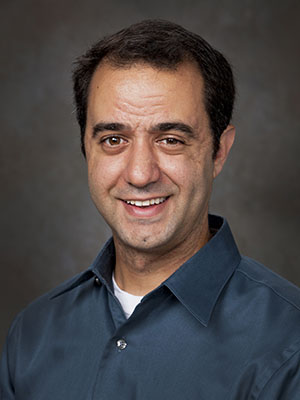
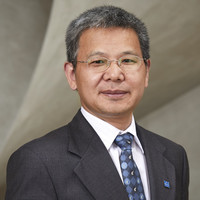
Bobak Mortazavi is an Associate Professor in the Department of Computer Science & Engineering at Texas A&M University. His research focuses on medical analytics, machine learning, wearable sensors, and cyber-physical systems. He leads interdisciplinary projects in healthcare technology, including AI-driven diagnostics and predictive modeling for cardiovascular diseases. He has received notable awards such as the Best Demonstration Award at IEEE EMBS 2012 and the Best Paper Award at the Fourth International Conference on Data Analytics 2015. His work bridges machine learning with clinical applications, emphasizing practical solutions for healthcare challenges. Recent research includes developing AI tools for aortic stenosis detection, electrolyte estimation via ECG, and real-time patient monitoring systems. He collaborates with industry and academic partners to advance telemedicine and wearable health technologies. Key contributions include the SMART-LV project for smartphone-based cardiac diagnostics and the ArterialNet framework for blood pressure reconstruction using wearable sensors. His work is published in top journals like IEEE Journal of Biomedical and Health Informatics and Elsevier's Pervasive and Mobile Computing.
Peter Bühlmann is a Professor at ETH Zürich within the Seminar für Statistik , focusing on high-dimensional statistics, causal inference, and machine learning. His work bridges theoretical advancements with practical software implementations in R packages like pcalg , mboost , and glmmlasso , impacting fields such as genomics, proteomics, and intensive care analytics. Key Contributions : Causal structure learning, stability selection, anchor regression, and deconfounding. Software : Developed widely used R packages for statistical modeling and causal inference. Teaching : Courses on high-dimensional statistics at ETH Zürich and international institutions. Research Trends : Recent articles emphasize causal robustness, domain adaptation, and applications in medicine. His work addresses challenges in heterogeneous data, missing values, and covariate shifts using methods like spectral deconfounding and residual prediction tests. Scientific Recognition : Co-author of a paper designated as a New Hot Paper (Meinshausen and Bühlmann, 2006) by Essential Science Indicators, indicating significant impact in high-dimensional multiple testing.
Animesh Garg is an Assistant Professor at the School of Interactive Computing at Georgia Tech, where he leads the People, AI, and Robotics (PAIR) research group . He holds a Senior Researcher position at Nvidia Research and has courtesy appointments at the University of Toronto and Vector Institute. Previously, he served as Chief Scientific Officer at Apptronik (2024-2025) and Senior Staff Research Scientist at Nvidia Research (2018-2024). Education : Ph.D. in Operations Research from UC Berkeley (2011-2016), MS in Computer Science and Industrial Engineering from Georgia Tech and University of Delhi. Research Focus : Building Generalizable Autonomy through Reinforcement Learning , Control Theory , and 3D Vision , with applications in Surgical Robotics , Self-Driving Labs , and Manufacturing . Key Article Themes : His recent work emphasizes Foundation Models for robotics, Differentiable Simulation , Language-Guided Autonomy , and Structured Inductive Biases in sequential decision-making. Scientific Awards : Stephen Fleming Early Career Professorship at Georgia Tech. Teaching : Courses on AI, Deep Reinforcement Learning, and Algorithmic Intelligence in Robotics at Georgia Tech. Labs & Collaborations : Affiliated with Institute for Robotics and Intelligent Machines (IRIM) and ML@GT at Georgia Tech; collaborates intensively with Nvidia Robotics.
Prof. Michael Moor is a tenure-track Assistant Professor for Medical AI at ETH Zurich's Department of Biosystems Science and Engineering in Basel. Previously, he conducted postdoctoral research at Stanford University under Prof. Jure Leskovec, focusing on medical foundation models. His work spans causal learning, multimodal AI, and sepsis prediction. Moor holds an MD from the University of Basel and a PhD from ETH Zurich's Machine Learning and Computational Biology Lab under Prof. Karsten Borgwardt. Research Interests: Generalist medical AI models Multimodal medical reasoning Zero-shot and few-shot learning Clinical causal inference Retrieval-augmented language models Sepsis prediction systems Key Achievements: Published foundational work in Nature (2023) on generalist medical AI Developed Med-Flamingo multimodal model (2023) Zero-shot causal learning framework accepted to NeurIPS 2023 (Spotlight) International sepsis prediction study with 156k ICU patients (2023) Lab Activities: Leads ETH's Medical Foundation Models group, collaborating with Stanford HAI and NASA Ames. Active in creating medical AI benchmarks like AgentClinic and developing retrieval-augmented systems like Almanac.
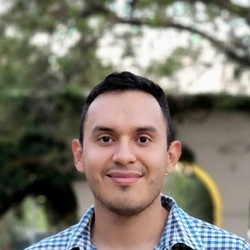
Raul Astudillo Marban is a Postdoctoral Scholar Research Associate in the Department of Computing and Mathematical Sciences at Caltech, hosted by Professor Yisong Yue. He will join MBZUAI as a tenure-track Assistant Professor in August 2025. His research focuses on adaptive learning and decision-making in complex, data-intensive environments, with applications in personalized healthcare, engineering design, and scientific discovery. He earned his Ph.D. in Operations Research and Information Engineering from Cornell University under Professor Peter Frazier and holds an undergraduate degree in Mathematics from the University of Guanajuato and the Center for Research in Mathematics. His work integrates Bayesian optimization and machine learning to address real-world challenges such as protein engineering, plant breeding, and computational biology. Key contributions include steering generative models with experimental data, preferential multi-objective optimization, and cost-aware Bayesian strategies. He has received recognition as a Rising Star in Management Science and Engineering (Stanford) and a Rising Star in Data Science (University of Chicago/UCSD). Recent research highlights include optimizing protein fitness through generative models, active learning in directed evolution, and Bayesian optimization for budget allocation in agriculture. His publications span top venues like NeurIPS, Nature Communications, and TMLR. He actively recruits students/researchers for projects in machine learning and optimization.
Katja Hose is a Full Professor of Data Management at TU Wien's DBAI research unit, heading the Data Management and Knowledge-Driven AI Lab. She previously held a Poul Due Jensen Foundation Professorship at Aalborg University. Her research focuses on data and knowledge engineering, including graph databases, knowledge graphs, querying, analytics, and machine learning, with interdisciplinary applications in bioscience, healthcare, and environmental assessment. Education: PhD in Computer Science (Ilmenau University of Technology, 2009), Postdoc at Max Planck Institute for Informatics (2009–2012). Academic roles include Program Co-Chair for ISWC 2024 and EDBT 2023, and editorial board membership at VLDBJ and TGDK. She leads projects like TARGET (health virtual twins) and ARMADA (data management). Research Interests: Knowledge Graphs, Semantic Web, Big Data, Machine Learning, Data Integration, and Provenance Systems. Key contributions include SHACL shape extraction, conversational data analytics, and environmental knowledge graphs. Awards include the 2025 Distinguished Meta-Reviewer Award and 2024 Manfred Paul Award. Advising and Grants: Supervised students including E. Pürmayr (Diploma Thesis 2025). Active in EU projects (TARGET, ARMADA) and grant coordination. Labs/Teams: DMKI Lab at TU Wien, collaborating with interdisciplinary teams in healthcare and environmental science.
Zakia Hammal is an Assistant Research Professor with dual appointments at Carnegie Mellon University, holding positions in the Robotics Institute within the School of Computer Science and the Department of Biomedical Engineering in the College of Engineering. Her work bridges computer science, machine learning, artificial intelligence, and social/behavioral psychology to advance computational models for human behavior analysis. Dr. Hammal's educational background includes a PhD in Computer Science, a Master of Artificial Intelligence and Algorithmic with specialization in Image Processing, and an Engineer's degree in Computer Science with specialization in Computer Systems. Her academic journey has positioned her at the intersection of technical expertise and healthcare applications. Her research focuses on multimodal human behavior modeling in social interaction, with particular emphasis on health informatics and affective computing (Emotion AI). Dr. Hammal's work has pioneered computational models for multimodal assessment of psychiatric disorders, including depression severity evaluation, automatic pain intensity measurement, assessment of expressiveness in children with facial abnormalities, analysis of non-verbal communication in mother-infant interaction, and identification of behavioral markers in autism spectrum disorder. Her approach integrates computer vision, machine learning, and behavioral psychology to create systems that can objectively measure human behaviors that are often subjective in clinical settings. Analysis of her recent publications reveals a consistent trajectory toward more sophisticated multimodal approaches to healthcare challenges, particularly in pain assessment and mental health diagnostics. Her work increasingly emphasizes interpretable AI models that can translate complex behavioral patterns into clinically meaningful insights, with growing attention to applications for vulnerable populations including infants, elderly patients, and those with craniofacial abnormalities or autism spectrum disorder. Women in AI Awards North America 2023 – AI Researcher of the Year Award Outstanding Reviewer Award at FG 2015 Best Paper award at ACII 2015 Outstanding Paper award at ICMI 2012 Dr. Hammal has secured significant research funding, primarily from the U.S. National Institutes of Health, including an R01 grant for developing a Multimodal Behavioral AI platform for pain assessment and management, and additional grants for automatic pain assessment in older adults with dementia. Her leadership extends to mentoring through her involvement in organizing workshops and conferences that train the next generation of researchers in affective computing and health informatics. As an active leader in her field, Dr. Hammal serves as ACM ICMI Steering Board Committee Member, Associate Editor for IEEE Transactions on Affective Computing and IEEE Transactions on Multimedia, and has organized numerous influential workshops including the International Workshop on Automated Assessment of Pain and Face and Gesture Analysis for Health Informatics. She is set to serve as Program Chair for FG 2025, ACII 2025, and ICMI 2026, demonstrating her growing influence in shaping the future direction of research in multimodal interaction and affective computing.
Zhonghai Lu is a Professor of Electronic Systems Design (specializing in Dependable and Autonomous Systems) at KTH Royal Institute of Technology, part of the Department of Electrical Engineering in the School of Electrical Engineering and Computer Science (EECS). He serves as Program Director for KTH's Embedded Systems master's program and Director of Studies at the Division of Electronics and Embedded Systems. His research focuses on Network-on-Chip (NoC), computer architecture, embedded systems, and Prognostics and Health Management (PHM) of power electronics. He leads a research group exploring in-network processing and embedded intelligence, transforming passive networks into active computational frameworks. Lu holds a BSc from Beijing Normal University (1989), MSc and PhD from KTH (2002, 2007), and an MBA in Innovation and Growth from the University of Turku (2012). He has authored over 240 scientific papers, including journal articles and peer-reviewed conferences, with notable recognitions such as Best Paper Awards at NOCS’2015 and EU HiPEAC, and a Featured Paper in IEEE Transactions on Computers (2020). He serves as Associate Editor for ACM Transactions on Architecture and Code Optimization (TACO) and has chaired major conferences like HiPEAC’2017 and NOCS’2018. His research group’s recent work includes integrating AI into hardware acceleration, fault-tolerant neural networks, and RUL estimation for power electronics using recurrent neural networks. Lu has secured grants from the Swedish Research Council and Intel Corporation and developed courses like IL2230 (Hardware Architectures for Deep Learning) and IL2233 (Embedded Intelligence), pioneering embedded AI education at KTH. Education: BSc (Beijing Normal University), MSc/PhD (KTH), MBA (University of Turku) Awards: Best Paper Awards (NOCS, EU HiPEAC), Swedish Research Council Grants, Intel Research Gifts Labs/Teams: Research Group on In-Network Processing and Embedded Intelligence
Jessica Illuzzi is the Deputy Dean for Education and Harold W. Jockers Professor of Medical Education at the Yale School of Medicine, where she is also a Professor in the Department of Obstetrics, Gynecology, and Reproductive Sciences. She plays a pivotal role in medical education leadership, curriculum development, and accreditation efforts, while maintaining an active research program in maternal and neonatal health. Harvard University, AB in Biochemical Sciences (1994) Harvard Medical School, MD (1998) Yale School of Graduate Studies, MS in Epidemiology (2006) Residency in Obstetrics and Gynecology, Yale-New Haven Hospital (2002) Her research focuses on the impact of obstetric interventions on maternal and neonatal outcomes, especially among low-risk women. Key areas include cesarean section, vaginal birth after cesarean (VBAC), group B streptococcus prophylaxis, and innovative maternity care models. She has led studies on labor management, health disparities, and quality improvement in obstetric care. Recent publications highlight trends in racial and ethnic disparities in maternal outcomes, validation of VBAC prediction tools, neonatal resuscitation guidelines, and integrated maternal-child care models in Haiti. Her work spans clinical epidemiology, health services research, and digital health interventions in obstetrics. Hellman Award (2017) Leah Lowenstein Award (2010) Roy M. Pitkin Award (2010) Bohmfalk Award (2007) Association of Professors of Gynecology and Obstetrics Teaching Award (2006) Dr. Illuzzi has been a strong advocate for medical education reform and student mentorship. She previously served as clerkship director and curriculum director, and has played key roles in Yale’s curriculum redesign and LCME reaccreditation. She has also led quality improvement initiatives in labor care and contributed to national guidelines on neonatal resuscitation. Her collaborative research network includes frequent co-authors such as Xiao Xu and Katherine Harper Campbell.
Zach Shahn is an Assistant Professor in the Department of Epidemiology and Biostatistics at the CUNY School of Public Health. He holds a PhD in Statistics from Columbia University and a BA in Mathematics from Stanford University. His research focuses on causal inference methods applied to healthcare data, particularly time-varying treatment effects and critical care applications. He has conducted postdoctoral work at Harvard School of Public Health and previously worked at IBM Research in Healthcare and Life Sciences. Education: PhD in Statistics and Probability, Columbia University BA in Mathematics, Stanford University Research interests include developing causal inference frameworks for evaluating treatment efficacy in dynamic healthcare settings, with a focus on critical care outcomes and methodological innovations. Recent work explores applications of causal diagrams, instrumental variables, and machine learning in healthcare decision-making. His studies often involve large-scale healthcare datasets to assess interventions' real-world impacts. Key trends in his articles include advancements in causal effect estimation under complex treatment regimes, bias analysis in observational studies, and methodological contributions to difference-in-differences and N-of-1 trial designs. His work bridges statistical theory with practical healthcare challenges, emphasizing reproducibility and policy relevance. No scientific awards are listed, though his contributions to causal inference methodologies are notable in academic circles. He has advised on healthcare data projects and published extensively without explicitly listed grants. His professional network includes collaborations with institutions like Harvard and IBM. He is affiliated with CUNY's public health programs and actively engages in academic discourse via Twitter and LinkedIn. His lab or team details are not explicitly mentioned in available materials.
Prof. Martin Boeker is a Professor of Medical Informatics at the Technical University of Munich (TUM), affiliated with the TUM School of Medicine and Health. His work focuses on advancing healthcare through AI-driven solutions, interoperability frameworks, and precision medicine initiatives. Key projects include the German Medical Text Corpus (GeMTeX) and the MIRACUM DIFUTURE Alignment Hub. Expertise: Medical Informatics, AI in Healthcare, Federated Learning, Health Data Integration Key Contributions: FHIR-based systems, clinical decision support, patient-centered outcomes research Leadership: Director of the Institute for AI and Informatics in Medicine at TUM Hospital Right of the Isar Research emphasizes bridging clinical practice and data science through projects like modular health crawlers, automated guideline adherence monitoring, and cross-institutional medical NLP solutions. His work spans oncology informatics, rare disease management, and pandemic response data ecosystems. Recent articles highlight innovations in digital twins for precision oncology, federated analysis in oncology, and German-language medical NLP challenges. He collaborates internationally on EHR standardization and healthcare interoperability, contributing to the Medical Informatics Initiative (MII) and pandemic evidence ecosystems. Grants and collaborations involve the German Federal Ministry of Education and Research, European initiatives, and industry partnerships. Educational efforts focus on training future medical informatics professionals through MII competency programs.
Mats Danielsson is a Professor at KTH Royal Institute of Technology, leading the Medical Imaging research group within the Department of Particle Astrophysics and Medical Imaging. He has coordinated major projects like the ERC Advanced Grant for the Si3 project (starting 2024) and the EIC Pathfinder's 1MICRON project (starting 2025). His work focuses on advancing photon-counting detectors, X-ray technologies, and medical imaging systems. Notable recognitions include the 2024 KTH Innovation Award and the 2022 Hans Wigzell Science Prize. Danielsson has co-founded companies such as Sectra Mamea AB and C-RAD AB, and holds 135 patents with over 150 scientific publications. Education: MSc (1990) and PhD (1996) from KTH, followed by postdoctoral research at Lawrence Berkeley National Lab (1996–1998). He joined KTH in 1999, where he has held his current professorship since then. His research spans medical imaging, detector innovation, and radiation physics applications in healthcare. Research Interests: Development of high-resolution CT detectors, photon-counting technologies, compact X-ray sources, and AI-driven image processing. His recent work emphasizes minimizing radiation exposure while enhancing diagnostic precision through novel detector designs and machine learning algorithms. Key Projects: ERC Si3 project (3D detector for nuclear medicine), EIC 1MICRON (micrometer-scale imaging), and MedTechLabs collaboration with Karolinska Institutet. He has pioneered innovations such as MicroDose mammography and advanced photon-counting spectral CT systems. Awards: KTH Innovation Award (2024), Hans Wigzell Prize (2022), IVA membership (2017), Polhem finalist (2014), and INGVAR Award (2004). Advising & Grants: Over 150 scientific publications, 135 patents, and leadership in multi-institutional projects. Teaches courses on medical imaging and modern physics at KTH. Labs/Teams: Director of the Medical Imaging Group at KTH, co-founder of MedTechLabs, and collaborator across academia and industry in medical imaging innovation.
Arthur Schafer is a Full Professor in the Department of Philosophy at the University of Manitoba's Faculty of Arts and Founding Director of the Centre for Professional and Applied Ethics. He serves as a National Research Associate of the Canadian Centre for Policy Alternatives and previously held roles as ethics consultant for the Winnipeg Regional Health Authority and Head of the Section of Bio-Medical Ethics in the Faculty of Medicine. His academic credentials include a BLitt in Philosophy from the University of Oxford (1967) and a BA Honours from the University of Manitoba. His distinguished career spans over five decades of ethical scholarship and public engagement. Professor Schafer specializes in professional and applied ethics with intensive focus on bioethics , research ethics , and biomedical conflicts of interest . His work critically examines medical assistance in dying , informed consent , clinical trial ethics , and human rights frameworks , establishing him as a leading voice in Canadian ethical discourse. His philosophical approach bridges theoretical rigor with practical policy applications across multiple professional domains. Analysis of his 13 most recent publications reveals enduring engagement with evolving ethical challenges, particularly the tension between institutional interests and professional integrity. His scholarship demonstrates consistent progression from foundational ethical theory toward contemporary policy applications, with recent work heavily concentrated on medical assistance in dying and pharmaceutical industry influence in healthcare systems. His scientific recognition includes: D. R. Campbell Outreach Award (1984) Olive Beatrice Stanton Award for Excellence in Teaching (1976) Canadian Commonwealth Scholarship (1964) Woodrow Wilson Fellowship (1964) Canada Council Fellow As an active supervisor for Master's and PhD students, Schafer extends his mentorship through ethics consulting for professional associations in Medicine, Engineering, Architecture, Nursing, and Pharmacy. His policy impact is evidenced by service on the Provincial-Territorial Expert Panel on Medical Assistance in Dying and two published reports for the Canadian Centre for Policy Alternatives. His extensive media contributions—including hundreds of CBC appearances and newspaper columns—demonstrate exceptional public scholarship. The Centre for Professional and Applied Ethics, which he founded, functions as a vital interdisciplinary hub connecting academic philosophy with real-world ethical challenges across healthcare, law, and public policy sectors, facilitating ongoing dialogue between scholars, practitioners, and community stakeholders.
Professor Alessandra Russo leads the Structured and Probabilistic Knowledge Engineering (SPIKE) research group at Imperial College London's Department of Computing. With expertise spanning computational logic, symbolic machine learning, and neuro-symbolic AI, she develops foundational AI techniques applied to security, network management, healthcare, and adaptive systems. Professor Russo holds a PhD in Computing from Imperial College London and an MSc in Computer Science from Ionian University. Her research pioneers logic-based learning systems for intelligent adaptive technologies, with projects including declarative networking for security management, privacy-preserving federated learning, and hybrid neuro-symbolic approaches for robust reasoning. Her current work focuses on developing interpretable AI systems through neuro-symbolic integration, creating frameworks that combine neural networks with symbolic reasoning for explainable decision-making. Recent publications explore rule learning from knowledge graphs, transformer-based world models, and formal methods for representation learning. Professor Russo teaches courses on Logic-Based Learning and AI Applications, and has received the Google PhD Fellowship for her research contributions. She mentors numerous PhD students in areas spanning theoretical foundations and practical applications of computational logic and machine learning.
Dr Anandadeep Mandal is an Associate Professor in Finance and the Scotcoin Distinguished Chair of Digital Finance at the University of Birmingham , within the Birmingham Business School and the Department of Finance . He is the founding director of the MSc Financial Technology programme and the Programme Director for the MBA (Distance Learning), demonstrating significant leadership in academic program development. Education: PhD in Probability Distribution Fitting, Cranfield University (2016) MRes in Management Science, Cranfield University (2012) MSc in Finance and Investments, Durham University (2008) Bachelor’s in Electronics Engineering Research Interests: Dr Mandal’s interdisciplinary research lies at the intersection of mathematical modelling, artificial intelligence, finance, and digital innovation . His work focuses on AI-enabled investment strategies , blockchain for financial transparency , ESG performance measurement , and the development of the Sustainable Efficiency Index (SEI) . He also pioneers AI applications in digital education , including a patent-pending platform for automated grading of multi-modal student submissions using ensemble AI methods. Publication Trends: His recent scholarly output spans high-impact journals and conferences, reflecting a strong focus on digital finance , climate and social media analytics , cryptocurrency regulation , and AI in financial forecasting . His work combines advanced data science techniques with real-world policy and financial applications, particularly in sustainability and public health. Scientific Awards: No specific awards are mentioned in the provided text. Advising and Grants: Dr Mandal has secured over £2 million in research funding from sources including UKRI, UoB QR Funding, and industry partners. While specific students are not listed, his role as programme director and research leader suggests active mentorship. His research has direct policy impact through collaborations with the NHS Trusts , NIHR , and the UK Government . Labs, Teams, and Impact: Dr Mandal leads a research agenda that bridges academia and public policy. His work extends beyond the university through public engagement at science festivals, outreach for young learners, and expert contributions to UK Parliamentary consultations on AI, sustainability, and financial innovation. He is a key figure in advancing digital finance education and research at the University of Birmingham.