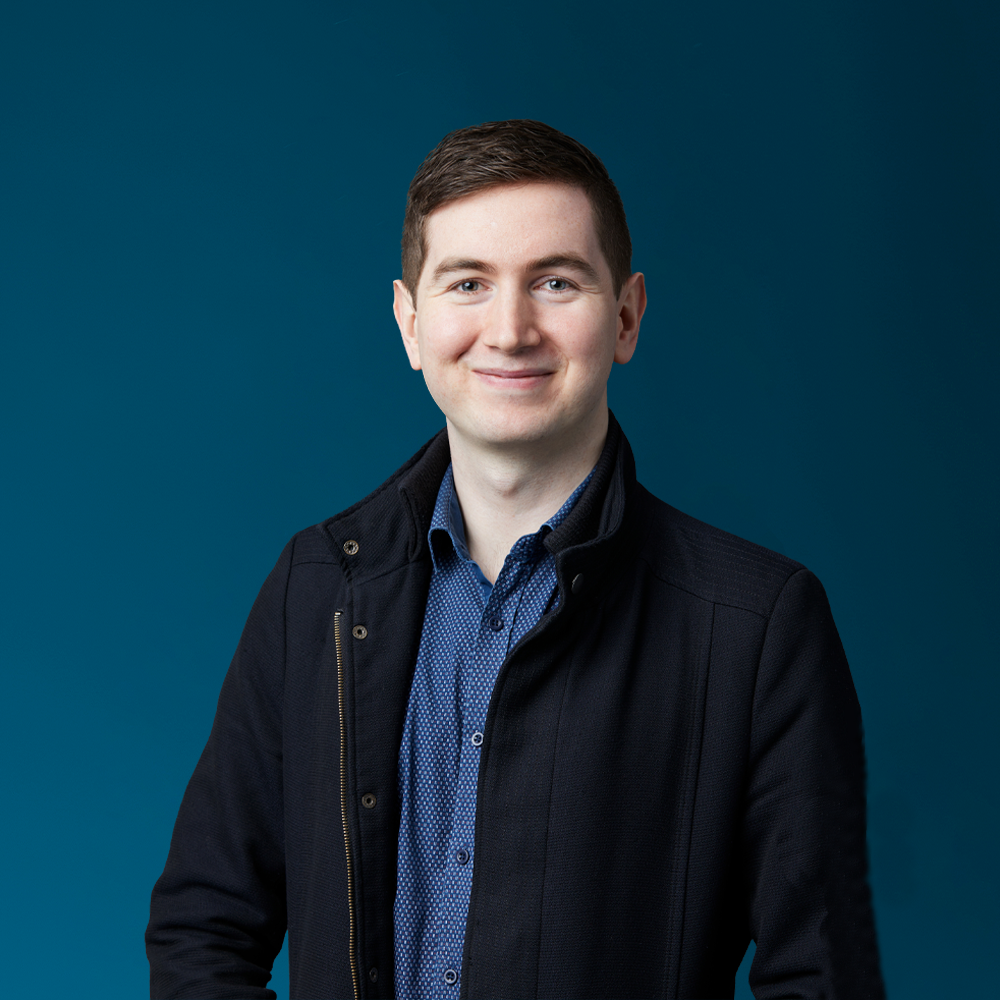
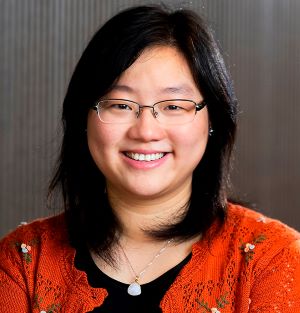
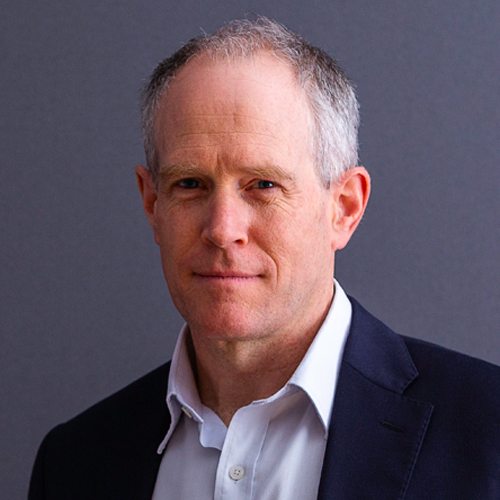
Leigh Tyers is a High Performance Computational Specialist at the Curtin Institute for Data Science , Curtin University, Australia. With a Master’s degree in Computational Physics and an undergraduate background in Physics and Mathematics, his expertise spans HPC, algorithm optimization, and mathematical modeling. Educated in Computational Physics and Mathematics Specializes in NISQ and quantum-inspired algorithms Applied HPC to geophysical data inversion at ExploreGeo His research interests bridge machine learning , climate science , health , and remote sensing , with a focus on computationally intensive simulations and inversion techniques using platforms like the Pawsey supercomputer. Leigh joined Curtin Institute for Data Science in March 2021, contributing to remote sensing projects while maintaining his competencies in distributed computing and statistical modeling.
Gaurangi Anand is a Postdoctoral Research Fellow at the Australian Institute for Machine Learning within the Faculty of Sciences, Engineering and Technology at the University of Adelaide. Her research expertise includes: Machine learning techniques for determining probability distributions of collaboratively interacting entities Analysis of complex, noise-laden datasets Application of Graph Neural Networks for relationship prediction between species and chemicals Development of unsupervised representation learning methods for time series and trajectory data Dr. Anand previously served as a Postdoctoral Research Fellow at CSIRO from 2021 to 2024, where she addressed challenges posed by diverse experimental conditions in ecological and chemical relationship modeling. She completed her doctoral studies at Queensland University of Technology in Brisbane, focusing on innovative approaches to time series and trajectory data analysis. Her interdisciplinary background combines computer science, statistics, and domain-specific applications to solve complex data-intensive scientific problems.
Maria Cunningham is a researcher at the School of Physics, University of New South Wales (UNSW), focusing on molecular astrophysics, astrochemistry, and computational astrophysics. Her work bridges disciplines like physics, astronomy, and chemistry to explore star formation, interstellar molecular clouds, and pre-biotic molecules. Her research involves collaborations with international teams in the USA, Chile, and Germany, emphasizing data-intensive astronomy and ALMA observations. Key projects include the ATOMS survey, SPLASH (Southern Parkes Large-Area Survey in Hydroxyl), and computational modeling of magnetic fields and turbulence in the interstellar medium. Molecular Astrophysics : Investigating physical conditions and chemistry in molecular clouds via molecular line radiation. Bioastronomy : Studying pre-biotic molecules in the interstellar medium. Turbulence & Star Formation : Linking magnetic field alignment and turbulent energy transfer to star formation processes. The 15 most recent articles span astrophysics (e.g., magnetic fields in RCW 36, Orion cold clumps) and an outlier 2021 virology study on SARS-CoV-2. Trends highlight molecular cloud dynamics, computational methods, and interdisciplinary applications of astrophysical data.
Professor Tina Du serves as the Head of the School of Information and Communication Studies and a full Professor of Information Sciences at Charles Sturt University in New South Wales, Australia. She leads a vibrant research group focused on key issues affecting the library and information sector, examining ways to improve library and information services and enhance library collections. Dr. Du's research interests are interdisciplinary in nature, exploring user-technology interactions, community engagement, information journey, emerging technologies and social impacts, and data governance and privacy. Her work spans diverse communities including LGBTQIA+ individuals, late-life migrants, Indigenous communities, and culturally and linguistically diverse older adults. She employs both qualitative and quantitative methodologies to understand information behavior in various contexts and to develop solutions that promote social justice and digital inclusion. Analysis of her recent publications reveals a strong focus on information behavior across diverse communities, digital privacy and ethics, sustainable development through information practices, and the social impacts of emerging technologies. Her research demonstrates increasing attention to marginalized populations and social justice issues, while maintaining strong methodological rigor in information science research. She has made significant contributions to understanding how information practices can advance the United Nations Sustainable Development Goals. Australian Research Council Discovery Early Career Researcher Award (ARC DECRA) Visiting research fellowship at the University of Oxford South Australian Young Tall Poppy of Science Award Winnovation Award National field leader in Library & Information Science Top 50 researcher in Engineering & Computer Science Discipline by The Australian's Research Magazine (2020) 6 best paper awards Professor Du has attracted more than $1.55M in government and industry research funding through competitive research grants. She serves as co-chair of the Research Advisory Committee of the Australian Library and Information Association (ALIA) and as Director-at-Large on the Board of Directors of the international Association for Information Science and Technology (ASIS&T). Her research group, the Libraries Research Group, builds on Charles Sturt University's position as the leading and largest provider of library education in Australia. Her research team, the Libraries Research Group, focuses on key issues affecting the library sector, examining ways to improve library and information services and enhance library collections. The group works closely with librarians across Australia, providing evidence-based solutions to real-world problems. Dr. Du has also established strong collaborations with Indigenous communities, particularly the Ngarrindjeri people, to develop culturally appropriate information systems and practices.
Professor Alex Ching-Tai Ng is a faculty member at the University of Adelaide, serving as a Professor in the School of Architecture and Civil Engineering within the Faculty of Sciences, Engineering and Technology. He joined the university in 2011 as a Lecturer and was promoted to Professor, holding administrative roles such as Associate Dean of Graduate Studies and Director of Graduate Studies (2018–2022). Education: B.Eng. (First-class Honours, City University of Hong Kong), M.Phil. (City University of Hong Kong), Ph.D. (University of Queensland) His research interests span Structural Health Monitoring (SHM), Nondestructive Evaluation (NDE), smart sensing technologies, and vibration testing. He focuses on developing advanced SHM/NDE techniques for structural integrity assessment, with applications in engineering reliability and decarbonization of construction. His publications highlight innovations in guided wave-based damage detection, nonlinear ultrasonic methods for composite materials, and machine learning integration in structural diagnostics. Key trends include FRP-strengthened structures, graphene composites, and real-time hybrid simulation for wind response analysis. Scientific awards include: The Nishino Prize (EASEC, 2016) Australian Research Council Discovery Early Career Researcher Award (2013) He actively supervises Masters and PhD candidates and has served as an assessor for international grants (ARC, RGC, ERC, SNSF, NCN, CONICYT). Professional leadership includes Co-Editor-in-Chief of Engineering Structures and roles in technical committees like ISHMII and ANSHM.
Derrick Lopez is a Research Fellow at the University of Western Australia (UWA), affiliated with the Cardiovascular Epidemiology Research Centre (CERC) and the School of Population and Global Health. His primary roles include leading data-intensive research projects, supervising MD students, and teaching linked health data courses. He holds a PhD from UWA and has completed specialized training in high-performance computing, health economics, and pharmacoepidemiology. His research focuses on cardiovascular epidemiology, health services research, and pharmacoepidemiology, with a particular interest in ageing and frailty. He has extensive experience analyzing large administrative health datasets, including hospital, mortality, and pharmaceutical data. Key collaborations include the Medicines Intelligence Centre for Research Excellence and the National Stroke Data Linkage Interest Group. Recent work explores spatial variations in health outcomes (e.g., breast cancer disparities in Queensland) and the impact of temperature extremes on urban health. His articles emphasize innovative data analysis techniques and healthcare policy implications. Lopez has secured over AU$1 million in research funding, including grants for projects on pulmonary rehabilitation cost-effectiveness and heat vulnerability modeling. He actively engages in academic service, serving as an editor for the International Journal of Population Data Science and contributing to national/international conference programs.
Dr. Karen Lee-Waddell is the Director of the Australian SKA Regional Centre (AusSRC) and Project Scientist for the WALLABY survey, leading efforts to build data-intensive research capabilities for radio astronomy. She is affiliated with the University of Western Australia (UWA) and the International Centre for Radio Astronomy Research (ICRAR). Her roles involve collaborations with CSIRO, Curtin University, and the Pawsey Supercomputing Centre. Education: PhD in Astrophysics & Astronomy (Queen's University, 2015), MSc in Space Sciences (Royal Military College of Canada, 2011), and dual BSc/BAs in Physics and Classics (McMaster University, 2003–2009). Research focuses on galaxy interactions, neutral hydrogen distribution, and extragalactic phenomena. Key projects include the WALLABY survey (using ASKAP/CSIRO) and SKA data processing. She also advocates STEM education through school outreach programs. Awards: Canadian Forces' Decoration Medal (2019) for service in the Royal Canadian Navy Reserve. Active in grants and collaborations, including the HiVIS project for SKA imaging and the ACAMAR Visiting Fellowship program. Labs/Teams: AusSRC, ICRAR, and WALLABY collaboration network. Research emphasizes observational techniques, machine learning applications, and computational astrophysics.
Paul Gretton is a Research Fellow at the Crawford School of Public Policy and a senior research associate of the Centre of European Studies at the Australian National University. He previously served as Assistant Commissioner at the Australian Productivity Commission, where he led the Trade and Economic Studies branch, overseeing trade policy reviews, national economic reform assessments, productivity reporting, and quantitative economic modeling. Paul's research focuses on economic growth, national economic reform, and trade policy. He regularly employs and advocates for the use of economy-wide economic modeling to support policy assessments. His work spans various areas including productivity analysis, land degradation and agricultural economics, firm size and export performance, and the impact of information and communication technologies on economic growth. He has conducted research for international organizations and has worked as an advisor in Pakistan, the Kyrgyz Republic, and Ukraine, representing Australia in Asia-Pacific and OECD forums. His extensive publication record demonstrates a consistent focus on trade policy analysis and economic modeling, with particular expertise in the GTAP model for dynamic economic simulations. Gretton's work frequently examines bilateral and regional trade agreements, economic reform impacts, and the relationship between trade liberalization and economic growth. His recent research has addressed contemporary challenges including Brexit's implications for global trade, regional economic integration in Asia-Pacific, and the economic effects of policy reforms in various national contexts. Throughout his career, Paul has managed commissioned studies on preferential Rules of Origin, Bilateral and Regional Trade Agreements, and the impacts of national economic reform. He was responsible for preparing the Commission's annual Trade & Assistance Review and has contributed significantly to understanding how economic policies affect national and regional development. His methodological approach emphasizes rigorous quantitative analysis and economy-wide modeling to provide robust evidence for policy decisions.
Shuaiwen Song is a SOAR Associate Professor (tenured) at the School of Computer Science , University of Sydney, and directs the Future System Architecture (FSA) Lab . He holds affiliated professor positions at the University of Washington's Electrical Engineering department and serves as a Visiting Professor at Microsoft. Key research areas: High Performance Computing (HPC), Hardware-Software Co-design, Emerging Architectures (heterogeneous, quantum), and System ML Current projects: Large-Scale Sparse Model Design (Google), Tiered Memory Systems (Google), Compiler Optimizations for Heterogeneous Computing (Microsoft/Alibaba), Planet-Scale XR Systems (Meta), Quantum System Architecture (Australian Research Council) His work bridges system software and hardware, focusing on holistic design for complex many-accelerator systems and futuristic architectures like VR/AR and quantum accelerators. Recent publications highlight advancements in temporal graph processing, VR rendering, and ReRAM-based CNN training. He has received prestigious awards including IEEE Mid-Career Award for Scalable Computing , Alibaba AIR Faculty Award , and Australia's Most Innovative Engineers recognition.
Dr. John Zigman is an academic affiliated with the Faculty of Engineering at The University of Sydney. His research spans interdisciplinary fields including geostatistics, big data processing, and computer systems optimization. He has contributed to advancements in geological boundary modeling, memory management frameworks for hybrid systems, and Java performance analysis. Key research interests include: Geological modeling using Bayesian approaches and dynamic time warping Development of holistic memory management systems (e.g., Panthera framework) Optimization of parallel computing architectures and distributed garbage collection Integration of geophysical data with autonomous spatial modeling algorithms Recent work focuses on photonic integrated circuits (2025), Java performance re-engineering (2025), and large-scale geological boundary rectification (2023). His publications demonstrate expertise in both theoretical computer science and applied geosciences. Notable collaborations include work with Prof. Arman Melkumyan on geostatistical applications and Prof. Stephen Blackburn on persistent Java systems. His research bridges computational methods with earth sciences, addressing challenges in resource exploration and data-intensive systems.
Albert Zomaya is the Peter Nicol Russell Chair Professor of Computer Science and Director of the Centre for Distributed and High-Performance Computing at The University of Sydney. He holds a PhD and is a Fellow of multiple prestigious institutions including the Australian Academy of Science and the Royal Society of New South Wales. His research focuses on parallel and distributed computing, networking, and complex systems, with applications in cybersecurity, cloud computing, and IoT. He has authored over 700 publications, 30 books, and edited numerous journals. His awards include the ACM MSWIM Reginald A. Fessenden Award and the New South Wales Premier’s Prize for Engineering. Education: PhD, along with extensive academic and industry experience across multiple institutions including the University of Western Australia and the University of Sydney. Research interests span distributed computing, high-performance systems, energy-efficient scheduling, and bioinformatics applications. His work impacts national security, healthcare, and industrial productivity through advancements in computing technologies. Awards highlight his contributions to scalable computing, parallel processing, and sustainable computing. He serves on editorial boards of major journals like ACM Computing Surveys and IEEE Transactions on Computers. Advising and grants include mentoring numerous PhD students and leading projects like the ARC Professorial Fellowship on energy-aware scheduling. He directs research centers and collaborates with industry partners to translate theoretical advancements into practical solutions. Labs and teams: Leads the Centre for Distributed and High Performance Computing, and collaborates with institutions like the Net Zero Institute and the University of Sydney Nano Institute.
Prof Xujuan Zhou is a Professor of Information Systems at the School of Business, University of Southern Queensland. She is affiliated with the Centre for Heritage and Culture and the Centre for Health Research. Her work focuses on interdisciplinary applications of machine learning and AI in healthcare, cybersecurity, and agricultural systems. She holds qualifications including a BIT (Honours) and PhD from Queensland University of Technology (QUT). Bachelor of IT (BIT), QUT Bachelor of IT (Honours), QUT PhD in IT, QUT Her research interests span AI-driven medical diagnostics (e.g., depression prediction, thyroid care), cybersecurity solutions for 5G networks, blockchain applications in agricultural traceability, and hybrid ML models for fraud detection. She has published extensively on topics like intrusion detection systems, remote patient monitoring, and X-ray-based disease identification using CycleGAN. Her work emphasizes both technical innovation and ethical considerations in AI deployment. Recent publications explore the intersection of social media analysis and mental health monitoring, blockchain for secure recommendation systems, and federated learning for personalized healthcare monitoring. Over 60,000 views and 13,000 downloads of her research outputs highlight the impact of her interdisciplinary work. Her contributions include developing AI tools for sepsis prediction, pain intensity estimation via facial expressions, and automated classification of lung nodules. She has also pioneered work on quantum-inspired algorithms for optimization problems in medical scheduling.
Professor Michael Schuetz is a Professor and Chair/Director of the Jamieson Trauma Institute at the School of Medicine, Faculty of Health, Queensland University of Technology (QUT). His expertise spans Traumatology, Emergency Care, and Fracture Healing, with a focus on orthopaedic trauma surgery and trauma system development. He holds a PhD in Medicine and is actively involved in research at the intersection of clinical sciences and biomedical engineering. His research interests include computer modeling for fracture analysis, implant development, and trauma system optimization. Notable projects involve epidemiological studies on fracture-related infections and economic analyses of trauma care. Collaborations with global experts highlight his international influence in orthopaedic trauma surgery. Publications emphasize clinical outcomes, infection prevention, and biomechanical innovations. His work on antibiotic delivery options and surgical techniques reflects a commitment to improving patient outcomes. Leadership in training programs and consensus-building for global trauma care resources underscores his role in advancing trauma medicine worldwide. Labs and teams include the Jamieson Trauma Institute, where he leads multidisciplinary projects. Grants and funding support his research into bone regeneration, surgical innovation, and trauma system efficacy.
Zifan Lin is a Lecturer and PhD student in the Multi-Discipline Doctor of Philosophy program at the School of Engineering, University of Western Australia. His research focuses on power electronics, underwater imaging, and control systems, with notable contributions to inverter technology, DC microgrid systems, and machine learning applications in vision systems. He actively collaborates on projects spanning Australia and other regions, addressing challenges in renewable energy integration and advanced image processing. His academic background includes multi-disciplinary training in engineering, complementing his teaching duties. Research interests emphasize practical solutions for energy systems (e.g., DC-DC converters, NPC inverters) and underwater image enhancement networks like TANet and ReX-Net. Recent work explores semantic feature refinement for mask detection and robust control schemes for electric motors using reinforcement learning. Publications highlight innovations in space vector modulation strategies, finite-set model predictive control, and agricultural drying technologies. While no specific awards are listed, his prolific output in top journals like IEEE Transactions and LWT-FOOD SCIENCE AND TECHNOLOGY reflects academic recognition. His advising and grant activities remain unspecified in available data.
Professor Miles Davenport is Program Head of the Infection Analytics Program at the Kirby Institute, University of New South Wales (UNSW). With a background spanning clinical medicine, experimental immunology, and mathematical modeling, he directs a team of applied mathematicians and evidence specialists focusing on host-pathogen interactions in SARS-CoV-2, HIV, and malaria. His work integrates experimental data with computational approaches to understand infection dynamics and immunity. His educational background includes: Bachelor of Science (Medicine) from University of Sydney MB BS (Medicine and Surgery) from University of Sydney D.Phil (Doctor of Philosophy) from University of Oxford Professor Davenport's research spans immunology, infectious diseases, and mathematical modeling. His team applies statistical and computational approaches to investigate treatment and immunity to infectious diseases, with major focuses on HIV immunity and latency, antimalarial treatment and immunity, and neonatal immunity. He has made significant contributions to understanding immune correlates for protection from SARS-CoV-2 infection, which has informed numerous guidelines on vaccination and treatment. His work bridges the gap between clinical medicine, immunology, and quantitative analysis, creating a unique interdisciplinary approach to infectious disease research. His recent publications demonstrate a strong focus on SARS-CoV-2 variants, vaccine effectiveness, HIV reservoir dynamics, and immune responses across different populations. The work spans mathematical modeling, clinical studies, and laboratory-based immunological investigations, reflecting his team's integrated approach to understanding host-pathogen interactions. There's a clear trend toward addressing emerging infectious disease threats through quantitative analysis of immune responses and transmission dynamics. Professor Davenport has held significant editorial positions including Senior Editor at eLife (2020-2024) and Editorial Board member at Journal of Virology (2015-2023). He served as President of the Australasian Society for Immunology (2009-2010), demonstrating leadership in the immunology community. He actively supervises postgraduate students, particularly seeking those with backgrounds in mathematics, statistics, or other quantitative disciplines to join his team. His Infection Analytics Program collaborates with approximately 30 experimental and clinical groups worldwide, using modeling to understand the dynamics of infection and immunity. Current thesis topics include Dynamics of HIV latency, Immunity to SARS-CoV-2, and Evidence Assessment in vaccine development. The Infection Analytics Program at the Kirby Institute serves as his primary research base, bringing together mathematicians, statisticians, and immunologists to tackle complex questions in infectious disease dynamics. The program's interdisciplinary approach allows for innovative solutions to challenges in vaccine development, treatment strategies, and understanding immune responses across different pathogens.