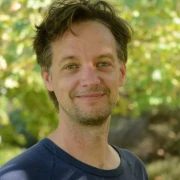
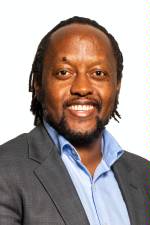
Dr. Robin Laycock is a Senior Lecturer in the Department of Health and Biomedical Sciences at RMIT University. He leads the Social and Cognitive Neuroscience (SoCoNeuro) Lab, focusing on behavioral and neural mechanisms of social perception in neurotypical and neurodivergent populations, including autism spectrum disorders and the neurocognitive effects of concussion. His research integrates methodologies such as eye-tracking, EEG, and fNIRS to study visual perception, face processing, and the impact of stress/anxiety on cognition. Dr. Laycock holds a PhD from La Trobe University, where he investigated visual processing pathways. His work also includes the BabyFace study, exploring social perception in pre-term infants using fNIRS. He is affiliated with RMIT’s Healthy Foundations Research Group and supervises research projects on topics like concussion neurocognition and social media’s neurobiological effects. Research interests span visual neuroscience, social neuroscience, and clinical applications of neuroimaging. He teaches undergraduate courses in Biological Psychology and supervises postgraduate research in vision science, neuropsychology, and affective neuroscience. His lab’s recent studies examine sex differences in sports-related concussion neuroimaging and the role of deepfakes in emotion perception research. He actively collaborates on projects addressing autism traits, stress effects on visual processing, and neuroimaging advancements.
Andreas Wicenec is a Professor and Senior Principal Research Fellow at the University of Western Australia (UWA), leading the Data Intensive Astronomy Program (DIA) at the International Centre for Radio Astronomy Research (ICRAR). He specializes in data-intensive astronomy, high-performance computing, and large-scale data management systems. His work supports the Square Kilometre Array (SKA) and other major observatories. Education: PhD in Astronomy from the University of Tübingen (1994), Physics Diploma (1989). Professional roles include Archive Scientist at the European Southern Observatory (ESO) and leadership in the International Virtual Observatory Alliance (IVOA). Research focuses on petascale data flows, reproducible science workflows, and next-generation archive systems like NGAS. Current projects include the DALiuGE engine, SKA data handling, and gravitational wave detection pipelines using deep learning. Key Projects: SKA Science Data Processing (7M AUD contract), Data Activated Flow Graph Engine (DALiuGE), and NGAS archive system Awards: ACM Gordon Bell Prize 2020 finalist Grants: Includes SKA Bridging Design (2019–2021), ICRAR IV (2025–2030) Labs/Teams: Active in ICRAR's Data Intensive Astronomy group, collaborating internationally on large-scale astronomy initiatives.
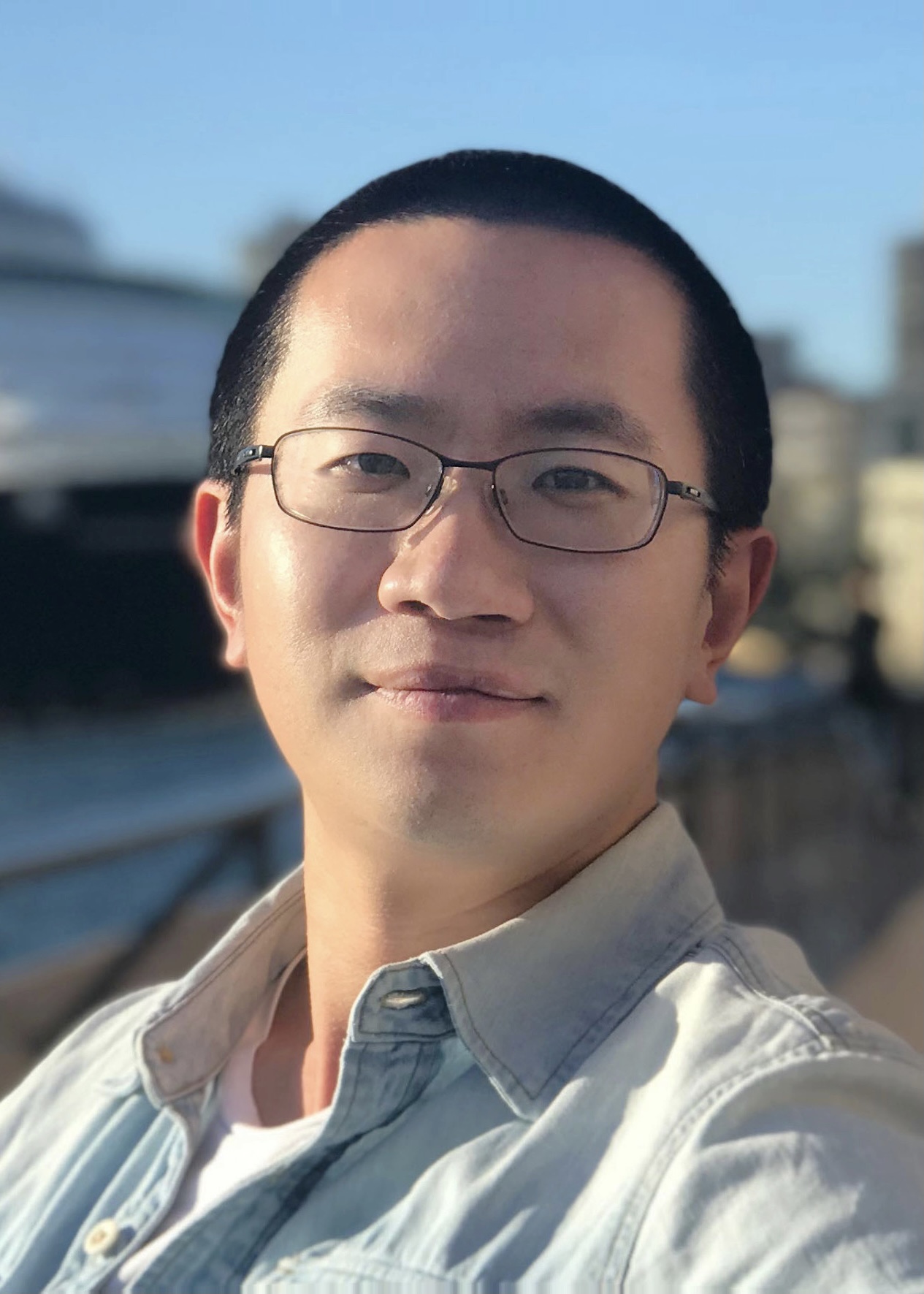
Dr Xinchen Zhang is a Grant-Funded Researcher (A) at the University of Adelaide's Department of Mechanical Engineering within the School of Electrical and Mechanical Engineering. His research focuses on integrating machine learning with computational fluid dynamics (CFD) to enhance predictive capabilities for multiphase flow solutions, particularly in sustainable energy applications like decarbonization technologies. He holds a PhD (2022) with a Dean's Commendation for Doctoral Thesis Excellence, emphasizing fluid and particle dynamics in particle-laden flows. His work addresses challenges in net-zero industrial processes such as limestone calcination and hydrogen production via methane pyrolysis, leveraging advanced CFD and ML-augmented methodologies. Key research areas include turbulence modeling, particle dispersion in jets, and flow regime analysis in horizontal particle-laden pipe systems. He is eligible to supervise Masters and PhD students as a co-supervisor. Dr Zhang's publications span 2018–2024, with recent trends focusing on physics-informed machine learning for turbulence modeling and multiphase flow optimization. His contributions advance computational efficiency and accuracy in predicting complex fluid-particle interactions.
Dr. Ghazal Bargshady is a Lecturer at the University of Canberra , with expertise in Affective Computing , Artificial Intelligence , and Healthcare Technology . Her roles include teaching units such as Computer Vision, Data Analytics, and Soft Computing, as well as supervising PhD and Master by Research students in AI-driven projects for healthcare and road safety. Education: She earned her PhD in Artificial Intelligence and Computer Vision from the University of Southern Queensland in 2020. Research Interests: Dr. Bargshady specializes in Computer Vision Deep Learning Biosignal Processing Facial Expression Analysis Human Factors in AI Wearable Sensors Multimodal Data Fusion Brain–Computer Interfaces Her work addresses real-world challenges in pain assessment, depression recognition, and driver safety using cutting-edge AI models. Article Trends: Her recent publications focus on Transformer architectures , fNIRS signal analysis , multimodal pain detection , and depression severity estimation via facial video data. These studies highlight her contributions to AI in healthcare , transportation safety , and biomedical signal processing . Teaching Activities: Dr. Bargshady has lectured units including Programming for Data Science , Computer Vision , and Soft Computing , emphasizing practical AI applications.
Dr. Madhushi Bandara is a Lecturer at the School of Computer Science, University of Technology Sydney (UTS), specializing in knowledge representation, complex system modeling, and data analytics. She leads the data management research stream at the UTS DigiSAS lab and is a core member of the Biomedical Data Science Laboratory within the UTS Australian Artificial Intelligence Institute. Her industry collaborations include Telstra, Cancer Australia, and Capsifi, focusing on AI integration in healthcare and finance. She coordinates the Business Information Systems major in UTS's Master of Information Technology program and convenes the Future Generation Enterprise Architecture Community of Practice. Education PhD in AI Systems Engineering, University of New South Wales (2020) BSc (Hons) in Engineering, University of Moratuwa, Sri Lanka (2015) Research Interests Madhushi's work bridges machine learning, knowledge graphs, and enterprise architecture to address challenges in data governance for SMEs, ESG metric management, and healthcare pathway analysis. Her research emphasizes translating cutting-edge AI into industry solutions through contextual domain knowledge integration. Scientific Awards UNSW-UTS Trustworthy Digital Society Scholarship Teaching & Leadership She teaches enterprise information systems, digital strategy, and AI for enterprises in UTS's online postgraduate programs. Her service roles include co-chairing tracks at the Australasian Conference on Information Systems and reviewing for Expert Systems with Applications.
Kevin Vinsen is a Senior Research Fellow at the University of Western Australia, working in the Data Intensive Astronomy (DIA) Program of the International Centre for Radio Astronomy Research (ICRAR) since 2009. He is also affiliated with the UWA Defence and Security Institute and holds an ORCID ID of 0000-0001-5332-3784. His work focuses on translating ICRAR software capabilities into practical industry applications across diverse domains. His research interests include: Peta-scale systems High-performance Computing Machine Learning applications in multiple fields Wave and weather forecasting Digital Assistive Technologies Agricultural applications of ML Large language models Vinsen heads the Translation and Impact work of the DIA team and leads the development of Machine Learning systems. His current projects include ML for wave forecasting on the NW shelf, wind and temperature forecasting, honey traceability and provenance, and digital assistive technology for people with disabilities. His work contributes to UN Sustainable Development Goals related to industry, oceans, agriculture, food, disability, and defense. His research output demonstrates a strong trend toward applying machine learning techniques to solve real-world problems across astronomy, environmental science, agriculture, and disability support. This interdisciplinary approach showcases the versatility of his computational expertise across scientific and social domains. Vinsen has an h-index of 11 with 621 citations across 33 research outputs. As the ICRAR/UWA Summer Studentship Co-ordinator, he mentors emerging researchers and contributes to building research capacity. His collaborative network spans multiple institutions and research areas, reflecting his ability to bridge academic research with practical applications.
Dr Zhe Wang is a Senior Lecturer at the School of Information and Communication Technology, Griffith University, focusing on artificial intelligence, knowledge graphs, and semantic technologies. He earned his PhD in Computer Science from Griffith University (2011) and previously worked as a Research Fellow at the University of Oxford (2011-2013) on ontology-based systems. Research: Specializes in knowledge graph construction, rule mining for explainable AI, and integrating machine learning with logical reasoning. Led development of the scalable RLvLR rule-mining system and contributed to the HermiT ontology reasoner. Teaching: Instructs undergraduate and postgraduate courses including Introduction to Artificial Intelligence, Secure Development Operations, and Software Engineering Fundamentals. Grants: Funded by Australia's Economic Accelerator Ignite Grant (2025) for AI-driven marine life survey systems and Office of National Intelligence projects (2021-2022). Publications: Active in top venues like AAAI, ICASSP, and ISWC, with recent work on temporal knowledge graph reasoning, auction design algorithms, and neurosymbolic AI systems.
Professor Asif Gill is Head of Discipline for Software Engineering at the School of Computer Science, University of Technology Sydney (UTS), where he was promoted to Professor of Computer Science in January 2024. He also serves as Director of the DigiSAS Research and Innovation Lab and is actively involved in the Global Big Data Technologies Centre at UTS. As a founder of both the DigiSAS Lab and the Future Generation Enterprise Architecture Community of Practice (FGEA CoP), he has established integrated teaching-research-engagement frameworks that translate academic research into practical applications while enhancing graduate employment opportunities. Professor Gill's research interests span Adaptive Enterprise Architecture , Agile Software Development , and Design Science Research & Innovation , with a particular focus on architecting large-scale data-intensive enterprise software systems. His work addresses challenges across academia, industry, government, and society, with significant contributions to AI systems architecture, digital identity management, and enterprise knowledge graphs. His applied research has resulted in numerous collaborations with organizations including the Reserve Bank of Australia, Revenue NSW, Capsifi, Data Zoo, and the NSW Department of Planning, Industry and Environment. His publication record includes 3 books and over 190 articles in major academic journals such as IEEE Transactions on Professional Communication, Information and Management, and Information Systems. His recent work demonstrates a consistent focus on cutting-edge topics in enterprise architecture, AI systems, and digital identity, with multiple publications appearing in 2024-2025. His research trajectory shows a clear evolution from foundational work in agile software development toward more sophisticated integration of AI, enterprise architecture, and data governance. Fellow of the Australian Computer Society (ACS) Fellow of DSE (ESCP Center for Design Science in Entrepreneurship) Senior Member IEEE Associate Editor, IEEE Transactions on Technology & Society Associate Editor, Springer Nature Discover Data journals Member, Data Sharing Committee, IFIP Technical Committee 8.1 Member, Standards Australia Software and Systems Engineering Committee IT-015 Professor Gill has successfully secured numerous research grants from 2019-2026, totaling significant funding for projects related to digital identity, enterprise architecture, and AI systems. His approach emphasizes industry-academia collaboration, with many projects involving direct partnerships with government agencies and industry organizations. He has supervised multiple PhD and Master's students through industry-sponsored scholarships and maintains active collaborations with researchers across multiple institutions. Leading the DigiSAS Research and Innovation Lab, Professor Gill has created an environment that bridges theoretical research with practical implementation. The lab focuses on developing frameworks and tools for adaptive enterprise architecture, with particular emphasis on AI-enabled systems, data governance, and digital identity solutions. His work on the Data Satellite Architecture represents a significant contribution to combating data pollution in federated digital ecosystems.
Xiaoyang Wang is a Senior Lecturer in the School of Computer Science and Engineering (CSE) at the University of New South Wales (UNSW). He holds a Bachelor's and Master's degree in Computer Science from Northeastern University, China, and earned his PhD from CSE UNSW. Dr. Wang's research focuses on database systems with a special emphasis on query processing and data mining on large-scale graph, spatial, and streaming data. His expertise extends to data-driven machine learning, smart contract analysis on blockchain, and FinTech with financial network analysis. His work spans Graph Processing, Graph Neural Networks, Spatial Data Processing, AI for Databases (AI4DB), Database for AI (DB4AI), and FinTech applications. His publication record shows significant contributions to the field with 7 book chapters, 56 journal articles, 61 conference papers, 7 edited conference proceedings, and 4 conference abstracts. Recent publications (2022-2025) demonstrate his strong research trajectory in advanced graph processing techniques, neural network applications, and innovative database approaches. Key themes include hierarchical contrastive learning, robust attack frameworks, temporal graph processing, influence maximization, knowledge graph-enhanced reasoning, and rumor mitigation. Dr. Wang actively recruits PhD students interested in pursuing research in related fields and encourages current undergraduate and master's students at UNSW to contact him about research opportunities. He maintains an active research agenda with practical implications for industries dealing with large-scale network data, financial technology applications, and data-intensive systems. He can be reached at xiaoyang.wang1@unsw.edu.au and is located in Engineering building K17-501D at UNSW.
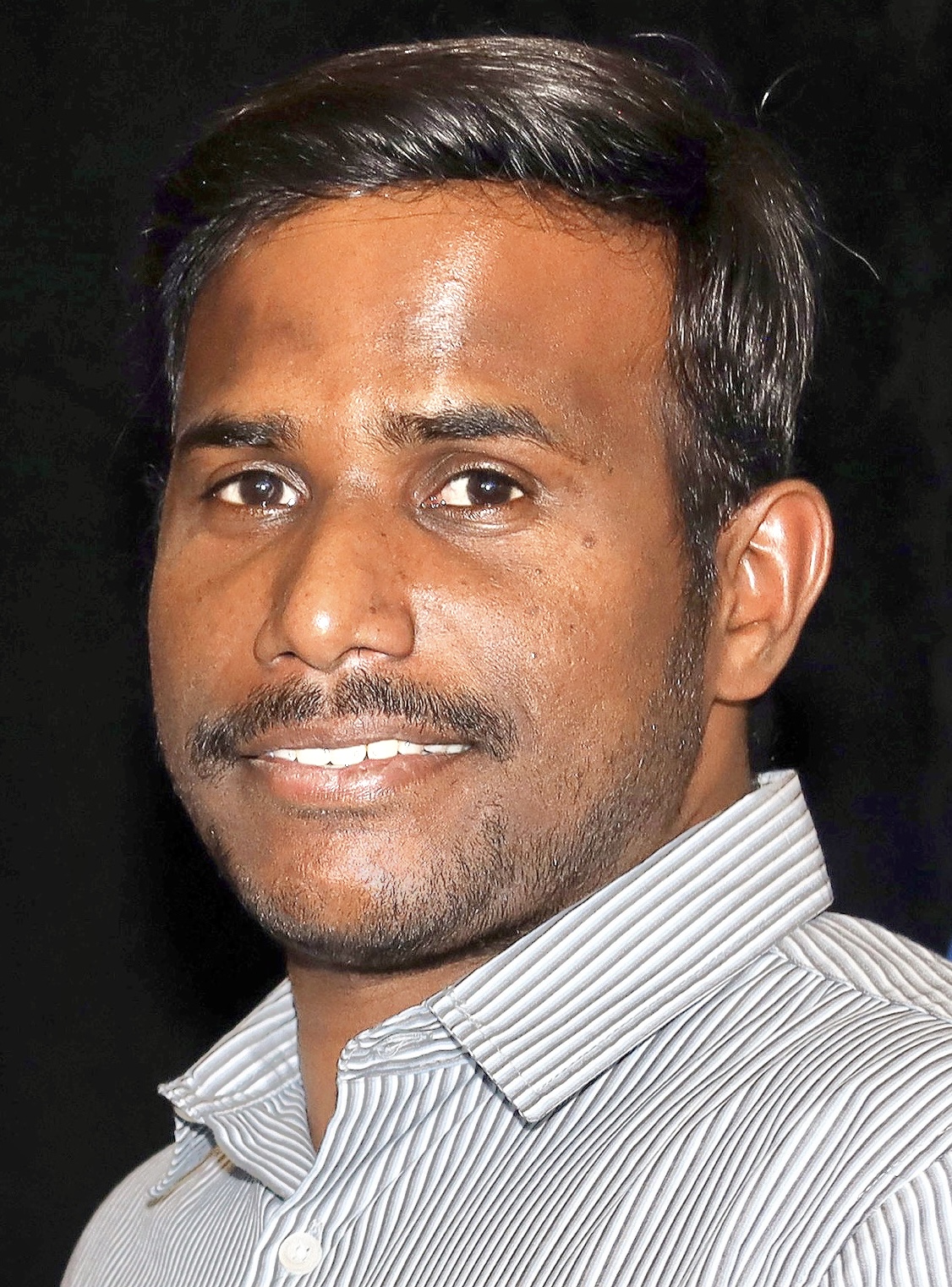
Dr. Sirojan Tharmakulasingam serves as a Lecturer and Research and Development Coordinator at the Signals, Information & Machine Intelligence lab within the Faculty of Engineering at the University of New South Wales (UNSW) Sydney. His work bridges theoretical machine learning with practical applications in edge computing and high-performance systems. His research spans multiple cutting-edge domains including machine learning, artificial intelligence, data science, edge computing, and high-performance computing. Dr. Tharmakulasingam specializes in developing next-generation inference models by integrating machine learning, signal processing, mathematical modeling, and computing across diverse data types including images, video, audio, and quantum molecular data. His work has significant implications for scientific computing, telecommunications, and healthcare applications. Analysis of his publication trends reveals a strong focus on practical AI implementations, with increasing emphasis on edge computing solutions, quantum applications, and energy-efficient models. His recent work demonstrates progression from foundational machine learning techniques toward specialized applications in scientific computing and real-time systems. Dr. Tharmakulasingam holds a Doctor of Philosophy from UNSW Sydney and a Bachelor of Science of Engineering from the University of Moratuwa in Sri Lanka. His academic journey reflects a strong foundation in both theoretical and applied engineering principles. As Research and Development Coordinator for the Signals, Information & Machine Intelligence lab, he oversees critical research infrastructure and collaborations. His work location in Room 447 of the EE&T Building (G17) places him at the heart of UNSW's engineering research ecosystem, with access to the Mark Wainwright Analytical Centre's extensive facilities.
Ann Maharaj is an Adjunct Associate Professor in the Department of Econometrics and Business Statistics at Monash University's Caulfield Campus, within the Faculty of Business and Economics. She is an active researcher and educator with expertise in statistical computing and time series analysis. Department: Econometrics and Business Statistics Role: Adjunct Associate Professor Institution: Monash University Campus: Caulfield Her research focuses on advanced statistical methodologies, particularly in time series classification , wavelet analysis , fuzzy classification , and interval time series analysis . These methods are applied in diverse domains such as finance, environmental science, climatology, and human mobility. She has co-authored a book on time series clustering and classification and has published extensively in top-tier journals. The recent trend in her publications (2020–2024) shows a strong emphasis on clustering and classification of complex time series data using wavelet, cepstral, and fuzzy techniques. Her work integrates statistical theory with practical applications, particularly in financial and environmental datasets, contributing to sustainable development goals through data-driven insights. She has received recognition for her teaching excellence: Monash Business School Award for Teaching Excellence (2017) Ann Maharaj is actively involved in academic service and professional communities. She has supervised research students and contributed to statistical consulting and workshops. Her professional affiliations include: Elected member of the International Statistical Institute (ISI) Member of the International Association of Statistical Computing (IASC), serving on its Council (2013–2017) and Executive (2015–2017) Accredited statistician with the Statistical Society of Australia (SSA) Former Secretary and Academic Vice-President of the Monash Branch of the NTEU (2000–2014) She led a research project funded by the Collier Charitable Fund in 2005 on computational infrastructure, indicating early engagement with data-intensive research. Her ongoing scholarly output demonstrates sustained research activity and collaboration with international scholars in statistics and data science. She is associated with research groups and networks focused on statistical computing and time series analysis, contributing to both methodological advancement and real-world application through interdisciplinary collaboration.
Farshid Hajati is a Lecturer in Data Science at the University of New England's School of Science and Technology. He holds a PhD from Western Sydney University and has industry experience as a Senior Data Scientist at Australian government health agencies. His expertise spans machine learning, medical AI, and computer vision. Dr. Hajati's research develops deep learning solutions for medical applications including retinal disease detection, cardiac arrhythmia classification, and fungal infection diagnosis. He has secured significant funding including $433,000 for an intracranial pressure assessment device and $100,000 from Google Research. His publications demonstrate consistent innovation in multimodal medical AI, with recent advances in interpretable graph networks for biomedical data and handheld retinal imaging. Earlier foundational work established methods for 3D face recognition and dynamic texture analysis.
Dr. Francis Gacenga, currently at the University of Southern Queensland (UniSQ), serves as a Senior Digital Research Advisor in the Research Infrastructure Admin department. He is affiliated with the Centre for Sustainable Agricultural Systems and Institute for Advanced Engineering and Space Sciences. PhD in Information Systems (USQ, 2013) MBA (University of Nairobi, 2000) Graduate Diploma in MIS (University of Greenwich, 2003) BA(Hons) from Kenyatta University (1997) With over 20 years of experience in IT and academic research, Dr. Gacenga specializes in Research Data Management (RDM), IT Service Management (ITSM), Digital Research Infrastructure, and Design Science. His work focuses on applying FAIR (Findable, Accessible, Interoperable, Reusable) data principles to agricultural and environmental domains. The 15 most recent publications reveal a trajectory from foundational ITSM research (2010-2016) to agricultural data platforms (2019-2024). Key themes include FAIR data implementation, cloud computing integration, reproducible research frameworks, and cross-disciplinary agricultural applications. Senior Member of Australian Computer Society (since 2009) Former Chair of ACS Toowoomba Chapter As Principal Investigator for grants totaling over $500k from GRDC, Soils CRC, and ARDC, he leads digital infrastructure projects. He also supervises Doctoral candidates and contributes to national cybersecurity and data policy committees.
Dr. Jing Fu is a Lecturer at the School of Engineering, RMIT University in Australia. Her research focuses on applying optimization algorithms and machine learning to telecommunications, wireless networks, and edge computing. She specializes in restless bandit models for dynamic resource allocation, multi-agent coordination, and energy-efficient systems design. Key areas include satellite communications, radar systems, and distributed computing architectures. Her work bridges theoretical operations research with practical applications in 5G/6G networks, UAV communication platforms, and smart sensor networks. She has published extensively on topics like beam scheduling, edge computing offloading strategies, and adaptive wireless protocols. Current supervision interests span neural networks for sensor systems, IoT resource allocation, and next-generation mega satellite networks. Research Themes: AI-driven network optimization, distributed radar systems, energy-efficient edge computing Key Projects: Reinforcement learning-based IoT resource allocation 6G wireless communication with AI integration Optimal beam scheduling for phased array radars Collaborations: Active in multi-disciplinary projects involving telecommunications, aerospace engineering, and computer science Dr. Fu supervises research projects on neural networks for telecommunications, adaptive wireless techniques, and satellite formation flying. She is based at RMIT's City Campus and open to guiding postgraduate research in her areas of expertise.
Dr. David Belton is a Senior Lecturer in the School of Earth and Planetary Sciences at Curtin University, within the Faculty of Science and Engineering. He also holds a portfolio role in the Office of the Provost. His expertise lies in laser scanning (both terrestrial and mobile) and photogrammetry, with a focus on automated processing, feature extraction, and applications in mining, heritage conservation, and structural monitoring. Dr. Belton holds a BCSc, BSc (First Class Honours), and a PhD from Curtin University. His teaching responsibilities include coordinating and lecturing in Cartographical Statistics and Integrated Surveying, alongside previous roles in Mine Surveying and Mine Survey Project courses. He actively supervises PhD, MPhil, and Honours students, fostering research excellence in spatial sciences. His research emphasizes practical applications of geospatial technologies, including underwater photogrammetry, pipeline monitoring, and coral reef analysis. Key areas include robust statistical methods for point cloud processing, sensor calibration, and open-source device development for marine surveys. His work bridges theoretical advancements with real-world challenges in environmental monitoring, infrastructure assessment, and cultural heritage preservation. Publications span high-impact journals like Corall Reefs , ISPRS Journal of Photogrammetry , and IEEE Transactions , reflecting contributions to geomatics, remote sensing, and computer vision. His research often addresses interdisciplinary challenges, such as UAV-based ecological monitoring and automated 3D model reconstruction from laser scanning data. Dr. Belton collaborates widely, contributing to projects like the Sydney-Kormoran wreck analysis and heritage documentation of Pilbara rock art. His work underscores innovative solutions for spatial data challenges across environmental, engineering, and archaeological domains.