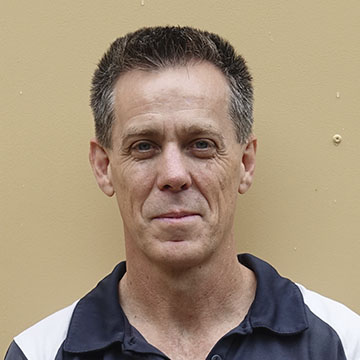
Dr Andrew Townshend is a Senior Lecturer and Head of Discipline (Exercise Science) at the School of Behavioural and Health Sciences, Australian Catholic University (ACU). He holds expertise in distance running, pacing strategies, interval training, and gait retraining. His research focuses on optimizing athletic performance through physiological and biomechanical analysis, with recent work on energy cost in runners, interval training variability, and elite adolescent athlete development. Education: Completed a Bachelor of Applied Science (Human Movement) at Queensland University of Technology (QUT) in 2006, followed by a PhD in 2010 examining hill-running pacing strategies. Professional roles include Head of Discipline since 2020 and Senior Lecturer since 2018. Research Interests: Combines field-based and laboratory studies to explore pacing strategies, gait mechanics, and training methodologies. Key areas include the impact of gait retraining on energy efficiency, individual responses to interval training, and seasonal adaptations in elite athletes. Awards: Recognized with the Australian Postgraduate Industry Award (2006), Australian Postgraduate Award (2008), and QUT’s Vice-Chancellor’s Performance Award (2011). Advising & Grants: Supervised seven postgraduate students to completion, focusing on high-performance sport topics. Active in grant applications related to sports performance research. Labs/Teams: Leads research within ACU’s Sports Performance, Recovery, Injury and New Technologies (SPRINT) Research Centre, collaborating on projects related to athlete development and performance optimization.
Alexander G. Agrios is an Associate Professor and holds the Al Geib Professorship in Environmental Engineering Research and Education at the University of Connecticut's College of Engineering, School of Civil and Environmental Engineering. He leads the Agrios Research Group focused on environmental applications of nanotechnology, particularly photoelectrochemical solar energy conversion and photocatalytic pollutant remediation. His research explores: Nanoscale semiconductors for low-cost solar energy conversion Novel architectures in dye-sensitized solar cells (DSSC) to maximize electron harvesting efficiency Perovskite solar cells (PSC) using advanced nanostructures Combined PV/thermal solar collectors and photocatalytic environmental cleanup Agrios's publication trends (2016-2025) reveal strong focus on: Advanced characterization of photovoltaic systems using impedance spectroscopy Nanomaterial development for solar cells and batteries Environmental implications of nanotechnology Novel synthesis methods for energy materials He directs laboratory research in Castleman Building Room 310 and maintains active collaboration through his research group. No awards or student advisees are mentioned in available materials.
Dilshan Remaz Ossen is an Associate Professor at the University of Kansas School of Architecture and Design, with prior teaching roles at Kingdom University-Bahrain and Universiti Teknologi Malaysia (UTM). His expertise bridges architecture, climate science, and sustainable urban design, focusing on global warming challenges and climate-responsive solutions. Education: B.Arch. and M.Arch. from the University of Moratuwa, Sri Lanka (2000); Doctorate in Architecture from UTM (2007). Chartered Architect (Sri Lanka Institute of Architects). Completed UK Professional Standards Framework for Higher Education (2019), recognized as Fellow of the Higher Education Academy. Research Interests: Energy efficiency in buildings, urban heat island mitigation, climate change impacts on heritage cities, and bio-inspired cooling systems. Notable projects include: Developed urban geometry strategies to reduce heat intensity in Putrajaya’s administrative city. Assessed climate change threats to Malacca’s World Heritage Site, proposing adaptive preservation methods. Co-created a passive bio-inspired cooling unit based on traditional “wind catcher” techniques for arid regions. Collaborated with UTM and Malaysia’s Public Works Department (JKR) to establish daylight design guidelines for government buildings. Awards: Excellent Service Award (UTM, 2012 & 2015); Higher Education Academy Fellowship (2019). Advising & Partnerships: Mentored doctoral students in sustainability research. Partnered with UTM and JKR on applied projects. Active in international conferences and peer-reviewed publications (over 30 journal articles). Labs & Teams: Involved in research groups focusing on tropical building design, heritage preservation, and computational sustainability tools.
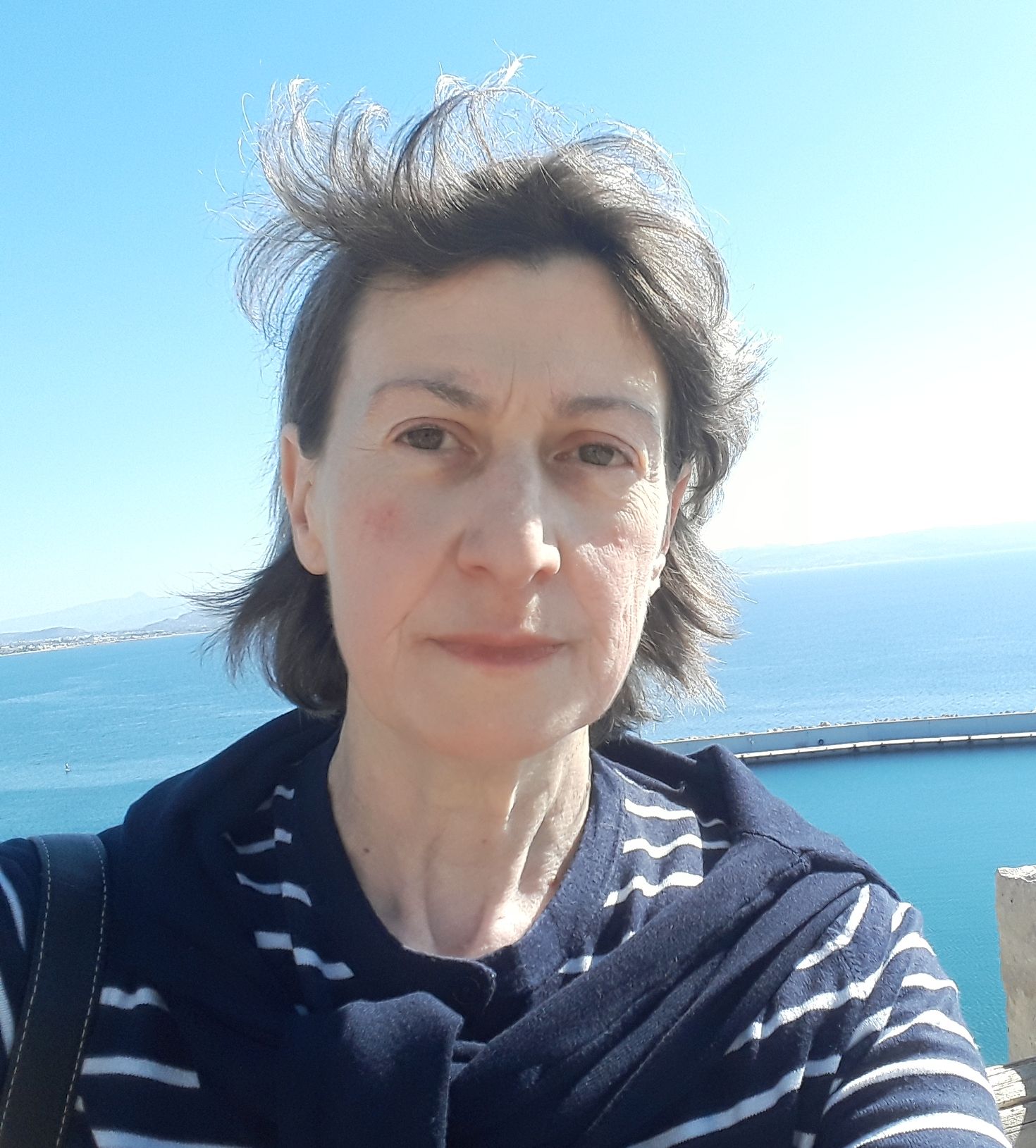
Marina Astitha is an Associate Professor at the University of Connecticut's College of Engineering , specifically within the School of Civil and Environmental Engineering . Her research bridges atmospheric science with practical applications in energy systems and environmental management. Ph.D. in Physics from the University of Athens (2007) Specializes in high-resolution weather modeling and machine learning integration Research Interests include: Atmospheric Physics, Dynamics, and Chemistry Extreme Weather Event Prediction Multi-Media Modeling Systems Uncertainty Quantification in Atmospheric Models Climate Change Impacts on Wind Energy Resources Real-Time Weather and Air Quality Forecasting Scientific Awards : No awards explicitly mentioned in the provided data, but her publications and research activities indicate significant contributions to meteorology and environmental engineering fields. Advising and Grants : Specific details about grants and students are not provided in the available information, though her research focus suggests involvement in funded projects related to climate change, renewable energy, and environmental modeling. Labs and Teams : Leads the Atmospheric Modeling Group at UConn, integrating numerical weather prediction with machine learning techniques for environmental and energy applications.
Isambo Karali is an Assistant Professor in the Department of Informatics and Telecommunications at the National and Kapodistrian University of Athens, a position she has held since November 2007. Prior to this, she served as a Lecturer at the same department from September 1999 to November 2007. Her academic career spans over three decades with significant contributions to knowledge representation, uncertainty reasoning, and semantic web technologies. Dr. Karali's educational background includes: PhD in Informatics (1995) from the University of Athens MSc in Computer Science (1988) from University College, University of London Bachelor of Mathematics (1986) from the Department of Mathematics, University of Athens Dr. Karali's research focuses on Knowledge Representation and Reasoning with Uncertainty, Artificial Intelligence, Logic Programming, and Object-Oriented Programming. She has made significant contributions to applying Dempster-Shafer theory for handling uncertainty in Semantic Web applications. Her work bridges theoretical foundations of logic programming with practical applications in knowledge representation, particularly in distributed and heterogeneous environments. She has supervised numerous PhD and master's theses in these areas. Her recent publications demonstrate a strong trend toward integrating uncertainty reasoning with Semantic Web technologies, particularly using Dempster-Shafer theory and fuzzy logic. Her work addresses challenges in managing imprecise and uncertain information in large-scale knowledge systems, with applications in recommendation systems, news analysis, and semantic search. The interdisciplinary nature of her research connects artificial intelligence, knowledge representation, and web technologies to solve complex information management problems. Dr. Karali has been actively involved in research funding and collaboration: Principal Investigator for "Handling uncertainty in data intensive applications on a distributed computing environment (cloud computing)" under the "Thalis" Program Scientific Responsible for "Artificial Intelligence and Logic Programming Techniques for Knowledge on the World Wide Web" at the National and Kapodistrian University of Athens Scientific Responsible for "Semantic Web and Logic Programming - Application to Guided Search" at the National and Kapodistrian University of Athens Participant in multiple EU research projects including MISSION, COSMOS, ADDSIA, PARACHUTE, APPLAUSE, and EDS As an educator, Dr. Karali has taught core undergraduate courses including Object-Oriented Programming and Logic Programming, as well as graduate courses on Knowledge Technologies and Artificial Intelligence. She has supervised numerous PhD and master's students, with a focus on uncertainty reasoning, semantic web technologies, and logic programming applications. Her mentorship extends to student competitions, including guiding the Department's team in the Microsoft ImagineCup 2009. Dr. Karali has also contributed to the academic community through service activities, including membership on program committees for conferences like IEEE ICTAI, reviewer for prestigious journals, and organizational roles in academic events. From 2000 to 2012, she was responsible for the Department's website, contributing to its architecture design and system development.
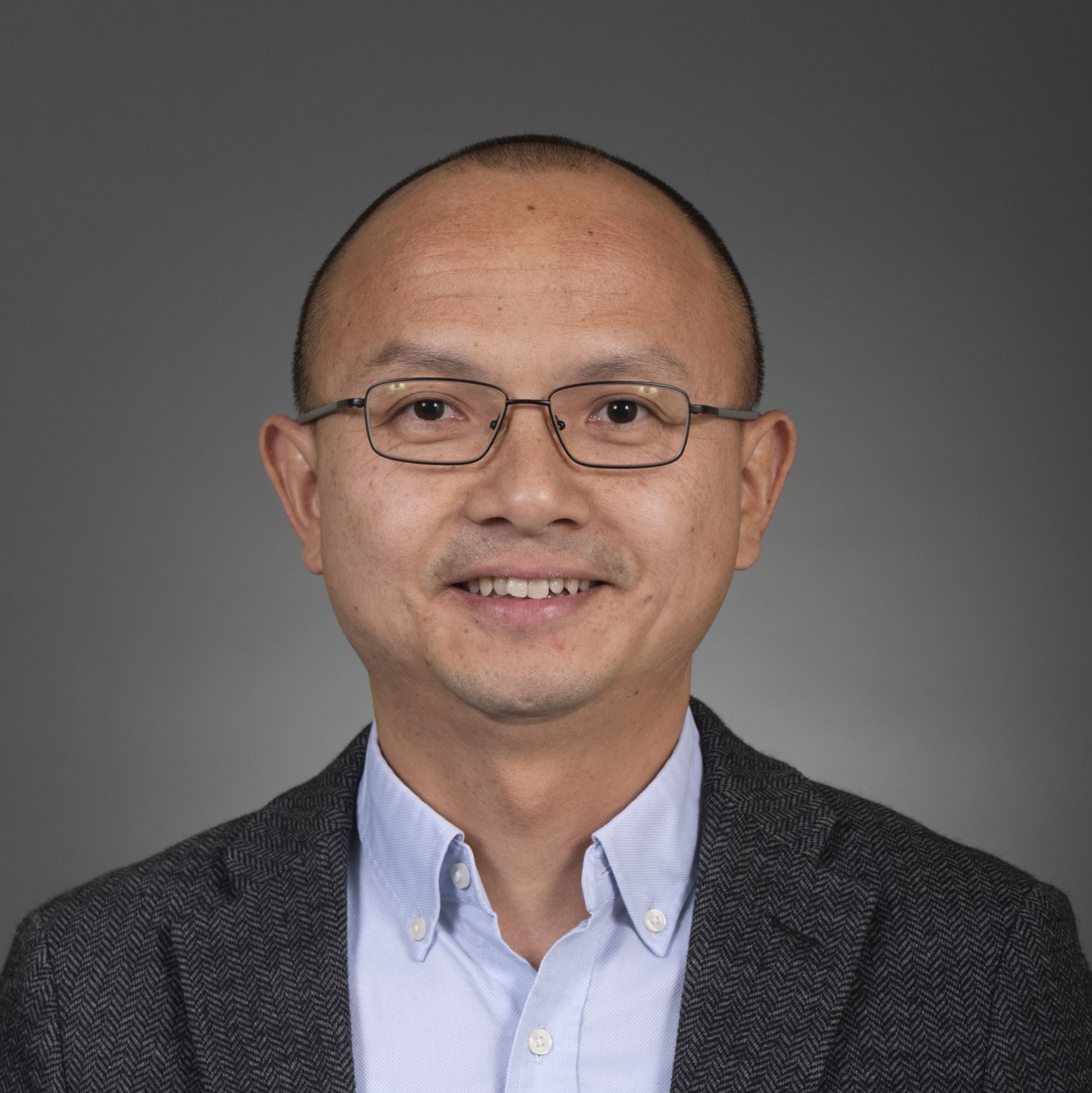
Gang He is an Assistant Professor at the Marxe School of Public and International Affairs at Baruch College, City University of New York (CUNY). He also serves as Doctoral Faculty in Earth and Environmental Sciences at the CUNY Graduate Center and is a Faculty Affiliate at the CUNY Institute for Demographic Research. As founder and director of the Deep Energy and Climate Policy Lab , he focuses on data-driven energy and climate policy research. Ph.D. in Energy and Resources, University of California, Berkeley M.A. in Climate and Society, Columbia University B.S. and M.S. in Geography, Peking University His research examines energy systems , climate policy , and sustainable development , with specific interests in power sector decarbonization, renewable energy integration, and policy informatics. Recent work explores the carbon-water-energy nexus , just transition from coal, and global supply chain impacts on clean energy deployment. Key publication trends show focus on: Energy transition modeling (SWITCH-China) Renewable cost analysis Climate policy effectiveness Health co-benefits of decarbonization Workforce impacts in coal regions International climate collaboration Scientific recognition includes: World's Top 2% Scientists (2024) Baruch College Faculty Research Award Integrated Assessment Modeling Consortium Best Poster Award Asia 21 Young Leader Aspen Environment Forum Scholar He has provided policy expertise to the New York State Climate Action Council , testified before the Climate Leadership and Community Protection Act hearings, and contributed to UNFCCC and U.S.-China climate working groups . His research has received funding from multiple sources including federal agencies, NGOs, and industry partners. As part of his institutional engagement, he participates in: Marxe School Research Committee CUNY Climate Change Consortium Planning Committee Energy Transition Sub-working Group (U.S.-China Working Group) National Offshore Wind R&D Consortium’s R&D Advisory Group He serves as Associate Editor for Energy, Ecology and Environment and reviewer for leading energy and environmental journals.
Marko Kosunen is an Associate Professor at Aalto University's Department of Electronics and Nanoengineering. He holds M.Sc., Lic.Sc., and D.Sc. (Tech.) degrees from Helsinki University of Technology (now part of Aalto University), completed in 1998, 2001, and 2006, respectively. He served as a visiting scholar at the Berkeley Wireless Research Center, UC Berkeley (2017–2019), supported by a Marie Sklodowska-Curie EU grant. He co-chairs Microelectronics Finland, a collaborative body linking academia and industry in microelectronics research and education. His research focuses on programmatic circuit design methodologies, digital-intensive time-based data converters, transceiver circuits, and RISC-V-based microprocessor implementations with DSP accelerators. He has authored/co-authored over 100 peer-reviewed papers and holds multiple patents. His work spans VLSI systems, RF IC design, and energy-efficient signal processing architectures. Recent articles highlight advancements in automated comparator design frameworks, 5G transmitter hardware, and neural network accelerators. His contributions often bridge theoretical design methodologies with practical applications in wireless communication and AI hardware. Dr. Kosunen actively collaborates with industry partners, evidenced by his role in Microelectronics Finland and co-authored works addressing real-world challenges like 5G transceiver efficiency and in-sensor neural processing.
Dr. Lehana Thabane serves as Professor of Biostatistics at McMaster University's Faculty of Health Sciences, holding primary appointment in the Department of Health Research Methods, Evidence, and Impact. He concurrently holds leadership roles as Vice President of Research and Scientific Director at St. Joseph's Healthcare Hamilton, with cross-departmental affiliations spanning Pediatrics, Medicine, Surgery, Psychiatry, and multiple health science schools. His research integrates advanced biostatistical methodology with clinical applications across orthopedics, cardiology, and public health domains. Dr. Thabane pioneers frameworks for clinical trial design and evidence synthesis, with particular emphasis on osteoporosis management, fracture prevention systems, and healthcare delivery optimization through rigorous methodological approaches. Recent publication analysis reveals dominant themes in orthopedic trauma management (38%), infectious complications in surgical contexts (25%), and addiction medicine methodology (15%), consistently applying biostatistical innovation to complex clinical problems across diverse patient populations. His accolades include: 2020 Anne & Neil McArthur Annual Research Award Fellowships from American Statistical Association and Society for Clinical Trials International Statistical Institute membership Canadian Academy of Health Sciences fellowship Academy of Science of South Africa honorary membership Mentoring over 200 graduate students and junior faculty, Dr. Thabane directs biostatistics at St. Joseph's Healthcare while leading major collaborative initiatives including the Canadian Longitudinal Study on Aging. His editorial leadership as Editor-in-Chief of Pilot and Feasibility Studies shapes methodological standards across clinical research. Current work focuses on fracture management protocols, opioid treatment optimization, and cardiovascular outcomes through interdisciplinary teams bridging statistical methodology with clinical application across McMaster University and partner healthcare institutions.
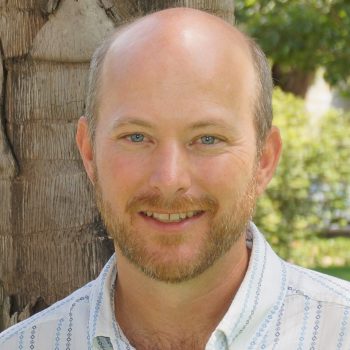
Mark Johnson is a Professor at the University of British Columbia (UBC), holding dual appointments in the Institute for Resources, Environment and Sustainability (IRES) and the Department of Earth, Ocean and Atmospheric Sciences within the Faculty of Science. He also serves as the Canada Research Chair (Tier 2) in Ecohydrology , focusing on interdisciplinary water and carbon cycle research. His research emphasizes ecohydrological processes, land-use impacts, and sustainable management strategies under climate change. Johnson’s work spans tropical and temperate ecosystems, including the Amazon, Cerrado, and Pantanal biomes, as well as Canadian watersheds. Key areas include carbon sequestration dynamics, freshwater ecosystem health, and agricultural water efficiency. He collaborates with communities, governments, and industry to translate scientific insights into actionable policies and practices. His research interests are driven by innovative methods such as drone-based hyperspectral and thermal imaging, remote sensing integration, and Bayesian inference to study ecosystem productivity and water-carbon interactions. He has pioneered studies on biochar applications to improve soil fertility and water retention in drought-prone regions. Johnson’s scientific contributions include advancing understanding of CO2 and CH4 fluxes in wetlands, evaluating water footprints, and modeling evaporative demands. His work highlights the urgency of rethinking water and land management in agriculturally intensive regions like the tropics and the Lower Fraser Valley. Awards: Canada Research Chair (Tier 2, Ecohydrology) In teaching, Johnson instructs courses such as Global Aspects of Ecohydrology , Social-Ecological Systems , and Ecohydrology of Watersheds , bridging theoretical and applied environmental science. His grants and projects, including the AgWIT initiative, prioritize community-driven solutions for water security and sustainable agriculture. He leads the Ecohydrology Lab at UBC, coordinating with global networks like AmeriFlux and NASA’s ECOSTRESS mission to enhance large-scale ecohydrological monitoring. His team addresses pressing issues like climate adaptation, wetland restoration, and the socio-hydrological resilience of rural communities in Costa Rica and Brazil.
Dimitris N. Politis is a Distinguished Professor in the Department of Mathematics and the Halicioglu Data Science Institute at the University of California, San Diego. He holds the prestigious Halicioglu Data Science Institute Chancellor's Endowed Chair II position and has been affiliated with UCSD since 1997, progressing from Associate Professor to his current distinguished position. His educational background includes a Ph.D. in Statistics from Stanford University (1990), along with multiple master's degrees in Statistics, Mathematics, and Computer and Systems Engineering from Stanford and Rensselaer Polytechnic Institute. Professor Politis's research focuses on advanced statistical methodologies, with particular expertise in: Time Series and Random Fields analysis Computer-Intensive Methods in Statistics Resampling and Subsampling for Dependent Observations Spatial Statistics and Point Processes Nonparametric Spectral and Probability Density Estimation Model-free Prediction and Regression Information Theory and Signal Processing Econometric Analysis of Financial Time Series His scholarly output includes over 100 journal papers and several influential books, most notably "SUBSAMPLING" (1999), "MODEL-FREE PREDICTION AND REGRESSION" (2015), and "TIME SERIES: A FIRST COURSE WITH BOOTSTRAP STARTER" (2020), which has become a key educational resource in the field. Professor Politis has received numerous prestigious awards and honors: Guggenheim Fellowship (2011) Fellow of the American Statistical Association (2011) Fellow of the Institute of Mathematical Statistics (2004) Distinguished Author Award from the Journal of Time Series Analysis (2020) Econometric Theory Multa Scripsit Award (2013) Tjalling C. Koopmans Econometric Theory Prize (2012) He has been principal investigator on numerous NSF and NIH grants, including current funding for "Computer-intensive methods for dependent and complex data" (NSF DMS 24-13718, 2024). Professor Politis has held significant leadership roles, including serving as Chair of the Faculty Council of the Halicioglu Data Science Institute (2019-2023) and Associate Director (Founding) of the Institute (2018-2024). As a co-founder of the International Society for NonParametric Statistics, Professor Politis has made substantial contributions to the organization of major conferences and workshops in his field, including the First Conference of the International Society for NonParametric Statistics in 2012. His editorial work includes serving as Co-Editor of the Journal of Time Series Analysis since 2013 and Senior Editor for the ACM/IMS Journal of Data Science since 2022.
Runsheng Yin is an Associate Professor in Forest Economics at Michigan State University's Department of Forestry, affiliated with the College of Agriculture & Natural Resources. He has held academic roles since 2000, including Director of the Ecosystem Policy Institute of China (2006–2013). His research focuses on ecosystem services evaluation, ecological restoration, forest tenure reform, and natural resource policy. Yin holds a PhD from the University of Georgia (1995), an M.S. from Beijing Forestry University (1986), and a B.S. from Shanxi Agricultural University (1982). His professional experience includes roles at institutions in China, Sweden, and the U.S., emphasizing international collaboration. His research explores payment for ecosystem services, forest policy reform, and carbon sequestration. Recent work analyzes China's Sloping Land Conversion Program and comparative forest tenure systems. Over 80 peer-reviewed articles and grants totaling $6M+ reflect his contributions to environmental economics and policy. Notable awards include the Distinguished Professor title from Zhejiang A&F University and the Joseph Fisher Dissertation Fellowship. He has led projects funded by NSF, USAID, and Chinese institutions.
Sina Sheikholeslami is a Researcher at the Division of Energy Systems, Department of Energy Technology at KTH Royal Institute of Technology. He works on leveraging AI for sustainability and climate action, focusing on projects like Beyond 2030 and OnStove. His affiliations include the KTH Climate Action Centre and Vinuesa Lab. He holds a PhD in Distributed Computing from KTH (2025), advised by Vladimir Vlassov, Amir Payberah, and Jim Dowling, with prior M.Sc. studies at Eindhoven University of Technology and KTH through the EIT Digital Master School. He also completed a B.Sc. in Computer Software Engineering at Amirkabir University of Technology. Research interests include distributed systems, machine learning, deep learning, and their applications in sustainable development. Notable work includes developing frameworks like AutoAblation for ablation studies and Importance-aware DPT for dataset partitioning, which earned the Best Artefact Award at DAIS 2023. His recent work explores using LLMs for ablation studies and weight initialization techniques from hyperparameter trials. Academic leadership roles include serving on the KTH PhD Chapter’s Board, EECS PhD Student Council, and committees such as the School Assembly and Third-Cycle Education Council. He is Sweden’s Local Representative for the EIT Digital Alumni Foundation. His teaching roles include assistant and teacher in courses like Data Mining and Data-Intensive Computing. He supervises multiple students, including those exploring topics like scalable model training with Ray and feature stores in Hopsworks. His research spans environmental monitoring (e.g., ExtremeEarth), public transit systems (DUGET), and interdisciplinary applications of ML in wood science and urban planning.
Per Gunnar Kjeldsberg is a Professor and acting head of the Department of Electronic Systems at NTNU. He holds a PhD (Dr.ing) from NTNU (2001) and an MSc (Siv.ing) from NTH (1992). His research focuses on energy-efficient embedded systems, heterogeneous multi-processor architectures, and IoT applications. He leads the Circuit and Radio Systems group and the Energy Efficient Computing Systems (EECS) initiative at NTNU. Kjeldsberg has been principal researcher in EU projects like READEX (FET-HPC) and TULIPP (LEIT), and currently supervises the MSCA-IF project Palmera. Education: Dr.ing. (PhD), NTNU, 2001 Siv.ing. (MSc), NTH, 1992 Research Interests: Embedded systems design, low-power cache optimization, multi-media signal processing, and scenario-driven design methodologies. Collaborations include imec (Leuven), UC Irvine, and UNSW Sydney. Teaching: Master courses: TFE4141, TFE4208, TFE02 PhD course: FE8109 Key Projects: PALMERA (EU MSCA-IF): Low-power cache design READEX: Runtime optimization for exascale computing TULIPP: Ubiquitous image processing platforms HiPEAC: European HPC/Embedded Architecture Network Professional Activities: Senior Member of IEEE, Board Member roles, frequent journal/conference reviewer, and visiting researcher at imec (Belgium), UC Irvine, and UNSW Sydney.
Patricia Smith is a Professor and Department Head at Texas A&M University's College of Agriculture & Life Sciences. She holds a B.S. in Management (1992, Oklahoma State University), M.S. in Biosystems and Agricultural Engineering (1996, Oklahoma State), and a Ph.D. in Biological and Agricultural Engineering (2000, North Carolina State University). Her research focuses on hydrologic modeling, land-use impacts on hydrologic processes, and Total Maximum Daily Load (TMDL) development for bacterial stream impairment. She has received notable awards, including the 2019 Margaret Annette Peters Advising Award and the 2015 USDA Excellence in Teaching Award. Her interdisciplinary work spans environmental engineering, climate change mitigation, and water resource management. Recent publications explore carbon sequestration, neonatal care, and transboundary water policies. She contributes to Texas A&M AgriLife Research and Extension programs, addressing agricultural and ecological challenges through collaborative, data-driven approaches. Key research interests include AI-enhanced hydrological modeling, sustainable water policies, and environmental engineering solutions. Her articles highlight innovative methods in carbon dioxide removal, maternal-neonatal health outcomes, and invasive species management. Awards : 2019 Margaret Annette Peters Award 2015 USDA Excellence in Teaching Award Her work integrates engineering, ecology, and policy to address global challenges like water scarcity and climate adaptation.
Associate Professor at Nanyang Technological University's College of Computing and Data Science, serving as Deputy Director of the Cyber Security Research Centre @ NTU (CYSREN) and Associate Director of the NTU Centre Computational Technologies for Finance (CCTF). His research focuses on building trustworthy, efficient, and intelligent systems with emphasis on security and privacy across AI, robotics, and cloud infrastructures. Educational background: Bachelor of Physics, Peking University, 2011 Ph.D. in Electrical Engineering, Princeton University, 2017 Research spans five core domains: Generative AI Safety (vulnerability identification, safety testing, misuse detection), Deep learning security (adversarial examples, backdoor attacks, privacy protection), Robotics security (perception system attacks, safety testing), Machine learning optimization (workload scheduling, acceleration), and Computer architecture security (side-channel defenses, cloud security). His work bridges theoretical security with practical system implementations across diverse applications. Recent publications (2024-2026) reveal intense focus on securing generative AI systems, particularly text-to-image models and large language models, with significant contributions to red teaming methodologies, backdoor attack mitigation, and multimodal security. Emerging trends show expanding research into autonomous vehicle security and privacy-preserving machine learning with cryptographic techniques. Key awards include: Distinguished Artifact Award (CCS 2024) Stamatis Vassiliadis Best Paper Award Nominee (FPL 2024) Outstanding Paper Award (ACL 2024) Distinguished Artifact Award (Usenix Security 2024) Actively supervises PhD students and research staff while leading multiple high-impact grants: Ongoing: NRF CREATE Quantum Security (2025-2029), Continental NTU Corp Lab Automotive HPC (2025-2028), CRPO EV Charging Security (2025-2027) Completed: MoE AcRF Tier2 IP Protection (2022-2025), NTU S-Lab Efficient GPU Scheduler (2020-2025) Leads research within CYSREN and TAICeN (Trustworthy AI Centre NTU), directing interdisciplinary teams that investigate security threats across AI deployment stacks while developing practical defenses for real-world systems.