Lappeenranta-Lahti University of Technology LUTFinland
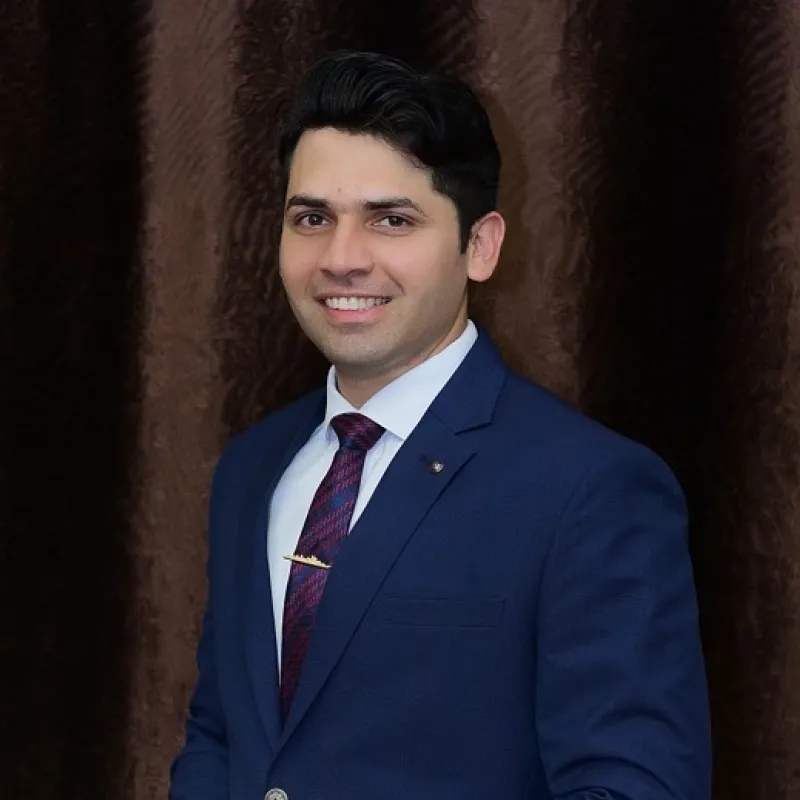
Adeel Tariq is a Post-Doctoral Researcher at the Industrial Engineering and Management department of LUT School of Engineering Sciences , Lappeenranta University of Technology, Finland. He completed his Ph.D. (2019) and MBA (2014) at the School of Management , Asian Institute of Technology, Thailand. Research Focus: Technology and innovation management, digital transformation, sustainable development, knowledge management, and leadership studies. Peer Review: Active reviewer for journals including Leadership & Organization Development Journal , Journal of Intellectual Capital , and European Journal of Innovation Management . Collaborations: Regular co-author with Waqas Tariq, Muhammad Saleem Sumbal, and Marko Torkkeli on topics like digital governance, fintech, and SME sustainability.
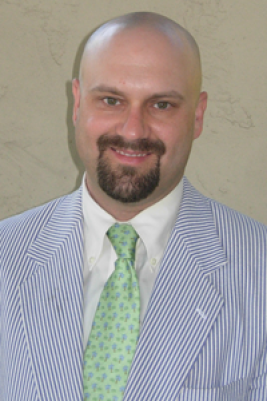
James Alexandre Goulet is a Professor in the Department of Civil, Geological and Mining Engineering at Polytechnique Montréal. His research focuses on Machine Learning Methods for Civil Engineering applications such as structural health monitoring (SHM) and infrastructure maintenance planning. He leads the Canari project for online change point detection in SHM and contributes to open-source libraries like cuTAGI for Bayesian neural networks. Affiliations : Chair in Machine Learning for Infrastructure Monitoring at Polytechnique Montréal, IVADO Institute member, and GRS (Structural Engineering Research Group) member Expertise : Building engineering, structural safety, applied probability, learning theories Recent research trends include Bayesian state-space models, LSTM neural network integration for infrastructure forecasting, and uncertainty quantification in SHM systems. His work emphasizes probabilistic methods and analytical inference over black-box approaches. Teaching includes courses on structural reliability and probabilistic data analysis for civil engineers. He supervises graduate students in topics ranging from damage detection algorithms to stochastic deterioration modeling of infrastructures.
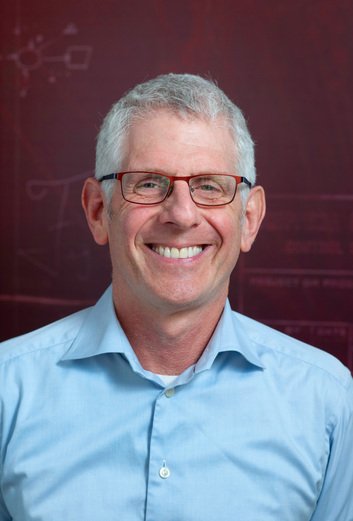
Hoyt Bleakley is an Associate Professor of Economics at the University of Michigan, where he conducts research at the intersection of economic development, human capital, economic history, and health economics. He also holds positions as a Research Associate Professor at the Institute for Survey Research and a Research Associate at the National Bureau of Economic Research. For the 2024-2025 academic year, he is an Emma and Carroll Roush National Fellow at The Hoover Institution. Bleakley earned his B.A. in Economics from the Massachusetts Institute of Technology in 1995, followed by a Ph.D. in Economics from MIT in 2002. His academic journey has included teaching positions at the University of Chicago Booth School of Business and the University of California, San Diego before joining the University of Michigan faculty. His research focuses on economic development , human capital formation , and economic history , with particular attention to how health interventions, education, and language skills impact long-term economic outcomes. His work often employs historical natural experiments to identify causal relationships in development economics. A significant portion of his research examines the economic effects of disease eradication programs, particularly for hookworm and malaria in the Americas, and how these health interventions affected human capital accumulation and economic development. He has also made important contributions to understanding the economic impacts of slavery, portage and path dependence in economic geography, and the assimilation patterns of immigrants based on language acquisition. Bleakley's publications reveal a consistent focus on using historical data to address contemporary development questions. His recent work has increasingly examined American economic history, with studies on slavery, institutional development, and geographic determinants of economic activity. His research methodology often combines rigorous econometric analysis with deep historical context, resulting in publications in top economics journals including the Quarterly Journal of Economics, Review of Economics and Statistics, and American Economic Journal: Applied Economics. Bleakley serves as a referee for numerous economics journals and has contributed to the profession through his scholarly publications and research. His work on malaria eradication received significant attention in both academic and policy circles. At the University of Michigan, Bleakley teaches courses on Economic Development (ECON 461 for undergraduates and ECON 665 for PhD students) and Human Capital in Historical Perspective (ECON 664). His teaching reflects his research interests, connecting historical economic patterns to contemporary development challenges.
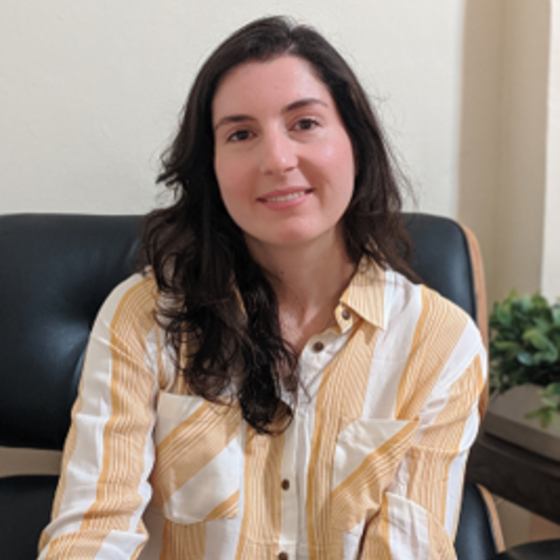
Jon Weissman is a Professor of Computer Science at the University of Minnesota, Twin Cities. His research focuses on distributed systems, edge and cloud computing, and high-performance computing (HPC), aiming to enhance performance, reliability, and energy efficiency. Education: Ph.D. in Computer Science, University of Virginia (1995) M.S. in Computer Science, University of Virginia (1989) B.S. in Applied Mathematics and Computer Science, Carnegie-Mellon University (1984) His research explores edge and cloud computing, IoT, and HPC, including subtopics like storage systems, resource management, and security. Publications highlight trends in adaptive prefetching, compressed sensing for medical devices, and IoT-informed autoscaling. Scientific Awards: NSF CAREER Award (1995) Senior Member, IEEE He has advised Ph.D. students like Albert Jonathan, Kwangsung Oh, and Francis Liu. His lab is located in 4-204A Keller Hall, and he serves on steering committees for conferences like HPDC.
University of Illinois Urbana-ChampaignUnited States
Jodi Schneider is an Associate Professor at the University of Illinois Urbana-Champaign , with affiliate appointments at the Beckman Institute , Health Care Engineering Systems Center , European Union Center , and Center for Health Informatics . She directs the Information Quality Lab and focuses on the science of science through argumentation and evidence analysis. PhD in Informatics (National University of Ireland, Galway) M.S. in Library and Information Science (UIUC) M.A. in Mathematics (UT-Austin) B.A. in Liberal Arts (St. John's College) Her research examines how scientific controversies persist through citation patterns, the role of knowledge brokers in public policy, and information quality in biomedical contexts. She has developed semantic frameworks for micropublications and knowledge maintenance in digital libraries. Recent publications include citation integrity studies in Scientometrics , retraction indexing in STI Conference , and argumentation mining in Human Language Technologies . Collaborative projects span institutions like Harvard Radcliffe Institute and RWTH Aachen . NSF CAREER Award IMLS Early Career Award Senior Member, Association of Computing Machinery Marie Curie Fellow She advises graduate students in information quality and knowledge representation , with funding from the Alfred P. Sloan Foundation , NIH , and European Commission . Her lab develops tools to combat scientific misinformation and improve public health informatics .
University of Illinois Urbana-ChampaignUnited States
Bo Chen is a postdoctoral researcher at the Siebel School of Computing and Data Science and the Coordinated Science Laboratory at the University of Illinois at Urbana-Champaign. His work focuses on AI-system co-design for immersive computing, particularly in extended reality (XR) and multi-modal content delivery over wireless networks. Ph.D. in Computer Science (2022), advised by Klara Nahrstedt B.S. in Computer Science from Shanghai Jiao Tong University (2016) His research integrates AI techniques with system-level optimizations to address challenges in XR infrastructure , including multi-view video streaming , NeRF-based content delivery , and uncertainty management in video transmission . He has pioneered methods like Loose Frame Referencing for learned codecs and Context-Aware NeRF Serving for mobile XR applications. Bo Chen's recent publications span top venues like ACM MobiSys, ACM SenSys, and USENIX NSDI. Key themes include AI-driven compression , dynamic 3D rendering , and reliable streaming over mobile networks . He has received recognition including the Rising Star Best Presentation Award (ACM MobiSys 2025) and Best Student Paper Award (ACM MMSys 2022). Bayesian optimization for XR systems Multi-view video aggregation at edge networks 3D Gaussian Splatting for immersive media
Arash Joorabchi is an Assistant Professor at the Department of Electronic and Computer Engineering, Faculty of Science and Engineering, University of Limerick, Ireland. His research focuses on the intersection of machine learning, educational technology, and digital library systems, with particular emphasis on automated assessment, text mining, and knowledge organization techniques. Research Trends: Analysis of his publications reveals sustained contributions to automated short-answer grading, Arabic text classification, and semantic integration of Wikipedia with academic resources. Key methodologies include sentence transformers, hybrid text representation models, and citation-based indexing techniques. Technical Domains: His work spans natural language processing, educational data mining, metadata management, and semantic web technologies. Specific applications include Q&A platform analysis, library resource discovery, and curriculum development systems.
Viviane Sanfelice is an Assistant Professor in the Department of Economics at Temple University's College of Liberal Arts. She joined the faculty in Fall 2019 after earning a Ph.D. in Economics from the University of Rochester (2014), an M.A. in Economics from Fundação Getúlio Vargas (2010), and a B.A. in Applied Mathematics from the University of São Paulo (2008). Her professional experience includes roles at the World Bank as a junior professional associate and at São Paulo’s Education Department as a technical advisor. Education: Ph.D. in Economics, University of Rochester (2014) M.A. in Economics, Fundação Getúlio Vargas (2010) B.A. in Applied Mathematics, University of São Paulo (2008) Her research focuses on applied microeconomics, particularly in public and urban economics. Key areas include the economic impacts of crime, maternal labor supply dynamics, health outcomes affected by environmental factors, and poverty/labor market analysis in developing contexts. She has contributed to software tools like ADECOMP for econometric welfare decomposition. Recent publications analyze housing policy and crime reduction (2025), maternal childcare policy in Brazil (2023), and urban safety programs in Chicago (2019). Her work spans journals such as Journal of Public Economics , Journal of Urban Economics , and Health Economics . Teaching responsibilities include courses in microeconomic principles, econometrics, and advanced econometric methods.
Andrea Armstrong is the Dr. Norman C. Francis Distinguished Professor of Law at Loyola University New Orleans College of Law and a 2023 MacArthur Fellow. She joined the faculty in 2010 and is a leading expert on prison and jail conditions, certified by the U.S. Department of Justice as a Prison Rape Elimination Act auditor. J.D., Yale Law School, 2007 M.P.A., Princeton University School of Public and International Affairs, 2001 B.A., New York University, 1996 Her scholarship focuses on the constitutional dimensions of prisons and jails, particularly prison labor practices, the intersection of race and incarceration, public oversight of detention facilities, and healthcare disparities. She integrates law with history, public policy, and the arts to highlight the human costs of incarceration, advocating for systemic reforms through environmental justice and anti-discrimination frameworks. Andrea’s research includes 15 recent articles, spanning public health in prisons, constitutional challenges to labor practices, and environmental justice analyses of death row conditions. Her work emphasizes transparency, government accountability, and the systemic failures in carceral healthcare. Scientific Awards: 2023 MacArthur Fellow 2019 Interdisciplinary Research Leader, Robert Wood Johnson Foundation Armstrong has testified before Congress on prison labor and deaths in custody, served on Louisiana legislative committees, and collaborated with museums and foundations to make incarceration law accessible. She founded IncarcerationTransparency.org and leads grant-funded projects requiring IRB approval.
Dr. Alasdair King serves as Reader in Film at Queen Mary University of London , where he leads the Centre for Film and Ethics and contributes to the Finance Aesthetics research cluster. His work bridges film philosophy , critical political economy , and German cinema studies , with particular focus on financialization's impact on moving image aesthetics. DAAD Visiting Research Fellow (2015) Co-founder of CAPITAL FORMS (2020) graduate program in Economic Humanities PhD examiner at institutions including University of Warwick, University of Manchester, and University of Edinburgh He supervises doctoral projects on cinematic economics , AI media , and posthuman aesthetics , currently co-guiding two AHRC and LAHP-funded students. His 2023 monograph The Financial Image establishes frameworks for analyzing film's relationship to finance capital through works by Hito Steyerl , Harun Farocki , and Isaac Julien . A second monograph Hans Magnus Enzensberger: Writing, Media, Democracy (2007) remains foundational for understanding Frankfurt School media theory in West German context.
Gabriele de Seta is a researcher at the University of Bergen's Department of Linguistic, Literary and Aesthetic Studies, leading the ALGOFOLK project funded by the Trond Mohn Foundation (2024-2028). A sociologist by training with a PhD from Hong Kong Polytechnic University, he previously served as postdoctoral fellow at Academia Sinica (Taipei) and on the ERC-funded Machine Vision in Everyday Life project. Department of Ethnology, Academia Sinica (postdoctoral fellow) Department of Linguistic, Literary and Aesthetic Studies, University of Bergen (researcher) His research focuses on algorithmic folklore, synthetic ethnography, and Chinese digital culture. He examines how digital technologies and creative practices mutually shape each other, particularly in China's sociotechnical landscape. Key areas include platform governance, machine vision, algorithmic accountability, and digital vernaculars. Recent publications analyze TikTok/Douyin's infrastructural role, deepfakes, QR codes as globalized gateways, and Chinese internet vulgarity. His work combines theoretical frameworks from STS, media studies, and digital anthropology with fieldwork on Chinese digital practices. Trond Mohn Foundation Starting Grant ERC-funded research As educator, he designed the Machine Vision module for Bergen's Critical Approaches to Technology and Society course and taught Key Theories in Digital Culture. He supervises multiple MA/PhD students including co-supervision of Hanna Lauvli. Through his blog and podcast, he promotes public engagement with digital research.
Alexander Russell is a Professor of Computer Science and Mathematics at the University of Connecticut, serving as Director of Graduate Affairs in the School of Computing and Director of the UConn Voting Technology Research Lab. He holds a Ph.D. in Mathematics and an S.M. in Computer Science from MIT, alongside dual B.A. degrees in Mathematics and Computer Science from Cornell University. His research focuses on cryptographic protocols, blockchain security, quantum computing, algorithms, and election auditing. Key areas include consensus algorithms, complexity-theoretic cryptography, and applied cryptography in voting systems. Recent work emphasizes low-variance risk-limiting audits and adaptive security mechanisms for blockchains. Notable contributions span provably secure blockchain protocols (e.g., Ouroboros), election integrity methods, and smartphone-based depression prediction models. His articles address topics like settlement bounds in longest-chain consensus, Byzantine-resilient gossip protocols, and energy-efficient neighbor discovery in mobile networks. Russell advises on interdisciplinary projects at the Voting Technology Research Center and collaborates on grants involving quantum-resistant cryptography and healthcare analytics. His work bridges theoretical computer science with practical applications in secure systems and public infrastructure.
Dr. Miriam Gieselmann was a researcher at the Media Technology Department of the University of Tübingen from November 2020 to June 2024. Her work focused on human-AI interaction dynamics, trust in AI systems, and methodological challenges in studying human-machine relationships. She contributed to interdisciplinary research on AI acceptance in business contexts and pedestrian behavior analysis in urban environments. Her research interests span: Multimodal interaction design Trust and disclosure behaviors toward AI Ethical implications of conversational AI Methodological innovations for human-machine interaction studies Applications of AI in education and traffic psychology Her publications analyze AI adoption barriers, disclosure decision-making mechanisms, and perceptual dynamics in human-AI relationships. She co-authored foundational work on pedestrian communication patterns at urban intersections, contributing to safer street design principles. Miriam collaborated with interdisciplinary teams across business, psychology, and urban studies domains. Her work emphasizes bridging theoretical insights with practical applications in technology design and public policy.
Philippe BONNIFAIT is a Professor at the University of Technology of Compiègne (UTC) and Director of the Heudiasyc Research Lab (UMR UTC-CNRS 7253) since 2018. He specializes in robotics, autonomous vehicles, and data fusion, with a focus on localization systems and sensor integration. His research addresses challenges in intelligent transportation, fault detection, and cooperative robotics. He holds leadership roles including Head of the Autonomous Land Robotics axis in the TIRREX EQUIPEX+ project, and serves on the steering committee of the SIVALab joint lab with UTC, CNRS, and Renault. His international collaborations include Coimbra University (Portugal). Research Interests: Autonomous Vehicle Navigation Multi-Sensor Fusion GNSS-Based Positioning Decentralized Cooperative Systems Intelligent Transportation Systems Publications highlight advancements in vehicle localization, error mitigation, and sensor integration for autonomous systems. Notable work includes fault detection methodologies and HD map-aided navigation. No scientific awards listed. Active in lab administration and industry partnerships, contributing to experimental vehicles and robotics infrastructure.
University of Illinois Urbana-ChampaignUnited States
Francis Y. Yan is an Assistant Professor of Computer Science at the University of Illinois Urbana-Champaign (UIUC), holding an affiliate appointment in Electrical & Computer Engineering within the Grainger College of Engineering. He leads the Illinois Networked Systems and AI (NSAI) research group, focusing on building intelligent networked systems that are safe, robust, and performance-optimized through practical machine learning integration. Prior to joining UIUC in January 2025, he served as a Senior Researcher at Microsoft Research Redmond under Victor Bahl. His educational background includes: Ph.D. in Computer Science from Stanford University (2020), advised by Keith Winstein and Philip Levis B.S. in Computer Science (Yao Class) and B.A. in Economics from Tsinghua University (2015) Additional undergraduate studies at MIT Yan's research adopts a holistic approach to practical machine learning for networked systems, emphasizing judicious application rather than indiscriminate use. He builds real-world systems and research platforms to lay ML foundations, devises deployable algorithms using domain insights, and validates performance through extensive empirical evidence. His work consistently addresses operator concerns regarding ML deployment—focusing on safety, robustness, generalization, and efficiency—while strategically combining ML with classical networking and systems techniques. Analysis of his 15 most recent publications (2023-2025) reveals dominant themes in resource allocation for microservices (DeDe, Autothrottle), real-time video optimization (Mowgli, GRACE), and LLM-driven network algorithm design. His work bridges theoretical advances with industrial deployment, evidenced by platforms like Puffer (400,000+ users) and OpenNetLab that have become community standards for validating congestion control algorithms. His research has been recognized with top honors: USENIX NSDI Outstanding Paper Award (2024) for Autothrottle APNet Best Paper Award (2022) IRTF Applied Networking Research Prize (2021) USENIX NSDI Community Award (2020) USENIX ATC Best Paper Award (2018) for Pantheon Yan actively recruits master's and undergraduate researchers for his NSAI group, prioritizing self-motivated students for projects in networked systems and AI. His research is supported by industry collaborations (notably Microsoft) and manifests in deployable platforms like Puffer—which has enabled award-winning research at NSDI and SIGCOMM—and OpenNetLab for real-time communications. His work directly impacts production systems including Microsoft Teams and Bing. He founded and directs the Illinois Networked Systems and AI (NSAI) research group, which operates critical infrastructure including Puffer (a live TV service and research platform) and OpenNetLab. These platforms facilitate community-wide validation of novel algorithms, with Puffer alone supporting multiple best-paper awards at top conferences. Current workstreams span cloud resource management (Teal, Autothrottle, DeDe), low-latency video (Puffer, Tambur, Mowgli), and LLM-augmented systems (Nada, Designing Network Algorithms via LLMs).