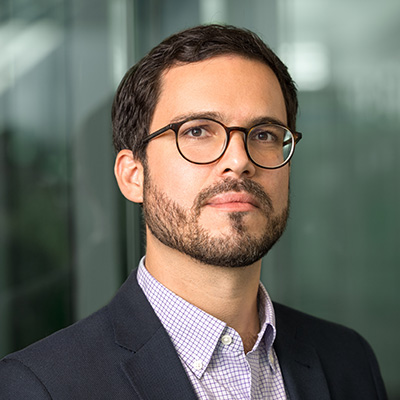
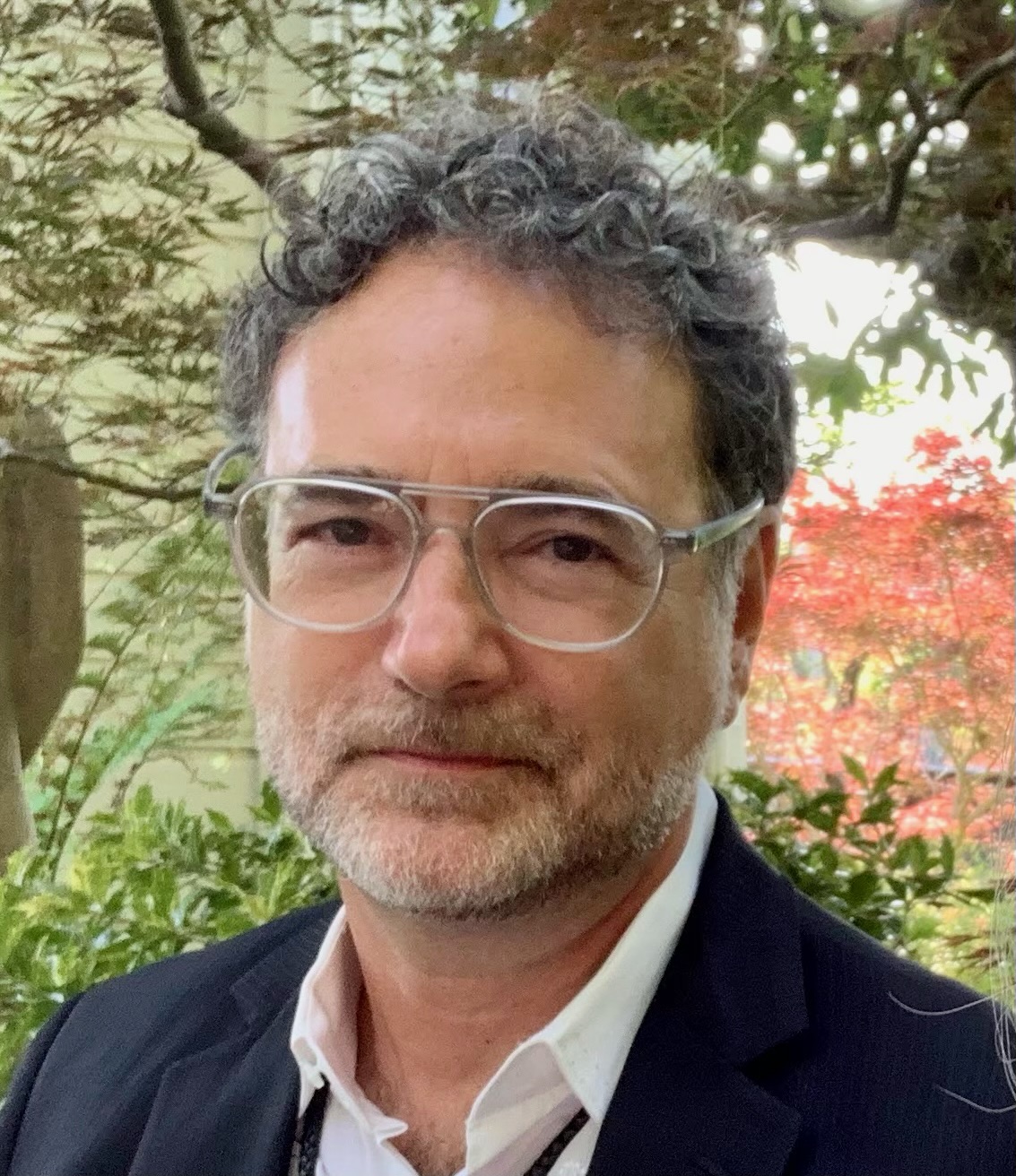
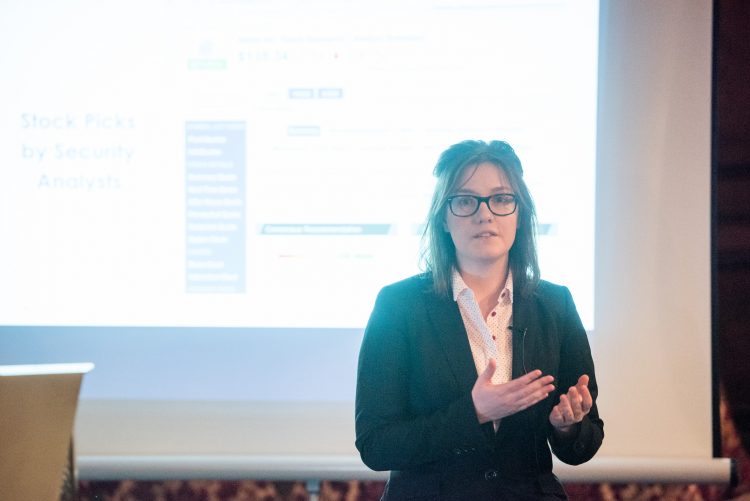
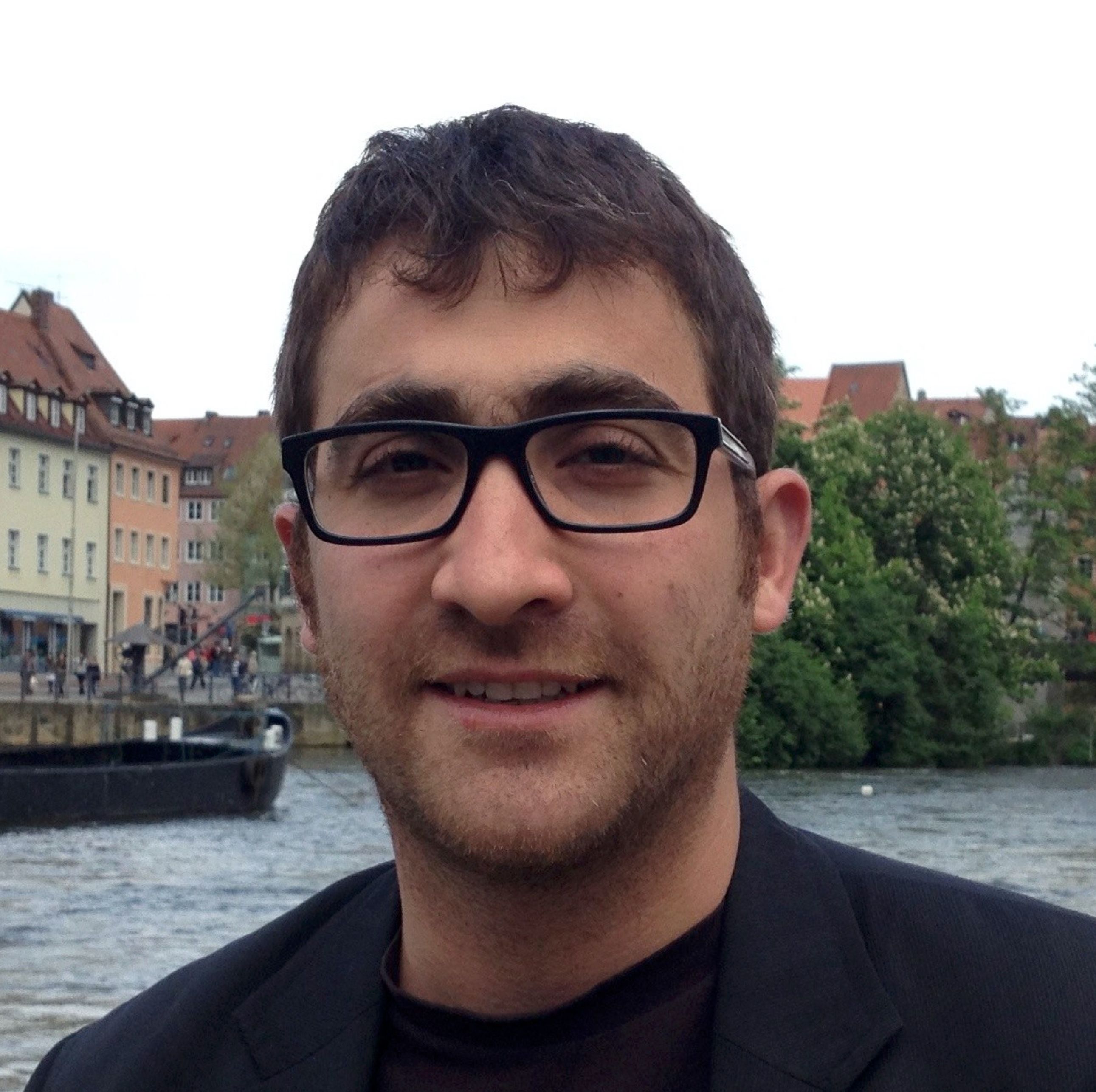
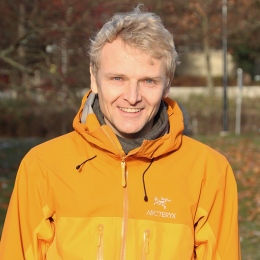
Daniel Vogler is a Senior Research and Teaching Associate and Head of Research at the University of Zurich , affiliated with the Institute of Communication Science and Media Research (IKMZ) . He serves as Deputy Director of the fög – Research Center for Public Opinion and Society , with a career spanning over 15 years in academic communication research. Education: Communication Science, Political Science, and Ethnology at University of Zurich (2003-2013), culminating in a 2020 PhD on Media Reputation of Universities . His research focuses on Journalism Research, Public Relations, Online Communication, Crisis Communication, and Computational Social Science , with notable work on media reputation dynamics, AI's impact on journalism, and crisis-driven norm formation. Recent publications analyze Swiss media ecosystems using automated content analysis and longitudinal studies. Key awards include the 2023 ICA Health Communication Top Paper Award and the 2020 ICA Best Student Paper Award . He contributes to editorial boards of journals like the International Journal of Crisis and Risk Communication Research and co-edits the Yearbook Quality of the Media – Switzerland .
Jonathan Beller is a Professor in the Humanities and Media Studies department at the School of Liberal Arts & Sciences , Pratt Institute. His work sits at the intersection of visual culture, media theory, and political economy. Educated at Columbia University (B.A.) and Duke University (Ph.D.) Editorial Collective member of Social Text His research examines the cinematic mode of production, attention economy, racial capitalism, and the sociopolitical implications of digital media. Key themes include visuality as labor exploitation, algorithmic violence, and media's role in shaping economic systems. Recent publications analyze racialization in digital systems , computational capital , and decentralized financial media , reflecting his long-standing interest in media's material conditions. Contact: jbeller@pratt.edu
Mathias Lerch serves as Lecturer and Head of the Urban Demography Laboratory (URBDEMO) at the School of Architecture, Civil and Environmental Engineering (ENAC) of the Swiss Federal Institute of Technology Lausanne (EPFL). With expertise spanning population dynamics, urbanization, and demographic estimation, he bridges demography with urban planning and environmental science through interdisciplinary research on mortality, fertility, and migration patterns. His research centers on Population and Development, International Demography, and Urban Demography, examining how socioeconomic and environmental factors interact with demographic change. Methodologically, Lerch specializes in data collection, linkage, quality assessment, and advanced statistical modeling for demographic estimation and multi-regional projection, with particular focus on migration systems, fertility transitions, and mortality disparities in urban contexts. Analysis of his 15 most recent publications (2017-2025) reveals consistent investigation into migration patterns across rural-urban continua, fertility transitions in developing regions, and mortality outcomes in urban environments. His work demonstrates methodological innovation through multi-regional projection techniques and large-scale dataset integration, significantly advancing demographic estimation practices and policy-relevant insights for urban population growth. Dr. Lerch currently advises PhD students Beckendorff Dorothee and Du Wenxiu while teaching courses including Urban Demography and Border Forensics at EPFL. His advisory work focuses on training the next generation of demographers in quantitative methods and urban population analysis. As head of URBDEMO, Lerch leads a research team developing systemic frameworks for understanding urban population dynamics. The laboratory's work integrates demographic methods with urban studies to address contemporary challenges in urbanization, migration flows, and sustainable city development through innovative data linkage and modeling approaches.
Prof. Dr. Erik Theissen is a full-time faculty member at the University of Mannheim, holding the Chair in Business Administration and Finance. His research focuses on market microstructure, corporate governance, and information-based trading in equity markets. University of Mannheim, Department of Business Administration Research areas: Finance, Market Microstructure, Corporate Governance His work compares auction and dealer markets, analyzes insider trading regulations, and evaluates the impact of trader anonymity on market liquidity. He has explored competition between exchanges (e.g., Euronext vs. Xetra) and the role of internalized trading under MiFID. His publications include Organizational Forms of Securities Trading (1998), with over 15 major peer-reviewed articles since 2001. Key journals include the Review of Financial Studies, European Financial Management, and Journal of Corporate Finance. 2001 Financial Innovation Award of Bethmann Bank 2001 Best Paper Award (Association of University Professors of Business Administration) 1998 Dissertation Award of the German Stock Institute His research spans experimental economics (e.g., market design, risk attitude estimation) and empirical analysis of German capital markets, including IPO pricing and mutual fund performance.
Roni Berger, PhD, is a Professor at Adelphi University's School of Social Work with over 30 years of academic experience. Her research focuses on trauma in cross-cultural contexts, immigrant/refugee experiences, and posttraumatic growth. She holds clinical credentials as a Licensed Clinical Social Worker (NYS) and Clinical Family Therapist (AAMFT). Education includes: Ph.D. from The Hebrew University of Jerusalem (1994) Psychotherapy certification from Tel Aviv University (1977) MSW and BSW from The Hebrew University of Jerusalem (1974, 1969) Her research examines how sociopolitical environments shape trauma responses across diverse populations including immigrants, refugees, and religious communities. Current investigations explore cultural mediators of posttraumatic growth, trauma-informed pedagogy, and qualitative methodologies for marginalized groups. Publication analysis reveals consistent focus on: cultural competence in trauma care, immigrant mental health interventions, innovative qualitative methodologies, and social work education reform. Recent work addresses pandemic-related pedagogical challenges and cross-cultural manifestations of psychological distress. Awards include: Two Fulbright Awards (Hong Kong 2007, Tel Aviv 2011) President Research Award (2004) NATO Science for Peace sponsorship (2012) Notable advising includes chairing 20+ dissertations on trauma, cultural identity, and marginalized populations. Secured multiple grants including from Fulbright, NATO, and Adelphi University for studies on cultural trauma and community resilience. Leads international educational initiatives in Israel, Ghana, Nepal, and Hong Kong. Directs global trauma education programs, including intensive courses in Israel examining Holocaust intergenerational trauma, security stress, and immigrant experiences. Developed cross-university collaborations in Australia and Hong Kong to advance trauma-informed curriculum development.
Margherita Fantoli is a tenure track lecturer at the Faculty of Arts at KU Leuven, affiliated with the Cultural Studies Research Group. She is an active member of multiple research institutes including DigiSoc – KU Leuven Institute for Digital Society and LECTIO – KU Leuven Institute for the Study of the Transmission of Texts, Ideas and Images in Antiquity, the Middle Ages and the Renaissance. Her institutional involvement extends to the Faculty Council of Arts and the POC Digital Humanities. Dr. Fantoli's research spans Digital Humanities with a focus on historical linguistics, classical studies, and book history. Her work integrates computational methods with traditional humanities scholarship, particularly in analyzing ancient Greek and Latin texts, knowledge transmission networks, and multilingualism in historical contexts. She specializes in using digital tools to explore cultural transmission from antiquity through the Renaissance, with particular attention to network analysis of historical texts and academic communities. Her recent publications demonstrate a strong trend toward computational approaches to historical scholarship, particularly through the STUDIUM.AI project which maps knowledge networks around the premodern University of Leuven (1425-1797). Her work bridges classical philology with digital methods, examining topics such as canon formation in antiquity, multilingualism in early modern book catalogues, and the presence of classical texts in later periods. She frequently collaborates across disciplines, working with computer scientists, historians, and linguists. Dr. Fantoli serves as promoter or co-promoter on multiple significant research projects including CLARIAH-VL+ (toward the 'SSH Open Science Cloud' in Flanders), studies on the coherence of scientific language in ancient technical texts, and investigations into canon formation in Greco-Roman antiquity. Her teaching portfolio includes courses on data processing, linked data scholarship, and introduction to Digital Humanities, reflecting her commitment to training the next generation of digitally literate humanities scholars. She is actively involved with the Cultural Studies Research Group in Leuven, contributing to their mission of exploring cultural transmission across historical periods. Through her leadership in the STUDIUM.AI project and other digital initiatives, she helps build infrastructure for connecting historical knowledge networks and making premodern scholarship more accessible through digital means.
Jan Van Bavel is a full professor at the Faculty of Social Sciences, KU Leuven, with a focus on demography, family dynamics, and climate change impacts. He is a member of LC&Y - KU Leuven Institute for Child and Youth and participates in councils like POC Sociology and POC Master Psychology. Research spans fertility trends, migration, poverty analysis, and adolescent decision-making Active promoter/co-promoter in 8 projects (2021–2028) on climate-family links, migrant deservingness, and wealth inequality Teaches courses on population studies, climate change, and societal transitions His recent work examines climate change's effect on fertility desires, adolescent loyalties, and immigrant integration frameworks, with articles in journals like Demographic Research and Socio-Economic Review . No scientific awards were explicitly mentioned in the provided data.
Katherine L. Milkman (Katy) is the James G. Dinan Professor at the Wharton School of the University of Pennsylvania, with secondary appointments in Penn's Perelman School of Medicine and School of Arts & Sciences. She co-founded and co-directs the Behavior Change for Good Initiative, a research center dedicated to advancing the science of lasting behavior change. Her work integrates economics and psychology to address challenges like savings, exercise adherence, vaccination rates, and discrimination through large-scale field experiments. Education: PhD in Computer Science and Business from Harvard University; Bachelor's degree (summa cum laude) in Operations Research and Financial Engineering from Princeton University. Research Focus: Milkman's research leverages big data and behavioral science to understand decision-making failures (e.g., self-control, discrimination) and design scalable interventions. Her recent work emphasizes: Nudge-based strategies for education, health, and finance Diversity enhancement in organizational settings Habit formation through incentive structures Publication Trends: Her 15 most recent articles (2022-2025) primarily involve megastudies testing behavioral interventions. Key themes include: leveraging email/reminders to improve math education and vaccination rates; addressing loan delinquency through nudges; and using stereotyping dynamics to increase diversity in hiring. Over 80% employ field experiments across healthcare, finance, and education sectors. Awards & Honors: Thinkers50 Top Management Thinker (2021, 2023) Schmidt Futures Innovation Fellow (2022) Fellow, Association for Psychological Science (2020) Multiple teaching awards from Wharton (2015, 2016) William F. O’Dell Award for impactful research (2017) Advisory & Grants: Milkman has advised major organizations including The White House, Google, Walmart, and the U.S. Department of Defense. Her Behavior Change for Good Initiative secures funding for large-scale social impact research. She hosts Schwab's behavioral economics podcast Choiceology and contributes to policy through op-eds in The New York Times and Scientific American . Labs & Teams: Co-directs the Behavior Change for Good Initiative, collaborating with interdisciplinary researchers (e.g., Angela Duckworth, Sendhil Mullainathan) on longitudinal studies. The initiative designs and tests interventions across health, education, and savings domains.
Dr Lynette Pretorius is a Lecturer at Monash University's School of Curriculum Teaching & Inclusive Education, where she has established herself as an award-winning educator and researcher. With extensive experience teaching across undergraduate, postgraduate, and graduate research levels, she supervises PhD students while weaving together interdisciplinary expertise to create inclusive and transformative learning environments. Her work spans multiple academic contexts while maintaining a consistent focus on compassionate, equitable education. Dr Pretorius's research centers on doctoral education, academic identity, student wellbeing, and AI literacy, with particular emphasis on creating more just and creative academic spaces. Drawing from autoethnography and qualitative methodologies, her work interlaces personal narratives with institutional systems to understand how lived experiences and academic structures shape one another. She champions pedagogies of care that prioritize wellbeing, justice, and student growth through reflexive, relational ethics and methodological transparency. Her recent publications reveal a growing focus on AI literacy in higher education, with multiple 2024-2025 works developing frameworks for responsible AI use, examining AI's decolonial potential, and exploring how generative AI transforms academic communication and research practices. Alongside this emerging AI focus, her longstanding work on doctoral education continues through writing groups, wellbeing research, and investigations into academic identity formation. Dr Pretorius has received significant recognition for her contributions, including: Dean's Award for Teaching Excellence (2022) Global Impact Grant (Student Success) (2022) Senior Fellow, Higher Education Academy (2021) Dean's Citation for Outstanding Contribution to Student Learning (2019) Dean's Award for Programs that Enhance Learning (2019) Her research leadership extends to multiple funded projects including 'Behind the Academic Curtain: Doctoral Students and the Hidden Rules of Academia' (2025-2026) and 'Learning about Academic Publishing through Collaborative Online International Learning' (2024-2025). She actively supervises doctoral students and has developed innovative approaches to research and teaching, particularly through her work on doctoral writing groups as transformative spaces. Dr Pretorius maintains a strong public scholarly presence through her Scholar's Way Blog, University Study Made Easy YouTube Channel, and the AI Literacy Lab. These platforms extend her research impact beyond traditional academic boundaries, reaching broader educational communities and providing practical resources for students and educators navigating contemporary academic challenges.
Junzhao Ma is a Senior Lecturer in the Department of Marketing at Monash University. He holds a BA in Economics from Yale University and a PhD in Marketing from the Kellogg School of Management, Northwestern University. Previously, he worked as a marketing analyst at Capital One Financial Corporation and JP Morgan and Co. Education: BA Economics (Yale University), PhD Marketing (Kellogg School, Northwestern University) His research focuses on technology adoption, e-commerce, real estate, and media's social impact, employing novel methodologies and data sources. He has contributed to journals like Journal of Retailing , International Journal of Research in Marketing , and Journal of Business Ethics . His work aligns with UN Sustainable Development Goals related to reduced inequalities and responsible consumption. Recent research highlights include studies on service robot anthropomorphism (2023), sex robots acceptance (2022), and media-driven consumption trends (2020). He has received Dean's Letters for Teaching Excellence in 2020 and 2021. Scientific Awards: Dean's Letter for Teaching Excellence (2020, 2021) Junzhao actively engages in academic service, including peer reviews for Asia Pacific Journal of Marketing and Logistics and presentations at the INFORMS Marketing Science Conference and Australian & New Zealand Marketing Academy Conference. He has served as Chief Investigator in projects like "Bridging the Intention-Behaviour Gap in the Australian Tourism Industry" (2022-2024) and "eBabies: Forecast and Implications for Society" (2020-2021).
Andrew Godwin is a Professor at the University of Kansas Medical Center , where he serves as the Chancellor’s Distinguished Chair in Biomedical Sciences and Director of Molecular Oncology in the Department of Pathology and Laboratory Medicine. He is also the Deputy Director of the NCI-designated University of Kansas Cancer Center and the Founding Director of the Kansas Institute for Precision Medicine and Biospecimen Shared Resource . Dr. Godwin is a leader in translational research and precision medicine , with a focus on molecular oncology , biomarker discovery , and genomic diagnostics . His work bridges basic and clinical science to improve cancer patient care, particularly in ovarian cancer , Ewing sarcoma , and breast cancer . He has contributed over 230 ovarian cancer-related publications and pioneered studies linking the PI3K/AKT pathway to cancer treatment targets. His research program encompasses liquid biopsies using extracellular vesicles , molecular therapeutics , companion diagnostics , and clinical trial validation . He leads the Biomarker Discovery Laboratory and has secured over $250M in extramural funding , including a $11.4M NIH grant for precision medicine initiatives. His team has developed CELLSEARCH® , the first FDA-cleared test for circulating tumor cells. Notable awards include the Dolph C. Simons, Sr. Higuchi Award (2020), Outstanding Mentorship in Pathology Award (2024), and multiple mentoring accolades from KU. He has mentored over 150 trainees across career stages and leads a multidisciplinary lab with expertise in genomics , proteomics , and bioengineering . Academic Roles: Chancellor’s Distinguished Chair in Biomedical Sciences Director, Molecular Oncology, Pathology and Laboratory Medicine Deputy Director, KU Cancer Center Founding Director, Kansas Institute for Precision Medicine Adjunct Professor, Bioengineering Program, University of Kansas Scientific Awards: KUMC Achievement Award for mentoring postdocs (2014) Chancellor’s Club Award for Research (2018) Dolph C. Simons, Sr. Higuchi Award (2020) KU Excellence in Mentoring Award (2021) Outstanding Mentorship in Pathology (2024) Key Research Themes: Extracellular vesicles as liquid biopsy tools Molecular mechanisms of sarcoma and breast cancer Genomic diagnostics and precision oncology Clinical trial biomarker validation Biospecimen repository leadership
Dr Jack Cunliffe is a Senior Lecturer in Quantitative Methods and Criminology at the University of Kent's School of Social Sciences, serving as Director of Studies for Criminology since joining in 2015. His academic journey began with a mathematics undergraduate degree, followed by a PhD in Social Policy from the London School of Economics, and prior government experience in the Home Office and Ministry of Justice. His educational background includes: PhD in Social Policy, London School of Economics (thesis on structural equation modelling of area characteristics as offending risk factors) Undergraduate degree in Mathematics Dr Cunliffe's primary research focuses are cybercrime (particularly online drug trade and fraud) and policy evaluation (assessing prison interventions and drug diversion schemes). He actively contributes as the School of Social Sciences champion for the Institute of Cyber Security for Society and collaborates across disciplines on identity fusion, charitable giving during the pandemic, and primary school civic education. His methodological expertise lies in advanced quantitative analysis of administrative and survey data. His publication record (2017-2025) demonstrates a cohesive research trajectory: early work centered on cryptomarkets and darknet drug trade (2017-2019), evolving into prison rehabilitation interventions (2024-2025) and pandemic-related social behavior (2023). These publications, appearing in high-impact journals like Nature Human Behaviour and BMJ, reflect interdisciplinary collaboration and a commitment to addressing pressing societal issues through rigorous quantitative methods. No scientific awards, fellowships, or medals are documented in the provided information. Dr Cunliffe has led quantitative components of major projects including the Ministry of Justice-funded Prison Leavers Project and evaluations of police drug diversion schemes. He mentors PhD students in cybercrime and policy evaluation and has designed significant curriculum reforms for Kent's criminology program. His grant portfolio reflects strong partnerships with government agencies and interdisciplinary academic teams. As the School of Social Sciences representative for the Institute of Cyber Security for Society, Dr Cunliffe fosters cross-school collaboration on cybercrime research. He also plays a central role in the criminology program's academic leadership, having overseen a comprehensive curriculum redesign and teaching advanced quantitative methods and cybercrime courses.
Alexandre Kohlhas is a University of Oxford Associate Professor in the Department of Economics and a William R Miller Fellow at St Edmund Hall . Previously an Assistant Professor at Stockholm University's Institute for International Economic Studies, his research bridges macroeconomics , monetary policy , and information economics with a focus on expectation formation and uncertainty. Doctorate from Pembroke College, University of Cambridge His work explores economic uncertainty and information asymmetry , analyzing how heterogeneous expectations and asymmetric attention shape macroeconomic outcomes. Recent publications examine data-driven macroeconomic modeling , wealth heterogeneity , and higher-order beliefs in monetary policy contexts. Key research trends include expectation formation in uncertain environments, monetary transmission mechanisms , and information aggregation in markets. His 14 most recent articles demonstrate consistent engagement with theoretical and applied macroeconomics through behavioral and informational lenses. William R Miller Fellow Tutorial Fellow in Economics Governing Body Fellow Reach Alexandre via email for academic collaboration or supervision inquiries.
Dr. Taylan Acar is a Post-Doctoral Researcher at Goethe University Frankfurt/Main, focusing on the intersection of gender, socio-economic status, and immigrant backgrounds in parenting norms and childcare practices. His work emphasizes the gendered division of labor, attitudes toward gender equality, and external childcare utilization in Germany. PhD in Sociology, University of Wisconsin-Madison Project: Internalized Gender and Parenting Norms (2025) Research areas: Gender Studies, Sociology of Education, Migration Studies His research spans comparative analyses of educational integration, labor dynamics in healthcare, and socio-political factors affecting family processes. Recent publications highlight discrepancies between gender ideology and childcare practices, while older works address subcontracted labor and feminist reimaginings of neoliberal policies. Scientific awards include the Ferhunde Özbay Best Article Award (Turkish Population Studies Association). His work is funded by Boğaziçi University Research Fund (BAP) and contributes to debates on gender equality, migration integration, and educational equity.
Konrad Burchardi is Professor of Economics at the Institute for International Economic Studies (IIES) at Stockholm University. His academic work focuses on understanding economic development processes and the social foundations of economic behavior, with significant contributions to development economics and migration studies. Professor Burchardi obtained his PhD in Economics from the London School of Economics (LSE), with prior studies conducted in Munich, Aix-en-Provence, and at LSE. His educational background reflects a strong international foundation in economic theory and development perspectives. His research primarily centers on productivity growth at early stages of economic development and the social underpinnings of economic interactions. Key contributions include field experiments on sharecropping contracts in developing countries, demonstrating how output-sharing rules affect agricultural productivity, and research showing how migration ancestry influences foreign direct investment patterns. His work spans agricultural economics, migration studies, experimental economics, and economic networks, often employing rigorous field and natural experimental designs to establish causal relationships. Analysis of Professor Burchardi's publication record reveals consistent contributions to top economics journals with a focus on development and labor economics. His work shows an evolution from examining micro-level economic behaviors in developing countries to broader questions about migration networks and their economic impacts. His recent publications indicate increasing attention to historical economic data and financial inclusion, with work scheduled through 2025.