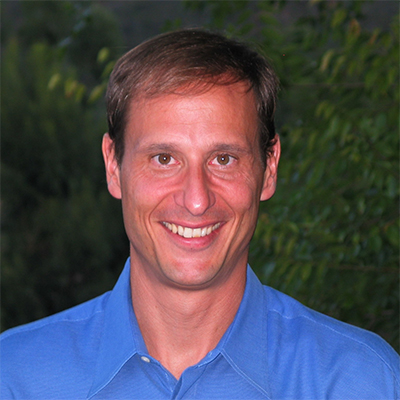
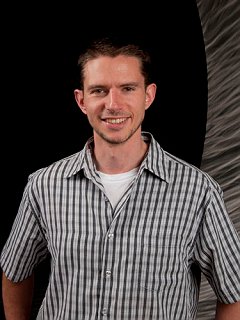
Prof. Dr. Thorsten Thiel is a full professor at the Faculty of Economics, Law and Social Sciences at the University of Erfurt. He serves as holder of the Professorship for Democracy Promotion and Digital Policy, Equal Opportunities Officer (Gleichstellungsbeauftragter) of the Faculty, and representative for Social Sciences study programs. His research focuses on political theory in digital contexts, specifically examining democratic transformations through technology, sovereignty in digital infrastructure, and structural changes in public spheres. Professorship for Democracy Promotion and Digital Policy Equal Opportunities Officer Faculty Representative for Social Sciences ORCID: 0000-0002-4261-118X His scholarly work investigates: Digital sovereignty frameworks and their political implications Structural transformations of public spheres through social media AI's impact on democratic processes Privatization of digital public infrastructure Anonymous activism and digital rights Republicanism in networked societies Recent publications analyze emerging challenges to democratic governance in digital environments, including algorithmic decision-making, platform regulation, and crisis hackathons as democratic innovations. He has contributed to debates on digital sovereignty (2024), AI's influence on political will-formation (2024), and Habermasian digital public sphere theory (2023). His #WirVsVirus hackathon analysis (2023) explores participatory technology in crisis governance.
Sverker Molander is a Full Professor at the Environmental Systems Analysis group at Chalmers University. His research integrates systems approaches to analyze human-induced environmental change and its mitigation, with a focus on chemical risk assessment, material flows, and renewable energy systems. He actively collaborates with social scientists to examine technology-society-ecosystem interfaces and participates in international programs like Sida's collaboration with Universidade Eduardo Mondlane in Mozambique. SETAC Global Science Committee member Baltic Sea Foundation research delegation Kamprad Family Foundation scientific reviewer His work employs environmental risk assessments, life cycle analyses, and substance flow modeling, particularly examining: Toxicological impacts of nanomaterials Renewable energy environmental interactions Chemical exposure limit inconsistencies Multidisciplinary approaches to sustainability Risk communication in chemical supply chains Climate-chemical pollution intersections Recent publications demonstrate expertise in: Ecotoxicity extrapolation methods Machine learning for toxicity prediction Circular tungsten flows Marine energy collision risks Climate-adapted chemical management His research connects technical systems with societal and ecological considerations, emphasizing indicator development and interdisciplinary collaboration.
Annalisa Croce is a Full Professor at the Graduate School of Management, Politecnico di Milano, where she teaches courses including Business Data Analytics and Economia e Organizzazione Aziendale (Business Economics and Organization) at undergraduate and graduate levels since 2014. She serves as Director of the Executive MBA Part Time program and Teaching Area Coordinator for Finance. Her educational background includes: PhD in Management Economics and Industrial Engineering, Politecnico di Milano Master of Science in Management Engineering, Politecnico di Milano Professor Croce's research specializes in empirical analyses of entrepreneurial finance, with core expertise in venture capital, business angel investments, and corporate governance in high-tech firms. Her work spans corporate finance dynamics, innovation economics, efficiency estimation across sectors, and emerging fields like social impact finance and climate finance. She employs diverse empirical methodologies to examine financing mechanisms, ownership structures, and innovation determinants in entrepreneurial ventures. Analysis of her 15 most recent publications reveals intensifying focus on gender diversity in venture capital, internationalization of angel investments, cleantech policy frameworks, and digital transformation in entrepreneurial finance. The trajectory shows growing integration of machine learning approaches and heightened attention to sustainability themes, particularly climate finance and social impact investing since 2021. Her honors include: Gate2Growth 2006 Second Best Paper Award for 'Venture Capital and the Investments of New Technology Based Firms' European Community Short-Term Scientific Mission grant (COST-STSM-IS0604-06244) at Universidad Complutense de Madrid Professor Croce directs the Bureau of Entrepreneurial Finance and serves on the Scientific Committee of Politecnico di Milano's Observatory of Climate Finance. She holds extensive editorial responsibilities including Board of Review membership for Journal of Business Venturing, Editorial Review Board for Entrepreneurship Theory and Practice, and guest editorship for Technological Forecasting and Social Change special issue on digital entrepreneurial finance. Her peer review work spans top journals in economics, finance, and management.
Dr. Chandi Witharana is an Assistant Professor in the Department of Natural Resources and the Environment at the University of Connecticut's College of Agriculture, Health, and Natural Resources. Previously, they served as Assistant Professor in Residence (2020-2023), Assistant Research Professor (2018-2020), and Visiting Assistant Professor (2016-2018) at UConn. Their academic journey includes a Postdoctoral Research Fellowship at SUNY Stony Brook (2014-2016) and graduate work at UConn where they earned their PhD in Remote Sensing in 2014. Dr. Witharana teaches courses in high-resolution remote sensing, geospatial analysis, and introductory geomatics. Dr. Witharana's educational background includes: PhD in Remote Sensing, University of Connecticut (2014) MS in GIScience, University of Connecticut (2009) BS in Geology, University of Peradeniya, Sri Lanka (2005) Dr. Witharana's research focuses on methodological developments for analyzing large volumes of multi-modal remote sensing data for environmental, industrial, and agricultural applications, with special emphasis on Arctic Permafrost remote sensing. They harness sub-meter resolution satellite imagery, AI, and high-performance computing resources to map permafrost landforms, monitor thaw disturbances, and assess risks to human-built infrastructure in the Arctic. Their work extends beyond research to include innovative applications of remote sensing in K-12 STEM education through imagery-enabled lesson plans. Dr. Witharana aims to use cutting-edge geospatial technologies as transformative learning instruments to help students understand complex human-environment interactions. The recent publications of Dr. Witharana demonstrate a strong focus on applying advanced AI and remote sensing techniques to Arctic permafrost monitoring and infrastructure risk assessment. Their work increasingly incorporates vision transformers and deep learning models for more accurate detection of permafrost features and unhealthy tree crowns. There's a clear trend toward developing scalable geospatial datasets with standardized approaches, particularly for retrogressive thaw slumps. Many publications address practical applications including power outage risk modeling, forest management for storm resistance, and infrastructure monitoring in changing Arctic landscapes. The research shows growing interdisciplinary collaboration across environmental science, computer science, and engineering domains. Dr. Witharana has secured significant research funding as PI or Co-PI on numerous grants totaling over $14 million, including: NSF's Permafrost Discovery Gateway project ($3,000,000) Google-funded research on tracking Arctic permafrost thaw ($5,000,000) NSF's role of capillaries in the Arctic hydrologic system ($2,000,000) USDA projects on drone imaging for nutrient deficiency detection ($200,000) Eversource Energy projects on tree risk modeling ($275,000) As an educator, Dr. Witharana mentors students through research projects funded by these grants and teaches specialized courses in remote sensing and geospatial analysis. They serve as Director of the Remote Sensing & Geospatial Data Analytics Graduate Program and as a Steering Committee Member for UConn's Data Science Masters Program. Dr. Witharana is also an Editorial Advisory Board Member for the ISPRS Journal of Photogrammetry and Remote Sensing and regularly reviews proposals for NSF and other agencies. Their research group leverages high-performance computing resources including Frontera/NSF and XSEDE allocations for large-scale geospatial analysis. Dr. Witharana leads research teams focused on Arctic permafrost monitoring and geospatial AI applications, collaborating with institutions including University of Alaska-Fairbanks, Woodwell Climate Research Center, and UC Santa Barbara. Their work involves developing advanced workflows for processing satellite imagery and implementing machine learning models for environmental monitoring. The research group actively engages in developing educational applications of remote sensing technology, particularly for K-12 STEM education.
Edgar Vadimovich Vatamanitsa serves as an Assistant Professor in the Department of Computer Science at Chernivtsi National University, specializing in cross-platform software development and cloud computing applications. His work bridges academic research with industry practice through active engagement in both university teaching and commercial software development. Education: Yuriy Fedkovych Chernivtsi National University (2013): Systems Software, Software Engineer Dr. Vatamanitsa's research centers on Java/Android pattern development, client-server architectures, and distributed systems. He pioneers practical implementations of design patterns in cloud environments, with significant contributions to optical field simulation, semiconductor modeling, and intelligent transportation systems. His methodology emphasizes cross-platform efficiency and real-world applicability of theoretical computing concepts. Analysis of his 2022-2024 publications reveals dominant themes in cloud-based optical computation (AWS infrastructure), Java pattern implementation for Android, and cross-platform solutions for traffic management and semiconductor physics. His work consistently integrates distributed systems with domain-specific challenges in optics, printing technology, and educational analytics, demonstrating exceptional versatility across engineering disciplines. Professional Activities: Member of Bukovina Information Technology Cluster (since 2022) Senior Software Developer at EPAM SYSTEMS Certificate in Cross-platform Programming and Information Security (Ternopil National Technical University, 2023) Tech Summer Bootcamp for Teachers participant (2023)
Dat Bao is a Senior Lecturer at Monash University's School of Education Culture & Society. Previously, he held positions at Leeds Beckett University (UK), Cornell University (USA), National University of Singapore, and Assumption University of Thailand. His internationally recognized research spans Australia, China, Japan, Philippines, Thailand, Vietnam, and the UK, with nearly 80 publications and numerous plenary conference presentations across four continents. Bao's research centers on silence studies, creative pedagogy in language education, curriculum development, intercultural education, creative thinking, and work-related learning. He investigates silence as a strategic resource in language classrooms and develops innovative approaches to enhance teaching through poetry and creative frameworks. His work bridges theoretical insights with practical classroom applications, particularly in cross-cultural contexts. His 2025 publications reveal three key trajectories:深化研究 on silence as autonomy and relationship-building in teacher-student dynamics, emerging work applying AI (multimodal deep learning) to specialized language domains like legal English, and continued exploration of ecojustice in language teaching. This demonstrates both continuity in his core silence studies and innovative expansion into technological and ecological dimensions of language education. His accolades include: Dean's Award for Excellence in Teaching (2018), Monash University Dat Bao has led multiple externally funded projects, primarily consultancy programs for TESOL teachers from China's Zhejiang Province (2018-2019) and research on Vietnamese graduates' brain circulation. These collaborative initiatives involved Monash colleagues and addressed practical teacher development needs while generating empirical insights into international education flows.
Nikolaos Papaspyrou is a Professor at the School of Electrical and Computer Engineering of the National Technical University of Athens (NTUA) and a member of the Software Engineering Laboratory . His research focuses on the theory and implementation of programming languages, including semantics, type systems, compilers, static analysis, and formal verification. Since October 2021, he has been on leave from NTUA, working as a Software Engineer for Google in the memory management team for the V8 JavaScript and WebAssembly engine. He previously served as Director of the Division of Computer Science (2017-2019) and was on sabbatical with Google's compiler group in Munich (2015-2016). His work includes the RELEASE project (EU FP7 STREP) for reliable large-scale server software and uncertainty handling in distributed databases (European Social Fund). Ph.D. and Diploma in Electrical and Computer Engineering from NTUA M.Sc. in Computer Science from Cornell University His research interests span programming languages , software engineering , and formal verification , with recent publications on coinductive proofs in Liquid Haskell, concurrency semantics, and quantum compilation. He has supervised over 50 diploma projects and mentored numerous students now at institutions like MIT, Princeton, and UC Berkeley. Awards include conference organizing and program committee roles, though no formal scientific prizes are listed.
Andrew Charles, M.D., is a Professor at the Department of Neurology within the David Geffen School of Medicine at UCLA. He holds the Meyer and Renee Luskin Chair in Migraine and Headache Studies and serves as Director of the UCLA Goldberg Migraine Program. His research focuses on migraine pathophysiology, cortical spreading depression, and CGRP-targeting therapies. Member, Brain Research Institute Hatos Center for Neuropharmacology Research Interests span migraine mechanisms, neurovascular coupling, headache disorders, and cortical excitability. His work integrates in vivo imaging, pharmacology, and clinical trial data to advance headache therapeutics. Article Trends show sustained focus on migraine mechanisms (particularly cortical spreading depression), CGRP-based therapies, neurovascular imaging, and translational models for headache disorders. Scientific Awards : Meyer and Renee Luskin Chair in Migraine and Headache Studies Member, Brain Research Institute
Daniela Guericke is an Assistant Professor at the University of Twente in the Department of Industrial Engineering & Business Information Systems. Her research contributes to UN Sustainable Development Goals in Artificial Intelligence, Health, Energy, Climate, and Circular Economy. She specializes in modeling, simulation, optimization, and data science for energy systems and sustainable industry. Research Trends: Daniela's recent work focuses on Stochastic network optimization for district heating systems Multi-objective scheduling with energy tariffs Hydrogen railway infrastructure design Renewable energy community planning Demand response integration in large-scale energy systems Labs & Collaborations: She collaborates with the CITIES project (Centre for IT-Intelligent Energy Systems) and contributes to advancements in smart grids, energy efficiency, and circular economy frameworks.
Venkat Venkatakrishnan is a Professor of Computer Science and Director of Research at the Discovery Partners Institute at the University of Illinois at Chicago. As Associate Dean for Research and Graduate Studies in the College of Engineering, he leads initiatives in cybersecurity research and education. His research focuses on Computer Systems Security , utilizing techniques from Compilers Operating Systems Formal Methods to defend against cyber attacks. He has developed innovative approaches to secure desktop systems, detect web vulnerabilities, and reconstruct attack scenarios. Recent publications highlight his work in areas including: Advanced Persistent Threat detection Web application security Automated exploit generation Security sanitization tools SQL injection prevention Content security policies Scientific achievements include Distinguished Paper Award at USENIX Security Symposium (2018) Best Paper Awards at IEEE QRS (2016), Oakland (2009), and ACSAC (2003) Finalist for AT&T Best Applied Security Research Paper (2010) He has mentored numerous students and postdoctoral researchers, many of whom have become faculty members at prestigious institutions or joined leading technology companies. His work bridges academic research with practical applications for businesses and websites seeking to patch security vulnerabilities.
Tiark Rompf is an Assistant Professor at Purdue University , with research spanning programming languages, compilers, and systems. His work bridges domains including architecture, databases, machine learning, and AI through projects like Reachability Types and Rhyme. Co-director of the Purdue Center for Programming Principles and Software Systems (PurPL) Scientific Advisor at SambaNova Systems Previously a member of the Scala team at EPFL His research focuses on: Runtime code generation and advanced compiler technology Expressive data-centric query languages (Rhyme, Datalog) Reachability type systems for memory safety and effect handling Metaprogramming and logical relations for formal verification Recent publications highlight contributions to Datalog compilation (Flan), nested data structures (Rhyme), and polymorphic reachability types. He leads projects exploring: Compiler optimizations for emerging architectures (GPU, TPU, FPGA) ML-driven compiler improvements Secure multi-party computation via metaprogramming Scientific awards include: NSF CAREER Award (2016) Google Faculty Research Awards (2017, 2018) DOE Early Career Research Award (2017) ACM SIGPLAN PL Software Award (2019) GPCE Test of Time Award (2020) Students and alumni from his group have joined institutions like Databricks, DeepMind, Galois, and Meta. He teaches advanced compiler courses including: CS 590 - Advanced Topics in Compilers CS 352 - Compilers CS 502 - Graduate Compilers
Jean Auriol is a researcher affiliated with the Signals and Systems Laboratory , focusing on advanced control theory and partial differential equations (PDEs). His work spans robustness, hyperbolic systems, and infinite-dimensional systems, often addressing real-world applications in engineering and physics. Research Interests: PDEs and Control Theory Robustness in Dynamical Systems Hyperbolic Systems and Networked Control Stochastic and Delayed Systems Recent Publications: Stability analysis of triangular hyperbolic systems Smart traffic management for autonomous vehicles Stochastic hyperbolic PDE stabilization Minimum time control of coupled PDEs Neural network-based parameter estimation for drilling systems
Ann Ragin, PhD, is a Research Professor in the Department of Radiology at the Feinberg School of Medicine, Northwestern University. Her work focuses on quantitative MRI and brain network analysis to investigate aging effects and viral infections including HIV and COVID-19. She maintains active affiliations with the Institute for Public Health and Medicine (IPHAM), Northwestern University Clinical and Translational Sciences Institute (NUCATS), Northwestern University Institute of Neuroscience (NUIN), Robert J. Havey, MD Institute for Global Health, and Simpson Querrey Institute for Epigenetics. Her academic credentials include a PhD from Northwestern University (1987) and postgraduate training at the University of Chicago (1989), where she completed a postdoctoral fellowship in Quantitative Methods. Dr. Ragin's research program integrates advanced imaging techniques with clinical neuroscience: Development of quantitative MRI methodologies for in vivo brain measurement Brain network analysis for early neural injury detection 4D flow imaging applications in cerebral blood flow assessment Investigation of neuroinflammation in HIV/AIDS and aging populations Structural-functional neuroimaging correlations in viral infections Her recent publications reveal a dual research trajectory: computational neuroscience innovations (tensor-based graph networks for brain analysis) and clinical applications in cardiopulmonary imaging (pulmonary hypertension biomarkers). This work bridges machine learning, neurology, and cardiology through collaborative NIH-funded studies with the AIDS Clinical Trials Group. Professional leadership includes continuous membership in the AIDS Clinical Trials Group (2013-present), Conference on Retroviruses and Opportunistic Infections, and International Society for Magnetic Resonance in Medicine (2002-present), with prior service on the Chicago Society for Neuroscience Council (2003-2005). While specific grant details remain undisclosed per institutional policy, her ACTG membership and multi-institute affiliations indicate substantial involvement in federally funded research. No advisee information appears in public profiles, though her 99 publications suggest extensive mentorship within collaborative projects. Current initiatives focus on multimodal brain network analysis for HIV-related neurocognitive disorders and quantitative MRI biomarkers for pulmonary hypertension, leveraging Northwestern's advanced imaging infrastructure across multiple research consortia.
Chancellor Johnstone serves as an Adjunct Assistant Professor at the Air Force Institute of Technology (AFIT), specializing in interdisciplinary research bridging military applications with advanced analytics. His work integrates operations research, statistical modeling, and machine learning to solve complex defense-related challenges. His academic credentials include: PhD in Statistics, Iowa State University, 2020 MS in Operations Research, Air Force Institute of Technology, 2015 BS in Operations Research, United States Air Force Academy, 2013 Dr. Johnstone's research focuses on robust optimization for decision-making under uncertainty, anomaly detection in complex systems, and federated learning frameworks for distributed data environments. His methodology emphasizes conformal prediction for uncertainty quantification and physiology-based classification in human-machine systems, with direct applications to Air Force operations including pilot training, mission planning, and personnel selection. Analysis of his 2021-2024 publications reveals three dominant research trajectories: (1) military logistics optimization incorporating cyber-physical constraints; (2) physiological signal processing using graph neural networks for multi-modal data; and (3) responsible AI development addressing bias in high-stakes military personnel decisions. His work consistently demonstrates translation of theoretical advances—particularly in conformal prediction and federated learning—into operational Air Force contexts.
Ben Hermann is a Professor for Secure Software Engineering at Technische Universität Dortmund, Germany, with research focusing on the intersection of programming languages and security. His work primarily centers on vulnerability detection using static analysis, risk assessment of software libraries, security guarantees in type systems, and language-based security. His academic journey includes a doctoral degree from Technische Universität Darmstadt in 2016, followed by postdoctoral work in Eric Bodden's Secure Software Engineering Group at the Heinz Nixdorf Institute. Since 2020, he has held a tenure-track professorship at TU Dortmund, after serving as an interim Professor for IT Security at Paderborn University from October 2019 to September 2020. Hermann's research portfolio demonstrates consistent output in static program analysis frameworks, particularly with contributions to Soot and PhASAR. His work spans vulnerability detection, analysis reusability, and research quality in computer science, with emphasis on artifact evaluation. His recent publications show progression from framework development toward security applications and research methodology. Hermann has been actively involved in numerous conferences including ASE, ICSE, ECOOP, and SPLASH, often serving in program committees and as session chair. His research group at TU Dortmund includes students like Maximilian Krebs who presented work on energy consumption prediction of programs. He maintains an active presence in the academic community, advocating for research quality and reproducibility, and serves in various organizational roles including Doctoral Symposium Chair and Diversity & Inclusion Chair for conferences.