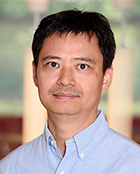
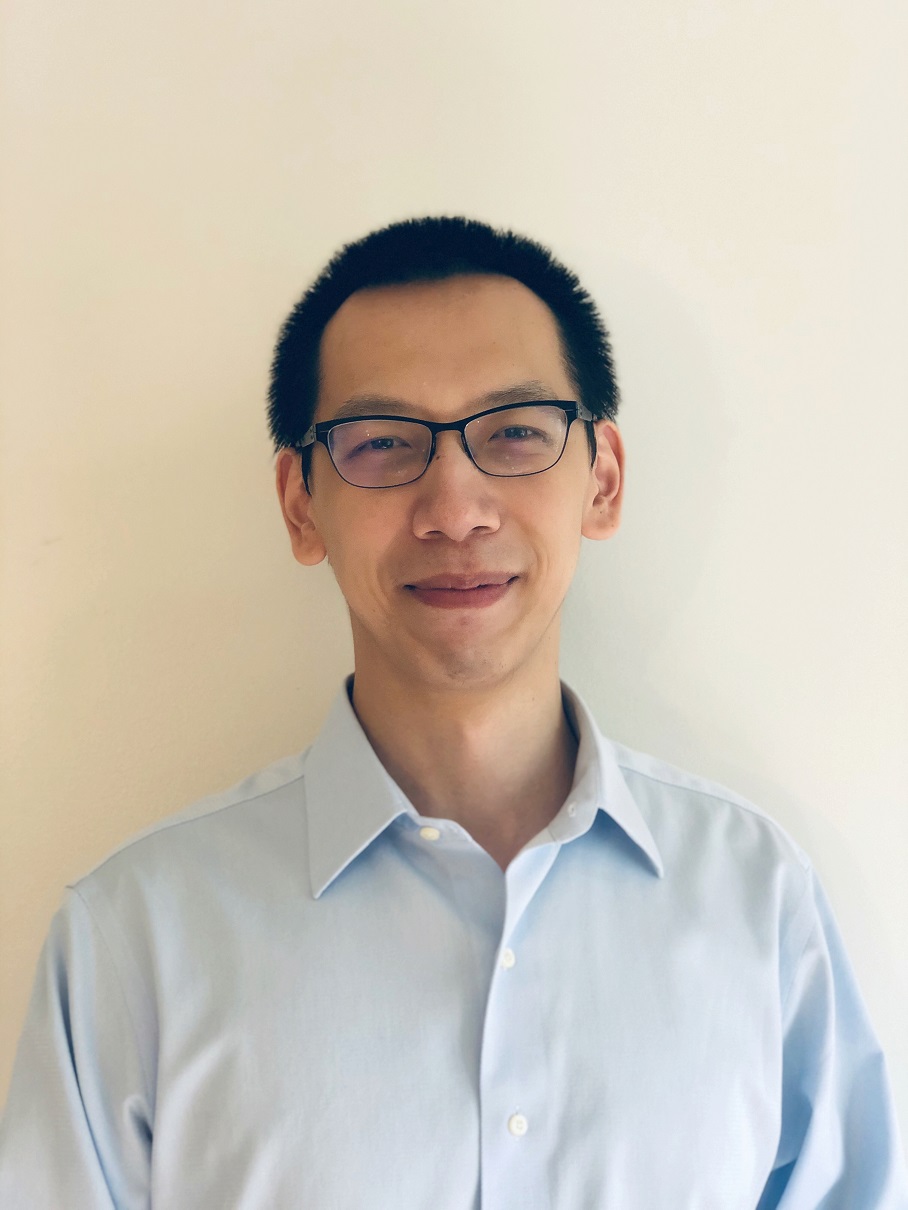
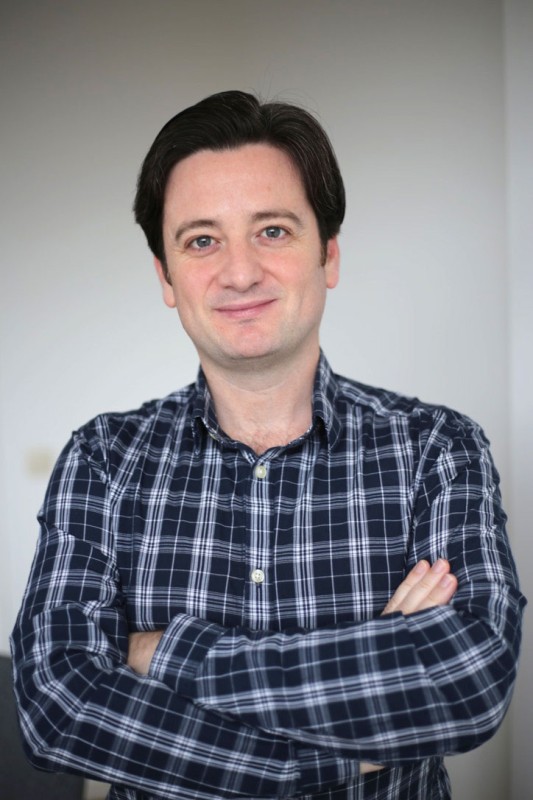
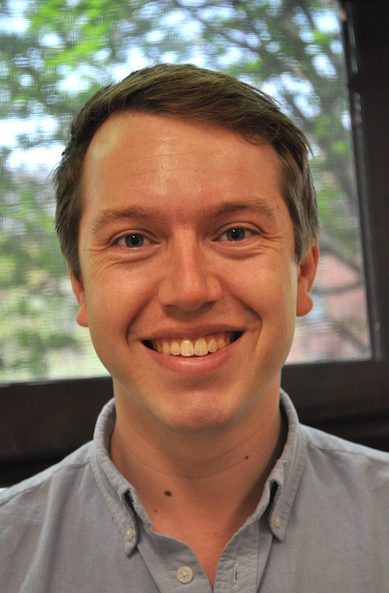
Haibin Ling is the SUNY Empire Innovation Professor in the Department of Computer Science at Stony Brook University, part of the College of Engineering and Applied Sciences. His research focuses on computer vision, medical image analysis, augmented reality, and AI applications in science. He holds a Ph.D. from the University of Maryland (2006) and prior degrees from Peking University. Previously, he worked at Temple University (2008–2019) and held roles at Siemens Corporate Research, UCLA, and Microsoft Research Asia. Professor Ling's work spans biomedical imaging, AI for science, and human-computer interaction. He leads the CV Lab and collaborates with the AI Institute at Stony Brook. Awards include the NSF CAREER Award (2014), Best Student Paper (ACM UIST 2003), and IEEE Fellow (2020). He serves on editorial boards for IEEE Trans. PAMI, Pattern Recognition, and CVIU, and chairs major conferences like CVPR. His research group includes over 50 students and alumni, with active projects in tracking benchmarks (LaSOT), Leafsnap, and medical imaging tools. Notable publications address OCTA flow estimation, backdoor attacks on vision models, and topology-guided medical learning. Collaborations involve institutions like Temple University and Stony Brook's Department of Applied Mathematics and Statistics.
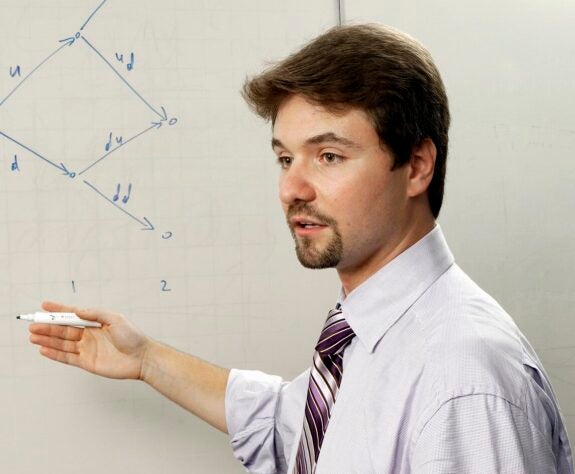
Nikolai Roussanov is the Moise Y. Safra Associate Professor of Finance at the Wharton School, University of Pennsylvania, and a Faculty Research Fellow at the National Bureau of Economic Research. His research spans asset pricing, econometrics, household finance, and macroeconomics, with a focus on market dynamics and behavioral economic factors. His research interests include: Asset pricing anomalies and risk factor modeling Household financial decision-making under uncertainty Macroeconomic impacts on commodity and currency markets Behavioral finance and mental accounting mechanisms Recent publications analyze inflation risks across asset classes, corporate bond valuation, behavioral retirement strategies, and the role of leisure economics in declining work hours. His work frequently integrates empirical finance and econometric methodologies. Scientific contributions include: Faculty Research Fellow, National Bureau of Economic Research His scholarship bridges technical financial modeling with real-world economic phenomena, covering topics like oil price shocks, mortgage liquidity, and systemic market failures.
Xiaowei Jia is an Assistant Professor in the Department of Computer Science at the University of Pittsburgh. He holds a Ph.D. from the University of Minnesota (supervised by Prof. Vipin Kumar) and B.S./M.S. degrees from the University of Science and Technology of China (USTC) and SUNY Buffalo. His research focuses on integrating scientific theory with machine learning to address societal and environmental challenges, such as climate modeling, hydrology, and fairness in AI. Education: Ph.D., University of Minnesota (2020) M.S., State University of New York at Buffalo B.S., University of Science and Technology of China (USTC) Research Interests: Knowledge-Guided Machine Learning Spatiotemporal Data Mining Fairness in AI for Social Good Applications in Environmental Science and Healthcare Publications showcase his work on physics-integrated neural networks, spatiotemporal modeling (e.g., water temperature prediction), and fairness-aware algorithms. His work has been recognized with Best Paper awards at SIAM SDM (2022, 2023). Awards include the Best Applied Data Science Paper Award at SIAM SDM in 2022 and 2023. He teaches advanced machine learning courses, emphasizing theory integration with real-world applications.
Michael O'Boyle is a Professor at the University of Edinburgh's School of Informatics, where he serves as Director of the ARM Research Centre of Excellence and the EPSRC Centre for Doctoral Training in Pervasive Parallelism. Holding an EPSRC Established Career Research Fellowship, he leads pioneering work in compiler technology for heterogeneous architectures, bridging theoretical advances with practical high-performance computing applications. Professor O'Boyle's research spans multiple cutting-edge areas including heterogeneous code discovery and optimization, neural machine translation for program synthesis, deep neural network system stack optimization, software-defined hardware, and compiler/architecture co-design. His approach integrates constraint analysis, program synthesis, and machine learning to address complex challenges in high-performance computing across diverse hardware platforms. His recent publications reveal a strong trend toward integrating machine learning with traditional compiler techniques, particularly in neural program synthesis, tensor optimization, and architecture-aware compilation. This work represents a paradigm shift in compiler design, moving from rule-based systems to learning-based approaches that can automatically adapt to diverse hardware targets. IEEE/ACM CGO 2025 Distinguished Paper Award for 'Tensorize: Fast Synthesis of Tensor Programs from Legacy Code' IEEE/ACM CGO 2024 Test of Time Award ACM GPCE 2023 Best Paper Award for 'C2TACO: Lifting Tensor Code to TACOM' ACM ASPLOS 2021 Distinguished Paper Award IEEE HPCA 2021 Best Paper Award for 'Prodigy: Improving the Memory Latency of Data-Indirect Irregular Workloads' Professor O'Boyle has successfully mentored numerous PhD students who have secured prominent positions in academia (including at Cambridge, Edinburgh, Leeds, and McGill) and industry (including Meta, NVIDIA, Qualcomm, Huawei, and Microsoft). His research is supported by significant funding from EPSRC, ARM, and European projects including Bonseyes and Transmuter, demonstrating strong international recognition and industry impact. He leads the influential Compiler and Architecture Design (CArD) Group at the University of Edinburgh and is a founder of the HiPEAC Network of Excellence, which has grown into a major European initiative connecting researchers and practitioners in high-performance and embedded computing.
David A. Hsieh is the Bank of America Professor of Finance at the Fuqua School of Business, Duke University, where he has been a faculty member since 1993. Previously, he served as Associate Professor and Assistant Professor at the University of Chicago's Graduate School of Business from 1981-1989. His extensive research has significantly contributed to the understanding of hedge funds, financial risk management, and nonlinear dynamics in financial markets. Massachusetts Institute of Technology, Ph.D. in Economics, 1981 Yale University, B.S. in Economics and Mathematics, 1976 (Summa Cum Laude, Phi Beta Kappa) Phillips Academy, Andover, 1972 (Cum Laude) Dr. Hsieh's research primarily focuses on the dynamics of asset prices and their implications for financial risk management. He has made significant contributions to understanding risk and return characteristics in hedge funds and commodity funds, pioneering work on nonlinear dynamics applications to financial markets. His research has evolved from early work on exchange rates and volatility modeling to more recent comprehensive analyses of hedge fund strategies, performance measurement, and industry structure. Hsieh's publication history reveals a clear progression from foundational work on nonlinear dynamics in financial markets to increasingly sophisticated analyses of hedge fund strategies and risk characteristics. His recent work, often in collaboration with William Fung and other prominent finance researchers, has focused on mega hedge fund firms, franchise value in the industry, and the evolution of hedge fund strategies toward more index-like products. The research consistently combines rigorous theoretical frameworks with robust empirical analyses across diverse market conditions. CAIA Award for Excellence in Alternative Investment Research (2015) CFA Institute Graham and Dodd Award of Excellence (2004) Bank of America Faculty Award (2002) Duke Cross-Continent Executive MBA Teaching Excellence Award (2002) Fischer Black Memorial Foundation Robert J. Schwartz Memorial Prize (1999) Smith Breeden First Prize (1990) Yale Science and Engineering Association High Scholarship Award (1976) Russell Henry Chittenden Prize (1976) Dr. Hsieh has served as a consultant for the International Monetary Fund (2007-2016) and the Bank for International Settlements (1998), and as a Visiting Scholar at both the International Monetary Fund and the Board of Governors of the Federal Reserve System. His editorial service includes Finance Editor for Management Science (2003-2009) and Associate Editor roles for several leading finance journals. He has developed extensive research resources including a Hedge Fund Data Library that has become widely used in academic and industry research.
Ceren Budak is an Associate Professor at the University of Michigan School of Information and holds a joint appointment as Associate Professor of Electrical Engineering and Computer Science in the College of Engineering. Her work bridges computer science, statistics, and social sciences through computational social science approaches. Her educational background includes a PhD in Computer Science from the University of California, Santa Barbara (2012) and a Bachelors degree in Computer Science from Bilkent University in Turkey (2007). Prior to joining the University of Michigan faculty, she was a Postdoctoral Researcher at Microsoft Research New York. Professor Budak's research centers on computational social science, with particular emphasis on analyzing large-scale datasets to address questions with social, political, and policy implications. Her work spans several interconnected domains: News Media Production & Consumption (examining bias in news outlets and reader preferences), Social Movements & Media (using social media data to study collective action), Social Networks (understanding information diffusion processes), and Measuring and Promoting the Quality of Online Discussions (developing tools to improve online conversations). She teaches SI 608 (Networks) and SI 618 (Data Manipulation and Analysis) at the School of Information. Her publication record demonstrates consistent contributions to understanding how online information ecosystems operate, with recent work focusing on AI-human collaboration, misinformation dynamics, social movement framing, and the application of computational methods to political communication. Her research shows a clear trajectory from foundational work on social network diffusion to increasingly sophisticated analyses of contemporary information challenges. Among her service activities, she has served as Registration chair for COSN (ACM Conference on Online Social Networks) 2015 and as Program Committee Member for numerous prestigious conferences including WWW, ICWSM, WebSci, AAAI, and others. She has also been involved in organizing the MSR NYC Data Science Seminar Series and instructing the Microsoft Research Data Science Summer School.
Prof. Dr. Dennis Säring is a faculty member at the University of Applied Sciences Wedel , specifically affiliated with the School of Engineering. His academic and research activities focus on Deep Learning , Medical Image Analysis , and applications of Artificial Intelligence in healthcare and biomedical imaging. He has led seminars on Deep Learning topics and supervised student projects in Autonomous Driving at Audi's AADC 2018 competition. Research Highlights : Cardiovascular imaging, forensic age estimation via MRI, neural network-based bone segmentation, and cerebrovascular aneurysm analysis. Technical Expertise : Cardiac MRI, 3D/4D image processing, parametric mapping, and spatiotemporal data fusion. His recent publications (2018-2023) emphasize 3D MR segmentation for age assessment, CMR strain analysis in athletes, and T1/T2 mapping for myocarditis. Key collaborations include institutions like the University Medical Center Hamburg-Eppendorf and Wedler Hochschulbund, with funding for autonomous vehicle research. While no explicit scientific awards are listed, his work spans clinical cardiology, forensic radiology, and AI-driven medical diagnostics.
Luca De Benedictis is a Professor of International Economics and Network Analysis at the University of Macerata's Department of Economics and Law. His research focuses on international trade empirics, including trade specialization measurement, network analysis, and causal models. He has authored numerous articles on topics like gravity models, migration impacts, and historical trade networks. His work spans journals such as the Journal of the Royal Statistical Society and Network Science . He teaches courses in International Economics and Network Analysis. His research interests include economic geography, policy evaluation, and applied econometrics. Notable projects include analyzing the Erasmus Program's inclusivity, Roman road networks' legacy, and immigration's effect on trade. De Benedictis has secured funding from EU initiatives like COSTNET and GeComplexity, focusing on network data science and economic systems. He serves on editorial boards of journals like Italian Economic Journal and Journal of Historical Network Research . His work bridges theoretical models with empirical applications in trade, migration, and policy.
Erik B. Sudderth is a Professor of Computer Science and Statistics and Chancellor's Fellow at the University of California, Irvine (UCI). He leads the Learning, Inference, & Vision Group and directs multiple research centers, including the UCI Center for Machine Learning and Intelligent Systems and the HPI Research Center in Machine Learning and Data Science. He previously served as an Associate Professor at Brown University. Education: B.S. (summa cum laude) in Electrical Engineering from UC San Diego (1999), M.S. and Ph.D. in EECS from MIT (2002, 2006). His research focuses on statistical methods for scalable machine learning, Bayesian nonparametrics, probabilistic graphical models, and applications in computer vision, AI, and environmental science. Key areas include nonparametric clustering, deep generative models, and particle-based inference algorithms. Research interests span diverse topics: advancing Bayesian nonparametric models for medical time series, scalable variational inference, and AI ethics. Notable contributions include the NET-VISA seismic monitoring system (ISBA Mitchell Prize, 2014), the BNPy toolbox (NSF CAREER Award), and work on diverse particle max-product algorithms for continuous inference. Scientific awards include the NSF CAREER Award, ISBA Mitchell Prize, and recognition as one of "AI's 10 to Watch" (IEEE). He has served as editor for top journals (JMLR, IEEE PAMI) and conference chairs (NeurIPS, CVPR). His work bridges theory and practice, with applications in robotics, climate science, and healthcare. Labs/Teams: UCI Learning, Inference, & Vision Group; UCI Center for Machine Learning; CREATE Technology Center. Grants include NSF funding for visually impaired collaboration tools and soil biogeochemical modeling.
Bradley D. Olsen is a full professor in the Department of Chemical Engineering at the Massachusetts Institute of Technology (MIT), where he leads research at the intersection of polymer science, soft matter physics, and bioengineering. His work focuses on designing materials for critical applications in biotechnology, hemostasis, and sustainable polymer development while advancing fundamental understanding of polymer network mechanics and self-assembly. Education: Ph.D. in Chemical Engineering, University of California Berkeley (2007) S.B. in Chemical Engineering, Massachusetts Institute of Technology (2003) Olsen's research spans protein-based materials, block copolymer phase behavior, and mechanochemical hydrogels. He has pioneered methods for quantifying polymer network topology, developing hemostatic nanoparticles, and creating bio-inspired materials for selective biomolecular transport and medical applications. His recent publications emphasize data-driven approaches to polymer characterization and educational outreach in materials science. Scientific Awards: American Physical Society (APS) Fellow (2023) Fulbright Amazonia Scholar (2023) Alexander and I. Michael Kasser Chair in Chemical Engineering (2021) ACS Macro Letters Young Investigator Award (2021) MIT Committed to Caring Honor (2019) AIChE Owens Corning Early Career Award (2019) APS Dillon Medal (2018) Kavli Emerging Leader in Chemistry (2017) ACS Polymer Division Fellow (2016) Camille Dreyfus-Teacher Scholar (2015) Alfred P. Sloan Research Fellow (2014) NSF Career Grant (2013) NIH Postdoctoral Fellowship (2008-2009) Hertz Fellow (2003-2007) Barry M. Goldwater Scholarship (2002) Olsen has received significant grant support including NSF Career (2013) and AFOSR (2012) awards. His teaching activities include innovative international outreach like the 2025 soccer-themed science camp in Brazil. The Olsen Group at MIT explores advanced materials with applications ranging from trauma care to sustainable polymers.
Zhi Da is the Howard J. and Geraldine F. Korth Chair in Finance and Professor of Finance at the University of Notre Dame , Mendoza College of Business, Department of Finance. He completed his Ph.D. in Finance at Northwestern University’s Kellogg School of Management (2006), preceded by an M.Sc. in Financial Engineering from the National University of Singapore (2001) and a B.B.A. with First-Class Honors (1999) from the same institution. Holding editorial roles at Journal of Finance , Management Science , Review of Financial Studies and several other top journals, he is a leading voice in empirical finance research. Education Ph.D. in Finance, 2006 – Kellogg School of Management, Northwestern University M.Sc. in Financial Engineering, 2001 – National University of Singapore B.B.A. (1st Class Honors), 1999 – National University of Singapore Research Interests Zhi Da’s scholarship sits at the intersection of asset pricing , behavioral finance , and market microstructure . He investigates how investor attention, institutional trading, liquidity frictions, and information flows jointly determine the cross-section of expected returns. His work delves into retail margin trading, the role of pension-fund flows in exchange-rate dynamics, the informational content of SEC filings, and the efficiency of short-selling mechanisms. By combining large-scale data analytics, textual analysis, and structural modeling, he uncovers novel predictors of returns ranging from presidential approval ratings to real-time attention measures. Recent projects explore fractional trading ’s impact on price efficiency, hedging demand as a driver of intraday momentum, and the hidden effort problem in delegated portfolio management. These themes collectively advance our understanding of limits to arbitrage and the formation of extrapolative beliefs. Publication Landscape Spanning 2025 back to 2009, his 15 most recent articles in Journal of Finance , Review of Financial Studies , Management Science , Journal of Financial Economics , and Journal of Financial and Quantitative Analysis converge on three broad motifs: (1) micro-level trading frictions—liquidity costs, margin requirements, and short-selling constraints; (2) macro-finance linkages—exchange rates, fiscal policy, and global capital flows; and (3) information economics—attention allocation, media analytics, and regulatory disclosures. The collective evidence demonstrates that seemingly small trading or informational frictions aggregate into large, persistent cross-sectional return predictability. Honors and Awards 2017 William F. Sharpe Award for Best Paper, Journal of Financial and Quantitative Analysis Lead-article distinctions in Journal of Finance , Review of Financial Studies , and Management Science Featured coverage in SmartMoney and CNBC Teaching & Mentorship At Notre Dame’s Mendoza College, Professor Da teaches Investments (undergraduate and MBA) and Fixed Income Securities , integrating cutting-edge research insights into the curriculum. While specific advisees are not listed, his extensive co-author network (22+ recurring collaborators) attests to a vibrant mentoring environment. Laboratory & Data Resources He publicly distributes the NAT (Net Arbitrage Trading) dataset, a stock-quarter panel of arbitrage positions used in Chen, Da & Huang (2019). This resource has become a standard tool for researchers studying arbitrage capital movements.
Tom Rainforth is an Associate Professor of Statistical Machine Learning at the University of Oxford's Department of Statistics, leading the RainML Research Lab (rainml.uk). He holds a Tutorial Fellowship at Mansfield College and is Principal Investigator of the ERC Starting Grant 'Data-Driven Algorithms for Data Acquisition' (2024–2029). Previously, he held roles including a postdoc under Yee Whye Teh (2017–2019), Junior Research Fellow at Christ Church College (2019–2019), and Florence Nightingale Bicentennial Fellow (2020–2024). He earned his MEng in Mechanical Engineering from the University of Cambridge and his D.Phil from Oxford under Frank Wood and Michael Osborne, focusing on probabilistic programming and Monte Carlo methods. He briefly worked in Ferrari's Formula 1 team. Research Interests : Bayesian experimental design, probabilistic and data-efficient machine learning, active learning, deep learning (with a focus on probabilistic approaches), probabilistic programming, and Monte Carlo methods. His work emphasizes statistical efficiency and adaptive algorithms. Publications : Recent contributions span modern Bayesian experimental design, adaptive importance sampling (Daisee), and applications of probabilistic methods in LLMs and generative models. His research bridges theory and practice, addressing challenges in scalability and robustness. Awards : ERC Starting Grant (2024–2029), highlighting his leadership in foundational AI research. Advising & Grants : Supervises 15 graduate students, including work on Bayesian neural networks, generative flows, and experimental design. His ERC grant supports cutting-edge data-driven algorithm development. Labs & Teams : Directs the RainML Lab, which develops scalable Bayesian methods and probabilistic AI systems.
Dr. Liang Cheng is the Department Chair and Professor in the Department of Electrical Engineering and Computer Science at the University of Toledo. He leads a department with ~700 students across CS, CSE, and EE programs. His research focuses on Cyber-Physical Systems (CPS), IoT, AI/ML, and intelligent infrastructure, supported by over $30M in funding from NSF, DOE, DOT, and industry. Notable projects include CPS Breakthrough initiatives and underground sensing systems. He co-edited a multidisciplinary book on Underground Sensing and contributed to smart grid cybersecurity. Dr. Cheng has held leadership roles at Lehigh University, shaping faculty governance and equity policies. His 100+ publications span networking, real-time systems, and sensor networks. He advises on funded projects totaling $30M+ and has pioneered pedagogical approaches in computer science education. Research Interests: Cyber-Physical Systems (CPS): Focuses on autonomous drones, energy systems, and real-time infrastructure Networking: Expertise in TSN, DTN, and wireless protocols Cybersecurity: SCADA systems, PLC attack detection, and blockchain energy modeling Underground Sensing: Geo-sensing via wireless signals and subsurface tomography Grants & Projects: Over 20 sponsored projects including NSF CPS Breakthrough (2018-2023), ABB smart grid projects, and DARPA-funded EDIFY systems. Key contributions include reconfigurable wireless architectures and network calculus tools for real-time systems. Teaching: Courses span senior design, compiler design, parallel computing, and wireless sensor networks. Developed pedagogical patterns for non-CS programming education. Awards: Recognized for leadership in academic governance and interdisciplinary research collaboration.
Prof. Dr. Gonzalo Guillén Gosálbez is a Full Professor at the Department of Chemistry and Applied Biosciences , ETH Zürich. He holds a PhD in Process Systems Engineering (UPC, 2005) and has held academic positions at Imperial College London (Reader), University of Manchester (Senior Lecturer), and Universitat Rovira i Virgili (Assistant/Associate Professor). His research focuses on Sustainable Chemical Processes , integrating life cycle assessment, optimization techniques, and planetary boundary analysis to evaluate and design low-carbon technologies. Current position: Full Professor, ETH Zürich (2019–present) Prior roles: Imperial College London (2016–2019), University of Manchester (2014–2016), URV Spain (2008–2014) Education: PhD (UPC, 2005), MEng/BEng (University of Murcia) His research explores CO2 valorization , green methanol synthesis , circular marine fuels , and planetary boundary compliance in energy and chemical systems. Recent work emphasizes machine learning for process modeling, single-atom catalysis , and decentralized ammonia production . Scientific contributions include 15+ peer-reviewed articles (2023–2025) in journals like Nature Chemical Engineering , ACS Sustainable Chemistry & Engineering , and Energy & Environmental Science . Key themes: Optimization of hybrid fossil/renewable carbon systems Environmental impacts of energy transitions Catalyst design for sustainable chemistry Life cycle assessment of emerging technologies Awarded UPC Top Doctoral Student Award and Top National Student Award , he combines process systems engineering with sustainability metrics to address global challenges in chemical and energy systems.
David Duvenaud is an Associate Professor at the University of Toronto , holding a Canada Research Chair in Generative Models and a Schwartz Reisman Chair in Technology and Society . He is cross-appointed to the Department of Computer Science and Department of Statistical Sciences . A Sloan Research Fellow and founding member of the Vector Institute , his work bridges deep probabilistic models , AI safety , and scientific computing . PhD in Machine Learning (University of Cambridge, 2014) Postdoc in Hyperparameter Optimization (Harvard University, 2016) Co-founded Invenia (energy forecasting company) His research spans foundational Neural Ordinary Differential Equations (NeurIPS 2018 Best Paper) and Automatic Chemical Design (ACS Central Science 2018) to recent work on AGI governance (2025) and AI safety (2024). Key contributions include stochastic variational inference , implicit differentiation frameworks , and antisymmetrization layers for quantum Monte Carlo. Recent publications (2024-2025) focus on systemic existential risks from AI , many-shot jailbreaking attacks , and epistemic uncertainty quantification . His group trains energy-based models with scalable MCMC samplers and develops invertible neural architectures (e.g., Residual Flows NeurIPS 2019). He also explores human-AI alignment through LLM Processes (NeurIPS 2024) and Sycophancy in Language Models (ICLR 2024). Canada Research Chair (2025) NSERC Grant (2025) Sloan Research Fellow (2021) Schwartz Reisman Chair (2021) Best Paper Award (NeurIPS 2018) Distinguished Paper Award (ICFP 2021) His students include James Requeima , Jesse Bettencourt , and Raymond Douglas . He teaches courses on Statistical Methods for Machine Learning and Differentiable Inference . Current work (2025) investigates systemic human disempowerment through incremental AI capabilities and sabotage risk mitigation via hyperparameter-aware evaluations.