

Rianne M. Schouten is a postdoctoral researcher at Eindhoven University of Technology (TU/e), affiliated with the School of Mathematics and Computer Science and specializing in Data Mining . Her work focuses on Exceptional Model Mining and Pattern Discovery in complex datasets, including hierarchical and sequential data. She has held external positions at Utrecht University (2017–2019), Columbia University (2016), and SRON Netherlands Institute for Space Research (2015). Research Trends : Her publications (2017–2025) emphasize quality measures for data mining, subgroup discovery , and sequence analysis , with applications in Markov chains and high-dimensional data . Collaborations span France, the Netherlands, and the U.S. External Roles : External researcher, Utrecht University (2017–2019) Staff associate, Columbia University (2016) Intern, SRON Netherlands Institute for Space Research (2015)
جستوجوی استاد و پژوهشگر
استاد راهنما، استاد دانشگاه یا پژوهشگر مناسب برای مسیر پژوهشیتان را پیدا کنید و با او ارتباط بگیرید.
نمایش ۱۶-۳۰ از ۶۵ استاد راهنما
اطلاعات این پروفایلها از صفحات عمومی دانشگاهها جمعآوری شده و ممکن است بهروز نباشد.

Senja Barthelمشاهده پروفایل
استادیار
Dr. Senja Barthel is an Assistant Professor at the Department of Mathematics, Faculty of Science, Vrije Universiteit Amsterdam. Her research bridges geometric topology and mathematical chemistry, focusing on spatial graphs and their applications in materials science. She is affiliated with the Center for Topology and Applications Amsterdam, Amsterdam Sustainability Institute, and NWO DIAMANT cluster. Current projects include Topology of molecular braids (NWO M1 grant), geometrical analysis for mass transport, and contributions to the NWA Emergence Consortium (WP4.3 and WP4.4). Research interests: entanglements in spatial graphs, embeddings in surfaces, pore geometry in materials, energy landscapes, crystal net topologies, and topological data analysis for molecular modeling. Teaching includes Linear Algebra, Differential Topology, and Calculus at BSc levels, with supervision of BSc and PhD projects. Her recent publications analyze ion diffusion in solids, thermal transport in ZIFs, and topological descriptors for crystal networks, reflecting interdisciplinary work combining mathematics, chemistry, and computational methods. Collaborators include Magnus Botnan (Dutch Applied Topology days) and Amber Mace (Uppsala Universitet).

Evelina Tutucciمشاهده پروفایل
استادیار
Evelina Tutucci is an Assistant Professor at the Vrije Universiteit Amsterdam, affiliated with both the Faculty of Science (Systems Biology Department) and AIMMS (Applied and Industrial Mathematics and Systems Biology). Her research focuses on molecular mechanisms of gene expression regulation, RNA trafficking, and fungal pathogen biology. She employs advanced microscopy techniques such as single-molecule FISH and live-cell imaging to study mRNA dynamics in systems like Saccharomyces cerevisiae and Candida albicans. Her work contributes to UN Sustainable Development Goals related to health and sustainable agriculture through studies on fungal pathogens and mycology. Tutucci teaches courses including Caput RNA Biology, Genetics, and bioinformatics research projects. She has supervised one PhD thesis and developed open-access datasets for RNA imaging protocols, including a groundbreaking MS2 system for tracking mRNA lifecycles. Collaborations span global institutions, focusing on mRNA transport, mitochondrial protein synthesis, and cAMP signaling pathways in yeast. Her recent research highlights include discovering mitochondrial RNA localization mechanisms impacting protein synthesis efficiency and developing imaging tools for simultaneous mRNA/protein detection. Tutucci's contributions bridge molecular biology with systems-level understanding of cellular processes, emphasizing spatiotemporal dynamics of gene expression.
Maruf Dhaliمشاهده پروفایل
استادیار
M.A. (Maruf) Dhali, Dr. is an Assistant Professor in Artificial Intelligence at the University of Groningen's Bernoulli Institute (Faculty of Science and Engineering) and concurrently holds an Assistant Professor position in the Qumran Institute (Faculty of Religion, Culture and Society). He specializes in machine learning, pattern recognition, and computer vision with a focus on historical document analysis, particularly the Dead Sea Scrolls. His work bridges AI and cultural heritage preservation. Education: Ph.D. in Artificial Intelligence (ERC-funded project on Dead Sea Scrolls), M.Sc. (Distinction) in Computer Vision, Machine Learning & Robotics (Heriot-Watt University, 2015). Additional studies at the Universities of Burgundy (France), Girona (Spain), and Edinburgh (UK). Research Interests: Machine Learning applications in historical document analysis, handwriting recognition, deep learning, and probabilistic robotics. His work has been featured in PLoS ONE , Springer LNCS , and international media including BBC News and The Independent. Grants & Projects: Principal Investigator for NWO HAICu Project (2024-2030) on Dutch cultural heritage data. Formerly part of the ERC-funded Dual-mode Time Axis Calibration project (2016-2021). Awards: Knapp Lecture Scholar at the University of Oxford (2025). Invited speaker at global institutions including KU Leuven, University of Basel, and NTNU. Teaching: Coordinates courses like Pattern Recognition , Deep Learning Practical , and Handwriting Recognition . Co-teaches interdisciplinary modules such as Apocalypse and Politics and The Text Awakens .
James Townsendمشاهده پروفایل
پژوهشگر
James Townsend, also known as Jamie, is a machine learning researcher at the Amsterdam Machine Learning Lab (AMLab) within the Informatics Institute at the University of Amsterdam. He completed his PhD in 2020 at the UCL AI Centre in London under the supervision of Professor David Barber. His educational background includes a PhD in lossless compression with latent variable models from University College London, with prior research contributions to the Autograd library and early development of JAX during a Google Brain internship in 2018. Townsend's research centers on deep generative models and lossless compression, extending to unsupervised learning, approximate inference, Monte Carlo methods, optimization, and machine learning software systems. His work bridges theoretical information theory with practical implementation, particularly in neural compression techniques. He has significantly contributed to open-source tools including Autograd and JAX, demonstrating expertise in automatic differentiation systems. His publication record spans high-impact venues like NeurIPS, ICLR, and ICML, with recent work focusing on innovative compression paradigms for complex data structures including graphs and multisets. Key contributions include shuffle coding, reversible programming for compression verification, and multiset compression techniques that challenge conventional approaches. Scientific recognition includes: Best Paper Award at Deep Generative Models and Downstream Applications Workshop (2021) Townsend actively participates in the research community through invited talks at Stanford's Information Theory Forum and the Languages for Inference workshop. His collaborations span academic institutions and industry partners like Google Brain, with current work centered on advancing lossless compression through deep learning at the AMLab. He maintains an active open-source presence via GitHub (@j-towns) and technical discourse on Twitter (@_j_towns), while publishing through Google Scholar under his formal name James Townsend.
Toral Ruizمشاهده پروفایل
استادیار
Dr. Toral Ruiz is an Assistant Professor at the University of Groningen 's Faculty of Arts . Her research focuses on Machine Translation , Computational Linguistics , and Natural Language Processing , with particular emphasis on translation quality assessment, literary adaptation, and ethical automation frameworks. Expertise: Machine Translation, Computational Linguistics, NLP, Translation Quality, Literary Adaptation, Ethical Automation Contact: a.toral.ruiz@rug.nl Her recent work explores speech-text discrimination , tokenization strategies , and lexical diversity in literature . She contributes to the European Association for Machine Translation and collaborates on projects like LT-LiDER for digital literacy in translation. Press engagement includes discussions on machine translation limitations in creativity and cross-lingual literary reception . Notable collaborations include studies on Catalan/Dutch translation reception and sustainability frameworks for translation automation.

Kaiquan Wuمشاهده پروفایل
پژوهشگر
Kaiquan Wu is a doctoral candidate and postdoc researcher at Eindhoven University of Technology (TU/e), Netherlands, specializing in digital signal processing for fiber-optic communication systems. His research focuses on error correction codes, coded modulation, and channel modeling. PhD Candidate in Electrical Engineering (Signal Processing Systems) Postdoc in Electrical Engineering (ICT Lab) Member of the ICONIC , BIT-FREE , and DIGI-OPT research projects Research interests include combating signal impairments in optical systems through advanced DSP techniques, such as decision feedback equalizers (DFE), geometric shaping, and low-complexity detection algorithms. He has published extensively on FSO systems, IM-DD links, and energy dispersion analysis. Collaborations involve developing simplified FSO channel models, low-complexity architectures for data center applications, and patent innovations in amplitude shaping methods. His work contributes to increasing the capacity of optical communication systems while reducing complexity and error rates.

Xander Wilckeمشاهده پروفایل
عضو هیئت علمی
Xander Wilcke is a Research Associate at the Faculty of Science, VU University, with affiliations to the Artificial Intelligence Research Associate group and the Network Institute. His work focuses on machine learning applied to knowledge graphs, data mining, and multimodal data analysis. He holds a PhD in Machine Learning for Heterogeneous Knowledge Graphs from VU University (2022). Research Interests: Machine Learning on knowledge graphs, multimodal data integration, pattern discovery, and archaeological data analysis. His work emphasizes user-centric approaches and end-to-end learning frameworks for heterogeneous data. Recent projects include hypothesis creation support systems and timestamp vectorization techniques. Awards: Best-Paper Award Nominee at KDIR 2020 ICT.OPEN Best Poster Presentation Award (Runner-up, 2018) Advising & Grants: Contributed to the development of the kgbench dataset collection Recipient of grants supporting knowledge engineering and data mining research Active in academic collaborations, presenting at conferences like SEMANTICS 2024 and organizing workshops on social-historical knowledge graph analysis. Teaches courses on Knowledge Representation and Machine Learning for Graphs at VU University.

Yuri Engelhardtمشاهده پروفایل
استادیار
Yuri Engelhardt is an Assistant Professor at the Faculty of Geo-Information Science and Earth Observation within the University of Twente , specializing in the Department of Geo-information Processing . His work bridges visualization, geography, and sustainability science. As a visualization expert, Yuri focuses on creating equitable visual communication tools that address climate crisis , health , and biodiversity challenges, aligning with UN Sustainable Development Goals. He explores diagrammatic representation and alternative visualization options for practical design applications. His research output demonstrates cross-disciplinary collaboration spanning computer science, geographic information systems, and visual communication. Notable work includes systematic approaches to visualization classification and map design innovations that leverage spatial metaphors.
Fabian C. Mossمشاهده پروفایل
استادیار
Fabian C. Moss is an Assistant Professor for Digital Music Philology and Music Theory at Julius-Maximilians-Universität Würzburg (JMU), Germany. His research bridges humanities and computational methods, focusing on interdisciplinary approaches to music structure, including musicology, mathematics, data science, and digital humanities. He leads projects such as DigiMusTh (building a digital collection of historical music theory texts) and Digital Choro (exploring Brazil’s musical heritage). He is also part of the Zentrum für Philologie und Digitalität (ZPD) and the Graduate School Humanities (GSH) at JMU. Before joining JMU, Moss held positions as a Research Fellow in Cultural Analytics at the University of Amsterdam and as a postdoctoral and doctoral researcher at École Polytechnique Fédérale de Lausanne (EPFL). He has conducted research visits at MIT and Escola Superior de Música de Catalunya (ESMUC). His work emphasizes computational modeling, corpus studies, and historical music analysis, with a focus on tonal evolution, harmonic progressions, and digital tools for musicology. Moss teaches courses in computational musicology, music theory, and digital tools. He serves on advisory boards for journals like Computational Humanities Research and Analitica , and actively contributes to conferences and workshops. His research outputs include datasets, software tools (e.g., MonodiKit, midiVERTO), and interdisciplinary analyses of musical corpora.

Marwan Hassaniمشاهده پروفایل
استادیار
- Process Mining
- Data Mining
- Unsupervised Learning
- +۷ مورد دیگر
Marwan Hassani is an Assistant Professor at Eindhoven University of Technology's Department of Mathematics and Computer Science, affiliated with the Process Analytics and EAISI Foundational groups. He leads the streaming process mining research group and the Customer Journey track at the Data Science Center Eindhoven (DSC/e). His academic background includes a PhD from RWTH Aachen University (2015) and postdoctoral research there until 2016. Research focuses on unsupervised learning methods for streaming event data, including clustering, outlier detection, and sequential pattern mining, with applications in customer journey optimization and real-time process analytics. Over 65 publications span data mining, process mining, and related areas. He serves on program committees for ECML/PKDD, SDM, and journals like KAIS and DAMI, co-chairing multiple events. Key technical contributions include PrefixCDD for concept drift detection, BFSPMiner for sequential pattern mining, and autoencoder-based anomaly detection systems. His work addresses GDPR compliance in business processes and traffic flow prediction using contrastive learning. Awards include a 2025 Best Paper Award at ACM SIGAPP. Education: PhD in Computer Science (RWTH Aachen, 2015) Projects: Led GDPR compliance project (2018-2021), developed BPR4GDPR framework Teaching: Advanced Process Mining, Foundations of Data Analytics Editorial roles: Guest editor for Data & Knowledge Engineering , editorial board member for Process Science Research aligns with UN SDGs through contributions to efficient resource management and privacy-preserving analytics.
- Statistics
- Data Science
- Biostatistics
- +۳ مورد دیگر
Prof. Katrijn Van Deun is a Full Professor in the Department of Methodology at the Tilburg School of Social and Behavioral Sciences, Tilburg University. Her research focuses on statistical methodology, data science, and their applications in health and behavioral sciences. She leads projects such as the WaTCh study, exploring determinants of quality of life in thyroid cancer patients. Her work bridges methodological innovation with practical applications in fields like HR analytics, rheumatoid arthritis treatment, and biostatistics. Key research interests include multivariate analysis, sparse PCA, meta-analyses, and health outcomes research. She has published extensively on topics such as structural equation modeling, infection risks in rheumatoid arthritis, and predictive analytics in HRM. Her contributions address complex data challenges, integrating high-dimensional data with traditional methodologies to uncover meaningful patterns. Prof. Van Deun collaborates across disciplines, involving teams in psychology, medicine, and computer science. Her work emphasizes methodological rigor and translational research, aiming to improve clinical decision-making and patient outcomes. She is actively involved in developing statistical tools and frameworks to handle big data and interdisciplinary research challenges.

Elena Berettaمشاهده پروفایل
استادیار
Elena Beretta is an Assistant Professor at the Faculty of Science, Department of Computer Science at Vrije Universiteit Amsterdam, affiliated with the Network Institute. Her research focuses on ethical AI, human-machine interaction, and sociotechnical bias in AI systems. She explores how AI systems encode identity, process visual data, and influence decision-making, advocating for inclusive and accountable technologies. Key research areas include: Human-Machine Interaction & Ethical Design AI, Identity & Representation (e.g., gender and LGBTQI+ representation) AI & Visual Data (e.g., facial recognition and image processing) Her work bridges computer science and social sciences, addressing fairness in algorithms and mitigating bias through interdisciplinary methods. Recent publications highlight studies on vision transformers, non-binary representation in computer vision, and discriminatory risks in automated systems. Prof. Beretta collaborates on projects like the Open Data Infrastructure for Social Science (ODISSEI), enhancing data accessibility and ethical AI practices. She has contributed to agent-based simulations analyzing retailer behavior and cultural technology adoption, reflecting her broader interest in societal impacts of technology.

Boris Škorićمشاهده پروفایل
دانشیار
Boris Škorić is an Associate Professor in the Security of Embedded Systems (SEC) group at the Department of Mathematics and Computer Science, Technische Universiteit Eindhoven. His research focuses on quantum cryptography, security with noisy data, and collusion-resistant watermarking. He is affiliated with the CREST project and has contributed to advancements in quantum-secure authentication and quantum key distribution protocols. Education : Ph.D. in Physics (Quantum Hall Effect), M.Sc. in Physics His research interests span three core areas: (1) Security with noisy data, addressing challenges in cryptographic primitives using physical measurements; (2) Quantum physics for security, including quantum readout of Physical Unclonable Functions (PUFs) and quantum key recycling; and (3) Collusion-resistant watermarking codes for digital content protection. He has pioneered techniques such as quantum-secure authentication via laser speckle and error correction methods for secure key storage. His publications reflect a strong emphasis on quantum security, including developments in continuous-variable quantum key distribution, entropically secure encryption, and quantum position verification. Recent work explores applications in healthcare data protection and secure communication over turbulent optical channels. Grants & Labs : Active in the CREST project (Collusion-Resistant Embedding and Secure Tracing) and collaborates with industry on quantum-secure technologies. Leads research in the SEC group, mentoring projects on cryptographic protocols and embedded system security.
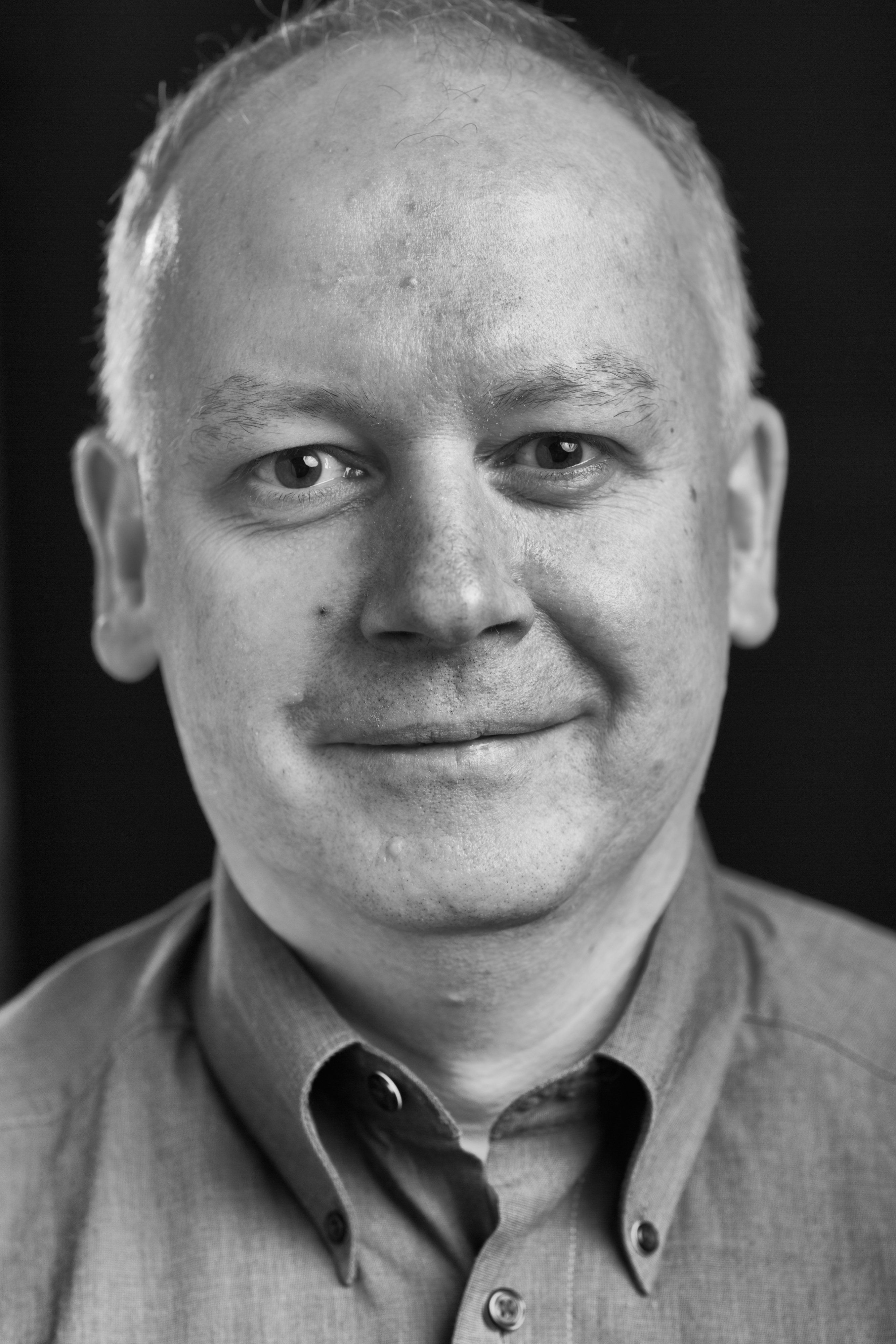
Stefan Manegold is a Professor for Data Management (0.2 fte) at Leiden University's Faculty of Science within the Leiden Institute of Advanced Computer Science (LIACS), while also serving as a Senior Researcher (0.8 fte) and former Head (2011-2024) of the Database Architectures Research Group at Centrum Wiskunde & Informatica (CWI) in Amsterdam. His career spans over 27 years at CWI and 11 years as a professor at Leiden University, with prior experience at Humboldt-Universität zu Berlin. Professor Manegold's research focuses on innovative database architectures, particularly column-store systems and hardware-aware database technologies. His expertise spans database query optimization, parallel and distributed information systems, XML storage and processing, and scientific data management. He has pioneered work in adaptive indexing, progressive query processing, and main-memory database systems that leverage modern hardware capabilities. His research bridges theoretical database concepts with practical implementations, as evidenced by his involvement in the MonetDB open-source database system. His work shows a clear evolution from foundational database research toward addressing modern challenges in big data management, scientific data processing, and interactive analytics. Recent publications demonstrate his continued leadership in database indexing techniques, GPU-accelerated database operations, and geospatial data management. Professor Manegold has received significant recognition for his contributions to the database community, including the prestigious 2020 ACM SIGMOD Contributions Award, the VLDB'2011 Challenges & Visions Track Best Paper Award, and the VLDB'2009 10-year Best Paper Award. His work has had substantial impact on both academic research and practical database system design. He has been actively involved in the academic community through conference organization, particularly with SIGMOD and VLDB events, and has contributed to numerous workshops including the Data Management on New Hardware (DaMoN) series. His leadership extends to collaborative research projects such as SciLens, PROMIMOOC, and DAMIOSO, which address data management challenges in scientific domains. Professor Manegold leads the Database Architectures Research Group at CWI, which has been at the forefront of database system research for decades. The group's work on MonetDB has influenced modern column-store database systems and continues to push boundaries in areas like progressive query processing and hardware-aware database design.