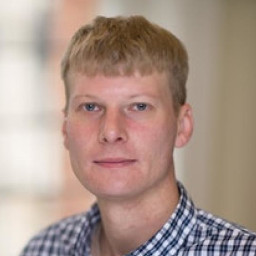
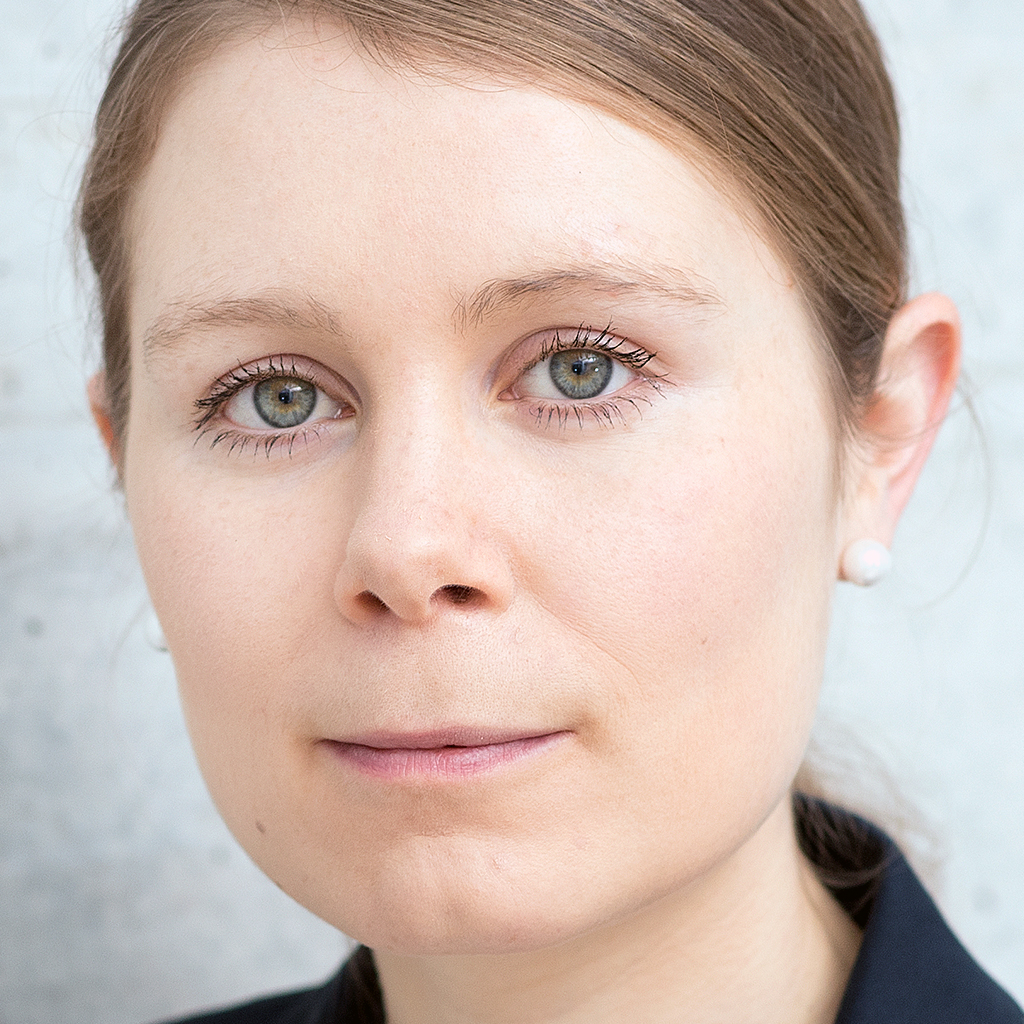
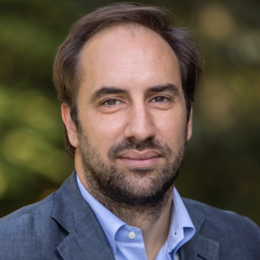
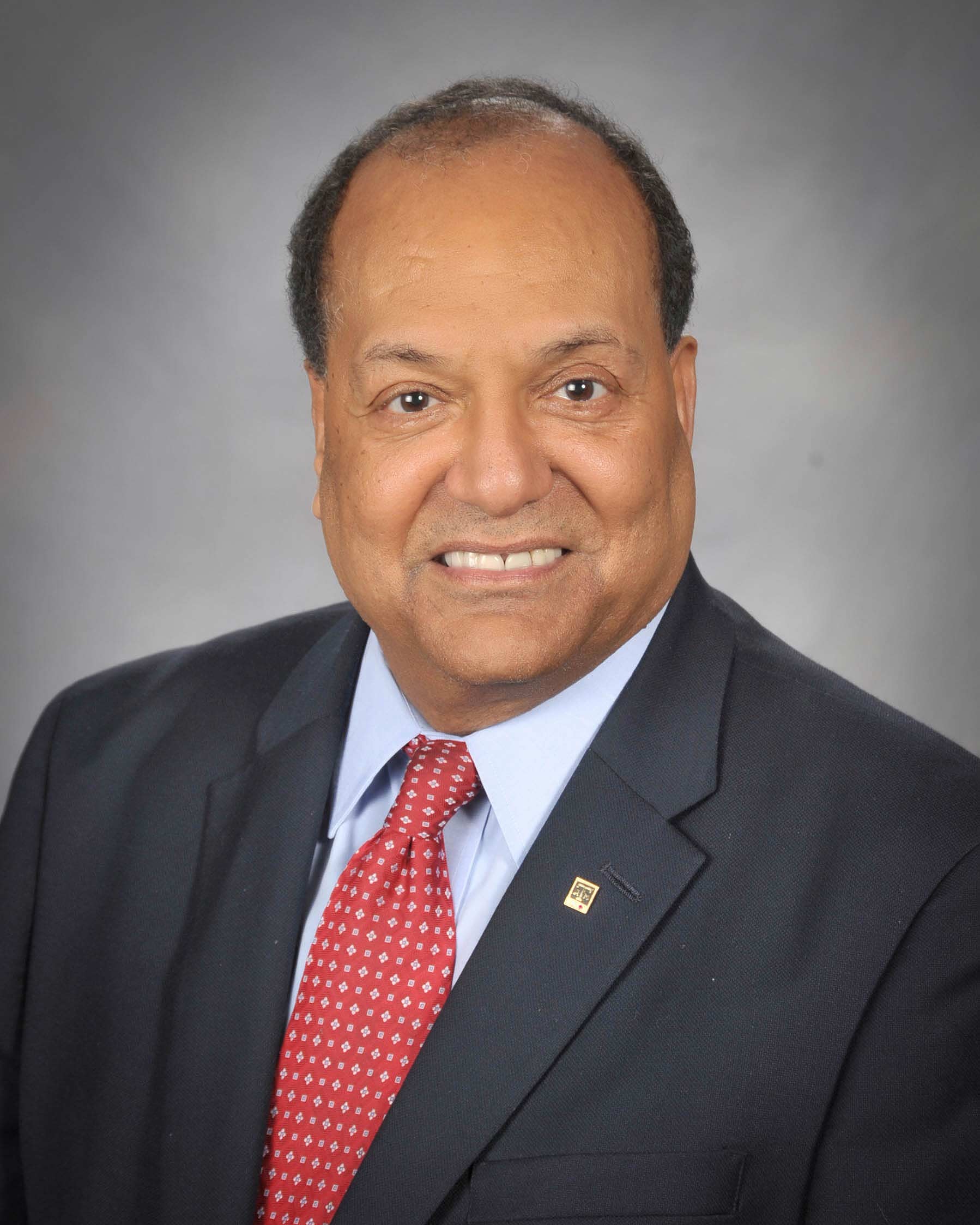
Katherine Romanak is a Research Professor at the Bureau of Economic Geology, The University of Texas at Austin, specializing in geochemistry and carbon capture/storage (CCS) technologies. She pioneered the process-based soil gas monitoring approach for detecting CO2 leakage, which has become a global standard. Her work bridges scientific research and policy, with contributions to UNFCCC COPs and U.S. Class VI CCS regulations. Ph.D. in Geology (1997), UT Austin M.S. in Geology (1988), UT Arlington B.S. in Geology (1984), Southern Methodist University Her research focuses on: Geochemistry of carbon cycling in vadose zones and aquifers Development of environmental monitoring protocols for CCS sites CO2 leakage attribution and stakeholder engagement Integration of machine learning with field monitoring techniques Recent publications emphasize simplifying monitoring complexity, offshore CCS applications, and machine learning for anomaly detection. She holds two U.S. patents and collaborates globally on projects in Japan, Australia, Canada, and the U.S. Gulf Coast. Scientific awards include: 2015 BEG publication award 2017 U.S. patents for CO2 leakage detection Her team seeks partnerships with vadose zone modelers and microbiologists to advance industrial-scale monitoring systems. Romanak also co-developed UT Austin’s online CCS certification program and provides technical training for petroleum professionals transitioning to CCS roles.
Prof. Dr.-Ing. Richard Membarth is a Research Professor for System-on-a-Chip and AI at the Edge Computing at Technische Hochschule Ingolstadt (THI). He is affiliated with the Hardware-Software Co-Design group and holds a secondary position at the German Research Center for Artificial Intelligence (DFKI) Saarbrücken. Co-creator of DSL frameworks like AnyDSL and Hipacc Key contributor to MetaDL (AI metaprogramming) and PRIME (predictive rendering) His research bridges GPU computing , domain-specific languages , and compiler technology , with recent work on Vulkan SPIR-V compilation and device-driven SpMV algorithms . Notable awards include the HiPEAC Paper Award (2018) and multiple Best Paper Awards for his compiler frameworks.
Peter Long is a Senior Lecturer in Ecology and Conservation at the University of Oxford Brookes, School of Biological and Medical Sciences . His research integrates satellite remote sensing, environmental modeling, and biodiversity assessment to address ecological and conservation challenges at landscape and global scales. Key research themes include: Developing algorithms for satellite data analysis Quantifying biodiversity and ecosystem services Building web-based ecological assessment tools Studying climate-agriculture interactions Assessing deforestation drivers in Madagascar Recent publications (2023–2025) focus on regenerative agriculture carbon impacts , Madagascar deforestation policy , and climate-induced habitat changes . He specializes in GIS, high-performance computing, and stakeholder engagement for environmental monitoring. Collaborations span Guatemala , Madagascar , and Europe , with tools like LEFT (web-based ecological value estimator) and BioTIME 2.0 (biodiversity time series database).
Dr. Shabnam Sadeghi Esfahlani is an Associate Professor in Robotics at the School of Engineering and the Built Environment, Anglia Ruskin University , where she serves as Deputy Leader of the BORI research group and leads the Automation & Robotics MSc program. Her interdisciplinary expertise spans mechatronics, artificial intelligence, virtual reality, and serious games , with a focus on applications for rehabilitation, medical training, and autonomous systems . As a Chartered Engineer and Senior Fellow of the Higher Education Academy , she has secured significant funding from Innovate UK, Horizon 2020, and GCRF , with grants exceeding £3 million. Education PhD in Mechanical Engineering, Anglia Ruskin University BSc (First Class) in Statistics & Mathematical Science, Shahid Beheshty University Her research integrates AI with robotics for societal impact, exemplified by the open-source SROBO ground robot and projects like Rehabgame and the Assistive Feeding Robot . She has published over 45 peer-reviewed articles and contributes to academic communities as a journal guest editor and conference organizer . Key collaborations include IET, IMechE, and the Nuffield Foundation as a mentor for young students. Scientific Awards & Recognitions: Chartered Engineer (CEng), Engineering Council UK Senior Fellow (SFHEA), Higher Education Academy Student-Voted 'Made a Difference Award' (2018) Post-Graduate Certificate in Higher Education
Daniel Livingstone is a researcher at The Glasgow School of Art (GSA) specializing in the application of games and 3D technologies to enhance learning and public engagement. His work spans medical visualization, heritage interpretation, and broader educational technology domains. Current PGR supervisee: Shaojie Ni (AR & Gamification in Museums) Email: D.Livingstone@gsa.ac.uk Research Themes : Serious games, virtual reality, 3D anatomical modeling, disease education, digital heritage preservation, and AI-driven simulations. Highlights include AR tools for rheumatology engagement, VR applications in diabetes management, and digital reconstructions of historical surgical instruments. Article Trends : Focus on merging immersive technologies with healthcare education, heritage storytelling, and interdisciplinary applications of game engines. Recurring keywords: Augmented Reality , 3D Visualization , Medical Education , Public Health , Virtual Environments .
Matias D. Cattaneo is a Professor in the Department of Operations Research and Financial Engineering at Princeton University , with affiliated roles in the School of Public and International Affairs , Economics Department , Latin American Studies Program , Data-Driven Social Science , AI at Princeton , and Center for Statistics and Machine Learning . He serves as an Amazon Scholar and collaborates with global organizations. Education : Ph.D. in Economics (2008) and M.A. in Statistics (2005) from UC Berkeley, Master in Economics (2003) from Universidad Torcuato Di Tella, Licentiate in Economics (2000) from Universidad de Buenos Aires. Research focuses on interdisciplinary challenges in social, behavioral, and biomedical sciences, combining econometrics, statistics, data science, and causal inference. His methodological work includes regression discontinuity designs, synthetic control methods, and local polynomial estimation, with applications to decision-making under uncertainty. Scientific recognition : Elected Fellow of the American Statistical Association Elected Fellow of the Institute of Mathematical Statistics Elected Fellow of the International Association for Applied Econometrics Elected Member of the International Statistical Institute Software contributions include R packages rdhte , scpi , and lpcde , freely available on GitHub. His GitHub activity includes 344 contributions in the last year, with active repositories on regression discontinuity and synthetic control methods.
Timothy Menzies is a full Professor in the Department of Computer Science at North Carolina State University's College of Engineering. He serves as the director of the Irrational Research lab (mad scientists r'us) and holds editorial positions as editor-in-chief of the Automated Software Engineering journal and associate editor for IEEE Transactions on Software Engineering. With over 300 publications and more than 24,000 citations, Menzies is a globally recognized leader in software engineering research. Menzies' research focuses on developing computer systems that make optimal decisions with minimal data, specializing in artificial intelligence, intelligent agents, data sciences, analytics, and software engineering. His pioneering work in data-driven, explainable, and minimal AI for software systems has redefined defect prediction, effort estimation, and multi-objective optimization. He is particularly known for his contributions to empirical software engineering, emphasizing transparency and reproducibility. As the co-creator of the PROMISE repository, he helped establish modern empirical software engineering by demonstrating that small, interpretable AI models can outperform larger, more complex ones. Menzies' recent publications reveal several key trends in his research: a growing emphasis on ethical considerations in AI deployment, particularly in sensitive domains like legal systems; continued innovation in software analytics with a focus on hyperparameter optimization tailored specifically for software engineering tasks; exploration of causal relationships in software analytics; and development of techniques that work effectively with limited data, including landscape analysis, surrogate learning, and active learning approaches. Mining Software Repositories Foundational Contribution Award (2017) Carol Miller Graduate Lecturer Award (2016) IBM Faculty Award (2016, 2017) ACM Fellow (2025) ASE Fellow (2024) IEEE Fellow Professor Menzies has advised 24 Ph.D. students throughout his career, with recent completions including Andre Motta (April 2025) and Xueqi Yang (October 2024). His research has secured over $19 million in funding from prestigious agencies including NSF, DARPA, and NASA, as well as industry partners like Meta, Microsoft, and IBM. Current grants focus on improving machine learning model efficiency, adapting empirical software engineering methods to computational science, vulnerability detection, and software analytics at scale using transfer learning across 10,000+ GitHub projects. Menzies has developed innovative approaches to help developers navigate the challenges of AI implementation while maintaining ethical standards and practical effectiveness. As director of the Irrational Research lab, Menzies leads a team focused on creating AI tools that are not only intelligent but also fair, transparent, and trustworthy. The lab's work emphasizes practical applications of AI in software engineering while addressing the human factors involved in developer-AI collaboration. Current projects include developing methods for better fuzzing with L3harris, improving vulnerability detection through smart pruning techniques, and creating AI platforms for workforce empowerment through credential gap diagnostics.
Xin Li is a Professor in the Department of Electrical and Computer Engineering at Duke University and serves as the Associate Vice Chancellor at Duke Kunshan University. He holds a Ph.D. from Carnegie Mellon University (2005) and has held leadership roles in research consortia like the FCRP Focus Research Center and the Center for Silicon System Implementation (CSSI). His research bridges integrated circuits , machine learning , and cyber-physical systems , with applications in autonomous driving, battery lifetime prediction, and smart buildings. Education : Ph.D., Carnegie Mellon University (2005); M.S., Fudan University (2001); B.S., Fudan University (1998) His work emphasizes robust design methodologies for analog/RF circuits, data-driven predictive modeling , and Bayesian inference for high-dimensional variation spaces. Recent publications focus on generative adversarial networks for circuit design, multi-view imputation for incomplete data, and knowledge-driven autonomous systems . He has received numerous accolades, including the NSF CAREER Award (2012) , IEEE Donald O. Pederson Best Paper Awards (2013, 2016) , and IEEE Fellow (2017) . He has served as Editor for journals like IEEE Transactions on Biomedical Engineering and as Chair for conferences including ISVLSI and CAD/Graphics.
Ronald J. Glotzbach is an Associate Professor at Purdue University's West Lafayette campus within the School of Applied and Creative Computing . His work focuses on web programming and development , leading projects that integrate dynamic content, databases, and educational technologies . He has taught courses such as CGT 356 (Web Programming), CGT 353 (Interactive Media), and CGT 456 (Advanced Web Programming). B.S. in Computer Graphics Technology M.S. in Technology Ph.D. in Curriculum and Instruction (pursuing) His research explores leading-edge web technologies for delivering interactive content, emphasizing web-enabling software, dynamic media integration, and mobile programming . Key trends in his publications include RSS technologies in education , web-based evaluation systems , and geospatial data tools for environmental sciences. Scientific awards include: Outstanding Professor (2003, 2004) CGT Dwyer Award for Outstanding Undergraduate Teaching (2005) CGT Outstanding Un-Tenured Faculty Award (2008) Professor Glotzbach has led numerous student teams in CGT projects , served as SIGGRAPH Student Volunteer Chair (2003-2005) , and collaborated with industry partners like Boeing (F-15 Distributed Mission Trainer) and Microsoft (XML Documents Testing Team) . He also provided expert testimony in a copyright case (2006) for Wargo & French, LLP.
Dr. Alireza Ahmadian Fard Fini is an Associate Professor at the University of Technology Sydney within the Faculty of Design and Society. With over 23 years of experience in the construction industry, his work bridges professional practice, teaching, and research, focusing on construction automation and workforce management . His research aims to enhance construction productivity through digital technologies and personalized workforce solutions. Education: PhD, University of New South Wales, Australia MEng, University of Calgary, Canada MSc, Iran University of Science and Technology, Iran BSc, Shiraz University, Iran Dr. Fini’s research spans construction automation (off-site processes, digital integration) and workforce management (skill development, safety). His recent publications highlight deep learning applications for progress monitoring, drone technology in material handling, and sustainable practices in timber construction. Collaborative projects with industry partners emphasize data analytics and cloud-based deployment for practical outcomes. Scientific grants include the CRC-P Industrialization of Nail-Laminated Timber , Beverly Homes’ Industrialization of Dowel Laminated Timber , and Edwards Scholarship for prefabricated timber systems . His teaching portfolio includes Design Team Management , Site Establishment , and Time Management at UTS. Future work will focus on standardizing timber panel stability , expanding UAV applications , and aligning mental health research with policy frameworks.
Jürgen Sauer is a Full Professor at the University of Fribourg , affiliated with the Department of Psychology under the Faculty of Letters and Human Sciences . With over 120 publications, his research focuses on Human-Machine Interaction , Usability Testing , User Experience (UX) , and Automation Design , particularly in high-stakes environments like X-ray baggage screening and spaceflight simulations . Email: juergen.sauer@unifr.ch Phone: +41 26 300 7622 Address: RM 01 bu. C-1.117, Rue PA de Faucigny 2, 1700 Fribourg Orcid: 0000-0003-2105-1694 His research projects, funded by the Swiss National Science Foundation (FNS), include: Improving work design for airport security officers (2019-2024): Developed pictorial scales for measuring psychological constructs in security environments. Social stress and support in hybrid teams (2018-2023): Investigated machine-induced social stressors and mitigation through social support. Automation in visual inspection tasks (2014-2018): Examined adaptable automation for baggage screening and system reliability effects. Usability testing effectiveness (2012-2016): Analyzed cultural background impacts and non-usability product features influencing test outcomes. Key contributions include the Luggage Inspection Simulation (LIS) environment for modeling work environments and the development of pictorial usability scales for multilingual applicability. His work bridges ergonomics , human factors , and applied psychology , with notable collaborations with researchers like Adrian Schwaninger and Andreas Sonderegger . His recent publications (2025-2014) analyze: Human-machine performance under false alarms and miscues Social stressor dynamics in hybrid teams Usability scale animation effects Phubbing behavior in professional contexts Accessible website design for non-disabled users
Dr. Christina Haag is a postdoctoral researcher at the Institute for Implementation Science in Health Care , affiliated with the Faculty of Medicine at the University of Zurich . She leads interdisciplinary projects at the intersection of mental health, digital health, and computational linguistics, focusing on chronic illnesses like multiple sclerosis (MS). Her work leverages free text, sensor data, and advanced analysis techniques such as hierarchical modeling and natural language processing (NLP). Doctorate from the Institute of Psychology, University of Zurich Research experience at the MRC Cognition & Brain Sciences Unit, University of Cambridge Her research explores: Daily-life mental and physical health indicators in MS Development of NLP methods for text classification and topic modeling Digital biomarker creation using wearable sensor data Mindfulness interventions for affective executive control Implementation of remote monitoring tools in healthcare Her recent publications highlight trends in applying NLP and machine learning to unstructured health data, analyzing MS activity patterns, and refining interdisciplinary research methodologies. She contributes to DSI communities including AI & Law , Health , and Ethics , and collaborates on projects like BarKA-MS and DSI-Approach . She is a core member of the UZH Digital & Mobile Health Group , working under Prof. Viktor von Wyl.
Stefano Bonetti is an Associate Professor in the Department of Physics at Stockholm University , leading the Ultrafast Condensed Matter Dynamics Group . His research focuses on manipulating quantum materials using terahertz (THz) and near-infrared laser fields to study spin dynamics and ultrafast phenomena at nanoscale and femtosecond timescales. PhD in Materials Physics (KTH Royal Institute of Technology, Sweden) MSc in Engineering Physics (KTH) BSc in Technical Physics (Politecnico di Milano, Italy) Recent research efforts involve time-resolved X-ray microscopy to visualize spin currents and magnetization dynamics, leveraging facilities like free-electron lasers. His work bridges experimental physics and applied materials science, aiming to enhance energy efficiency in data storage technologies by understanding ultrafast spin-lattice interactions . Key scientific awards and grants: ERC Starting Grant (2017-2021) Wallenberg Academy Fellow (2018-2023) VR's free grant (2019-2023) International Career Grant (COFUND) (2015-2019) He has contributed to developing THz-based techniques for magnetic control and authored foundational work on spin-wave solitons and nonlinear magnetoelastic coupling . His group collaborates internationally, utilizing advanced synchrotron and free-electron laser facilities.
Dr. Yassin A. Hassan is a Professor at the College of Engineering , Texas A&M University , with joint appointments in Nuclear Engineering and Mechanical Engineering . He holds the L.F. Peterson '36 Chair II , is a University Distinguished Professor , and directs the Center for Advanced Small Modular and Microreactors (CASMR) . Ph.D., Nuclear Engineering, University of Illinois – 1980 M.S., Nuclear Engineering, University of Illinois – 1975 B.S., Engineering, University of Alexandria in Egypt – 1968 His research interests include: Computational & Experimental Thermal Hydraulics Reactor Safety Fluid Mechanics Two-Phase Flow Turbulence & Laser Velocimetry Imaging Techniques His recent publications focus on: Thermal hydraulics of heat pipes and microreactors AI integration in nuclear thermal-fluid systems Flow regime transitions in wire-wrapped fuel assemblies CFD validation for pebble bed and molten salt reactors Uncertainty quantification in reactor simulations Flow visualization techniques under elevated pressures Scientific awards include: American Nuclear Society Seaborg Medal (2008) James N. Landis Medal (ASME, 2017) Akiyama Medal (ICONE 24, 2016) Arthur Holly Compton Award (ANS, 2003) Texas A&M TEES Research Impact Award (2018-2019) Honorary professor, Bangor University, UK Dr. Hassan leads the Thermal-Hydraulics Research Laboratory and has pioneered advancements in reactor safety, digital twin technologies, and AI-driven thermal-fluid simulations.
Diego Rosso is a Professor in the Civil and Environmental Engineering Department at the Samueli School of Engineering, University of California, Irvine, with joint appointments in Chemical and Biomolecular Engineering, and Materials Science and Engineering. He serves as Director of the UCI WEX Center, focusing on environmental process engineering and sustainable water systems. Ph.D., Civil Engineering, UCLA (2005) M.S., Civil Engineering, UCLA (2003) Chemical Engineering Laureate, University of Padua (2002) His research emphasizes wastewater treatment, mass transfer mechanisms, and carbon/energy-footprint analysis. He explores innovative technologies like nanobiocomposites for heavy metal removal, hydrocyclone systems for microplastics separation, and decentralized water/wastewater infrastructure for urban sustainability. Recent publications analyze ARIMA forecasting for wastewater flow, SARS-CoV-2 surveillance in decentralized systems, and oxygen transfer optimization in biological processes. His work bridges environmental engineering with data-driven modeling and sustainable technology development. His laboratory, the Environmental Process Lab, investigates advanced treatment methods and resource recovery strategies. Contact: bidui@uci.edu | (949) 824-8661 | 844F Engineering Tower, UCI.