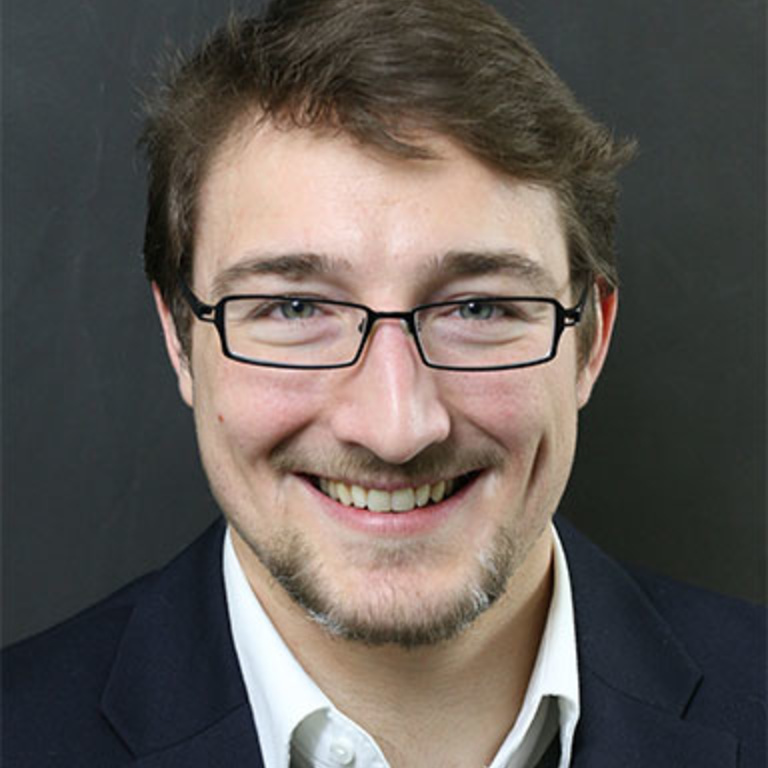
Patrick J.W. Koelewijn is a Researcher at the Department of Electrical Engineering , Eindhoven University of Technology . His work focuses on the analysis and control of nonlinear and LPV systems , leveraging machine learning techniques for robust control synthesis. Education: BSc and MSc in Electrical Engineering (Automotive) and Systems and Control from Eindhoven University of Technology (both cum laude), with exchange research at Hamburg University of Technology. Key Research Areas: Linear Parameter-Varying (LPV) systems, nonlinear control, discrete-time modeling, state feedback, stability analysis, and optimal control. Notable Projects: Member of the ARPOCS project (2017–2023), developing automated LPV modeling and control for nonlinear systems. His recent publications highlight applications of convex optimization for stability analysis, data-driven state feedback methods, and reduced-order LPV modeling techniques. Collaborations include institutions like Hamburg University of Technology (TUHH).
Francis Ogoke is an incoming Assistant Professor in the Department of Mechanical Engineering at Carnegie Mellon University, set to begin in Fall 2025. He is currently a postdoctoral associate at the Massachusetts Institute of Technology. His academic journey includes a Ph.D. in Mechanical Engineering from Carnegie Mellon University (2024) and a B.S.E. in Chemical and Biological Engineering from Princeton University (2019). His research lies at the intersection of artificial intelligence and engineering systems, with a focus on developing foundational AI methods for complex engineering problems. Key areas include: Physics-informed deep learning Uncertainty quantification and probabilistic modeling Representation learning for generalization Applications in additive manufacturing, digital twins, and cyber-physical systems The recent articles reflect a strong trend in leveraging deep learning—especially vision transformers, generative models, and reinforcement learning—for accelerating simulations, enhancing in-situ monitoring, and improving control in additive manufacturing. His work consistently bridges AI innovation with real-world engineering challenges, particularly in metal 3D printing and multiphysics modeling. Notable scientific awards include: Presidential Fellowship in the College of Engineering, Carnegie Mellon University G.E.M. Fellowship Francis Ogoke advises emerging researchers and is expected to lead a research group focused on AI-driven engineering systems. His lab will likely focus on developing intelligent frameworks for digital twins and autonomous manufacturing. He has not yet advised any students as per current records. He is actively involved in pioneering research that integrates AI into core engineering workflows, supported by advanced computational and experimental infrastructure. He is affiliated with the College of Engineering at Carnegie Mellon University and conducts research relevant to advanced manufacturing, sensing technologies, and intelligent systems.
Adithya Murali is an Assistant Professor at the University of Wisconsin-Madison's Department of Computer Science. His research focuses on Formal Methods and Programming Languages , specifically democratizing software verification through data-driven logic learning and neuro-symbolic approaches. He holds a Ph.D. from the University of Illinois at Urbana-Champaign (UIUC), advised by P. Madhusudan Parthasarathy. Education: Ph.D. in Computer Science (UIUC, 2024), B.Tech. from BITS-Pilani (2017) Roles: Subreviewer for PLDI, CONCUR, ICALP, and LICS; Teaching Assistant for courses in Logic, Compilers, and Trustworthy AI His research interests center on reducing the cognitive burden of software verification, enabling non-experts to verify code through innovative techniques like logic learning from data. Cross-disciplinary work integrates machine learning with symbolic reasoning, exemplified in projects like the CLEVR VDP Dataset and GQA VDP Dataset for visual discrimination puzzles. Recent publications span formal verification frameworks (e.g., FO-Complete Heap Logics), neuro-symbolic systems, and automated reasoning. His work has received the ACM Europe Best Paper Award (OOPSLA 2023) . Awards: Ray Ozzie Fellowship (2018), Gold Medal (BITS-Pilani 2017), INSPIRE Scholarship (2012-2016) Grants: UIUC Travel Grants, SIGPLAN Funding He advises students across UIUC and UW-Madison, focusing on program synthesis, verification, and AI integration. Collaborations include the Formal Methods Seminar at UIUC and volunteer roles at major conferences.
Cristian Ricardo Constante Amores serves as an Assistant Professor in the Department of Mechanical Science and Engineering at the University of Illinois Urbana-Champaign, where his research bridges computational fluid dynamics and data science to investigate complex interfacial phenomena and multiphase flows. His expertise spans surfactant physics, Marangoni stress effects, and three-dimensional interface tracking using level set methods, with particular focus on droplet impact dynamics and elastoinertial turbulence in polymer solutions. He pioneers data-driven approaches including Koopman operator theory and neural ordinary differential equations to develop reduced-order models for fluid systems, leveraging manifold dynamics and automatic differentiation to enhance predictive accuracy in chaotic regimes. Recent publications reveal a cohesive trajectory toward integrating machine learning with traditional fluid mechanics, addressing challenges in dynamic surface tension modeling, coherent structure identification, and turbulence prediction across high-impact journals such as the Journal of Fluid Mechanics and Chaos, demonstrating consistent innovation in computational methodology for multiphase flow analysis.
Charbel Farhat is the Vivian Church Hoff Professor of Aircraft Structures and Professor of Aeronautics and Astronautics at Stanford University's School of Engineering. He chairs the Department of Aeronautics and Astronautics and has led significant initiatives such as the Stanford-King Abdulaziz City for Science and Technology Center. His research focuses on computational methods for multiphysics problems in aerospace engineering, including fluid-structure interaction, digital twinning, and uncertainty quantification. Farhat has authored over 650 publications and holds prestigious awards like the Vannevar Bush Faculty Fellowship and multiple honorary doctorates. Education: Ph.D. in Civil Engineering, University of California, Berkeley (1987) MS in Electrical Engineering and Computer Sciences, UC Berkeley (1986) MS in Structural Engineering, UC Berkeley (1984) MS in Applied Mechanics, Université de Paris VI (1983) Engineering Diploma, Ecole Centrale des Arts et Manufactures (1983) Research Interests: Farhat's work emphasizes advanced computational algorithms for aerospace systems, including autonomous carrier landing dynamics, hypersonic trajectory analysis, and physics-based machine learning. His group develops high-performance software for digital twinning and model reduction techniques to address complex engineering challenges. Recent efforts include supersonic parachute dynamics modeling and probabilistic learning frameworks for uncertainty quantification. Awards & Recognition: Member of National Academy of Engineering (U.S.), Royal Academy of Engineering (UK), and Lebanese Academy of Sciences Fellowships from AIAA, ASME, SIAM, and multiple computational mechanics societies Recipient of the Gordon Bell Prize, John von Neumann Medal, and Gauss-Newton Medal Advising & Grants: Farhat supervises doctoral and master's students in advanced computational methods. His research is funded by NSF, AFOSR, ONR, NASA, and industry partners like Boeing and Lockheed-Martin. He advises on national boards and editorial roles for journals like the International Journal for Numerical Methods in Engineering. Labs & Teams: Leads the Farhat Research Group (FRG) at Stanford, focusing on Simulation-Based Engineering Science. Collaborates internationally on projects like the Army High Performance Computing Research Center and the Stanford-King Abdulaziz Center.
Casey Harwood is an Associate Professor in the Department of Mechanical Engineering at the University of Iowa's College of Engineering, and an Associate Faculty Research Engineer at IIHR—Hydroscience and Engineering. He specializes in experimental fluid dynamics, fluid-structure interactions, and multi-phase flow phenomena. His research focuses on hydroelastic responses of lifting surfaces, ventilation in flows, and advanced modeling techniques. Harwood holds a PhD in Naval Architecture and Marine Engineering from the University of Michigan (2016), an MSe from the same university (2014), and a BS from The Webb Institute (2011). He leads the Marine Science and Technology (MaST) Lab, which explores naval engineering challenges and fluid dynamics applications. His research trends emphasize multi-phase flow dynamics, including cavitation, ventilation, and hydrofoil performance in complex environments. Recent work addresses amphibious vehicle dynamics in surf zones and data-driven modeling for underwater vehicles. He also contributes to engineering education, designing curricula and digital tools for naval science and foundry science education. Notable collaborations include IIHR—Hydroscience and Engineering. His lab focuses on experimental setups and numerical methods for real-time fluid dynamics analysis.
Dr.-Ing. Norbert Hosters is a Research Associate and Chief Engineer at the Chair for Computational Analysis of Technical Systems (CATS), Faculty of Mechanical Engineering, RWTH Aachen University. He has been active since 2020 and serves as General Secretary of the German Association for Computational Mechanics (GACM). His work bridges advanced computational methods with engineering applications. His research focuses on numerical methods for fluid-structure interaction , computational fluid and structural dynamics , isogeometric analysis , and aerothermoelasticity . He also explores applied quantum methods and physics-informed neural networks for solving complex PDEs and optimizing industrial processes. His interdisciplinary work spans mechanical, biomedical, and computational engineering. The recent publications (2023–2025) demonstrate a strong trend toward integrating machine learning with traditional simulation techniques, particularly in partitioned FSI , multiphase flow , shape optimization , and biomedical simulations such as LVAD modeling. His work appears in high-impact journals like Scientific Reports , Computers & Fluids , and International Journal for Numerical Methods in Engineering , as well as major conferences including GACM and CMBE. He is actively involved in teaching courses on Numerical Methods for Fluid-Structure Interaction , Isogeometric Analysis , and Simulation Methods in Mechanical Engineering . He offers student projects and supervises research, though no named advisees are listed. He has no listed scientific awards or fellowships. His research is conducted within the CATS chair, a leading group in computational mechanics, contributing to both fundamental methods and industrial applications. He plays a key role in academic service through GACM leadership.
Frank Lagor is an Associate Professor in the Department of Mechanical and Aerospace Engineering at the University of Virginia. He joined UVA in 2023 after serving as faculty at the State University of New York at Buffalo. His research focuses on estimation and control for autonomous systems interacting with fluid environments, including gust mitigation in aerospace systems and bio-inspired flow sensing for robotics. Dr. Lagor holds a Ph.D. in Aerospace Engineering from the University of Maryland (2017), with prior degrees from the University of Pennsylvania (M.S., 2009) and Villanova University (B.S., 2006). Before academia, he worked at Lockheed Martin as a Certified Principal Engineer for satellite solar array systems. His research interests emphasize unsteady flow estimation, optimal maneuver design in gust encounters, and reduced-order modeling techniques. Key contributions include sensor placement strategies for data-driven flow estimation and closed-loop control methodologies for autonomous underwater vehicles. He has received prestigious awards including the AFOSR Young Investigator Award (2021) and UB SEAS Early Career Teacher of the Year (2020). Courses taught include advanced control systems theory, dynamics, and stochastic estimation methods.
Thibault Marzullo is a Researcher in Mechanical Engineering at the National Renewable Energy Laboratory (NREL), contributing to the Commercial Buildings Research Group's Controls and Advanced Analytics section since February 2022. He serves as a principal investigator for the Wells Fargo Innovation Incubator, co-founded by NREL. Education: Master's in Mechanical Engineering, Institut Superieur de l’Automobile et des Transports, Nevers (France) PhD in Mechanical Engineering, National University of Ireland, Galway His research focuses on systems control, machine learning, and energy management, particularly in building resilience, reduced order modeling, and energy justice. His work integrates advanced analytics with building technologies for carbon reduction and resiliency optimization. Marzullo's recent publications highlight trends in reinforcement learning applications for building energy systems, predictive control models, and real-world implementation challenges. Topics span energy storage, semantic interoperability, and sustainable engineering solutions. He has experience in teaching engineering courses, designing experiments, and developing machine learning algorithms, with expertise in computer vision, data acquisition, and model order reduction techniques.
Søren Juhl Andersen is an Associate Professor at the Department of Wind and Energy Systems Flows Wind Turbine Design Division, Technical University of Denmark (DTU). His research focuses on wind turbine wake dynamics, computational fluid dynamics (CFD), and energy systems optimization. Education : Not explicitly mentioned in provided texts Research Interests : Dr. Andersen specializes in wind turbine aerodynamics, turbulence dynamics, and data-driven flow control. His work explores Large Eddy Simulation (LES) for wind farm modeling, Proper Orthogonal Decomposition (POD) for wake characterization, and machine learning applications in wind energy optimization. Article Trends : Recent publications emphasize wake steering uncertainty, turbulence integral scales, and reduced-order modeling. Key themes include wind farm control strategies, lidar-assisted flow estimation, and cross-code validation of simulation tools. Projects : He leads initiatives like Train2Wind (2020–2024) and supervises PhD projects on machine learning surrogates, non-equilibrium turbulence dynamics, and wake entrainment studies. Conferences : Presented at Wake Conference (2025), TORQUE (2024), and FarmConners (2020)
Carsten Skovmose Kallesøe is a Professor at the Department of Electronic Systems, The Technical Faculty of IT and Design, Aalborg University. His work focuses on control systems, water distribution networks, and sustainable energy integration. Current Role: Professor (Department of Electronic Systems) Key Research Areas: Stochastic Model Predictive Control, Sanitation Networks, Water Distribution Systems, and Photovoltaic Energy Optimization Projects: Led research on decentralized control architectures, combined sewer overflow management, and adaptive pressure/leakage estimation in water supply systems Kallesøe applies advanced control theories to real-world challenges in hydraulic networks. Recent work includes integrating reinforcement learning for decentralized control systems and optimizing photovoltaic panel deployment in water distribution infrastructure. His publications (2005–2025) span topics like fouling characterization using the 3ω method, correlated equilibrium control strategies, and energy-efficient district heating pipe supervision. While specific awards aren't listed, his leadership in projects like the SAMPLE-driven adaptive management system demonstrates significant impact.
Kenrick D Cato serves as Professor of Informatics at the University of Pennsylvania School of Nursing and Nurse Scientist for Pediatric Data and Analytics at Children's Hospital of Philadelphia. His research integrates data science with clinical practice to enhance healthcare delivery through informatics-driven solutions, focusing particularly on reducing documentation burden and improving patient safety systems. Dr. Cato's work centers on clinical informatics with emphases in natural language processing, machine learning applications for healthcare, and health equity. Key research areas include detection of stigmatizing language in clinical documentation (especially in obstetrics/pediatrics), development of early warning systems like CONCERN for patient deterioration, mitigation of algorithmic bias, and optimization of electronic health record workflows. His scholarship consistently addresses the intersection of technology, clinical practice, and social determinants of health. Analysis of his 2025 publications reveals dominant trends in applying computational methods to real-world healthcare challenges. He pioneers techniques for bias detection in clinical NLP, evaluates equity in AI decision support systems, and investigates documentation burden impacts across diverse populations. His work with the National COVID Cohort Collaborative demonstrates expertise in large-scale data analysis for public health crises. Dr. Cato's scholarly contributions are recognized through prestigious fellowships: Fellow of the American Academy of Nursing (FAAN) Fellow of the American College of Medical Informatics (FACMI) As Nurse Scientist at CHOP, he leads pediatric data analytics initiatives translating research into clinical tools. His leadership extends to AMIA's diversity, equity, and inclusion efforts, and he actively shapes policy through publications addressing documentation burden and AI ethics. While specific grant details aren't provided, his extensive 2025 publication output indicates robust research funding across multi-site collaborations. Embedded within CHOP's pediatric analytics team, Dr. Cato collaborates with clinicians and data scientists to develop implementable informatics solutions for child health, with current projects focusing on real-time surveillance systems and pediatric risk prediction models.
Prof. Amir Boag is a Professor in the Physical Electronics Department of the School of Electrical Engineering at Tel Aviv University. He received his B.Sc. and B.A. degrees Summa Cum Laude in 1983, M.Sc. in 1985, and Ph.D. in 1991, all from the Technion - Israel Institute of Technology. His academic journey includes faculty positions at the Technion (1991-1992), a Visiting Assistant Professorship at the University of Illinois at Urbana-Champaign (1992-1994), and industry experience at Israel Aircraft Industries (1994-1999) before joining Tel Aviv University in 1999. Prof. Boag's research focuses on computational electromagnetics and acoustics, specializing in numerically efficient algorithms, beam representations of fields, radar imaging techniques including Synthetic Aperture Radar, quantum-electromagnetic simulations, and antenna/nano-antenna design. His work bridges theoretical developments with practical applications in electromagnetic and acoustic systems. His research group comprises over ten graduate students working on cutting-edge problems in wave physics. Prof. Boag has published more than 130 journal articles and presented over 300 conference papers. He has been instrumental in organizing the Tel Aviv University Antenna Symposium and Underwater Acoustics Symposium, with the 13th Underwater Acoustics Symposium scheduled for October 23, 2025. IEEE Fellow (2008) for contributions to integral equation based analysis, design, and imaging techniques Fellow of the Electromagnetics Academy Former Associate Editor for IEEE Transactions on Antennas and Propagation Holder of approximately ten patents in electromagnetics and antenna design Prof. Boag's research demonstrates strong continuity in developing efficient numerical methods for electromagnetic and acoustic problems, with increasing focus on quantum-electromagnetic interactions and nano-scale applications in recent years. His work maintains strong connections between fundamental theory and practical engineering applications, particularly in radar and imaging systems.