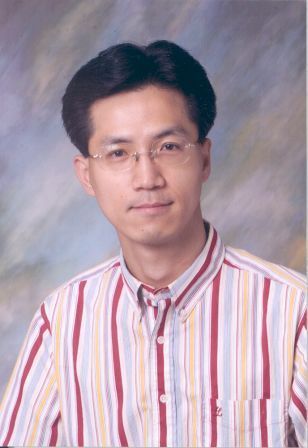
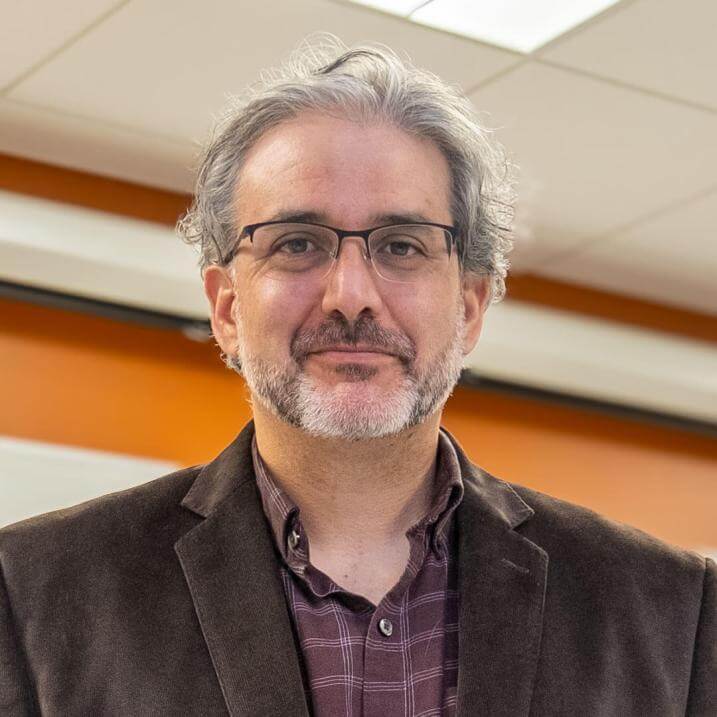
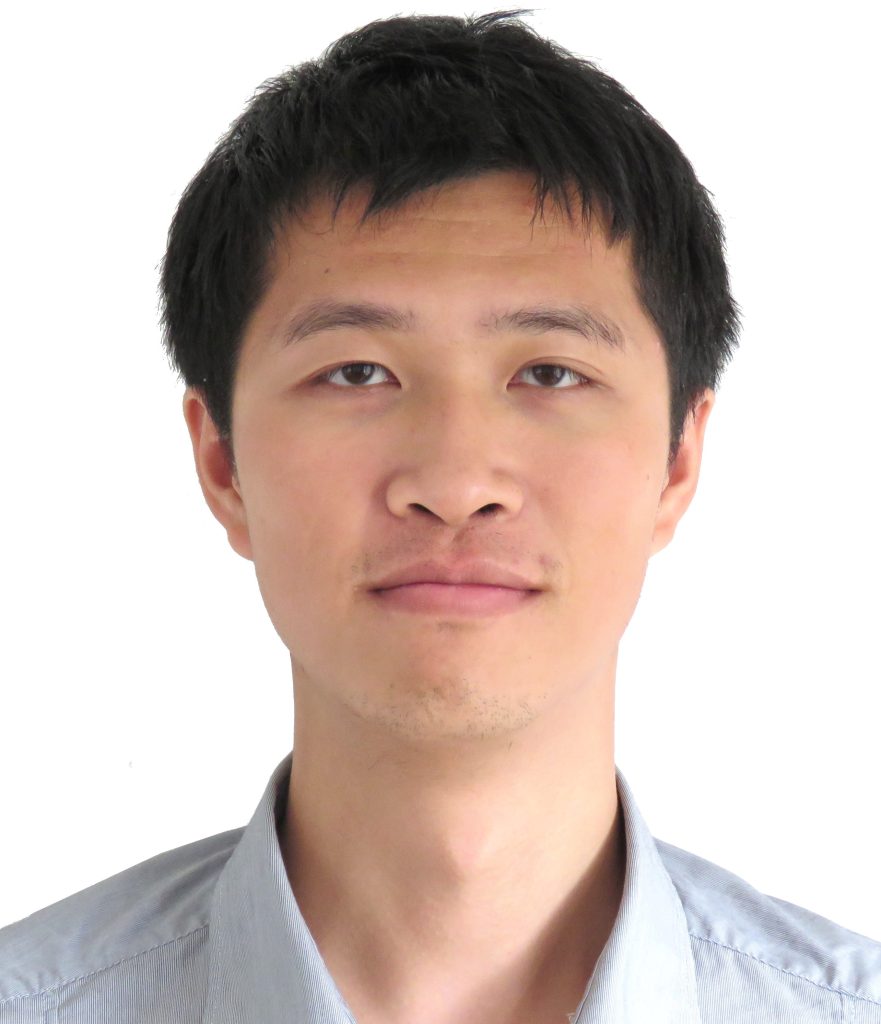
Sicun Gao is an Associate Professor in the Computer Science and Engineering department at the University of California, San Diego. His research focuses on practical algorithms for NP-hard search and optimization problems in computational systems, emphasizing combinatorial perspectives in numerical and statistical contexts to achieve reliable autonomy. Research Interests: Automated reasoning, Hamilton-Jacobi reachability, safe reinforcement learning, control barrier functions, and optimization in cyber-physical systems. Teaching: Courses on AI search, optimization, and graduate research seminars. The 15 most recent publications highlight advancements in safe AI control, motion planning, and policy optimization, often integrating neural networks with formal verification. Awards include the IEEE Power & Energy Society Technical Committee Prize Paper Award and the IROS RoboCup Best Paper Award. He advises PhD students working on AI-driven control and robotics, with alumni placed at institutions like Seoul National University, Amazon, and Apple. Grants include NSF Career, Air Force Young Investigator, and DARPA Assured Autonomy funding. His lab develops tools like dReal for automated reasoning in nonlinear theories over the reals.
Maya Ramanath is an Associate Professor in the Department of Computer Science and Engineering at Indian Institute of Technology (IIT) Delhi. She joined IIT Delhi in 2011 after a postdoctoral research stint at the Max-Planck Institute for Informatics in Germany. Her research interests focus on database systems, information retrieval, semantic web technologies, and knowledge graph construction and applications. Education: PhD in Computer Science, Indian Institute of Science, Bangalore M.Sc.(Engg.) in Computer Science, Indian Institute of Science, Bangalore B.E. in Computer Science and Engineering, Bangalore University, Bangalore Her recent work emphasizes efficient query processing over large-scale graphs, knowledge graph applications, and natural language interfaces for semantic data. Notable contributions include algorithms for reachability approximation in web-scale graphs, speculative query planning for knowledge graphs, and exploratory querying techniques. She has collaborated extensively on projects like NAGA, ESTHETE, and KlusTree, advancing the state of the art in graph-based data management and semantic search. Publications span conferences such as ICDE, ECIR, EDBT, and VLDB, reflecting a strong focus on database systems, graph algorithms, and semantic web applications. Her work bridges theoretical foundations with practical implementations, addressing scalability and efficiency challenges in modern data management systems. Research and advising activities include supervision of projects on distributed graph processing, query optimization, and knowledge representation. She has contributed to open-source tools like LegoDB and StatiX, and her lab focuses on interdisciplinary approaches to data-centric AI.
Prof. Dr. Melanie Zeilinger is an Associate Professor at the Department of Mechanical and Process Engineering at ETH Zurich, leading the Intelligent Control Systems group at the Institute for Dynamic Systems and Control. She holds a diploma in Engineering Cybernetics from the University of Stuttgart (2006) and a Ph.D. in Electrical Engineering from ETH Zurich (2011). Her postdoctoral research included stints at EPFL (2011–2012), a Marie Curie fellowship at UC Berkeley and the Max Planck Institute (2012–2015), and a professorship at the University of Freiburg (2018–2019). Her research focuses on learning-based control, distributed control systems, and robotics , with applications to medical devices (e.g., hydrocephalus shunts) and human-in-the-loop systems. She organizes the Conference on Learning for Dynamics and Control (L4DC) and contributes to initiatives like the "Algorithm on My Team" project. Her awards include the ETH Medal for her PhD thesis, a Marie-Curie IO Fellowship , and an SNF Assistant Professorship grant . She serves as an Associate Editor for IEEE Control Systems Letters and actively reviews for top journals/conferences like IEEE TAC, Automatica, and NeurIPS. Key projects include: VIEshunt: A smart ventricular shunt for hydrocephalus treatment, combining control systems and medical engineering. Autonomous Racing: Contextual tuning and safety-certified learning-based MPC for real-time obstacle avoidance. Data-Driven Control: Integrating Gaussian processes and state-space models into MPC frameworks for uncertain systems. Her work bridges control theory, machine learning, and robotics, addressing societal challenges such as healthcare and energy efficiency.
Farnoush Banaei-Kashani is an Associate Professor (Tenured) in the Department of Computer Science and Engineering at the University of Colorado Denver. She also holds an Adjunct Associate Professor position in the Department of Mathematical and Statistical Sciences. As the founder and director of the Big Data Management and Mining Lab (BDLab), she leads multiple GAANN Fellowship Programs, including BDSE (Big Data Science and Engineering), DDC (Data-Driven Cybersecurity), and II (Infrastructure Informatics). She directs the 'Data Science in Biomedicine' MS Track and focuses on data-driven decision systems (DDSs), integrating machine learning and big data analytics into healthcare, energy, transportation, and environmental applications. Education: Details not explicitly provided in the text. Her research spans data management cycles for DDSs, addressing challenges like big data volume, velocity, and variety. Key projects include iWatch (crime surveillance), POCM (mobility monitoring), and GeoSIM (urban texture documentation). She teaches courses such as Machine Learning Systems, Big Data Science, and Data Mining. Publications highlight advancements in sea ice classification, federated learning, proteomic networks, and privacy-preserving AI. Her work is funded by NSF, NIH, DOT, and industry partners like Google and IBM. She has advised numerous students and contributes to academic leadership as editor, conference chair (ACM SIGSPATIAL 2018/2019), and program committee member for venues like SIGMOD and KDD.
Aaron D. Ames is the Bren Professor of Mechanical and Civil Engineering, Control and Dynamical Systems, and Aerospace at the California Institute of Technology (Caltech). He serves as the Booth-Kresa Leadership Chair and Director of the Center for Autonomous Systems and Technologies since 2025. His academic journey includes a BS in Mechanical Engineering and BA in Mathematics from the University of St. Thomas (2001), followed by an MA in Mathematics and a PhD in Electrical Engineering and Computer Sciences from UC Berkeley (2006). Research Interests span theoretical and experimental work in hybrid systems, nonlinear control, and bipedal robotic locomotion. Specific focus areas include: Control Barrier Functions (CBFs) for safety-critical systems Powered prostheses and robotic assistive devices Legged locomotion for bipedal and quadrupedal robots Cyber-physical systems and autonomous control Model predictive control and real-time optimization Humanoid robotics and geometric safety filters Recent publications emphasize risk-aware control, safety verification, and locomotion on constrained environments, with applications to drones, exoskeletons, and quadrupedal robots. His work often integrates theoretical advancements with practical validation through the AMBER Lab. Scientific Awards & Honors : NSF CAREER Award (2010) Donald P. Eckman Award (2015) Leon O. Chua Award (2005) Bernard Friedman Prize (2006) Teaching includes graduate courses on nonlinear control, hybrid systems, and robotics at Caltech, alongside prior roles at Georgia Tech and Texas A&M. He leads the AMBER Lab (Bipedal Robotics) and has secured major grants from the National Science Foundation, NASA, and industry partners like Miso Robotics and SRI International.
Margaret P. Chapman is an Assistant Professor in the Department of Electrical and Computer Engineering at the University of Toronto's Faculty of Applied Science and Engineering. She leads the DATA Lab (Decision Analysis for Trustworthy Autonomy), focusing on risk-averse and stochastic control theory with applications to environmental and human health. Education: B.S. and M.S. in Mechanical Engineering from Stanford University (2012, 2014), Ph.D. in Electrical Engineering and Computer Sciences from UC Berkeley (2020, advised by Claire Tomlin) Her research bridges robust and stochastic optimal control via risk measure theory, emphasizing safety-critical applications in healthcare and sustainable cities. Key challenges include scalable risk-sensitive control methods, integrating physics-based and data-driven models for safety analysis, and promoting technologies that enhance planetary and human well-being. Recent publications focus on risk-averse autonomous systems, CVaR-based safety analysis, and multi-time-scale modeling for cancer treatment. She has advised students in both graduate and undergraduate research roles, including NSERC awardees and thesis participants. Awards: US National Science Foundation Graduate Research Fellowship, Berkeley Fellowship, Terman Engineering Scholastic Award, Leon O. Chua Award She teaches courses like ECE 557 (Linear Control Theory) and ECE 1643 (Risk-Averse Control with Learning). Her invited talks span institutions such as MIT, Princeton, and Georgia Tech, highlighting risk-sensitive analysis and control for trustworthy autonomy.
Yang Kaidi is an Assistant Professor in the Department of Civil and Environmental Engineering at the National University of Singapore (NUS), affiliated with the Institute of Operations Research and Analytics (IORA) within NUS’s Smart Nation Research Cluster. Their research focuses on intelligent transportation systems, traffic control, shared mobility, and machine learning applications in mobility. Key interests include connected and automated vehicles, privacy-preserving data sharing, and reinforcement learning for traffic optimization. Research highlights include developing parameter privacy-preserving strategies for mixed-autonomy platoons, enhancing safety in autonomous driving via transformer-based trajectory prediction, and optimizing traffic signal timing using connected vehicle data. Their work bridges theoretical control systems with practical urban mobility challenges, addressing issues like ridesourcing-public transit integration, modular transit service operations, and weaving section management in mixed traffic environments. Recent publications emphasize real-time control frameworks, cooperative safety mechanisms, and data-driven solutions for urban and highway systems. Yang’s interdisciplinary approach integrates robotics, optimization, and cybersecurity to advance smart transportation infrastructure. Their contributions are particularly notable in privacy-preserving techniques for traffic state estimation and federated learning applications. While no specific awards or grants are listed, their research aligns with Singapore’s Smart Nation initiatives through IORA’s strategic focus areas. Yang’s work has implications for future traffic management systems, autonomous vehicle coordination, and sustainable urban mobility solutions.
Inseok Hwang is the Paul Stanley Professor of Aeronautics and Astronautics at Purdue University's School of Aeronautics and Astronautics. He earned his Ph.D. from Stanford University, specializing in multiple-vehicle control systems. His research focuses on hybrid systems, air traffic control, unmanned systems, and cybersecurity of cyber-physical systems. He leads the Flight Dynamics and Control/Hybrid Systems Laboratory and has received numerous awards, including the NSF CAREER Award and AIAA Associate Fellow designation. His work spans theoretical advancements in control theory and practical applications in aerospace systems. He has over 150 peer-reviewed publications and actively collaborates with industry and government agencies like NASA and the FAA. Education: B.S. (Seoul National University, 1992), M.S. (KAIST, 1994), Ph.D. (Stanford, 2004). Professional memberships include AIAA and IEEE. Research Interests: Hybrid systems analysis, air traffic surveillance and control, fault detection and isolation, spacecraft control, and cybersecurity for autonomous systems. His lab develops algorithms for safe and efficient operation of networked systems, including UAS traffic management and resilient control protocols against cyberattacks. Awards: NSF CAREER (2008), AIAA Associate Fellow (2012), University Faculty Scholar (2017), C.T. Sun Award (2019), multiple Seed for Success Awards (2020–2024), and Paul Stanley Professorship (2024). Grants and Collaborations: Active projects funded by NSF, NASA, FAA, and industry partners. Focus areas include resilient navigation, anomaly detection in air traffic systems, and cyberattack mitigation for autonomous vehicles.
Summary Luis A. Duffaut Espinosa is an Assistant Professor in the Department of Electrical and Biomedical Engineering at the University of Vermont (UVM), affiliated with the College of Engineering and Mathematical Sciences. His research focuses on control theory, estimation, robotics, and nonlinear systems with applications in autonomy, quantum control, and environmental monitoring. He holds a Ph.D. in Electrical and Computer Engineering from Old Dominion University (2009) and has held academic positions at George Mason University and postdoctoral roles at Johns Hopkins University and the University of New South Wales. Education: Ph.D. in Electrical and Computer Engineering (2009), Old Dominion University M.S. in Mathematics (2005), Pontificia Universidad Católica del Perú B.S. in Physics (2003), Universidad Nacional de Ingeniería, Peru Research Interests: His work emphasizes data-driven control and estimation methodologies, including model-free approaches for power systems, environmental monitoring, and quantum control. Current projects include real-time data assimilation in harsh environments, resilient robotics in GPS-denied conditions, and SAR with small satellites. He co-directs the Autonomous and Intelligent Systems Research Laboratory (AIRLab) and is part of the CREATE center. Recognition: 2024 NSF CAREER Award for work on safety-aware data-driven control frameworks Teaching & Advising: He teaches courses in estimation theory, control systems, and signal processing. Advises a team of graduate and undergraduate students focusing on autonomy, robotics, and control systems. Notable students include Danial Waleed (Ph.D. 2024), Jacob Friz-Trillo (M.S. 2025), and Farnaz Boudaghi (Ph.D. candidate). Labs & Collaborations: AIRLab: Focuses on data-driven control for autonomy in robotics and engineered systems CREATE: Research on resilient energy and autonomous technologies
Kaidi Yang is an Assistant Professor at the National University of Singapore (NUS) in the Department of Civil and Environmental Engineering, specializing in Intelligent Transportation Systems and related fields. He holds a PhD from ETH Zurich (2019), an M.Sc. in Control Science and Engineering from Tsinghua University (2014), and dual bachelor’s degrees in Automation and Mathematics from Tsinghua University (2011). His research focuses on advancing traffic control, connected/automated vehicles, shared mobility systems, and data privacy in transportation. He has contributed to developing algorithms for efficient traffic signal control, platooning coordination, and privacy-preserving data sharing in transportation networks. Education: Ph.D., Civil and Environmental Engineering (Transportation), ETH Zurich, 2019 M.Sc., Control Science and Engineering, Tsinghua University, 2014 B.Sc./B.Eng., Dual Degrees in Pure/Applied Mathematics and Automation, Tsinghua University, 2011 Yang has received prestigious awards including the Swiss National Science Foundation’s Postdoc Mobility Fellowship (2021–2022) and the IEEE ITS Conference Best Student Paper Award (2020). He serves as an Associate Editor for the IEEE Conference on Intelligent Transportation Systems (2024). His work bridges theoretical advancements in operations research, robotics, and machine learning with practical applications in urban mobility systems. Recent efforts emphasize integrating privacy-preserving techniques into traffic management and optimizing mixed-autonomy platoon control.
Murat Arcak is a Professor of Electrical Engineering and Computer Sciences and Mechanical Engineering at the University of California, Berkeley, holding the Robert M. Saunders Endowed Chair in the College of Engineering. His research spans control theory, autonomous systems, and multi-agent systems with applications in transportation, energy, and biology. Dr. Arcak received his Ph.D. in Electrical Engineering from the University of California, Santa Barbara in 2000, following an M.S. from the same institution in 1997 and a B.S. from Bogazici University in Istanbul, Turkey in 1996. His research interests focus on developing scalable control design and verification methods for complex systems with many interconnected components, nonlinear dynamics, and learning capabilities. He has made significant contributions to control theory, particularly in areas like reachability analysis, dissipative systems, and compositional verification methods. His work bridges theoretical advances with practical applications in transportation systems, energy networks, and biological systems. A leading researcher in control systems, Dr. Arcak's recent publications demonstrate a strong focus on data-driven approaches for system verification, synthetic biology applications, and formal methods for traffic control. His research combines mathematical rigor with practical implementation, often developing novel theoretical frameworks that address real-world engineering challenges. CAREER Award from the National Science Foundation (2003) Donald P. Eckman Award from the American Automatic Control Council (2006) Control and Systems Theory Prize from SIAM (2007) Antonio Ruberti Young Researcher Prize from IEEE Control Systems Society (2014) Brockett-Willems Outstanding Paper Award (2021) IFAC Fellow (2020) IFAC Automatica Paper Prize (2020) CSS Transactions on Control of Network Systems Outstanding Paper Award (2017) Electrical Engineering Award for Outstanding Teaching (2014) CSS Antonio Ruberti Young Researcher Prize (2014) IEEE Fellow (2012) SIAM Activity Group Control and Systems Theory Prize (2007) Dr. Arcak has advised numerous graduate students and postdoctoral researchers, though specific names are not listed in the available information. His research has been supported by various grants from the National Science Foundation and other funding agencies, enabling his work on control theory and applications across multiple domains. He is affiliated with several research centers at UC Berkeley including the Berkeley Artificial Intelligence Research Lab (BAIR), Berkeley Deep Drive (BDD), the Center for the Theoretical Foundations of Learning, Inference, Information, Intelligence, Mathematics and Microeconomics at Berkeley (CLIMB), the Institute of Transportation Studies (ITS), and Partners for Advanced Transit and Highways (PATH).
Jeeseop Kim is an Assistant Professor in the Department of Aerospace and Mechanical Engineering at The University of Texas at El Paso (UTEP), College of Engineering, specializing in robotics, autonomy, and control theory. His research focuses on safety-critical planning and control, with emphasis on bipedal/quadrupedal locomotion, hybrid dynamical system control, and whole-body planning and control. Education: B.S. in Mechanical and Aerospace Engineering, Seoul National University (2014) M.S. in Intelligence and Information (Robotics), Seoul National University (2017) Ph.D. in Mechanical Engineering, Virginia Tech (2022) Postdoctoral Scholar, Mechanical and Civil Engineering, Caltech (2022–2025) His research spans safety-critical control systems for legged robots, including obstacle-aware nonlinear model predictive control (MPC), control barrier functions, and distributed coordination algorithms. Recent work explores adaptive delay estimation, tactile sensing for robotic grasping, and hardware-software co-design for humanoid robots. Key article trends highlight advancements in autonomous inspection robotics, hybrid control architectures, and real-time planning for quadrupedal systems. His work integrates control theory with practical applications in industrial and healthcare domains. Awards: ASME DSCD Rudolf Kalman Best Paper Award (2022) IEEE ICRA Outstanding Paper Award (2023) Jeeseop teaches MECH 4332: Mechanical Computational Applications in Vision and Robotics (Fall 2025). He actively recruits Ph.D. students for Spring/Fall 2026 and seeks motivated undergraduates/MS students with skills in robotics kinematics, programming (C/C++, Python, MATLAB), and CAD design. The AIGIS Lab welcomes applicants with interests in robotics, controls, and autonomous systems.
Sebastien Nicolas Gros is a Professor at the Department of Engineering Cybernetics, Norwegian University of Science and Technology (NTNU). His research focuses on safe reinforcement learning (RL) and data-driven model predictive control (MPC), with applications in energy systems, biomedical engineering, and autonomous vehicles. Institution: Norwegian University of Science and Technology Department: Engineering Cybernetics His work emphasizes AI-driven optimization for domestic energy storage, battery integration, and smart building management. Collaborations include Equinor, DNV, Kongsberg, Volvo, and CorPower Ocean. Key themes in his publications include: Control theory for renewable energy systems (wave energy converters, buildings) Biomedical applications (artificial pancreas, glucose monitoring) Transportation systems (electric vehicles, autonomous ships) Machine learning integration with physical models He supervises 6 PhD students and co-supervises projects on multi-rotor wind turbines and industrial PhD collaborations. The articles demonstrate a convergence of RL, MPC, and uncertainty quantification across energy, biomedical, and transportation domains.
Michael Everett is an Assistant Professor at Northeastern University with a joint appointment in the Department of Electrical & Computer Engineering and the Khoury College of Computer Sciences. He directs the Autonomy & Intelligence Laboratory, focusing on certifiable learning machines at the intersection of robotics, deep learning, and control theory. His research emphasizes safety, reliability, and efficiency in robotics applications like off-road navigation and social environments. Education: PhD in Mechanical Engineering, Massachusetts Institute of Technology (2020) SM in Mechanical Engineering, MIT (2017) SB in Mechanical Engineering, MIT (2015) Research Interests: Robotics and motion planning Control theory and neural network verification Reinforcement learning applications Certifiable safety guarantees for autonomous systems Navigation in dynamic/human environments Awards: Runner-Up: Best Paper Award (ICML 2022) Winner: Best Student Paper (IROS 2017/2023) Editors’ Top 5 Published Articles (IEEE Access 2021) Lab & Contributions: The Autonomy & Intelligence Lab develops algorithms for high-speed off-road autonomy, socially aware navigation, and neural feedback verification. His work includes the RAMP planning pipeline and Evora traversability learning framework. He collaborates with Google’s PAIR team on trustworthy AI.
Khanh Nguyen is an Assistant Professor in the Department of Computer Science & Engineering at Texas A&M University, part of the College of Engineering. His research focuses on improving scalability and efficiency in Big Data systems through compiler and runtime innovations, particularly in memory management and distributed computing. Education: Ph.D. in Computer Science, University of California, Los Angeles (2019) M.S. in Computer Science, University of California, Irvine (2015) B.S. in Computer Science, University of California, Irvine (2012) His research interests include programming languages, compiler design, memory management, and Big Data systems. He has developed techniques such as Gerenuk for thin computation over big data, Skyway for distributed heap connectivity, and Yak , a high-performance garbage collector. His work emphasizes resource efficiency and workload scalability, particularly for machine learning and data-parallel applications. Recent publications (2021–2024) highlight advancements in adaptive memory management for warehouse-scale computers, semantics-aware swapping in disaggregated systems, and query-driven distributed tracing. Awards: Google Ph.D. Fellowship (2017) Facebook Ph.D. Fellowship Finalist (2017) His research bridges compiler/runtime systems with large-scale data processing, addressing challenges in distributed systems and far-memory utilization. He collaborates with industry and academic partners to advance practical, scalable solutions for modern data-intensive workloads.