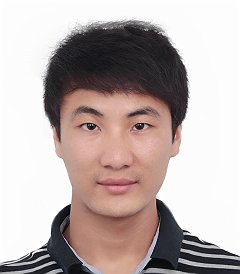
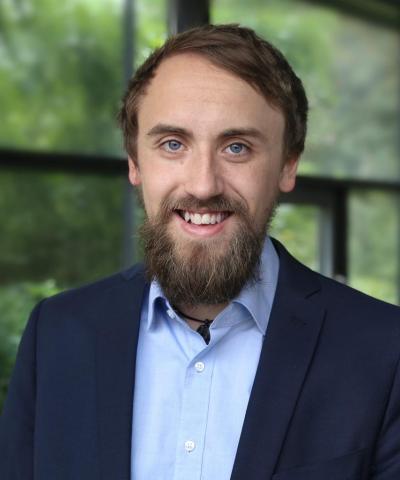
Stephan Altmann is a Professor at the Department of Engineering and Management, Technische Hochschule Mannheim , where he directs the International Relations in Engineering and Management and co-leads the Virtual Innovation Player (VIP) initiative. His work focuses on strategic ecosystem design , data-driven business models , and innovation management across sectors like construction, mobility, and industrial goods. He collaborates with global partners such as Chargehere GmbH , KSB , and Siemens AG , leveraging student teams to explore future market requirements and technology trends. Academic Roles: Professor (Technische Hochschule Mannheim), Honorary Professor (University of Ulm) Key Research Areas: Strategic Ecosystem Design, Corporate Incubation, Data-Driven Business Models, Sustainable Construction, E-Mobility Collaborative Networks: Partners with 10+ companies including BASF, STIHL, and Harmonic Drive AG
Gustavo A. Oliva is an Adjunct Professor at Queen's University in Canada, where he leads the blockchain research team at the Software Analysis and Intelligence Lab (SAIL). His research focuses on enabling cost-effective decentralized applications on programmable blockchain platforms like Ethereum, alongside empirical studies in software ecosystems, code analytics, and explainable AI. Dr. Oliva earned his PhD from the University of São Paulo (USP) in Brazil under Professor Dr. Marco Gerosa. Prior to his current role, he was a Post-Doctoral Fellow at Queen's University supervised by Professor Dr. Ahmed Hassan. His primary research spans programmable blockchains, software ecosystems (particularly npm), code analytics, and explainable AI. He employs static analysis, historical repository mining, and machine learning to investigate software evolution, dependency management, and smart contract development. Current projects address gas efficiency challenges in Ethereum, upgradeability patterns in smart contracts, and the impact of foundation models on software engineering practices. Recent publications reveal a dominant focus on blockchain systems (70% of recent work), with growing emphasis on foundation model challenges (FMware). His Ethereum research explores transaction processing, gas optimization, and technical debt, while newer work catalogs software engineering challenges in trustworthy AI-powered systems. Scientific recognition includes: Microsoft Azure for Research sponsorship Capes/CNPq scholarship for Visiting Research at Queen's University (2014) HPE scholarships for Smart Cities and Cloud Service Choreography projects European Commission FP7 funding for CHOReOS project Dr. Oliva actively mentors 8+ students across academic levels. His PhD advisees include Muhammad Ahasanuzzaman (ongoing), Amir Mohammad Ebrahimi, and Filipe Cogo (now at Huawei). Master's students Michael Pacheco and Ahmad Abdullah Zarir now work at Huawei and Amazon respectively. He also supervises visitor and undergraduate researchers in blockchain projects. His service includes program committees for ICSE, SANER, and MSR conferences, plus tutorial leadership at ASE, KDD, and FSE. As director of SAIL's blockchain research team, he manages projects on Ethereum smart contract analysis, npm dependency ecosystems, and AI-driven software engineering. Current initiatives include SPICE (automated issue labeling) and foundational work on trustworthy FMware development, with industry collaborations at Huawei and Amazon.
Einar Broch Johnsen is a Professor at the Department of Informatics, University of Oslo, where he has established himself as a leading researcher in formal methods and their application to distributed systems, cloud computing, and digital twins. His work bridges theoretical computer science with practical engineering challenges in complex systems. His research interests span formal methods, distributed and concurrent systems, programming models, digital twins, and robotics. He has made significant contributions to the ABS modeling language for asynchronous distributed systems and the SMOL programming language for digital twins. His approach emphasizes lightweight analysis techniques, type systems, testing, and deductive verification to ensure system reliability. His recent publications reveal a strong focus on applying formal methods to digital twin technology, with particular emphasis on healthcare applications, pandemic modeling, and robotics. His work demonstrates how formal verification techniques can enhance the reliability of AI-driven systems, especially in critical domains like underwater robotics and pandemic response. Johnsen actively contributes to the academic community through leadership roles including co-Editor-in-Chief of Formal Aspects of Computing , membership in IFIP WG2.2, and service on numerous conference program committees. He has chaired major conferences including FM 2015 and DisCoTec 2008. He leads and participates in numerous research projects including Sirius (as strategy director), Envisage (as coordinator), HyVar (as scientific coordinator), and REMARO (as co-initiator). His current projects include DART: Digital Arctic Twins, A Digital Twin for Vaccination Strategies, A Digital Twin of the Oslo Fjord, and NebulOuS: A Meta Operating System for Cloud Computing Continuums. Johnsen teaches courses including IN2031 – Project in Programming, IN2080: Computability and Complexity, and IN5170: Models of Concurrency, mentoring the next generation of computer scientists in formal methods and systems engineering.
Qing Liao is a Researcher at Harbin Institute of Technology, specializing in software engineering with a focus on security, machine learning applications for code, and automation. His work bridges theoretical and practical challenges in modern software systems. Research Interests: Qing's research spans several interconnected areas: Software Security : Vulnerability detection, patch analysis, and configuration security. Machine Learning for Code : Application of ML models (e.g., transformers, graph networks) to code understanding, generation, and API recommendation. Program Analysis : Techniques for static analysis, browser fuzzing, and performance tuning. Automation : Tools for IaC generation, UI-to-code transformation, and configuration optimization. Publication Trends (2022–2026): His recent publications emphasize security (7/11 papers), particularly vulnerability detection using graph learning and static analysis. A secondary focus is ML-driven code automation (4/11 papers), including knowledge distillation, API generation, and UI-to-code systems. Work consistently targets real-world applicability, evidenced by industry-track publications at ASE/ICSE.
Raymond C. W. Leung serves as Assistant Professor of Finance at Cheung Kong Graduate School of Business (CKGSB), bringing expertise from his PhD at UC Berkeley Haas School of Business. His institutional affiliation centers on CKGSB's Finance Department within China's premier independent business school. His academic credentials include: PhD in Finance, University of California, Berkeley, Haas School of Business Professor Leung's research spans Delegated Portfolio Management, Asset Pricing Theory, and Corporate Finance Theory, with particular focus on Continuous-Time Principal-Agent Problems in financial markets. His methodology combines rigorous mathematical modeling with empirical analysis of market institutions, addressing core challenges in portfolio management and financial innovation. This dual theoretical-practical approach positions his work at the intersection of academic finance and real-world market applications. His publication record reveals two distinct streams: technical working papers advancing asset pricing theory (2013-2019) and contemporary business commentaries (2025) analyzing China's economic evolution. The academic work centers on stochastic volatility control and principal-agent frameworks, while recent insights examine AI-driven business education, RMB internationalization, and globalization dynamics in film and tech industries. This progression demonstrates his expanding relevance from pure finance theory to macro business strategy. His scientific recognition includes: Financial Management Association 2017 Annual Meeting semi-finalist for best Investments paper Western Finance Association's 2015 Cubist Systematic Strategies Ph.D. Candidate Award UC Berkeley's Carl F. Cheit Outstanding Graduate Instructor Award (2014-2015) Multiple Berkeley research fellowships and scholarships (2010-2014) While no formal student advisement is documented, Professor Leung's teaching excellence was recognized through Berkeley's graduate instructor award. His grant activity remains unspecified in public materials, though departmental scholarships supported his doctoral research. Current industry engagements appear through CKGSB's executive education programs including the Global Unicorn Series. No dedicated research labs or teams are referenced, though his work intersects with CKGSB's broader initiatives in China-Africa economic analysis and AI business transformation.
Prof. Dr. Margarita Bidler serves as Professor of Customer Insights & Data Analytics at Pforzheim University's School of Business and Law since winter semester 2023/24, teaching in Consumer Psychology and Market Research programs. Her industry background at Allianz and BSH directly informs her academic work on data-driven business applications. Her academic qualifications include: 2020: Dr. rer. pol. in Business Administration, University of Passau, Germany 2019: Professional Certificate in Data Science, Harvard University, USA 2016: Master of Science in Business Administration, TU Dresden, Germany Prof. Bidler's research centers on consumer privacy dynamics in digital ecosystems, investigating how cognitive and affective processes drive data disclosure behaviors. She pioneers studies on gamification for data sharing, sustainable data practices ('Disclosing Data for the Planet'), and personal data monetization models, with particular focus on regulatory challenges in European markets. Her quantitative approach bridges marketing theory and business intelligence applications. Recent publications (2019-2025) reveal evolving expertise from foundational privacy decision-making (dissertation) to cutting-edge sustainable data disclosure research. Key trends include the strategic use of gamification in consumer data exchanges, the 'currency' value of personal data in digital services, and environmental dimensions of data sharing – positioning her at the intersection of marketing ethics and data science. Her academic recognition includes: Scholarships for female early career researchers (2019) While specific grant details aren't public, her industry collaborations and editorial role at Journal of Business Research indicate strong research support. She actively mentors students in market research programs and contributes to academic governance through award juries for German market research innovation. Her work maintains consistent industry relevance through applied frameworks for consumer journey optimization. Prof. Bidler engages the academic community as Editorial Review Member for Journal of Business Research and through presentations at major international conferences (EMAC, AMA, Frontiers in Service), though no dedicated research lab is currently established at Pforzheim University.
Chao Ni is an active Associate Professor at the School of Software Technology, Zhejiang University, specializing in software engineering with a focus on software quality assurance and mining software repositories. His research spans multiple key areas including vulnerability detection, defect prediction, automated program repair, and software security. He has consistently published in top-tier software engineering conferences such as ASE, ICSE, ESEC/FSE, and ISSTA, demonstrating significant contributions to the field. Ni also serves on program committees for major conferences, indicating recognition by his peers in the software engineering community. Dr. Ni's research interests center around Software Quality Assurance and Mining Software Repositories , with particular emphasis on vulnerability detection, defect prediction, and automated program repair. His work often combines traditional software engineering approaches with machine learning techniques to address challenging problems in software development and maintenance. Recent publications show a strong focus on security aspects of software engineering, including smart contract security, JavaScript breaking changes, and vulnerability detection in C/C++ code. Analysis of Dr. Ni's recent publications reveals a consistent research trajectory focused on improving software quality through advanced analysis techniques. His work spans multiple subdomains including vulnerability detection (particularly in smart contracts and C/C++ code), defect prediction (especially just-in-time approaches), and automated program repair. A notable trend is his increasing integration of machine learning techniques with traditional software engineering methods, creating hybrid approaches that leverage both semantic features and expert knowledge. His research has practical applications in software security, maintenance, and testing. Dr. Ni has served on program committees for numerous prestigious conferences including APSEC, ASE, ESEC/FSE, and Mining Software Repositories. His service as a committee member across multiple tracks (Technical Track, Research Papers, Data and Tool Showcase) demonstrates his broad expertise and recognition in the software engineering community. His GitHub profile (jacknichao) shows active engagement with open source projects related to his research, particularly in vulnerability detection tools.
David Lindlbauer is a Professor in the Human-Computer Interaction Institute at Carnegie Mellon University. His research focuses on advancing mixed reality, augmented reality, and human-computer interaction systems. He holds a PhD from TU Berlin (2018) and has authored over 60 publications in top venues like CHI, UIST, and VR. His work emphasizes adaptive interfaces, multimodal interaction, and context-aware systems. Lindlbauer collaborates widely with industry partners and academic institutions, contributing to projects like AR telepresence, haptic feedback systems, and AI-driven interface optimization. His recent efforts include exploring AI integration in everyday AR applications and developing novel techniques for spatial audio notifications. Education: PhD in Computer Science, TU Berlin, 2018 Research Interests: Lindlbauer's work bridges physical and digital worlds through innovations in mixed reality. Key areas include: Context-aware interface adaptation AR/VR interaction techniques Haptic and audio feedback systems Multimodal AI integration User-centered design methodologies Recent Trends: His publications (2020-2025) show strong focus on AI-enhanced AR systems, spatial computing, and real-world deployment challenges. Notable projects include 'Persistent Assistant' for ambient AI interactions and 'MiniMates' for constrained AR environments. Grants & Collaboration: Active in interdisciplinary projects involving computer vision, robotics, and cognitive science. Collaborators include Microsoft Research, NASA, and European XR consortia. Labs/Teams: Leads the Mixed Reality Interaction Lab at CMU, focusing on next-gen AR/VR systems and their societal impacts.
Max Jalowski is a Research Fellow at the Chair of Information Systems I, Innovation and Value Creation at Friedrich-Alexander-Universität Erlangen-Nürnberg (FAU). He holds a PhD (2020) and a Master of Science in Computer Science (2017) from FAU. His research focuses on designing behavior-changing technologies, persuasive systems, and innovation frameworks for Industry 4.0, cybersecurity, and AI-based business models. He co-founded the FAU spin-off QuartRevo as CTO, translating research into practical solutions. Education: PhD in Computer Science (2020): Dissertation on 'Revolutionizing Workshops: Supporting Participants' Creativity with Persuasive Technology' MSc in Computer Science (2017): Specialization in IT Security and Distributed Systems Research Interests: Persuasive Technology for Creative Collaboration Cyber-Physical Systems (CPS) and Industry 4.0 AI-Based Business Model Innovation Open Innovation in Cybersecurity Human-Robot Interaction Key Projects: QuartRevo: FAU spin-off applying research on innovation technologies PID4CPS: Portable Industrial Demonstrator for CPS VeSiKi: Research on IT security for critical infrastructures Teaching: Focuses on innovation technology, cyber-physical systems, and business model development. Grants & Industry Collaboration: Active in projects funded by industry partners, with a focus on applied research in manufacturing and critical infrastructure sectors. Labs/Teams: Involved in the Chair's CPS and innovation labs, collaborating with industry partners like Siemens and HHL Leipzig Graduate School.
Scott Sanner is a Professor in the Department of Mechanical and Industrial Engineering at the University of Toronto's Faculty of Applied Science and Engineering. With an extensive publication record spanning over two decades, his research bridges artificial intelligence, machine learning, and engineering applications. His work demonstrates significant contributions across multiple top-tier conferences including AAAI, ICLR, NeurIPS, and SIGIR. Dr. Sanner's research interests encompass Reinforcement Learning, Knowledge Representation, Planning and Decision Making, Recommender Systems, and Large Language Models. His work shows a consistent focus on bridging symbolic and neural approaches to AI, with particular emphasis on commonsense reasoning, traffic signal control, and conversational recommendation systems. Recent publications demonstrate increasing integration of large language models with traditional AI techniques for complex reasoning tasks. Analysis of his recent publications reveals a strong trend toward leveraging large language models for knowledge representation and reasoning tasks, while maintaining his foundational work in reinforcement learning and planning. His research increasingly focuses on practical applications in transportation systems, recommendation technologies, and commonsense reasoning frameworks that combine neural and symbolic approaches. Dr. Sanner has mentored numerous graduate students who have become active researchers in the field, including Jihwan Jeong, Zheda Mai, Armin Toroghi, and Anton Korikov. His collaborative work spans multiple institutions and demonstrates strong industry and academic partnerships, particularly with researchers from Australian National University and various technology companies. His research group appears to focus on intelligent systems for decision making under uncertainty, with applications ranging from traffic management to personalized recommendation systems. Current projects show significant emphasis on integrating large language models with traditional AI techniques for more robust and explainable systems.
Dr. Anurag Bajpai is a Research Fellow and Project Group Leader of the "Artificial Intelligence for Materials Science" group at the Max Planck Institute for Sustainable Materials in Düsseldorf, Germany. He holds a Ph.D. and M.Tech in Materials Science and Engineering from the Indian Institute of Technology, Kanpur (2017–2023), and a B.E. in Materials and Metallurgical Engineering from Punjab Engineering College, Chandigarh (2011–2015). His research focuses on integrating AI with experimental materials science to advance sustainable alloy design, particularly in metallic glasses and multicomponent alloys. Research Interests include: Machine learning-driven alloy/process design Thermal and mechanical behavior of metallic glasses Electronic waste recycling and green metallurgy Molecular dynamics simulations Process kinetics optimization His current work emphasizes sustainable materials development using scrap steel and reducing environmental impacts. Key Contributions include pioneering machine learning approaches for glass formation prediction (2022–2023), developing AI models for high-entropy alloy design (2024), and advancing cryomilling techniques for waste beneficiation. His group's work on attention-enhanced variational learning (2025) has pushed boundaries in ultra-hard metallic glass design. Awards include the prestigious Alexander von Humboldt Postdoctoral Fellowship (2024–present). His research has been published in 20+ articles, with notable contributions in AI-driven materials discovery and sustainable waste management.
Robert Bamler is a Professor of Data Science and Machine Learning at the University of Tübingen, Germany , and a member of the Cluster of Excellence "Machine Learning: New Perspectives for Science" and the Tübingen AI Center . Current affiliation: University of Tübingen (since November 2020) Prior roles: Postdoctoral Scholar at UC Irvine (with Stephan Mandt), Machine Learning Researcher at Disney Research (Pittsburgh/Los Angeles) Education: PhD in Theoretical Statistical and Quantum Physics from University of Cologne (2016), advised by Achim Rosch Research Focus : Algorithm development for deep generative models (including large language models) Resource-efficient inference and model compression Probabilistic machine learning applications in natural sciences Theoretical foundations in statistics, information theory, and physics Scientific Contributions : German Telekom Foundation PhD scholarship awardee Co-founder of the BamlerLab reading group on probabilistic modeling and compression Key Collaborations : Stephan Mandt (UC Irvine) Bernhard Schölkopf (MPI-IS) Cluster of Excellence "Machine Learning" (Tübingen) Teaching : Lecturer for "Data Compression With and Without Deep Probabilistic Models" (2021-2025) Organizer of weekly reading groups on function-space inference and compression algorithms
Prof. Gabriele Roth-Dietrich is a Professor of Business Informatics at the Faculty of Computer Science, Mannheim University of Applied Sciences. She has held academic positions at multiple institutions including Hochschule Heilbronn and the Steinbeis-Transferzentrum MyeBusiness. Her research focuses on digital transformation, business process optimization, enterprise software (notably SAP systems), and machine learning applications in business analytics. Education highlights include a PhD in Business Administration from the University of Mannheim (2002–2003) and a Physics diploma from Heidelberg University (1989–1994). She is certified as a SAP ERP Solutions Consultant (2005). Her research interests span business model innovation enabled by IT, energy management optimization via machine learning, and practical applications of AI in automotive and platform-based businesses. Key contributions include comparative analyses of BI tools and enterprise software solutions. Publications emphasize data-driven decision-making frameworks and digital strategy implementation. She actively contributes to academic conferences and has authored textbooks on applied business informatics methodologies.
Dr. Maximilian Stark is a Lecturer at the Institute of Communications, TU Hamburg. His research focuses on machine learning-driven advancements in communication systems, particularly applying the information bottleneck method to decoding algorithms, signal processing, and quantization techniques. His work bridges theoretical information theory with practical implementation challenges in coding and channel design. Key research areas include LDPC and polar codes optimization, low-bitwidth decoding architectures, and distributed signal processing frameworks. Recent publications emphasize adaptive learning systems for error resilience under quantization constraints and hardware-efficient receiver design. Dr. Stark's academic contributions span over 20 peer-reviewed articles since 2016, with a strong emphasis on integrating machine learning principles into traditional communication engineering problems. Notable themes include neural decoding paradigms, resource-constrained quantization strategies, and distributed information compression methods. No scientific awards explicitly listed. Academic advising details and lab affiliations are not provided in source materials.
Dr. Jaemin Wang is a Research Fellow at the Max Planck Institute for Sustainable Materials in Düsseldorf, Germany. His research focuses on applying machine learning and computational modeling to advance materials science, particularly in the design and characterization of medium- and high-entropy alloys. Prior to this, he completed his M.S.-Ph.D. integrated program at Pohang University of Science and Technology (POSTECH), Republic of Korea, followed by postdoctoral research at the Center for Advanced Aerospace Materials at POSTECH. His educational background includes a B.Sc. (2015–2019) and M.Sc.-Ph.D. (2019–2024) in Materials Science and Engineering from POSTECH. His work integrates computational methods with experimental techniques to study microstructural evolution, mechanical properties, and phase transformations in advanced alloys, with applications in additive manufacturing and cryogenics. Key research areas include: Machine learning-driven alloy design and solidification modeling Computational modeling of TWIP/TRIP mechanisms in medium-entropy alloys Microstructure-control strategies for enhanced mechanical performance Cryogenic behavior of carbon-added ferrous alloys Phase stability and metastability engineering His recent publications explore the interplay between precipitation, microstructural hierarchy, and mechanical properties in novel alloy systems. Collaborative efforts focus on bridging AI-driven predictions with experimental validation for real-world material applications. Dr. Wang is affiliated with the Artificial Intelligence for Material Science research group and contributes to advancing predictive materials science through interdisciplinary approaches.