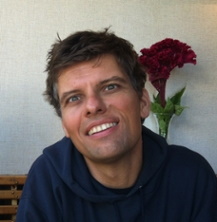
Dr. V.L. Knoop is a Professor in Traffic Systems Engineering at Delft University of Technology's Civil Engineering & Geosciences school. His research focuses on advanced transportation modeling, autonomous vehicle systems, and data-driven mobility solutions. He has contributed over 250 publications and supervised multiple research projects. Notable awards include the Greenshields Prize (2012, 2015, 2016) and D. Grant Mickle Award (2016). Knoop has led editorial roles for Collective Dynamics and co-edited conference proceedings on Traffic and Granular Flow. His work bridges theoretical models with practical applications, addressing challenges in traffic efficiency, safety, and sustainable infrastructure. Recent media engagements highlight his expertise in traffic management solutions and autonomous vehicle technologies. Education: PhD in Civil Engineering (assumed) Research Interests: Development of macroscopic traffic flow models Integration of autonomous systems into existing transport networks Data analytics for traffic prediction and optimization Key Contributions: Large-scale car-following dataset analysis (Lyft Level-5 collaboration) Ramp metering optimization studies using empirical trajectory data Publications on adaptive cruise control and uncertainty-based decision-making in autonomous vehicles Labs/Teams: Traffic Systems Group at TU Delft Collaborations with Rijkswaterstaat (Dutch Ministry of Infrastructure) and Flitsmeister
Dennis Moeke is a Lecturer in Logistics and Alliances at HAN University of Applied Sciences, leading the Logistics and Alliances Lectorate. He holds a broad professional network spanning logistics, government, and academia, with a focus on healthcare logistics and sustainable urban development. His research addresses societal challenges such as affordable healthcare systems, smart logistics solutions, and livable cities through interdisciplinary collaboration. His expertise includes patient logistics, data-driven capacity planning, and optimization of healthcare processes. Key projects include the Healthy City Lab , exploring sustainable last-mile logistics in cities via two Living Labs (Campus Heijendaal and Buur & Zo), and the Living Labs Sustainable Supply Chain Management in Healthcare . He has secured significant funding, including a NWO grant (Project 439.18.457), to advance interdisciplinary research. Notable contributions include developing the Buur & Zo concept (home care concierge services) and optimizing hospital patient flows using process mining. He collaborates with organizations like Logistics Valley, Health Valley, CWZ Carinova, and Siza. His work emphasizes practical applications, translating academic insights into real-world tools for healthcare and logistics sectors. Publications span topics like home care scheduling optimization, sustainable urban logistics, and pandemic response logistics. He actively promotes the role of logistics in societal well-being through teaching and industry partnerships.
Rob Basten is an Associate Professor in the Department of Industrial Engineering and Innovation Sciences at Eindhoven University of Technology (TU/e). He has been with TU/e since October 2014, initially as an Assistant Professor before being promoted. His work focuses on operations management and behavioral operations management, with particular expertise in maintenance, spare parts supply, and after-sales services for high-tech equipment. Basten's research is highly applied, often conducted in collaboration with industry partners such as ASML, NXP, Canon Production Printing, Marel Poultry, and the Ministry of Defence. Dr. Basten's educational background includes: Master's in Industrial Engineering and Management (2004) from University of Twente Master's in Computer Science (2005) from University of Twente PhD in Operations Management (2010) from University of Twente Rob Basten's research centers on improving after-sales services for high-tech equipment, with a focus on incorporating new technologies such as 3D printing and IoT. His work spans both analytical and empirical approaches, with increasing emphasis on behavioral operations management as human decision-makers interact with AI-based decision support systems. Basten investigates how to design and control after-sales service supply chains when spare parts can be 3D printed, and how to optimize maintenance policies for complex systems. His interdisciplinary research bridges operations management, maintenance engineering, and human behavior. Analysis of Basten's recent publications reveals a strong focus on the application of new technologies in after-sales services. Key trends include the integration of additive manufacturing in spare parts supply chains, condition-based and predictive maintenance driven by Industry 4.0 technologies, and the behavioral aspects of human-AI collaboration in maintenance decision-making. His work frequently addresses challenges in high-tech manufacturing contexts, particularly semiconductor equipment, with a growing emphasis on Industry 5.0 concepts that integrate human-centered approaches with advanced technologies. Dr. Basten has received recognition for his work, including: Finalist for the 2020 Daniel H. Wagner Prize for Excellence in Operations Research Practice ISIR Best Student Paper Award 2018 Rob Basten actively supervises numerous PhD students and has led several major research projects. He currently supervises nine PhD students including Maryam Azani, Ragnar Eggertsson, Bibi de Jong, Zhao Kang, Niccolò Maccarini, Aran Nasiri, Bas van Oudenhoven, İpek Tanıl, and Alireza Yazdani. He has successfully guided six PhD students to completion. Basten has been project leader and work package leader in significant research initiatives including ProSeLoNext (funded by NWO with industry co-funding), PrimaVera, SINTAS, and OCPROM projects. His research is consistently supported by both public funding agencies and industry partnerships, reflecting the practical relevance of his work. Basten is an active member of the Operations, Planning, Accounting & Control group at TU/e and contributes to the EAISI High Tech Systems initiative. He has organized key academic events including the first two editions of the Maintenance Research Day and the Behavioral Operations Conference 2019. His work connects academic research with industry practice through ongoing collaborations with leading high-tech companies, creating a dynamic research environment focused on solving real-world challenges in maintenance and service logistics.
Prof. dr. Jeroen de Mast is a faculty member at the University of Amsterdam (UvA) , affiliated with the Faculty of Economics and Business and the Section Business Analytics . His research focuses on Lean Six Sigma , statistical engineering , and diagnostic problem solving , with applications in healthcare operations and industrial processes. He has authored numerous publications on topics such as variation reduction, measurement systems, and quality improvement frameworks. Academic Rank: Professor Contact: j.demast@uva.nl Research Trends (2019–2025): His work spans operational excellence , appointment scheduling optimization , and statistical validation , emphasizing interdisciplinary collaboration between statistics, healthcare, and business analytics. Key methodologies include DMAIC , DAPS diagrams , and adaptive polynomials .
Elham Shirazi is an Assistant Professor specializing in Advanced Manufacturing, Sustainable Products & Energy Systems . Her research aligns with UN Sustainable Development Goals, focusing on Energy Management , Smart Grids , and Artificial Intelligence applications in energy systems. She has an h-index of 10 and 577 citations, primarily in Machine Learning and Power Systems . Her recent publications highlight trends in PV Power Forecasting , Energy Storage Optimization , and Grid Stability . Key methodologies include Long Short-Term Memory (LSTM) , Deep Reinforcement Learning , and Wavelet Packet Decomposition , applied to Building-Integrated Photovoltaics and Multi-agent Systems for grid resilience.
Abhishta Abhishta is an Assistant Professor at the University of Twente's Industrial Engineering & Business Information Systems group. His research focuses on cybersecurity economics, particularly measuring financial impacts of cyberattacks and improving organizational security investments through data-driven methods. Key research areas: Cybersecurity Economics, Digital Sovereignty, Behavioral Data Science Active in security analytics, ransomware studies, and trust mechanisms in predictive systems Contributions to EU policy analysis, DDoS defense, and cloud security risk frameworks Recent publications explore ransomware economics, dark web communication patterns, and digital sovereignty through EU legal documents. He combines technical cybersecurity analysis with behavioral science and economic modeling. Media expert on botnet business models and cybercrime economics Collaborates with industry on security decision-making Contributor to neuroscience-enhanced marketing research
Alessandro Chiumento is an Assistant Professor at the Department of Pervasive Systems, Faculty of Electrical Engineering, Mathematics and Computer Science (EEMCS), University of Twente. His research focuses on artificial intelligence, edge AI, wireless communication, and sensor systems for industrial and health applications. Key Research Areas: Reinforcement Learning, Deep Learning, 5G/6G Networks, Human Activity Recognition Recent publications highlight his work in mmWave radar systems for vital sign monitoring, UAV-based communication networks, and AI-driven resource management for IoT. He has contributed to 5G-RedCap optimization, WiFi network performance analysis, and biomedical sensor development. In 2024-2025, his team released comprehensive datasets for mmWave radar applications, explored non-invasive animal health monitoring, and advanced cross-layer QoS optimization frameworks. Earlier works (2016-2023) addressed Bluetooth mesh networking, LTE interference management, and multi-antenna systems for UAVs. Technical Themes: Spectrum Efficiency, Network Topology, Channel Quality Prediction, Autonomous Agents
Victor S. Dolk serves as an Assistant Professor in the Department of Mechanical Engineering at Eindhoven University of Technology (TU/e), actively contributing to the Heemels research group. His academic foundation includes a Master's thesis titled Mixing and switching completed in 2013 under M. Lauret's supervision at TU/e. Dolk's research centers on advanced control systems theory, with core expertise in event-triggered and time-triggered communication frameworks for multi-agent systems. His investigations address critical challenges in networked control environments including communication resource optimization, stability analysis under time-varying delays, resilience against denial-of-service attacks, and data-driven predictive control methodologies. Specific domains encompass linear parameter-varying (LPV) systems, complexity reduction in coupled mechanical problems, and certificates for stability analysis. Recent publications (2024-2025) demonstrate concentrated advancements in multi-agent communication resilience, digital implementation frameworks, and theoretical foundations for stability certificates in LPV systems. These works published in IEEE Transactions on Automatic Control and Automatica reveal strong emphasis on practical implementations of event-triggered mechanisms while maintaining analytical rigor. With 37 total research outputs and 1619 Scopus citations, Dolk has supervised 5 research projects or student theses. His ongoing work shows strategic focus on bridging theoretical control frameworks with real-world implementation constraints in resource-limited environments. As a core member of the Heemels research group at TU/e, Dolk collaborates extensively on networked control systems with international partners, contributing to the group's reputation in event-triggered control theory and applications.
Jaap Molenaar is a Professor at the Mathematical and Statistical Methods - Biometris group, affiliated with PE&RC (Plant Research International). As an external employee, he specializes in systems biology, mathematical modeling, and computational methods, with a focus on plant growth and dynamic control systems. His work bridges theoretical and applied research across ecology and agricultural sciences. PhD Promotor for 5 projects (2010–2024) Active in interdisciplinary collaborations (e.g., water distribution systems, plant meristem patterning) Research Interests include uncertainty quantification, nonlinear systems, and cellular/molecular pattern formation. His publications highlight applications of spectral expansion methods, sensitivity algorithms, and dynamic modeling in plant physiology and control theory. 2024: Prediction uncertainty in systems biology 2023: Leaf-level photosynthesis modeling 2022: Structural identifiability in control systems Science Communication : Featured in national media (e.g., EenVandaag , 2023) discussing EU policies to protect bees and agricultural ecosystems.
Rick P. Kramer is an Assistant Professor at the Department of the Built Environment, Eindhoven University of Technology, Netherlands. His research focuses on smart control of indoor environments, energy efficiency in HVAC systems, and data-driven solutions for building automation. He holds a PhD (2017) and MSc (2012) from TU/e, both in Building Services. His work addresses challenges in optimizing energy use while ensuring human wellbeing in offices, museums, and cleanrooms. Education: MSc (with honors) in Building Services, TU/e (2012) PhD (with honors), TU/e (2017) – Dissertation: 'Energy efficient indoor climate control strategies for museums' Research Interests: Rick combines data-driven techniques with expert knowledge to develop algorithms for building automation. Key areas include HVAC system diagnostics, low delta-T syndrome mitigation, and sustainable energy solutions like aquifer thermal energy systems. His work aligns with UN SDGs on climate action and sustainable cities. Awards: B.J. Max Prijs (2019) for museum environment research Best PhD Dissertation, Built Environment Department (2018) MSc Thesis Award (2013) Projects & Activities: Rick leads the B4B: Brains for Buildings' Energy Systems project (2021–2025), focusing on intelligent building energy systems. He actively contributes to academic journals, conferences, and industry collaborations. Courses Taught: Building Physics and Services Data Science for Intelligent Buildings Circularity and Energy Performance
Yoeri R.J. Poels is a researcher at Eindhoven University of Technology specializing in fusion energy and artificial intelligence applications. His work focuses on enhancing tokamak operations through data-driven modeling and AI techniques, with significant contributions to the Eurofusion Tokamak Exploitation Team and MAST Upgrade collaboration. His research interests bridge fusion energy engineering and artificial intelligence , particularly in developing surrogate models and deep learning algorithms for tokamak control systems. Key areas include power exhaust management, divertor technology, and real-time plasma control solutions for next-generation fusion reactors. His work integrates physics-based modeling with advanced machine learning techniques to address critical challenges in fusion energy development. Analysis of his publication record reveals a strong trajectory in applying AI methods to fusion challenges , with increasing focus on practical implementation in experimental tokamak devices. His recent work demonstrates how data-driven approaches can enhance control systems for managing transient heat loads and improving reactor stability. As part of major international collaborations including the MAST Upgrade team and TCV tokamak research, Poels contributes to cutting-edge fusion research across multiple institutions. His work appears in high-impact journals including Nature Energy , Communications Physics , and Nuclear Fusion , reflecting the interdisciplinary nature of his research at the intersection of physics, engineering, and computer science.
Chao Zhang is an Assistant Professor in Human-Centered AI at the Human-Technology Interaction group, Eindhoven University of Technology. His research bridges psychology and technology through data-driven methods and psychological theories, focusing on behavior change, AI-human dynamics, and trustworthy systems. MSc in Human-Technology Interaction (TU/e) PhD in Intelligent Systems (TU/e, 2019) Postdoc at Utrecht University Research interests span Human-Centered AI , Explainable AI , and Behavioral Data Science . Key contributions include: Integrating psychological principles with machine learning Modeling longitudinal behavioral data Developing interpretable AI systems for lifestyle interventions Investigating social characteristics in AI-driven environments Current work includes the ENFIELD project on Trustworthy Green AI. Scientific contributions appear in CHI Conference , arXiv , and International Journal of Social Robotics . Recognized with a TU/e PhD Thesis Award nomination in 2021.
Caspar A.S. Pouw is a Research Fellow in the Department of Applied Physics and Science Education at Eindhoven University of Technology (TU/e). He holds a dual role as a Postdoc researcher and Data Scientist at ProRail. His work focuses on advancing human crowd flow monitoring, modeling, and nudging technologies, particularly within the HTCrowd project. Pouw’s research integrates fluid dynamics principles to analyze pedestrian behavior in crowded environments, aiming to enhance safety and efficiency in urban spaces. Educated at TU/e, he earned his Master’s in Applied Physics (specializing in Fluids and Flows) and a Bachelor’s in Combustion Science. He has taught courses on sociophysics, covering crowd dynamics analysis, modeling, and nudging strategies. His contributions align with UN Sustainable Development Goals related to safe cities and resilient infrastructure. Recent research emphasizes data-driven modeling of pedestrian dynamics, psychological influences on train boarding efficiency, and real-time monitoring systems. His work bridges physics, computer science, and urban planning, with applications in transportation and public safety. Collaborations include ProRail and interdisciplinary teams at TU/e. Pouw’s datasets and software tools, such as those for pedestrian trajectory analysis, are openly available. His media coverage highlights innovations in crowd management post-COVID-19. Future work involves expanding predictive models for crowd behavior and optimizing transport infrastructure design.
Dr. Bernd Ensing is an Associate Professor at the van 't Hoff Institute for Molecular Sciences (HIMS) within the University of Amsterdam's Faculty of Science. He directs the AI4Science Laboratory, focusing on integrating artificial intelligence with molecular simulations. His research spans computational chemistry, catalyst design, and biophysical systems, emphasizing bio-inspired materials and electron/proton transfer mechanisms. Key research areas include: molecular simulations of catalytic processes (e.g., hydrogenase enzymes), multiscale modeling of soft materials, and machine learning-enhanced data analysis. He develops advanced algorithms like Path-metadynamics and FABULOUS for free energy exploration and reaction coordinate identification. Notable contributions include studies on polyether solubility in water, light-activated proteins' signaling mechanisms, and adaptive resolution simulations (Hybrid-atomistic/coarse-grained methods). His group collaborates on AI-driven material discovery and sustainable chemistry solutions. He has supervised numerous student projects at bachelor/master levels, requiring expertise in quantum chemistry, thermodynamics, or programming. The AI4Science Lab promotes open-source tools via GitHub and community-driven initiatives like PLUMED tutorials.
Dr. Jos Hageman is an Assistant Professor affiliated with the Mathematical and Statistical Methods group (Biometris) at Wageningen University & Research. His research focuses on integrating advanced analytical techniques (e.g., mass spectrometry, metabolomics) with statistical modeling to address challenges in food science, plant biology, and environmental systems. He specializes in developing predictive models for food product design, microbial activity analysis, and environmental impact assessment. Education: Not explicitly stated in provided texts. Key research interests include metabolomics-driven food innovation, lipid and protein interaction modeling, and the environmental effects of microplastics. His work combines proteomics, metabolomics, and statistical methods to investigate plant-microbe interactions, crop diversity, and sustainable agriculture. He has collaborated on projects involving statistical analysis of fermentation processes, QSAR modeling for antibacterial compounds, and machine learning for ingredient characterization. Recent publications highlight advancements in QSAR models for food systems, microplastic toxicity assessment, and lipid species analysis via mass spectrometry. His datasets include metabolite profiles of grassland plants and breast milk protein dynamics. As a co-promotor, he oversees PhD projects on kwashiorkor etiology, plant-based protein optimization, and bioreactor transcriptomics. Current active projects focus on improving plant-based food proteins and understanding kwashiorkor pathophysiology through causal learning. His work bridges analytical chemistry, computational methods, and applied biology, contributing to food security and environmental sustainability initiatives.