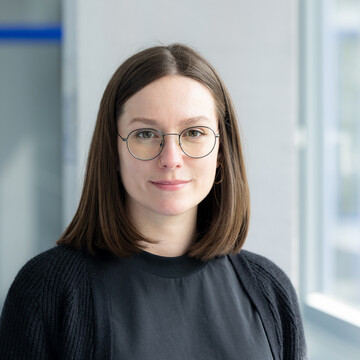
Daria Szafran is a researcher at the School of Social Sciences, University of Mannheim, focusing on interdisciplinary studies at the intersection of computational modeling, migration dynamics, and public health. Her work combines quantitative and qualitative approaches to analyze complex social phenomena. Current research areas include: Algorithmic refugee matching and smart city integration Perceptions of Muslim immigration in Germany E-cigarette addiction mechanisms and public health implications Ethical considerations in automated decision-making systems Her recent publications emphasize computational social science methods, with peer-reviewed articles on agent-based modeling and analysis of online user communities. She employs mixed-methods frameworks including focus group discussions and netnographic analyses. Geographic and demographic factors in social cohesion are recurring themes across her work, particularly examining how projected population changes influence perceptions of migration backgrounds in Germany.
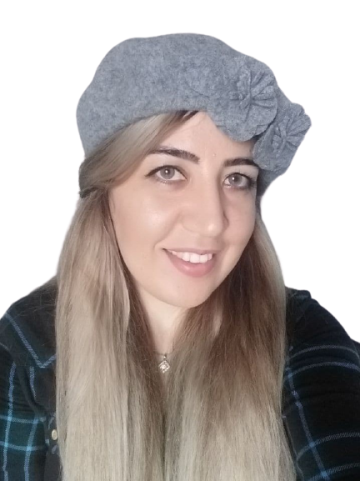
Nahid Jamshidi is a Researcher at the Institute of Mathematics within the Faculty of Natural Sciences II (Chemistry, Physics and Mathematics) at Martin Luther University Halle-Wittenberg, specializing in applied stochastics with emphasis on numerical methods for stochastic systems. Her research focuses on: Stochastic Differential Equations driven by fractional Brownian motion Numerical analysis of stiff and unstable systems Model order reduction techniques including Gramian-based and sampling methods Convergence and stability analysis of Euler, Milstein, and exponential integrators Computational challenges in high-dimensional stochastic modeling Long-range dependence phenomena in fractional noise processes Analysis of her 7 publications (2017-2024) reveals consistent advancement in numerical schemes for fractional SDEs, with recent work (2023-2024) addressing exponential integrators for stiff systems and empirical Gramian applications. Her research bridges theoretical stochastic analysis with practical computational solutions for complex noise-driven dynamics. No scientific awards are documented in available sources. The provided information contains no records of student supervision, grant funding, laboratory affiliations, or research team memberships.
Marko Tkalcic is a Professor affiliated with the University of Primorska, Slovenia, with a former affiliation at the Free University of Bolzano/Bozen, Italy. His research focuses on recommender systems, user modeling, and affective computing, particularly in the context of music, multimedia, and human-computer interaction. He has contributed to over 118 publications since 2008, spanning journals, conferences, and workshops. His work emphasizes ethical AI, transparency in adaptive systems, and the integration of psychological theories into computational models. Key research areas include hybrid music recommendation systems, emotion and personality-driven recommendations, and the societal impact of AI. Tkalcic has organized and chaired multiple workshops, including HUMANIZE (Transparency in Adaptive Systems) and EMPIRE (Emotions and Personality in Personalized Systems). His recent studies explore eudaimonic/hedonic characteristics in media content and the prediction of user preferences using machine learning. He collaborates extensively with institutions like the University of Trento, TU Wien, and Tilburg University, reflecting his global academic network. Tkalcic’s publications address challenges in algorithmic fairness, user-centric design, and interdisciplinary applications of recommendation technologies. His work bridges computational methods with cognitive and social sciences, aiming to enhance human-centered digital experiences.
Peter Struss is a Professor at the Technical University of Munich (TUM), affiliated with the TUM School of Computation, Information and Technology. He holds the academic title of Prof. Dr. rer. nat. habil. and is part of the Department of Computer Science 16, specifically the Chair of Computer Science Applications in Medicine led by Prof. Navab. His research focuses on interdisciplinary applications of computer science in medical fields, including healthcare technology, medical informatics, and AI-driven solutions for biomedical challenges. His professional contact information includes an office located at TUINI16, Boltzmannstr. 3/III in Garching bei München. While no specific awards or publications are listed here, his affiliation with the medical computer science chair suggests expertise in computational methods for medical diagnostics, imaging, or patient data analysis. Further details on his educational background, grants, or advising activities are not provided in the source text.
Dr. Anna Żyłka is a researcher at the Department of Advanced Computational Methods, Faculty of Science and Technology, Jan Dlugosz University in Czestochowa, Poland. Her work focuses on fluidization, chemical looping combustion, and computational modeling of thermal processes. Fluidization techniques in energy systems Process simulation for emission reduction Reaction kinetics in combustion Her recent publications highlight advancements in CFD-DEM coupling for fluidized beds, CO2 capture optimization , and eco-friendly desalination systems . Collaborative efforts with co-authors like Jaroslaw Krzywanski and Karolina Grabowska underscore her interdisciplinary approach.
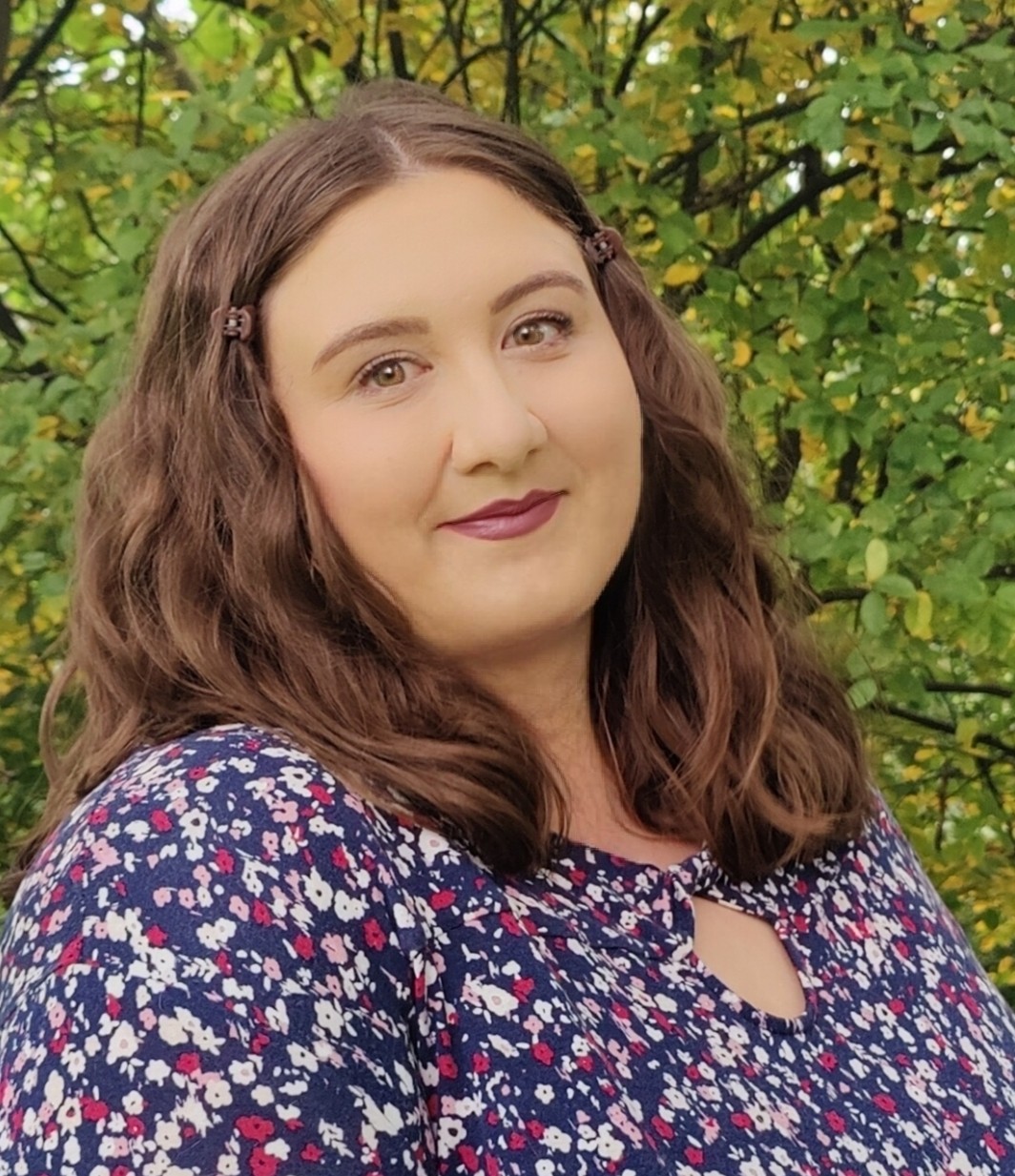
Katrin Herweg is a Research Scientist at the Institute of Imaging and Computer Vision (Chair of Imaging and Image Processing), RWTH Aachen University, Germany. She has been actively contributing to the advancement of high-resolution, time-of-flight positron emission tomography (PET) detector technologies since 2019. Her work is deeply rooted in the Department of Physics of Molecular Imaging Systems at the Institute for Experimental Molecular Imaging, and she continues her research in detector development with a strong focus on scintillator physics and photodetection systems. Master of Science in Physics, RWTH Aachen University (2017–2020), Focus: Experimental Particle Physics Bachelor of Science in Physics, RWTH Aachen University (2014–2017) Katrin's research centers on the development of PET detectors with ultra-high timing resolution. She investigates fast and ultra-fast light emission mechanisms in scintillator materials such as CsZnCl₃, LYSO:Ce,Ca, and BaF₂ through experimental measurements and simulations. Her work aims to push the boundaries of time-of-flight PET and CT by enabling sub-100 ps timing precision, which enhances image quality and quantification in nuclear medicine. She also explores novel photodetector technologies like μSiPMs and digital-analog SiPMs (DIGILOG) to overcome limitations of traditional materials like BGO. The recent publications highlight a consistent trend in advancing PET detector performance through innovations in scintillator characterization, ASIC-based readouts (e.g., TOFPET2c), high-frequency SiPM electronics, and modular, scalable detector designs with depth-of-interaction capability. Her work bridges fundamental physics with practical medical imaging applications, particularly in scatter rejection, organ-dedicated imaging, and axial field-of-view expansion. Scientific Awards: 3rd Place, IEEE Nuclear Science Symposium Student Paper Award (November 2023) Katrin has supervised multiple bachelor's theses on topics including deep learning-based position estimation in PET detectors, optical coupling materials, and scintillator coatings. She has served as an exercise and laboratory course instructor in nuclear medicine physics for both M.Sc. Biomedical Engineering and B.Sc. Electrical Engineering students. While no direct grant information is listed, her extensive publication record in high-impact journals and conferences suggests active participation in funded research projects. She collaborates closely with Prof. Volkmar Schulz and Dr. Stefan Gundacker, key figures in molecular imaging at RWTH Aachen. Katrin is a member of the research team at the Chair of Imaging and Image Processing (LFB), which focuses on advanced imaging systems, detector development, and image reconstruction algorithms. The team is part of a larger ecosystem at RWTH Aachen dedicated to experimental molecular imaging and biomedical engineering, contributing to platforms like Hyperion III for PET/MRI research.
Ambra Tamina Jacqueline Ottersbach is a researcher and teaching associate in the Department of German Studies/Linguistics at the University of Siegen, Faculty I. She works under the Chair of German Studies/Linguistics led by Prof. Dr. Petra M. Vogel, contributing to both research and academic instruction. Her research focuses on onomastics , particularly the linguistic structure and cultural motivations behind naming practices for birds and technical devices. She employs comparative and descriptive methods in German and cross-linguistically, especially in German-Swedish contexts. Her work intersects with syntax , phonology , and dialectology , as evidenced by her involvement in the "Dialect Atlas of Central West Germany" (DMW) project. The two most recent publications reflect a strong thematic trend in creative naming and anthropomorphization in language, analyzing pet-like names for machines and symbolic motifs in avian nomenclature. These works fall within broader domains of cultural linguistics and lexical innovation . Member, Society for German Language (GfdS) Member, QVM Commission of Faculty I, University of Siegen (since December 2023) Member, Examination Board for German Studies, University of Siegen (since April 2025) She has taught courses in Syntax and Phonology & Graphematics across multiple semesters, demonstrating active engagement in academic mentoring and curriculum delivery. Her role includes supervising student groups and contributing to academic governance. Ambra Ottersbach has been consistently involved in the "Dialect Atlas of Central West Germany" (DMW) project, indicating sustained collaboration in empirical linguistic research. Her work environment emphasizes interdisciplinary and data-driven approaches to German linguistics.
Prof. Dr. Matthias Grabmair is a Professor of Legal Tech at the TUM School of Computation, Information and Technology, part of the Technische Universität München (TUM). His research focuses on advancing computational methods for legal analysis, particularly leveraging natural language processing (NLP) to enhance legal document summarization, judgment prediction, and AI-driven legal systems. He leads the JUSMOD organization and has contributed to datasets like ECtHR-PCR for precedent understanding. Key research areas include automated legal reporting (e.g., LexGenie), cross-jurisdictional analysis, and ethical AI applications in privacy policies (PrivaT5). His work emphasizes improving judicial decision-making transparency through models like Hiculr for rhetorical role labeling and Chronoslex for temporal generalization. Prof. Grabmair also explores adversarial robustness in legal AI systems and transfer learning across legal domains. Publications span 2005–2025, with recent emphasis on generative AI for legal texts, explainable AI in judgment prediction, and curriculum learning for legal document analysis. His research bridges computational methods with legal practice, addressing challenges in fairness, reliability, and scalability of AI applications in law.
Dr. Andreas Luther is a Lecturer and Tutor in Environmental Sensing and Modeling at the Technical University of Munich (TUM). His research focuses on atmospheric modeling, greenhouse gas monitoring, and inverse emission estimation. He leads projects involving the MUCCnet urban carbon column network and develops software like Pyra for automated greenhouse gas measurements. His work combines mobile spectrometry, Lagrangian modeling, and Bayesian inversion techniques to quantify methane and CO2 emissions from coal mines, urban environments, and industrial sources. Collaborations include international projects like ICOS Cities and the GHG-KIT initiative. Key research contributions include refining emission inventories using FTIR data, validating satellite measurements, and advancing mobile measurement systems. He teaches environmental sensing and modeling, contributing to student training through practical courses and seminars. His publications span conferences such as EGU and ICOS, with recent work addressing methane emissions in Vienna, Hamburg, and the Upper Silesian Coal Basin. Dr. Luther’s lab focuses on combining remote sensing technologies with high-resolution dispersion models. He actively participates in EU-funded projects and has developed sensor frameworks for urban climate monitoring. His technical expertise spans both field instrumentation and computational inversion methods, bridging applied environmental science with data-driven solutions.
Eric Amann is a Researcher at the University of Koblenz-Landau, affiliated with the Process Science Research Group (FG PS) under Prof. Dr. Patrick Delfmann. His work focuses on developing self-learning algorithms for predicting process instance behavior in workflow management systems, as part of the DFG-funded Context-aware Predictive Process Analytics project. He supports teaching activities within the research group. Education: Completed a Master of Science in Business Informatics at the University of Koblenz-Landau (Koblenz Campus) in May 2022. Parallel to studies, he worked as a software developer in cybersecurity. Research Interests: Specializes in Business Process Management, Process Mining, and Data Visualization. His current project addresses predictive analytics in process systems using AI-driven methods. Professional Contributions: Provides specialist consultancy in business informatics for the university's FB4 (Faculty/Department 4). Active in both research and academic support roles.
Prof. Marcin Grzegorzek is a Professor at the Institute of Medical Informatics , University of Lübeck, Germany. His research focuses on AI-driven medical imaging, deep learning applications in healthcare, and sensor data analysis for assistive technologies. Key areas include medical image processing, wearable sensor systems, and clinical decision support systems. Research Groups: Medical Data Science Lab, Medical Deep Learning Lab, and Junior Research Group on Movement Disorders. Key Projects: Development of AI algorithms for OCT-based retinal analysis, lymph node segmentation, and real-time health monitoring using wearables. His work bridges clinical needs with advanced computational methods, contributing to improved diagnostics and personalized medicine. Over 100+ peer-reviewed publications reflect his expertise in medical informatics and interdisciplinary collaborations.
Prof. Sonja Grün is a Professor and Director of the Computational and Systems Neuroscience division (IAS-6) and the JARA-Institute Brain structure-function relationships (INM-10) at Forschungszentrum Jülich. She leads the Statistical Neuroscience research group, focusing on cell assemblies, dynamical neuronal interactions in cortex, higher-order correlation analysis, and reproducible workflows. Her work bridges experimental and computational approaches to understand neural coding and network dynamics. Key contributions include methodologies for spike pattern detection (e.g., SPADE) and tools for data curation (UnitRefine). She actively develops neuroinformatics standards (e.g., Neuroelectrophysiology Analysis Ontology) and promotes reproducible research through provenance tracking initiatives like NFDI-Neuro. Her research spans motor cortex activity, visual processing, and model validation frameworks. Research interests emphasize spatio-temporal spike patterns, cortical network models, and artifact detection in high-density recordings. She collaborates on projects integrating electrophysiological data with computational simulations (e.g., NEST) and brain wave analysis (Cobrawap). Current efforts address challenges in data sharing, artifact removal, and scalable analysis pipelines for heterogeneous datasets.
Prof. Dr. Josef Schürle is a Professor at Reutlingen University specializing in Economics, Investment, and Quantitative Methods. He teaches courses on business fundamentals, finance, and data science/statistical learning. His research focuses on Financial and Actuarial Data Science, emphasizing practical applications such as anonymization techniques for insurance data and advanced investment simulation models. Education & Career: No detailed education history provided, though his academic rank implies doctoral qualifications. Current position as a full-time professor in the department of Wirtschaftswissenschaften, Investition und Finanzierung sowie Quantitative Methoden. Research Trends: Recent publications (2021–2022) highlight work in actuarial data anonymization and financial simulation tools. His work bridges theoretical quantitative methods with real-world applications in insurance and investment sectors. Grants & Labs: No specific grants or lab affiliations mentioned. His research is likely integrated into Reutlingen University’s broader initiatives in digital business and data-driven decision-making.
Anna Swantje van der Meer is a Child and Adolescent Psychotherapist and Doctoral Student at Philipps University of Marburg, affiliated with the Child and Adolescent Psychotherapy Outpatient Clinic (KJ-PAM) and the Department of Clinical Child and Adolescent Psychology. She contributes to the German Center for Mental Health (DZPG) through the Youth Mental Health Infrastructure KODAP, focusing on data collection and clinical research. Research Interests: Her work centers on mental health and health literacy among refugee youth, stress experienced by professionals working with traumatized children, and participatory research involving adolescents in clinical psychology. These interests are reflected in both her publications and thesis supervision. Publication Trends: Her recent articles are primarily systematic reviews in high-impact psychology and psychiatry journals, emphasizing refugee mental health, youth involvement in research, and conceptual models of health and illness. The interdisciplinary nature of her work bridges clinical practice, public health, and qualitative inquiry. Scientific Memberships: German Society for Psychology (DGPs) Teaching and Supervision: She teaches the module "In-Depth Practice - Practice Wise" in the Master Psychotherapy program at Philipps University of Marburg and has led an elective seminar in Clinical Psychology at TU Dortmund. She supervises multiple theses on topics including health literacy, professional stress, addiction, and participatory methods. Research Projects: Active in DZPG-related research, particularly the KODAP infrastructure, she integrates clinical practice with data-driven research to improve outpatient psychotherapeutic care for youth.
Peter Schröder-Bäck is a Professor of Ethics and Sociology at the University of Applied Sciences for Police and Public Administration of North Rhine-Westphalia (HSPV NRW), based in Aachen. He has held this position since 2020, following roles as Assistant/Associate Professor at Maastricht University (2008-2020) and prior work in public health institutions. His academic credentials include a Habilitation in Public Health (University of Bremen, 2012), a Ph.D. in Philosophy (Ruhr-Universität Bochum, 2003), and an M.A. in Bioethics (Georgetown University, 2000). His research explores the intersection of ethics, sociology, and public policy, with emphases on: Public Health Ethics : Normative frameworks for health governance, policy justification, and balancing individual vs. population interests. Maternal & Global Health : Service utilization barriers, sociodemographic disparities, and pandemic impacts in Southeast Asia. Moral Distress : Psychological and ethical challenges for health professionals during crises like COVID-19. Police Ethics : Violence reduction, human rights, and ethical decision-making in law enforcement. His recent publications (2021-2025) reflect a strong focus on ethical dilemmas in public health crises, health policy implementation, and equity-driven research. Trends include critical analyses of pandemic responses, knowledge translation in health systems, and the sociopolitical determinants of health governance. Awards and honors recognize his contributions: Großer Lehrpreis (Maastricht, 2018) Honorary Membership, Faculty of Public Health UK (2017) Best Abstract Prize, European Public Health Association (2007) Fulbright Scholarship (1999-2000) He has supervised 10 PhD students, with dissertations spanning health systems innovation, child safety, and ethical autonomy in healthcare. His work bridges academic rigor with practical policy applications, emphasizing normative clarity in public service.