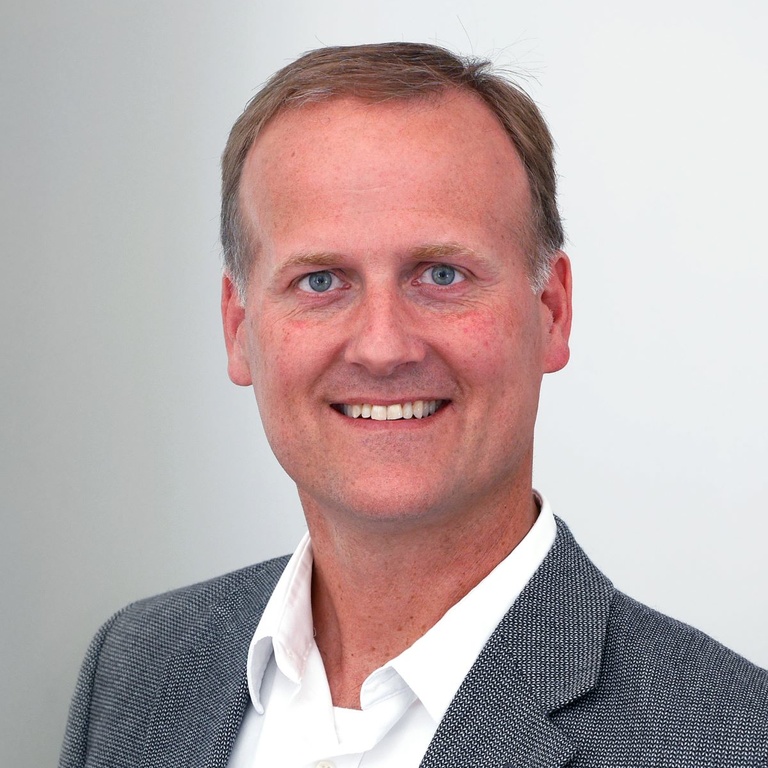
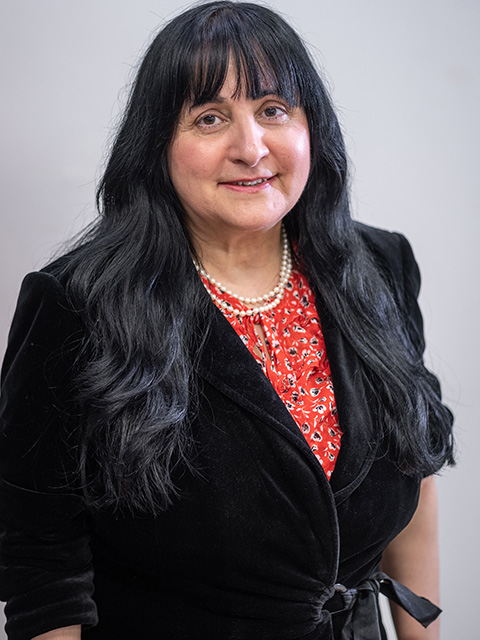
Prof. Dr.-Ing. Johannes Henrich Schleifenbaum is a Professor and Chair of Digital Additive Production at RWTH Aachen University, where he leads research in the Profile area Production Engineering (ProdE). His work advances additive manufacturing (AM) through interdisciplinary approaches combining materials science, process engineering, and digital technologies. His research encompasses: Laser powder bed fusion (LPBF) process optimization and defect mitigation Development of novel alloys/composites for AM applications Sustainable manufacturing practices including material recycling Integration of AI/ML for accelerated material and process design Digital tools for automated design and distributed manufacturing Recent publications (2023-2025) demonstrate a strong focus on: Multi-material processing and microstructure control Machine learning-driven alloy development Standardization and scalability of AM processes Advanced simulations for meltpool dynamics and thermal behavior Applications in aerospace, construction, and biochemical engineering He leads the Chair of Digital Additive Production, collaborating with industry partners to translate research into industrial solutions for next-generation manufacturing.
Markus König is a Professor of Informatics in Civil Engineering at Ruhr University Bochum, where he has been researching and teaching since October 2009. His work focuses on Building Information Modeling (BIM), digital construction technologies, and civil engineering informatics, with significant contributions to the development and implementation of digital methods in German construction industry. Dr. König earned his degree in civil engineering with a focus on applied computer science at Leibniz University Hannover, where he also completed his doctorate on cooperative building planning at the Institute for Building Informatics. He subsequently held a junior professorship for Theoretical Methods of Project Management at Bauhaus University Weimar before joining Ruhr University Bochum. His research spans multiple cutting-edge areas including Building Information Modeling (BIM), construction process simulation, tunneling informatics, infrastructure asset management, and the application of artificial intelligence and computer vision in civil engineering. As chair of the Building Informatics Working Group from 2012-2016, he played a key role in developing the first national BIM curriculum for German universities and serves as editor of the book 'Building Information Modeling: Technological Foundations and Industrial Practice.' Analysis of his recent publications reveals a strong trend toward semantic technologies, digital twins, automated compliance checking, and the integration of AI in construction processes. His work increasingly focuses on information containers, ontology development, and the application of large language models to infrastructure data, reflecting the evolving landscape of digital construction. Dr. König's significant contributions to digital construction have been recognized with prestigious awards: Lower Saxony-Bremen Construction Industry Award (2017) for 'services in the development and introduction of digital construction in Germany' Konrad Zuse Medal (2020) While specific details about his advising and grant activities aren't explicitly mentioned in the provided text, his extensive publication record with numerous co-authors suggests active supervision of doctoral students and research staff. His involvement in multiple collaborative research projects is evident from his publication history. At Ruhr University Bochum, Professor König leads a research group focused on civil engineering informatics, with particular emphasis on BIM, digital construction technologies, and their application across the building lifecycle. His team appears to work at the intersection of computer science and civil engineering, developing innovative solutions for construction process optimization, infrastructure management, and digital transformation of the AEC industry.
Dr. Anna Raffoni serves as a Senior Lecturer in Accounting and Finance at Loughborough Business School, Loughborough University, and holds the strategic role of Programme Lead for Social Science Research (Business and Management Studies). She joined the institution in January 2015 after accumulating academic experience at the University of East Anglia, Cranfield University School of Management, and the University of Bologna, establishing herself as a key contributor to the Accounting and Finance research group. Her academic foundation includes a PhD in Management Accounting (specializing in customer value management) awarded by the University of Florence in 2009, which continues to inform her interdisciplinary research trajectory. Raffoni's scholarly work centers on performance management, business analytics, and strategic management accounting, with publications appearing in premier journals including the European Journal of Operational Research, British Accounting Review, Production, Planning & Control, and Omega. Her research uniquely bridges quantitative operations research methods with accounting frameworks, particularly examining how data analytics transforms traditional performance measurement in banking and service sectors through techniques like machine learning and data envelopment analysis. Analysis of her 15 most recent publications (2012-2024) reveals a clear evolution toward integrating advanced analytics with performance management systems. She has pioneered multidimensional efficiency measurement in banking branches, explored total cost of ownership in supply chains, and investigated strategic performance measurement adoption, consistently demonstrating how operational research methods solve real-world accounting challenges while advancing theoretical models. Her scientific recognition features the Dean’s Award for Early Career Teacher of the Year (2017), acknowledging her excellence in undergraduate and postgraduate instruction. In her capacity as Programme Lead, Raffoni shapes research strategy and supports faculty development across Business and Management Studies. While specific supervisees and grant details aren't documented in available materials, her leadership role and active publication record indicate substantial engagement in research mentorship and academic community building. She actively collaborates within Loughborough's Accounting and Finance research group, contributing to interdisciplinary projects that address contemporary challenges in financial management through analytical approaches, with emerging work suggesting increasing focus on artificial intelligence applications in performance systems.
Sageev Oore is an Associate Professor in the Faculty of Computer Science at Dalhousie University, a Research Faculty Member at the Vector Institute for Artificial Intelligence, and a Canada CIFAR AI Chair. He previously served as Associate Professor and Chairperson in the Department of Mathematics & Computer Science at Saint Mary’s University and spent 2016–2018 as a Visiting Research Scientist at Google Brain, working on the Magenta team. Faculty of Computer Science, Dalhousie University Vector Institute for Artificial Intelligence Google Brain (2016–2018) Saint Mary’s University (former) Sageev Oore's research centers on machine learning and deep learning, with a strong focus on creative applications in music, audio processing, and computational creativity. His work bridges the gap between technical innovation and artistic expression, developing systems that generate and interact with music using neural networks. He has made significant contributions to generative models for music, including the development of PerformanceRNN and other interactive systems. His recent publications highlight advancements in out-of-distribution detection (Gram-OOD), interactive music generation, and deep learning tools for creative domains. These works reflect a consistent trend toward building intelligent, user-centered systems that enhance human creativity through AI. Canada CIFAR AI Chair (2018) Best Paper Award, CVPR ISIC Workshop (2020) Outstanding Demonstration Award (Runner-up), NeurIPS (2020) Best Demonstration Award, AAAI (2017) Best Demonstration Award, NeurIPS (2016) Sageev Oore actively mentors graduate and undergraduate students, with well-funded research positions available for motivated candidates. His collaborations span academia and industry, including major projects with Google Brain and interdisciplinary work with artists. He leads research initiatives in AI-driven creativity and is deeply involved in the Canadian AI ecosystem through the Vector Institute and CIFAR. His work is supported by significant grants and affiliations, including the Canada CIFAR AI Chair program, which funds his research in foundational AI and its applications. He is also part of the Magenta project at Google, contributing to open-source tools for art and music generation. Sageev Oore leads a research group focused on deep learning for creative applications, with projects in music generation, audio synthesis, and human-AI interaction. His lab collaborates with musicians, artists, and healthcare researchers, fostering a transdisciplinary approach to AI innovation.
Craig L. Just holds the Donald E. Bently Professorship in Engineering and serves as a Professor in the Department of Civil and Environmental Engineering at the University of Iowa's College of Engineering. He also works as a Faculty Research Engineer at IIHR—Hydroscience and Engineering. With a PhD in Environmental Engineering and Science (2001) and an MA in Chemistry (1994), both from the University of Iowa and University of Northern Iowa respectively, his career spans over two decades of academic and practical contributions. Education: PhD, Environmental Engineering and Science, University of Iowa (2001) MA, Chemistry, University of Northern Iowa (1994) BS, Chemistry, University of Northern Iowa (1992) Dr. Just's research focuses on water quality monitoring through sensor technology, freshwater mussel biosensing , pharmaceutical contaminant removal , and PCB exposure analysis from dredging operations. His work bridges environmental engineering with ecological health and sustainable systems. Recent publications highlight trends in anaerobic digestion optimization , PCB emission characterization , and machine learning applications for biogas prediction. He has extensively studied constructed wetlands , nitrogen cycling , and flood risk mitigation in agricultural and urban contexts. As director of the Iowa Wastewater and Waste to Energy Research Program, he leads initiatives connecting bioremediation , smart infrastructure , and community engagement . His projects span from hydrological modeling in Iowa to international water programs in Honduras.
Valeriy Vyatkin is a Professor at the Department of Electrical Engineering and Automation, Aalto University. His research focuses on advancing industrial automation, control systems, and their integration with emerging technologies like machine learning and digital twins. He specializes in standards such as IEC 61499, addressing interoperability, formal verification, and performance optimization in distributed automation systems. Key research interests include: Physics-informed machine learning for industrial processes (e.g., steel rolling, reservoir engineering) Formal methods for control system validation and safety-critical applications Development of adaptive automation frameworks for Industry 5.0 challenges, including human-robot collaboration and energy systems Interoperability between legacy and modern industrial standards (OPAS, OPC UA) Recent work emphasizes real-time simulation, FPGA-based control prototyping, and AI-driven solutions for energy efficiency and sustainability in manufacturing, horticulture, and process industries. Publications span topics like robotic walker design, probabilistic model checking, and decentralized learning management systems. He collaborates on EU and industry-funded projects, focusing on digital twin implementation, edge computing, and virtual commissioning. His team develops tools for automated code generation, system migration, and anomaly detection in complex industrial settings.
Evita Papazikou serves as a Lecturer in Transport Engineering at the School of Engineering, University of the West of England (UWE Bristol), where she contributes to the Centre for Transport and Society and collaborates with the Bristol Robotics Laboratory's Connected & Autonomous Vehicles Centre. Her academic qualifications include: Civil Engineering (BEng and MEng) from Aristotle University of Thessaloniki MSc in Planning, Organisation, and Management of Transport Systems, Aristotle University of Thessaloniki PhD in Automated Systems and Driver Behaviour (Road Safety) from Loughborough University, sponsored by the Insurance Institute for Highway Safety with access to SHRP2 NDS data Dr. Papazikou's research focuses on road safety, connected and automated vehicles, driver behaviour analysis, and smart infrastructure. She investigates accident causation through statistical modeling, develops driver monitoring systems, and explores human factors in transportation. Her work integrates traffic simulation with mobility data fusion from vehicles, sensors, and infrastructure to enhance safety in future mobility systems, particularly in cooperative, connected, and automated environments. Her recent publications (2023-2025) reveal a concentrated research trajectory examining safety impacts of dedicated lanes for autonomous vehicles, parking policy implications in automated eras, and driver fatigue management. She consistently employs naturalistic driving data and traffic microsimulation to analyze driver-vehicle-environment interactions, with increasing emphasis on real-world intervention effectiveness and environmental sustainability in mobility systems. Scientific Awards: No specific awards were mentioned in the provided information. Dr. Papazikou has secured significant research funding through competitive programs including Horizon 2020, Innovate UK, and the Department for Transport. Her project portfolio demonstrates substantial industry collaboration, particularly with Ford, and includes: LEVITATE: Assessing societal impacts of Connected and Automated Vehicles SafetyCube: Developing an innovative road safety decision support tool i-DREAMS: Creating a smart driver and road environment assessment system DDRST: Building a data-driven road safety tool for hotspot identification TRIP: Developing a driver culpability assignment tool for road injury prevention She actively contributes to interdisciplinary research through her affiliations with the Centre for Transport and Society and the Bristol Robotics Laboratory's Connected & Autonomous Vehicles Centre, where she bridges engineering, human factors, and policy development for next-generation transportation systems.
Renate Egan is a Professor and Deputy Head of School (Engagement) at the School of Photovoltaics and Renewable Energy Engineering , University of New South Wales (UNSW). She leads UNSW's activities in the Australian Centre for Advanced Photovoltaics , a national research consortium involving multiple Australian institutions. Her research focuses on: Techno-economic analysis of photovoltaic technologies Energy data analytics for decentralized systems Electricity market restructuring Technology transfer and commercialization Recent work examines machine learning applications in energy demand forecasting, thermal storage optimization, and bushfire resilience. She collaborates extensively across academia, industry, and government sectors. Key affiliations include: Co-Founder of Solar Analytics (Australia's largest independent energy monitoring provider) Executive Committee member of the IEA PV Power Systems program
Mikael Johansson is a Professor at Kungliga Tekniska Högskolan (KTH), specializing in Control Technology . He teaches and coordinates courses such as Distributed Optimization (FEL3311) and various advanced-level degree projects in computer science, electrical engineering, and systems engineering. His research spans Control Systems , Machine Learning , and Optimization , with a focus on asynchronous algorithms, federated learning, and applications in energy systems and construction. His work includes 15 recent publications on topics like neural networks, distributed optimization, and battery technology. Notable areas of contribution are in asynchronous learning, federated learning with privacy constraints, and quasi-Newton methods for optimization. His research bridges theoretical advancements with practical applications in urban design, healthcare, and autonomous systems.
Giacomo Chiesa is a Full Professor at the Department of Architecture and Design (DAD) at Politecnico di Torino. He is a member of the Interdepartmental Center Ec-L - Energy Center Lab. His research focuses on Architectural Technology , Bioclimatic Design , Building Performance , and Urban Climate . Research Interests : Building Simulation, Passive Cooling, Smart Buildings, Digital Twin, Climate Change Adaptation Recent publications analyze urban weather datasets for energy simulations, shading control thresholds , and ventilation strategies in educational buildings. His work covers energy renovation roadmaps , thermal comfort , and climate-resilient building systems . Teaching : PhD courses in Human-Centric Methodologies and MSc courses in ICT in Building Design Research Leadership : Scientific Director for projects like Urban Generation and Prelude , EU-funded initiatives
Professor Mahroo Eftekhari is a Professor in Building Services Engineering at Loughborough University, leading the Low Energy Building Services Engineering MSc programme. Her research focuses on energy-efficient building systems, thermal comfort, HVAC optimization, and renewable integration. She has pioneered control systems for airports and buildings, including MPC-based strategies to reduce energy use while enhancing occupant well-being. Notable contributions include the development of BISPA (Building & Industrial Services Pipework Academy), a national center for BIM and pipework training. Education: Holds qualifications including CEng (Chartered Engineer), DPhil (Doctor of Philosophy), FCIBSE (Fellow of Chartered Institution of Building Services Engineers), and SFHEA (Senior Fellow of the Higher Education Academy). Her academic career is marked by collaborations with Tata Steel, Mitsubishi R&D, and Vexo, yielding applied research in sustainable building technologies. Research Interests: Indoor Air Quality, Thermal Comfort Modeling, Zero Energy Buildings, Digital Twins, and Advanced Control Systems. She has developed innovative solutions like AI-driven thermal management for Building Energy Management Systems (BEMS) and interfaces to synchronize airport operations with energy systems. Awards & Grants: Secured funding from diverse bodies for projects such as adaptive thermal comfort models, BISPA infrastructure, and energy-efficient HVAC strategies. Her work emphasizes practical applications, including reducing CO₂ emissions via airport terminal optimization and improving renewable energy use in buildings. Lab & Teams: Leads the Building Energy Research Group, managing projects in closed-loop heating systems, IEQ monitoring, and hydronic system efficiency. The Civil Engineering labs house interactive BIM rigs launched with institutional and industry support.
Li Song is a Professor and holds the Lesch Centennial Chair & Lloyd G. and Joyce Austin Presidential Professor at the University of Oklahoma's Aerospace & Mechanical Engineering Department. He leads the Building Energy Efficiency Lab and serves as AME Associate Director for Research. His expertise spans building energy systems, HVAC optimization, and fault detection technologies. Education: Ph.D. (Thermal/Fluid Science, 2004) from University of Nebraska-Lincoln; M.S. (Thermal/Fluid Science, 1996) from Harbin Institute of Technology; B.S. (Thermal Energy Systems, 1993) from Shengyang University of Civil Engineering and Architecture. Research focuses on energy-efficient HVAC systems, fault detection algorithms, and building performance analytics. Notable contributions include the ULEM-FDD system for high-performance buildings and virtual sensor technologies for airflow/water flow measurement. Awards include the ConocoPhillips Energy Prize (2011 finalist) and Bes-Tech Innovation Award (2006). Publications emphasize HVAC control strategies, energy modeling, and IoT-enabled diagnostics. Courses taught include Thermodynamics, Energy Efficient Building Systems Design, and HVAC Systems Engineering.
Professor Min An is a Professor of Construction and Risk Management at the University of Salford, leading the Infrastructure Research Group within the School of Science, Engineering & Environment. He holds an honorary professorship at two overseas universities (China and Portugal) and serves on the editorial boards of 12 international journals. With over 40 years of experience, his career spans academic roles at Heriot-Watt University, Coventry University, and the University of Birmingham, alongside industry roles as a civil engineer and researcher. His research focuses on safety and risk management in construction, transportation systems, and energy sectors, with over 200 publications. Key areas include railway and highway safety, offshore oil & gas risk assessment, and nuclear reliability management. He has secured funding from EPSRC, EU, DfT, and industry partners, leading 20+ projects. Notable achievements include developing methodologies for infrastructure safety and maintaining collaborations with 30+ industrial partners. Professor An has supervised 30 PhD students and over 280 postgraduate projects, contributing to industry workshops and best practices. Awards include multiple science technology prizes and conference best paper/keynote recognitions. His teaching spans risk management, construction safety, and project management across MSc programs.
Dr. Joshua Jeong is an Assistant Professor in the Hubert Department of Global Health at Emory University's Rollins School of Public Health. He serves as the principal investigator for three cluster randomized controlled trials assessing community-based parenting interventions in Tanzania and Kenya. His work focuses on father-inclusive strategies to improve early childhood development (ECD) in resource-limited settings. Dr. Jeong holds affiliate editorship at the Journal of Child Psychology and Psychiatry and collaborates with NGOs, governments, and international agencies to inform scalable ECD programs. His research integrates mixed-methods approaches for intervention development and evaluation, emphasizing gender equality and couples' relationships. Dr. Jeong earned his ScD and ScM in Global Health and Population from Harvard University (with FLAS Swahili fellowship and Harvard Center on the Developing Child award), and a BS in Human Development from Cornell University. His educational background includes advanced training in implementation science and intervention design. Research interests center on parent-child relationships , particularly father engagement in low-resource contexts. He explores how caregiver mental health, economic empowerment, and family dynamics impact ECD outcomes. Current projects address parenting program scalability through existing community networks and faith-based organizations. Findings aim to improve program fidelity, gender equity, and holistic child development support. His team's work has been recognized with awards from NIH, Society for Research in Child Development, and the Jacobs Foundation. Ongoing projects include evaluations of father-inclusive parenting programs and studies on maternal decision-making power's influence on child care-seeking behaviors. Lab activities involve graduate and undergraduate research assistants analyzing qualitative and quantitative data from fieldwork in Tanzania and Kenya. Weekly lab meetings are project-specific, with Spring 2025 sessions held at the Rollins Building. Collaborations with local implementing partners like Anglican Development Services and ChildFund Kenya drive applied research initiatives.
Kerryn Butler-Henderson is an Adjunct Professor in the Department of Health and Biomedical Sciences at RMIT University. Her research focuses on digital health transformation, healthcare informatics, and workforce education. She actively contributes to understanding the integration of artificial intelligence, predictive analytics, and electronic health records (EHR) into healthcare systems. Her work emphasizes improving clinical outcomes through data-driven approaches and addressing challenges in workforce digital literacy. She holds an ORCID identifier (0000-0002-6082-2108) and is open to supervising PhD and Masters students. Research interests include: Learning health systems and AI applications Prediction modeling for musculoskeletal disorders Digital health workforce development Value-based healthcare frameworks Educational innovations in nursing and healthcare Key publications from 2024-2025 explore topics like EHR generalizability, digital health literacy measures, and global digital health workforce roles. Her interdisciplinary collaborations span occupational health, gerontology, and healthcare accounting. Dr. Butler-Henderson is engaged in curriculum development for digital health competencies and has contributed to national surveys on nursing education trends. She maintains strong industry connections through RMIT's Health and Biomedical Sciences research networks.