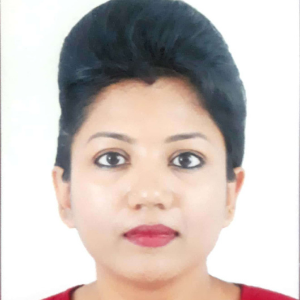
Suchana Datta is a Research Fellow at the Insight Centre for Data Analytics . Her work bridges Information Retrieval and Artificial Intelligence , with a focus on query performance prediction (QPP) and causality-driven retrieval . She has contributed extensively to improving neural ranking models through relevance feedback and reproducibility studies. Research Highlights Developing novel frameworks for supervised and unsupervised QPP using deep learning and hybrid feature integration Advancing causality modeling in information retrieval systems Exploring temporal trends in 19th-century literature through computational analysis Pioneering work in cloud forensics with dynamic forensic frameworks Publication Trends Her recent work (2022-2025) emphasizes neural QPP models , reproducibility in IR experiments, and causality detection in query events. Earlier contributions (2016-2020) focus on cloud forensic frameworks like DCF and causal analysis in retrieval systems.
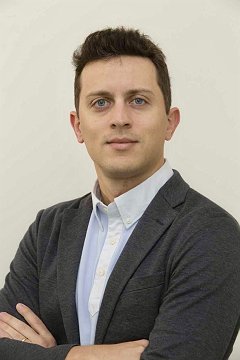
Ljubiša Bojić is a Senior Research Fellow at the Digital Society Lab (DigiLab) within the Institute for Philosophy and Social Theory at the University of Belgrade and concurrently at the Institute for Artificial Intelligence of Serbia. He serves as External Faculty at the Complexity Science Hub Vienna, focusing on AI's societal implications, particularly AI alignment, recommender systems, and metaverse ethics. His work bridges communication science, futurology, and digital humanism to address critical challenges in technology governance. Education: Ph.D. in Communication Science, University of Lyon II, France (2014) Research Focus: Bojić investigates how AI systems can uphold human values through ethical design, with emphasis on recommender algorithms as the most powerful social force shaping contemporary society. His pioneering work on digital addictions examines how AI-driven platforms create echo chambers and social polarization. He advocates for declaring recommender systems a public good and digital identity a human right, exploring both the addictive risks and therapeutic potentials of immersive technologies like the metaverse. Publication Trends: His recent output (2022-2025) reveals a strategic evolution from analyzing digital addiction mechanisms toward developing concrete AI governance frameworks. Key themes include linguistic pragmatics in large language models, consciousness metrics in AI, and cross-platform social dynamics. His research increasingly informs global policy through rigorous computational social science methods applied to real-world challenges like vaccine hesitancy and political polarization. Scientific Recognition: Fellow, Institute for Human Sciences Vienna (IWM) (2023) Member, United Nations Environment Programme Foresight Expert Panel (2023) Policy Engagement: Bojić co-developed Serbia's AI ethics standards and advised Spain's AI strategy. His Horizon Europe project TWON generated Policy Handout No. 8, mandating algorithms to deliver emotionally balanced, diverse content. His 'CERN for AI' framework influenced G7 policy briefs and was featured by the World Economic Forum. He regularly testifies before international bodies on AI governance. Institutional Leadership: As founder of EMERGE: Forum on the Future of AI Driven Humanity and initiator of the Belgrade Digital Freedom Pledge (signed by OSCE officials), he drives global conversations on digital rights. At DigiLab, he leads research on social media dynamics using big data analytics, while coordinating international networks like COST Action CA21129 on opinion analysis.
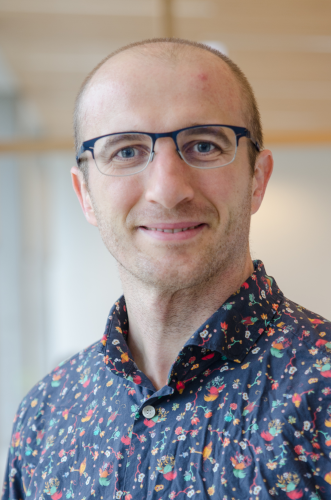
David Bani-Harouni is a researcher at the Chair of Computer Aided Medical Procedures at Technische Universität München (TUM). His work focuses on Medical Informatics , Artificial Intelligence , and Deep Learning , with an emphasis on Clinical Decision Support and Medical Image Analysis . Research Interests : Large Language Models (LLMs), Vision Language Models (VLMs), interpretability in deep learning, multimodal clinical decision support, and medical image analysis. Teaching : He contributes to lectures and practical courses such as Computer Aided Medical Procedures I , Medical Augmented Reality , and Deep Learning for Medical Applications . Publications : His research spans reinforcement learning for clinical decision-making, multimodal operating room datasets, toxin prediction systems (e.g., ToxNet), and graph convolutional networks for intoxication prediction. Contact : david.bani-harouni@tum.de
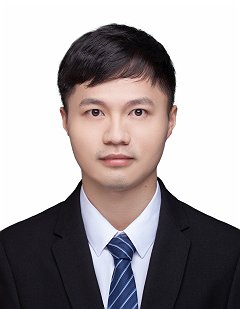
Dr. Jun Li is a Senior Lecturer at the School of Computer Science, Faculty of Engineering and Information Technology, University of Technology Sydney (UTS), Australia. He received his Ph.D. in Computer Science from Queen Mary University of London in 2009 and is affiliated with the Australian Artificial Intelligence Institute (AAII) at UTS. His research spans multiple domains within artificial intelligence, with primary focus on Machine Learning applications in computer vision and 3D geometry. Dr. Li has published extensively in high-impact journals including IEEE Transactions (TPAMI, TIP, TNNSLS) and Pattern Recognition, with recent work expanding into interdisciplinary research in earth science and marine applications. His research output demonstrates consistent productivity with numerous publications each year across diverse AI application areas. Dr. Li's work shows strong thematic progression from foundational computer vision techniques to applied interdisciplinary research. Early work focused on face hallucination and video super-resolution, while more recent publications address environmental applications using Graph Neural Networks for wave prediction and damage classification for disaster response. His research consistently bridges theoretical AI advances with practical real-world applications across healthcare, autonomous systems, and environmental science. AI to assist disaster emergency response (2023-2026) Applying Generative Adversarial Network in Medical Image Analysis (2020-2021) Big Massive Open Online Course (MOOC) Data Retrieval (2017-2020) As an educator, Dr. Li teaches core courses including '31005 Machine Learning' and '32513 Advanced Data Analytics Algorithms' at UTS, and is available for Masters Research and PhD student supervision, contributing to the development of next-generation AI researchers.
Guodong Long is an Associate Professor at the University of Technology Sydney (UTS) in the Faculty of Engineering and Information Technology. He joined UTS in 2010 and earned his PhD there in 2014. His research focuses on federated learning, trustworthy AI, and pre-trained foundation models with applications in healthcare, IoT, and social media. PhD in Artificial Intelligence, University of Technology Sydney (2014) Leading the Foundation Model and Federated Learning research group (https://www.fmfl.group/) His work addresses challenges in frequency transformation for time series, privacy-preserving healthcare analytics, and spatio-temporal traffic forecasting. He has published extensively at top AI conferences like AAAI, ICLR, and NeurIPS, with significant citation impact (4,682 citations in 2022). Collaborations with industry partners have secured over $4M in external funding. Recent publications emphasize federated foundation models (ICLR'25), privacy-preserving recommendation systems (WWW'25), and adaptive time series analysis. His research integrates domain knowledge and graph learning for multivariate time series imputation and traffic prediction. Dr. Long actively contributes to academic leadership as General Co-Chair for WebConf 2025, Program Co-Chair for AI conferences, and reviewer for top venues. He supervises PhD and master's students and welcomes research visitors for extended collaborations.
Ashis Kumer Biswas is an Assistant Professor in the Department of Computer Science and Engineering at the University of Colorado Denver, where he directs the Machine Learning Laboratory (ML Lab). His academic career spans institutions in Bangladesh, Texas, and Colorado, with a strong focus on interdisciplinary research at the intersection of machine learning, deep learning, and bioinformatics applications. Dr. Biswas earned his educational credentials from prestigious institutions: Ph.D. in Computer Science and Engineering from the University of Texas at Arlington (2016) M.S. in Computer Science and Engineering from University of Dhaka, Bangladesh (2009) B.S. in Computer Science and Engineering from University of Dhaka, Bangladesh (2008) His research centers around machine learning and deep learning with applications in bioinformatics, responsible AI, and healthcare. Dr. Biswas pioneered the 'data-blind machine learning paradigm,' focusing on privacy-aware intelligent applications for analyzing sensitive data like patient health records without direct access. His work spans genomic data analysis, medical imaging, natural language understanding, educational technology, and cybersecurity. He actively investigates how to incorporate responsible AI principles into system designs, with particular attention to privacy preservation, bias mitigation, and ethical outcomes in machine learning models. Analysis of his recent publications reveals a strong trend toward trustworthy AI systems, with significant focus on invertible neural networks for privacy preservation, bias-aware classification frameworks, and applications of machine learning to healthcare and education. His work consistently bridges theoretical machine learning advances with practical real-world applications. Dr. Biswas has secured significant research funding from the National Science Foundation, Google, US Department of Education, and other organizations. His work has been recognized with a best paper award at the BIBE conference. He serves as a reviewer for prestigious journals including TCBB, Frontiers in Oncology, and Elsevier Methods. As an educator, Dr. Biswas teaches graduate-level courses in machine learning, deep learning, reinforcement learning, and bioinformatics. He mentors a diverse group of students through the ML Lab, supervising undergraduate, MS, and PhD candidates working on collaborative research projects with community impact. His former students have secured positions at major technology companies including Amazon, Oracle, and research institutions.
Mattia Fazzini is an Assistant Professor in the Department of Computer Science & Engineering at the University of Minnesota's College of Science and Engineering. His primary academic appointment focuses on software engineering research and teaching, with active involvement in major conferences including ASE, ISSTA, ICSE, and MOBILESoft where he has served in leadership roles such as General Co-chair (MOBILESoft 2023) and Program Committee Co-chair. His research centers on software testing, maintenance, and security , with particular emphasis on mobile applications. Key research themes include: Developing techniques for automated Android testing and maintenance Addressing API compatibility issues across Android versions Creating tools for test oracle generation and bug reproduction Investigating security vulnerabilities in mobile ecosystems Optimizing test suites through test double analysis His recent publications (2021-2025) reveal strong focus on Android-specific challenges, with recurring themes in compatibility testing, automated test generation, and security analysis. Over 60% of his work involves tool development for practical testing scenarios, particularly targeting mobile platforms. Notable recognitions include: IEEE TCSE Distinguished Paper Award (2024) for work on test suite optimization ACM Distinguished Paper Award (2022) for COVID-19 app analysis As an educator, he advises multiple PhD and Master's students while teaching undergraduate and graduate courses including CSCI 3081W (Program Design) and CSCI 5802 (Software Engineering II). His service contributions span conference organization (MOBILESoft, ISSTA, ICSE) and extensive program committee work across top software engineering venues. He leads research projects focused on practical testing solutions with real-world applicability in mobile software development.
Klim Zaporojets is a Marie Skłodowska-Curie Postdoctoral Fellow in the Department of Computer Science at Aarhus University, where he conducts research within the Data-Intensive Systems Group. His work bridges theoretical advancements and practical applications in natural language understanding. His research focuses on information extraction systems that connect textual content with structured knowledge bases. His methodology emphasizes leveraging external knowledge sources to enhance information extraction performance, particularly in document-level contexts where entities evolve over time. His work spans temporal relation extraction, entity linking, and biomedical text mining applications. The publication record reveals a strong focus on document-level information extraction with increasing emphasis on temporal aspects and knowledge integration. Recent work explores large language model applications for graph learning and calibration challenges in LLMs, showing evolution from traditional NLP tasks to cutting-edge foundation model research. His publications appear in top-tier venues including ACL, EMNLP, CIKM, and NeurIPS. His scientific recognition includes the prestigious Marie Skłodowska-Curie Postdoctoral Fellowship, supporting his research at Aarhus University. His work has produced several influential datasets including DWIE, TempEL, and BioDEX that have become benchmarks in document-level information extraction. Zaporojets maintains active collaborations with researchers at Ghent University (evidenced by his ugent.be email address) and has contributed to multiple interdisciplinary projects spanning computational linguistics, healthcare informatics, and knowledge representation. His technical contributions include open-source implementations of his research, demonstrating commitment to reproducible science.
Mary Ann Tan is a PhD student and Junior Researcher at Karlsruhe Institute of Technology (KIT) and FIZ Karlsruhe – Leibniz Institute for Information Infrastructure, working within the Information Service Engineering group and the Institute of Applied Informatics and Formal Description Methods (AIFB). Her academic background includes: PhD candidate at KIT/FIZ Karlsruhe (2020–present) MSc in Computational Linguistics, Ludwig-Maximilians University, Munich (2018–2020) MSc in Computer Science (NLP specialization), De La Salle University, Manila (2002–2004) BSc in Computer Science, De La Salle University, Manila (1997–2001) Tan's research integrates Natural Language Processing, Knowledge Graphs, and Deep Learning to solve challenges in Cultural Heritage digitization. She develops methods for cross-lingual embeddings, knowledge graph refinement, multimodal search, and transformer-based workflows – transforming legacy cultural data into structured, AI-processable formats. Her work bridges technical AI innovation with practical heritage preservation needs, emphasizing under-resourced languages and multimodal cultural artifacts. Her 11 publications (2021-2025) reveal a cohesive trajectory: starting with bibliographic knowledge graphs (2021), advancing to multimodal art search and audio ontologies (2022-2023), and recently focusing on LLM integration for cultural data and mathematical semantics (2024-2025). This progression demonstrates increasing technical sophistication while maintaining consistent application to cultural heritage challenges. As an active collaborator in large international projects (e.g., the 50+ author Semantic Web and Creative AI report), Tan contributes to team-based research while developing her independent expertise. Her industry experience in software engineering informs her practical approach to research implementation within the Information Service Engineering group.
Christian Peukert serves as Professor of Digitization, Innovation and Intellectual Property at HEC Lausanne (Faculty of Business and Economics at University of Lausanne) and leads the Digital Markets Lab. His research examines how digitization transforms consumer behavior, firm strategies, and market dynamics, with particular focus on intellectual property frameworks and the economics of data and artificial intelligence. He actively contributes to the Digital Economy Network and teaches courses in strategy, innovation, applied econometrics, and data science. Peukert's research interests center on the economic implications of digital transformation across multiple domains. His work investigates copyright economics in the digital age, AI regulation challenges, open source software business models, and the impact of data governance frameworks like GDPR. He explores how technological changes affect market efficiency in creative industries including publishing, music, and comics, while examining the relationship between innovation incentives and intellectual property systems in digital environments. His publication portfolio demonstrates strong interdisciplinary engagement across law, economics, and computer science, with recent articles appearing in top journals like Management Science, Research Policy, and Organization Science. Notable research trends include examining AI training data economics, analyzing digital market regulation effectiveness, and studying the welfare impacts of mobile internet access policies. His work frequently employs empirical methods including field experiments, natural experiments, and large-scale data analysis. Peukert has received significant recognition for his scholarly contributions, including: Best Paper Award at Strategy Science Conference for research on startup funding and open source communities Best Paper Award at WISE for work on news recommendation algorithms Best Paper Award at INFORMS Annual Meeting 2024 for research on AI training data dynamics His research has attracted media attention from major outlets including Wall Street Journal, Washington Post, MIT Technology Review, and VoxEU, demonstrating the policy relevance of his work. Peukert maintains active collaborations with researchers across Europe and regularly contributes to policy discussions on digital markets and intellectual property through his leadership in the Digital Markets Lab and Digital Economy Network.
Dr. Ramya Tekumalla serves as Assistant Professor in the Department of Informatics and Mathematics within Mercer University's College of Professional Advancement. Her research centers on mining massive unstructured datasets and curating domain-specific data through advanced machine learning, natural language processing, and statistical inference methodologies. Her educational foundation includes: PhD in Computer Science, Georgia State University (2022) MS in Computer Science, Georgia State University (2015) BS in Computer Science, Gitam University (2013) Dr. Tekumalla's research spans Data Mining, Natural Language Processing, and Biomedical Informatics , with demonstrated impact in pharmacovigilance and pandemic characterization. Having processed over 16 billion Tweets for NLP applications, she develops open-source data pipelines using Python, SQL, and NLP tools while adhering to FAIR data principles to maximize research reproducibility and community benefit. Her scholarly contributions show strong alignment with health informatics applications, particularly in automated phenotype extraction using large language models as evidenced by her 2024 Genomics and Informatics publication and OHDSI Symposium presentation. Recognition includes: Best Community Contribution Award, OHDSI (October 24, 2024) As an educator with seven years of engineering experience, she teaches INFD 602, INFD 615, and INFD 645, integrating practical data engineering skills with cutting-edge research applications. Her commitment to open science drives community-oriented research development and collaborative problem-solving in health data sciences.
Amin Adelzadeh is a Lecturer in Architecture at the Augsburg Technical University of Applied Sciences, where he works within the Architecture and Civil Engineering faculty. He is actively engaged in research through the federally-funded 'Timber Structure Interface (TSI)' project, supported by The Agency for Renewable Resources e. V. (FNR) in Germany. Dr. Adelzadeh has established an international academic career with research and teaching positions at Chalmers University of Technology in Sweden, Bremen University of Applied Sciences, Technical University of Kaiserslautern, University of Mazandaran, and Politecnico Di Milano. His educational background includes a Master of Science degree in Architecture from Politecnico Di Milano in Italy, where he received merit-based scholarships. His research focuses on sustainable digital timber construction with expertise spanning zero-waste approaches, circular systems, reusable structures, and advanced fabrication techniques. Dr. Adelzadeh has developed significant expertise in timber systems, automated joinery, robotic fabrication, and data interface modeling for structural analysis. Analysis of his recent publications (2022-2023) reveals a strong focus on innovative timber construction systems, particularly hybrid shell structures, joint systems for segmented timber plates, and computational workflows for complex geometries. His work consistently bridges architectural design with structural engineering and advanced digital fabrication methods. Recipient of several merit-based scholarships Dr. Adelzadeh maintains an active presence in the international research community, having presented at major conferences including ACADIA, CAADRIA, eCAADe, and the International Mass Timber Conference. He has curated academic lecture series featuring prominent educators from institutions like Columbia University, TU Delft, and University of Stuttgart. His teaching encompasses design studios, technical workshops on timber prefabrication, and international conference presentations. His current research group focuses on developing circular construction systems for material-efficient assembly of reusable lightweight timber structures using defective short solid beams, representing a significant contribution to sustainable building practices.
Xiao Yu is a Research Fellow (Assistant Research Professor) at the State Key Laboratory of Blockchain and Data Security, Zhejiang University, Hangzhou, China. Previously, they were a Postdoctoral Researcher at Huawei under Prof. Xin Xia. They hold dual PhD degrees: from Wuhan University's School of Computer Science (December 2020) supervised by Prof. Jin Liu, and from City University of Hong Kong's Department of Computer Science (March 2021) supervised by Prof. Qing Li and Prof. Jacky Wai Keung. Research focuses on three interconnected domains: LLMs Data Governance and Evaluation addressing hallucination phenomena and task-specific LLM evaluation in software engineering; Intelligent Software Engineering leveraging deep learning for code generation, annotation, and maintenance; and Software Security and Reliability investigating vulnerability detection, log anomaly identification, and security bug classification. Their work bridges theoretical advancements with industrial applications, particularly in blockchain and data security contexts. Recent publications demonstrate strong trends in realistic LLM evaluation (RealisticCodeBench), vulnerability detection using semi-supervised learning, and industrial anomaly detection. Key thematic areas include effort-aware defect prediction, code smell detection, and the practical application of large language models in software engineering tasks, with increasing emphasis on data quality and privacy considerations. Xiao Yu actively contributes to the academic community through extensive service roles including journal reviewing for ACM Transactions on Software Engineering and Methodology, IEEE Transactions on Dependable and Secure Computing, and serving on program committees for major conferences like APSEC 2025 and ASE 2025. They have supervised numerous graduate students as evidenced by authorship patterns in publications. Based at Zhejiang University's State Key Laboratory of Blockchain and Data Security, their research operates at the intersection of academic rigor and industrial relevance, with strong collaborations spanning multiple institutions including Huawei, Wuhan University, and City University of Hong Kong.
Pinjia He is an Assistant Professor and Presidential Young Fellow at The Chinese University of Hong Kong, Shenzhen's School of Data Science. He is also recognized as a national-level young talent in China. His academic journey includes a postdoctoral position at ETH Zurich's Department of Computer Science under Prof. Zhendong Su, a Ph.D. in Computer Science and Engineering from The Chinese University of Hong Kong supervised by Prof. Michael R. Lyu, and a B.E. in Computer Science and Technology from South China University of Technology. Ph.D. in Computer Science and Engineering, The Chinese University of Hong Kong Postdoctoral Scholar, ETH Zurich B.E. in Computer Science and Technology, South China University of Technology Dr. He's research spans software engineering, natural language processing, and systems, with particular focus on (1) AI for SE (e.g., LLM for code, AIOps), (2) SE for AI (e.g., LLM safety), and (3) software testing. He is renowned for his work on robust NLP systems and software log analysis. His research has been published at top venues including ICSE, FSE, ASE, ISSTA, ICLR, and OSDI. His publication trends show a consistent focus on log analysis systems, with recent work shifting toward LLM applications in software engineering and safety evaluation of conversational AI systems. His research demonstrates strong industry impact with tools downloaded over 60,000 times by more than 450 organizations. Most Influential Paper Award (ISSRE) IEEE Open Software Services Award Dr. He actively contributes to the academic community as Social Media Co-Chair for FSE 2025, Associate Editor of TOSEM, and serves on program committees for major conferences including FSE 2025, ICSE 2025, ISSTA 2025, and ASE 2024. His GitHub repositories (logparser, loglizer, loghub) have garnered over 5,000 stars and significant industry recognition including from IBM. While specific grant information isn't detailed in the provided text, his extensive publication record and tool development suggest substantial research funding. His work has been cited over 5,000 times according to Google Scholar, and his open-source tools have been widely adopted in both academia and industry. His current research focuses on advancing the intersection of software engineering and artificial intelligence, particularly in leveraging LLMs for software development tasks while ensuring their safety and reliability.
John Grundy is a Professor of Software Engineering and Senior Deputy Dean at Monash University's Faculty of Information Technology in Melbourne, Australia. He is also an Australian Laureate Fellow (2020-2026) and leads the "Human-centric Software Engineering" (HumaniSE) research lab. With over 32 years of academic experience, Professor Grundy has held numerous leadership positions including Pro Vice-Chancellor at Deakin University and Dean roles at Swinburne University and the University of Auckland. BSc(Hons), MSc, PhD and DSc degrees in Computer Science from the University of Auckland IEEE Fellow, Fellow of Automated Software Engineering, Fellow of Engineers Australia Lero Parnas Fellow (2023) Recipient of the ACM SIGSOFT Distinguished Service Award (2023) and Dean's Award for Graduate Research Student Supervision (2024) Professor Grundy's research focuses on making "Software Engineering more like traditional Engineering disciplines" through human-centric visual modeling approaches. His primary research areas include model-driven engineering, software architecture, visual languages, software security engineering, and human factors in software development. He specifically investigates how personality, emotions, gender, age, and disability impact software usage, requirements engineering, design, and testing. His current projects include the Visual Wiki platform for knowledge engineering, Marama meta-tools, and Software Process and Product Improvement initiatives. His research has significant implications for accessibility, usability, and the alignment of software applications with diverse user needs. Professor Grundy has published extensively in top software engineering venues and has supervised numerous PhD students throughout his career. IEEE Technical Council on Software Engineering Distinguished Education Award (2014) ACM SIGSOFT Distinguished Service Award (2023) CORE Distinguished Service Award (2023) Lero Parnas Fellow (2023) Dean's Award for Graduate Research Student Supervision (2024) Professor Grundy has supervised numerous PhD students and has received funding for various research projects, most notably his 5-year Australian Laureate Fellowship (2020-2026) focused on human-centric software engineering. His HumaniSE research lab brings together interdisciplinary teams to address challenges in making software systems more responsive to human needs and contexts. His lab focuses on developing new conceptual foundations and modeling techniques that incorporate human factors throughout the software development lifecycle, with applications in smart homes, digital health, and smart city solutions.