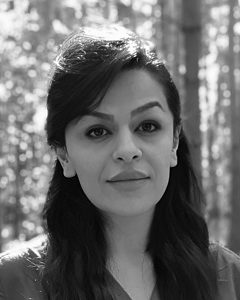
Dr. Zeynab Parisa Foroozan is a Researcher at the Institute of Geography within the Faculty of Natural Sciences at Friedrich-Alexander University Erlangen-Nuremberg (FAU). Her research focuses on paleoclimatology and dendrochronology, specializing in using tree-ring stable isotopes to reconstruct past climate conditions in semi-arid regions of Iran, with particular emphasis on hydroclimate variability over multi-century timescales. Dr. Foroozan earned her Ph.D. in Physical Geography from FAU in 2020, following an M.Sc. and B.Sc. in Natural Resources Engineering from the University of Tehran. During her doctoral studies, she was supported by prestigious DAAD scholarships (2015-2019) and the FFL scholarship for women in research (2019-2020), demonstrating her academic excellence and commitment to advancing women in scientific fields. Her research expertise encompasses: Stable isotope analysis in tree rings (δ 18 O and δ 13 C) Paleoclimate reconstruction for semi-arid regions Hydroclimate variability over multi-century timescales Dendrochronological methods for climate signal extraction Tree-ring based precipitation history Wood science and properties analysis Dr. Foroozan's publication record demonstrates consistent output in high-impact climate science journals, with a focus on developing innovative methodologies for climate reconstruction using tree-ring isotopes. Her work bridges the fields of climate science, environmental change, and sustainable development, with practical implications for water resource management in vulnerable regions. Among her notable research achievements are: Reconstruction of a 501-year spring precipitation history for northern Iran Development of methods for establishing multi-century δ 18 O chronologies Identification of climatic signals in stable carbon isotope ratios of Iranian tree species Analysis of moisture variations using tree-ring stable oxygen isotopes Dr. Foroozan currently leads the JunIRANet project (since 2023) focused on reconstructing past hydroclimate variability in Iran, building on her previous work with the BayTreeNet project (2021-2022) as part of the Bavarian Network for Climate Research. She actively contributes to academic education by offering M.Sc. thesis opportunities on topics related to stable oxygen isotopes in tree rings as hydroclimate proxies.