

Seth Blumsack is a Professor at the Pennsylvania State University in the Department of Energy and Mineral Engineering and serves as Director of the Center for Energy Law and Policy . He holds an Adjunct Research Professor position at the Carnegie Mellon Electricity Industry Center and is affiliated with the Santa Fe Institute as an External Faculty member. His research spans energy economics , power grid reliability , and complex infrastructure networks . Key projects include: Interdependent natural gas and electricity systems analysis Governance of regional transmission organizations Smart grid consumer behavior studies Power grid reliability tools development He has secured funding from the U.S. National Science Foundation , Department of Energy , Environmental Protection Agency , and private industry. His Best paper award at Hawai’i International Conference on System Sciences (2011) and John T. Ryan, Jr. Fellowship (2011-17) highlight his scientific recognition. Publications emphasize electricity market deregulation , energy infrastructure resilience , and consumer response to smart grid technologies . His work has been cited in major media outlets like The New York Times and The Los Angeles Times , and he has consulted for National Renewable Energy Laboratory , U.S. Department of Energy , and other industry stakeholders.
جستوجوی استاد و پژوهشگر
استاد راهنما، استاد دانشگاه یا پژوهشگر مناسب برای مسیر پژوهشیتان را پیدا کنید و با او ارتباط بگیرید.
نمایش ۶۹۱-۷۰۵ از ۲۳٬۱۰۰ استاد راهنما
اطلاعات این پروفایلها از صفحات عمومی دانشگاهها جمعآوری شده و ممکن است بهروز نباشد.
Ana Inés Torres is an Associate Professor in the Department of Chemical Engineering at Carnegie Mellon University's College of Engineering. She leads an active research group focused on sustainable process systems engineering, with affiliations at the Center for Advanced Process Decision-Making and the Wilton E. Scott Institute for Energy Innovation. Her work bridges chemical engineering with sustainability challenges, particularly in decarbonization and circular economy applications. Dr. Torres earned her educational credentials from Universidad de la República Oriental del Uruguay and the University of Minnesota: Ph.D. in Chemical Engineering, University of Minnesota (2013) Diploma in Chemical Engineering, Universidad de la República Oriental del Uruguay (2005) B.S. in Chemistry, Universidad de la República Oriental del Uruguay (2003) Her research interests span process systems engineering with a sustainability focus, particularly in chemical industry decarbonization through electrification and biomass utilization, circular economy network analysis, and environmentally-friendly rare earth element recovery processes. She integrates modeling, analysis, and optimization to design clean and sustainable chemical processes, with growing emphasis on machine learning applications in process optimization. Analyzing her recent publications reveals a strong focus on decarbonization strategies for existing industrial infrastructure, particularly oil refineries, and circular economy network design. Her work demonstrates increasing integration of machine learning with traditional process systems engineering approaches to tackle complex sustainability challenges across multiple scales, from molecular recovery processes to entire supply chain networks. Dr. Torres has received several prestigious recognitions: NSF CAREER award (2024) Dean's Early Career Fellowships award (2025) Consultant for United Nations Industrial Development Organization (UNIDO) (2024) Associate editor of Clean Technologies and Environmental Policy She actively mentors a diverse group of graduate students working on cutting-edge sustainability challenges, with recent projects focusing on circular economy networks, rare earth element recovery, and bio-refinery design. Her research has attracted significant funding, including the NSF CAREER award, and she participates in multiple collaborative initiatives through CMU's energy research centers. Dr. Torres also serves as an invited speaker at major conferences including FOCAPD and FOCAPO/CPC. Dr. Torres leads the Torres Research Group at CMU, which maintains strong connections with industry partners and international organizations including UNIDO. The group operates within CMU's robust energy research ecosystem, collaborating with the Wilton E. Scott Institute for Energy Innovation and the Center for Advanced Process Decision-Making to address complex sustainability challenges through interdisciplinary approaches.
- Photonics
- Silicon Photonics
- Optical Computing
- +۳ مورد دیگر
Professor David J. Thomson is a Professorial Fellow in the Optoelectronics Research Centre (ORC) at the University of Southampton, holding a prestigious Royal Society University Research Fellowship. He pioneers photonics research for computing applications and LIDAR systems, commanding over £10 million in research funding and leading a 12-member team focused on novel photonic device development and electronic integration. Thomson's research centers on silicon photonics and optical computing, with critical advancements in high-speed optical modulators, photonic integrated circuits, and LIDAR technologies. His work drives innovations in programmable photonics using phase-change materials and the co-integration of photonic and electronic systems, enabling breakthroughs in energy-efficient data communication and next-generation computing architectures. Recent publications (2024-2025) reveal a dominant focus on silicon photonics for ultra-high-speed optical interconnects, featuring programmable circuits with Sb2Se3 phase-change materials, 224 Gbaud transmitters, and MOSCAP ring modulators with sub-5nm insulators. These works collectively address bandwidth and energy challenges in data centers and high-performance computing through monolithic integration and novel material systems. Scientific Awards: Royal Society University Research Fellowship Thomson actively supervises eight PhD students across the ORC and Department of Electronics and Electrical Engineering, while managing substantial grants exceeding £10 million from the Royal Society, EPSRC, Horizon Europe, and Huawei Technologies. His projects include DOLORES (Digital Optical Computing Platform), Tunnel Epitaxy of III-V on Silicon, and PIXEurope, targeting revolutionary photonic integration for neural networks and communications. He leads a specialized research team within the ORC's state-of-the-art facilities, focusing on photonic device design, fabrication, and characterization. This group collaborates on major European initiatives like Horizon Europe's DOLORES and PIXEurope, advancing silicon photonic platforms for optical computing and LIDAR applications.
Kjetil Taskén is a full Professor at the Institute for Clinical Medicine, Faculty of Medicine, University of Oslo , and serves as the Director of the Institute for Cancer Research, Oslo University Hospital . He leads the OUS Center for Precision Medicine in Cancer (SEPREK) since 2021 and has held multiple leadership roles in molecular medicine initiatives, including Director of the Norwegian Centre for Molecular Medicine (NCMM) and co-founder of Bioteknologisenteret. Current affiliations: University of Oslo | Oslo University Hospital Education: Dr.med. (Molecular Cell Biology) | Cand.med. | Research Leadership Course Research interests include immunoregulation in cancer , precision oncology , cellular signal transduction in disease , and drug development targeting immune checkpoints . His work bridges translational immunology and molecular oncology , with a focus on regulatory T cell modulation for cancer therapy. Scientific contributions span high-impact publications on regulatory T cell inhibition , precision medicine implementation , and signal pathway drug targeting . Recent articles highlight collaborations across Europe (PCM4EU, PRIME-ROSE) and Norway (IMPRESS-Norway), with methodological advances in tumor microenvironment modeling and mutation timing analysis . Awards : King Olav V Cancer Research Prize | Anders Jahre Medical Prize | Faculty Medal (UiO) | Norwegian Academy of Science and Letters Leadership : Director of NCMM | Founder of Bioteknologisenteret | Head of multiple national cancer research initiatives Labs and teams include the Cancer Immunology Section at Oslo University Hospital and affiliations with the K. G. Jebsen Center for B-Cell Malignancies , where he co-leads research groups.
- Machine Learning
- Public Health
- Urban Analytics
- +۵ مورد دیگر
Daniel B. Neill is a Professor of Computer Science, Public Service, and Urban Analytics at New York University (NYU), jointly appointed across the Courant Institute of Mathematical Sciences, Robert F. Wagner Graduate School of Public Service, and the Center for Urban Science and Progress (Tandon School of Engineering). He also serves as the Director of the Machine Learning for Good Laboratory (ML4G) and is affiliated with NYU's Center for Data Science and Tandon Department of Computer Science and Engineering. Education: Ph.D. in Computer Science, Carnegie Mellon University M.S. in Computer Science, Carnegie Mellon University M.Phil. in Computer Speech, Cambridge University Research Interests: Dr. Neill's research focuses on developing novel machine learning methods for social good, with applications in disease surveillance (e.g., early outbreak detection), healthcare (e.g., anomalous care patterns), and urban analytics (e.g., predicting citizen needs). He also explores algorithmic fairness , causal inference , and pre-syndromic surveillance using unstructured data. His work bridges theoretical machine learning with real-world policy challenges, collaborating with health departments, hospitals, and city governments to deploy data-driven tools that enhance public health, safety, and security. Scientific Awards & Honors: NSF CAREER Award NSF Graduate Research Fellowship IEEE Intelligent Systems' "Top Ten AI Researchers to Watch" Yelp Dataset Challenge Winner Hidden Signals Challenge Runner-Up (DHS) Grants & Funding: He has received significant funding from the National Science Foundation (NSF), including grants on fairness in AI (IIS-2040898), bias in urban analytics (IIS-1926470), and others. He also acknowledges support from UPMC, MacArthur Foundation, and Richard King Mellon Foundation. Laboratory & Leadership: He directs the Machine Learning for Good Laboratory (ML4G) at NYU, focusing on AI for social impact. He previously co-directed NYU's Urban Initiative (2019-2022) and led the Event and Pattern Detection Laboratory at Carnegie Mellon University.
Maria Cherbaمشاهده پروفایل
استادیار
- Cultural and Health
- Telemedicine
- Health Services
- +۸ مورد دیگر
Maria Cherba is an Assistant Professor in Communication at the Faculty of Arts, University of Ottawa. Her work bridges health communication, telemedicine, and Indigenous health equity. Ph.D. in Communication from Université de Montréal (2020) Research Interests span: Cultural and Health Telemedicine and Digital Health Patient Experience and Interpersonal Communication Indigenous Health Advocacy Organizational Communication in Healthcare Psychosocial Support Systems Publication Trends focus on telemedicine implementation, Indigenous health representation in policy, patient-physician interactions in chronic care, and pandemic impacts on end-of-life preferences. Her methodological emphasis lies in qualitative interaction analysis.

Cesare Franchini is a full Professor at the University of Vienna's Faculty of Physics, leading the Computational Materials Physics research group. His work focuses on theoretical understanding and computational modeling of quantum materials using first principles methods, particularly VASP. He maintains an active research program with numerous postdocs, PhD students, and collaborations across multiple institutions including the University of Bologna. Professor Franchini's research centers on quantum materials with many interacting degrees of freedom (lattice, spin, and electron orbital) that enable novel electronic and magnetic phases. His specific interests include metal-insulator transitions, polaron physics (electron-phonon interactions), non-collinear spin orderings, topological Dirac/Weyl phases, multiferroism, and superconductivity. He has increasingly incorporated machine learning data-driven tools and diagrammatic Monte Carlo techniques into his computational approaches. Analysis of his recent publications (2024-2025) reveals a strong focus on polaron physics across multiple material systems, with significant work on hematite, titanium dioxide, and quantum paraelectrics like KTaO3. His research increasingly integrates machine learning with traditional first-principles methods, particularly for studying hydrogen diffusion, surface science phenomena, and electronic structure calculations. There's also substantial work on single-atom catalysis and the application of advanced computational techniques to understand fundamental charge transport mechanisms in energy materials. Professor Franchini actively supervises numerous PhD students and postdocs, including Andrea Angeletti, Viktor Birschitzky, Lorenzo Celiberti, and several others working on diverse aspects of computational materials physics. He leads or participates in major research projects including TACO (Taming Complexity in Materials Modeling), DCAFM (Doctoral College Advanced Functional Materials), and the recently launched Spin-orbit entangled anharmonic polarons project. His group maintains strong collaborations with experimentalists at Charles University, Technical University of Vienna, and other international institutions.
Mikko Kurimo is a Full Professor at Aalto University's Department of Information and Communications Engineering, School of Electrical Engineering. He earned his M.Sc., Lic.Tech., and D.Sc.(Tech.) from Helsinki University of Technology (1992, 1994, 1997) and pioneered neural networks for automatic speech recognition (ASR) in his PhD thesis. After research roles at IDIAP (Swiss AI center) and visiting positions at University of Colorado, Edinburgh, SRI, ICSI, and Nitech, he leads Aalto's ASR group since 2000. His work focuses on unsupervised subword modeling for morphologically complex languages (Finnish, Estonian, Turkish, Arabic) and large speech foundation models. PhD in Neural ASR (Helsinki University of Technology, 1997) Research Scientist at IDIAP (Switzerland) Visiting Fellow at University of Colorado, Edinburgh, SRI, ICSI, Nitech Head of Aalto ASR Group (2000-present) His research spans deep learning for ASR, spoken language modeling , and low-resource language solutions . Recent work explores continued pre-training of self-supervised models, multimodal emotion recognition, and pronunciation assessment using LLMs. He led the winning team in the 2017 Multi-Genre Broadcast challenge and secured competitive funding in Tekes Challenge Finland and EC's H2020-ICT-2017. Key article trends include: Advancements in children's speech recognition and dysarthric speech processing Integration of generative AI for language learning feedback Specialization in low-resource Uralic languages (Finnish, Northern Sámi) Development of robust ASR systems for complex phonetic environments Scientific Awards ACM Multimedia 2023 Computational Paralinguistics Challenge Prize First place in MGB3 2017 Arabic ASR Challenge ISCA Best Student Paper Award (2011) Professeur Invité at Université de Saint-Etienne (2005-2006) Royal Society International Short Visit Fellowship (2004) Professor Kurimo leads the Speech Recognition Group at Aalto, collaborating with COIN (Centre of Excellence in Computational Inference) and AIRC (Adaptive Informatics Research Centre). His projects like CaptainA mobile app demonstrate practical applications of ASR in language education. He has supervised numerous publications with co-authors in domains spanning bandwidth extension, stuttering detection, and speech sound disorder assessment.

Ghassan AlRegib is the John and Marilu McCarty Chair Professor in the School of Electrical and Computer Engineering at Georgia Institute of Technology. He directs the Omni Lab for Intelligent Visual Engineering and Science (OLIVES), the Center for Energy and Geo Processing (CeGP), and previously led Georgia Tech's MENA initiatives (2015-2018). His research spans machine learning, image processing, and seismic interpretation with real-world applications in autonomous vehicles, medical imaging, and subsurface analysis. His research focuses on trustworthy AI systems through three pillars: enhancing interpretability, improving robustness/generalizability, and tackling domain-specific challenges. Key interests include human-in-the-loop frameworks, uncertainty quantification, explainable AI, and physics-driven learning. The OLIVES lab pioneered modern machine learning applications in seismic interpretation and developed open-source datasets for geological fault analysis. Dr. AlRegib's scientific contributions include over 270 publications, multiple U.S. patents, and leadership roles as Technical Program co-Chair for ICIP 2020/2024. His work demonstrates significant impact through awards like the IEEE Fellow designation (2022) and multiple best paper awards at premier conferences. IEEE Fellow (2022) 2023 EURASIP Best Paper Award 2019 ICIP Best Paper Award 2017 Denning Faculty Award for Global Engagement CSIP Research & Service Awards (2003) He has advised numerous PhD students including Dr. Ashraf Alattar (now Auburn professor) and Dr. Zhiling Long (Kennesaw State faculty). His lab structure emphasizes collaborative teams comprising postdocs, senior/junior PhD students, and undergraduates working on high-impact problems from autonomous systems to medical diagnostics. Current research thrusts include trustworthy neural networks, human-in-the-loop frameworks, and deployment of machine learning in seismic interpretation and ophthalmology.
David Alan Goldberg is an Associate Professor in the School of Operations Research and Information Engineering (ORIE) at Cornell University, part of Cornell Engineering. He joined Cornell in 2017 and previously held the A. Russel Chandler III Associate Professorship at Georgia Tech’s Industrial and Systems Engineering department. Goldberg earned his Ph.D. in Operations Research from MIT (2011) and a B.S. in Computer Science from Columbia University (2006). Education: B.S. in Computer Science, Columbia University (2006) Ph.D. in Operations Research, MIT (2011) Research Interests: Goldberg’s work focuses on applied probability and stochastic processes, including optimal stopping, inventory and queueing models, combinatorial optimization, and robust optimization. He develops algorithms and insights for complex systems, addressing challenges like the curse of dimensionality. His research spans applications in data science, operations research, and stochastic modeling. Notable contributions include distributionally robust inventory control and high-dimensional decision-making frameworks. Awards and Honors: 2025 Community-Engaged Practice and Innovation Award (David M. Einhorn Center) 2023 Sunny Yau ’72 Teaching Award (Cornell) 2019 INFORMS Applied Probability Society Best Publication Award 2015 NSF CAREER Award Multiple INFORMS Nicholson Student Paper Competitions (First Place, 2019 & 2015) Teaching and Service: Goldberg leads Cornell ORIE’s undergraduate research program, connecting students to real-world applications of OR and data science. He teaches courses in probability modeling, stochastic models, and academic skills for PhD students. He chairs the INFORMS Applied Probability Society and serves on editorial boards for Operations Research and Stochastic Systems . At Cornell, he advises the Undergraduate ORIE Society and directs undergraduate studies in ORIE. Labs & Collaborations: Goldberg’s research integrates theoretical rigor with practical applications, often involving collaborations across disciplines. His work bridges operations research, statistics, and computer science to address modern challenges in inventory systems, queueing networks, and decision-making under uncertainty.
Chee Kiat Seowمشاهده پروفایل
دانشیار
- Cyber Physical Security
- Wireless Communication Localization
- Internet of Things (IoT) with AI/ML
- +۳ مورد دیگر
Dr. Chee Kiat Seow is an Associate Professor at the University of Glasgow's School of Computing Science. He holds a PhD from Nanyang Technological University (NTU) and an MSc from the National University of Singapore (NUS). His research focuses on cyber-physical security, wireless communication localization, and IoT systems leveraging AI/ML. He has led projects valued in the millions, winning awards like the IEEE Best Student Paper and National Instruments Engineering Impact Awards. Education: PhD (NTU), MSc (NUS) Research: Specializes in UWB positioning, spoofing detection, and IoT integration with 5G/GNSS. Teaching: Courses include Big Data, Software Engineering, and Data Analytics. His recent work addresses NLOS mitigation in indoor localization and cyber-physical security threats. Over 63 publications span journals like IEEE Transactions and conferences such as IPIN and WF-IoT. Supervised 6+ PhD/MSc students on topics like autonomous robotics and AI-driven localization. Grants: Includes $853K for 5G-X Smart Building projects and $797K for GNSS signal authentication. Awards: IEEE PIERS Best Student Paper (2019), NI Engineering Impact Awards (2015-2016). He advises on IoT and cybersecurity for organizations like ARTC and National Instruments. Active in IEEE Signal Processing and Computer Society.
- Singular Stochastic Partial Differential Equations
- Regularity Structures
- Renormalisation Theory
- +۵ مورد دیگر
Yvain Bruned is a Professor of Mathematics at Université de Lorraine, Nancy, France, where he leads research in singular stochastic partial differential equations and related fields. He serves as Principal Investigator for the ERC Starting Grant LoRDeT (2023-2028), which focuses on advancing the theory of decorated trees and Hopf algebraic structures for solving singular SPDEs and dispersive PDEs at low regularity. Previously, he was a Lecturer at the University of Edinburgh (2019-2022) and completed postdoctoral work at Imperial College London and University of Warwick under Martin Hairer. His educational background includes: PhD in Mathematics (2012-2015), UPMC (Paris 6), on "Singular KPZ type equations" under Lorenzo Zambotti Master 2 in Probability and Statistics, ENS Cachan / Rennes 1, with honors Master 1 in Mathematics, ENS Cachan, with honors Bachelor in Mathematics and Computer Science, University of Rennes 1, with honors Student at ENS Cachan Brittany extension (2009-2013) Classes Préparatoires in Mathematics and Physics (2007-2009) Bruned's research centers on singular stochastic partial differential equations, with particular focus on Regularity Structures, renormalization theory, and their connections to Hopf algebras. His work bridges theoretical mathematics with applications in quantum field theory, wave turbulence, and numerical analysis. He has developed novel approaches using decorated trees to handle renormalization procedures for singular SPDEs and has extended these methods to dispersive PDEs with random initial data. His research program aims to establish existence and uniqueness results for quasilinear and dispersive SPDEs while developing algebraic tools through deformations of Hopf algebras. His extensive publication record demonstrates consistent contributions to the field of singular SPDEs, with a clear trajectory from foundational work on Regularity Structures to more recent applications in dispersive PDEs and numerical methods. The publications reveal a strong collaborative network with leading researchers in stochastic analysis, mathematical physics, and algebra. His work shows increasing sophistication in handling renormalization procedures through algebraic structures, with recent papers exploring connections between different mathematical frameworks. His major scientific recognition includes: ERC Starting Grant LoRDeT (2023-2028) Bruned actively supervises a large group of researchers, currently advising 4 PhD students and 2 postdoctoral researchers at Université de Lorraine, with several former PhD students having completed their degrees at the University of Edinburgh. His ERC grant has enabled him to organize multiple international workshops in Nancy, fostering collaboration between researchers in singular SPDEs, algebraic structures, and numerical analysis. The grant also supports the development of software platforms for decorated trees and their Hopf algebraic structures. As Principal Investigator of the ERC LoRDeT project, Bruned leads a vibrant research team based at the Elie Cartan Institute of Lorraine, which includes postdocs, PhD students, and visiting researchers. The team regularly organizes specialized workshops on topics including operads, symmetries for quantum field theory, and normal forms for singular dynamics, creating a dynamic research environment that bridges multiple mathematical disciplines.
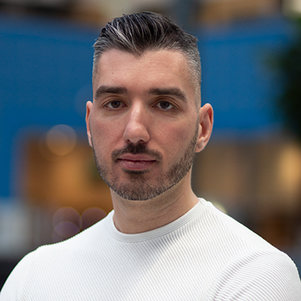
Achilleas Psyllidis is an Assistant Professor of Urban Mobility and Director of the Urban Analytics Lab at TU Delft. He also leads the Social Urban Data Lab at Amsterdam Institute for Advanced Metropolitan Solutions and is affiliated with the LDE Centre for BOLD Cities. His roles include membership in TU Delft's Transport & Mobility Institute, the Mobility Futures Vision Team, and serving on the Executive Board of CUPUM. Education: PhD in Spatial Data Science (TU Delft, Faculty of Architecture and the Built Environment) Master of Science in Spatial Planning (National Technical University of Athens) Engineering Diploma in Architectural Engineering (National Technical University of Athens) Research Interests: Focuses on accessibility, walkability, land-use dynamics, and travel behavior. Develops computational methods for analyzing access equity, spatial segregation, and human mobility. Leads projects on sustainable urban mobility, environmental exposures, and the 15-minute city concept. Awards: CTwalk Map: Best Demo Award (ICT.Open 2024) ROUTE Ontology of Urban Transportation Entities (2015) Grants & Projects: Involved in initiatives like PERISCOPE (Social Resilience Design), Horizon2020 'Equal-Life' (Environmental Health), and SocialGlass (Urban Analytics Dashboard). Active in research collaborations across Europe and Asia. Labs & Teams: Directs Urban Analytics Lab and Social Urban Data Lab, focusing on data-driven urban solutions. Engages in interdisciplinary teams addressing mobility futures, urban health, and sustainable design.
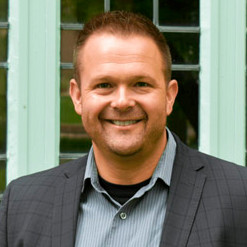
Scott Wolfe is a Professor, Associate Director, and Director of the PhD Program at the School of Criminal Justice, Michigan State University. He also serves as Director of the Michigan Justice Statistics Center and has secured funding from the National Science Foundation, National Institute of Justice, and Bureau of Justice Statistics. PhD in Criminology and Criminal Justice, Arizona State University (2012) MA in Criminal Justice, University of Louisville (2008) BA in Criminal Justice, Ohio Northern University (2006) Scott's research focuses on policing, organizational justice, and criminological theory. He evaluates police training programs for mental health crisis response, disabilities, and driver training, while also studying police supervisor-employee relations, use of force predictors, procedural justice, and the Ferguson Effect. His recent publications address racial disparities in traffic stops, police training effectiveness, de-policing impacts on crime, and procedural justice mechanisms. These works span criminology, public policy, and data analytics, with awards from the American Society of Criminology and Justice Information Resource Network. American Society of Criminology Division of Policing Outstanding Student Article Award (2024) Justice Information Resource Network’s Douglas Yearwood Publication Award (2025, Small SAC division) Scott leads funded projects such as the evaluation of police training programs in Southeast Michigan ($125,000) and the Michigan State Justice Statistics Program ($224,997). His team partners with agencies like the Michigan State Police to analyze disparities and develop training solutions.
Prof. Fatih Terzi is a faculty member in the Department of Urban and Regional Planning at Istanbul Technical University's Faculty of Architecture. His research focuses on sustainable urban development, resilience, ecology, GIS applications, and smart cities. He has held visiting researcher positions at Clemson University (USA), University College London, and Technical University Berlin. He has led projects supported by EU, TÜBİTAK, and others, addressing ecological planning, risk reduction, and urban regeneration. His work bridges academic research with practical urban planning, including projects with municipalities and the Ministry of Environment. He has received multiple awards for research and design, including the Best Paper Award (2025) and TÜBİTAK recognitions. Education: PhD in Urban and Regional Planning from Istanbul Technical University (2010), MSc in Urban Planning (2004), BSc in Urban and Regional Planning from Yıldız Technical University (2000). Research interests include spatial strategic planning, ecological cities, and climate-sensitive urban design. He uses urban modeling and GIS to address sustainability challenges. His recent projects include Istanbul's flood risk analysis, green space strategies, and sustainable city planning in Kayseri and Malatya. Notable awards include the 2024 TÜBİTAK award for urban resilience projects and the 2023 Istanbul Technical University Academic Performance Award. He has also been recognized for design competitions, including the İzmir Ecological Living Area Project (2021) and the 2017 Balkan Architectural Biennale Urbanism Grand Prix. Prof. Terzi holds administrative roles at Istanbul Technical University, including Merkez Danışma Kurulu Üyeliği (2023–present). He oversees academic projects on urban resilience, smart cities, and ecological planning, contributing to both national and international initiatives.