Jacob Gorm Davidsen is an Associate Professor at Aalborg University's Department of Communication and Psychology, affiliated with The Faculty of Social Sciences and Humanities. He leads the Collaboratory for Human-Centered Immersive Problem-Solving Spaces (CHIPS) and co-founded initiatives like VILA and AVA360VR. His research focuses on leveraging digital technologies, particularly Virtual Reality (VR), to enhance learning, collaboration, and problem-solving in immersive environments. He holds a PhD in Human Centered Communication and Informatics. Key projects include 'En bedre start' (funded by Independent Research Fund Denmark) exploring VR for teacher training and the 360mash project addressing GPU cloud and software anonymization. His work bridges computer science, education, and human-centered design. Main research interests include immersive VR applications, collaborative learning environments, and digital infrastructure for social sciences. His contributions span 105+ publications, with recent emphasis on activity-based VR frameworks and near-future educational technologies. He serves on editorial boards (e.g., European Journal of Engineering Education) and actively reviews manuscripts. Notable software tools developed include DOTE and AVA360VR for qualitative analysis and video collaboration.
Honorio Martin Gonzalez serves as a Full Professor and Deputy Director of Students and Coordination of Final Study Projects at Universidad Carlos III de Madrid (UC3M), specializing in Electronic Technology. His academic base is located in room 1.2.B05 of the Agustín de Betancourt building at the Leganés campus. His research centers on Electronic Engineering and Identification Technologies , with specific focus on RFID systems, sensor networks, and electronic identification solutions. These interests align with his affiliation to the University Group of Identification Technologies (GUTI), where practical applications in security and logistics systems are developed. Professor Gonzalez maintains active research portal integration through UC3M's institutional systems, with publications and project data accessible via their research portal infrastructure. His operational role includes student coordination for final degree projects within the Electronic Technology domain. Contact details include direct email ( honorio.martin@uc3m.es ) and campus telephone (916249496), reflecting his ongoing administrative and academic responsibilities at the university.
Dr. Frederick Scholl is an Associate Teaching Professor and Director of the Cybersecurity Program at Quinnipiac University's School of Computing and Engineering. He leads university-level online cybersecurity master's programs, focusing on curriculum development, student recruitment, career placement, and industry collaboration. His expertise spans enterprise information systems management, security policy development, ISO compliance, HIPAA, NIST, and risk management frameworks. He has held academic roles at Vanderbilt University, Lipscomb University, and NYU Polytechnic School of Engineering. Education: PhD in Cybersecurity-related field from Cornell University. Professional experience includes roles in automobile manufacturing (Nissan Americas), IT services (Monarch Information Networks), and research (Columbia University, Rockwell International Science Center). Research interests emphasize bridging cybersecurity education with industry needs, compliance standards, and real-world risk mitigation strategies. Recent work includes cybersecurity competitions fostering student problem-solving, AI-driven threat detection research, and healthcare enterprise security programs. Media engagements and thought leadership on topics like Biden's cybersecurity executive order and tech policy. Program recognitions include grants expanding access to cybersecurity education and awards for workforce development initiatives.
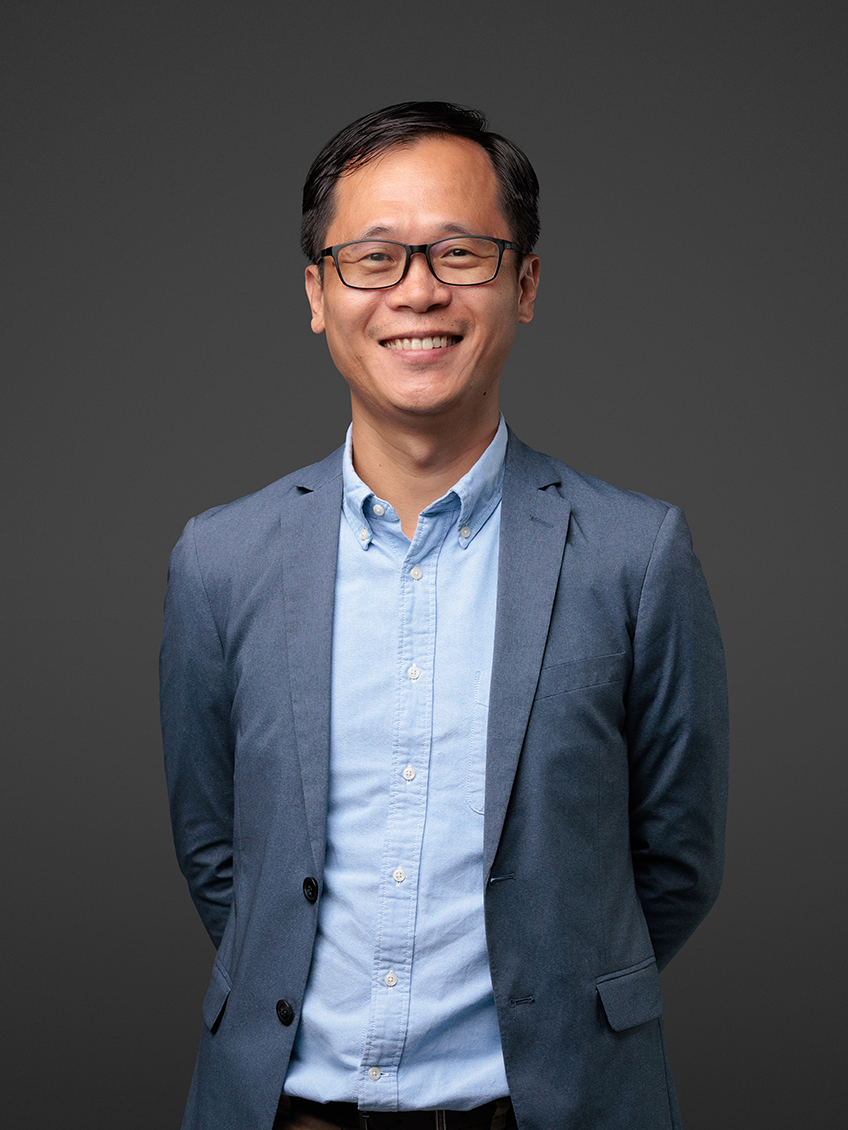
Chen Binbin is an Associate Professor and Associate Head of Pillar (Innovation and Enterprise) in the Information Systems Technology and Design (ISTD) pillar at Singapore University of Technology and Design (SUTD). He serves as Deputy Director for the Future Communications Research and Development Programme (FCP), Singapore. Previously, he was a Principal Research Scientist at the Advanced Digital Sciences Center (now Illinois ARCS), affiliated with the University of Illinois. Education: PhD in Computer Science from National University of Singapore, and Bachelor's from Peking University. Research focuses on wireless networking, distributed systems, and cyber security for critical infrastructures like smart grids and industrial control systems. His work addresses secure communications, intrusion detection, and resilience against cyber-physical threats. Notable contributions include error-estimating coding, provenance verification in ICS, and AI-driven network security solutions. Key awards include the 2010 ACM SIGCOMM Best Paper Award for error-estimating coding research. His grants span agencies like Singapore's National Research Foundation (NRF), Cyber Security Agency (CSA), and Energy Market Authority (EMA). He leads projects on secure smart grid communication, industrial control system defense, and AI-enhanced cybersecurity tools. Technical leadership involves developing frameworks like CyberSAGE for security assessment and CMD for IoT malware detection. Active in collaborations with industry and government, his work bridges theory and practice in securing critical infrastructure systems.
Per-Arne Andersen is an Associate Professor at the Department of Information and Communication Technology within the University of Agder . His research focuses on artificial intelligence , reinforcement learning , Tsetlin machines , and deep learning , with applications in real-time strategy games , industrial environments , and IoT systems . Projects: RESTORE Research Groups: CAIR - Center for Artificial Intelligence Research, CIEM - Center for Integrated Crisis Management, Intelligent Mechatronics (iTron) His work explores safe and sustainable reinforcement learning , interpretable AI , and generative environment modeling . He has developed frameworks like CaiRL and CostNet for high-performance RL environments and goal-directed learning. Recent publications include advancements in Tsetlin automaton analysis , GNSS jamming classification , and road quality detection . Articles from 2025-2016 span machine learning , computer vision , and environmental modeling . He contributes to IEEE , Springer , and LNCS publications, with a focus on interdisciplinary AI applications in crisis management , cybersecurity , and industrial optimization .
Prof. Dr.-Ing. Daniela Thrän serves as Professor of Bioenergy Systems at the University of Leipzig's Faculty of Economics and Head of the Department of Bioenergy at the Helmholtz Centre for Environmental Research (UFZ), positions she has held since 2011. She concurrently leads Germany's delegation in IEA Bioenergy Task 44 on Flexible Bioenergy and System Integration and chairs the Social Sustainability Transformations group at UFZ, bridging academic research with national climate policy through roles in the Federal Bioeconomy Council (2012-2023) and Thuringia's Climate Advisory Board. Her academic background includes: Engineering studies in Technical Environmental Protection at Technical University of Berlin (1989-1995) Doctorate at Bauhaus University Weimar (1998-2001) on material flow management in rural regional development Thrän's research centers on bioenergy's role in climate neutrality, specializing in carbon dioxide removal (CDR) via bio-based methods including BECCS, life cycle sustainability assessment, and spatial modeling of renewable energy systems. She analyzes biomass resource potentials within circular bioeconomy frameworks and investigates socio-economic drivers of energy transitions, with recent work focusing on urban-rural biomass integration and flexible bioenergy services for grid stability. Her 2023-2025 publications reveal intensifying focus on bio-CDR implementation challenges and policy frameworks, alongside systematic assessments of biomass allocation in Germany's net-zero pathways. Key trends include AI-enhanced literature mapping for climate research, municipal-scale renewable integration dynamics, and cross-national comparisons (e.g., Germany/Canada biogas systems), with growing emphasis on socio-technical trade-offs in land use and stakeholder acceptance. No scientific awards, prizes, or fellowships were documented in the provided text. Thrän actively mentors doctoral candidates as DBFZ's representative for bioenergy colloquia and leads major initiatives: IEA Bioenergy Task 44: National Team Leader for Germany (2019-present) Helmholtz Climate Initiative (HI-CAM): Co-author of spatial energy transition reports Editor-in-Chief of Springer's "energy, sustainability and society" (2017-present) She directs UFZ's Department of Bioenergy (BEN) and Models team, developing spatially resolved energy system tools like BENOPTex. Her groups focus on techno-economic analysis of biogenic resources, smart bioenergy system services, and socio-ecological impacts of renewable energy expansion, with strong links to European standardization bodies (ISO/TC 238, CEN TC 335) and Germany's aviation biofuels advisory board (aireg).
Yufang Jin is an Associate Professor in the Department of Land, Air and Water Resources at the University of California, Davis, with affiliations in the Geography Graduate Group. Her work bridges environmental science and geospatial technologies, focusing on critical Earth system processes. Her research centers on remote sensing of terrestrial ecosystems , with key emphases on fire disturbance , ecohydrology , biogeochemical cycles , and climate change . She applies advanced GIS and modeling techniques to study global environmental change, contributing to the Methods, Models, and GIS Science concentration within the Environmental Sciences area of depth. The available data does not include recent publications, but her research profile suggests a strong focus on satellite-based monitoring, land surface dynamics, and environmental modeling across spatial and temporal scales. Dr. Jin has not had any scientific awards listed in the source material. She advises graduate students through the Geography Graduate Group, though specific advisees are not named. There is no mention of external grants or funding sources in the provided text. Her research activities are likely supported through university and federal environmental science programs. She is associated with research infrastructure at UC Davis, potentially including geospatial labs or environmental monitoring systems, though specific labs or research teams are not detailed in the current bio.
Jeffrey A. Lee is a Professor in the Department of Geosciences at Texas Tech University, specializing in aeolian geomorphology and environmental processes. With academic appointments since 1988, his work focuses on wind-driven sediment transport and dune dynamics across multiple continents. Education: B.A. in Geography (1979), University of California, Los Angeles M.A. in Geography (1984), University of California, Los Angeles Ph.D. in Geography (1990), Arizona State University Research interests center on aeolian processes, particularly dust emission dynamics and wind erosion patterns. His work examines temporal trends in blowing dust across Texas and the American Southwest, while also investigating long-term shifts in wind climate patterns. Professor Lee teaches foundational physical geography courses including Global Environmental Science and advanced topics in arid land geomorphology. Recent publications demonstrate interdisciplinary focus across aeolian geomorphology, environmental monitoring, and climate science. Key themes include dust source characterization using satellite data, drought legacy effects on erosion, and historical analysis of environmental disasters like the Dust Bowl. Contact: jeff.lee@ttu.edu | 213 Holden Hall, Texas Tech University | (806) 834-8228
Helmut Rainer is a Professor of Economics at the University of Munich and Director of the Center for Labor and Demographic Economics at the ifo Institute. Previously, he held a faculty position at the University of St. Andrews' School of Economics and Finance. He earned his Ph.D. from the University of Essex in 2005. Education: Ph.D. in Economics, University of Essex, 2005 Research Interests: Focuses on applied microeconomics, particularly family economics and labor economics. His work extends to policy analysis involving domestic violence, gender equality, immigration, and social policy. Notable areas include quantifying domestic violence during crises, evaluating childcare policies, and studying the socioeconomic impacts of political movements like Fridays for Future. Policy Contributions: Advised German Federal Government on the Second Gender Equality Report (2015–2017) and contributed to evaluations of family policies and labor market reforms. His recent work highlights the effectiveness of arrests in reducing domestic violence cycles and analyzes the economic consequences of sports-related violence. Awards: Economic Journal Best Paper Award 2016 Grants & Funding: DFG-funded projects on custody effects and gender dynamics Leibniz Association grants for research on violence against women and economic uncertainty Labs/Teams: Leads the Center for Labor and Demographic Economics at ifo Institute, focusing on policy-relevant economic analysis of labor markets, family structures, and demographic trends.
Dr. David C Mohr is a Professor at Northwestern University Feinberg School of Medicine, holding joint appointments in Preventive Medicine, Medical Social Sciences, and Psychiatry. He serves as Director of the Center for Behavioral Intervention Technologies (CBITs) and Chief of Behavioral Medicine in the Department of Preventive Medicine. With a PhD in Clinical Psychology from the University of Arizona (1991), he transitioned from UCSF to Northwestern in 2006. His research focuses on designing digital mental health interventions leveraging user-centered design and smartphone sensor data. Notable contributions include developing smartphone apps for depression/anxiety management and pioneering implementation strategies for scalable digital mental health solutions. He has led over 400 publications, with recent work emphasizing AI ethics, wearable sensing, and healthcare workforce burnout. Education: BA: University of California, Berkeley (1980) MA/PhD: University of Arizona (1988/1991) Affiliations: Center for Behavioral Intervention Technologies (CBITs) Institute for Augmented Intelligence in Medicine Robert H. Lurie Comprehensive Cancer Center Dr. Mohr’s honors include APA and Society for Behavioral Medicine Fellowships. He advises global initiatives like ImplMentAll (EU-funded) and chairs the Society for Digital Mental Health. His work bridges clinical innovation with real-world implementation, emphasizing equity and sustainability in digital health solutions.
Kirill Igorevich Levchenko is an Associate Professor at the University of Illinois at Urbana-Champaign, holding joint appointments in the Department of Electrical and Computer Engineering, the Siebel School of Computing and Data Science, the Information Trust Institute, and the Coordinated Science Laboratory. His interdisciplinary work bridges systems, networking, and security. His research focuses on cybersecurity , network measurement , programmable networks , and online misinformation . He investigates real-world network infrastructure vulnerabilities, develops secure protocols for emerging technologies like UAVs, and studies human interactions with digital deception. His work combines empirical measurement with system design. Recent publications reveal a strong trend in networking systems and security , particularly in programmable data planes, measurement frameworks like PacketLab, and defenses against botnets and spam. He also explores the societal impact of technology through studies on fake media and user perception. Yi-Min Wang and Pi-Yu Chung Faculty Fellow Dr. Levchenko leads research projects in network security and trust, likely supported by grants from federal and private agencies, though specific grants are not listed. His publications suggest active mentorship of graduate students, particularly in systems and networking. He contributes to major conferences in computer security and internet measurement. He is affiliated with the Coordinated Science Lab and the Information Trust Institute , both leading interdisciplinary research centers at UIUC focused on advanced computing and cybersecurity.
Lisa Yan serves as a Teaching Professor in the Department of Electrical Engineering and Computer Sciences at the University of California, Berkeley, appointed in Spring 2022. She teaches core computer science education courses including CS 195 (Social Implications of Computer Technology), CS H195 (Honors variant), CS 294-189 (Teaching Process Design), and CS 375 (Teaching Techniques), holding regular office hours in Soda Hall for student engagement. Her academic credentials include: PhD in Electrical Engineering from Stanford University (2019) MS in Electrical Engineering from Stanford University (2015) BS in Electrical Engineering and Computer Science from UC Berkeley (2013) Dr. Yan's research centers on data-driven analysis of student learning in large-scale computer science courses, with significant contributions to computing ethics pedagogy and teaching assistant development programs. Her work develops innovative methodologies for assessing student earnestness in interactive lectures, creating flexible learning extensions, and designing integrity-focused assessments. Earlier research focused on software-defined networking and network switch performance optimization, demonstrating technical depth before her pivot to educational innovation. Current projects emphasize scalable teaching techniques and mastery learning frameworks that address challenges in modern CS education. Analysis of her 14 publications (2013-2024) reveals a strategic shift from computer networking (pre-2018) to computer science education research (2018-present). Recent work (2020-2024) dominates in venues like SIGCSE, featuring tools such as Otter-Grader for Jupyter notebook grading and the Earnest Insight Toolkit for lecture participation analysis. This evolution highlights her commitment to solving practical educational challenges through data analysis and tool development, particularly for large undergraduate courses. She received recognition through: The Faculty Award for Outstanding Mentorship of GSIs (2024) Lisa actively mentors Graduate Student Instructors and collaborates with educational technology initiatives. Her research team includes dedicated support staff like Taylor Kaserman (taylor.kase@berkeley.edu), reflecting structured collaboration in developing teaching innovations. She contributes to curriculum design committees within EECS, focusing on assessment integrity and scalable pedagogical methods for growing student populations. Her work operates through the EECS department's educational infrastructure, utilizing Soda Hall resources for both teaching coordination and research development, with strong connections to Berkeley's broader computing education ecosystem.
Dr. Eman El-Sheikh is a Professor and Associate Vice President at the University of West Florida (UWF), affiliated with the Hal Marcus College of Science and Engineering, the Department of Computer Science, and the Center for Cybersecurity. She is a globally recognized leader in artificial intelligence, machine learning, and cybersecurity, with over 30 years of experience and more than $26 million in competitive research funding. Ph.D. in Computer Science and AI, Michigan State University (2002) M.Sc. in Computer Science, Michigan State University (1995) B.Sc. in Computer Science, American University in Cairo (1992) Her research centers on the integration of Artificial Intelligence and Machine Learning in cybersecurity, with a strong emphasis on education, workforce development, and ethical AI. She leads the development of AI-Cyber curricula for national adoption and is a pioneer in experiential learning models such as the Cybersecurity for All® and CyberSkills2Work® programs. The trends in her recent publications reflect a consistent focus on AI-driven cybersecurity solutions, secure AI systems, national workforce development, experiential education, and inclusive cyber training. Her work bridges technical innovation with policy, leadership, and pedagogy, demonstrating a holistic approach to strengthening the cybersecurity ecosystem. Dr. El-Sheikh has received numerous prestigious honors, including: 2024 GISEC Global Educator of the Year 2024 and 2025 Cybersecurity Woman of the Year (World Finalist) UWF Million Dollar Research Hall of Fame ($25M and $1M levels) 2020 Women Leaders in Cybersecurity, Security Magazine Achievement Award for Advancing Cybersecurity Education (SAM 2016) NSF/NSA AI-Cyber Task Force Member (2024–2025) Founder, Women in Cybersecurity (WiCyS) Florida Affiliate She has led major grant-funded initiatives such as the National Cybersecurity Workforce Development Program and CyberSkills2Work®, securing over $26 million to advance cybersecurity education and training. She mentors students and emerging professionals, particularly through diversity and inclusion efforts. Dr. El-Sheikh also serves as Chief Strategic Alliance Officer and USA Ambassador for the Global Council for Responsible AI, influencing national and global AI policy and education standards. She founded and leads the Artificial Intelligence Research Group at UWF and is actively involved in national task forces and advisory boards, including the Florida Cybersecurity Task Force and the WiCyS Florida Affiliate Advisory Board. Her leadership extends to shaping the future of AI and cybersecurity through collaborative research, innovation in higher education, and strategic partnerships.
Laura J. Faherty is a Senior Physician Policy Researcher at the RAND Corporation and an Affiliate Professor of Policy Analysis at the RAND School of Public Policy. She is also an Associate Professor at the Tufts University School of Medicine and an attending physician at Maine Medical Center, holding the title of RAND Global Scholar in Pandemic Preparedness. Her research focuses on maternal-child health, pandemic preparedness, vaccination strategies, and behavioral health surveillance in public health crises. Education: M.D. and M.P.H. (Global Epidemiology) from Emory University M.S. in Health Policy Research from the University of Pennsylvania B.A. in History of Science from Princeton University Research Interests: Her work emphasizes building public health trust through social media, wastewater surveillance for pandemic early warning, school vaccination policies, and perinatal behavioral health. She has contributed to critical initiatives like the CDC-funded behavioral health surveillance toolkit, the 2020 U.S. Vaccines National Strategic Plan, and The Rockefeller Foundation's playbook for K–12 school testing during the pandemic. Grants & Funding: Supported by NIH (NIDA, NIMHD, NIMH), the Bill & Melinda Gates Foundation, the Rockefeller Foundation, and CDC. Labs & Teams: Collaborates across interdisciplinary teams at RAND, Tufts, and global health organizations to address pandemic preparedness and maternal-child health disparities.
Lennart Heim is a Professor of Policy Analysis at the RAND School of Public Policy and Compute Lead at the Technology and Security Policy Center within The RAND Corporation. His research focuses on AI governance, compute infrastructure, and their strategic implications for national security and global competitiveness. He advises organizations like Epoch and contributes to initiatives such as the OECD.AI Expert Group on AI Compute and Climate. Previously, he held roles at ETH Zürich and the Centre for the Governance of AI. Education: Studied computer engineering at ETH Zürich and RWTH Aachen University. Current affiliations include adjunct fellowships at GovAI and pro forecasting at INFER Pub. Research Interests: He examines how compute capacity shapes AI development, policy frameworks for AI governance, and the interplay between technology and geopolitical strategy. His work emphasizes leveraging compute for ethical AI deployment while mitigating security risks. Advising & Grants: Advises Epoch on AI trajectory analysis and has collaborated with the National Science Foundation and NIST on policy frameworks. His grants focus on AI energy requirements and global engagement strategies. Labs/Teams: Leads compute research initiatives in the Technology and Security Policy Center, engaging interdisciplinary teams to address AI’s societal and security challenges.