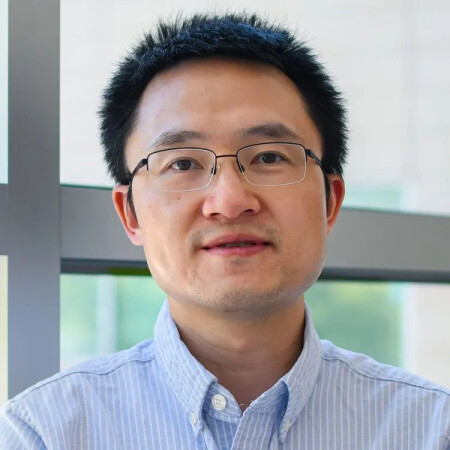
Phil Pavilionis is an Associate Professor of Kinesiology in the School of Public Health at the University of Nevada, Reno. With over 20 years of clinical experience as a Certified Athletic Trainer (ATC) and Certified Strength and Conditioning Specialist (CSCS), he bridges academic research with practical applications in sports medicine. His roles include teaching undergraduate/graduate courses, conducting research in the Neuromechanics Laboratory, and serving as an adjunct clinical athletic trainer for Nevada Sports Medicine. Education: Ph.D. in Neuroscience, University of Nevada, Reno (2024) M.S. in Exercise Science, California University of Pennsylvania (2007) B.S. in Health Science, University of Nevada, Reno (1995) Dr. Pavilionis specializes in head injury prevention and virtual reality applications for concussion evaluation. His research leverages clinical experience to develop standardized assessment protocols, focusing on vestibular-ocular motor screening (VOMS) using virtual reality to reduce administrator variability. Key investigations include oculomotor deficits following concussion, head impact biomechanics in football using instrumented mouthguards, and minimal detectable change metrics for neurocognitive tests like ImPACT. His work integrates neuroscience, kinesiology, and engineering to improve concussion diagnosis and management. Analysis of his 45 publications (2022-2025) reveals three dominant trends: (1) Virtual reality standardization of concussion assessments, particularly VOMS protocols; (2) Head impact monitoring using instrumented mouthguards to evaluate protective equipment like Guardian Caps; and (3) Machine learning applications for objective concussion detection through eye-tracking and biomechanical data. These studies consistently address the critical need for objective, standardized tools to overcome subjective symptom reporting in sports concussion management. Dr. Pavilionis actively collaborates with the Neuromechanics Laboratory and Nevada Sports Medicine, translating research into clinical practice. While no specific grants are documented in the provided materials, his extensive publication record (including 15 articles in 2023 alone) demonstrates sustained research productivity and interdisciplinary collaboration across neuroscience, engineering, and sports medicine disciplines.