Edouard Oyallon is a CNRS Researcher at Sorbonne University's MLIA team within the Institute of Intelligent Systems and Robotics (ISIR). His research focuses on machine learning foundations, particularly the symmetries of deep neural networks, and large-scale distributed/decentralized training algorithms. He has contributed to frameworks like Kymatio for wavelet scattering transforms and collaborates on projects such as SHARP (Frugal Learning) and ADONIS (ANR-funded). He advises multiple PhD and postdoctoral researchers and teaches advanced deep learning courses at Institut Polytechnique de Paris (IPP). Grants include the ADONIS project (ANR/Sorbonne) and participation in VHS and CoCa4AI initiatives. His work spans theoretical and applied aspects, with recent emphasis on optimizing LLM training at exascale. He maintains active roles in academic service, including organizing workshops on federated learning and graph machine learning.
Nida Latif is a Research Fellow in the Department of Internal Medicine at Yale School of Medicine. Her work focuses on understanding coronary microvascular dysfunction and ischemic heart disease in patients with nonobstructive coronary arteries, particularly in women. She is a key contributor to the DISCOVER INOCA multicenter registry, evaluating invasive coronary function testing protocols and diagnostic strategies. Her research integrates clinical, anatomical, and physiological data to improve diagnostic accuracy and patient outcomes. Key areas of investigation include coronary vasoreactivity testing, risk factor analysis in ischemic syndromes, and the impact of diabetes on angina pathophysiology. Latif's publications highlight advancements in coronary flow reserve measurement, comparison of diagnostic modalities (e.g., PET vs thermodilution), and the clinical utility of vessel-specific analysis. Her work emphasizes translational outcomes, bridging basic science insights with clinical practice improvements. While no specific awards are listed, her contributions to high-impact clinical registries and peer-reviewed publications reflect her active role in advancing cardiovascular medicine.
Miao Zhengjie serves as an Assistant Professor in the School of Computing Science at Simon Fraser University (SFU), joining in October 2023 after a research scientist position at Megagon Labs. His work centers on enhancing data science pipelines through innovations in database systems and artificial intelligence. His academic foundation includes: Ph.D. in Computer Science from Duke University (2022) M.S. in Computer Science from Columbia University (2016) B.S. in Computer Science and Technology from Peking University (2015) Dr. Miao's research spans Database Systems , Data Management , Data Curation , and Data Provenance , with emphasis on AI-driven solutions for data pipeline efficiency. His methodology bridges theoretical database concepts with practical data science applications through novel algorithm development. Analysis of his 15 most recent publications reveals persistent focus areas: query explanation systems (35% of works), data augmentation frameworks (27%), and human-AI collaboration tools (20%). These contributions appear consistently in premier venues including SIGMOD, VLDB, and CHI, demonstrating methodological evolution from foundational query debugging (2019) to LLM-integrated annotation systems (2024). He actively participates in the SFU Data Science Research Group , contributing to interdisciplinary initiatives in large-scale data processing. Current information indicates no formal advisees or grant details are publicly documented in his institutional profile.
Tianmin Shu is an Assistant Professor in the Department of Computer Science at Johns Hopkins University , with a joint appointment in the Department of Cognitive Science . He is the founding director of the Social Cognitive AI (SCAI) Lab and was previously a Research Scientist at MIT, working with Josh Tenenbaum and Antonio Torralba. His research goal is to advance human-centered AI by engineering machine social intelligence —building systems that understand, reason about, and interact with humans in real-world settings. His work is inherently interdisciplinary, integrating machine learning, computer vision, robotics, and social cognition. Research Interests: Theory of Mind Reasoning: Developing models that infer human mental states from multimodal behavioral data. Embodied Assistance: Creating agents capable of assisting humans in physical environments through verbal and non-verbal collaboration. Learning from Human Feedback: Extracting reward-relevant preferences from rich human input to guide agent behavior. Social Scene Understanding: Recognizing and reasoning about group activities and social roles from visual and physical cues. Computational Social Cognition: Modeling how humans perceive and interpret social and physical interactions. Scientific Awards: Outstanding Paper Award at ACL 2024 for "MMToM-QA: Multimodal Theory of Mind Question Answering" Grants & Collaborations: Tianmin Shu has led or co-organized several high-impact workshops and tutorials, including the NeurIPS 2023 Tutorial on "Language Models Meet World Models" and the RSS 2024 Workshop on "Social Intelligence in Humans and Robots". His lab has also developed open-source platforms like VirtualHome-Social and SimWorld for multi-agent interaction research. Lab & Team: As director of the Social Cognitive AI (SCAI) Lab at Johns Hopkins University, Tianmin Shu leads a multidisciplinary team focused on building socially intelligent systems. His lab is located in Malone Hall 213 and collaborates closely with the Departments of Computer Science and Cognitive Science.
Elena Simperl is a Professor of Computer Science and Deputy Head of Department for Enterprise and Engagement at King's College London's Department of Informatics. She co-directs the King's Institute for Artificial Intelligence and serves as Director of Research for the Open Data Institute. As a Hans Fischer Senior Fellow at the Technical University of Munich's Institute for Advanced Study, she leads the Trustworthy Knowledge Graphs focus group and contributes to advancing human-centric AI research across European institutions. Professor Simperl obtained her doctoral degree in Computer Science from the Free University of Berlin and her diploma from the Technical University of Munich. Prior to joining King's, she held academic positions in Germany, Austria, and at the University of Southampton, and was a Turing Fellow. Her career trajectory demonstrates consistent leadership in bridging academic research with practical applications in data ecosystems. Her research sits at the critical intersection of AI and social computing, focusing on human-centric approaches to building sociotechnical systems that integrate data, algorithms, and human capabilities. She investigates how to make knowledge engineering more accessible, how to leverage collective intelligence for data quality improvement, and how to design participatory AI systems that address societal challenges like misinformation. Her work spans knowledge graphs, semantic technologies, crowdsourcing, and open data, with particular emphasis on the social dimensions of data-intensive systems and the governance frameworks needed for trustworthy AI deployment. Analysis of her recent publications reveals a strong evolution toward integrating large language models with traditional knowledge engineering practices while maintaining human oversight. There's a clear trajectory from foundational work on knowledge representation toward increasingly applied research addressing real-world challenges in media ecosystems, citizen science, and data governance, with growing attention to policy implications of AI technologies. Fellow of the British Computer Society Fellow of the Royal Society of Arts Hans Fischer Senior Fellow at TUM-IAS (2023) Ranked among top 100 most influential scholars in knowledge engineering of the last decade Included in Women in AI 2000 ranking Professor Simperl has led 14 major European and national research projects totaling millions in funding, including MediaFutures (a Horizon 2020 program tackling online misinformation), QROWD, ODINE, Data Pitch, and ACTION. She currently co-chairs the Croissant working group in ML Commons developing data standards for AI, and serves as president of the Semantic Web Science Association. Her research has directly influenced the development of data ecosystems supporting startups and citizen science initiatives across Europe, demonstrating exceptional ability to translate theoretical advances into practical impact. As Director of Research at the Open Data Institute, she oversees initiatives connecting data entrepreneurs with artists and civic organizations. Her leadership in the MediaFutures project established a data-driven innovation hub that supported 51 startups/SMEs and 43 artists through three open calls, creating a sustainable model for arts-technology collaborations addressing media challenges. Her work with the ODINE project helped create a European ecosystem for data-driven startups, demonstrating her commitment to building practical applications of open data principles.
Aykut Erdem is an Associate Professor of Computer Engineering at Koç University, affiliated with the KUIS AI Center. He earned his PhD, MSc, and BSc in Computer Engineering from Middle East Technical University (METU), with visiting researcher experiences at Virginia Tech (2004) and MIT (2007). His research focuses on learning-based approaches for visual data understanding, including image editing, visual saliency estimation, and vision-language integration. Research Interests: Vision and Graphics, Machine Learning, Artificial Intelligence, Computer Vision, Natural Language Processing, Generative Artificial Intelligence. Recent work includes text-guided image/video editing, diffusion models for object removal, and GAN-based frameworks for domain adaptation. Scientific Awards: Young Scientist Award (BAGEP 2021) by Science Academy in Computer Engineering Best Paper Award at 5th Multimodal Learning and Applications Workshop (2022) Collaborations and Funding: Principal investigator for TUBITAK 1001 project on generative AI for visual data (2021-2024), Adobe Research Gift (2023), and co-investigator for multiple TUBITAK grants. Serves as Associate Editor for IEEE Transactions on Image Processing (2022-present).
Thomas Bäck is a Professor at the Leiden Institute of Advanced Computer Science (LIACS) , Leiden University , Netherlands, and a member of the interdisciplinary programme Society, Artificial Intelligence and Life Sciences (SAILS) . His academic career spans roles at Leiden University (1996–present) and leadership positions at the Center for Applied Systems Analysis in Dortmund (1994–2000). Education : Diplom-Informatiker (Computer Science), Technische Universität Dortmund (1990) Dr. rer. nat. (Computer Science), Technische Universität Dortmund (1994) Research Interests : Dr. Bäck specializes in evolutionary computation , machine learning , and their applications in sustainable smart industry and healthcare . Recent work focuses on integrating large language models (LLMs) and quantum computing into optimization frameworks, with projects like CIMPLO (predictive maintenance), ECOLE (experience-based optimization), and SAPPAO (airline operations optimization). Scientific Contributions : His 526+ publications cover evolutionary algorithms, quantum optimization, and LLM-driven design, with recent trends including: Quantum computing (e.g., quantum approximate optimization, quantum advantage challenges) LLM integration (e.g., hyperparameter tuning, mutation control, code evolution graphs) Healthcare and industry (e.g., predictive maintenance, anomaly detection, melt quality prediction) Algorithm benchmarking (e.g., IOHprofiler, MA-BBOB, explainable benchmarking) Scientific Awards : IEEE Fellow (2022) Royal Netherlands Academy of Arts and Sciences (KNAW) member (2021) Academia Europaea member (2022) IEEE Computational Intelligence Society Evolutionary Computation Pioneer Award (2015) Fellow, International Society of Genetic and Evolutionary Computation (2003) Best Ph.D. thesis award, German Society of Computer Science (GI) (1995) Advising and Grants : He supervises Ph.D. candidates in evolutionary computation and machine learning and has secured 7 major grants from organizations like the Dutch Research Council , European Commission , and The Research Council of Norway . His editorial roles include Editor-in-Chief of the Evolutionary Computation Journal and associate editorships in leading AI journals.
Berrak Sisman is an Assistant Professor in the Department of Electrical and Computer Engineering at Johns Hopkins University, affiliated with the Data Science and AI Institute and the Center for Language and Speech Processing (CLSP). She leads the Speech & Machine Learning Lab (SmILe Lab), focusing on AI-driven speech technologies. She received her PhD from the National University of Singapore in 2020 and was previously a tenure-track faculty member at the University of Texas at Dallas (2022–2024). Research Interests: Her work spans artificial intelligence, speech synthesis, voice conversion, emotion analysis in speech, medical speech applications, and secure speech technology. She develops neural models for expressive and adaptive speech processing. Publications: Her recent articles (2024–2025) emphasize speech emotion recognition, zero-shot prosody control, accent conversion, and disentangled representations in TTS, reflecting a focus on cross-modal learning, robustness, and real-world applications. Awards & Grants: NSF CAREER Award (2024) Amazon Faculty Research Award (2022) Singapore Ministry of Education Award (2021) A*STAR Singapore International Graduate Award (2016–2020) Leadership: She directs the SmILe Lab, recruiting PhD/Master’s students for projects in neural speech modeling. Her grants include NSF and Amazon funding for voice conversion and emotion synthesis research.
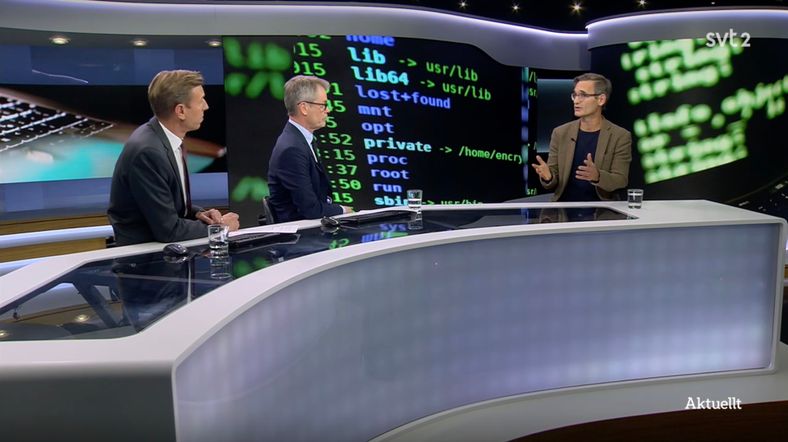
Pontus Johnson is a Professor at the KTH Royal Institute of Technology in Stockholm, Sweden. He leads the Center for Cyber Defense and Information Security (collaborating with Swedish Armed Forces, FRA, MSB, FOI, FHS) and serves as vice director of Cybercampus Sweden since 2024. His research focuses on cybersecurity , enterprise architecture analysis , and probabilistic threat modeling , particularly through his development of the Meta Attack Language (MAL) for simulating cyber attacks on networked systems. Education: MSc in Computer Science, Lund Institute of Technology (1997) PhD in Computer Science, KTH (2002) Docent title, KTH (2007) Leadership Roles: Director, Center for Cyber Defense and Information Security (2013–present) Vice Director, Cybercampus Sweden (2024–present) Board Member, Swedish Research Council (2025–present) Deputy Chair, Swedish Royal Academy of Engineering Sciences (IVA) Board (2024–present) His work spans cybersecurity research , attack simulation methodologies , and enterprise architecture frameworks . He has developed tools like securiCAD (acquired by Google) and pwnPr3d for probabilistic threat modeling. His 15 most recent publications highlight advancements in graph-based attack simulations , automated security assessments , and AI applications in cyber defense . Scientific recognition includes: Listed among Tech Awards Sweden's 50 Most Influential People in Swedish Tech (2022, 2023) Discovery of vulnerability in the Universal Turing Machine (2021) He supervises 16 PhD students and alumni (2005–2024), including Simon Gökstorp , Jakob Nyberg , and Sotirios Katsikeas . His academic service includes over 50 program committee roles and leadership positions in international conferences. He contributes to both academic and public domains through media appearances (SVT, Aftonbladet), courses in ethical hacking , and industry collaboration via his role at Google (20% of his time). His research group Software Systems Architecture and Security (SSAS) focuses on predictive security frameworks and system-of-systems analysis.
Dr. Elisa Donati is a researcher and independent group leader at the Institute of Neuroinformatics , affiliated with both the University of Zurich and the Swiss Federal Institute of Technology Zurich . Her work bridges neuromorphic engineering, biomedical signal processing, and wearable healthcare technologies, with a focus on creating brain-inspired systems for neuroprosthetics and rehabilitation. Affiliation: Institute of Neuroinformatics, University of Zurich & ETH Zurich Email: elisa@ini.uzh.ch Elisa’s research emphasizes developing neuromorphic signal processing strategies for wearable and embedded systems, enabling real-time closed-loop interactions with the nervous system. She specializes in translating neuroscience insights into energy-efficient technologies for digital health applications, including neuroprosthetics and personalized biomedical devices using neuromorphic hardware. Her recent publications (2024–2025) highlight advancements in gesture recognition via EMG and event-based systems, neuromorphic heart rate monitoring , and spiking neural network architectures . These works span biomedical signal processing, low-power computing, and adaptive algorithms, reflecting her commitment to robust, real-time, and brain-inspired solutions for healthcare. Elisa’s contributions to neuromorphic computing are evident in her exploration of heterogeneous population encoding , event-driven processing , and ultra-low-power microcontrollers . Her projects often integrate wearable systems with neuroscience, aiming to improve prosthetic control and rehabilitation technologies .
Georg Martius is a Full Professor in the Department of Computer Science at the University of Tübingen's Faculty of Science and a Max Planck Research Group Leader at the MPI for Intelligent Systems. Since April 2023, he has been a core member of the DFG-funded Cluster of Excellence 'Machine Learning: New Perspectives for Science,' which received extended funding through 2032 for its mission to integrate machine learning into fundamental scientific discovery processes. His academic foundation includes a PhD from the University of Göttingen and Bernstein Center for Computational Neuroscience (2005), a Diploma in Computer Science from the University of Leipzig (2003), and a visiting research period at the University of Edinburgh's Division of Informatics. Postdoctoral positions followed at the Max Planck Institutes for Dynamics and Self-Organization (Göttingen, 2009), Mathematics in the Sciences (Leipzig, 2010), and IST Austria (2015). Professor Martius's research pioneers the intersection of reinforcement learning, robotics, and tactile sensing, with emphasis on developing autonomous systems capable of natural locomotion, dexterous manipulation, and physical-world understanding. His work bridges theoretical machine learning with practical hardware applications, particularly in creating differentiable simulators, superresolution tactile sensors, and biologically plausible learning frameworks for robotic control. Analysis of his 2024-2025 publications reveals dominant trends in offline reinforcement learning (especially goal-conditioned and diversity-maximization techniques), object-centric representation learning for video understanding, and tactile sensing innovations. A strong thread connects foundation models to world model construction, while his work on differentiable physics engines enables precise collision handling and contact dynamics for real-world robotic control. His leadership roles include directing the Distributed Intelligence research team at Tübingen and contributing to major collaborative initiatives like the Real Robot Challenge and Myochallenge 2022. The Cluster of Excellence appointment represents recognition of his contributions to transforming scientific methodology through machine learning, particularly in automating hypothesis generation and experimental design. Current projects focus on integrating large-scale machine learning with embodied intelligence, advancing tactile perception systems like the Minsight vision-based sensor, and developing neuroplasticity-inspired approaches for robust out-of-distribution detection. His work directly impacts fields requiring physical interaction intelligence, from autonomous navigation to medical robotics, with emphasis on sample-efficient learning from limited real-world data.
Timo Vesala is Professor of Meteorology and Academy Professor at the University of Helsinki’s Faculty of Agriculture and Forestry, Institute for Atmospheric and Earth System Research (INAR). He is also affiliated with the Viikki Plant Science Centre (ViPS) and serves as a supervisor in the Doctoral Programme in Atmospheric Sciences. Research Interests: Micrometeorology and biogeochemical cycles Ecosystem–atmosphere exchanges of greenhouse gases Eddy-covariance methodology and flux networks Boreal lakes, wetlands, and forests as components of the climate system Development of long-term observational infrastructures such as ICOS-Finland Recent research output (2023–2025) is dominated by high-impact articles in Advances in Atmospheric Sciences , Biogeosciences , Agricultural and Forest Meteorology , and Geophysical Research Letters , reflecting a balanced portfolio of process understanding, methodological advances, and large-scale synthesis studies. Scientific Awards: Academy Professor (Akatemiaprofessori) – awarded by the Academy of Finland Doctoral Advising & Grants: Supervised or co-supervised doctoral theses of Sheila Wachiye, E. Lopez-Blanco, and X. Li Principal Investigator on Academy of Finland project “The Hidden Role of Gases in Trees” (2021–2025) Project leader for “Kasvihuonekaasujen maa-ilmakehävaihto järvi- ja suoekosysteemeille” (2024–2026) Co-leader of the art-science initiative “Periferia – Metsätaiteeellinen asema” (2021–2031) Participant in EU flagship EMME-CARE (2017–2026) Labs & Teams: Timo Vesala heads the Micrometeorology Group at INAR and leads the Finnish ICOS (Integrated Carbon Observation System) network node. His team operates multiple eddy-covariance towers across boreal lakes, wetlands, and forests, integrating field observations with modeling and remote-sensing data.
Tuuli Toivonen is a Professor of Geoinformatics at the Department of Geosciences and Geography, University of Helsinki. She leads the transdisciplinary Digital Geography Lab , which addresses human-scale spatial analytics for sustainable societies. She serves as Vice-Director of Geography Degree Programs (post-2022) and previously held the Director role (2020-2022). After receiving the ERC Consolidator Grant in 2022, she continues advancing open science through active memberships in HELSUS and URBARIA . PhD in Geography (University of Turku, 2006) Specialist Vocational Qualification in Leadership (2023) Life Member, Clare Hall, University of Cambridge (since 2021) Her research focuses on Human-Place Interactions through accessibility/mobility lenses, combining Open Data , Machine Learning , and Spatial Analytics . Key application areas include Urban Geography , Conservation Science , and Governance Policy . Recent publications address Dynamic Cities (2018), Social Media for Conservation (2019), and Environmental Exposure During Travel (2021). Her lab produces datasets like the Helsinki Region Travel Time Matrix series (2014-2023). Scientific Awards: European Open Data Champion (2017) Open Science Price (2017) University of Helsinki Geography Award (2018) She supervises Master's thesis work and serves as Opponent for doctoral defenses across Europe. Her teaching portfolio includes Advanced Geoinformatics and Digital Geographies courses.
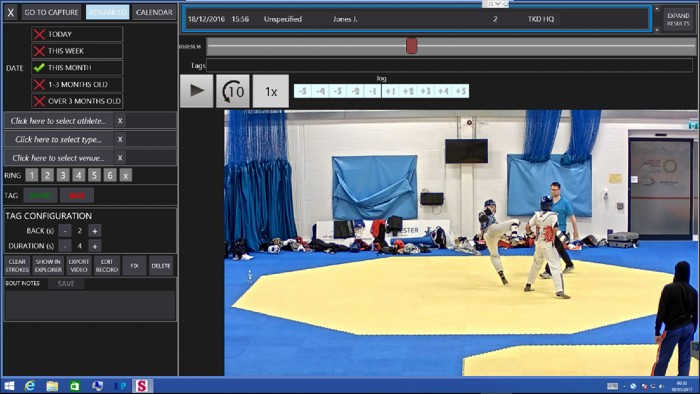
Dr. Simon Goodwill is the Head of Research in Sport and Physical Activity and Head of the Sports Engineering Research Group (SERG) at Sheffield Hallam University's Academy of Sport and Physical Activity. He holds a PhD focused on tennis ball-racket impact modeling and has collaborated with the International Tennis Federation. His expertise includes novel photogrammetry techniques, software development for athlete performance analysis, and camera calibration systems like check2d/check3d. He led projects supporting Team GB athletes in multiple Olympics, contributing to 42 medals at Rio 2016. Currently, he oversees the Advanced Wellbeing Research Centre (AWRC), applying sports performance methodologies to health research. His work integrates machine vision, data acquisition hardware, and elite athlete monitoring systems, with notable contributions to the EIS Innovation Partnership and sports tech exhibits like Le Tour Yorkshire's bike simulator. Education & Research: Simon’s PhD (modeling tennis impacts) and extensive software engineering background underpin his research. His projects span biomechanics, sports engineering, and health tech, with collaborations involving UK Sport, FIFA, and Adidas. He has developed systems used by athletes in London 2012, Rio 2016, and Glasgow 2014 Commonwealth Games. Research Themes: His work emphasizes performance analysis through photogrammetry, real-time athlete tracking, and health-related applications of sports tech. Key projects include court pace rating for the ITF, iBoxer2 boxing data tools, and the AWRC’s health innovations. Grants & Impact: The AWRC, funded by UK DoH and ESIF (£15.7M), reflects his role in translating elite athlete tech to public health. His work is cited in UK government reports on Olympic legacy and has received media attention, including BBC features on GB Boxing’s iBoxer software. Advising & Leadership: Supervised 17 PhD students on topics like machine learning in taekwondo, swimming analysis, and tennis racket dynamics. Served as External/External advisor and led 10+ Olympic cycle projects. Active in the International Sports Engineering Association as Director.
Marketta Kyttä is a Professor of Land Use Planning at Aalto University's Department of Built Environment. She holds a PhD in Architecture from Helsinki University of Technology (2004) and leads the Spatial Planning and Transportation Engineering Master’s program. Research Interests: Child- and age-friendly urban environments SoftGIS methodology for participatory mapping Social sustainability and urban health Public participation in planning Activity space modeling Scientific Awards: Lea Pulkkinen award Tapio Nummenmaa award Geospatial World Forum's WebGIS Innovation Award (2010) Oskari Vilamo award (2020) Oppikirja-palkinto for urban planning literature Methodological Contributions: SoftGIS (PPGIS innovation) Commercialization as Maptionnaire software International Collaborations: Affiliated with universities in Italy, Australia, and the US. Her work spans 80+ countries through Maptionnaire’s global adoption.