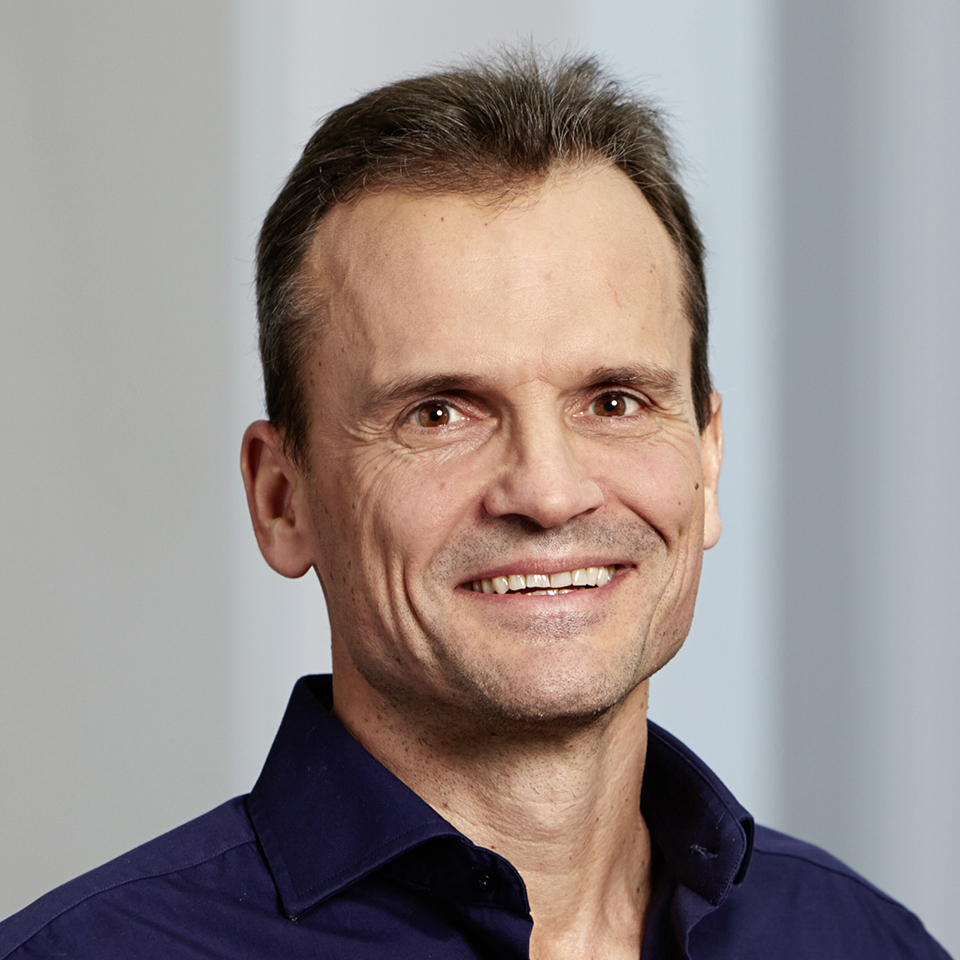
Letterio Galletta is an Assistant Professor of Computer Science at IMT School for Advanced Studies Lucca, within the SySMA research unit. Previously, he held a postdoctoral researcher position at the University of Pisa's Department of Computer Science and earned his Ph.D. in Computer Science from the University of Pisa in 2014. His research focuses on language-based security, leveraging programming languages, compilers, and formal verification to address security challenges in adaptive software, IoT, firewalls, and blockchain technologies. Key research areas include secure compilation, access control policy analysis, smart contract formal models, and static analysis techniques. His work bridges theoretical foundations with practical applications, such as securing satellite communication systems (IRIS2) and enhancing firewall policy enforcement. Publications highlight contributions to blockchain transaction parallelism, IoT security metrics, and formal methods for SELinux configurations. He actively contributes to tools like FWS (Firewall Synthesizer) and VeriOSS for bug bounty protocols. His research emphasizes interdisciplinary approaches, combining cybersecurity with distributed systems and embedded computing.
Dr. Rebecca Balasundaram is a Lecturer and Module Director at York St John University's York Business School in London, UK, and an adjunct professor at Vellore Institute of Science and Technology, India. With over 20 years of teaching experience and a decade of research in Machine Learning, Artificial Intelligence, Blockchain, and Cybersecurity, she holds a PhD in Computer Science from Bharathiyar University. She previously served as an Associate Professor at SRMIST, India, and leads the research group 'MetaLearn AI Innovators.' Her teaching spans Python/R for Machine Learning, Cryptography, and Software Engineering. She has secured research funding, including a 2023 QR-funded project on AI for predicting premature births using Machine Learning. She actively publishes in top journals, filed five patents, and presents globally on AI, Blockchain, and security. Recent activities include keynote speeches at the International Conference on Resilience Management (2023) and a training session for Nigerian security operatives (2023). Her research focuses on AI-driven security solutions, blockchain optimization, and educational tech innovations like 'Teachable Machine Using Mixed Reality.' She mentors students through SAAR projects and collaborates with industry on applied research.
Rudolf Mayer is an Lecturer at the School of Logic and Computation and School of Information Systems Engineering at Vienna University of Technology . He is affiliated with the university through his roles in teaching and research, focusing on Machine Learning , Digital Preservation , and Privacy-Preserving Data Analysis . His work spans both academic research and applied projects, with a strong emphasis on collaborative and secure data management . His research interests include Machine Learning , Privacy-Preserving Techniques , Digital Preservation , and Music Information Retrieval . Over his career, Mayer has contributed to Developing frameworks for digital preservation of scientific and business processes Advancing privacy-preserving data analysis through platforms like WellFort Exploring adversarial machine learning and model stealing attacks Integrating semantic web technologies into data management systems His publications highlight trends in collaborative cybersecurity , model robustness , and digital archiving with applications in federated learning, self-organizing maps, and music analysis. Mayer has supervised 15+ graduate students , covering topics such as adversarial attacks , model watermarking , and privacy-preserving anomaly detection . Notable projects he has been involved in include the NEWSROOM initiative for cybersecurity automation, the Research Studio Digital Memory Engineering , and contributions to the PLANETS project for long-term digital access.
Hao Dong is a Researcher affiliated with the University of California, Santa Barbara (UCSB) and Meta. His primary role involves advancing research in machine learning and GPU-accelerated computing. He is part of the Department of Statistics and Applied Probability at UCSB. His research focuses on optimizing deep learning models through techniques like sparsity, attention mechanisms, and hardware acceleration. Key areas include transformer models, spiking neural networks, and graph neural networks. He has contributed to frameworks like H2Learn and fuseGNN, emphasizing efficiency in training and inference phases. His publications consistently explore computational efficiency, scalability, and hardware-software co-design, particularly leveraging GPUs to accelerate neural network operations. Notable work includes dynamic sparse attention mechanisms and structured sparsity strategies to reduce computational costs while maintaining accuracy. No scientific awards or grants are explicitly mentioned in the provided information. His academic contributions are centered on algorithmic innovation and practical implementation in high-performance computing environments.
Dr. Hai Dong is a Senior Lecturer at the School of Computing Technologies, RMIT University, Melbourne, Australia. He leads the Smart Sensing and Services Research Area and directs the GreenCryptoLab, a joint laboratory with CloudTech. He chairs the IEEE Task Force on Deep Edge Intelligence and has held roles including Research Fellow at Curtin University and RMIT. Education: PhD (Curtin University), BEng (Northeastern University, China), Graduate Certificate in Learning & Teaching (Distinction) His research focuses on Edge Intelligence, Blockchain, AI Security, and Cyber Security. He has published 150+ articles in top venues like TIFS, ICML, and ICSOC, securing over $5M in research funding from ARC, CRC, and industry partners. Recent work emphasizes Green Cryptocurrency systems and federated learning applications. His awards include the 2023 RMIT Industry Engagement Award and Best Paper recognitions in ICSOC and IEEE ICBC. Supervision: Active in guiding PhD/Master students in AI Security, Edge Computing, and Blockchain. Grants: Major projects include Green Bitcoin platforms and secure crypto payment systems. Labs: GreenCryptoLab collaborates on sustainable blockchain tech and secure edge systems.
Michael Brand is an Adjunct Professor at RMIT University's School of Computing Technologies. His research focuses on cryptography, privacy-preserving technologies, machine learning, and algorithm design. Key areas include zero-knowledge proofs, secure financial systems like FinTracer, and computational theory. His work bridges theoretical foundations with practical applications in data security and real-time processing systems. Research interests span advanced cryptographic protocols, privacy-enhancing machine learning techniques, and distributed computing paradigms. Notable contributions include innovations in blockchain tracing mechanisms and foundational work in statistical estimation theory. He actively publishes in top-tier venues, addressing challenges in secure computation, network analysis, and database systems. Collaborations emphasize interdisciplinary solutions to modern computational and security challenges.
Dr. Jeremy L Jacob is a Senior Lecturer in the Department of Computer Science at the University of York. He holds a BSc in Mathematics from the University of Hull, an MSc in Computation from the University of Oxford (Oxon), and a DPhil (PhD) from Oxon. With over 10 years of postgraduate research experience, he has been a Lecturer since 1992 and joined the University of York in 1993. His research focuses on applying mathematical principles to programming language design, software engineering, and security protocols. His work spans formal methods, threat modeling in cloud and IoT systems, and security protocol analysis. He is affiliated with the Automated Software Engineering research group led by Professor Dimitris Kolovos. Contact details include office CSE/043 and phone +44 (0)1904 325667, though direct email access requires using the department's web form to protect against spam. Key contributions include pioneering work on translating CSP into timed automata, adapting threat modeling frameworks for modern systems, and exploring confidentiality properties in formal specifications (e.g., Circus and Z formalisms). His research bridges theoretical foundations with practical applications in cybersecurity and software engineering.
Markus Püschel is a Professor of Computer Science at ETH Zurich, leading the Advanced Computing Laboratory. He previously served as Head of the Department of Computer Science at ETH from 2013 to 2016. Before joining ETH in 2010, he was a Professor at Carnegie Mellon University (CMU) and retains adjunct status there. He holds a PhD in Computer Science (1998) and a Mathematics Diploma (1995) from the University of Karlsruhe. His research focuses on program generation for performance, Fourier analysis, signal processing, machine learning, and compiler optimization. He pioneered the SPIRAL system for generating optimized signal processing libraries and has contributed to algebraic signal processing theory. His work bridges mathematical foundations with practical high-performance computing, emphasizing automated code generation and domain-specific languages. Research trends in his articles include causal inference on directed acyclic graphs, quantized neural network inference, and efficient compiler techniques. His work on graph signal processing and causal analysis has led to novel methods in time-series data and DAG learning. Awards: IEEE Fellow (2020), Golden Owl Teaching Award (2015), NSF Discovery Grant (2008), and multiple best paper awards. Grants/Projects: Co-PI for Making Program Analysis Fast (SNF), SPIRAL GPU projects, and collaborations with industry partners like Intel and AMD. He advises over 40 PhD and master’s students, many of whom contribute to impactful projects in compilers, machine learning, and signal processing. His lab also co-founded the Swiss Data Science Center.
Ramalingam Sridhar is an Associate Professor in the Department of Computer Science and Engineering at the University at Buffalo, part of the State University of New York. He holds a PhD in Computer Engineering from Washington State University. His research focuses on VLSI systems, embedded technologies, computer architecture, and wireless networks security. He leads the High Performance VLSI Systems and Architecture Laboratory, emphasizing energy-efficient designs and hardware security. Affiliations: School of Engineering and Applied Sciences, Adjunct role in Electrical Engineering. Educations: PhD (Computer Engineering, Washington State University, 1987). Research interests include low-power VLSI circuits, secure embedded systems, wireless security protocols, and energy-aware mobile systems. His work bridges cross-layer design challenges in networks and hardware reliability. He has contributed to over 100 publications, including key advancements in register file design, secure RFID systems, and intrusion detection. Recipient of the IEEE CAS Society Distinguished Lecturer (2003-2004) and Best Poster Award (2005). Advised numerous PhD and MS students in areas like network-on-chips and security. Collaborates with industry partners like IBM and NASA on projects involving FPGA architectures and space communication security.
Alexis Lechervy is an Assistant Professor at the University of Caen within the GREYC Laboratory's Image team. His research develops machine learning methods for efficient multimedia analysis and retrieval systems. Core research themes include: Multi-exit neural architectures for adaptive computation Multimodal fusion strategies for visual and textual data Metric learning for content-based retrieval Interactive learning systems for human-AI collaboration Resource-efficient deep learning models Dr. Lechervy's work bridges fundamental machine learning research with applications in medical imaging, biometrics, and multimedia retrieval. His algorithms optimize the balance between computational efficiency and predictive accuracy in resource-constrained environments.
Dr. Karen Eguiazarian is a Professor of Signal Processing at the Department of Computing Sciences , Tampere University . He leads the Computational Imaging research group and has served as head of the Signal Processing Research Community (SPRC) at Tampere University of Technology (2016-2018). Education: M.Sc. in Mathematics, Yerevan State University, Armenia (1981) Ph.D. in Physics and Mathematics, Moscow State University, Russia (1986) Doctor of Technology in Signal Processing, Tampere University of Technology, Finland (1994) His research focuses on Computational Imaging , Compressed Sensing , and Efficient Signal Processing Algorithms , with significant contributions to Image/Video Restoration and Compression . Recent work includes AI-driven phase imaging, hyperspectral reconstruction, and noise-robust algorithms for remote sensing and biomedical applications. Scientific Awards: Service Award from the Society for Imaging Science and Technology (IS&T) (2014) Honorary Doctoral Degree from Don State-Technical University, Russia (2015) Dr. Eguiazarian has supervised 25 doctoral theses and published over 650 papers. He serves as Editor-in-Chief of the Journal of Electronic Imaging and associate editor of the IEEE Transactions on Image Processing , while co-founding Noiseless Imaging Oy , a Tampere University spin-off.
Barton P. Miller is a Vilas Distinguished Achievement Professor and the Amar & Balinder Sohi Professor of Computer Sciences at the University of Wisconsin, Madison, where he has made significant contributions to computer science research and education. As a faculty member in the Computer Sciences Department within the College of Engineering, he directs major research initiatives including the Paradyn Tools project and leads cybersecurity efforts as Chief Scientist of the DHS-funded Software Assurance Marketplace (SWAMP) research center. Miller received his B.A. degree from the University of California, San Diego in 1977, and M.S. and Ph.D. degrees in Computer Science from the University of California, Berkeley in 1980 and 1984. His educational background laid the foundation for his pioneering work in software testing and analysis. His research spans multiple critical areas of computer science, with a primary focus on binary code analysis and instrumentation , software security , and distributed and parallel program performance . Miller is particularly renowned for founding the field of Fuzz random software testing in 1988 and dynamic binary code instrumentation in 1992. His work bridges theoretical computer science with practical applications, addressing real-world challenges in high-performance computing systems, cybersecurity, and scalable distributed systems. His research has direct applications in national security through his work with DHS and TrustedCI, the NSF Cybersecurity Center of Excellence. Miller's publications reveal a consistent focus on binary analysis tools, security vulnerability detection, and performance optimization techniques. His recent work shows increasing emphasis on ransomware analysis, GPU performance optimization, and practical security tool development for developers. The trajectory of his research demonstrates how foundational work in binary instrumentation has evolved to address contemporary cybersecurity challenges while maintaining relevance to high-performance computing environments. Among his notable honors, Miller is a Fellow of the ACM and recipient of the prestigious Jean-Claude Laprie Award in Dependable Computing , an R&D 100 Award , and multiple best paper awards including at HPDC 2009 and CCGrid 2018. His contributions to the field have been recognized through distinguished lectureships at institutions including Ben Gurion University and IBM T.J. Watson Research Center. As an educator, Miller has mentored numerous students and taught courses spanning operating systems, software security, and distributed systems. He has received teaching awards and developed educational resources including free and open software security training materials. His work with TrustedCI has focused on cybersecurity for scientific communities, helping researchers secure their computational infrastructure while maintaining research productivity. Miller also co-directs the MIST software vulnerability assessment project in collaboration with colleagues at the Autonomous University of Barcelona. Miller directs the Paradyn Tools project, which investigates program scalability and binary program analysis technologies for use in HPC, systems design, and cyber-security. His work extends to practical applications through collaborations with government agencies including DHS and the U.S. Secret Service Electronic Crimes Task Force. His research group has developed tools like Dyninst, MRNet, and the Wisconsin Safety Analyzer that have become foundational in their respective domains.
Dr. Feng Wang is an Assistant Professor in the School of Engineering at Liberty University, specializing in network reliability, interdomain routing, and software-defined networking. His research addresses challenges in next-generation internet architectures, network performance measurement, and secure IoT device management. Education: B.E. in Electrical and Computer Engineering from Zhejiang University (China) M.S. in Electrical and Computer Engineering from Yanshan University (China) Ph.D. in Electrical and Computer Engineering from the University of Massachusetts, Amherst Research focuses on: - Detecting transient routing failures and improving network performance through real-time diagnostic systems (e.g., collaboration with AT&T). - Designing scalable addressing schemes for IoT and wireless sensor networks. - Developing intrusion detection systems (e.g., MOCA framework) and network anomaly mitigation techniques. His publications (2015-2023) emphasize network security, routing protocol optimization, and scalable internet architectures. Notable work includes BGP rerouting solutions, real-time routing failure diagnosis, and variable-length addressing for 6LoWPAN. No scientific awards were explicitly listed in the provided texts. Collaborations include Agilent, AT&T, and Intel, focusing on practical network reliability and security solutions. Dr. Wang has advised no listed students or managed grants in the provided texts. His research extends to lab implementations of lightweight routers (SoC-based) and stability-aware protocols for RPL networks.
Tim Polzehl is a Senior Researcher at the German Research Center for Artificial Intelligence (DFKI) in Berlin's Speech and Language Technology (SLT) Department. He holds a PhD in technical communication sciences from TU Berlin (2014), focusing on automatic personality prediction from speech/user data. Previously, he led the Next-Generation Crowdsourcing group as a postdoc at TU Berlin's Quality and Usability Lab, overseeing projects like the Crowdee crowdsourcing platform. His current research spans speech anonymization, disinformation detection, deepfake analysis, and AI ethics. He actively supervises doctoral students and collaborates on EU-funded projects. Education: PhD in Technical Communication Sciences, TU Berlin (2014) Studies in Technical Communication Sciences, TU Berlin Research Interests: Focuses on applying AI to speech technology, privacy-preserving systems, and combating disinformation through machine learning. Specializes in multimodal systems, ethical AI deployment, and human-AI collaboration frameworks. Publications: Recent work emphasizes regulatory challenges of AI (e.g., EU AI Act compliance), privacy in clinical speech data, and personality-aware chatbots. Key areas include disinformation detection via LLMs and technical cybersecurity for speech systems. Grants & Awards: Participated in BMBF-funded leadership programs and EIT-Digital EU projects. Current projects involve developing frameworks for ethical AI integration in critical applications like elections. Labs/Teams: Leads SLT Department initiatives on autonomous AI agents and voice cloning at DFKI. Collaborates with TU Berlin's Quality and Usability Lab on ongoing research.
Dr. Steve Kerrison is a Senior Lecturer in Cybersecurity at James Cook University (Singapore Campus). He holds a PhD and MEng in Computer Science from the University of Bristol, and certifications including CISSP and CCSP. His expertise spans IoT cybersecurity, embedded systems, and energy-efficient computing. Education: PhD in Computer Science, University of Bristol (2010-2015) MEng in Computer Systems Engineering, University of Bristol (2005-2009) CISSP and CCSP certifications (ISC)² Research Interests: Focuses on IoT cybersecurity, PKI for IoT, energy-efficient computing, and Industry 4.0. Collaborations include EU-funded projects (ENTRA, ICT-Energy) and Singapore’s National Cybersecurity R&D Program. Teaching: Specializes in open-source tools and community-driven cybersecurity education. Formerly a Senior Research Associate at Bristol and CTO at MICROSEC, a Singapore-based IoT security startup.

/prod01/yorksjacuk/media/content-assets/staff-profile-images/rebecca_balasundaram-_web_size-10.jpg)