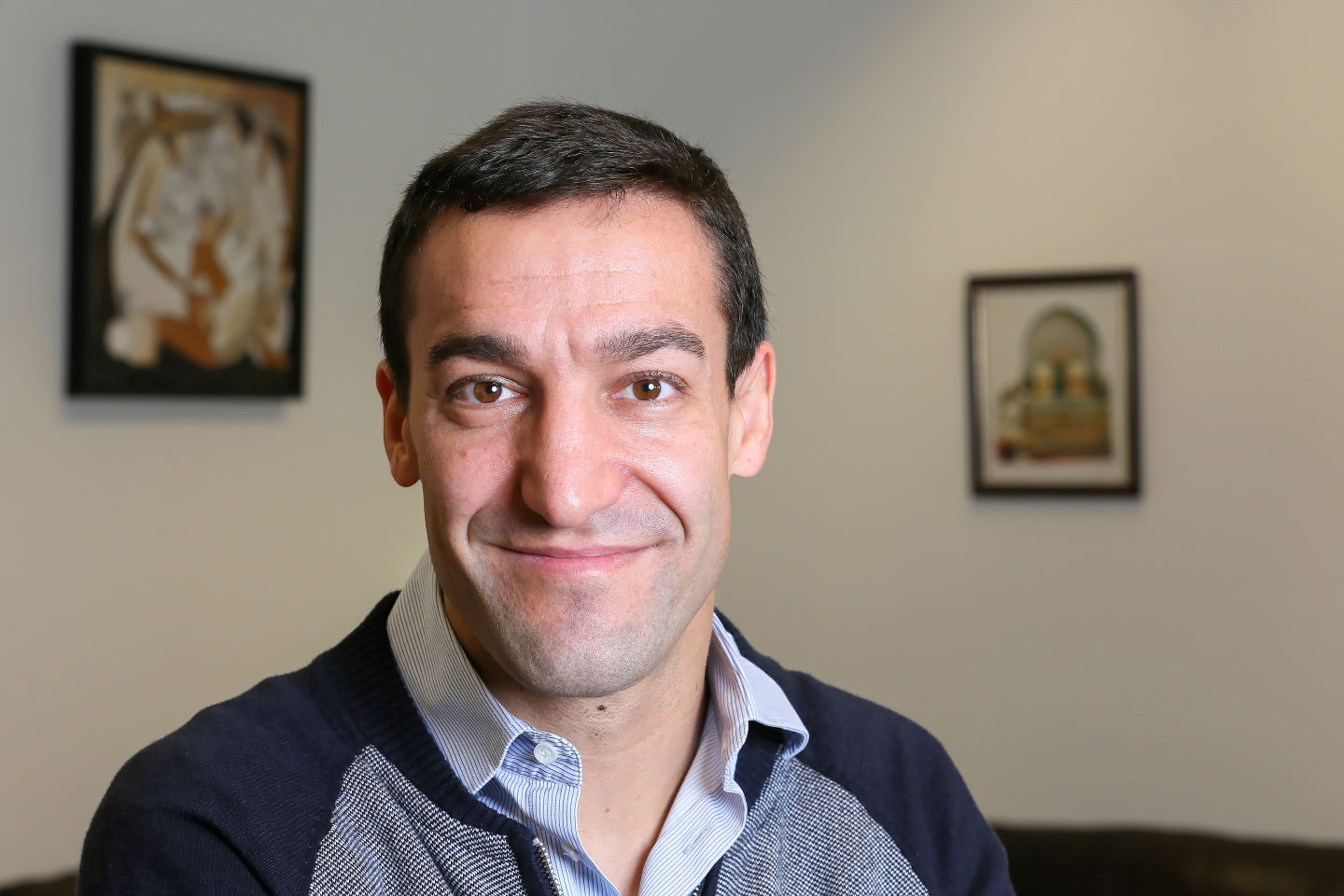
Daniel Livingstone is a researcher at The Glasgow School of Art (GSA) specializing in the application of games and 3D technologies to enhance learning and public engagement. His work spans medical visualization, heritage interpretation, and broader educational technology domains. Current PGR supervisee: Shaojie Ni (AR & Gamification in Museums) Email: D.Livingstone@gsa.ac.uk Research Themes : Serious games, virtual reality, 3D anatomical modeling, disease education, digital heritage preservation, and AI-driven simulations. Highlights include AR tools for rheumatology engagement, VR applications in diabetes management, and digital reconstructions of historical surgical instruments. Article Trends : Focus on merging immersive technologies with healthcare education, heritage storytelling, and interdisciplinary applications of game engines. Recurring keywords: Augmented Reality , 3D Visualization , Medical Education , Public Health , Virtual Environments .
Julie K. Schwarz, MD, PhD, FASTRO is a tenured Professor of Radiation Oncology at Washington University School of Medicine, where she serves as Vice-Chair of Research and Director of the Cancer Biology Division. She also holds appointments as Professor of Cell Biology and Physiology and is affiliated with the Roy and Diana Vagelos Division of Biology & Biomedical Sciences, specifically within the Cancer Biology and Molecular Cell Biology programs. Dr. Schwarz is a key member of the Siteman Cancer Center and co-leads one of only five centers comprising the NIH's Radiation Oncology-Biology Integration Network (ROBIN). Dr. Schwarz completed her BS in Biology at Duke University (1995) followed by an MD/PhD in Cell and Molecular Biology at Washington University School of Medicine (2004) through the Medical Scientist Training Program. She completed her Internal Medicine internship (2005) and Radiation Oncology residency (2009) at Barnes-Jewish Hospital, becoming board-certified by the American Board of Radiology in Radiation Oncology (2010). Her research program focuses on translational studies of gynecologic cancers, particularly cervical cancer, with emphasis on tumor metabolism, biomarker discovery, and treatment resistance mechanisms. Dr. Schwarz's laboratory maintains one of the largest tumor repositories for cervical cancer, which includes specimens collected before and during chemoradiation treatment. Her work has demonstrated the critical role of pretreatment and post-treatment FDG-PET scanning for cervical cancer patients and has identified alterations in PI3K/Akt pathway genes associated with treatment response. Recent research directions include studying obesity's paradoxical favorable impact on cervical cancer outcomes, glucose and glutamine metabolism as targets for cancer therapy, and the role of tumor immunology in therapy resistance. Analysis of Dr. Schwarz's most recent publications reveals a strong focus on cervical cancer biology, tumor metabolism, and novel therapeutic approaches. Her work integrates clinical data with laboratory research to identify biomarkers and develop improved treatment strategies. Current research emphasizes the interface between tumor metabolism, the microenvironment, and response to therapy, with particular attention to HPV-related cancers, tumor imaging, and metabolic targets for radiosensitization. Fellow of American Society for Radiation Oncology (ASTRO) (2024) Danforth WashU Physician-Scientist Scholar Award (2024) Elected into American Society for Clinical Investigation (2022) Michael Fry Research Award for Outstanding Junior Investigator: Radiation Research Society (2012) Fellow: National Cancer Care Network (2008) RSNA Roentgen Resident/Fellow Research Award (2008) As a dedicated mentor, Dr. Schwarz has guided numerous trainees across all levels including undergraduates, graduate students, medical students, residents, fellows, and postdoctoral researchers. Her Schwarz Lab is highly collaborative and actively recruits students and researchers, with recent successes including Leahan Castillo receiving an Honorable Mention at AACR and Brett Tortelli developing significant research on the vaginal microbiome's relationship to cervical cancer treatment response. Dr. Schwarz is R01-funded and leads multiple research projects, including work on the TARGET Center which focuses on understanding the biologic effects of radiation therapy in cancer treatment. She actively participates in national organizations including the ASTRO/NCI Radiobiology Consensus Workshop, AACR Radiation Oncology Think Tank, and the ASTRO Community of Radiation Oncology Physician Scientists. Dr. Schwarz directs the Schwarz Lab, which is growing and actively recruiting postdocs, staff scientists, and graduate students. The lab employs a multidisciplinary approach combining well-annotated clinical databases, prospectively collected patient tumor banks, and state-of-the-art sequencing technologies. Current research directions include single-cell sequencing approaches to study treatment effects on tumor cells and immune cells within the tumor microenvironment, glucose and glutamine metabolism as targets for cancer therapy, and targeting myeloid-derived cells to improve anti-tumor immunity. The lab is highly collaborative and studies multiple tumor types including cervical, pancreatic, and ovarian cancers.
Fengqing Maggie Zhu is an Associate Professor at the Elmore Family School of Electrical and Computer Engineering within Purdue University , West Lafayette campus. Her research spans image processing , video compression , computer vision , and smart health , with notable contributions to learned image compression , 3D reconstruction , and nutrition analysis via computer vision . Educational background: BS in Electrical Engineering, Purdue University (2004) MS in Electrical and Computer Engineering, Purdue University (2006) PhD in Electrical and Computer Engineering, Purdue University (2011) Her work focuses on developing machine learning-based compression techniques for 2D/3D images and videos, with applications in food portion estimation , wearable dietary monitoring , and virtual reality facial expression tracking . She explores structured pruning , mixed precision quantization , and continual learning to create efficient, robust systems for edge-cloud collaboration. The 2025-2024 article collection reveals concentrated efforts in learned image compression (with 8 papers on quantization, pruning, hierarchical VAEs), food-related computer vision (12+ papers on portion estimation, databases, classification), and 3D reconstruction (MetaFood3D dataset, ICP-3DGS algorithm). Emerging themes include privacy-preserving AI for wearable cameras and class-incremental learning frameworks. Contact: zhu0@purdue.edu
Katy Ilonka Gero is a Lecturer at the School of Computer Science, University of Sydney , with prior postdoctoral roles at Harvard University and the Library Innovation Lab. She holds a PhD in Computer Science from Columbia University (2022) and a BS in Mechanical Engineering from MIT (2017). Education : PhD in Computer Science (Columbia University, 2022); BS in Mechanical Engineering (MIT, 2017) Her research focuses on Human-Computer Interaction in creative domains, particularly how language models impact creative practice, ownership, and learning . She develops community-driven AI models through co-design with creative communities and investigates ethical data governance practices. Recent work includes designing interactive writing tools for metaphor creation and exploring the social dynamics of AI support in writing . The 15 most recent articles reflect trends in AI-augmented creativity (Metaphoria, CHI 2019), AI ethics (Nature Machine Intelligence 2023), and human-AI collaboration (CHI 2020 Best Paper). These works span language model evaluation , creative ownership , and technical innovations in soft robotics (2012) and science communication (2021). Scientific Awards : NSF Graduate Research Fellowship Brown Institute for Media Innovation Grant Amazon Research Award Best Paper - CHI 2025 Honorable Mention - CHI 2024 Best Paper - CHI 2020 As a poet and essayist , she co-edits Ensemble Park , a human-computer co-writing magazine, and authored the dynamic poetry book The Anxiety of Conception (2025). Her grants include support from the National Science Foundation , Brown Institute , and Amazon . For technical details, visit her personal website or GitHub.
Xiaonan Lu is an Associate Professor of Electrical Engineering Technology at Purdue University's School of Engineering Technology, with a courtesy appointment in the Elmore Family School of Electrical and Computer Engineering. His research focuses on critical challenges in modern power systems dominated by inverter-based resources, particularly stability and control in microgrids and renewable-integrated grids. His research interests span power systems engineering with emphasis on small-signal stability analysis, dynamic modeling of hybrid AC/DC microgrids, and advanced control strategies for grid-forming and grid-following inverters. He investigates AI-assisted modeling techniques, resilience enhancement through hydrogen integration, and data-driven optimization of microgrid operations to address challenges in low-inertia power systems and distributed energy resource coordination. Analysis of his recent publications (2024-2025) reveals dominant trends toward AI-aided stability assessment, seamless control transitions between inverter modes, and quantifiable trade-offs in voltage regulation and power sharing. His work consistently addresses practical implementation challenges including communication delays, cyber resilience, and standardized testing methodologies for inverter-dominated systems.
Mesut Akdere is a Professor of Human Resource Development at Purdue University's Polytechnic Institute and founding faculty member of its Human Resource Development undergraduate program. He directs multiple research labs including the Purdue HRD Virtual Lab, Purdue HR Analytics Interactive Learning Lab, and the Cyber Resilience Adaptive Virtual Reality Experiences (CRAVRE) project sponsored by FEMA. Ph.D., University of Minnesota His research bridges technology with human resource development, focusing on virtual reality leadership training, STEM workforce development , intercultural competence through immersive simulations, and human resource analytics in the big data era. He has pioneered frameworks for human-robot teamwork and virtual reality safety training in agriculture. Dr. Akdere has received five major awards (2020-2021) including the Richard A. Swanson Research Excellence Award and Purdue Polytechnic Institute's Outstanding Faculty in Discovery Award. Current grants exceeding $16M include projects from the U.S. Department of Homeland Security, Department of Labor, and National Science Foundation. Cyber Resilience Adaptive Virtual Reality Experiences (CRAVRE) - $1.5M (2019-2024) Purdue Cyber Apprenticeship Program - $12M (2020-2023) NSF Collaborative Research - $580K (2021-2023)
Philipp Koehn is a Professor in the Department of Computer Science at Johns Hopkins University, with additional affiliation at the University of Edinburgh. His primary research focuses on statistical and neural machine translation, specifically developing methods to leverage large-scale digital information for cross-lingual communication. He leads the Machine Translation Research Group and maintains key resources like the Moses toolkit and Europarl corpus. His research interests span: Core machine translation techniques (statistical/neural approaches) Low-resource and unsupervised translation methods Cross-lingual representation learning Speech-to-speech translation systems Large-scale parallel data mining and alignment Evaluation methodologies for generated text Koehn's recent publications demonstrate strong focus on improving translation efficiency (dynamic compression, streaming models), robustness (noise handling, error correction), and accessibility (low-resource languages, radio speech processing). Key trends include multilingual generalization, document-level coherence, and human-centered evaluation. Significant scientific recognition includes: ACL Fellow (2024) IAMT Award of Honor (2015) European Inventor Award Finalist (2013) He currently advises PhD students Rachel Wicks, Elina Baral, Bismarck Odoom, and Weiting Tan. His Machine Translation Group develops widely-used open-source tools and organizes major conferences including WMT and MT Marathon.
Orit Shaer is a Professor and co-Chair of Computer Science at Wellesley College , where she founded and directs the Human-Computer Interaction (HCI) Lab . Her work bridges tangible interaction, human-AI collaboration, and mixed-reality interfaces, focusing on transforming work and learning environments through embodied technologies. Education : B.A. from Academic College of Tel-Aviv, M.S. and Ph.D. in Computer Science from Tufts University Research interests center on novel human-computer interaction paradigms : Human-AI collaboration frameworks Tangible and embodied interface design Mixed-reality applications for productivity Genomics collaboration tools STEAM education technologies Recent publications highlight human-AI co-creation (CHI 2024), temporal dynamics in automated work (CHIWork 2024), and pandemic-era remote interaction studies (IEEE Pervasive Computing 2021). Awarded: NSF CAREER Award Agilent Technologies Research Award Google App Engine Education Award Pinanski Prize for Excellent Teaching Best Paper Honorable Mention (ACM CHI 2014) Honorable Mention (CHIWork 2022) She co-founded the international CHIWork Symposium and chairs the ACM TEI conference. Her NSF IRES grant (2022) supports US-German collaboration on human-automation interaction.
David Atienza is a Professor in the Department of Electrical Engineering at the School of Engineering, Swiss Federal Institute of Technology in Lausanne (EPFL), renowned for pioneering embedded systems education and research in ultra-low power computing. His innovative teaching methods, including using Nintendo DS consoles and smartphones to teach embedded systems, earned him the 2015 EPFL Teaching Award in Electrical Engineering. His research focuses on Embedded Systems , Edge AI , and Wearable Healthcare , with breakthroughs in energy-efficient hardware-software co-design for biomedical applications. Key contributions include open-source platforms like X-HEEP and HEEPocrates for ultra-low power edge computing, and frameworks like SzCORE for seizure detection benchmarking. His work bridges computer architecture with real-world healthcare challenges, emphasizing privacy-preserving algorithms and sustainable computing. Recent publications (2023-2025) reveal a dominant trend toward biomedical edge AI and sustainable computing , with 70% of articles targeting healthcare wearables (seizure detection, cough monitoring) and 30% addressing energy efficiency in data centers and edge devices. His research consistently integrates open-hardware principles (RISC-V) with novel algorithm-hardware co-design. Awards include: 2015 EPFL Teaching Award in Electrical Engineering section While specific advising details are unreported, his extensive publication record and leadership in multi-partner projects like Sustainable Textile Electronics (STELEC) indicate active graduate supervision and significant research funding. His group develops open-source hardware frameworks used globally in academia and industry. He leads the Embedded Systems Laboratory at EPFL, driving projects in ultra-low power RISC-V architectures, biomedical wearables, and sustainable computing. Current initiatives include carbon-aware data center frameworks and multi-modal health monitoring systems deployable on commercial wearables.
Sami Äyrämö is an Associate Professor at the Faculty of Information Technology , University of Jyväskylä. His research bridges machine learning and health science , focusing on innovative applications in biomechanics , medical imaging , and exercise physiology . Specializes in automated scoring systems for medical diagnostics Pioneer in domain-specific transfer learning for healthcare data Develops synthetic data for wellbeing sector innovation His work spans colorectal cancer tissue analysis , ACL injury risk modeling , and dementia detection from speech , with recent studies applying cluster analysis and deep learning to sports biomechanics challenges. Current projects include the WellbeingDataLab initiative for synthetic exercise data, and collaborations with the Computational Data Science Research Group on spectral imaging and health analytics.
Liza J. Shapiro is a Professor in the Department of Anthropology at the University of Texas at Austin, affiliated with the College of Liberal Arts. Her research focuses on the functional morphology, ontogeny, and evolution of primate locomotion, employing quantitative comparative analysis of musculoskeletal systems in extant and extinct primates alongside biomechanical studies in both laboratory and field settings. Her work emphasizes the vertebral musculoskeletal system in primates and investigates quadrupedal locomotion mechanics. Recent publications explore lemur locomotor mechanics, wild primate limb kinematics, and the role of compliant substrates in augmenting leaping behavior. She has also contributed to debates on hominin locomotor evolution through fossil analysis. Shapiro teaches courses including Primate Anatomy , Biological Anthropology , and Primate Evolution , with active research programs involving collaborations with scholars like Andrew Barr and Brett Nachman. She contributes to the Academic Phylogeny of Biological Anthropology project and maintains field and laboratory research methodologies.
Dr. Erma Perenda serves as Professor and Chair of Distributed Signal Processing at RWTH Aachen University, Germany, leading research within the Department of Distributed Signal Processing. Her contact details include email perenda@dsp.rwth-aachen.de and phone +49 241 80-27879, with office location at Kopernikusstraße 16, 52074 Aachen in the ICT Cubes facility. Her research spans: Distributed Signal Processing Wireless Communications Machine Learning (Deep Reinforcement Learning, Federated Learning) Modulation Classification AI-driven Network Optimization She focuses on solving real-world challenges in wireless systems including hardware impairments, channel variations, and energy efficiency through advanced AI techniques. Analysis of her 2018-2024 publications reveals consistent innovation in applying multi-agent deep reinforcement learning to wireless power allocation, developing robust modulation classification methods resilient to channel impairments, and implementing federated learning for industrial edge computing. Her work bridges theoretical machine learning with practical wireless communication constraints. Scientific Awards: No awards documented in available sources Advising and Grants: No student advisees or grant information provided Labs and Teams: Leads Distributed Signal Processing research group at RWTH Aachen University Based in ICT Cubes building focusing on wireless AI systems
Sadegh Talebi is a Tenure Track Assistant Professor in the Machine Learning Section at the Department of Computer Science, University of Copenhagen . His research focuses on theoretical aspects of reinforcement learning, Markov decision processes, online learning, stochastic multi-armed bandit problems, and resource allocation in networks. Education BSc in Electrical Engineering (minor: Electronics) from Iran University of Science and Technology (IUST) (2004) MSc in Electrical Engineering (minor: Communication Systems) from Sharif University of Technology (2006) PhD in Electrical Engineering from the Department of Automatic Control at KTH Royal Institute of Technology (supervised by Alexandre Proutiere and Mikael Johansson) Research Specializes in theoretical foundations of reinforcement learning and online learning Key contributions in stochastic optimization, MDPs, and bandit algorithms Collaborates on applications in resource allocation and quantum computing Publications include high-impact work on offline RL, differentially private exploration, and scalable MDP solutions in journals like Neural Processing Letters and conferences such as NeurIPS and UAI.
Luka Radic is a Researcher in the Machine Learning Section at the Department of Computer Science, University of Copenhagen. His work bridges theoretical and applied research in machine learning, with a focus on quantum machine learning , large language models , and fairness in AI systems.
Baosheng Yu serves as an Assistant Professor of Digital Health at the Lee Kong Chian School of Medicine, Nanyang Technological University (NTU), Singapore, with prior experience as a Research Fellow at the University of Sydney, Australia. His academic credentials include: Bachelor of Engineering (B.E.) from University of Science and Technology of China (USTC), 2014 Ph.D. from University of Sydney (USYD), 2019 Dr. Yu's research integrates cutting-edge artificial intelligence with multimodal medical data—spanning imaging, clinical text, and physiological signals—to revolutionize diagnostic precision and therapeutic efficacy. His work bridges Artificial and Augmented Intelligence , Biomedical Informatics , and Data Science , with specialized focus on medical image segmentation, clinical NLP for electronic health records, and real-time signal analysis for patient monitoring systems. He actively recruits PhD candidates and Research Associates/Fellows for digital health initiatives, indicating robust research momentum. While specific grant portfolios remain unspecified, his methodology suggests strong alignment with Singapore's national priorities in AI-driven healthcare transformation and precision medicine.