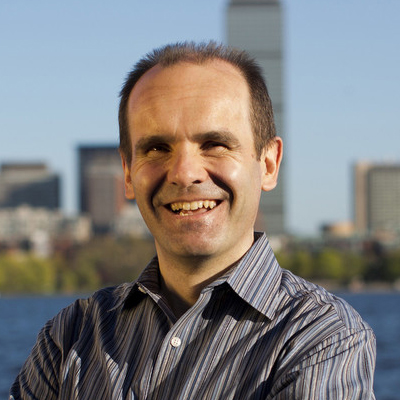
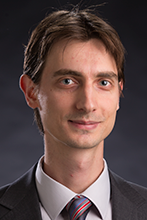
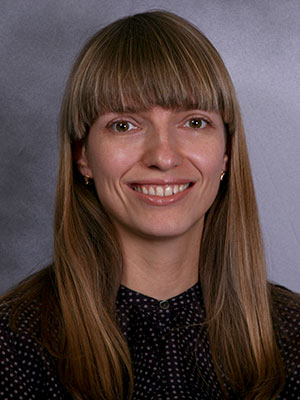
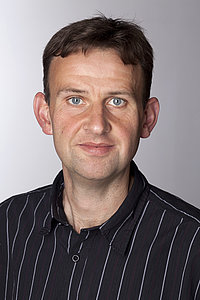
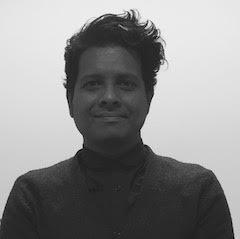
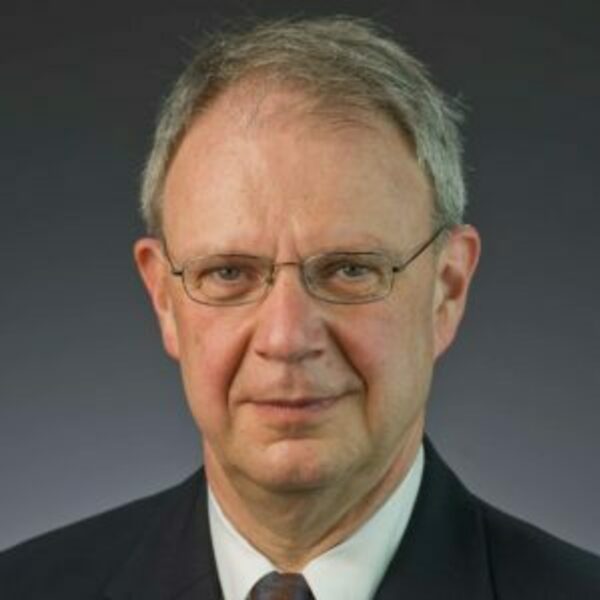
Konstantinos Andreadis is an Associate Professor in the Department of Civil and Environmental Engineering at the University of Massachusetts Amherst. He leads the Computational Hydrology Research Group, focusing on water resources modeling, remote sensing, data assimilation, and climate change impacts. His research spans hydrologic modeling at multiple scales, satellite-based drought monitoring, and reservoir operations analysis. Education: Engineering Diploma in Environmental Engineering (2002), Technical University of Crete MScE in Civil & Environmental Engineering (2004), University of Washington PhD in Civil & Environmental Engineering (2009), University of Washington His work integrates satellite data (e.g., SWOT, SMAP) with numerical models to study freshwater dynamics, floodplain encroachment, and machine learning applications. Key projects include flood risk assessment in urbanizing regions, drought impact analysis in forested environments, and optimizing agricultural water management. Scientific Awards: NASA Early Career Achievement Medal (2015) Professor Andreadis has mentored PhD students like Xinchen He, who successfully defended his dissertation in 2025. His research group collaborates with institutions worldwide, emphasizing data-driven solutions for global hydrology.
Professor Georg Gottwald is a distinguished academic in the School of Mathematics and Statistics at the University of Sydney, where he has been a faculty member since 2002, progressing from Lecturer to his current position as Professor since 2013. He also holds a Visiting Professor position at the University of Surrey in the UK since 2013. His extensive research career spans dynamical systems theory, geophysical fluid dynamics, and the intersection of machine learning with complex systems. Professor Gottwald's research focuses on dynamical systems theory as an abstract formalism for studying systems evolving in time and space. His work has significant applications across diverse fields including climate modeling, biological systems, and complex networks. He is particularly known for developing methods for model reduction of complex dynamical systems, stochastic modeling approaches, and the application of machine learning techniques to dynamical systems. His research aligns with the Faculty of Science Research Strengths in Understanding the Universe, Fundamental Laws of Nature, Complex Systems, Climate and Environmental Change, Data and Decisions, and National Security. His most recent publications demonstrate a strong trajectory toward integrating machine learning with dynamical systems theory, particularly in developing stable generative models, learning dynamical systems with random feature maps, and combining data assimilation with machine learning for forecasting. His work spans pure mathematical theory to practical applications in climate science, finance, and biological systems, showing remarkable breadth while maintaining deep mathematical rigor. Future Fellowship, 'Stochastic methods in mathematical geophysical fluid dynamics', Australian Research Council, 2010-2014 Australian Research Fellowship, 'Stochastic methods in mathematical geophysical fluid dynamics', Australian Research Council, 2010-2015 (declined) Australian Research Fellowship, 'Geometric methods in geophysical fluid dynamics', Australian Research Council, 2004-2009 Professor Gottwald has successfully supervised numerous PhD and Master's students who have gone on to academic and industry positions worldwide. His current research group includes postdocs and PhD students working on machine learning for dynamical systems, stochastic model reduction, physics-informed machine intelligence, and tensor methods for scientific machine learning. He has secured multiple ARC Discovery Project grants and has been involved in significant international collaborative research projects. He is actively involved with the Sydney Dynamics Group, which he co-founded in 2007, fostering collaboration between the University of Sydney and UNSW. Professor Gottwald maintains strong editorial commitments as Associate Editor for Geophysical and Astrophysical Fluid Dynamics, SIAM Journal of Applied Dynamical Systems, and Journal of Computational Dynamics, and serves on the Editorial Advisory Board for Chaos and the Editorial Board for Physical Review E. His professional activities demonstrate leadership in the dynamical systems community through organizing workshops, seminars, and special journal issues.
Pierre Lermusiaux is the Nam Pyo Suh Professor of Mechanical Engineering and Associate Department Head for Operations Research at MIT. His research focuses on numerical ocean modeling, data assimilation, uncertainty quantification, and applications to ocean dynamics and engineering. He holds a B/M.Eng. from University of Liège, M.Sc. and Ph.D. from Harvard University. Recognized with awards like the MIT Doherty Chair and Spira Teaching Award, his work bridges computational science and marine systems. Education: B/M.Eng., University of Liège, 1992 M.Sc., Harvard University, 1993 Ph.D., Harvard University, 1997 Research Interests: Combines oceanographic modeling with advanced computational methods. Specializes in stochastic ocean prediction, autonomous systems optimization, and interdisciplinary applications of uncertainty quantification. His work enables real-time environmental forecasting and marine robotics navigation strategies. Publications: Focus on developing computational frameworks for probabilistic ocean forecasts, acoustic propagation modeling, and machine learning-based environmental prediction systems. Recent work emphasizes adaptive sampling strategies and energy-efficient path planning for underwater vehicles. Awards: Fulbright Foundation Fellowship (1993-96) Ruth and Joel Spira Award for Teaching (2010) MIT Doherty Chair in Ocean Utilization (2009-2011) Advising & Grants: Leads MIT’s MSEAS group and has secured funding from NSF, ONR, and international collaborations. Advises projects on ocean robotics, climate modeling, and underwater acoustics. Key contributions include the MIT Red Sea Modeling System and real-time forecasting platforms. Labs/Teams: Directs MIT’s multidisciplinary ocean modeling efforts, integrating mechanical engineering, computer science, and environmental science. Co-leads initiatives like the Ocean Predictions with Ensembles (OPEN) project and the METEOR autonomous observatory system.
Omer San is an Associate Professor in the Department of Mechanical, Aerospace and Biomedical Engineering at the University of Tennessee, Knoxville (2023–present). Previously, he served as Associate Professor (2021–2023) and Assistant Professor (2015–2021) at Oklahoma State University. His research focuses on scientific machine learning, digital twins, and fluid dynamics, emphasizing hybrid analysis and modeling approaches to address challenges in turbulence simulation and data assimilation. PhD in Engineering Mechanics, Virginia Tech (2012) MS in Aerospace Engineering, Old Dominion University (2007) BS in Aeronautical Engineering, Istanbul Technical University (2005) Research interests include physics-guided machine learning, data-driven reduced order modeling, and large eddy simulation closure techniques. His work bridges first-principles models and data-driven methods to enhance predictive accuracy in complex systems such as geophysical flows and turbulence. He leads the Digital Twin Lab, advancing hybrid modeling frameworks for digital twin technologies. Notable awards include the DOE ASCR Early Career Award (2018) and OSU’s Distinguished Early Career Faculty Award (2022). His research is funded by AFOSR, DOE, NSF, NASA, and industry partnerships.
Dr. Sophie Wilkinson is an Assistant Professor at the School of Resource & Environmental Management, Simon Fraser University (SFU) since 2023. Her interdisciplinary research focuses on wildfire ecology and ecosystem management, integrating field studies, experimental fires, GIS, and ecological modeling to enhance resilience against wildfires. She holds a PhD in Ecohydrology from McMaster University, with prior degrees from the University of Leeds. Her work emphasizes understanding wildfire severity patterns and ecological tipping points in Canadian boreal forests and peatlands. Collaborating with the Canadian Forestry Service and land managers, she translates research into practical solutions, including a new fuel moisture index for wildfire danger rating systems. Key research themes include peatland ecohydrology, climate change impacts, and fire management strategies. She teaches REM 471 (Forest Ecosystems and Management) and is developing a community science platform (iWetland) for wetland monitoring. Wilkinson’s studies highlight the interconnectedness of human activities, environmental health, and wildfire dynamics. Her publications span over 30 peer-reviewed articles since 2020, addressing topics like peat burn severity thresholds, seismic line impacts on boreal ecosystems, and turtle nesting habitat recovery post-fire. She actively engages with policymakers and communities to bridge academic findings and real-world applications.
Dr. Patrycja Strycharczuk is Senior Lecturer in Linguistics at the University of Manchester, specializing in experimental phonetics and sociophonetics. Her award-winning research employs ultrasound imaging, acoustic analysis, and computational modeling to study speech production and perception. Research Focus: Strycharczuk's investigations address lingual articulation dynamics, vowel variation, and sound change mechanisms. Current projects examine speaker-specific articulation strategies, neural modeling of phonetic accommodation, and diphthongization patterns in English varieties. Methodologies include high-speed ultrasound, electromagnetic articulography, and machine learning approaches. Publication Trends: Recent articles (2023-2025) demonstrate increasing focus on computational modeling of speech production and perception. Earlier work established insights into dialect levelling, coda /l/ vocalization, and sociophonetic variation in UK English. Awards: Journal of Phonetics Best Early Career Scholar Article (2016).
Morten Hovd is a Professor in the Department of Engineering Cybernetics at the Norwegian University of Science and Technology (NTNU). His research focuses on advanced control systems, model predictive control (MPC), power electronics, and optimization algorithms. He has contributed significantly to the development of robust control strategies for uncertain systems and has published extensively in leading journals and conferences in the field of control engineering. His research interests span several key areas in control systems engineering, including model predictive control, nonlinear control systems, optimization under uncertainty, and applications in power systems and energy efficiency. He is particularly known for his work on discrete-time bilinear systems, modular multilevel converters (MMCs), and the integration of machine learning techniques with control theory. His contributions address both theoretical advancements and practical implementations in industries such as energy and petroleum engineering. Hovd's recent publications highlight advancements in energy-efficient control systems, stochastic surrogate modeling for subsurface flows, and optimization algorithms tailored for complex engineering problems. His work often combines rigorous mathematical frameworks with real-world applications, such as improving the reliability of power systems and enhancing reservoir management through data-driven methods. He is actively involved in teaching courses such as TTK4210 (Advanced Control of Industrial Processes) and TK8118 (Mini-seminar in Cybernetics). His research has led to innovations in fault detection for power systems, energy-efficient building climate control, and robust MPC strategies for uncertain systems.
Lena Mamykina is an Associate Professor of Biomedical Informatics at Columbia University's Vagelos College of Physicians and Surgeons. As a member of the Data, Media and Society Committee and Health Analytics Co-Chair, she develops technologies to empower individuals and communities in health management. Georgia Institute of Technology: M.S. and Ph.D. in Human-Computer Interaction and Human-Centered Computing Columbia University: M.A. in Biomedical Informatics Ukrainian State University of Maritime Technology: B.S. in Computer Science Her research in the Action Research for Collective Health (ARCH) group focuses on: Biomedical Informatics and Human-Computer Interaction Ubiquitous/Pervasive Computing for health monitoring Computer-Supported Collaborative Work in clinical teams Personalized health coaching systems using AI Recent publications highlight trends in: AI-driven diabetes management and glucose forecasting Context-aware mobile health applications Conversational agents for behavioral interventions Data assimilation techniques with sparse patient data Equity-focused health informatics design Human-AI collaboration in clinical settings
Gert Zöller is an Associate Professor of Applied Mathematics at the University of Potsdam, specializing in statistical seismology and mathematical modeling of earthquake processes. He has held this position since 2018, following a period from 2008-2018 as a Research Associate and Lecturer at the Institute of Mathematics at the University of Potsdam. His research focuses on statistical and physical models for earthquakes and other natural disasters, seismic hazard assessment, and extreme value statistics. Dr. Zöller earned his Diploma in Physics from Rheinische Friedrich-Wilhelms-University Bonn in 1995, his Doctorate (Dr. rer. nat.) from the University of Potsdam in 1999, and completed his Habilitation (Dr. rer. nat. habil.) in 2006. His academic journey included visiting scholar positions at the University of Southern California and the University of California, Santa Barbara in 2005. He has been actively involved in several major research initiatives including the DFG Collaborative Research Center 1294 (Data Assimilation) since 2017 and the DFG Graduate School NatRiskChange (Natural hazards and risks in a changing world) from 2015-2024. His research centers on developing sophisticated statistical models for earthquake forecasting, particularly focusing on the Groningen gas field in the Netherlands where induced seismicity has been a significant concern. Dr. Zöller's work integrates physics-based models with statistical approaches to improve seismic hazard assessment, with recent publications exploring Bayesian methods, Gaussian process modeling, and spatio-temporal analysis of earthquake sequences. His publications span top journals including Journal of Geophysical Research, Geophysical Journal International, and Bulletin of the Seismological Society of America. Dr. Zöller serves as a reviewer for numerous prestigious scientific journals including Science, Geophysical Research Letters, and Journal of Geophysical Research. He was Associate Editor of Nonlinear Processes in Geophysics from 2006-2014 and served as Scientific Officer for 'Earthquake Hazards' in the European Geosciences Union from 2010-2014. His professional memberships include the Seismological Society of America, American Geophysical Union, and European Geosciences Union. Currently, Dr. Zöller teaches 'Mathematics II for Economists' and serves on the Mathematics Examination Board at the University of Potsdam. His ongoing research continues to contribute significantly to the field of statistical seismology and earthquake hazard assessment, with publications extending into 2025.
Nathaniel Chaney is an Assistant Professor in the Department of Civil and Environmental Engineering at Duke University’s Pratt School of Engineering. He leads the Chaney Lab, a research group focused on computational hydrology and Earth system modeling. His work centers on understanding and representing land surface heterogeneity in hydrological and climate models using big data, machine learning, and high-performance computing. Ph.D. in Hydrology, Princeton University, 2015 B.A. in Atmospheric Sciences and Applied Mathematics, U.C. Berkeley Postdoctoral Research Associate, Princeton University and NOAA Geophysical Fluid Dynamics Laboratory His research interests include hydrology, Earth system science, soil science, ecology, geomorphology, numerical modeling, high performance computing, machine learning, and environmental data assimilation. He develops and applies models like HydroBlocks and POLARIS to improve the representation of land heterogeneity in Earth system models. His work bridges field-scale and macro-scale hydrology, addressing challenges in land-atmosphere interactions, drought monitoring, and climate prediction. The most recent publications highlight advancements in modeling land heterogeneity, improving soil moisture estimates, characterizing land surface temperature patterns, and enhancing Earth system models through better representation of catchment-scale processes. Key themes include spatial heterogeneity, land-atmosphere coupling, and the integration of remote sensing data with high-resolution modeling. He is actively mentoring several Ph.D. students, including Laura Torres Rojas, Tyler Waterman, Emma Xu, Jiaxuan Cai, Luiz Bacelar, Daniel Guyumus, and undergraduate Sarah Bailey. His lab fosters interdisciplinary research in hydrology, climate science, and data science. Nathaniel Chaney teaches courses such as CEE 584: Physical Hydrology, CEE 506: Environmental Spatial Data Analysis, and various independent study and advanced topics courses in civil and environmental engineering. He is currently recruiting motivated Ph.D. and postdoctoral researchers interested in his research themes.
Prathap Ramamurthy is an Associate Professor in the Department of Mechanical Engineering at City College of New York (CCNY) . He holds affiliations with the CUNY-CREST Institute, Earth System Science and Environmental Engineering, and NOAA-CESSRST. His research focuses on urban climate dynamics, environmental fluid dynamics, and climate sustainability. Key research areas include: Urban boundary layer dynamics and heat mitigation strategies Coastal urban meteorology and convective precipitation Air quality modeling and remote sensing applications Climate change impacts on urban environments His work combines field campaigns (e.g., CoURAGE experiment), numerical modeling, and AI-driven approaches to address challenges in urban resilience and energy systems. Major projects include studies on misting infrastructure, heat pumps in winter climates, and hurricane impacts on Puerto Rico's climate. Recent articles emphasize data-driven solutions for extreme weather adaptation and urban-rural atmospheric interactions. He collaborates with interdisciplinary teams to advance climate science and community-focused environmental monitoring initiatives.
Dr. Michelle Zhu is a Professor and Associate Director for Faculty and Academic Affairs at the School of Computing, Montclair State University. She previously held roles as Associate Professor and Director of Undergraduate Programs at Southern Illinois University Carbondale. Dr. Zhu holds a Ph.D. in Computer Science from Louisiana State University and a B.S. in Biomedical Engineering from Zhejiang University. Her research focuses on parallel/distributed computing, big data analytics, and high-performance networking, supported by grants from NSF, DOE, and NVIDIA. She has authored over 150 peer-reviewed publications. Education: Ph.D., Computer Science, Louisiana State University (2005) M.Sc., Computer Science, Louisiana State University (2002) B.S., Biomedical Engineering, Zhejiang University (1996) Her research interests span parallel computing architectures, cloud workflow scheduling, and cybersecurity. She has led initiatives integrating computational thinking into STEM education and developed robotics-based learning tools. Her work has been funded through NSF grants such as the $1.1M "Assimilating Computational and Mathematical Thinking into Earth and Environmental Science" project (2017–2022). Dr. Zhu’s articles explore topics like blockchain-based cloud security, GPU-accelerated Gibbs sampling, and edge computing deployment strategies. She actively contributes to academic governance, serving on Montclair State’s Middle States accreditation committee and the University Academic Assessment Council. Key Grants: NSF MRI: Multimodal Collaborative Robot System (MCROS), $321,737 (2021–2024) DOE: Scalable Application Support Platform for E-Sciences, $389,398 (2009–2013) Service Roles: Curriculum Committee Chair, Computer Science Department Blue Ribbon Task Force for Gen Ed Redesign (2019–2020) She collaborates on robotics projects like MCROS and leads outreach efforts to engage pre-university communities in AI and robotics education.
Joannes J. Westerink is the Joseph and Nona Ahearn Professor in Computational Science and Engineering at the University of Notre Dame, concurrently holding professorships in Aerospace and Mechanical Engineering, Applied and Computational Mathematics and Statistics, and Computer Science and Engineering. He leads the EFM Laboratory, focusing on computational fluid mechanics, finite element methods, and coastal ocean modeling. His research emphasizes storm surge prediction, tidal hydrodynamics, and geophysical turbulence modeling. Westerink holds a Ph.D. from MIT (1984). His work integrates advanced numerical techniques with real-world applications, such as NOAA's STOFS-2D-Global system for global water level forecasting and the UFS-Coastal modeling framework. He has developed high-resolution unstructured mesh models for coastal regions, enhancing predictions of hurricane impacts and compound flooding. His scientific contributions include over 150 peer-reviewed articles, with recent focus on machine learning corrections for operational models, probabilistic storm surge guidance, and global hindcasting. He received the endowed Ahearn Professorship for his transformative work in computational science and engineering. Key grants and collaborations involve NOAA, NASA, and NSF, advancing coastal resilience and climate modeling. His research spans academic, governmental, and industry partnerships, with applications in disaster risk reduction and environmental policy.
Qin Jim Chen is a Professor in Civil and Environmental Engineering and Marine and Environmental Sciences at Northeastern University. He specializes in coastal engineering and science, focusing on numerical modeling for coastal resiliency and sustainability. His research integrates field observations with advanced computational tools to address hurricane impacts and environmental adaptation. Education: Ph.D. Civil Engineering, Old Dominion University (collaboration with Danish Hydraulic Institute) M.Sc. Coastal and Ocean Engineering, Hohai University, China B.Sc. Civil Engineering, Hohai University, China Research Interests: Coastal morphodynamics and storm impacts Living shorelines and wetland restoration Hybrid infrastructure resilience Physics-informed machine learning for coastal processes Awards: 2022 Søren Buus Outstanding Research Award National Science Foundation CAREER Award (2006) LES-BTR Best Paper Award Grants & Advising: Principal Investigator on NSF-funded projects studying hurricane impacts and coastal dynamics. Collaborates with DHI Water and Environment Inc. on decision-making tools for climate adaptation. Advises on FUNWAVE-TVD software development for coastal modeling. Labs & Teams: Affiliated with the Institute for Experiential AI, Coastal Sustainability Institute, and Global Resilience Institute (GRI), focusing on interdisciplinary coastal resilience solutions.
Sachin Shanbhag is an Associate Professor in the Department of Scientific Computing and Department of Chemical & Biomedical Engineering at Florida State University (FSU), affiliated with the FAMU-FSU College of Engineering. His research focuses on polymer rheology, complex fluids, and multiscale modeling with applications in biomedical materials and nanotechnology. He holds a PhD in Chemical Engineering from the University of Michigan and a B.Tech from IIT Bombay. Research interests include polymer dynamics, constitutive modeling, and inverse problems. Notable awards include the NSF Early Career Award (2010) and the Petroleum Research Fund New Faculty Award (2006–2008). His work bridges computational methods with experimental data, advancing understanding of polymer networks and viscoelastic behavior. Education: B.Tech, IIT Bombay (1999); PhD, University of Michigan (2004) Affiliations: FSU-FAMU College of Engineering, Department of Scientific Computing Key Projects: Multiscale modeling for tissue engineering, nanotechnology applications, and polymer dynamics His publications emphasize analytical and numerical approaches to rheological challenges, with contributions to software tools like pyReSpect for relaxation spectrum analysis. Current research trends include nonlinear rheology, surrogate modeling, and data assimilation in polymer systems.