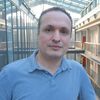
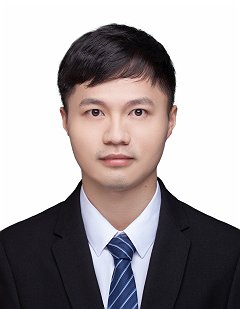
Mohsen Hajheidari is a Researcher at the Institute for Plant Sciences, University of Cologne, focusing on the molecular interface between plant development and metabolic regulation through advanced genomic methodologies. His primary research domains include: Optimizing Plant Performance by Mapping Development-Metabolism Interfaces Plant Microbiota Metabolic Networks and Edaphic Adaptation Synthetic and Reconstruction Biology Theoretical Plant Biology and Data Science Applications Current work centers on annotating functional cis-regulatory elements by resolving discrepancies between ChIP-seq and RNA-seq data, specifically investigating non-functional transcription factor binding sites through integrated analysis of gene expression, chromatin states, and population variation using the FLC transcription factor model for flowering time and seed dormancy regulation. He utilizes institutional resources including the Plant Metabolism and Metabolomics Facility, Imaging Platform, and CEPLAS data infrastructure for ongoing research under current funding cycles following the 2013-2018 project period.
Dr. Simon Maria Zumkeller is a researcher at the Institute of Bio- and Geosciences - Bioinformatics (IBG-4) at Forschungszentrum Jülich. He leads the DeepCRE project focusing on deep learning applications for identifying and functionally annotating cis-regulatory elements in crop genomes. His research interests bridge plant biology and artificial intelligence, specializing in: Genome-scale annotation of regulatory sequences across multiple plant species Integration of gene sequence data with DNA-protein interactions Analysis of transcription factor binding sites in plant gene regulatory networks Evolutionary conservation of regulatory sequence features Dr. Zumkeller collaborates with the Usadel lab at Heinrich Heine University (HHU) and Thomas Hartwig's group at the Max Planck Institute for Plant Breeding Research (MPIPZ), utilizing both public data repositories and custom datasets from partner laboratories. His current work focuses on four key plant species: Zea mays (maize), Arabidopsis thaliana, Solanum lycopersicum (tomato), and Sorghum bicolor, aiming to develop comprehensive models of plant gene regulation through convolutional neural networks.
Prof. Dr. Markus Stetter is a Professor at the Botanical Institute of the University of Cologne, Germany, actively leading research in plant domestication genomics within the CEPLAS Cluster of Excellence on Plant Sciences. His work focuses on evolutionary adaptation in crops, particularly amaranth and maize, using population genetics and molecular approaches to decode how wild plants became globally distributed crops. His research interests include: Genomic signatures of domestication Population and quantitative genetic modeling Molecular mechanisms of trait adaptation Theoretical plant biology and data science applications Edaphic adaptation in crop-wild relative systems Analysis of his 2017-2024 publications reveals a dominant focus on amaranth domestication genomics, with recurring themes in evolutionary rescue by wild relatives, inbreeding depression dynamics, and seed trait adaptation. His work integrates high-throughput sequencing with evolutionary theory to address crop resilience under environmental change. Prof. Stetter co-developed PopAmaranth, a specialized genome browser for amaranth population genetics, and maintains active leadership in CEPLAS Research Area 4 (Theoretical Plant Biology and Data Science). His laboratory utilizes genomic facilities including plant metabolomics and imaging platforms for experimental validation.
Dr. Preetha Chatterjee is an Assistant Professor in the Department of Computer Science at Drexel University's College of Engineering, where she leads the SOftware Engineering and Analytics Research (SOAR) Lab. Her academic career spans software engineering research, teaching, and service, with a focus on improving developer productivity through advanced analytics and tools. Dr. Chatterjee earned her M.S. and Ph.D. in Computer Science from the University of Delaware, advised by Dr. Lori Pollock, following 5+ years of industry experience as a Software Engineer. Her educational background bridges practical industry experience with rigorous academic training. Her research focuses on Software Engineering with emphasis on developing tools, knowledge sources, and strategies to support software maintenance and improve developer productivity. She incorporates evidence from mining software repositories, conducting empirical studies, and adapting state-of-the-art techniques from Natural Language Processing and Machine Learning. Her current research directions include LLM-assisted software development and maintenance, developer collaboration in distributed software teams, and knowledge extraction from large-scale software artifacts. She has made significant contributions to emotion mining in developer communications, toxicity detection in open source projects, and trust dynamics in GitHub pull requests. Dr. Chatterjee's publications demonstrate a clear progression from foundational work on mining developer chat communications and code snippets toward more sophisticated applications of machine learning and large language models in software engineering contexts. Her recent work increasingly focuses on the intersection of software engineering with social aspects like emotions, trust, and toxicity in developer interactions. Distinguished Reviewer Award at FSE 2023 Drexel CCI Research Excellence Award (awarded to her lab member Ramtin Ehsani) Drexel CS Leadership Award (awarded to her lab member Amirali Sajadi) Dr. Chatterjee has advised numerous students at various levels, including Ph.D., M.S., and undergraduate researchers. Her SOAR Lab currently includes Ph.D. students Ramtin Ehsani and Amirali Sajadi, who have received significant recognition for their work. She has served on multiple program committees for major software engineering conferences including ICSE, FSE, ASE, and MSR, and has held leadership roles such as Tutorials Co-chair for MSR 2025 and Journal-first Co-Chair for ICPC 2024. She co-leads the Drexel Programming Systems Seminar and has been an editorial board member for the Journal of Systems and Software. The SOAR Lab focuses on innovative research at the intersection of software engineering, machine learning, and natural language processing. The lab has produced influential datasets like DISCO (Discord Chat Conversations for Software Engineering Research) and comprehensive annotated datasets of GitHub issue threads. Current projects include improving LLM-assisted bug resolution, security assessment of LLM-generated code, emotion mining from software engineering communication, and information extraction from developer chat conversations.
Xiao Yu is a Research Fellow (Assistant Research Professor) at the State Key Laboratory of Blockchain and Data Security, Zhejiang University, Hangzhou, China. Previously, they were a Postdoctoral Researcher at Huawei under Prof. Xin Xia. They hold dual PhD degrees: from Wuhan University's School of Computer Science (December 2020) supervised by Prof. Jin Liu, and from City University of Hong Kong's Department of Computer Science (March 2021) supervised by Prof. Qing Li and Prof. Jacky Wai Keung. Research focuses on three interconnected domains: LLMs Data Governance and Evaluation addressing hallucination phenomena and task-specific LLM evaluation in software engineering; Intelligent Software Engineering leveraging deep learning for code generation, annotation, and maintenance; and Software Security and Reliability investigating vulnerability detection, log anomaly identification, and security bug classification. Their work bridges theoretical advancements with industrial applications, particularly in blockchain and data security contexts. Recent publications demonstrate strong trends in realistic LLM evaluation (RealisticCodeBench), vulnerability detection using semi-supervised learning, and industrial anomaly detection. Key thematic areas include effort-aware defect prediction, code smell detection, and the practical application of large language models in software engineering tasks, with increasing emphasis on data quality and privacy considerations. Xiao Yu actively contributes to the academic community through extensive service roles including journal reviewing for ACM Transactions on Software Engineering and Methodology, IEEE Transactions on Dependable and Secure Computing, and serving on program committees for major conferences like APSEC 2025 and ASE 2025. They have supervised numerous graduate students as evidenced by authorship patterns in publications. Based at Zhejiang University's State Key Laboratory of Blockchain and Data Security, their research operates at the intersection of academic rigor and industrial relevance, with strong collaborations spanning multiple institutions including Huawei, Wuhan University, and City University of Hong Kong.
Christoph Treude is an Associate Professor of Computer Science at Singapore Management University. His academic journey includes senior lecturer positions at the University of Melbourne and the University of Adelaide, and postdoctoral research at McGill University, the University of São Paulo, and the Federal University of Rio Grande do Norte. Treude's research focuses on improving software quality and developer efficiency through better access to relevant information. His methodology combines empirical studies with tool development that considers natural language artifacts in software repositories. His work spans several key areas of software engineering: Empirical studies of developer behavior and practices Integration of large language models in software development Human-AI collaboration frameworks Software documentation quality and maintenance Reproducibility in scientific software Security practices in code reviews His recent publications demonstrate a strong focus on the intersection of artificial intelligence and software engineering, examining how AI technologies can enhance developer productivity while maintaining code quality and security. His research often involves large-scale empirical studies across various software ecosystems and developer communities. Treude has received significant recognition for his contributions: ARC Discovery Early Career Research Award (2018-2020) Four best paper awards, including two ACM SIGSOFT Distinguished Paper Awards He serves on the Editorial Boards of IEEE Transactions on Software Engineering and Springer's Empirical Software Engineering journal, and holds the role of Open Science Editor for Elsevier's Journal of Systems and Software. Treude has chaired major conferences including ICSME 2020, ICPC 2023, and TechDebt 2023, and regularly participates in software engineering conference program committees. His research has been funded by industry leaders including Google, Facebook, and DST, and he has authored over 150 scientific articles with more than 250 co-authors.
Prof. Reiner Marchthaler is a Professor at Esslingen University of Applied Sciences within the Faculty of Computer Science and Information Technology. He serves as Deputy Director of the Institute for Intelligent Systems (IIS), Scientific Director of the Green IT 2026 Conference, and Liaison Lecturer for the Friedrich Ebert Foundation. His academic leadership spans autonomous systems research and educational initiatives in embedded technologies. His research centers on Embedded Systems and Sensor Data Fusion, with pioneering work on Kalman filters for autonomous systems. He maintains the authoritative resource kalman-filter.de and has developed real-time capable SLAM algorithms, camera-based reference systems, and parking space detection frameworks. His expertise extends to entropy-based safety evaluation in autonomous driving and semantic segmentation using mixed real/synthetic data. Analysis of his 2020-2025 publications reveals dominant trends in autonomous driving systems, emphasizing real-time sensor fusion, deep learning for perception, and safety validation. Key subfields include adaptive Kalman filtering (ROSE-Filter), landmark-based navigation, neural network training with synthetic data, and maximum entropy safety frameworks. His work bridges theoretical innovation with automotive applications, particularly in model vehicle testing environments. Prof. Marchthaler leads research at the Institute for Intelligent Systems, directing the Green IT 2026 initiative and advising the Friedrich Ebert Foundation. His team develops ROS-based validation environments for autonomous algorithms and maintains the Kalman filter knowledge portal. Current projects focus on connected traffic systems using conventional infrastructure landmarks and entropy-optimized safety protocols for production vehicles.
Prof. Dr. Jens Allmer is a full Professor of Medical Informatics and Bioinformatics at Ruhr West University of Applied Sciences (HRW) in Mülheim an der Ruhr, Germany. He previously held academic positions as Cluster Leader at Wageningen University and Research in the Netherlands (2017-2018) and as Assistant and Associate Professor at Izmir Institute of Technology in Turkey (2008-2016). His academic journey began with a PhD in Biology with distinction from the University of Münster in 2006. Prof. Allmer's research spans multiple omics disciplines with a primary focus on microRNA regulation and pathogen-host interactions. He employs machine learning techniques to explore these complex biological systems. His work has evolved from foundational bioinformatics methods to sophisticated integrative analyses, particularly in proteogenomics and computational miRNomics. He has made significant contributions to understanding microRNA detection algorithms, proteogenomic peptide mapping, and the development of comprehensive frameworks for omics data analysis. His recent publications demonstrate a strong trend toward integrative approaches that combine multiple data types, with increasing emphasis on machine learning applications in bioinformatics. The research spans from fundamental database development for noncoding RNAs to clinical applications in disease mechanisms, particularly in HIV infection and cancer pathways. His work shows consistent progression from method development to application in biological and medical contexts. Outstanding Young Scientist in Bioinformatics by the Turkish Academy of Sciences (2010) EMBO Short Term Fellowship Award (2013) DAAD Research Stays for University Academics and Scientists (2013, declined) Outstanding Young Researcher, Turkish Academy of Science (2010) Prof. Allmer has advised numerous doctoral and master's students throughout his career, primarily during his tenure at Izmir Institute of Technology. He has secured substantial research funding, with over 650,000 euros received for his projects. His teaching portfolio includes courses in medical informatics, bioinformatics, data mining, machine learning, and database systems across multiple institutions in Germany, Turkey, and through ERASMUS programs. He maintains active collaborations with researchers across Europe and continues to contribute significantly to both theoretical and applied aspects of bioinformatics.