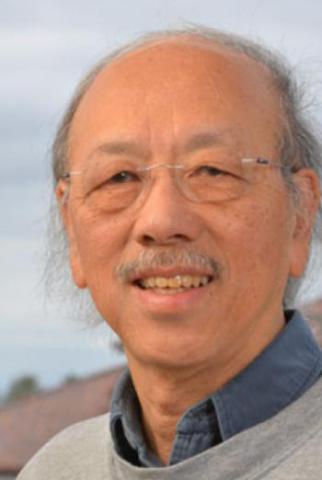
Wah Chiu is Wallenberg-Bienenstock Professor and Professor of Bioengineering and Microbiology and Immunology at Stanford University. A pioneer in cryogenic electron microscopy (cryo-EM), he develops methodologies for atomic-resolution structure determination of macromolecular complexes including viruses, chaperonins, and RNA-protein assemblies. His research integrates structural biology, computation, and instrumentation to advance cryo-EM and cryo-ET. Recent publications (2024-2025) showcase diverse applications from membrane protein structures to RNA hydration networks and battery materials, demonstrating consistent innovation in resolution limits and multimodal analysis. His articles reveal strong trends in method development for high-resolution tomography, integration of AI in microscopy analysis, and structural characterization of dynamic biological processes.
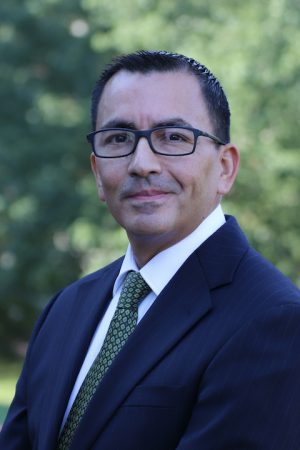
Virginia Franqueira is a Lecturer in the Department of Electronics, Computing and Mathematics. Her research spans digital forensics, blockchain security, and trust management systems, with applications in vehicular networks, cloud computing, and cybercrime investigation. She develops analytical frameworks for emerging security challenges, including ransomware, IoT vulnerabilities, and multimedia content verification. Her publications address blockchain forensics, behavioral analysis in digital investigations, and machine learning applications for privacy verification. Recent work includes automated violence detection in video, PhotoDNA vulnerability assessments, and trust models for vehicular ad-hoc networks (VANETs). She actively contributes to forensic methodology standardization, particularly for indecent image of children (IIOC) cases. Dr. Franqueira designs educational materials on IoT prototyping and security, emphasizing practical applications for students and professionals.
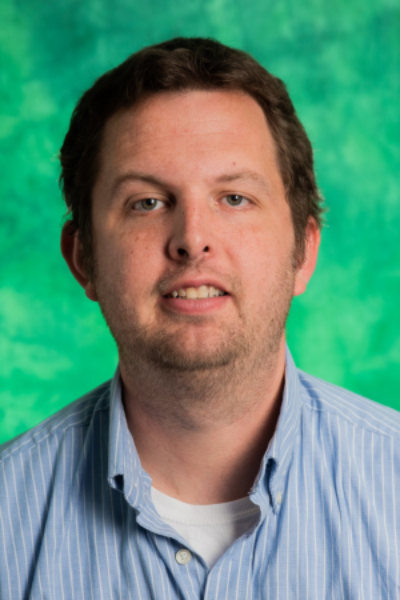
Dr. Patrick Horn is an Assistant Professor in the Department of Biological Sciences at the University of North Texas. He is also affiliated as adjunct faculty, contributing to interdisciplinary research initiatives. His work focuses on plant lipid metabolism, fatty acid biosynthesis, and metabolic engineering with applications in agriculture and biotechnology. Patrick holds a PhD and has conducted extensive research on lipid droplet proteins, plant genome annotation, and the role of cysteine residues in lipid metabolism. His research integrates advanced imaging techniques and omics approaches to study plant physiology, particularly in cottonseed oil quality improvement and stress responses in crops. Key research themes include lipidomics, metabolic pathway visualization, and the development of enabling technologies for spatial analysis of metabolites. His work bridges fundamental plant biology with applied agricultural challenges, such as enhancing seed oil content and understanding genetic determinants of fatty acid composition. Notable projects include the study of Physaria fendleri genome, nitrogen requirements in cotton cultivars, and the application of nondestructive measurements for cottonseed trait analysis. His methodologies span mass spectrometry imaging, lipid tagging, and subcellular organelle analysis.
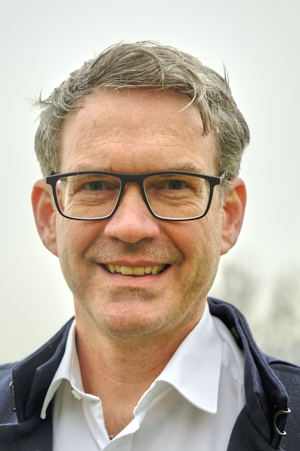
Prof. Florian Alexander Schmidt holds a professorship at the Faculty of Design, contributing to interdisciplinary research at the intersection of technology, ethics, and digital labour markets. His work critically examines the societal implications of emerging technologies such as AI, autonomous systems, and platform economies. Research interests include the ethical dimensions of crowdsourcing, the transformation of labour dynamics in the platform economy, and the design of human-AI collaboration systems. He has explored topics like AI training data production, autonomous vehicle ethics, and the socio-political challenges of gig work and crowd work. His publications analyze the complex interplay between technological innovation and human rights, emphasizing the need for ethical frameworks in digital labour markets. Notable themes in his work include platform capitalism critique, regulatory challenges in AI, and the democratization of design through crowdsourcing.
Laure Ciernik is a Doctoral Researcher at the Technical University of Berlin's Machine Learning Group, specializing in the application of machine learning to biomedical challenges. Her work bridges computational methodologies with healthcare applications, particularly in genomics and medical imaging. Her academic foundation includes: MSc in Data Science (2023) from ETH Zürich, with focus on ML for Healthcare and Bioinformatics BSc in Computer Science (2020) from ETH Zürich Laure's research centers on Biomedical Data Analysis , Computational Genomics , and Computational Pathology , with strong emphasis on Explainable AI techniques. Her work addresses the critical need for interpretable machine learning models in clinical settings, developing methods that balance accuracy with transparency. She combines deep expertise in computer science with domain knowledge in healthcare, enabling her to tackle complex problems at this interdisciplinary intersection. Her publication record reveals a clear trajectory toward solving real-world biomedical challenges through machine learning innovation. Her work spans histopathology analysis, genomic data interpretation, and material science applications, demonstrating both depth in healthcare AI and breadth across application domains. The consistent focus on interpretability and practical utility positions her research at the forefront of trustworthy AI development for medical applications. Her GitHub presence (username: lciernik) reflects active engagement with the research community, with repositories focused on similarity consistency and computational methods for cancer genomics. As a Doctoral Researcher, Laure contributes significantly to the Machine Learning Group's mission while maintaining collaborations with the Boeva Lab for Computational Cancer Genomics, where she conducted her master's thesis work. Her research integrates multiple data modalities to advance precision medicine approaches. Laure operates within the Machine Learning Group ecosystem at TU Berlin, contributing to a research environment that emphasizes both theoretical innovation and practical healthcare applications, with particular relevance to cancer diagnostics and treatment.
Prof. Oliver Ehmer is a Full Professor of Romance Linguistics at the University of Osnabrück (since April 2022), supported by the DFG Heisenberg Professorship. He previously held interim professorships at the Universities of Regensburg (Winter 2021/22) and Freiburg (multiple terms since 2018). His academic journey includes a Ph.D. (2010, 'summa cum laude') and Habilitation (2018) from the University of Freiburg, focusing on interactional linguistics and spoken language structures. Ehmer's research interests span linguistic structure, social interaction, and cognition; language variation and change; digital humanities; corpus technology; and pragmatic particles. He has coordinated major DFG initiatives, such as the Research Training Group 'Frequency Effects in Language' (2009–2012) and the 'Hermann Paul School of Linguistics' (2008–2009). His work emphasizes multimodal analysis of spoken corpora and the development of corpus tools like the act package for R and the Transformer software. Key Awards: Irmgard Ulderup Prize 2018 (Best Habilitation Thesis) FRIAS Research Prize (2010) Hans and Susanne Schneider Prize (2009) Ehmer leads projects such as 'Requests for action in interaction and language change' (DFG Heisenberg) and collaborates on 'Body knowledge' (Baden-Württemberg grant) and 'Emergent Memory' (DFG/SNF). He has developed corpora like ICAS (instructional corporeal skills), cespla (River Plate Spanish), and tools for transcription and analysis.
Sandra Kübler is a Professor in the Department of Linguistics at Indiana University, part of the College of Arts and Sciences. Her research focuses on computational linguistics, machine learning applications in natural language processing, and parsing of morphologically rich languages. She has led projects such as the NSF-funded SATC initiative on unsubstantiated information analysis and contributed to initiatives like the TLT workshops and SPMRL conferences. Her work spans dependency parsing, abusive language detection, and cross-lingual NLP challenges. She advises numerous PhD and Master’s students, many of whom have gone on to academic and industry roles. Her contributions include developing tools like the IUCL system for stance detection and collaborating on corpora for languages like Old Occitan and Xibe. Education details are not explicitly stated in the provided texts, but her extensive academic career and publications indicate advanced training in computational linguistics. Her research interests emphasize leveraging machine learning for linguistic analysis, particularly in under-resourced languages and social media text processing. Projects include the development of the TüBa-D/Z treebank and contributions to parser evaluation frameworks. She has organized major workshops such as the SIGMORPHON and TLT conferences, reflecting her leadership in the field. In advising, she has guided over 20 students to completion, many securing academic positions (e.g., University of British Columbia, Rose-Hulman Institute) or industry roles (e.g., JP Morgan Chase, Microsoft). Her lab activities involve collaborations with institutions like Bosch and IntraFind. Current research includes multilingual coreference resolution and fusion of hard/soft data for information reliability assessment.
Paulina Garcia Corral is a PhD candidate at the Berlin Graduate School for Global and Transregional Studies affiliated with the Hertie School. Her research focuses on sociology and political communication, leveraging computational methods to analyze leadership engagement with expert rhetoric during the COVID-19 pandemic. Previously, she worked as a Research Assistant at the London School of Economics (LSE), contributing to the Media and Communication Department and the Department of Methodology. She has also collaborated with NGOs in Mexico as a data scientist, producing evidence-based research for policy planning. Paulina holds an MSc in Social Research Methods from the LSE and a BA in Sociology from Universidad de Monterrey. Her work bridges computational linguistics with political analysis, exemplified by her recent publications on detecting hypocrisy in climate debates and developing causal models for political texts. She is supervised by Prof. Slava Jankin.
Bernhard Haslhofer is a Professor at the University of Vienna, affiliated with the Department of Information Systems within the Faculty of Computer Science and Mathematics. His research focuses on blockchain technology, cryptocurrency analytics, and digital libraries, with a particular emphasis on forensic applications of blockchain, decentralized finance (DeFi), and semantic web technologies. He co-leads the Cryptoasset Analytics Workshop (CAAW) and contributes to projects like GraphSense, a cryptoasset analytics platform. His work spans academic collaborations with institutions worldwide, including contributions to standards like ResourceSync and Open Annotation Collaboration (OAC) models. Research interests include machine learning applications in finance, decentralized governance mechanisms, and improving the interoperability of digital resources. Publications highlight trends in DeFi composability, blockchain forensics for crime mapping, and ethical considerations in AI-driven cryptocurrency analysis. He has organized major workshops at venues like The Web Conference (WWW) and Financial Cryptography (FC), fostering interdisciplinary dialogue between academia and industry. No notable scientific awards are explicitly listed in the provided text, though his extensive publication record reflects significant contributions to the field.
Irene Ruano Benito is a Senior Researcher at the INSTITUTE FOR RESEARCH IN SUSTAINABLE FOREST MANAGEMENT, specializing in forest ecosystems and silvicultural strategies. She holds a Doctorate from Universidad de Valladolid (2016) with a thesis on Mediterranean pine regeneration. Her research focuses on forest management, biodiversity conservation, and climate resilience in Mediterranean ecosystems. She currently leads the Bosque Modelo Palencia project (BF154), funded by the Spanish Ministry for Ecological Transition and the European Union’s NextGenerationEU program. Her work integrates advanced methodologies like GIS technologies, artificial intelligence, and socio-semantic systems (e.g., Educawood) to address environmental challenges. Key research interests include mixed forest carbon sequestration potential, drought resilience in pine species, and biosecurity in mountain national parks. She has collaborated on projects in Spain, Vietnam, and Northern Vietnam’s Acacia plantations, emphasizing interdisciplinary approaches. Publications highlight studies on seedling density effects, stand management diagrams, and post-fire forest recovery. Her contributions span experimental design (Nelder wheel methodology), predictive modeling, and policy-informed management strategies.
Antonio Solanas Perez is a University Professor at the Department of Social Psychology and Quantitative Psychology in the Faculty of Psychology at the University of Barcelona. He specializes in quantitative research methodologies, particularly in single-case experimental designs and multivariate analysis. His work intersects behavioral sciences, health sciences, and work psychology. Education includes a Bachelor's in Philosophy and Science (1985), a Licentiate in Psychology (1987), and a Doctorate in Taught Teaching (1990), all from the University of Barcelona. Research interests focus on statistical methodologies in behavioral sciences, including data analysis in single-case designs, simulation of social behavior, and brain connectivity networks in fMRI. He has led projects like "Learning analytics and big data" (2015-2021) and contributed to the Maria de Maetzu Excellence Mention for UBNEURO (2018-2022). Key publications explore analytical approaches for single-case experiments, meta-analysis methods, and applications in brain impairment studies. His textbook Statistics for the Behavioral Sciences: Annotated Exercises (2016) is widely used. Advising includes directing doctoral theses such as Rejina Mary Selvam's work on group-level indices. Grants and collaborations span educational sciences, health systems, and neuroscience through institutions like the Ministry of Science and AGAUR.
Julio Bahamon is a Teaching Associate Professor and Graduate Certificates Program Director (AAI & GDD) in the Department of Computer Science at the University of North Carolina at Charlotte. He holds a Ph.D. in Computer Science from North Carolina State University, with prior degrees from Texas A&M University–Kingsville (B.Sc.) and Florida State University (M.Sc.). His research focuses on Artificial Intelligence, Serious Games, and Interactive Narrative, particularly in character personality modeling and procedural content generation. Bahamon has industry experience in IT before transitioning to academia, emphasizing education's role in empowering society. Education: Ph.D., Computer Science, North Carolina State University M.Sc., Computer and Information Sciences, Florida State University B.Sc., Computer Science, Texas A&M University–Kingsville Research Interests: Bahamon’s work bridges AI and interactive systems, including narrative generation algorithms, forensic 3D environments (e.g., IC-CRIME project), and serious games for training. He explores computational models of character personality and collaborative web-based tools for crime scene analysis. His methodologies often integrate planning algorithms, behavioral modeling, and agent-based systems. Labs and Projects: He leads the IC-CRIME initiative, a collaborative 3D platform for forensic investigation and crime scene annotation. This work demonstrates his focus on applying technology to real-world challenges through interdisciplinary collaboration.
Dr. Christopher Ohge is a Senior Lecturer in Digital Approaches to Literature at the Institute of English Studies (IES), University of London. He holds a PhD from Boston University and has held academic roles at institutions including the University of Maine and the University of California, Berkeley. His research focuses on the intersection of digital humanities with textual scholarship, book history, and literary studies. He serves as Associate Director of the Herman Melville Electronic Library and contributes to Melville’s Marginalia Online. Key research interests include computational methods for analyzing literary texts, digital editing, and the environmental impact of digital research. Notable projects include the digital edition of Mary Anne Rawson’s The Bow in the Cloud (funded by an NEH-Mellon Fellowship) and the AHRC-DFG-funded 'Project StoryMachine' exploring AI and spatial hypertext in folklore studies. He co-leads the Green Digital Humanities Toolkit initiative under the Digital Humanities Climate Coalition. Ohge has taught at digital humanities summer schools globally and is a core faculty member of e-Laboratories’ Fundamentals of Editing course. His publications span monographs, edited volumes, and articles in journals like Leviathan and Textual Cultures . Awards include the Boydston Essay Prize (2020) for his work on Melville’s incomplete manuscripts. Education: PhD and MA in English from Boston University. Professional roles include editorial positions at the Mark Twain Papers Project and teaching at institutions across the US and UK.
Marcus Winter is a Principal Lecturer at the University of Brighton's School of Arch, Tech and Eng Computing and Mathematical Sciences. His research focuses on human-computer interaction and AI applications in education, cultural heritage, and museum engagement. He is particularly interested in how new technologies enhance visitor experiences and informal learning in museums. Winter is a Fellow of the Higher Education Academy (since 2019) and actively contributes to academic conferences and industry collaborations. He leads undergraduate and postgraduate computing modules, emphasizing practical, constructionist learning approaches based on Papert's principles. His teaching includes constructive alignment strategies and involves students in research prototype development. Winter also serves as an External Examiner at the Norwegian University of Science and Technology (NTNU). His research spans projects like 'Archives Alive' (2019–2020), exploring locative media and local history, and has produced over 25 peer-reviewed articles. His work often involves interdisciplinary collaboration, aiming to bridge academic research with real-world applications in museums and education.
Hang Joon Kim is a Professor in the Division of Statistics and Data Science within the Department of Mathematical Sciences at the University of Cincinnati's College of Arts and Sciences. He joined the university in 2015 as an Assistant Professor, was promoted to Associate Professor in 2021, and became a full Professor in 2025. His research spans multiple areas of statistics with applications in various scientific domains. Dr. Kim received his educational training from prestigious institutions: Ph.D. in Statistics from The Ohio State University, Columbus, OH M.S. in Applied Statistics from Yonsei University, Seoul, Korea B.A. in Applied Statistics from Yonsei University, Seoul, Korea B.A. in Business from Yonsei University, Seoul, Korea Dr. Kim's research focuses on advanced statistical methodologies with particular emphasis on Semiparametric Bayesian modeling , Causal inference , Meta analysis , Statistical genomics , Missing data , Survey sampling , Data privacy , and Synthetic data generation . His work bridges theoretical statistics with practical applications in biomedical research, official statistics, and data science. He has developed innovative approaches for handling complex data structures while maintaining statistical rigor and practical utility. His recent publications demonstrate a strong trend toward integrating multiple data sources while addressing privacy concerns. The 15 most recent articles show increasing focus on Bayesian methods for causal inference, synthetic data generation for privacy protection, and statistical approaches for genomic studies, reflecting his leadership at the intersection of statistical theory and real-world applications. Dr. Kim has received numerous prestigious awards and honors: Industrial Service Medal of Honor from the President of the Republic of Korea (Sep 2024) A&S Rising Star Award from the College of Arts and Sciences, University of Cincinnati (Apr 2018) Summer at Census Scholar from the U.S. Census Bureau (June 2017) KISS Career Development Award from the Korean International Statistical Society (Aug 2015) American Statistical Association Student Paper Award (Aug 2012) As an advisor, Dr. Kim has successfully mentored multiple PhD students to completion, with graduates securing academic and industry positions. His current research is supported by significant grants including an NSF-funded project on "Robust and efficient Bayesian inference for misspecified and underspecified models" (2024-2027) and a National Research Foundation of Korea project on "Statistically synthetic data generation" (2025-2028). He has served as PI on multiple substantial research projects totaling over $400,000 in funding. Dr. Kim leads research efforts in statistical methodology development, particularly in Bayesian modeling and data privacy. He has developed several R packages including synMicrodata for synthetic data generation, GGPA for genomic analysis, clusterMI for clustering with missing data, and DPImputeCont for imputation of continuous data. His work has practical applications in official statistics, biomedical research, and data science.