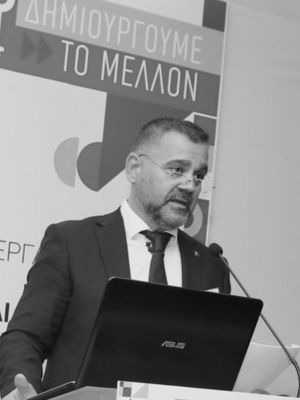
Stelios Timotheou is an Associate Professor at the Department of Electrical and Computer Engineering and faculty member at the KIOS Research and Innovation Center of Excellence, University of Cyprus. He holds a Dipl-Ing from National Technical University of Athens, and MSc/PhD from Imperial College London. His research focuses on developing real-time distributed methodologies using mathematical optimization, machine learning, and computational intelligence to enhance efficiency in critical infrastructure systems. Research interests center on data-driven decision making for urban mobility management, traffic control systems, and energy optimization. Key areas include: Intelligent UAV-based sensing for traffic monitoring Cooperative control algorithms for multi-agent systems Optimization of renewable energy integration Robust infrastructure protection strategies Recent publications demonstrate strong focus on traffic state estimation (76%), energy system optimization (16%), and UAV applications (8%). Awarded the Cyprus Research Award (2017) and ERC Consolidator Grant for URANUS project. Secured multiple research grants focusing on real-time control systems.
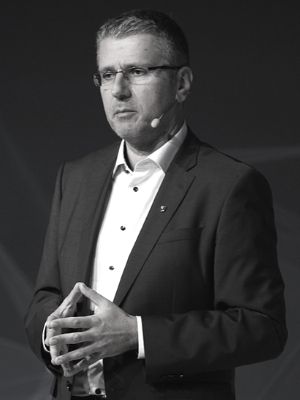
Marios Polycarpou is a Professor of Electrical and Computer Engineering and Director of the KIOS Research and Innovation Center of Excellence at the University of Cyprus. He holds honorary positions at Imperial College London and is a member of Academia Europaea. His expertise spans intelligent systems, adaptive control, machine learning, and critical infrastructure. Education: B.A. Computer Science (Rice University, 1987) B.Sc. Electrical Engineering (Rice University, 1987) M.S. Electrical Engineering (University of Southern California, 1989) Ph.D. Electrical Engineering (University of Southern California, 1992) Research Focus: Polycarpou’s work emphasizes fault diagnosis in cyber-physical systems, water distribution networks, and adaptive control. He pioneers digital twin technologies for infrastructure resilience and develops algorithms for real-time anomaly detection and system optimization. Article Trends: His recent publications address adaptive control strategies, cybersecurity in networked systems, and AI-driven solutions for water management. Key themes include distributed control, event-triggered mechanisms, and transformer-based anomaly localization. Awards: 2023 IEEE Frank Rosenblatt Technical Field Award 2016 IEEE Neural Networks Pioneer Award Fellow of IEEE and IFAC Grants & Leadership: He secured prestigious grants including ERC Advanced and Synergy Grants. He led KIOS CoE’s Horizon 2020 projects and served as IEEE Computational Intelligence Society President (2012–2013). Labs & Teams: Directs the KIOS CoE, a hub for AI in critical infrastructure. Collaborates on projects like ERC Water-Futures, focusing on long-term water system transitions and contamination mitigation.
Professor Ioannis Katakis is a Faculty Member at the University of Nicosia, where he is affiliated with the School of Sciences and Engineering and the Department of Computer Science. He has held various academic positions across multiple institutions including Aristotle University of Thessaloniki, University of Cyprus, Cyprus University of Technology, Open University of Cyprus, Hellenic Open University, Athens University of Economics and Business, and National and Kapodistrian University of Athens. His educational background includes a PhD in Machine Learning for Automated Text Classification (2005-2009), a Master's in Information Systems (2005-2007), and a Bachelor's in Computer Science (2000-2004), all from Aristotle University of Thessaloniki. Professor Katakis specializes in several cutting-edge areas of computer science and data analysis. His primary research interests include Mining Social, Web and Urban Data , Sentiment Analysis and Opinion Mining , Data Streams , and Multi-label Learning . His work bridges theoretical machine learning approaches with practical applications in social media analysis, healthcare informatics, privacy protection, and smart city technologies. He has published extensively in top venues including CIKM, ECML/PKDD, IEEE TKDE, and ECAI. His recent publications demonstrate a clear trend toward applying machine learning techniques to real-world problems with societal impact. He has focused on areas such as GDPR compliance in smart devices, sentiment analysis in crowd-sourced content, healthcare applications including drug reaction classification and brain disease monitoring, and privacy protection in wearable technologies. His work often involves multi-modal data analysis and addresses challenges in data streams and multi-label classification. Professor Katakis has made significant contributions to his field, with his research cited over 4,200 times. He serves as an Editor for the journal Information Systems and has edited four special issues in journals such as DAMI and InfSys. He regularly contributes to the academic community by serving on program committees for major conferences including ECML/PKDD, WSDM, DEBS, and IJCAI, and by reviewing for prestigious journals like TPAMI, DMKD, TKDE, TKDD, JMLR, TWEB, and ML. He has been actively involved in European research projects, notably serving as Quality Assurance Coordinator and Senior Researcher for projects such as VAVEL (www.vavel-project.eu) and INSIGHT (www.insight-ict.eu). His grant activities demonstrate a strong focus on collaborative, interdisciplinary research with practical applications in urban data management, social media analysis, and healthcare informatics. He has organized three workshops at major conferences (ICML, ECML/PKDD, EDBT/ICDT) and has extensive experience translating research into practical applications through his involvement in European projects.
Christos Nicolaides is an Assistant Professor at the Department of Business and Public Administration within the School of Economics and Management at the University of Cyprus (UCY), holding a secondary appointment as a Digital Fellow at MIT's Initiative on the Digital Economy. Previously, he spent three years as a James McDonnell Foundation-funded Postdoctoral Fellow at MIT Sloan School of Management. His educational background includes a PhD in Engineering from Massachusetts Institute of Technology (2014), SM from MIT (2011), MSc in Applied Mathematics from Imperial College London (2009), and BSc in Physics from University of Thessaloniki (2008). Nicolaides' research applies mathematical, statistical, and computational tools to large-scale empirical questions in social influence mediated by digital technologies. His work spans Data Science , Machine Learning , Social Networks , and Computational Social Science , with significant contributions to understanding human mobility patterns, disease transmission dynamics, and social contagion effects. His research has established novel methodologies for analyzing complex network structures in mobility data and social interactions. Analysis of his 15 most recent publications reveals a consistent focus on applying network science to real-world problems, particularly in pandemic response (12 publications), human mobility analytics (9 publications), and social contagion dynamics (7 publications). His work demonstrates increasing interdisciplinary integration, combining computer science, epidemiology, and organizational behavior since 2020. Marie S. Curie Fellow Two Highly Cited Papers by Web of Science (2017, 2020) Best Paper Award by Risk Analysis Society (2019) Professor of The Week by Poets & Quants (2020) As principal institutional investigator, Nicolaides has secured over €1 million in research funding from the European Commission, industry partners, Cyprus Innovation and Research Foundation, and Cyprus Ministry of Health. His current teaching includes Social Networks and Entrepreneurship, Introduction to Operations Management, and Quantitative Methods in Management. Media coverage of his work spans major outlets including The New York Times, CNN, Nature, and Science, with significant impact on public health policy discussions during the COVID-19 pandemic.
Dr. Evelina Charidemou is an Assistant Professor at the Department of Life Sciences, School of Life and Health Sciences, University of Cyprus. She holds a PhD in Biochemistry from the University of Cambridge and a Bachelor's degree (Honors) from Imperial College London, where she earned the Royal College of Science Associateship (ARCS). Her research focuses on developing metabolomics and lipidomics tools to investigate metabolic syndrome, particularly Type II diabetes and non-alcoholic fatty liver disease, using high-performance liquid chromatography and multivariate bioinformatics. Specialties: Nutritional Biochemistry, Metabolism, Histone Acetylation Collaborations: University of Oxford, University of Aarhus, Imperial College London Leadership: President of Cyprus Metabolomic Network Key Awards: Marie Skłodowska-Curie Individual Fellowship, Best Presentation (Metabolomics Sardinian Scientific School) Her work has been published in high-impact journals including Trends in Biochemical Sciences , EMBO Journal , and Hepatology , with a focus on the interplay between epigenetic mechanisms and metabolic diseases. She actively presents at international conferences such as the Metabolomics Society meetings and contributes to the International Journal of Biochemistry and Cell Biology.
Michael Sirivianos is an Associate Professor at the Cyprus University of Technology (CUT), where he serves as Dean of the School of Engineering and Technology. He holds a PhD in Computer Science from Duke University (2010) and leads research in cybersecurity, disinformation detection, and social media analysis. He coordinates multiple EU-funded projects including ReCRED (Horizon 2020) and ENCASE (Marie Curie RISE), securing over €3M in research funding. Research Focus His work spans: Cybersafety : Detection of cyberbullying, hate speech, and inappropriate content targeting children Trust Systems : Device-centric authentication and blockchain applications Disinformation Analysis : Graph-based detection of fake news and state-sponsored manipulation Scalable Systems : Distributed databases and network infrastructure Achievements & Recognition Best Paper Award (2019) for work on state-sponsored disinformation Distinguished Paper (2018) for fringe web community analysis Spotlight Session recognition (2020) for child protection research Featured in NYT, Washington Post, and Wired for YouTube content analysis Leadership Co-directs the Network Systems Research Lab, serves on the Board of CYENS Centre of Excellence, and coordinates the Fact-check Cyprus Centre against Disinformation.
Angelos Georghiou is an Associate Professor of Operations Management at the Department of Business and Public Administration, University of Cyprus. He previously held academic positions as Assistant Professor at McGill University (2016–2019), Post-Doctoral Researcher at MIT (2012–2013), and Postdoctoral Researcher at ETH Zurich (2013–2016). His work bridges computational methods in stochastic and robust optimization with applications in healthcare, energy systems, and operations management. Ph.D. in Operations Research, Imperial College London (2012) M.Sci. in Mathematics, Imperial College London (2008) His research focuses on stochastic optimization , robust optimization , and decision rules , addressing challenges in healthcare analytics , energy-efficient control systems , and machine learning integration . Recent publications in Management Science and Operations Research highlight his contributions to decision-dependent information discovery and computational frameworks. Key trends in his 15 most recent articles include: Advancing robust optimization techniques for multistage problems Applications in healthcare (psychiatric risk prediction) and energy systems Integration of machine learning with stochastic programming Development of tractable algorithms for complex decision environments Scientific Awards : Esdras-Minville Best Student Paper Award (2023) He serves on editorial boards of Operations Research Letters (Area Editor) and Management Science , and collaborates with institutions like MIT, ETH Zurich, and McGill University. His work with undergraduate students includes a 2021 paper in SIAM Undergraduate Research Online .
Dr. Artemios Oikonomou is a researcher at The Cyprus Institute's Science & Technology in Archaeology and Culture Research Center (STARC). He holds a PhD in Materials Science and Engineering from the University of Ioannina, Greece, and has conducted pioneering research on ancient glass technologies. His work integrates cutting-edge analytical methods to investigate material provenance, technological practices, and cultural context across ancient Mediterranean civilizations. Education: PhD in Materials Science and Engineering, University of Ioannina (Greece) MA in Fine Arts and Sciences, University of Ioannina MSc in Materials Science and Engineering, University of Ioannina Research focuses on applying scientific techniques such as XRF, SEM/EDS, and LA-ICP-MS to study ancient materials like glass, pottery, and murals. Key interests include: glass production/technology, artifact provenance, ancient recycling practices, and interdisciplinary archaeological questions. He has contributed to projects in Greece, Cyprus, Albania, and Jordan. Scientific Contributions: Marie Curie Post-Doctoral Fellowship recipient Authored/co-authored over 30 peer-reviewed papers Reviewer for Journal of Archaeological Science , Archaeometry , and others Professional Affiliations: Member of SAS, ACerS, ICOMOS, and AIHV. Involved in collaborative projects such as the Greek-Albanian archaeological initiative at Maligrad and the analysis of Coptic textiles at St. John’s Monastery.
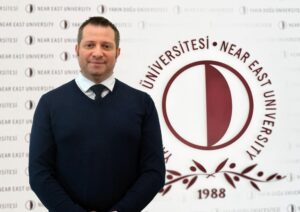
Prof. Dr. Fadi AL-TURJMAN serves as the founding Dean of the Faculty of AI and Informatics at Near East University (NEU), Cyprus. He holds multiple leadership roles including Head of the Software Engineering Department and Director of the AI and Robotics Institute and the International Research Center for AI and IoT. With a PhD in Computer Science from Queen’s University (2011), he specializes in AIoT systems, wireless networks, and blockchain integration. Affiliation: Near East University Leadership: Founding Dean for AI and Informatics, Director of AI & Robotics Institute Research Focus: His work bridges Artificial Intelligence of Things (AIoT) , Blockchain Applications , and Smart Networking . He explores cybersecurity frameworks for smart cities, quantum state optimization techniques, and novel AI-driven solutions for healthcare, agriculture, and energy systems. Key Article Trends: Recent publications emphasize Transformer models for environmental monitoring, blockchain-enabled security protocols , and evolutionary algorithms for resource optimization. His research spans interdisciplinary domains including medical diagnostics, vehicular networks, and sustainable infrastructure. Scientific Awards: Lifetime Golden Award of Dr. Suat Gunsel (2022) Multiple Best Research Awards at International Venues Labs & Teams: Directs the International Research Center for AI and IoT at NEU, leading multidisciplinary teams in developing advanced networking technologies and AI-driven solutions for global value chain applications.
Professor Demetris Vrontis serves as the Vice Rector for Faculty and Research and holds the rank of Professor of Strategic Management at the University of Nicosia, Cyprus. He is also the Founding Editor and Editor-in-Chief of the EuroMed Journal of Business , and leads the EuroMed Academy of Business and Gnosis Mediterranean Institute for Management Science. His editorial roles span over 80 guest-edited editions in top-tier journals, and he has authored over 450 refereed articles, 60 books, and 80 book chapters across management, marketing, and business disciplines. His research focuses on strategic management, international marketing, and organizational behavior, with a growing emphasis on digital transformation and sustainability. Education: PhD in International Marketing Management and Business, Manchester Metropolitan University (2000) MBA (Distinction), University of Hull (2000) BSc (Hons) in Business Studies, Manchester Metropolitan University (1997) Research Interests: Strategic Management, International Marketing, Digital Innovation, Sustainability, and Organizational Behavior. His work addresses contemporary challenges in business ecosystems, including AI integration, green innovation, and cross-cultural management. Awards & Affiliations: Fellow Member, Chartered Institute of Marketing Chartered Business Consultant Member of numerous international editorial boards and advisory councils Key Projects: Leads ERASMUS+ initiatives on digital excellence, sustainable education, and mental health in youth football. His research often bridges academia and industry, with collaborations in Vietnam, Italy, and South Africa. Institutional Roles: Serves on the boards of international companies and advises on policy at the national level in Cyprus and abroad.
Dr. Avgoustis Avgousti is a Senior Research and Technical Scientist at The Cyprus Institute's Science and Technology in Archaeology and Culture Research Center (STARC). He specializes in Research Software Engineering for Digital Humanities and Digital Cultural Heritage Informatics. With over 13 years at STARC, he leads digital transformation initiatives, focusing on advanced computational tools and methodologies to bridge technology and cultural heritage. Originally based in New York City, Dr. Avgousti completed a Postdoctoral Fellowship at the National Center for Supercomputing Applications (NCSA) at the University of Illinois Urbana-Champaign, where he contributed to software engineering and cultural heritage research. His expertise spans Big Data applications, semantic web technologies, and digital accessibility for cultural heritage institutions. His research interests emphasize democratizing access to small museum collections through platforms like CyprusArk, semantic content models, and interoperable digital systems. He advocates for reusable frameworks that empower non-technical scholars and small institutions. As a former college lecturer, he prioritizes education and mentorship in digital heritage. Dr. Avgousti’s work addresses challenges in digitizing archaeological and historical datasets, integrating computational methods into heritage preservation, and fostering international collaboration in cultural informatics. His projects often involve building web-based systems for data aggregation and public dissemination.
Klitos Christodoulou is an Assistant Professor in the Department of Digital Innovation at the University of Nicosia (UNIC), affiliated with the School of Business. He holds a PhD in Computer Science from the University of Manchester (2014), along with a BSc and MSc in Computer Science from the same institution. His research focuses on Distributed Ledger Technologies, Blockchain, Machine Learning, and Data Integration. He is a research faculty member at UNIC's Institute For the Future (IFF) since 2018 and actively contributes to ISO/TC 307 standards for Blockchain. Christodoulou has led projects like the Ripple grant and participated in EU initiatives such as EUNOMIA and DLT4ALL. He teaches blockchain courses in UNIC's MSc in Digital Currency program and serves on editorial boards, including Frontiers in Blockchain. His work explores blockchain governance, consensus algorithms, and ethical applications in supply chains. Education: BSc in Computer Science, University of Manchester (2006–2009) MSc in Advanced Computer Science, University of Manchester (2009–2010) PhD in Computer Science, University of Manchester (2010–2014) Research Interests: Blockchain and DLT architectures Machine Learning applications in finance and security Decentralized governance models Blockchain adoption frameworks Awards/Grants: Principal Investigator of the Ripple grant; EU-funded projects (EUNOMIA, DLT4ALL); contributor to Cyprus National Blockchain Strategy. Labs/Teams: Institute For the Future (IFF), University of Nicosia
Professor George Giaglis is a prominent academic in the School of Business at the University of Cyprus, serving as Director of the Institute for the Future. He holds a PhD in Information Systems from Brunel University and a BSc (Hons) in Information Systems from the Athens University of Economics and Business. His academic journey includes roles such as Professor, Vice Rector, and Associate Professor at the Athens University of Economics and Business (2002–2017) and prior positions at the University of the Aegean and Brunel University. His research focuses on blockchain technology, IoT, digital currencies, and pervasive information systems. He has contributed to over 200 publications, exploring topics like blockchain integration in marine systems, NFTs, CBDCs, and social network dynamics. His work bridges technology and business, addressing digital transformation challenges and ethical implications of emerging technologies. Giaglis has organized major conferences like Decentralized 2019 and contributed to EU blockchain policy discussions. His research emphasizes practical applications of technology in sectors like healthcare, finance, and urban logistics. Despite prolific output, no specific awards are noted, though his h-index of 25 reflects significant academic impact. His current roles involve advancing the Institute for the Future’s projects, advising on digital innovation strategies, and mentoring researchers in decentralized systems. Ongoing work includes exploring AI-blockchain synergies and regulatory frameworks for digital currencies.
Professor Edna Yamasaki is the Head of the Department of Life and Health Sciences at the University of Nicosia's School of Sciences and Engineering, and serves as Vice Rector for Academic Affairs. Her career spans roles in academia, research, and administrative leadership. She holds a Medicine degree from Federal Fluminense University (Brazil), followed by MSc/PhD in Biophysics (Neurobiology) from Federal University of Rio de Janeiro, and postdoctoral training at institutions including Harvard Medical School (USA) and the University of Cyprus. Her research focuses on nervous system development/degeneration, public health implications of climate change, and biomedical materials. Notable projects include the CYPHEW initiative (identifying Cyprus's heat-related health risks), polymer development for biological applications, and Erasmus+ programs promoting health-enhanced physical activity. She has contributed to environmental hydrodynamic modeling, health information systems evaluation (DIPSA framework), and disaster risk assessments for oil spills. Her work bridges neuroscience, environmental science, and public policy. Recent studies highlight aging populations' health challenges and the impact of extreme weather on mortality and hospital admissions in Cyprus. She actively collaborates on EU-funded projects addressing work safety, healthcare informatics, and climate adaptation. Professional milestones include coordinating interdisciplinary teams across multiple continents and transitioning between laboratory research to institutional leadership roles. Her leadership emphasizes fostering curiosity-driven research while addressing societal health challenges.
George Pallis is a Professor in the Department of Informatics at the University of Cyprus, affiliated with the School of Science. He holds a BSc and PhD from Aristotle University of Thessaloniki. His research focuses on Distributed and Network Computing, Big Data Analytics, and Cloud/Edge/Fog Computing. He leads the Master's Program in Data Science and has secured over €5.5M in research funding from the EU, Cyprus, and industry partners like Google. Education: BSc (2001), PhD (2006) from Aristotle University of Thessaloniki. Research Interests include Internet technologies, large-scale network environments, and cloud computing. He has published over 100 articles in top-tier journals and conferences (e.g., IEEE TKDE, ACM TOIT, WWW, ICDCS) and contributed to international standards (DIN, CEN). His work spans topics like fake news detection, edge computing frameworks, and energy-efficient micro-data centers. Key Achievements: Editor-in-Chief Emeritus of IEEE Internet Computing, recipient of multiple best paper awards, and contributor to projects like RAINBOW (H2020), UNICORN, and ICARUS. His research explores cutting-edge areas such as LLM manipulation, polarization detection, and carbon-aware computing. He has supervised five PhD students and served as General Chair for IEEE/ACM SEC 2024 and IEEE IC2E 2024. His work bridges academia and industry through collaborations on AI, IoT, and sustainable computing.