Benjamin Bach is a Lecturer (Assistant Professor) in Design Informatics and Visualization at the University of Edinburgh , affiliated with the School of Informatics and the Centre for Design Informatics . Education : PhD in Computer Science from Université Paris Sud (2014), MSc in Computer Science (Diplom Medieninformatik) from University of Technology Dresden (2010). Research Interests focus on designing interactive visualization interfaces to explore, communicate, and understand complex data. Key areas include: Network Visualization Immersive Analytics (Augmented/Virtual Reality) Data-driven Storytelling Collaborative and Non-digital Visualization Visualization of Spatio-temporal Data Graph Databases and Dynamic Networks His work integrates these themes into tools like networkcube and Vistorian , emphasizing interdisciplinary applications in biology, neuroscience, and history. Current projects explore annotation systems, dynamic network analysis, and geographic network visualization. Scientific Awards : Honorable mention for Best PhD Thesis by IEEE Visualization Committee (2014). Supervision : Mentored 14 graduate students (MSc, MA, B.Hons) and actively seeks PhD/MSc candidates in network visualization, data storytelling, and immersive analytics. Collaboration : Works within the interdisciplinary Centre for Design Informatics , which bridges data science, design, and digital humanities.
Prof. J. Rod Franklin, PhD is a Full Professor of Logistics and Academic Director of Executive Education at Kühne Logistics University (KLU) in Hamburg, Germany. With an extensive background spanning both academia and industry, Professor Franklin brings deep practical experience to his academic role. He has held significant leadership positions at KLU, including Dean of Programs, and was instrumental in the university's planning stages as he states: "KLU is near and dear to my heart, because I was one of the individuals that helped plan the university." His unique blend of academic rigor and industry expertise makes him a central figure in KLU's mission of providing world-class logistics education and research. Professor Franklin's academic foundation is impressive: Doctorate of Management, Case Western Reserve University, USA (2000) Master of Business Administration, Harvard Graduate School of Business, USA (1979) Master of Science in Mechanical Engineering, Stanford University, USA (1975) Bachelor of Science in Mechanical Engineering, Purdue University, USA (1974) His research focuses on applying modern management techniques to supply chain operations, with pioneering work in sustainable business models, green logistics, corporate social responsibility, and cloud-based supply chain management. Professor Franklin is a leading authority on the Physical Internet concept, which seeks to revolutionize logistics through interconnected systems inspired by the digital internet. His research consistently bridges theoretical frameworks with practical industry applications, addressing critical challenges in modern logistics networks while promoting sustainability and efficiency. Professor Franklin's publication record over the past two decades reveals a clear evolution from traditional logistics service innovation toward cutting-edge research on the Physical Internet, predictive analytics, and big data applications in supply chains. His recent work demonstrates increasing emphasis on urban logistics solutions, sustainability challenges, and the integration of digital technologies with physical logistics networks. His seminal 2020 paper "From the Digital Internet to the Physical Internet" has significantly advanced the conceptual framework for this emerging field, while his 2024 protocol design work continues to push the boundaries of practical implementation. Professor Franklin leads significant research initiatives including "Accelerating the Path Towards Physical Internet - SENSE," "Internet of Food and Farm 2020," and "URBANE - Upscaling innovative green urban logistics solutions." His work has been published in top-tier journals including Journal of Business Logistics, IEEE Transactions on Systems, Man and Cybernetics, and International Commerce Review, demonstrating substantial scholarly recognition. While specific individual awards aren't detailed in available information, his leadership in major funded research projects indicates significant institutional support for his work. As Academic Director of Executive Education at KLU, Professor Franklin oversees programs that effectively bridge academic theory with industry practice. His teaching portfolio includes MBA courses on Critical Thinking, Design Thinking, Managing Multiple Complex Expectations, and Systems Thinking - all emphasizing practical application of theoretical concepts. His extensive industry background, including executive roles at Kühne + Nagel and other major logistics firms, directly informs his approach to academic supervision and executive education. Professor Franklin has successfully secured research funding for multiple projects focused on sustainable logistics innovation, demonstrating his ability to translate theoretical concepts into impactful research initiatives. Professor Franklin leads collaborative research teams focused on the Physical Internet concept and its applications in modern logistics. Through projects like SENSE and URBANE, he works with international researchers, industry partners, and policymakers to develop innovative solutions for sustainable urban logistics. His research integrates expertise from computer science, operations research, and business management to address complex supply chain challenges. The BizSLAM App, developed as part of his work on multi-level SLA management, exemplifies his team's ability to create practical tools with direct industry applications, demonstrating the real-world impact of his research vision.
Carla Wilkin is a Professor of Accounting at Monash Business School, Monash University, Australia. She serves as Deputy Dean Accreditation and International and President of the Academic Board. Wilkin has previously held positions at the University of Melbourne and Deakin University. Her research spans corporate governance, IT governance, enterprise risk management, and accounting education. Key Research Areas: IT Governance, Professional Skepticism, ESG Reporting, Digital Transformation, PhD Supervision Leadership Roles: Vice President of Academic Board (2022–2023), Deputy Head of Department, PhD Coordinator Her work has been funded by the Australian Research Council, and she has published extensively in top journals like the Journal of Information Systems and British Accounting Review . Wilkin contributes to global academic governance through editorial roles and community engagement, including as Senior Editor of the Journal of Information Systems and Co-Chair of the Special Forum on Digital Transformation of ESG Reporting. Wilkin is a Fellow of CPA Australia and the Higher Education Academy. She has received multiple teaching awards, including Dean’s Commendations and the 2011 Australasian Conference on Information Systems Best Paper Award.
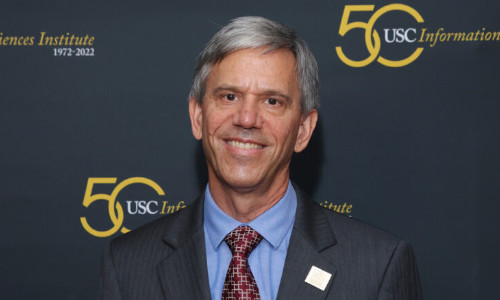
Craig Knoblock serves as the Keston Executive Director of the Information Sciences Institute (ISI) at the University of Southern California, Vice Dean of Engineering for the Viterbi School of Engineering, and Research Professor of both Computer Science and Spatial Sciences. He also directs USC's Data Science Program and leads the Center on Knowledge Graphs as Research Director. Dr. Knoblock's research focuses on techniques for describing, acquiring, and exploiting the semantics of data. His extensive work spans source modeling, schema and ontology alignment, entity and record linkage, data cleaning and normalization, extracting data from the Web, and building comprehensive knowledge graphs. With over 300 published works in these areas, his research has significantly advanced the field of semantic data integration. His work demonstrates strong trends toward practical applications of knowledge graphs across diverse domains including cultural heritage, geospatial information systems, human trafficking detection, and sensor networks. The evolution of his publications shows a progression from foundational ontology alignment techniques to sophisticated knowledge graph applications addressing real-world challenges. Fellow of the Association for the Advancement of Artificial Intelligence (AAAI) Fellow of the Association of Computing Machinery (ACM) Past President and Trustee of the International Joint Conference on Artificial Intelligence (IJCAI) Recipient of the 2014 Robert S. Engelmore Award Seven best paper awards for his research contributions As Executive Director of USC's Information Sciences Institute, Dr. Knoblock leads one of the world's premier research centers in computer science and information technology. His leadership extends to directing the Center on Knowledge Graphs and serving as Associate Director of the Informatics Program at USC. His educational background includes a Bachelor of Science from Syracuse University and Master's and Ph.D. degrees in Computer Science from Carnegie Mellon University.
Dr. Yacine Sam is a Lecturer in Computer Science at the Polytechnic School of the University of Tours (EPU), affiliated with the Fundamental and Applied Computer Science Laboratory of Tours (LIFAT). His research focuses on databases, knowledge representation & reasoning, web services, and semantic web technologies. Doctorate in Computer Science, Paul Cézanne University Aix-Marseille 3 (2008) Master 2 Research in Computer Science, Claude Bernard University Lyon 1 (2005) Dr. Sam's research spans multiple subfields including: Trustworthy execution of adaptive business processes Privacy ontologies for Web of Things Deep learning applications in personalized service recommendations Linked open data frameworks for semantic integration Blockchain implementations in distributed systems Health analytics using collaborative IoT data Contact: yacine.sam@univ-tours.fr
Leonardo Tonetto is a researcher at Technical University of Munich (TUM) within the Chair of Connected Mobility, working under Prof. Jörg Ott. His office is located in FMI 01.05.038 and he maintains an active presence in both academic research and open-source development with significant GitHub contributions (19 repositories, 73 stars). His work bridges theoretical research and practical implementation in mobility systems. Dr. Tonetto's research spans Mobile User Modeling , Deep Learning & Data Analysis , Signal Processing , and Complex Networks . His work demonstrates particular expertise in extracting meaningful patterns from human mobility data while addressing critical privacy concerns. Recent publications show increasing focus on ethical implications of location-based data and energy-efficient computing for augmented reality applications. Analysis of his publication record from 2014-2025 reveals a consistent research trajectory evolving from fundamental mobility pattern analysis toward more complex systems integrating privacy considerations and energy efficiency. His work increasingly intersects computer science with social implications, particularly in location-based services and epidemic modeling. The research shows strong methodological diversity, employing machine learning, network analysis, and signal processing techniques across various application domains. Through his GitHub profile and open-source contributions, Tonetto demonstrates commitment to reproducible research and community engagement. His technical skills span multiple programming languages and systems, supporting both theoretical research and practical implementation of mobility-aware systems. While specific grant information isn't publicly available, his consistent publication output suggests successful research funding.
Dr. Thi Phuong Khanh Nguyen is a researcher at the Ecole Nationale d'Ingénieurs de Tarbes (ENIT) , affiliated with the College of Engineering and Department of Systems . Her work focuses on Prognostics and Health Management (PHM) , predictive maintenance, and industrial data analytics, combining machine learning with physics-informed modeling to address uncertainty in system degradation. Teaching: Mathematics for engineers, Probability, Statistics, Operating safety Research: Health indicators, diagnostics, prognostics, multimodal data fusion Methods: Data mining, physical and data-driven models, decision support systems Tools: FAST, Petri nets, UML, HMM, RNN, CNN, Transformer architectures Her recent publications highlight advancements in explainable AI , physics-informed neural networks , and multimodal learning for fault detection, battery RUL prediction, and robotic inverse dynamics. She also explores blockchain and federated learning for decentralized prognostics.
Nick Bassiliades is a Professor at the School of Informatics , Aristotle University of Thessaloniki , Greece. His academic roles include serving as President of the Digital Governance Committee and the Digital Transformation of Greek Universities Committee, as well as Director of the Web, Data, and Knowledge Engineering Sector. Education: B.Sc. in Physics, Aristotle University of Thessaloniki (1991) M.Sc. in Applied Artificial Intelligence, University of Aberdeen (1992) Ph.D. in Parallel Knowledge Base Systems, Aristotle University of Thessaloniki (1998) His research focuses on Semantic Web , Ontologies , Knowledge Graphs , and applications in Artificial Intelligence , eGovernment , and Intelligent Agents . Recent publications emphasize ontological frameworks for requirements engineering, explainable AI, and electric vehicle knowledge graphs. He actively contributes to scientific communities as a Senior Member of IEEE and ACM , and serves as Co-Editor-in-Chief for the International Journal of Artificial Intelligence in Business and Management . His work involves collaborations with the Intelligent Systems laboratory and projects like XR4DRAMA for disaster management.
Dr. Fei Chiang is an Associate Professor in the Department of Computing and Software at McMaster University's Faculty of Engineering. Her research focuses on data management , with emphasis on data quality, data privacy, information extraction , and contextual data cleaning . She has collaborated with IBM Global Services and Microsoft Research on improving data quality in enterprise systems. Key research themes include graph databases , temporal data analysis , and privacy-aware data processing Recent publications explore federated learning , SQL understanding in LLMs , and temporal graph constraints Industry collaborations with IBM Toronto Lab and Microsoft Research have led to innovations in data cleaning automation and semantic analysis. Her work bridges database theory with machine learning applications in healthcare inventory optimization and flight reliability prediction.
Ayşenur Akyüz Birtürk serves as a Lecturer in the Department of Computer Engineering at Middle East Technical University (METU), Ankara, where she has taught since February 1994. Her academic career spans foundational programming courses to advanced graduate seminars in AI and Computational Linguistics, reflecting 30+ years of institutional commitment. She earned all her degrees from METU, culminating in a 1998 Ph.D. focused on Turkish language computational analysis. Her educational journey includes: B.S. in Computer Engineering (1985) M.S. in Computer Engineering (1988) with thesis on “A Model for Representing Concepts: Conceptual Dependency Theory” Ph.D. in Computer Engineering (1998) with thesis on “A Computational Analysis of Turkish using the Government-Binding Approach” Dr. Birtürk’s research centers on Artificial Intelligence and Natural Language Processing , with pioneering work in Turkish language parsing evolving into modern Recommender Systems . She integrates semantic relations and multi-domain data to build hybrid engines for movies, books, and music, emphasizing user modeling through knowledge representation and data mining techniques. Analysis of her 2010-2015 publications reveals two dominant threads: adaptive recommender systems (80% of output) using semantic similarity and dynamic clustering, and renewable energy analytics (20%) applying machine learning to wind/hydrological data. This pivot from NLP to energy forecasting demonstrates methodological versatility while maintaining core AI expertise. Her scientific recognition includes: TUBITAK scholarships throughout education (1977-1988) Multiple national contest awards in high school (1979-1980) Leadership in TUBITAK-funded energy and healthcare projects Dr. Birtürk has supervised 17 Master’s theses in NLP and recommender systems while securing competitive grants including METU-ISTEC #17435 (2006-2008; 504,000 YTL) and HASAT (2010-2013; 601,637 YTL). Her industry consultancy spans medical form design (FormAnalitik), question-answering systems, and retail intelligence platforms, translating academic research into real-world tools.
Evangelia (Eva) Kalyvianaki is a Senior Lecturer (equivalent to Associate Professor) in the Department of Computer Science and Technology at the University of Cambridge , where she is also a member of the Systems Research Group / netos group . Previously she held faculty positions as Lecturer at City University London and as post-doctoral researcher at Imperial College London. Education Ph.D. in Computer Science, Computer Laboratory (SRG/netos group), University of Cambridge M.Sc. in Computer Science, University of Crete, Greece B.Sc. in Computer Science, University of Crete, Greece Research Interests Her research spans the broad areas of Cloud Computing , Big Data Processing , Autonomic Computing , and Distributed Systems . A central theme is the design and management of next-generation, large-scale cloud applications, with an emphasis on applying mathematical reasoning—particularly control-theoretic techniques such as Kalman and H-infinity filtering—to address the complexity and uncertainty inherent in modern distributed infrastructures. Topics of active investigation include adaptive CPU and resource provisioning for virtualized servers, fairness and overload management in federated stream-processing systems, explicit state management for big-data frameworks, and distributed optimization algorithms for large-scale networked systems. Publications & Research Impact Across more than thirty peer-reviewed papers, her work demonstrates a consistent trajectory toward bridging rigorous control theory with practical systems challenges in the cloud. Signature contributions include the THEMIS framework for fair federated stream processing, dynamic block-sizing algorithms for data-stream engines, and robust resource-provisioning schemes based on advanced filtering techniques. Recent publications extend these ideas to fully distributed, finite-time coordination protocols that operate under quantized communications and time-varying delays, reflecting an expanding scope toward large-scale networked control systems. Scientific Awards No specific awards or fellowships are listed in the provided material. Advising & Funding While individual student names are not disclosed, her extensive publication record with numerous co-authors indicates active supervision of doctoral and master’s researchers. Funding acknowledgements in papers suggest support from UK research councils, EU projects, and industrial partnerships, although explicit grant details are not provided. Labs & Teams She is affiliated with the Systems Research Group (netos) within the Cambridge Computer Laboratory, a leading collective focused on networked and operating systems research, providing a collaborative environment for experimental cloud and distributed-systems work.
Morteza Zihayat is an Associate Professor and Canada Research Chair (Tier 2) in Human-Centered Artificial Intelligence at Toronto Metropolitan University. He holds dual appointments in the Faculty of Engineering and Architectural Science (Department of Electrical, Computer, and Biomedical Engineering) and the Ted Rogers School of Management. Additionally, he serves as an Adjunct Professor at the University of Waterloo in Management Sciences and is a Faculty Fellow at IBM's Centre for Advanced Studies. Dr. Zihayat's educational background includes: PhD in Computer Science from York University (2016) MSc in Computer Engineering from University of Tehran (2011) Postdoctoral Research Fellowship at University of Toronto's Faculty of Information (2017) His research lies at the intersection of AI, security, and society with a focus on building fair and transparent AI systems. Dr. Zihayat's expertise spans human-centered AI, fair information retrieval systems, and blockchain-enabled AI infrastructures. His work emphasizes creating AI systems that are accountable and designed to serve the public good, with applications in healthcare, digital media, and social networks. Dr. Zihayat has received numerous accolades including the Canada Research Chair (Tier 2) in Human-Centered AI (2024), Dean's Outstanding Scholarly, Research, and Creative Activity Award (2023), Best Short Paper Award at ECIR (2023), and IBM CAS Faculty Fellowship (2021). His research has attracted over $1.7 million in external funding from agencies such as NSERC, Mitacs, and multiple industry partners including Toronto Transit Commission, The Globe and Mail, AT&T, and IBM. Dr. Zihayat serves as Associate Editor of the Computational Intelligence Journal and is an active reviewer for top-tier venues. He is also Co-director and Co-founder of the Digital Enterprise Analytics and Leadership (DEAL) Research Center.
Professor Ebrahim Bagheri is a Tenured Full Professor at the University of Toronto's Faculty of Information and co-founder of Reviewerly, an AI-driven platform for scientific peer review. He holds editorial roles at IEEE Transactions on Network Science and Engineering and ACM Transactions on Intelligent Systems and Technology. His research focuses on ethical AI, information retrieval, and responsible AI development. He has secured over $16M in research funding and led initiatives such as the NSERC CREATE program on Responsible AI and the CFREF Bridging Divides Program. Education: PhD (prior institution not specified) Research Interests: Artificial Intelligence, Data & Society, Information Behavior, Social Media, Software & Systems. He emphasizes balancing technological innovation with societal benefits, addressing issues like algorithmic bias and ethical AI practices. Notable Awards: NSERC Synergy Award for Innovation (2019) recognizing industry-academia collaboration excellence. Grants: Includes projects on warranty design, knowledge graph mining, and robust neural retrieval techniques. Labs: Laboratory for Systems, Software and Semantics (LS3).
Dr. Lipeng Wan is a tenure-track Assistant Professor of Computer Science at Georgia State University (GSU), located at 25 Park Place, room 733. He holds a B.Eng. in Communication Engineering from Nanjing University of Science and Technology (2008), an M.Eng. in Information and Communication Engineering from Southeast University (2011), and a Ph.D. in Computer Science from the University of Tennessee, Knoxville (2016). Prior to joining GSU, he served as a Computer Scientist at Oak Ridge National Laboratory (ORNL), first as a postdoctoral researcher (2016–2018) and later as a full-time research staff member (2018–202?). His research focuses on big data management and analytics , high-performance and data-intensive computing , and resilience and performance optimization for distributed systems . Key interests include scientific data workflows, I/O innovations for exascale systems, and error-controlled data compression frameworks like MGARD and HPDR. Dr. Wan’s recent work emphasizes adaptive data transmission (e.g., JANUS), load balancing in cloud environments (SciLance), and optimizing file access patterns on HPC systems. His publications address challenges in exascale computing, including I/O performance, geographically distributed data management, and feature-preserving compression for climate simulations. He leads research at GSU in collaboration with national labs like ORNL, focusing on advancing scalable data management techniques for high-performance computing applications.
Hamid Karimi is an Assistant Professor of Computer Science at Utah State University (USU), where he leads the Data Science and Applications (DSA) lab. His research focuses on using AI and data mining for social good, including social media mining, educational data mining, and machine learning. He earned his Ph.D. in Computer Science from Michigan State University (MSU) in 2021, with a thesis on AI for social good. His interdisciplinary work includes the Teachers in Social Media project, which developed algorithms to improve PK-12 education quality. Dr. Karimi has received several awards, including the Best Paper Award at ASONAM 2018 and the International Faculty Recognition Award at USU in 2022. His research spans social media behavior analysis, misinformation detection, and fairness in machine learning. The DSA lab prioritizes practical solutions for socially impactful data science applications, such as cross-disciplinary projects in science and engineering. Education: Ph.D. in Computer Science, Michigan State University, 2021 Research Interests: Social Media Mining Educational Data Mining Graph Mining AI for Social Good Lab: Data Science and Applications (DSA) Lab, USU His work bridges theoretical data science with real-world applications, such as analyzing teacher behavior on Pinterest and leveraging GPT for scalable education tools. Dr. Karimi’s research emphasizes ethical AI practices and interpretable machine learning models.