Felipe Csaszar is a Professor of Strategy and Chair of the Strategy Department at the University of Michigan's Ross School of Business. His research focuses on decision structures' impact on innovation, financial performance, and social outcomes, with particular attention to cognitive frameworks, organizational processes, and AI's role in decision-making. He holds a PhD and MA from the Wharton School, University of Pennsylvania. Education: PhD in Strategy, University of Pennsylvania (2009) MA in Strategy, University of Pennsylvania (2007) Research Interests: Strategic decision-making under AI integration Cognitive and structural drivers of innovation Organizational decision processes and design Formal modeling and empirical strategy research Editorial Roles: Senior Editor, Strategy Science and Management Science Former Editor, Organization Science Co-editor, Handbook of AI and Strategy Professional Experience: Prior role: Assistant Professor at INSEAD Previous career: CEO of an internet startup and Head of Research at an asset management firm Labs/Teams: Leading the Strategy Science division at INFORMS Co-chair of the SMS Behavioral Strategy division
Liping Liu is a Professor in the Department of Management at The University of Akron's College of Business. He holds a Ph.D. in Business from the University of Kansas (1995), Master of Engineering in Systems Engineering (1991), and dual bachelor's degrees in Applied Mathematics (1986) and River Dynamics (1987). Ph.D., University of Kansas MS, Huazhong University of Science and Technology B.E., Wuhan University BS, Huazhong University of Science and Technology His research spans Artificial Intelligence , Electronic Business , Systems Analysis , Data Quality , and Belief Function Theory . He pioneered coarse utility theory and linear belief functions , now taught in top Ph.D. programs across multiple disciplines. Key trends in his publications include Belief Function Applications (2012-2024), Medical Data Systems (2003-2015), and Decision Theory (2004-2014). Recent works focus on Gamma Belief Functions (2024) and computational improvements in linear belief function operations (2019-2016). Scientific contributions recognized via: Microsoft Azure Educator Grant (2014-2016) Inclusion in Who's Who in America (2010-2013) and Who's Who in the World (2011-2013) As an editor and committee member for major conferences (INFORMS, AMCIS, Belief Functions conferences), he bridges academic research with practical systems implementation in e-business and healthcare domains.
Shane G. Henderson is the Charles W. Lake, Jr. Professor in Productivity at Cornell University's School of Operations Research and Information Engineering (ORIE). His research focuses on the intersection of optimization and simulation, with applications to complex systems such as bike-sharing networks, medical scheduling, and ambulance deployment. He emphasizes practical societal relevance, addressing challenges in healthcare, transportation, and parallel computing environments. Education: B.Sc. (Mathematics), University of Auckland (1992) M.S. (Statistics), Stanford University (1995) Ph.D. (Operations Research), Stanford University (1997) Research Interests: Structured simulation optimization, parallel computing applications, applied probability, and case-driven problem-solving. Recent work includes MRI scheduling, radiation treatment planning, and land/air ambulance systems. He advocates for methodologies that leverage convexity or quasi-convexity to enhance algorithmic efficiency and robustness. Awards and Recognition: 2016 Tau Beta Pi Professor of the Year 2014 Sonny Yau '72 Excellence in Teaching Award 2011 Hess Research & Education Award NSF CAREER Award (1999) Teaching & Service: Courses in probability, simulation, and mathematical modeling using case-based learning. Served on award committees for INFORMS Nicholson Prize, Pierskalla Prize, and Impact Prize. Organized major conferences including the 2009 INFORMS Applied Probability Society conference and multiple Winter Simulation Conferences. Currently co-edits simulation-optimization testbeds for experimental comparisons. Labs & Collaborations: Active in Cornell's collaborative research environment, focusing on interdisciplinary projects with industry partners like Motivate (bike-sharing systems). Engaged in advancing methodologies for complex systems through data-driven approaches.
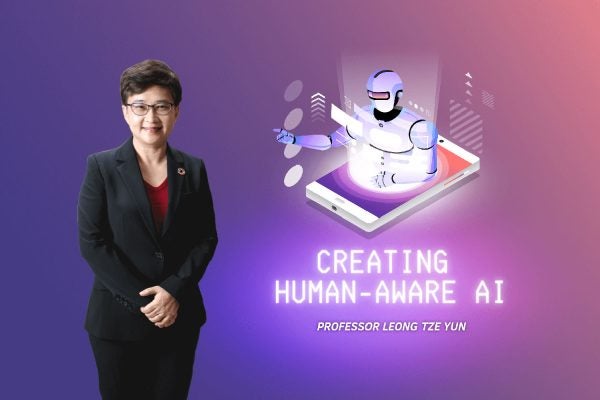
LEONG Tze Yun is a Professor in the Department of Computer Science at the School of Computing, National University of Singapore (NUS). She holds S.B., S.M., and Ph.D. degrees in Computer Science from the Massachusetts Institute of Technology (MIT). Her academic career spans both research and industry experience, with significant contributions to the fields of artificial intelligence and health informatics. Dr. Leong's educational background includes: Ph.D. in Electrical Engineering & Computer Science, Massachusetts Institute of Technology S.M. in Electrical Engineering & Computer Science, Massachusetts Institute of Technology S.B. in Computer Science & Engineering, Massachusetts Institute of Technology Her primary research interests focus on responsible AI, dynamic decision-making, neurocognitive modeling, reinforcement learning, artificial general intelligence, and biomedical and health informatics. Her work bridges the gap between theoretical AI development and practical healthcare applications, with an emphasis on ethical considerations and human-centered design. She directs the Medical Computing Laboratory at NUS, a multidisciplinary research program exploring human-aware decision modeling in complex environments. Analysis of her recent publications reveals a strong trend toward responsible AI development, with significant contributions to reinforcement learning techniques, causal inference methods, and applications of AI in healthcare. Her work increasingly integrates ethical considerations with technical AI development, particularly evident in her 2024 publications on medical AI and human values. Her scientific recognition includes: Fellow of the American College of Medical Informatics (ACMI) Founding Fellow of the International Academy of Health Sciences Informatics (IAHSI) Member of Eta Kappa Nu (Honor Society for Electrical Engineers) Dr. Leong has supervised numerous doctoral and master's students throughout her career, many of whom have gone on to prominent positions at institutions like Google, Netflix, Mayo Clinic, and academic institutions worldwide. Her advisory work extends to significant policy development, including contributions to WHO guidance on ethics and governance of AI for health. She currently serves on the World Health Organization (WHO) Expert Group on Ethics and Governance of AI for Health, the World Economic Forum (WEF) AI Governance Alliance, and the Advisory Council on AI in Uzbekistan. Her laboratory work focuses on developing adaptive systems that evolve with changing technical functionalities, system infrastructures, usage patterns, and operational contexts, with applications spanning prediction and decision analytics, human-aware robotics, game artificial intelligence, personalized education, and assistive care for elderly with neurocognitive disorders.
Yannis Paschalidis is a Distinguished Professor at Boston University with appointments in Electrical and Computer Engineering, Systems Engineering, Biomedical Engineering, and Computing & Data Sciences. He serves as Director of the Rafik B. Hariri Institute for Computing and Computational Science & Engineering. He holds a PhD (1996) and MS (1993) in Electrical Engineering and Computer Science from MIT, and a Diploma (1991) from the National Technical University of Athens. His interdisciplinary research spans optimization, control systems, machine learning, and data science with applications in healthcare, autonomous systems, and networks. Key focus areas include developing algorithms for autonomous navigation, healthcare analytics for clinical decision support, energy demand optimization, and computational biology for protein interaction modeling. Recent publications demonstrate strong focus on AI robustness (adversarial defenses, distributional robustness), healthcare applications (cognitive impairment detection, epidemic control), and sustainable systems (power networks, ecological forecasting). Methodological innovations center on reinforcement learning, distributionally robust optimization, and geometric analysis of classical algorithms. CAREER Award (NSF) IEEE Fellow (2014) IFAC Fellow (2022) IBM/IEEE Smarter Planet Award IEEE Computer Society Crowd Sourcing Prize IMIA Best Paper Award Charles DeLisi Award (2020) Distinguished Professor of Engineering As primary advisor to 35 PhD graduates, he leads the Network Optimization & Control (NOC) Lab. His research is funded by NSF, NIH, DoD, ARPA-E, and industry partners, including major grants on Neuro-Autonomy (ONR MURI), pandemic preparedness (ARPA-E NewRAMP), and healthcare AI (NIH QuBBD). He directs the Network Optimization & Control Lab focusing on optimization, learning, and control for autonomous systems, healthcare, and networks. The lab develops fundamental methodologies with applications in robotics, computational medicine, and infrastructure systems.
Joel Goh is Associate Professor at the Department of Analytics and Operations, NUS Business School, National University of Singapore. He serves as Director of the J.Y. Pillay Comparative Asia Research Centre (under NUS Global Asia Institute) and PhD Program Director at the Institute of Operations Research and Analytics (IORA). Previously, he was Assistant Professor at Harvard Business School (2014-2017) and Visiting Scholar (2017-2022). BSc, MSc, PhD in Operations, Information, and Technology from Stanford University His research focuses on healthcare analytics (preventing health conditions, hospital operations, frailty assessment), supply chain analytics (digital business models, platform leakage), and service platform operations (hospital-at-home programs, incentive design). He co-created the Robust Optimization Made Easy (ROME) software. Recent publications analyze workplace psychological safety (2024), hospital-at-home models (2024), and platform leakage dynamics (2023). His work spans 18+ journals with 740+ citations for burnout cost studies (2022) and 606+ citations for physician well-being research (2017). Teaching Honors : 2023: Best MBA Teaching & Skinner Innovation Award 2021: NUS Annual Teaching Excellence Award 2020: Early Career Research Excellence Award & 40 Under 40 Best MBA Professors Advising & Grants : Served as PhD Program Director. Received NUS Start-Up Grant R-314-000-110-133 (2021) and Humanities & Social Sciences Fellowship (2021). Editorial roles include Associate Editor at Management Science , Manufacturing & Service Operations Management , and Senior Editor at Production and Operations Management .
Dr. Sezgin Ayabakan is an Associate Professor in the Department of Management Information Systems at the Fox School of Business and Management, Temple University . He holds a PhD in Management Science from the University of Texas at Dallas, with a focus on Management Information Systems (MIS), an MS in Industrial and Systems Engineering from the University of Florida, and a BS in Industrial Engineering from Bilkent University in Turkey. His research focuses on healthcare analytics , particularly exploring how health information technology (HIT) impacts healthcare costs, quality, and utilization. Key research interests include data analytics applications in healthcare and social media, the business value of information systems, and open-source production strategies. He has examined topics such as telehealth efficacy, electronic health record (EHR) adoption challenges, hospital readmission reduction programs, and the interplay between healthcare IT and clinician well-being. Dr. Ayabakan teaches undergraduate and graduate courses in information systems, including MIS 2101: Digital Systems and SBM 3586: Diamond Peer Teachers - Internship II . His work has been published in top-tier journals like MIS Quarterly and Health Services Research and Management Epidemiology , with recent studies addressing telehealth utilization, EHR strategy impacts, and the role of organizational routines in clinician satisfaction. While no formal awards are listed, his contributions to healthcare IT research demonstrate significant academic impact. His advisory and grant activities are not detailed in the provided text, but his research often intersects with practical healthcare system challenges, suggesting potential collaborations with healthcare institutions and policy organizations.
Dr. Khurram Aziz is a Senior Instructor in the Faculty of Computer Science at Dalhousie University , Halifax, Canada. He is actively engaged in teaching and research, with a focus on optical networks, data center interconnects, and network performance modeling. Education: PhD in Electrical Engineering, Vienna University of Technology, Austria (2008) MSc in Electrical Engineering, National University of Singapore (2003) BSc (Hons) in Electrical Engineering, University of Engineering and Technology, Lahore, Pakistan (1998) His research interests include optical packet and burst switched networks , optical interconnects for data centers , analytical modeling and simulation , and network routing and switching . He has contributed extensively to the design and performance evaluation of scalable optical switches and hybrid switching systems. The recent publications reflect a strong trend in data center optical networks , focusing on performance, blocking probability, signal degradation, and architectural classification. His work bridges theoretical modeling with practical simulation frameworks, such as CloudNetSim++ in OMNeT++, contributing to cloud and high-capacity network research. Dr. Aziz has no listed scientific awards in the provided text. He teaches several core computer science courses including CSCI 2141: Intro to Database Systems , CSCI 3171: Network Computing , CSCI 3132: Object Orientation and Generic Programming , and CSCI 3120: Operating Systems . There is no mention of graduate student supervision or external research grants. He has co-authored book chapters in major handbooks on data centers and switched systems. Dr. Aziz has not listed any formal lab or research team affiliations in the provided content.
Angela Capel Cuevas is an Assistant Professor of Quantum Information Theory/Theoretical Quantum Computation at the University of Cambridge's Department of Applied Mathematics and Theoretical Physics (DAMTP). Previously, she held a Junior Professorship at Eberhard Karls Universität Tübingen (2021-2024) and was an MCQST Distinguished PostDoc at TU München (2020-2021). Her research focuses on the intersection of quantum information theory and quantum many-body systems, particularly studying thermalization dynamics via quantum functional inequalities. She is a recipient of the Simons Emmy Noether Fellowship and Forbes 30 Under 30 (Spain 2023). Education: PhD in Mathematics, Universidad Autónoma de Madrid/ICMAT (2015-2019) Master in Computational Engineering and Mathematics, URV/UOC (2016-2018) Bachelor in Mathematics, Universidad de Granada (2009-2014) Research: Angela's work applies analytic and geometric tools to quantum systems, emphasizing decay of correlations in Gibbs states and quantum dissipative evolutions. Key topics include entropy inequalities, modified logarithmic Sobolev inequalities, and thermalization rates in spin chains. Her recent work bridges quantum functional analysis with practical implications for quantum computing and thermalization phenomena. Grants & Roles: PI of CRC TRR 352 'Mathematics of Many-Body Quantum Systems' (7M€) Co-PI of QuantERA project TouQan (1.25M€) Organized workshops at BIRS and Tübingen (2023-2024) Awards: Simons Emmy Noether Fellowship (2023) Forbes 30 Under 30 (2023) Vicent Caselles RSME-FBBVA Award (2022) Labs/Teams: Leads a group studying quantum dissipative systems and thermalization at DAMTP. Collaborates with institutions globally on quantum functional inequalities and Gibbs state properties.
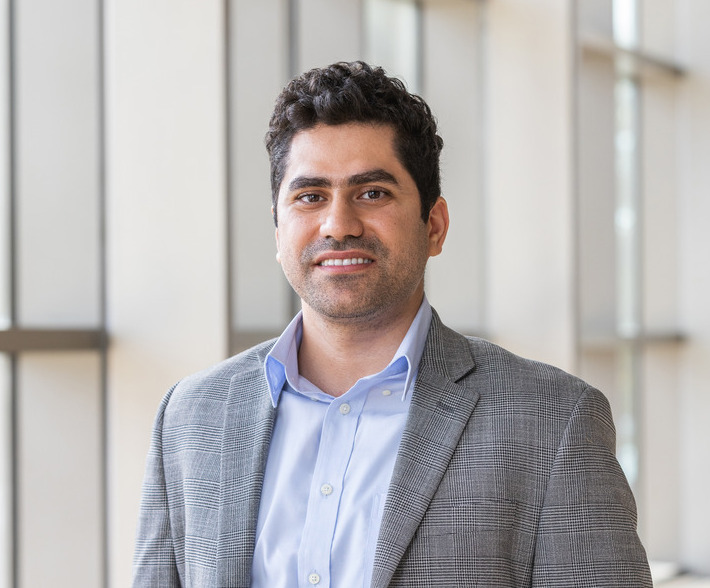
Mahdi Khodayar is an Assistant Professor of Computer Science at the University of Tulsa . He holds a Ph.D. in Electrical Engineering from Southern Methodist University (2020) and M.Sc./B.S. degrees in Artificial Intelligence and Software Engineering from K.N. Toosi University of Technology (2015, 2013). His research focuses on AI and machine learning applications in power systems, transportation systems, computer vision, and spatiotemporal pattern recognition. B.Sc. in Computer Engineering (2013), K.N. Toosi University of Technology M.Sc. in Artificial Intelligence (2015), K.N. Toosi University of Technology Ph.D. in Electrical Engineering (2020), Southern Methodist University Khodayar’s research bridges deep learning with energy systems , including fault detection in power grids, renewable energy forecasting, and traffic scene understanding. His work leverages graph neural networks , reinforcement learning , and generative models for robust spatiotemporal analysis. Recent publications highlight his focus on graph-based architectures for power systems, hybrid deep reinforcement learning in energy forecasting, and unsupervised domain adaptation in remote sensing. His work integrates physics-informed modeling with probabilistic frameworks . Scientific Awards : NSF ECCS Division Funding (2022) US DOT FHWA Grant (2023) Zelimir Schmidt Award for Early Career Research (2023) Honors Student Award (2015), K.N. Toosi University Khodayar has been funded by the NSF , US Department of Transportation , and the TU Cyber Fellows program . He serves as an associate editor for IEEE Transactions on Transportation Electrification and other journals.
Srijan Kumar is an Assistant Professor in the School of Computational Science and Engineering at Georgia Institute of Technology's College of Computing. His research focuses on data science, AI for security, and online safety, addressing challenges in detecting malicious users, misinformation, and enhancing AI robustness. His work has been deployed in platforms like Flipkart and Wikipedia, and recognized through awards such as the NSF CAREER and Forbes 30 Under 30. Education: B.Tech from Indian Institute of Technology, Kharagpur Ph.D. in Computer Science from University of Maryland, College Park Postdoctoral training at Stanford University Research Interests: Multi-modal/multi-lingual detection of harmful content and users Adversarial robustness of AI models Graph and network analysis for early detection Responsible recommender systems Awards & Grants: NSF CAREER Award (2023) Kavli Fellow (2022) Facebook/Adobe Faculty Awards NSF Convergence Accelerator Phase II grant ($5M) Advising & Labs: Leads the CLAWS Lab, advising over 20 students. Active in mentoring through conferences and NSF-funded projects.
CHAN Mun Choon is a Professor at the School of Computing, National University of Singapore (NUS) , where he directs the NUS-NCS Joint Laboratory for Cyber Security . He previously worked at Bell Labs (1997-2003) and holds a PhD from Columbia University (1997). His research spans systems and networking with specific interests in mobile computing, software-defined networking, and cyber-physical systems . PhD, Electrical Engineering (1997), Columbia University M.Phil., Electrical Engineering (1993), Columbia University MS, Electrical Engineering (1993), Columbia University BS, Computer & Electrical Engineering (1990), Purdue University His recent work focuses on 5G network architecture , data center fault debugging , and energy-efficient mobile sensing . He has published over 100 papers and holds 7 US patents , including cache-based compaction techniques with 210+ citations. His projects include fronthaul slicing for 5G, network-wide packet history frameworks, and participatory indoor localization. Scientific recognition includes: Best Paper Awards: IEEE ICNP 2019, ACM SOSR 2019, ICDCN 2016 Best Demo: IPSN 2016 Distinguished Member, INFOCOM TPC (2016, 2020, 2021) He serves as Vice-Dean, Graduate Studies and Vice-Dean, Academic Affairs at NUS Computing, and has graduated 21 PhD students . His lab develops solutions for network security , latency-sensitive applications , and mobile sensing .
Ji Zhu is the Susan A. Murphy Collegiate Professor of Statistics at the University of Michigan, Department of Statistics. He holds affiliations with the Michigan Institute for Data Science (MIDAS) and the Michigan Integrated Center for Health Analytics and Medical Prediction (MiCHAMP). His research focuses on statistical machine learning, network analysis, and health science applications. Education: B.Sc. in Physics (Peking University, 1996), M.Sc. and Ph.D. in Statistics (Stanford University, 2000 and 2003). Notable awards include the NSF CAREER Award (2008), Fellowships from the ASA (2013) and IMS (2015), and recognition as a Web of Science Highly Cited Researcher (2014–2020). Research interests span statistical methodologies for networks, survival analysis, and high-dimensional data. He co-authored influential papers on community detection, network cross-validation, and latent space models. Current editorial roles include Editor-in-Chief of the Annals of Applied Statistics and Action Editor for the Journal of Machine Learning Research. Advising: Supervised over 50 students and postdocs, many now in academia and industry. Notable former advisees include Tianxi Li (University of Minnesota), Yuan Zhang (Ohio State University), and Weijing Tang (Carnegie Mellon University). Labs/Teams: Active in interdisciplinary projects at MIDAS and MiCHAMP, focusing on healthcare analytics and predictive modeling for diseases like hepatitis and cardiovascular outcomes.
Mario Berges is an Associate Professor in the Department of Civil and Environmental Engineering at Carnegie Mellon University (CMU), with a courtesy appointment in Electrical and Computer Engineering. He holds leadership roles as Co-Director of the IBM Smart Infrastructure Analytics Lab and Director of the Intelligent Infrastructure Research Lab (INFERLab). His work focuses on applying information/communication technologies to enhance the operational efficiency and resilience of built environments amid evolving resource constraints and climate changes. Education: PhD in Civil & Environmental Engineering from CMU (2010). Research Interests: Berges' research integrates smart infrastructure systems, energy efficiency, and machine learning. Key areas include non-intrusive load monitoring (NILM), structural health monitoring of pipelines, building automation systems, and urban heat risk modeling. He develops data-driven frameworks for energy disaggregation, sensor placement optimization, and real-time infrastructure diagnostics. Awards: Recognized with the 2010 FIATECH Outstanding Early Career Researcher Award and 2015 Dean’s Early Career Fellowship from CMU. Grants & Labs: Leads INFERLab, collaborating with IBM on smart infrastructure projects. His work spans academic-industry partnerships focused on building analytics, smart grid technologies, and sensor networks. Future Directions: Expanding research into AI-driven energy systems, resilient urban infrastructure, and cross-disciplinary solutions for climate adaptation.
Alexandre Jacquillat is the Maurice F. Strong Career Development Associate Professor and Associate Professor of Operations Research and Statistics at MIT Sloan School of Management. His research focuses on data-driven decision-making with applications in air traffic management, urban mobility, and decarbonization. He holds a PhD in Engineering and MS degrees from MIT and École Polytechnique. Education PhD in Engineering, MIT MS in Technology and Policy, MIT MS in Applied Mathematics, École Polytechnique Research Interests His work develops scalable optimization models for efficient, equitable, and sustainable operations. Key areas include stochastic optimization, large-scale systems design, and machine learning applications in transportation and public policy. Recent projects explore vertiport planning for urban aerial mobility and prescriptive analytics for pandemic response. Awards Harold W. Kuhn Award (2024) INFORMS Harvey Greenberg Research Award (2023) MIT Jamieson Prize for Excellence in Teaching (2023) Multiple INFORMS Best Paper Awards (2015-2023) Named Leading Academic Data Leader by Chief Data Officer Magazine (2021-2022) Teaching & Grants Teaches courses in optimization (15.093, 15.083) and analytics (15.072). His grants support work in robotic warehousing, air traffic scheduling, and disaster response logistics. Advises on transportation analytics for industry and government. Labs/Teams Leads MIT Sloan's operations research group, collaborating with industry partners like McKinsey & Co. and Booz Allen Hamilton on transportation analytics and optimization projects.