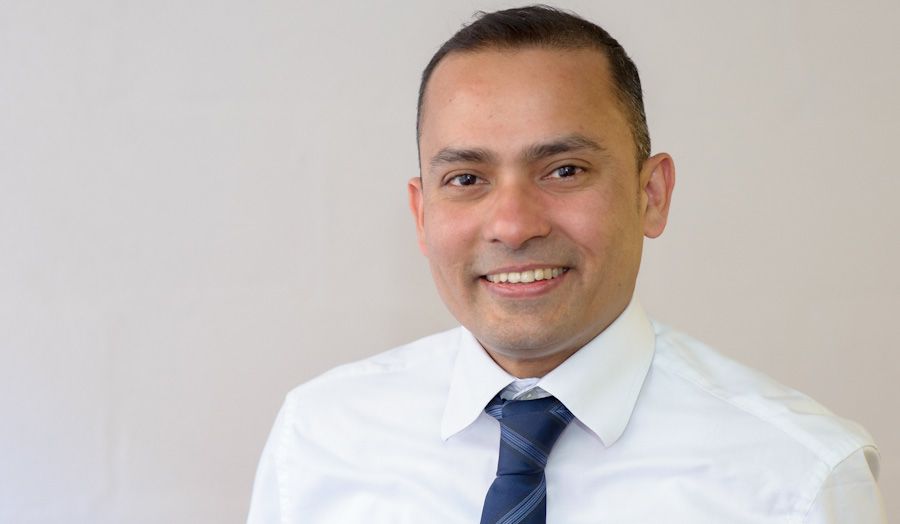
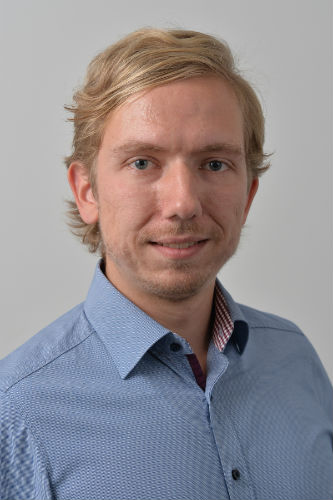
Professor Amir Michael serves as Professor of Accounting and Head of the Accounting Department at Durham University Business School, while directing the Durham Rutgers Accounting Analytics Network (DRAAN). Previously, he held leadership roles as Associate Dean for MBA/DBA and Director of the Durham MBA (Full Time) programme. His research centers on data-driven auditing and reporting, with specific expertise in Audit Data Analytics, Corporate Governance, and Accounting Education technology adoption. Key interests include improving audit transparency through artificial intelligence and examining voluntary financial disclosures within weak institutional environments. His work bridges theoretical accounting frameworks with practical applications in emerging markets, particularly Bangladesh. Recent publications reveal a strong focus on performance auditing evolution, behavioral aspects of audit time management, and board diversity impacts. His research consistently applies longitudinal methodologies to examine corporate reporting practices, with increasing emphasis on data analytics solutions for audit quality enhancement since 2019. Professor Michael actively supervises eight PhD candidates and pioneered the government-recognized BSc in Accounting (KPMG/ICAEW) School Leavers Programme, cited in the House of Commons and Wilson Review as a model for business-university collaboration. His student-centered teaching philosophy integrates research findings directly into classroom practice, emphasizing collaborative learning approaches.
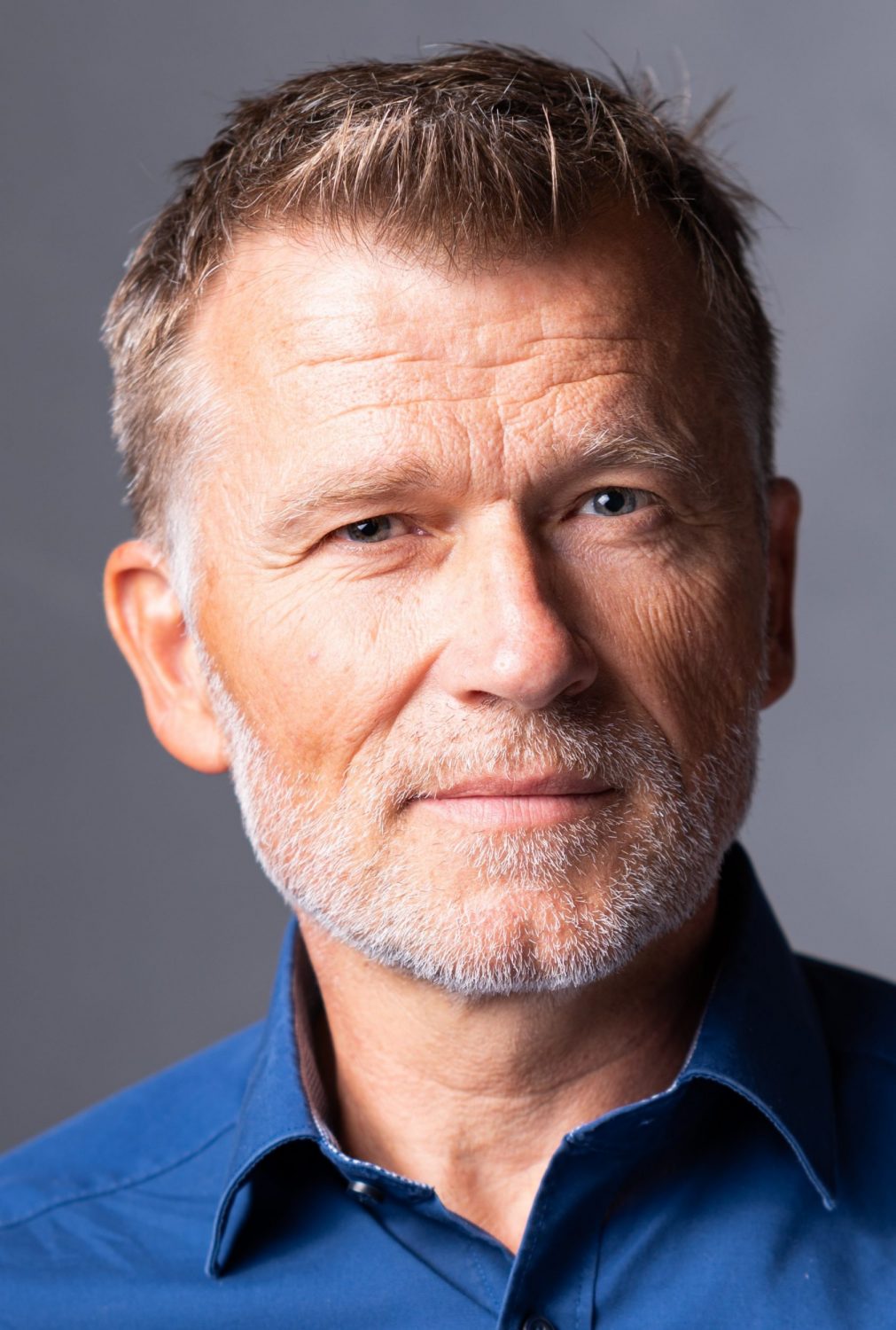
Ulrik Dam Nielsen is an Associate Professor in the Section for Fluid Mechanics, Coastal and Maritime Engineering at the Department of Civil and Mechanical Engineering, Technical University of Denmark (DTU). He also held an external position as Associate Professor II at the Norwegian University of Science and Technology (NTNU) from 2014 to 2023, reflecting strong international collaboration. His work contributes to UN Sustainable Development Goals related to sustainable maritime operations and clean energy. His research focuses on naval architecture and ship motion dynamics , particularly in the context of sea state estimation , added resistance in waves , and real-time prediction of vessel responses . He integrates data analytics , estimation theory , and machine learning to develop methods for monitoring hydrodynamic performance and enhancing maritime safety and energy efficiency. A central theme of his work is using ships as mobile wave sensors—transforming operational vessels into 'sailing wave buoys' for environmental monitoring. His recent publications show a clear shift toward data-driven methodologies, especially machine learning applications in sea state estimation, added resistance modeling, and performance monitoring. These works span journals like Ship Technology Research and Journal of Offshore Mechanics and Arctic Engineering , and conferences such as IEEE MetroSea, highlighting interdisciplinary innovation at the intersection of classical marine engineering and modern AI. Best Paper Presented by a Young Researcher Award (First Classified), 2024 (jointly awarded) He actively supervises PhD students—such as R. E. G. Mounet, M. Mittendorf, J. P. Tomy, and A. Oikonomakis—on projects funded by DTU and collaborative initiatives. His leadership in projects like WEFOSWAB (Wave Estimation and Forecasting Using Ships as Buoys) and data-driven added resistance modeling underscores his role in advancing smart maritime technologies. He also contributes to open science through the public release of datasets such as NetSSE . He teaches core courses including Introduction to Ships and Floating Structures , Marine and Ocean Engineering , and Ship Operations , shaping the next generation of maritime engineers.
Anne Yates is a Senior Lecturer in the School of Education at Victoria University of Wellington. She teaches in the Graduate Diploma of Teaching (Primary/Secondary), Masters of Teaching and Learning, and Masters of Education programs. Her research centers on digital technologies in education, online/distance learning, assessment methodologies, and initial teacher education. Prior to academia, she taught secondary school economics, accounting, and legal studies, contributing to New Zealand's NCEA development through standards design, professional development, and curriculum support. Education : BA (University of Otago) DipTchg (University of Canterbury) Dip Bus Studies (Massey University) MEd, PhD (Victoria University of Wellington) Research Focus : Her work investigates digital competence frameworks, AI in education (e.g., ChatGPT), MOOC recommender systems, and career-change teachers' professional identity. She emphasizes pedagogical adaptations during crises (e.g., COVID-19) and discipline-specific digital capabilities in higher education. Publication Trends : Her recent articles analyze technology-enhanced learning, teacher education reform, and educational resilience. Dominant themes include digital equity, personalized learning algorithms, and critical pedagogy, reflecting a consistent focus on innovation in teacher preparation and digital infrastructure. Professional Service : Member: THW-VUW Human Ethics Committee (2024), Faculty of Education Research Committee (2023–2025) Reviewer: Computers & Education, Technology Pedagogy and Education, Australian Journal of Career Development Advisor: New Zealand Qualifications Authority (2022–2023) Supervision & Grants : She supervises doctoral projects on digital competence in rural China, post-pandemic learning preferences, and gifted transgender youth. Funded projects include studies on undergraduate digital capabilities (2024) and ChatGPT in teacher education (2023).
Bojan Godina is Professor of Media and Religious Education at Friedensau Adventist University since June 2025, contributing to theological education with a focus on the intersection of media, religion, and psychology. His academic journey includes doctoral studies at the University of Heidelberg and extensive teaching experience across multiple institutions including Andrews University (USA), University of Heidelberg, and University of Cologne. His educational background includes: Doctorate at the University of Heidelberg, Faculty of Behavioral and Empirical Cultural Studies (2004-2007) MA in Social Behavioral Sciences from the Institute of Psychology and Pastoral Care at Friedensau University of Applied Sciences (2000-2002) Studies in Clinical Psychology and Psychotherapy at IPS Freudenstadt (1998-2000) Theological studies at Free Theological University of Giessen (1985-1988) Godina's research spans media education, religious studies, and psychology, with particular emphasis on how media influences religious understanding and personal development. His work explores the intersection of digital culture with spiritual formation, examining how religious deep structures operate beneath secular consciousness. His phenomenological approach to media literacy has informed numerous educational programs, including the award-winning Medienscout project which has been implemented in schools across Germany. He has developed innovative educational concepts like 'Naturecode' and 'Kimko' that integrate media competence with spiritual and environmental awareness. His publications reveal a consistent interdisciplinary trajectory connecting theology, psychology, and media studies. Godina's scholarly work demonstrates how religious deep structures operate across diverse worldviews, examining media manipulation techniques while developing practical tools for media literacy education. His recent work increasingly addresses digital age challenges to spiritual formation and mental health, particularly focusing on social media's impact on personality development and religious experience. Scientific recognition includes: 2012 Schutzbengel-Award (5,000 EUR) 2012 'Aktiv für Demokratie und Toleranz' award (5,000 EUR) 2014 Stuttgarter Kiwanis-Preis (2,000 EUR) Godina serves as Director of Studies at the German Society for Biblical-Therapeutic Pastoral Care (BTS) and previously chaired its Scientific Advisory Board. His teaching extends beyond traditional academic settings to practical ministry contexts, including numerous church-based educational initiatives. He has collaborated extensively with the Center for Empirical Research on Religion at the University of Novi Sad and with the ECPD Heidelberg on psychosomatic health research. As founder of the IKU Institute (University Institute for Culturally Relevant Communication and Values Education), Godina has led numerous innovative projects including the Medienscout initiative, Naturecode educational concept, and development of the 'Kimko' school subject for media competence in Baden-Württemberg. His work bridges academic research with practical application in educational and church contexts.
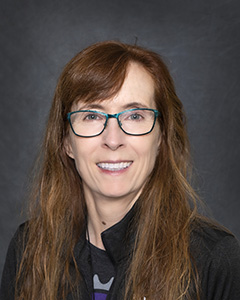
Susan Schrader serves as an Associate Professor in the Department of Petroleum Engineering within Montana Technological University's Lance College of Mines & Engineering, where she has held faculty positions since 2008 after previously teaching at the University of Texas Permian Basin. Her academic foundation includes a PhD in Petroleum Engineering from the New Mexico Institute of Mining and Technology and an MA in Applied Mathematics from the University of New Mexico, with additional doctoral coursework in Mathematics at Montana State University. Her educational qualifications comprise: PhD in Petroleum Engineering, New Mexico Institute of Mining and Technology MA in Applied Mathematics, University of New Mexico ABD toward PhD in Mathematics, Montana State University Schrader's research program centers on petroleum engineering with dual emphases on technical innovation and educational advancement. She develops computational models for fluid flow in low-permeability reservoirs while pioneering data analytics and machine learning applications for reservoir simulation. Concurrently, she investigates climate change mitigation through carbon sequestration and examines societal dimensions of energy industry-climate relationships. Her educational scholarship focuses on accreditation, program assessment, and promoting diversity within STEM disciplines, reflecting commitment to both technical excellence and inclusive pedagogy. Publication analysis reveals an evolutionary trajectory from early fuzzy logic applications in drilling risk assessment toward contemporary integration of neural networks in reservoir engineering and socio-technical climate research. This progression demonstrates increasing sophistication in computational methodologies while expanding into interdisciplinary energy-environment interfaces, particularly evident in her recent low-permeability flow modeling and climate change studies. No scientific awards are documented in available sources. Schrader's instructional responsibilities span advanced computational courses including Data Modeling for Petroleum Engineers, Data Science, and Advanced Reservoir Engineering, indicating substantial curriculum development contributions. While specific graduate student mentorship details are absent from provided materials, her research areas suggest supervision of projects combining petroleum engineering with data science methodologies. Grant funding specifics remain undisclosed in the source documentation. Her computational research likely leverages Montana Tech's High Performance Computing Cluster infrastructure, though no dedicated laboratory facilities are explicitly attributed to her in the available information.
Taha Mansouri is a Lecturer in Artificial Intelligence at the University of Salford's School of Science, Engineering & Environment. He leads the High Performance Computing facilities within the school and chairs the Salford AI Club, an inclusive community focused on AI applications in Higher Education. Mansouri holds dual PhDs - one in Artificial Intelligence and Deep Learning from the University of Salford and another in Information Technology Management from Allameh Tabataba'i University in Iran. His research interests span multiple critical areas in modern AI development, with particular emphasis on ethical considerations in AI systems. Mansouri actively investigates fairness, explainability, and transparency in AI algorithms, with specific focus on computer vision systems and large language models. His work addresses bias in facial emotion detection across age, gender, ethnicity, and cultural backgrounds, highlighting important concerns about equity in automated systems. Mansouri's recent publications demonstrate a strong trend toward practical applications of AI for social good, including detecting mold in social housing, ethical compliance in legal AI systems, and developing AI-resilient assessment tools for education. His research bridges theoretical AI development with real-world implementation challenges across healthcare, education, and industrial applications. Fellowship of the Higher Education Academy Senior Fellowship of the Higher Education Academy Mansouri actively supervises multiple PhD students working on diverse AI applications and leads significant research projects including the £500,000 Innovate UK Smart Grant-funded Expert Legal Intelligence (ELI) project. He serves on prestigious review panels including the EPSRC Peer Review College, the EDI Hub+ Flexible Fund Peer Review College, and the British Council's International Science Partnerships Fund Review College. His grant portfolio includes projects on ethical ASR models (£30,000 collaboration), WATCH-AI benchmarking tools, and inclusive AI emotion recognition systems. As leader of the High Performance Computing facilities, Mansouri supports interdisciplinary research across the university. He also chairs the Salford AI Club, fostering collaboration among individuals from diverse backgrounds interested in AI applications, particularly in Higher Education.
Professor Yuan Miao is a distinguished academic at Victoria University (VU), serving as Professor in the College of Arts, Business, Law, Education & IT and Head of the Information Technology Program. With a PhD from Tsinghua University's Automation Department, his academic journey spans prestigious institutions including the University of Melbourne and Nanyang Technological University in Singapore before settling at VU where he has been Professor since January 2010, following his Associate Professorship from August 2004 to December 2009. Education: BSc, Shandong University, China MEng, Tsinghua University, China PhD, Tsinghua University, Automation Department, China Professor Miao's research centers on Large Language Models (LLMs) and Generative AI, where he has identified critical barriers in practical applications including limited memory length in systems like ChatGPT and Gemini, contradictory explanations, lack of local knowledge integration, and significant errors in text-data hybrid reasoning (up to 38%). His innovative solutions involve cognitive map graphs and rational intelligence models to create customized AI systems. His work spans diverse application areas including human knowledge modeling, multimodal interaction, healthcare analytics (particularly dementia detection), cybersecurity, and robotics powered by rational intelligence. Analysis of Professor Miao's recent publications reveals a strong focus on integrating LLMs with specialized knowledge domains across healthcare, cybersecurity, and social media analysis. His research consistently addresses practical limitations of current AI systems while developing novel frameworks for more reliable and context-aware applications. The interdisciplinary nature of his work is evident in publications spanning medical informatics, cybersecurity analytics, and educational technology. Scientific Recognition: Two articles in fuzzy cognitive map modeling ranked among top 10 most cited works since 2000 (Google Scholar 2000-2016) Development of adversarial dataset based on SQuAD 2.0 that reduced BERT and ELECTRA accuracy from ~90% to ORCID identifier 0000-0002-6712-3465 with 138 peer-reviewed publications Professor Miao actively supervises PhD and Master's students across diverse research topics including access control systems, healthcare analytics, cybersecurity, and social behavior analysis. His research has secured substantial funding from both industry giants (Microsoft, Amazon, Oracle, Google) and government bodies (Australia Research Council, Data61, Singapore's NRF), with recent projects including Digital Transformation for Construction Industry ($1.258 million), Western Health SharePoint Development ($68,000), and Big Data Analysis for Domestic Violence Research (US$100,000). His current grant portfolio demonstrates strong industry-academia collaboration addressing real-world challenges. Professor Miao leads research teams focused on rational intelligence systems that overcome current LLM limitations, with particular emphasis on creating practical AI solutions for healthcare, cybersecurity, and smart city applications. His work with Maribyrnong City Council on the Smart City at Footscray Park project ($850,000) exemplifies his commitment to applying advanced AI research to community-level challenges.
Stefano Sarao Mannelli is a tenure-track Assistant Professor in the Department of Computer Science and Engineering at Chalmers University of Technology and University of Gothenburg. He also holds a Visiting Lecturer position at the University of the Witwatersrand. His research group focuses on fundamental aspects of learning in biological and artificial systems, with emphasis on bias generation, optimization dynamics, and comparative neuroscience. Education: Ph.D. in Theoretical Physics, Université Paris-Saclay (2020) M.Sc. in Electronic Engineering, Politecnico di Torino (2017) M.Sc. in Physics of Complex Systems, Politecnico di Torino/SISSA (2016) M2 in Physique Théorique, Paris Diderot/UPMC/ENS Cachan (2016) B.Sc. in Mathematics for Engineering, Politecnico di Torino (2014) Research: Dr. Mannelli develops model-based approaches to reduce complex machine learning problems into analytically tractable frameworks. His core interests include: 1) Bias amplification mechanisms in AI systems, 2) Learning differences between biological and artificial neural networks (continual/transfer/curriculum learning), and 3) Optimization in high-dimensional landscapes. His work bridges statistical physics, neuroscience, and deep learning theory. Publication Trends: Recent articles (2024-2025) predominantly analyze curriculum learning dynamics, bias propagation in optimization, and theoretical comparisons between biological and artificial learning systems. Methodologically, they combine statistical physics frameworks with control theory and high-dimensional analysis. Awards: Academic Grant (CM Lerici Foundation, 2025) Travel Grants (Guarantor of Brains, G-Research 2024) UK–IT Trustworthy AI Exchange Programme (Alan Turing Institute, 2023) SCGB Conference Award (Simons Foundation, 2023) Ph.D. Scholarship (CEA, 2017-2020) Team & Funding: Leads a research group with 2 PhD students and 1 postdoc. Secured significant funding for international workshops including Analytical Connectionism (£42K, 2023; $152K, 2024) and High-Dimensional Methods (135,500 SEK, 2025).
Dr. M. Abu Naser is an Associate Professor at London Metropolitan University's Guildhall School of Business and Law, specializing in corporate governance, behavioral finance, and developmental economics. He has over 20 years of academic and commercial experience, including roles at multinational firms like Ford and Tesco. His research focuses on AI's impact on education and finance, ESG investments, and microfinance-driven poverty reduction. He actively supervises PhD candidates and chairs international conferences like the Organisation Governance Conference and CSR conferences. Education: Holds a Ph.D., MBA, PGCertEd, PG Dip, AAA, and certifications as a Chartered Management Banker (CMBE). His professional recognitions include Fellowship of the Higher Education Academy (FHEA) and Royal Society of Arts (FRSA). Research Interests: Combines interdisciplinary approaches to address real-world problems through the Centre for Applied Research in Empowering Society and Developing Economics. Key themes include digital technology's role in corporate sustainability, generative AI in academia, and stakeholder governance frameworks. Publications Trends: Recent work emphasizes AI applications in finance, ESG investing, and cryptocurrency's role in microfinance. His 2024 studies explore generative AI's dual-edged impact on higher education and ESG's role in corporate valuation. Earlier research established foundational work on microfinance's gender empowerment and post-Brexit investment dynamics. Grants & Awards: Secured multi-institutional grants through international collaborations. Notable achievements include transforming a struggling enterprise into a profitable venture and advising Japanese investors via German Chamber of Commerce. His leadership in organizing global conferences (e.g., IConGFESR) highlights strategic event management skills. Labs/Teams: Leads the Small Business Clinic supporting startups and SMEs. Collaborates globally with institutions like the University of London and Kirklareli University, Turkey, fostering innovation and cultural exchange.
Reka Howard is an Associate Professor in the Department of Statistics at the University of Nebraska-Lincoln's Institute of Agriculture and Natural Resources (IANR), where she bridges advanced statistical methodology with agricultural innovation through genomic prediction research and graduate education. Education: PhD in Statistics and Plant Breeding, Iowa State University (2016) Research Focus: Dr. Howard pioneers statistical methods for genomic prediction in plant breeding, with emphasis on optimizing prediction accuracy and modeling genotype by environment interactions. Her work integrates environmental data with genomic information to develop robust models for crop improvement across soybean, wheat, and sorghum systems, directly addressing challenges in climate-resilient agriculture through computational innovation and field application. Publication Trends: Recent publications (2023-2025) reveal three dominant themes: (1) Methodological advances in genomic prediction including lambda optimization for ridge regression and sparse testing protocols; (2) Integration of environmental features with genomic data for transferable prediction models; and (3) Physiological investigations into nitrogen dynamics and canopy architecture in soybean production systems. Her work increasingly employs artificial intelligence techniques while maintaining rigorous statistical foundations. Teaching & Service: Dr. Howard instructs graduate statistical methods courses for agronomy, animal science, and engineering students, developing curriculum that translates complex methodologies into practical research tools for the next generation of agricultural scientists.
Ling Liu is a Professor in the School of Computer Science at Georgia Institute of Technology's College of Computing. She directs the Distributed Data Intensive Systems Lab (DiSL) and conducts research in big data systems, cloud computing, distributed systems, privacy, and trust. An IEEE Fellow and recipient of the IEEE Computer Society Technical Achievement Award, Liu has published over 300 papers with best paper awards at major conferences. Her research develops scalable systems for AI and data analytics with emphasis on performance, security, and privacy. Current projects include federated learning, adversarial robustness, and trustworthy distributed AI. Liu has served as Editor-in-Chief for IEEE Transactions on Service Computing and ACM Transactions on Internet Technology.
Marcus Specht is a Professor affiliated with Delft University of Technology and Leiden University, Netherlands. His research focuses on Educational Technology, Learning Analytics, and Artificial Intelligence in Education. He has contributed to projects involving agent-based social skills training, hybrid intelligence for cognitive process analysis, and computational thinking assessment in higher education. His work spans mobile learning, collaborative learning analytics, and gamification in MOOCs. He collaborates extensively with researchers like Marco Kalz, Roland Klemke, and Hendrik Drachsler. Notable contributions include the Presentation Trainer for public speaking feedback and the DojoIBL platform for inquiry-based learning. His research emphasizes multimodal learning systems, including AR/VR applications and sensor-based training tools. He explores the integration of AI into educational platforms, as seen in projects like JELAI and the ARTES architecture for social skills training.
Dr. Linus Wunderlich is a Lecturer in Financial Mathematics at Queen Mary University of London (QMUL), affiliated with the School of Mathematical Sciences. He holds a PhD in Hybrid Finite Element Methods for Non-linear and Non-smooth Problems in Solid Mechanics from Technical University Munich. His research focuses on integrating machine learning with numerical techniques in mathematical finance, including solving high-dimensional PDEs via neural networks and accelerating risk computations through Chebyshev interpolation. He also explores the theoretical foundations of AI and its applications in finance, engineering, and education. Linus teaches courses such as Mathematical Tools for Asset Management and Masterclass in Business Analytics , emphasizing practical machine learning skills for business contexts. His work spans computational finance, numerical analysis, and interdisciplinary projects including Olympic medal prediction models and violin bridge modeling from CT scans. Research grants include a £10,800 project with Numerical Algorithms Group Ltd on efficient volatility interpolation (2018–2019). He collaborates with institutions like LSE, Birkbeck, and University College Dublin, presenting at conferences such as SIAM Financial Mathematics and the German Probability & Statistics Days. His activities include developing interactive art projects and teaching machine learning courses during the pandemic. No scientific awards are explicitly mentioned in the provided texts. His research interests and publications reflect a blend of mathematical rigor and applied innovation, bridging finance, engineering, and education.
Marc Alier Forment is an Associate Professor at the Universitat Politècnica de Catalunya (UPC), affiliated with the Department of Services and Information Systems Engineering within the Faculty of Informatics of Barcelona (FIB). He is also associated with the Institut de Ciències de l'Educació and serves as Coordinator of the Doctoral Program in Engineering, Science, and Technology Education. His research is conducted through the UPC EduSTEAM - STEAM University Learning Research Group. His research interests span Educational Technology , Artificial Intelligence in Education , Learning Management Systems , Open Source in Education , Ethics in Computing , Sustainability in Education , Mobile Learning , Learning Analytics , and Privacy in EdTech . He emphasizes ethical, secure, and sustainable applications of technology in higher education, particularly in engineering contexts. The recent scholarly output highlights a strong focus on the integration of AI in education (especially through the LAMB framework), ethical implications of generative AI, privacy in learning analytics using edge and fog computing, and innovative pedagogical methods in computer science education. His work increasingly bridges technical computing with humanistic concerns such as ethics, privacy, and social responsibility. Best Paper Award TEEM'22 Premis de Programari lliure 2005 de l'AGAUR VI Premi Davyd Luque a la innovació en les TIC Best interoperability innovation: Moodle simple learning tools for interoperability consumer – Spain Marc Alier Forment has led and participated in numerous educational innovation and R&D+i projects, particularly focused on Moodle/LMS integration, mobile learning, open-source educational tools, and the development of ethical and privacy-preserving technologies. He has mentored and collaborated extensively with colleagues on curriculum development, particularly in embedding sustainability and ethics into computing education. His work is central to UPC’s digital education strategy, especially through the Atenea platform. He leads and contributes to the UPC EduSTEAM research group and has been instrumental in developing STEAM-based lecturer training programs. His projects often involve interdisciplinary collaboration across computing, education, and social sciences, aiming to create holistic, responsible technological solutions for learning.
Joe Geigel is a Professor in the Department of Computer Science at Rochester Institute of Technology's Golisano College of Computing and Information Sciences. He holds a DSc in Computer Science from George Washington University, an MS in Computer Science from Stevens Institute of Technology, and a BS in Mathematics from Manhattan College. His career includes industry positions at Eastman Kodak, Bell Laboratories, and RCA Solid State before transitioning to academia. Geigel's research explores the intersection of computer graphics and performing arts, with expertise in: Virtual and augmented reality systems Facial expression analysis and motion capture Interactive theatre and dance technologies Human-computer interaction for creative applications Interdisciplinary education methods His publications demonstrate consistent innovation in virtual performance technologies, with recent work focusing on mixed reality theatre, museum interpretation systems, and educational applications of immersive technologies. He has directed over 15 technology-enhanced productions including Singring and the Glass Guitar and Farewell to Dawn . As co-director of the CS Graphics and Applied Perception Lab, Geigel leads the XRLive team developing extended reality solutions for live performances. He teaches graduate courses in computer graphics, animation algorithms, and virtual reality applications.