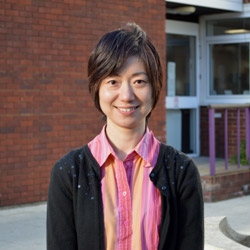
Boning Zhang is a PhD Student and Tutor at the School of Computing Science, University of Glasgow. His research focuses on federated learning systems and Bayesian neural networks for distributed artificial intelligence applications. His publications demonstrate expertise in developing privacy-preserving machine learning frameworks, particularly through innovative approaches to federated optimization and model personalization. Research applications span wireless communications, remote sensing, and aerial image analysis.
Rasmus Lund Jensen is an Associate Professor and Head of the Study Board of Civil Engineering at Aalborg University's Department of the Built Environment, within The Faculty of Engineering and Science. His primary research focuses on building systems, energy efficiency, indoor environmental quality, and sustainable design. He leads the Energy and Buildings Research Group and actively contributes to projects like HEATWISE and ReMaBrick, addressing thermal management and recycled materials in construction. Research interests include HVAC systems optimization, fault detection in building automation, and holistic assessment tools for indoor environmental quality. He has authored over 335 publications and secured multiple grants, including leadership roles in EU-funded initiatives. Notable awards include the Best Paper Award at CISBAT 2021 and the 2020 RM4L2020 award. His work emphasizes bridging academic research with practical industry applications, particularly in energy-efficient and climate-resilient building design. Recent projects involve improving energy pile foundations, optimizing diffuse ceiling ventilation, and developing datasets for occupancy and energy consumption analysis. Collaborations span academia and industry, fostering innovations in smart building technologies and sustainable materials.
René Bødker Christensen is an Assistant Professor at the Department of Mathematical Sciences, Aalborg University, within the Faculty of Engineering and Science. His research focuses on quantum codes, quantum error correction, entanglement engineering, and their applications in secure communication and computing. He holds a PhD in Mathematics (2020) from Aalborg University, specializing in quantum codes and multiparty computation. Education: PhD in Mathematics: Quantum Codes and Multiparty Computation (2020) Research Interests: Quantum coding theory, entanglement-based protocols, quantum error correction, and educational applications of virtual reality in mathematics. His work bridges theoretical mathematics and practical implementations in quantum networks and secure computation. Projects: myPBL-VRMath: Integrates virtual reality into engineering mathematics education (2024) Quantum codes research collaboration (2017-2019) Activities: Active in international conferences, including presentations on quantum entanglement applications and satellite-aided quantum networks. Participated in workshops on future communication technologies and quantum engineering. Labs/Teams: Collaborates with interdisciplinary teams in quantum information science and mathematics education. Engaged in projects combining theoretical research with practical implementations in emerging technologies.
Dr. Huijing Chen is a Senior Lecturer in Operations Management at the University of Portsmouth, affiliated with the School of Organisations, Systems and People within the Faculty of Business and Law. She holds a PhD in short-term seasonal demand forecasting and is Deputy Director of NATCOR. Her research focuses on time series modeling, machine learning for predictive analytics, and supply chain learning theories. Previously, she held academic positions at London Metropolitan University and the University of Salford. Her research interests include seasonal demand forecasting, reliability in healthcare systems, and operational research methodologies. She has secured grants from EPSRC, Innovate UK, and the British Academy, and is part of the Centre for Operational Research and Logistics. Her work spans over a decade, with notable contributions to forecasting techniques, inventory management, and Bayesian approaches to spare parts optimization. She collaborates with institutions like the European Journal of Operational Research and the International Journal of Forecasting.
Étienne Lalé is an Associate Professor of Economics at York University in Toronto, Canada. He holds a PhD in Economics from Sciences Po Paris (2013). His research focuses on macroeconomics and labor economics, with particular emphasis on labor market fluctuations, employment protection, worker reallocation, and cyclical employment patterns. He is affiliated with the Institute for the Study of Labor (IZA) as a Research Fellow, joining as a Research Affiliate in 2016 and becoming an IZA Fellow in 2021. His work spans topics such as the welfare effects of employment protection policies, labor market dynamics across occupations, and the impact of economic cycles on employment and hours. Recent studies include analyses of school closures during the pandemic and their effects on in-person learning, as well as the role of zero-hours contracts in frictional labor markets. His publications explore both theoretical and empirical dimensions of labor economics, often employing large-scale datasets to address policy-relevant questions. Key themes include small business dynamics, wealth distribution in general equilibrium models, and cross-country differences in aggregate employment patterns.
Chao Lan is an Assistant Professor at the School of Computer Science , University of Oklahoma. His research focuses on Machine Learning, particularly in fairness, multi-view learning, kernel methods, and privacy-preserving techniques. He holds a Ph.D. in Computer Science from the University of Kansas, and M.S. and B.S. degrees from Nanjing University of Posts and Telecommunication, China. Key professional roles include Area Chair for ICML'25 and NeurIPS'24, and Senior Program Committee member for PAKDD'25. He serves as an Associate Editor for ACM Transactions on Probabilistic Machine Learning (2024–present) and has received recognition as a Top Reviewer for multiple conferences. Education: Ph.D., Computer Science, University of Kansas M.S., Computer Science, Nanjing University of Posts and Telecommunication, China B.S., Computer Science, Nanjing University of Posts and Telecommunication, China His research emphasizes theoretical and applied machine learning, including fairness-aware algorithms, efficient kernel methods, and distributed systems with privacy guarantees. Recent work explores randomized learning frameworks and debiasing techniques in semi-supervised and multi-view contexts. Lauded for contributions, he has earned awards such as the NSF CRII Award (2019), Distinguished Paper Award at ACSAC 2021, and multiple scholarship recognitions. His publications span top venues like ICML, NeurIPS, KDD, and IJCAI.
Faiza Loukil is a Lecturer at the University of Savoie Mont Blanc, affiliated with the LISTIC laboratory and Polytech Annecy-Chambéry. She holds multiple roles, including Membership in the LISTIC laboratory council and Educational Manager for the L1/L2 economics-management program in IT, Digital, and Industrial Management (INGI) at IAE Savoie Mont Blanc. Her teaching focuses on Information Systems, Algorithms, Python programming, and Data Processing with Python. Her research interests center on privacy-preserving technologies, federated learning, AI applications in Human Resources, and blockchain-based solutions for data security. She leads the ANR JCJC-funded PriFeDAP project (2024–2028), exploring federated learning with domain adaptation, and co-leads the AI4DHN project (2024–2026) on AI-driven district heating network optimization. Key collaborations include Cegedim SRH (CIFRE theses on HR data processes) and international universities like the University of Sfax and Dhar El Mahraz Fez. Recent work emphasizes federated learning’s ethical challenges, bias mitigation in decentralized systems, and blockchain frameworks for circular economy applications. Her publications span AI ethics, IoT privacy, and smart contract implementations. Supervision includes thesis co-direction (e.g., Pierre Dardouillet on federated learning in HR software) and international internships in data science and blockchain. Teaching mobility includes delivering blockchain courses at the University of Monterrey via Erasmus+. Her interdisciplinary approach bridges technical innovation with societal impact in fields like healthcare, energy, and education.
Professor Lang White is a faculty member at the University of Adelaide, holding the position of Professor of Electrical Engineering within the School of Psychology and Faculty of Health and Medical Sciences. His research focuses on statistical signal processing, control systems, optimization, and multi-agent systems with applications in defense, AI-human interaction, and communication networks. He leads projects on hidden reciprocal chain modeling, sensor array processing, and game-theoretic resource allocation strategies. Collaborations include institutions in Italy, France, and the U.S., and he is actively involved in defense-funded initiatives. Current research areas include Bayesian rationality in satisfaction games, Stackelberg game models for asymmetric conflict, and adaptive reinforcement learning algorithms. He has secured postdoctoral positions in human-AI interaction and maintains expertise in MIMO radar waveform design and TCP congestion control. His work bridges engineering and psychology, addressing interdisciplinary challenges in decision-making and system optimization. Professor White seeks consultancy opportunities in signal processing and control systems for defense clients and contributes to academic outreach through conference presentations and journal publications. He advises on emerging trends in distributed optimization and maintains a lab focused on temporal modeling and stochastic processes.
Greg Costello is an Adjunct Research Fellow at Curtin University's School of Accounting, Economics and Finance, within the Faculty of Business and Law. He is affiliated with the Office of the Provost and is based at the Curtin Perth Campus in Building Business and Physio, Room 3043. His research focuses on urban economics, housing markets, econometrics, and spatial analysis, with a particular emphasis on Australian housing dynamics and policy impacts. Costello has contributed extensively to understanding monetary policy influences, land price dynamics, and housing affordability in urban contexts. His work often intersects with macroeconomic trends and regional development challenges. His research interests include analyzing housing market sub-markets, evaluating policy effectiveness, and exploring spatial and temporal patterns in property values. Notable contributions include studies on house price indices, the impact of tax policies, and the implications of demographic changes on housing demand. Costello's interdisciplinary approach bridges econometric modeling with real-world policy applications, particularly in urban and regional planning. Publications highlight a sustained focus on Australian housing markets since the early 2000s, with recent work emphasizing spatial dynamics and submarket segmentation. His research trajectory reflects a commitment to addressing contemporary challenges in housing economics, including affordability and policy-driven market changes. Costello has collaborated with institutions and scholars on projects analyzing housing cycles, urban development, and property valuation methods. While no awards are explicitly listed, his prolific publication record underscores his academic influence in real estate and urban economics.
Ádám Reiff is a Visiting Professor at the Department of Economics and Business at Central European University (CEU) and a researcher at the Centre of Economic and Regional Studies (HUN-REN), Institute of Economics. He holds a PhD in Economics from CEU. His research focuses on macroeconomics, monetary policy, price setting mechanisms, inflation dynamics, pension systems, and tax evasion. Previously, he worked at the National Bank of Hungary (MNB) from 2006 to 2021, contributing to monetary policy analysis and econometric studies. His research interests span state-dependent pricing models, business cycle analysis, and the political economy of public opinion. He has published in leading journals such as American Economic Journal: Macroeconomics and Perspectives on Politics , and his work frequently addresses Hungarian economic contexts. Reiff co-organizes the Reading Group on Price Setting, focusing on advanced theoretical and empirical analyses of pricing behaviors in macroeconomic frameworks. Key contributions include developing the sticky price inflation index as an alternative core inflation measure, analyzing pension inequalities in Hungary, and studying the impact of macroeconomic shocks on aggregate price adjustments. His recent work explores the political consequences of refugee crises and public opinion dynamics in Hungary. Reiff has presented his research at major conferences including the European Economic Association, the American Economic Association, and the Rimini Centre for Economic Analysis. His work often bridges theoretical models with empirical validation, emphasizing policy relevance in central banking and public finance contexts.
William B. Rubenstein is the Bruce Bromley Professor of Law at Harvard Law School , specializing in complex litigation and civil procedure . He serves as a leading authority on class action law through his authorship of Newberg and Rubenstein on Class Actions and has been court-appointed as expert witness in major cases like the National Prescription Opiate Litigation and NFL Concussion Injury Litigation . Education: J.D. from Harvard Law School (1986, magna cum laude ), B.A. from Yale College (1982) Professional History: Faculty at Harvard (2007-present), UCLA (1997-2007), Stanford (1995-1997) His research focuses on class action economics , attorney fee structures , and LGBTQ+ legal rights . He developed the negotiation class certification model to address collective action problems in heterogeneous class actions. His empirical work critiques the transparency deficits in class action settlements. Recent publications analyze jurisdictional vagueness in state long-arm statutes and cooperative settlement mechanisms for large-stakeholder class actions. He has served as amicus counsel in landmark SCOTUS cases like Frank v. Gaos and Laboratory Corporation v. Davis . Teaching: Civil Procedure, Advanced Civil Procedure, Complex Litigation Awards: Albert M. Sacks-Paul A. Freund (Harvard), Rutter (UCLA), Hurlbut (Stanford) Practice Experience: ACLU Director (1990-1995), litigated Braschi v. Stahl Associates (1989)
Koen Teuwen is a researcher at the Security research group (SEC) within the Department of Mathematics and Computer Science at Eindhoven University of Technology. His work focuses on automation, intrusion detection systems (IDS), and incident response , combining cybersecurity and machine learning to enhance digital resilience through practical solutions. Education: BSc and MSc in Computer Science & Engineering from TU/e, with courses at Radboud University Key Research Areas: Network security, explainable AI for security, data imbalance in threat analysis, and stakeholder-driven IDS optimization Projects: Active member of the 2021–2027 CATRIN project on responsible internet security Email: k.t.w.teuwen@tue.nl Research Trends: Recent publications show a focus on modular threat attribution frameworks , explainable alert classification , and practical IDS rule design for security operations centers. His work emphasizes the interplay between technical rigor and real-world applicability, particularly in botnet incident analysis and cyber threat intelligence generation. Advising: Coached S. Baggen’s 2024 MSc thesis on DeepCASE explainability. Collaborates with researchers like L. Allodi and E. Zambon.
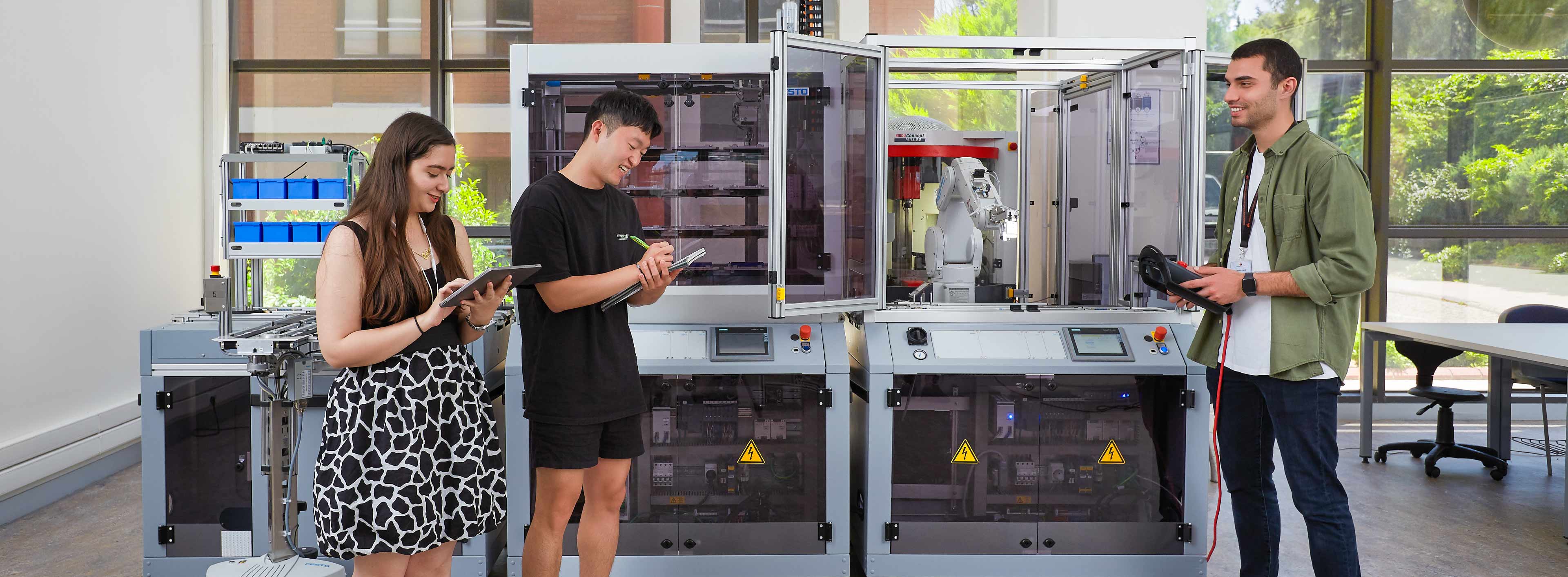
Dr. İlker Korkmaz is an Assistant Professor in the Department of Computer Engineering at İzmir University of Economics, Faculty of Engineering. He also serves as Assistant to the Dean and Department Representative. His academic journey began with a B.S. in Electrical-Electronics Engineering and an M.S. in Computer Science from Ege University, followed by a Ph.D. in Information Technologies from Ege University's International Computer Institute under the supervision of Prof. Dr. Mehmet Emin Dalkılıç. B.S. Electrical-Electronics Engineering, Ege University M.S. Computer Science, Ege University Ph.D. Information Technologies, Ege University International Computer Institute His research spans a broad spectrum of network-centric disciplines, with a strong emphasis on security and efficiency. He investigates computer networks , network security , and password security , while also exploring wireless sensor networks and secure data aggregation protocols . His current efforts are directed toward developing robust security frameworks for wireless sensor networks , particularly in the context of pervasive computing environments. Korkmaz’s publication record reflects his dedication to advancing secure network architectures. His works include studies on cloud-based Android home automation , comprehensive surveys of agent technologies for sensor networks , and the identification of MAC layer vulnerabilities in IEEE 802.15.4 networks. These contributions have garnered significant citations, underscoring their impact on the research community. Among his accolades, he received the Best Paper Award at the SENSORCOMM2008 conference organized by the International Academy, Research, and Industry Association (IARIA). Dr. Korkmaz is actively involved in academic service, holding administrative roles such as Assistant to the Dean, and maintains office hours on Mondays from 10:30 to 12:00 in room A418. He continues to mentor students and lead research initiatives aimed at enhancing network security and efficiency.
Mohammad Mohammadi Amiri is an Assistant Professor in the Computer Science Department at Rensselaer Polytechnic Institute (RPI), joining in Fall 2023. Previously, he held postdoctoral positions at MIT Media Lab (2022–present) and Princeton University (2019–2021), working with Prof. Vincent Poor and Prof. Sanjeev Kulkarni. He earned his Ph.D. in Electrical and Electronic Engineering from Imperial College London (2019), with prior degrees from Iran University of Science and Technology (B.Sc., 2011) and the University of Tehran (M.Sc., 2014). His research focuses on decentralized intelligence, federated learning, and wireless edge computing. He explores enabling distributed machine learning while preserving privacy, particularly in IoT and smart systems. Key areas include federated learning over wireless channels, data valuation, and optimization of edge computing resources. His articles address topics like federated learning convergence, device selection in wireless systems, and decentralized data valuation. Recent work includes papers accepted at AAAI 2023, CISS 2023, and IEEE Transactions on Wireless Communications. Awards : IEEE Communications Society Young Author Best Paper Award (2022) Best PhD Thesis Award (2019), IEEE Information Theory Chapter Eryl Cadwallader Davies Prize (2019), Imperial College London Advising & Grants : Mentoring Ph.D. students in machine learning and distributed systems Recipient of multiple scholarships and awards during his academic career Labs/Teams : Camera Culture Group (MIT Media Lab) Princeton University's Electrical Engineering Department
Raluca Ada Popa is an associate professor in the Department of Electrical Engineering and Computer Science at UC Berkeley, holding the Robert E. and Beverly A. Brooks Endowed Chair. She leads the Frontier Security team at Google DeepMind and co-founded the RISELab, SkyLab, and DARE diversity program. Her research focuses on systems security, cryptographic computing, and privacy-preserving machine learning. She received her PhD from MIT in 2014, alongside BS and MS degrees in Computer Science and Mathematics from MIT. Education: PhD in Computer Science, MIT (2014) MS in Computer Science, MIT (2010) BS in Computer Science and Mathematics, MIT (2009) Research Interests: Popa designs systems that compute securely on encrypted data, enabling confidentiality in cloud computing, AI, and collaborative analytics. Her work bridges cryptography and systems, with contributions to secure multi-party computation, hardware enclaves, and decentralized trust mechanisms. Key innovations include CryptDB, Opaque, and Helen, which have influenced industry standards like Microsoft SQL's Always Encrypted service. Publications & Awards: Over 50+ peer-reviewed papers, including influential work at top venues like USENIX Security, SOSP, and IEEE S&P. Notable awards include the ACM Grace Murray Hopper Award (2021), Sloan Research Fellowship (2018), and MIT Technology Review's TR35 (2019). Her work has been recognized for advancing secure computing and privacy-preserving technologies. Advising & Grants: Advisor to over 20 PhD students and postdocs, many of whom hold faculty positions or lead industry research. Recipient of major grants including NSF CAREER Award (2020), Bakar Fellowship (2019), and a $10M NSF Expedition for RISELab. Co-founded Opaque Systems (2021) and PreVeil (2015), with significant industry impact. Labs & Teams: Co-director of RISELab (Real-time, Intelligent, Secure Systems) and SkyLab (secure cloud and edge computing). Founded DARE to promote diversity in EECS research, connecting undergraduates with faculty mentors.